Aranjuez, long recognized as one of Trinidad and Tobago’s most critical agricultural heartlands, is bracing for projected dry conditions in the coming months, with local producers pushing for urgent government dialogue and intervention to mitigate widespread damage to crops and livelihoods.
The Trinidad and Tobago Meteorological Service (TTMS) recently updated its seasonal forecasts, placing mainland Trinidad under a drought watch for September, with northern-eastern regions of the island and the entire island of Tobago at risk of upgrading to full drought warnings by October. The agency flagged the agriculture sector as particularly vulnerable, warning that inconsistent rainfall, growing frequency of prolonged heatwaves, and plummeting soil moisture levels create significant threats to both standing crops and livestock.
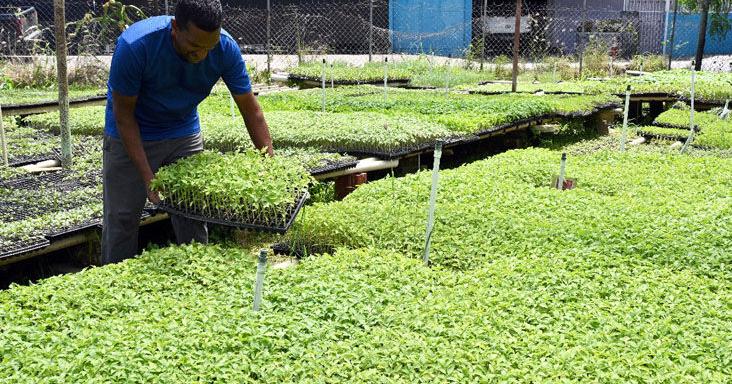
During an on-the-ground visit to Aranjuez this week, multiple farmers were observed working through the scorching midday sun, deploying emergency misting and flood irrigation techniques to protect their plants from soaring temperatures that have already begun to stress vegetation.
At 3R’s Nursery, a major local seedling supplier and commercial farm, owner Sheldon Monsoon has emerged as a leading voice calling for the Ministry of Agriculture and key state agencies including the Water and Sewerage Authority (WASA) to launch immediate consultations with all members of the local agricultural community, including livestock rearers. The goal of these talks, Monsoon says, would be to map projected water supply shortfalls and co-develop targeted mitigation strategies ahead of the dry season.
Monsoon explained that most Aranjuez agricultural operations rely on gravity-fed channels that draw water from the Aranjuez River for irrigation. However, many of these channels have become choked with sediment and overgrown vegetation, a problem that would cut off access to water as river levels drop in coming months. Clearing these channels is a low-cost, urgent fix that would vastly improve water access for small and large producers alike, he noted.
Already, rising temperatures are taking a visible toll on a wide range of produce, from pumpkin, root vegetables, and cucumbers to sweet peppers, pimento, eggplant, hot peppers, and leaf salad greens, Monsoon added.
Veteran farmer Hassan Cambridge echoed these concerns, saying he has had to double his daily labor to keep crops healthy under the current heat stress. Cambridge supports calls for full dredging of the Aranjuez River to boost water storage and ensure enough water can flow through the cleared channels to meet farmer needs if drought conditions fully develop.
Trevor Maharaj, a local producer specializing in seasoning crops, warned that significant crop losses could ripple through to consumer prices all the way to the Christmas holiday season in 2026. Short-season crops and green seasonings including chives, multiple thyme varieties, ginger, and chadon beni are already at high risk, alongside popular vegetables for traditional dishes like choka — baigan, pumpkin, and tomatoes. Maharaj added that even tree crops popular for the upcoming Divali festival, such as mangoes, face reduced yields and higher price tags, as extreme heat causes flower drop and disrupts regular fruiting cycles.
Compounding drought and heat stress, local farmers are also battling an ongoing infestation of giant African snails, an invasive species that consumes a wide range of native and agricultural vegetation, causing additional widespread losses.
Maharaj noted that Aranjuez and surrounding communities have long struggled with inconsistent pipe-borne water access, meaning farmers cannot rely on municipal supplies as a backup if river irrigation fails. Producers are calling on responsible authorities to develop and implement a formal contingency plan to guarantee adequate water access for agricultural operations through the projected dry period.
“When farmers take major losses, consumers end up paying the price at the end of the supply chain,” Maharaj emphasized.
Beyond agricultural risks, Trinidad and Tobago’s Ministry of Health has issued a public health advisory warning the general population about the dangers of unprotected exposure to extreme heat. The ministry notes that extended time in high temperatures can lead to heat exhaustion, and in severe unaddressed cases, progress to life-threatening heat stroke.
The advisory outlines key warning signs for public awareness: heat exhaustion typically presents with cold, pale, clammy skin, a fast weak pulse, muscle cramps, headaches, nausea, dizziness, and fatigue. Heat stroke, by contrast, often brings a core body temperature of 39°C or higher, a rapid strong pulse, confusion, fainting, and vomiting, and requires immediate medical attention.
To reduce heat-related health risks, the ministry urges the public to drink ample water throughout the day, avoid strenuous outdoor activity during the hottest hours of the day, and take regular water and shade breaks if outdoor work is unavoidable. Indoor cooling tips include closing windows and exterior shutters on sides of the building facing direct sun to trap cool air inside. The ministry also recommends wearing loose, light clothing, using broad-spectrum sunscreen with an SPF of 30 or higher (reapplied per label instructions) for anyone spending time outdoors, and prioritizing time in shaded or air-conditioned spaces when possible.
The ministry closed its statement by reminding residents that extreme heat is a serious health hazard, particularly for those spending extended time outdoors or engaging in physically demanding work, and should not be underestimated.