博客

  • What Replaces CFE? Belize Looks to “Distributed Generation”

    What Replaces CFE? Belize Looks to “Distributed Generation”

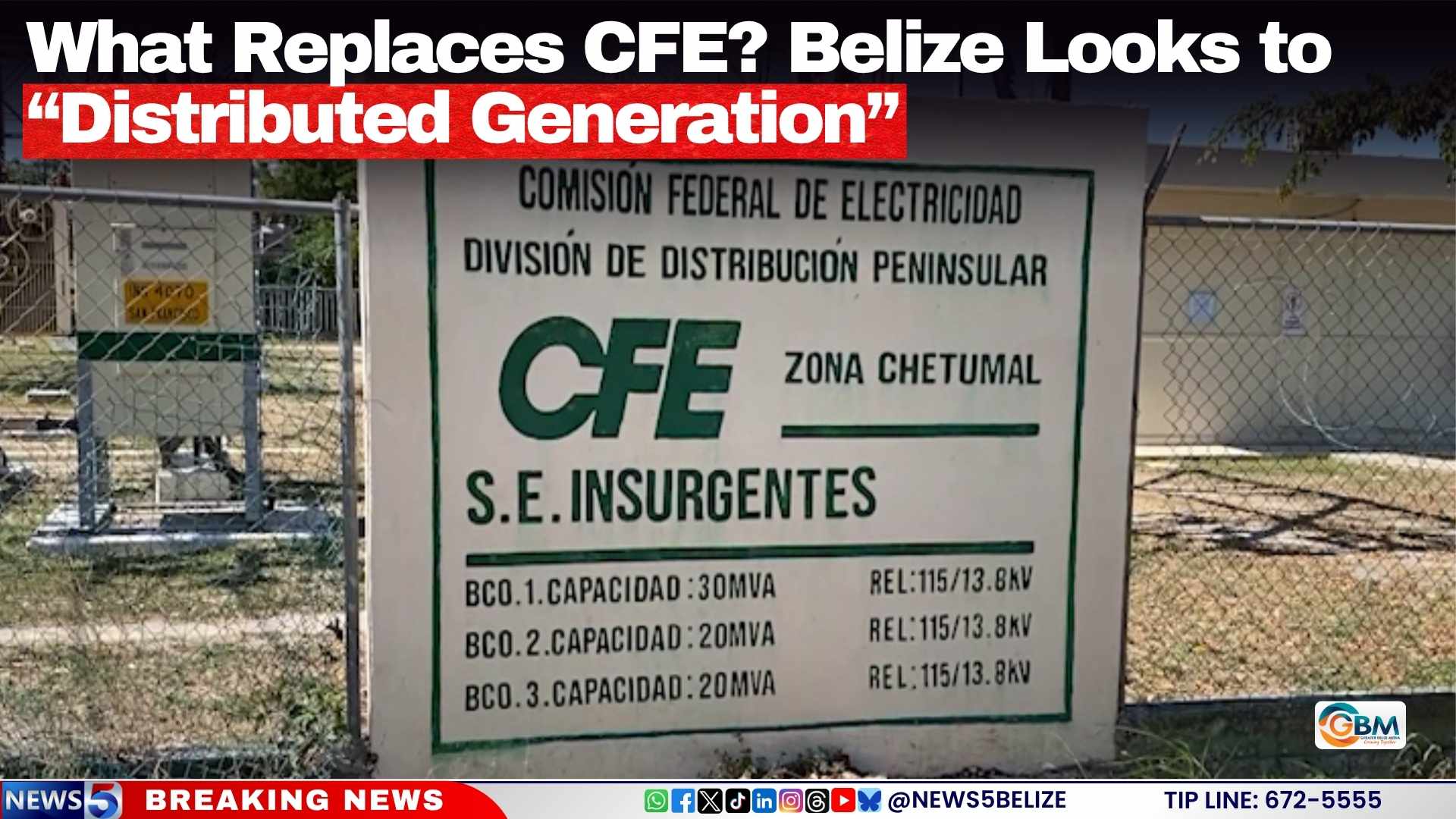
    For nearly 30 years, Belize has relied on imported electricity from Mexico’s state-owned power utility Comisión Federal de Electricidad (CFE) to meet its domestic energy needs. What began as a supplementary power source has now turned into a crippling dependence, accompanied by a mounting $30 million outstanding debt for the imported energy that threatens the stability of Belize’s entire power sector.

    Dr. Leroy Almendarez, Chief Executive Officer of Belize’s Public Utilities Commission, explained the root cause behind the ballooning debt: the full cost of imported power has never been properly passed through to end consumers. Under standard energy sector pricing models, the cost of procured power is supposed to be transferred directly to customers, meaning the utility should recover exactly what it pays for wholesale energy. But for years, this mechanism has failed in Belize.

    The gap between what the national utility BEL pays to its two core suppliers – CFE and domestic provider Hydro Belize – and the revenue it collects from customer bills has compounded year after year. “If you buy power for ten dollars per unit but consumers only pay a lower rate, that variance doesn’t disappear – you still have to pay the full procurement cost to your supplier, so the unpaid amount just keeps growing,” Almendarez elaborated.

    Compounding the debt crisis, Belize’s domestic electricity demand continues to climb, while imported supply from Mexico is increasingly unreliable, often falling short of what Belize needs to keep its grid running. In response, Belize’s Cabinet has issued an emergency declaration over the projected national electricity shortfall, and policymakers are now pursuing a radical shift: growing domestic power generation to replace reliance on Mexican imports.

    The centerpiece of Belize’s new energy strategy is expanded distributed generation, with a focus on utility-scale and small-scale solar power paired with grid-scale battery energy storage. This model, which spreads generation across multiple local sites rather than relying on large centralized imported supplies, would feed more locally produced power directly into the national grid, drastically cutting pressure to import energy from CFE.

    Almendarez emphasized that battery storage is a non-negotiable component of this expansion. Intermittent renewable sources like solar only generate power when the sun is shining, so without adequate storage capacity to hold excess energy for dispatch during peak demand or low-generation periods, the distributed generation model cannot deliver consistent, reliable power. As Belize moves forward with new procurement processes for additional generation capacity, the transition to distributed renewables is positioned to reshape the country’s energy future and resolve its long-standing import dependency and debt crisis.
  • UWP’s Daniel Lugay raises concerns over voter confirmation process in Roseau North

    UWP’s Daniel Lugay raises concerns over voter confirmation process in Roseau North

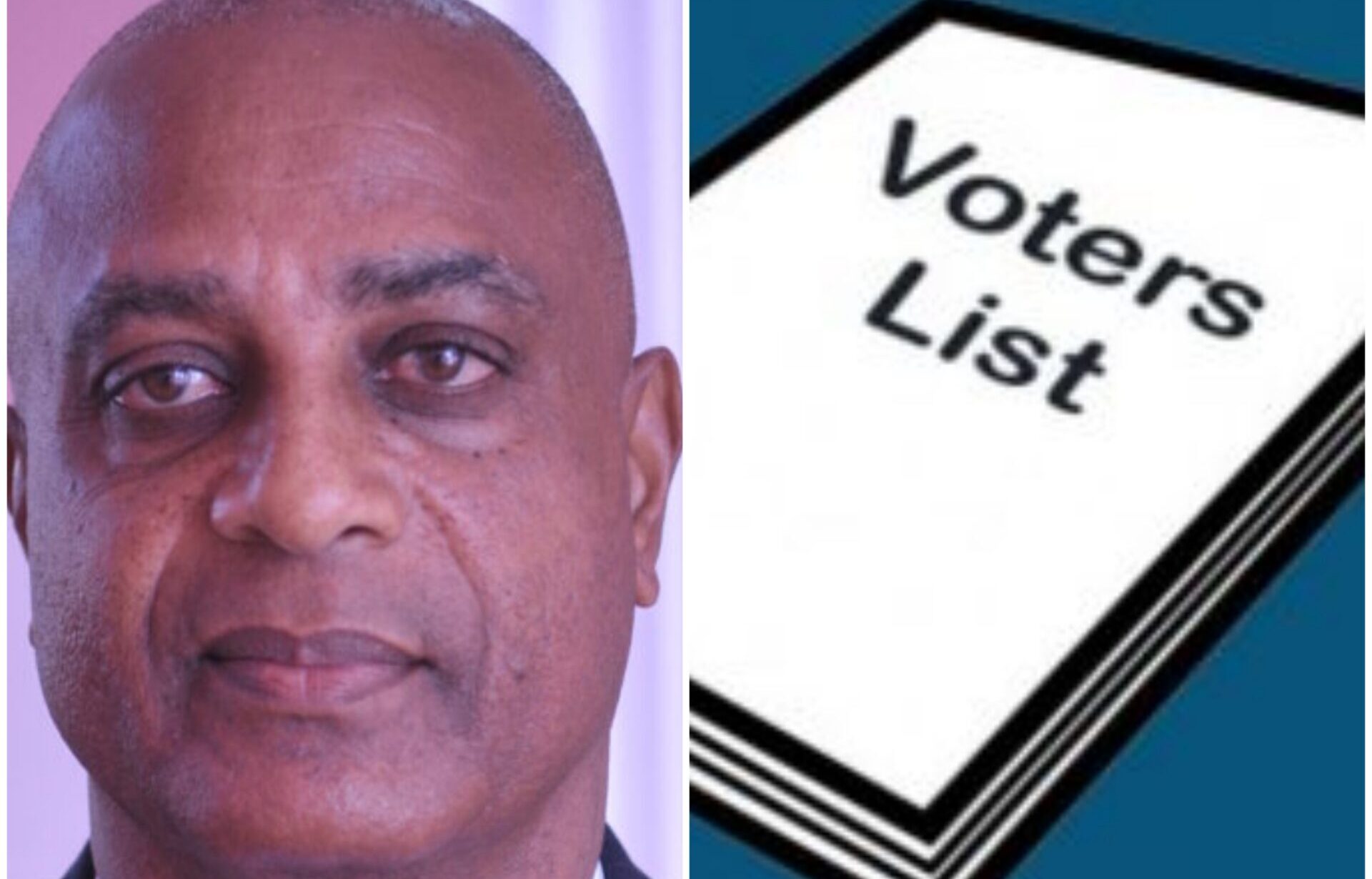
    As the United Workers Party (UWP) contender for the Roseau North Constituency, former parliamentary representative Daniel Lugay has emerged as a prominent critic of Dominica’s ongoing voter confirmation process, leveling serious claims of procedural mismanagement, unnecessary barriers for eligible voters, and potentially inequitable treatment of supporters across political lines.

    Lugay first flagged the issue to investigative journalist Richie Ferrol during an interview this Wednesday, outlining how his team’s preliminary review uncovered a glaring gap: roughly 500 constituents from Roseau North who had formally submitted voter confirmation applications were entirely missing from the first official list of confirmed voters published on the Electoral Office’s public website. Following this discovery, Lugay says he reached out to the Electoral Commission on multiple occasions to flag the discrepancy, but has yet to receive a resolution that addresses his concerns.

    Beyond the missing names, Lugay detailed widespread accounts of confusing, poorly communicated procedural hurdles that have left eligible applicants stranded mid-process. He pointed to his own wife’s experience as a clear example: she submitted her confirmation application at the exact same time as Lugay, only to be notified later that she was required to produce a marriage certificate to move forward. Lugay questioned why electoral officials, who already had his wife’s contact information on file, failed to reach out immediately to request the missing documentation when she first submitted her materials. While the certificate was ultimately provided and her ID card was issued, the delay and lack of proactive communication underscores deeper systemic issues, he argued.

    Another unnecessary barrier Lugay highlighted involves requirements for travel documentation. He says eligible voters who hold valid, unexpired traditional passports are still being ordered to upgrade to machine-readable electronic passports before their confirmation can be finalized, a step he calls completely unjustified.

    In Lugay’s view, the drawn-out, overly complex process – which has stretched on for more than a year, far longer than voter registration drives in larger Caribbean nations that complete the work in mere months – is directly responsible for the low number of confirmed voters on the latest electoral roll. He added that widespread voter frustration with the cumbersome process has likely driven down turnout enthusiasm, noting that roughly 40,000 Dominicans cast ballots in the 2019 General Election. Many eligible voters, he claimed, have essentially “revolted” against the unnecessarily convoluted confirmation exercise by opting out of the process entirely.

    The most serious allegation Lugay put forward centers on unequal access to assistance for voters with expired documentation. He claims that supporters of the ruling Dominica Labour Party are receiving targeted help to secure new passports when their old documents expire, and has raised questions about where the funding for this assistance comes from. Without presenting concrete public evidence, Lugay suggested that public state resources may be improperly diverted to fund this partisan support.

    He stressed that any taxpayer-funded assistance for passport acquisition should be extended equally to all Dominican citizens, regardless of which political party they support. “If you’re paying for passports, you’re paying for passports, and you make passports available to every citizen of the Commonwealth of Dominica,” Lugay said. He added that universal, equal access to this support would create a fair, level playing field for all candidates and ensure no eligible voter is disenfranchised simply because they face barriers to obtaining required documentation.

  • Gajadien: Verhoging directeur aanhouden om doorwerking naar politieke top te voorkomen

    Gajadien: Verhoging directeur aanhouden om doorwerking naar politieke top te voorkomen

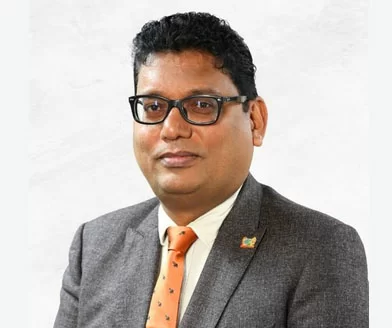
    On September 9, Asis Gajadien, leader of the VHP parliamentary faction, submitted an urgent formal request to Suriname’s President Jennifer Geerlings-Simons, calling for a temporary hold on a planned 15 percent salary adjustment for the Director of General Administration. The core goal of this request is to prevent the pay raise from triggering automatic incremental salary increases for the president and other senior political officeholders, a consequence that would stem from existing statutory linkage rules embedded in current public administration law.

    Gajadien has emphasized that his appeal does not target salary adjustments for general civil servants across the public sector. He confirmed that the planned 15 percent pay increase for all other eligible public employees should proceed in full as scheduled. The request exclusively targets the Director of General Administration position due to its unique legal pay linkage to the presidency, a structural connection that has sparked calls for reform.

    The parliamentarian sent the urgent letter to the president on Wednesday, routed through Ashwin Adhin, Speaker of the National Assembly (DNA). Under the current legal framework, the president’s official salary is explicitly tied to the pay level of the Director of General Administration. Any adjustment to the director’s pay therefore automatically flows through to the presidency, and under additional separate legal provisions, the change then cascades to set pay for all other political officeholders across the government.

    Gajadien argues that this automatic statutory linkage is no longer aligned with principles of good governance. He pointed out that during parliamentary deliberation on the Law on Monetary Provisions for the President, he already proposed amending the legislation to set the president’s salary as a fixed, explicit monetary amount in statute, rather than keeping it dependent on the pay of a career civil service position.

    Currently, a private member’s bill is being prepared to permanently end this automatic cross-linked pay system. If passed, the legislation will set the president’s salary as a specific, legally defined amount. Going forward, any salary adjustments for other public administration roles would only serve as an indicative reference point, and would no longer trigger automatic indexing of the presidency’s pay or that of other political officeholders.

    Pending parliamentary review and approval of this reform bill, Gajadien is asking the president to issue a resolution to temporarily suspend the 15 percent salary adjustment for the Director of General Administration. This temporary pause would prevent the automatic cascading pay increases for the president and other linked political positions from taking effect ahead of the planned legal change.

    Once the private member’s bill is debated and approved, Gajadien notes that the Director of General Administration’s salary can be adjusted in line with general public sector salary trends as planned, without the change automatically impacting the pay of political officeholders.

    The VHP faction leader added that the temporary hold would leave the existing legal foundation for the pay system fully intact during the transition period. He has asked the president to consider his request in the broader public interest, citing commitments to greater transparency, proper public administration, and a careful, orderly legal transition to the new pay framework.

  • “There is no secret in what God can do.” Canaries man reaches 101

    “There is no secret in what God can do.” Canaries man reaches 101

    One hundred and one years of steady, purpose-driven living came together for Joseph Gordon Marquis of Canaries on Wednesday, as the beloved centenarian celebrated his 101st birthday surrounded by loved ones, his life defined by unwavering faith, dedication to hard work, close family bonds, and a deliberately uncomplicated approach to daily life.

    Born and raised on the Caribbean island of Saint Lucia, Marquis left his home country at a young age to build a new life in England. It was there that he nurtured a long-held passion for woodworking and carpentry, a skill that ultimately landed him a decades-long position as a carpenter at London’s iconic Middlesex Hospital, where he honed his craft and supported his growing family.

    Marquis’s large, loving family stands as one of his greatest life achievements: he is a father to seven children, a grandfather to 19 grandchildren, and a great-grandfather to two young great-grandchildren, with a sprawling network of relatives who have carried forward his values of grit and gratitude.

    Beyond his career and family, Marquis’s longevity reflects intentional choices around personal health that he has maintained for decades. He has never taken up smoking, and while he drank alcohol occasionally earlier in his life, a negative experience led him to give up drinking entirely, a choice he has stuck with ever since.

    Faith has remained the cornerstone of Marquis’s life throughout every stage of his journey. Family members confirm that his deep-seated love of God and lifelong devotion to serving his faith have been a guiding force through both challenges and joys over the past century.
    Even at 101 years old, Marquis remains in remarkably good health, his family told local outlet *St Lucia Times*. “He is in good health. A few aches and pains but that is expected,” the family shared in an interview.

    Far from slowing down entirely, Marquis still keeps his mind and spirit active with quiet, meaningful daily hobbies. He regularly works through crossword puzzles to keep his mind sharp, devotes time to watching faith-focused biblical programming, and sets aside time each day to read scripture.

    When asked what he credits for his 101 years of full life, the centenarian offered a humble answer rooted firmly in his lifelong beliefs: “There is no secret in what God can do.”

  • CWI appoints veteran coach as batting consultant

    CWI appoints veteran coach as batting consultant

    Cricket West Indies (CWI) has announced the appointment of seasoned New Zealand-born coach Bob Carter as its new batting consultant, tasking him with a core mission to lift batting performance across the Caribbean region and build a sustainable pipeline of elite talent for coming generations. The official announcement, made Wednesday, lands at a pivotal juncture for West Indies cricket, as the side prepares for a stacked schedule of upcoming international competitions over the next two and a half years.

    Bringing more than three decades of high-level coaching experience to the role, Carter officially stepped into the position on September 1, and will collaborate across CWI’s men’s, women’s, and youth cricket programs. He will partner with existing regional and high-performance coaches to reinforce the local coaching ecosystem and nurture a deeper talent pool of skilled batters.

    In comments following his appointment, Carter emphasized his long-standing coaching philosophy: “My focus has always been on supporting players and coaches to reach their full potential, and I am looking forward to working alongside the regional and high-performance coaches to help achieve that.”

    Carter boasts an extensive resume across top global cricket circuits. From 2012 to 2025, he held the position of High-Performance Coach with New Zealand Cricket. He also served as head coach of the New Zealand Women’s national team between 2019 and 2022, and held two stints as assistant coach for the New Zealand men’s side. Earlier in his career, he took on head coaching roles for New Zealand domestic sides Canterbury and Wellington, and served as director of cricket at England’s Northamptonshire County Cricket Club.

    His first on-the-ground assignment will kick off later this month, with a regional tour covering all six of West Indies’ first-class cricket territories: Barbados, Guyana, Jamaica, Trinidad and Tobago, the Leeward Islands, and the Windward Islands. During the tour, he will work directly with local players and coaching staff to assess current standards and implement early improvements.

    Carter’s role is structured around two central priorities. First, he will deliver specialized technical guidance to both current elite batters and emerging young talent. Second, he will build the capacity of regional and high-performance coaches to design and deliver personalized, effective batting training programs for players at all levels.

    CWI Director of Cricket Miles Bascombe explained that the appointment forms a key part of the governing body’s broader push to upgrade regional coaching infrastructure. “West Indies teams will participate in at least six global events over the next 24 to 30 months, including the Men’s World Cup Qualifier next February. The steps we take now are intended to lay the groundwork for success. Bob’s immediate job is to raise the technical standard heading into these events,” Bascombe noted.

    Bascombe added that the long-term success of the appointment will be measured by sustainable change, not just short-term results: “But the measure of this appointment is not what our top six look like in twelve months. It is whether the coaches he works with come out of it better at teaching batting than they went in, and whether that reaches the coaching education modules the rest of the region is taught from. That is what lasts.”

    The hiring comes as part of CWI’s wider technical development initiative, following a review by the Cricket Strategy and Officiating Committee that identified two key priorities for West Indies cricket growth: targeted specialist technical support, and systematic strengthening of regional coaching capacity. With the 2027 Men’s ICC Cricket World Cup Qualifier set to take place between February and March next year, the appointment comes at a critical time to prepare the side for upcoming global competition, while building long-term strength across the regional cricket ecosystem.

  • Flow back-to-school giveback helps scores of students

    Flow back-to-school giveback helps scores of students

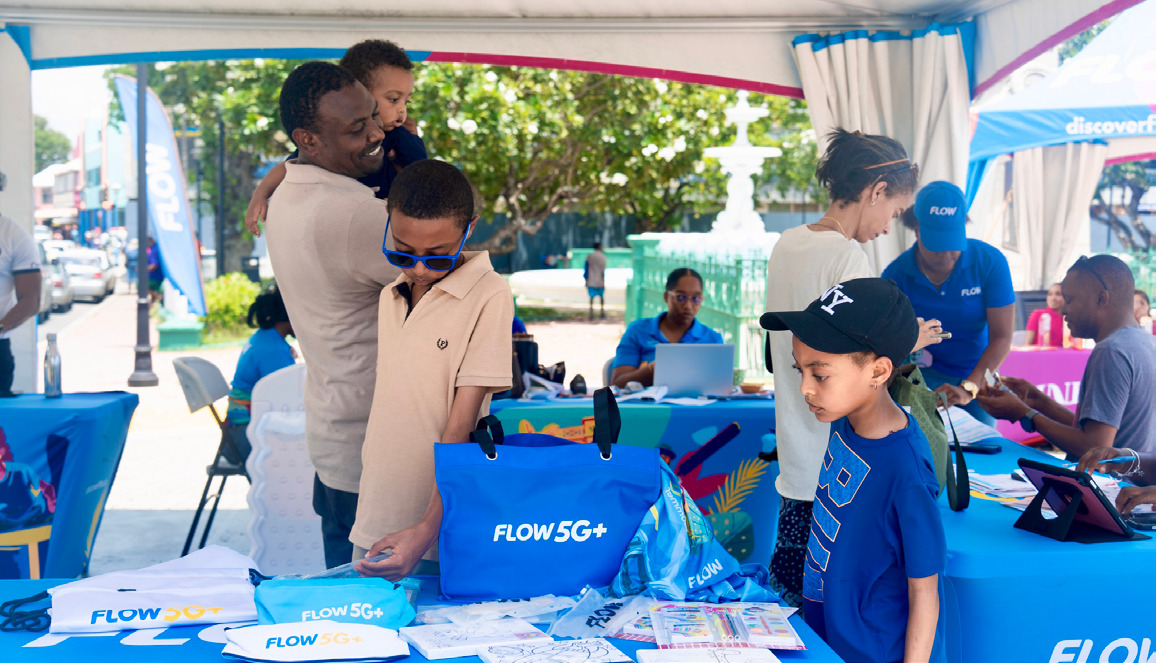
    As Barbadian families gear up for a new academic year, leading regional telecommunications provider Flow has stepped beyond traditional product promotions to deliver meaningful, community-centered support to hundreds of students – particularly those from low-income and vulnerable households – through a expanded two-day back-to-school giveback activation held September 4 and 5.

    Building on the success of a small-scale community outreach hosted at the same site in 2023, the first day of the 2024 initiative kicked off at Flow’s Customer Experience Centre in Windsor Lodge, St Michael. For this year’s event, Flow deepened its long-standing partnership with the One Family Programme, a national government initiative overseen by Barbados’ Ministry of People Empowerment and Elder Affairs that works to help vulnerable households move beyond reliance on traditional welfare toward long-term self-sufficiency. This collaboration allowed the organizers to prioritize access for students who face the greatest financial barriers to preparing for the new school term.

    Attendees on opening day enjoyed a full schedule of family-friendly activities beyond core assistance, including face painting, interactive games, live music, and art activities. One of the most popular highlights of the day was complimentary haircuts and braiding provided pro bono by local business Gomez Barber Studio, a small touch that helped many students start the school year feeling confident and polished. Local food and beverage producers including Pinehill Dairy, Banks Holdings Limited, WIBISCO, and Smiley Sno-Cones donated all snacks and drinks for the event, turning the day into a collective community effort.

    Flow’s own employees played a central role in creating a warm, inclusive atmosphere for attendees, with the event adopting a fun “Rep Your Alma Mater” theme that saw staff and local social media influencers show off their former schools’ colors, ties, and nostalgic memorabilia.

    The activation moved to Bridgetown’s National Heroes Square for its second day, where the focus expanded to include all participating Flow customers alongside supported students. Attendees were able to browse the company’s official back-to-school product offers while taking part in on-site entertainment, prize giveaways, and reward programs. A popular “Spin to Win” game offered attendees the chance to claim gift vouchers and merchandise from leading Barbadian retailers including Massy Stores, Abed’s, and Bridgetown Duty Free, while complimentary back-to-school breakfast bundles were distributed to guests. Additional high-value prizes included Samsung tablets and tickets to matches in the Caribbean Premier League (CPL), the region’s premier T20 cricket competition, with extra CPL-branded giveaways distributed throughout the day. Local popular artist and Flow brand representative DoeJay provided on-site entertainment to cap off the afternoon.

    Toni Yarde, Senior Communications Manager at Flow, emphasized that the community-focused initiative is a core reflection of the company’s long-term commitment to investing in the communities it serves. “Back to school is such an exciting milestone for kids, but we also know it puts enormous financial strain on many families across Barbados,” Yarde explained. “That’s why we chose to do more than just push back-to-school device and plan promotions. We wanted to create something that was meaningful, practical, and also fun for kids and their whole families.”

    Yarde added that the recurring partnership with the One Family Programme has been key to the initiative’s impact, saying: “This collaboration lets us directly reach the families that need extra support the most, while also bringing together our employees, customers, and local community partners around a shared goal. For Flow, giving back isn’t just about writing checks – it’s about showing up for the places where we live and work, and finding tangible ways to improve people’s daily lives.”

    The two-day giveback activation forms one centerpiece of Flow’s broader 2024 Back-to-School campaign, which continues to run across all of the company’s retail locations around Barbados, with ongoing special offers, customer rewards, and connectivity support for students and families.

  • UPP representative for Roseau South Edline Harris sponsors new bus stop in Eggleston

    UPP representative for Roseau South Edline Harris sponsors new bus stop in Eggleston

    Residents of Eggleston village now have access to a safe, upgraded waiting space for public transit, following the official handover of a new bus stop sponsored by local representative Edline Harris this Tuesday.

    Harris, who represents the Roseau South Constituency for the United Progressive Party (UPP), oversaw a formal handover ceremony with members of the Giraudel Council and local community members gathered to mark the completion of the small but impactful infrastructure project.

    In remarks delivered during the event, Harris framed the new bus stop as far more than a simple concrete and wood construction. For her, the finished structure stands as a tangible demonstration of responsive public service, the power of collaborative community work, and elected officials’ commitment to lifting the quality of everyday life for local constituents.

    She emphasized that even small, targeted infrastructure investments can drive meaningful change for local communities. Before the new bus stop was built, residents – particularly school-aged children – were forced to wait for rides in harsh weather, often huddling under damaged umbrellas to stay dry during rainstorms. That daily inconvenience has now been eliminated, thanks to the completed project.

    Harris extended public gratitude to all stakeholders who turned the project from a proposal into a usable public asset. She specifically recognized the Giraudel Council for partnering on the initiative, the broader United Progressive Party team for their ongoing backing, and every individual contributor who dedicated time and effort to bring the bus stop to fruition. Her remarks stressed that the successful delivery of the project is proof of what can be achieved when local leaders and residents align on shared community goals.

    As she formally transferred ownership of the bus stop to the council for ongoing maintenance, Harris expressed her hope that the structure would serve Eggleston residents reliably for decades to come. She closed by reaffirming her commitment to continued collaborative work with the community, advancing future projects that upgrade local infrastructure, expand economic opportunity, and build a higher quality of life for all residents across the constituency.

  • Minouche Bromet neemt vanaf 15 september leiding SZF over

    Minouche Bromet neemt vanaf 15 september leiding SZF over

    On September 9, public health authorities in Suriname announced a key leadership transition at the nation’s Staatsziekenfonds (SZF), the country’s public state health insurance fund. Starting September 15, Minouche Bromet will step into the role of acting general director to steer the organization while formal appointment processes are finalized.

    Internal stakeholders have already been notified of the leadership change: SZF staff received word of the transition via an internal memorandum on the same day the announcement was made, and Marciano Djanam, chair of the SZF board of directors, was formally briefed by relevant ministry officials.

    André Misiekaba, Minister of Public Health, Welfare and Labor (VWA), confirmed that he has officially put Bromet forward as the nominee for the permanent position of general director of the SZF. This nomination aligns fully with Article 16 of the statutes governing the State Health Fund Foundation, the legal framework that structures the agency’s operations.

    The decision to appoint an acting director ahead of final formal confirmation is rooted in a commitment to preserving organizational continuity. With the formal appointment process still requiring final completion, the interim appointment ensures no disruption to the SZF’s core public health services and daily operations. During her acting tenure, Bromet will oversee all day-to-day management of the fund, carrying out her duties in strict accordance with the foundation’s governing statutes.

    Bromet’s move to the permanent general director role remains contingent on two key milestones: the completion of all legally required formal procedural steps, and the final approval of Suriname’s Council of Ministers. Once both requirements are satisfied, the nomination will be finalized and Bromet will take on the permanent leadership position.

  • Panama Canal Restrictions Put Up to US$10 Billion in CARICOM Imports at Risk, CPSO Warns

    Panama Canal Restrictions Put Up to US$10 Billion in CARICOM Imports at Risk, CPSO Warns

    A new preliminary analysis from the Caribbean Community Private Sector Organization (CPSO) has uncovered significant economic risk facing CARICOM nations, as unprecedented transit restrictions at the Panama Canal put between $8 billion and $10 billion of the bloc’s annual imports in jeopardy. This figure accounts for roughly one-quarter to one-third of the entire region’s non-fuel import spending, marking one of the most pressing supply chain challenges Caribbean economies have faced in recent decades.

    The crisis stems from a prolonged drought in the Panama Canal’s watershed, where rainfall from May through August has hit 34% below the long-term historical average, and water inflows to the region have fallen 44% below typical levels. The Panama Canal Authority’s recently issued Advisory A-29-2026 has enacted strict new capacity limits: starting September 4, daily vessel transits will be capped at 34, with the cap dropping further to 32 just 11 days later on September 15. Authorities have also issued a stark warning that the 2026-2027 El Niño event, expected to be unusually intense, could cut water supplies even more dramatically during the 2027 dry season running from January to April.

    Market stress is already emerging as shipping lines adapt to constrained capacity. A recent priority booking slot for a Panama Canal transit sold at auction for $5.3 million, the highest winning bid ever recorded for the route. Major global container carriers including CMA CGM, MSC, and Hapag-Lloyd have already implemented per-TEU surcharges for all routes dependent on the canal, with industry analysts predicting further fee increases as water levels drop and draft restrictions tighten.

    Dr. Patrick Antoine, CEO and Technical Director of the CPSO, emphasized that these extra costs will not be absorbed by shipping companies alone, but will filter through the entire supply chain to end consumers. “Auction premiums and low-water surcharges do not stay on the carriers’ books,” Antoine explained. “They are passed down the chain to importers, to distributors, and ultimately to the Caribbean consumer. When slot scarcity forces carriers to reroute or rationalise port calls, small Caribbean markets are typically the first to lose frequency and the last to regain it.”

    CARICOM economies rank among the most import-dependent in the world, with the vast majority of food, manufactured consumer goods, and construction inputs reaching regional markets via transshipment networks that rely on the Panama Canal either for direct transit or for baseline pricing. The CPSO’s estimate of at-risk imports includes both $4.5 billion to $7 billion in cargo that travels directly through the canal, as well as additional goods that transit the canal before being consolidated at U.S. ports for final shipment to Caribbean nations.

    Consumers across the region face two overlapping risks from the disruption: first, reduced product availability as longer shipping lead times force retailers to operate with thinner inventory stockpiles, and second, broad-based price increases as surcharges and longer alternative routing push up final landed costs for all goods. The challenge is compounded by ongoing disruptions to shipping through the Strait of Hormuz, meaning two of the world’s most critical maritime trade chokepoints are under simultaneous pressure—one strained by climate-driven drought, and the other disrupted by geopolitical conflict. This dual shock has driven up global freight rates, war risk insurance premiums, and fuel costs across the board.

    For Caribbean nations that rely on imported petroleum, the overlap creates a particularly severe strain: electricity, transport, and food prices are all facing upward pressure at the same time, threatening to exacerbate cost-of-living crises across the region.

    In response to the growing threat, the CPSO has already presented a new supply chain resilience framework, called Derisking CSME Imports, to CARICOM Heads of Government during a July 2026 breakfast meeting held in Saint Lucia. The methodology maps the full extent of CARICOM’s exposure to external supply shocks, and breaks down exposure product by product to identify opportunities where regional production and alternative supply routes can replace vulnerable long-distance imports from outside the bloc.

    “Every percentage point of import demand we can shift to regional supply is a percentage point insulated from canal auctions, low-water surcharges and chokepoint conflict,” Antoine said. “Regional resilience is not built during a crisis. It is built before one.”

    The CPSO is currently urging regional importers to proactively coordinate with shipping carriers and logistics providers immediately to plan for routing adjustments, surcharge costs, and inventory management for the final quarter of 2026 and the high-risk 2027 dry season. The organization continues to advance the region’s trade connectivity agenda alongside CARICOM leaders, the World Bank’s Caribbean Reconnect Programme, and a proposed Regional Ferry Service initiative that is currently under review by heads of government.

  • Sherman Boston blames Electoral Office for disorganization during Roseau North by-election

    Sherman Boston blames Electoral Office for disorganization during Roseau North by-election

    In the wake of the recently concluded September 7 Roseau North by-election, independent contender Sherman Boston has raised sharp criticisms over widespread organizational failures in the electoral process, claiming that systemic missteps led to voter confusion and disenfranchisement across the constituency.

    Speaking exclusively to investigative journalist Richie Ferrol on September 8, one day after polls closed, Boston argued that the Electoral Office had ample time to prepare for the by-election and failed to deliver a smoothly coordinated voting process. He emphasized that procedural inconsistencies and poor planning eroded public trust in the island’s electoral system, going as far as to note that some registered voters were ultimately blocked from casting their ballots entirely due to the disarray.

    Boston singled out the Goodwill Primary School polling station as a primary example of these failures, where large numbers of voters struggled to locate their assigned voting areas. He recalled that the chaotic situation only prompted emergency intervention late in the day: “Actually at three o’clock on polling day, Mr. Duncan Stowe, the chairman of the electoral commission, and three young ladies came in and took two photos of the middle with signs to the Goodwill Primary School grounds, providing proper signage, as people appeared confused as to where to find the polling stations. This was done to reduce the chaos that was developing.”

    The independent candidate stressed that issues with election organization were not limited to his own on-the-ground observations, noting that multiple other stakeholders and voters had also submitted reports of similar problems across other polling locations.

    Beyond logistical failures, Boston outlined the broader structural challenges independent candidates face when competing against nominees from established political parties. He explained that a large share of voters still rely on major political parties for information and political guidance, creating a high barrier to entry for non-partisan candidates looking to build support. Boston also accused major parties of treating voters as tools to advance their own ideological goals and consolidate power, rather than prioritizing the long-term well-being of the general public.

    Boston went on to detail the inherent structural advantages he claims his two opponents held in the race. He alleged that the winning candidate, from the governing Dominica Labour Party (DLP), gained an unfair edge through the ruling party’s access to state infrastructure and public financing, which the party used to build and maintain its popularity among voters. “I mean, out of the three candidates, one had the backing of a political party that literally bought its popularity through government structures. The current government has access to the country’s financing; you cannot shy away from that,” Boston alleged.

    As for his other opponent, Boston noted that the United Workers Party (UWP) nominee benefited from decades of built-up support and a long-established political base in Roseau North, where the UWP has historically been considered the dominant political force. “The other opponent had an inherited popularity in the UWP and was supposed to be a stronghold in the Roseau North Constituency. It ended badly for them because, I mean, certain times you have to look outside yourself,” he asserted.

    These existing partisan power structures, Boston argued, created a fundamentally uneven electoral landscape that put an independent candidate like him at an unavoidable disadvantage from the start of the campaign.

    Despite the final outcome that saw DLP candidate Ashma McDougall win the seat and retain the party’s majority in parliament, Boston says the results should push major political parties to engage in serious introspection. He specifically pointed to the UWP, noting that the party had what could have been a clear path to victory but made strategic choices that undermined its chances.

    McDougall’s win closes the latest chapter in Roseau North’s political history, cementing the DLP’s continued parliamentary control in the constituency.