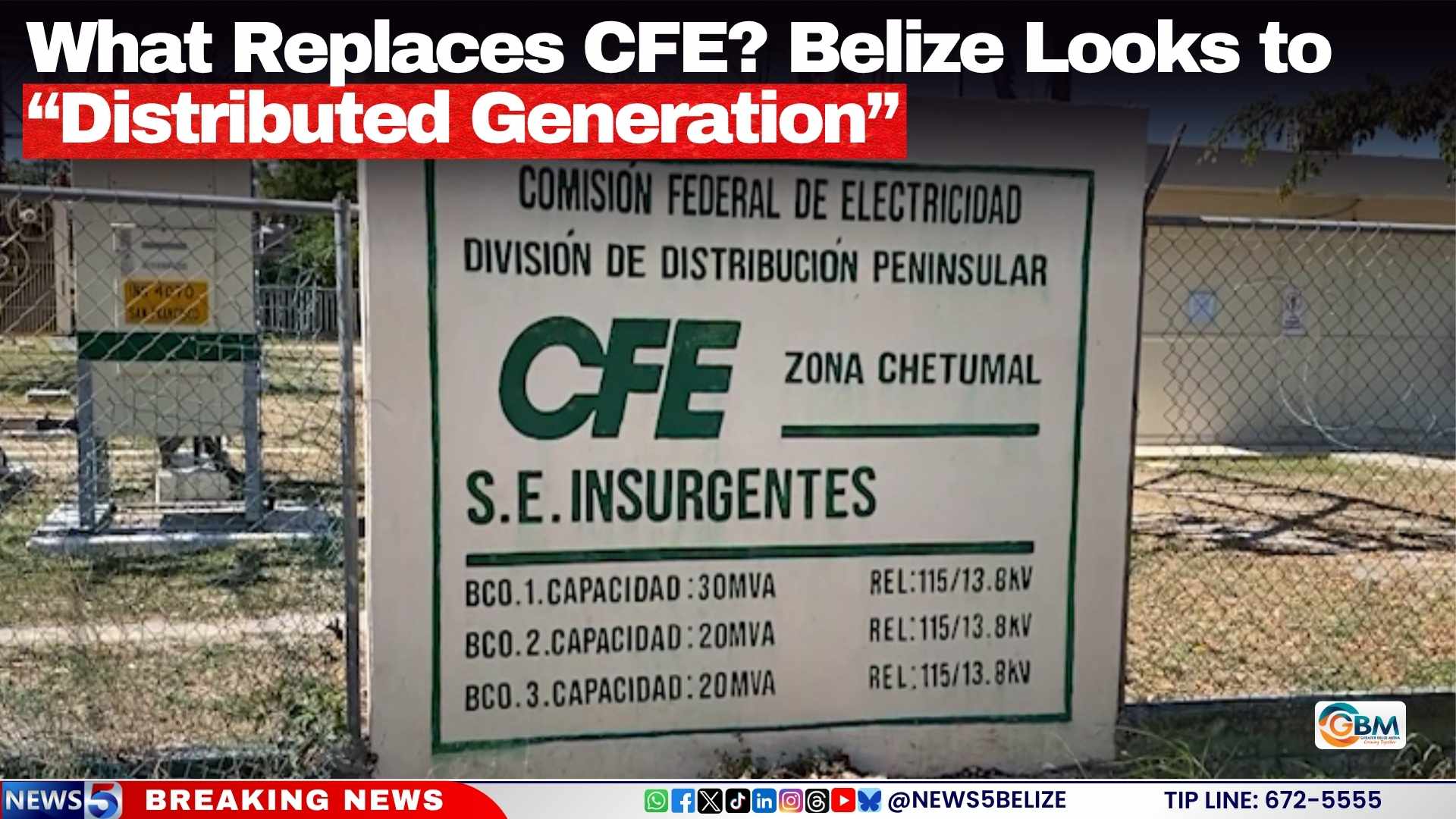
For nearly 30 years, Belize has relied on imported electricity from Mexico’s state-owned power utility Comisión Federal de Electricidad (CFE) to meet its domestic energy needs. What began as a supplementary power source has now turned into a crippling dependence, accompanied by a mounting $30 million outstanding debt for the imported energy that threatens the stability of Belize’s entire power sector.
Dr. Leroy Almendarez, Chief Executive Officer of Belize’s Public Utilities Commission, explained the root cause behind the ballooning debt: the full cost of imported power has never been properly passed through to end consumers. Under standard energy sector pricing models, the cost of procured power is supposed to be transferred directly to customers, meaning the utility should recover exactly what it pays for wholesale energy. But for years, this mechanism has failed in Belize.
The gap between what the national utility BEL pays to its two core suppliers – CFE and domestic provider Hydro Belize – and the revenue it collects from customer bills has compounded year after year. “If you buy power for ten dollars per unit but consumers only pay a lower rate, that variance doesn’t disappear – you still have to pay the full procurement cost to your supplier, so the unpaid amount just keeps growing,” Almendarez elaborated.
Compounding the debt crisis, Belize’s domestic electricity demand continues to climb, while imported supply from Mexico is increasingly unreliable, often falling short of what Belize needs to keep its grid running. In response, Belize’s Cabinet has issued an emergency declaration over the projected national electricity shortfall, and policymakers are now pursuing a radical shift: growing domestic power generation to replace reliance on Mexican imports.
The centerpiece of Belize’s new energy strategy is expanded distributed generation, with a focus on utility-scale and small-scale solar power paired with grid-scale battery energy storage. This model, which spreads generation across multiple local sites rather than relying on large centralized imported supplies, would feed more locally produced power directly into the national grid, drastically cutting pressure to import energy from CFE.
Almendarez emphasized that battery storage is a non-negotiable component of this expansion. Intermittent renewable sources like solar only generate power when the sun is shining, so without adequate storage capacity to hold excess energy for dispatch during peak demand or low-generation periods, the distributed generation model cannot deliver consistent, reliable power. As Belize moves forward with new procurement processes for additional generation capacity, the transition to distributed renewables is positioned to reshape the country’s energy future and resolve its long-standing import dependency and debt crisis.