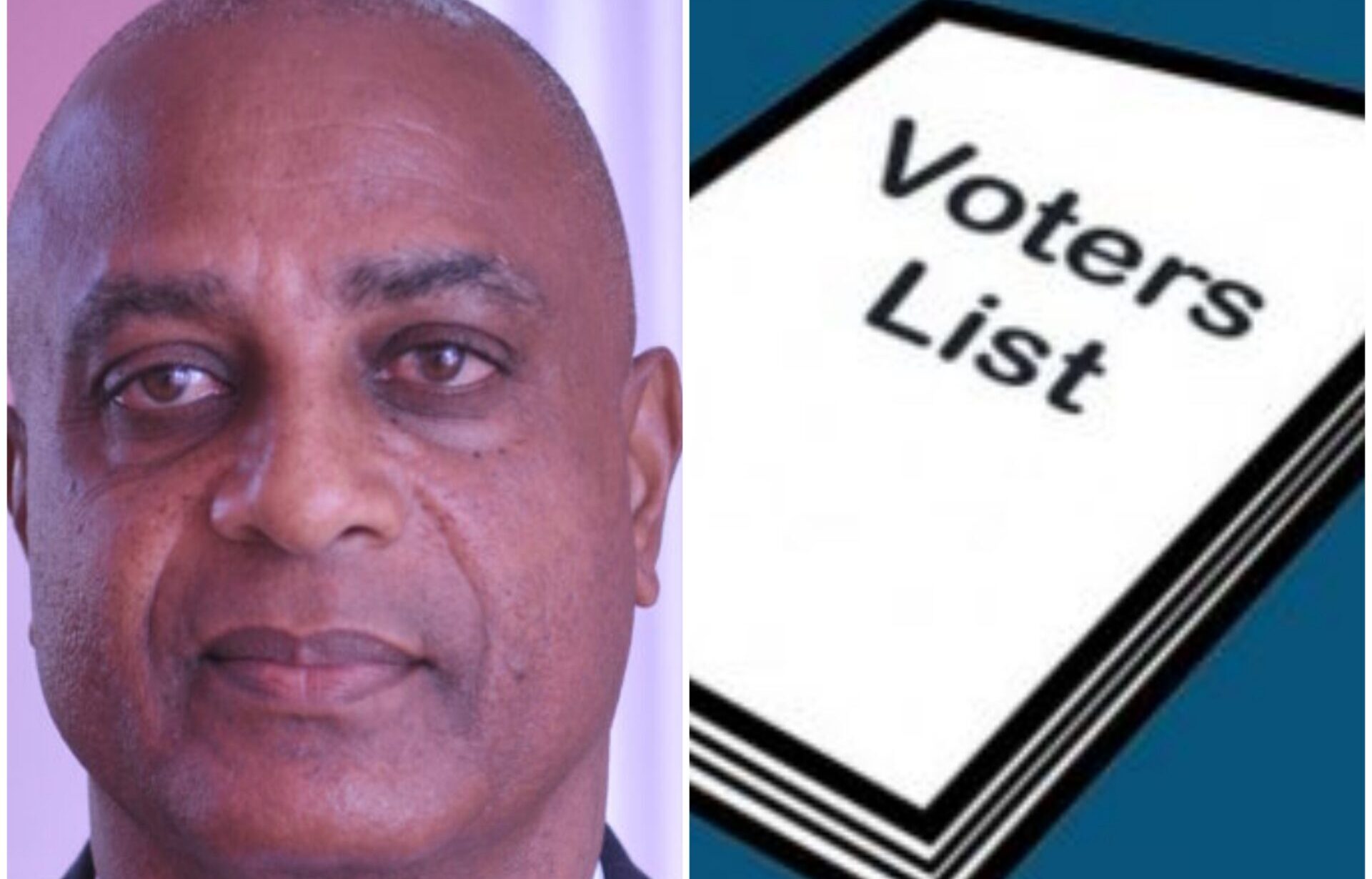
As the United Workers Party (UWP) contender for the Roseau North Constituency, former parliamentary representative Daniel Lugay has emerged as a prominent critic of Dominica’s ongoing voter confirmation process, leveling serious claims of procedural mismanagement, unnecessary barriers for eligible voters, and potentially inequitable treatment of supporters across political lines.
Lugay first flagged the issue to investigative journalist Richie Ferrol during an interview this Wednesday, outlining how his team’s preliminary review uncovered a glaring gap: roughly 500 constituents from Roseau North who had formally submitted voter confirmation applications were entirely missing from the first official list of confirmed voters published on the Electoral Office’s public website. Following this discovery, Lugay says he reached out to the Electoral Commission on multiple occasions to flag the discrepancy, but has yet to receive a resolution that addresses his concerns.
Beyond the missing names, Lugay detailed widespread accounts of confusing, poorly communicated procedural hurdles that have left eligible applicants stranded mid-process. He pointed to his own wife’s experience as a clear example: she submitted her confirmation application at the exact same time as Lugay, only to be notified later that she was required to produce a marriage certificate to move forward. Lugay questioned why electoral officials, who already had his wife’s contact information on file, failed to reach out immediately to request the missing documentation when she first submitted her materials. While the certificate was ultimately provided and her ID card was issued, the delay and lack of proactive communication underscores deeper systemic issues, he argued.
Another unnecessary barrier Lugay highlighted involves requirements for travel documentation. He says eligible voters who hold valid, unexpired traditional passports are still being ordered to upgrade to machine-readable electronic passports before their confirmation can be finalized, a step he calls completely unjustified.
In Lugay’s view, the drawn-out, overly complex process – which has stretched on for more than a year, far longer than voter registration drives in larger Caribbean nations that complete the work in mere months – is directly responsible for the low number of confirmed voters on the latest electoral roll. He added that widespread voter frustration with the cumbersome process has likely driven down turnout enthusiasm, noting that roughly 40,000 Dominicans cast ballots in the 2019 General Election. Many eligible voters, he claimed, have essentially “revolted” against the unnecessarily convoluted confirmation exercise by opting out of the process entirely.
The most serious allegation Lugay put forward centers on unequal access to assistance for voters with expired documentation. He claims that supporters of the ruling Dominica Labour Party are receiving targeted help to secure new passports when their old documents expire, and has raised questions about where the funding for this assistance comes from. Without presenting concrete public evidence, Lugay suggested that public state resources may be improperly diverted to fund this partisan support.
He stressed that any taxpayer-funded assistance for passport acquisition should be extended equally to all Dominican citizens, regardless of which political party they support. “If you’re paying for passports, you’re paying for passports, and you make passports available to every citizen of the Commonwealth of Dominica,” Lugay said. He added that universal, equal access to this support would create a fair, level playing field for all candidates and ensure no eligible voter is disenfranchised simply because they face barriers to obtaining required documentation.