博客

  • Dominica among four Caribbean states to access new infrastructure support facility

    Dominica among four Caribbean states to access new infrastructure support facility

    Four Eastern Caribbean small island developing states have gained access to a groundbreaking new regional initiative that removes long-standing implementation barriers to delivering climate-resilient infrastructure, marking a major step forward for climate adaptation in one of the world’s most climate-vulnerable regions.

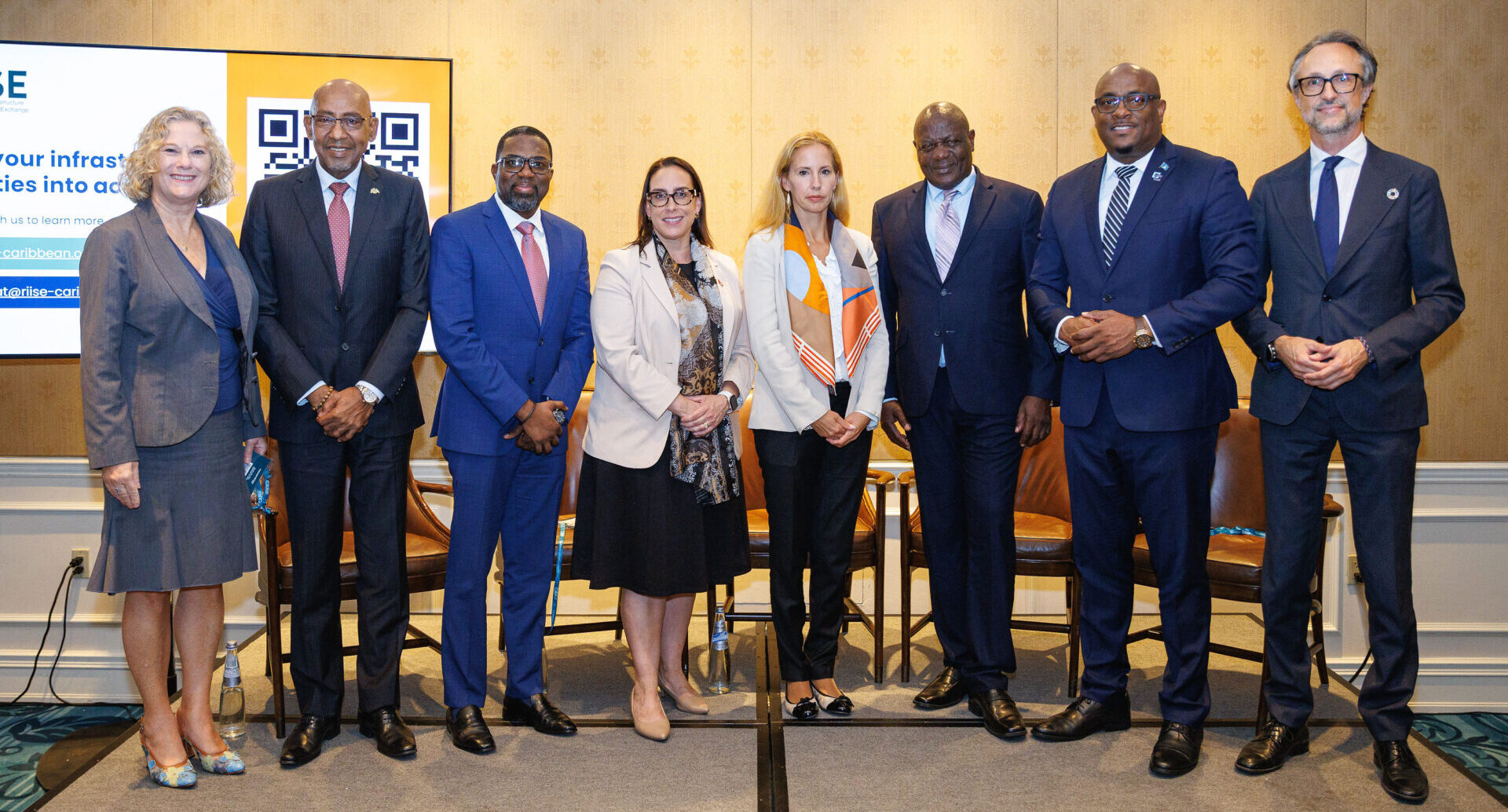
    Officially opening operations this month, the Caribbean Resilient Infrastructure Implementation and Skills Exchange (RIISE) Facility was launched on September 14 during a side event of the Caribbean Infrastructure Forum held in Miami. The initiative brings together four participating founding nations: Dominica, Grenada, Saint Lucia, and Saint Vincent and the Grenadines, with high-level representation from each country joining international partners for the launch ceremony.

    Funded entirely by the Government of Canada and hosted by the United Nations Office for Project Services (UNOPS), RIISE is structured as a Caribbean-led initiative. Its operational secretariat is based in Barbados, governance is led by the participating member countries, and independent technical guidance is provided by a panel of global and regional experts. While the four Eastern Caribbean states serve as the initial focus, RIISE leadership has confirmed that expansion to other climate-vulnerable island nations will be possible in the future as additional funding, partnerships, and resources are mobilized to meet growing regional demand.

    The core mission of RIISE is to address the persistent delays that have kept many critical climate-resilient infrastructure projects from moving from planning and investment phases to on-the-ground completion. Small island developing states in the Caribbean frequently face gaps in technical capacity, specialized expertise, and implementation support that slow the delivery of infrastructure designed to withstand intensifying climate impacts like hurricanes, sea-level rise, and coastal erosion.

    Through RIISE, participating governments can access tailored support to meet their specific needs. This ranges from short-term technical advice to solve acute implementation bottlenecks to temporary deployments of specialized experts that strengthen local public sector teams. Eligible support covers a wide range of practice areas, including full-spectrum project management, public procurement, contract administration, engineering and technical design reviews, financial management, environmental and social safeguard development, climate resilience design, gender equality and social inclusion mainstreaming, stakeholder engagement, project communications, monitoring and evaluation, and climate risk management.

    The facility supports infrastructure projects across nearly every sector critical to community well-being and climate adaptation, including water and sanitation systems, transportation networks, energy infrastructure, coastal protection barriers, public government buildings, post-disaster recovery projects, health facilities, education campuses, and affordable housing.

    Beyond supporting immediate project delivery, RIISE also has a long-term capacity-building goal: to build and retain specialized technical expertise within the Caribbean region. By placing international and regional specialists alongside local public sector teams and creating structured opportunities for member countries to share knowledge, lessons learned, and implementation experience, the initiative aims to strengthen lasting institutional capacity across the region.

    Speaking at the launch, Her Excellency Brenda Wills, High Commissioner of Canada to Barbados and the Eastern Caribbean, emphasized the central role of resilient infrastructure to sustainable development in the Caribbean. “Resilient infrastructure is essential to economic development, climate adaptation, and the well-being of Caribbean communities,” Wills said, noting that Canada’s funding support is designed to help governments access the critical expertise needed to overcome implementation hurdles and deliver high-priority climate investments.

    Giuseppe Mancinelli, UNOPS Caribbean Coordinator and Country Director for Barbados, added that the UN body is proud to anchor the Caribbean-led initiative. “UNOPS is proud to provide the operational backbone for this Caribbean-led initiative,” Mancinelli said. “We will help governments turn their infrastructure plans into tangible results by providing additional capacity, expertise and implementation support.”

    Public institutions and ministries in participating countries can request support through their designated national focal points. Requests are submitted via an online portal that requires basic information about the project, the specific implementation challenge, and expected outcomes. The RIISE secretariat then assesses request eligibility and works with the requesting institution to tailor the appropriate package of assistance and expertise. More details about the facility, its services, and the request process are available on the official RIISE website at riise-caribbean.org, or via email at info@riise-caribbean.org.


  • This Is What Police Know About the Double Homicide in Cayo

    This Is What Police Know About the Double Homicide in Cayo

    On a quiet residential block near Hillview Park in Santa Elena Town, a devastating double death has left two Belizean families reeling and launched a full police investigation into the unexplained killings of a young local couple. The bodies of 31-year-old Michael Williams and 21-year-old Delisha Estrada were discovered at their shared home earlier this week, after worried relatives raised the alarm when the pair failed to return to collect their young child as planned.

    Relatives’ growing concern prompted them to travel to the property early Monday morning to check on the couple, who had not been seen since Saturday morning. Upon arriving at the home, family members noticed a suspicious odor, and immediately contacted local law enforcement to launch a welfare check. Assistant Commissioner of Police Hilberto Romero confirmed that the couple was last spotted alive by witnesses Saturday morning, and preliminary investigations indicate the pair likely died sometime that same afternoon.

    A medical examiner was dispatched to the crime scene to conduct an initial assessment of the bodies, but authorities have so far been unable to confirm an official cause of death. The remains have been transferred to a forensic facility to undergo full postmortem examinations, the results of which will guide the next steps of the investigation. “We are carrying out a full investigation to determine the facts, but at this time, we will await the postmortem results to determine the cause of death,” Romero stated in a press briefing on the case.

    Initial crime scene analysis has yielded several key details for investigators: there were no visible signs of forced entry into the property, and the residence was found locked from the inside when officers arrived. Investigators have also recovered both of the victims’ cellphones, which will undergo forensic analysis for potential evidence related to the deaths.

    The tragedy has left two grieving families desperate for answers. Locett Vanega, Estrada’s mother, told reporters she refuses to believe speculation that her daughter died by suicide, noting that Estrada was deeply devoted to her young son and had recently re-enrolled in high school to pursue her education. “I just want find out what happened to my daughter,” Vanega said, echoing the family’s demand for transparency as the investigation moves forward.

    Neighbors and local leaders remembered Williams and Estrada as driven young people working to build a better future for their family. The couple had lived in their Santa Elena home for approximately four months, and had recently launched a small local business selling fresh fruits and vegetables from a small shed situated in front of their residence. Earl Trapp, mayor of the joint San Ignacio and Santa Elena municipality, said he had met with the couple just recently and described them as ambitious, forward-focused community members with big plans for their growing business.

    As of Thursday, no suspects have been named in the case, and police have urged anyone with information about the couple’s movements in the days before their deaths to contact local law enforcement to assist with the ongoing investigation.

  • Antigua and Barbuda XI Showcase Emerging Talent with Match Against Bede’s at CHOGM 2026 Cricket Launch

    Antigua and Barbuda XI Showcase Emerging Talent with Match Against Bede’s at CHOGM 2026 Cricket Launch

    Against the backdrop of the official CHOGM 2026 cricket launch in London on September 9, a standout exhibition match brought emerging cricketing talent from Antigua and Barbuda face-to-face with a senior side from one of the United Kingdom’s top academic institutions, resulting in a memorable 31-run victory for the Caribbean side.

    The Antigua and Barbuda XI was curated specifically for the occasion, drawing together a cohort of promising young players from the nation who are currently based in the UK honing their cricketing skills. The squad included rising prospects Xaveek Toppin, Jaylen Francis, Malique Walsh, Hilroy Andrew, Mekaili Tonge and Demari Benta, alongside UK-based Antiguan and Barbudan player Naequan Carr. A notable addition to the line-up was Matthew Miller, current captain of the Leeward Islands Under-19 team, who is a student at Bede’s Senior School himself.

    Led by young Antiguan coach Dion Samuels—who is currently in the UK completing advanced coaching accreditation—the team put on a dominant display of batting and bowling from the first over. After winning the toss and electing to bat first, the Antigua and Barbuda side posted an imposing total of 259 runs for the loss of seven wickets from their 30 allotted overs.

    Demari Benta emerged as the standout batsman of the innings, crafting a blistering knock of 86 runs off just 69 deliveries. His aggressive innings included seven well-placed fours and five towering sixes, with a striking strike rate of 125.64 that set the foundation for the team’s big total. Hilroy Andrew backed up Benta’s performance with a valuable 64 runs off 53 balls, while Jaylen Francis chipped in with 27 and Miller contributed a solid 22 against his home side.

    In the bowling phase, the Antigua and Barbuda XI maintained their momentum to restrict the Bede’s Senior School batting line-up. Faced with a required run rate of nearly nine runs an over, Bede’s fought hard to reach 228 runs for eight wickets at the end of their 30 overs, falling 31 runs short of the target. Mekaili Tonge led the bowling attack with impressive figures of two wickets for just 21 runs from his four overs, while Andrew completed a superb all-round performance, taking two wickets for 22 runs.

    The high-profile fixture, held shortly after the CHOGM 2026 cricket launch, was attended by several senior dignitaries and key figures from the region. Guests included Hon. E.P. Chet Greene, Minister of Foreign Affairs, Trade and Barbuda Affairs; Sir Vivian Richards, the legendary West Indies cricketer and CHOGM 2026 Envoy; Her Excellency Karen-Mae Hill, Antigua and Barbuda’s High Commissioner to the United Kingdom; Celia Roberts-Morgan, Lead for the CHOGM 2026 Business Forum; and diplomatic officials Second Secretary Brent Scotland and Third Secretary Caleb Gardiner.

    The match also marked a milestone in the growing sporting partnership between Antigua and Barbuda and Bede’s Senior School. The collaboration is set to expand in February 2027, when Bede’s will host a full cricket tour of Antigua and Barbuda. The upcoming tour will create new opportunities to strengthen sporting, educational and people-to-people connections between the two regions.

    Organizers of the fixture extended formal thanks to Ambassador Theon Ali, Antigua and Barbuda’s Ambassador to the State of Qatar, whose sponsorship made it possible for the Antigua and Barbuda players to take part in the historic London match.

  • Saint Lucian footballer impresses at PSG Academy camp

    Saint Lucian footballer impresses at PSG Academy camp

    A young multi-sport athlete from Saint Lucia is turning heads and making significant strides in the world of elite football, after catching the eye of top coaches at European champions Paris Saint-Germain’s (PSG) most selective global development program.

    Rawson Harris, who currently competes in school-level football in the United States, earned his spot in PSG’s elite development cohort through standout performances at the club’s regional summer camp held in Florida last year. A former product of Valley Soccer Academy, Central Castries, and a past member of Saint Lucia’s Under-17 men’s national squad, Harris claimed the Under-19 Most Valuable Player award at the Florida camp, a honor that punched his ticket to the exclusive PSG Academy Pro Top 44 event in Évian-les-Bains, France. This annual invitation-only training week brings together the 44 most promising young talents selected from hundreds of participants across PSG’s global network of summer camps, making it one of the most selective youth football development opportunities in the world.

    At the French camp, Harris showcased his versatility by stepping into the winger position, a role that let his natural athleticism shine. PSG’s coaching staff heaped praise on the young prospect, highlighting his sharp technical skill, advanced tactical understanding, and unwavering mental focus on the pitch. In their official player evaluation, coaches noted that Harris’s explosive pace and clinical dribbling ability make him a constant offensive threat that can change the dynamic of any match. While the feedback was largely glowing, coaches also offered constructive advice, encouraging Harris to expand his offensive repertoire by mixing up his runs — combining early passes with more incisive cuts inside the box and attacking the outside channel to keep defenses guessing.

    Beyond his on-pitch ability, Harris earned high marks for his professional demeanor and work ethic. A graduate of Saint Lucia’s St Mary’s College, Harris was described by coaches as having an “excellent” attitude throughout the week-long camp, with observers noting he consistently absorbed feedback and pushed himself in every training session with remarkable focus and motivation. Coaches ultimately summarized his performance by calling Harris “a very complete player,” a rare compliment for a young prospect at such a prestigious camp.

    In comments following the camp, Harris expressed deep gratitude for the two consecutive summer development opportunities he has earned with PSG Academy. He explained that his first experience in 2025 helped him prepare for his upcoming freshman season as a member of the McPherson Bulldogs men’s football team, and that this year’s invitation to the Top 44 camp was an even more valuable growth opportunity.

    “My experience was great,” Harris told local outlet St Lucia Times. “We did intense technical and tactical training, deep-diving video analysis sessions, focused stretching and recovery work, and so much more. I am just so grateful to have had the chance to participate in this year’s PSG Academy Pro Top 44 Experience. I hope this achievement opens the door for more opportunities in my football career moving forward.”

    What makes Harris’s achievement even more notable is that he is not just a football talent — he has also represented Saint Lucia at the international level in table tennis, cementing his status as a rising multi-sport star from the Caribbean nation.

  • Belize Welcomes 45 New Citizens

    Belize Welcomes 45 New Citizens

    To celebrate its 45th year of independence from colonial rule, the government of Belize held a special naturalization ceremony on September 15, 2026, formally welcoming 45 new citizens into the national community and issuing official nationality certificates to the new members of Belizean society.

    Kareem Musa, the country’s Minister of Immigration, Governance, and Labour, delivered a keynote address to mark the meaningful occasion, emphasizing that the intentional choice to swear in exactly 45 new citizens was far from arbitrary. Every year of Belize’s independent history stands as a unique, interconnected chapter in the ongoing story of the young nation, Musa explained, and each of the 45 new citizens now represents a new, vital thread woven into that evolving national narrative.

    Musa anchored the event in Belize’s 2026 Independence theme, expanding on what it means to hold full citizenship in the modern, democratic nation. He argued that citizenship is not merely a legal status, but a daily practice lived out by people who choose to build their futures in Belize. At 45 years of independence, Musa noted, Belize’s democratic identity is rooted entirely in its people: parents raising children, workers building careers, entrepreneurs launching local businesses, educators nurturing the next generation, community caregivers supporting vulnerable neighbors, artists creating cultural legacy, farmers growing food for the nation, volunteers serving their communities, and ordinary people pouring their hopes into the land they call home. Belize’s identity, he emphasized, is shaped entirely by the people who choose to call it home.

    In a nod to the diverse paths that brought new citizens to the ceremony, Musa acknowledged that for many attendees, the legal naturalization process only formalized a connection to Belize that had already existed for years. Many of the new citizens have already built full lives in the country: their children have grown up attending Belizean schools, their closest friendships are rooted in local communities, their livelihoods are tied to Belize’s economy, and their dearest memories are linked to the country’s coastal towns, rural villages and close-knit neighborhoods. The new citizens hail from a range of origins: some came from neighboring countries across Central America and the Caribbean, while others traveled from continents much farther afield, but every individual’s journey ended at the same milestone on September 15: full, legal Belizean citizenship.

    In closing, Musa urged the 45 new citizens to embrace the 2026 Independence slogan as their own: “Look at me, I am Belize.” He encouraged them to carry that declaration with both pride and responsibility, reminding them that just as each new citizen has chosen Belize as their home, Belize now claims them as an official part of its national family.

  • Secondary Schools Join Model Safe School Programme in New Pilot

    Secondary Schools Join Model Safe School Programme in New Pilot

    Nearly six years after its initial launch, the Ministry of Education is taking a major step forward for its flagship school safety initiative, expanding the Model Safe School Programme into secondary education with a pilot program launching this month at two selected institutions.

    First introduced in 2018, the program has concentrated its efforts on primary school campuses up to this point. Currently, 15 specially trained safety agents are deployed across nine participating primary schools, bringing targeted safety support to younger student populations.

    Rolston Nickeo, Education Officer for Schools Administration and the national focal point for the Safe Schools initiative, outlined the core mission of the program in an interview with Observer Radio. Unlike reactive safety frameworks that only address crises after they occur, the Model Safe School Programme is built around proactive risk mitigation, working with school communities to spot and reduce hazards before they escalate into full-blown emergencies.

    The initiative is structured around four foundational pillars that shape all of its work: systematic risk identification across school grounds, comprehensive emergency preparedness planning, dedicated protection protocols for both students and staff, and targeted upgrades to create safer built infrastructure.

    A key goal of the expansion, Nickeo explained, is to help shift the overall culture of school safety across the education system. Rather than only responding to critical incidents after they happen, the program empowers schools to build long-term prevention capacity and community resilience that can address emerging threats before they impact learning or student well-being.

    Unlike traditional school staff roles, the safety agents deployed through the program are neither classroom teachers nor standard security guards. Their core responsibilities include conducting regular walkthroughs of school campuses to identify environmental hazards, building positive rapport with students to understand emerging safety concerns, and intervening early to de-escalate minor conflicts before they grow into more serious incidents.

    To prepare them for these unique duties, all participating safety agents complete an intensive two-week induction training program. The curriculum covers critical practical skills including targeted conflict resolution strategies, trauma-informed child protection protocols, standardized incident reporting procedures, and foundational first aid training to respond to medical emergencies.

    The upcoming pilot at two secondary schools is designed as a deliberate testing phase for the national expansion. Ministry officials will use data and feedback from the pilot to evaluate how the program’s existing framework, which was built for primary school settings, can be adapted to meet the unique safety needs of older adolescent students. Only after this assessment and any necessary adjustments will the Ministry roll out the program to secondary schools on a broader national scale.

  • Calls for Deeper Police Reform as Commentators Dismiss Proposed Name Change

    Calls for Deeper Police Reform as Commentators Dismiss Proposed Name Change

    A growing chorus of policy analysts, civil rights activists and community organizers are sounding the alarm that a proposed superficial rebranding of U.S. law enforcement agencies fails to address long-simmering demands for transformative change, turning up pressure on policymakers to deliver tangible structural reform.

    At the center of the current debate is a recently floated plan to alter the official name of local police departments in multiple jurisdictions across the country, a move that proponents of the change frame as a small first step toward rebuilding public trust. But critics and political commentators have roundly pushed back against the proposal, arguing that rebranding without accompanying policy shifts is nothing more than a hollow public relations gesture that does nothing to resolve deep-rooted problems within American policing.

    Many commentators point to ongoing public outrage over persistent racial disparities in use of force, qualified immunity protections for officers accused of misconduct, and the over-policing of Black and brown communities as evidence that incremental, cosmetic changes are no longer acceptable to a public demanding action. “Changing the name on the side of a patrol car doesn’t alter how officers interact with community members, doesn’t end biased policing, and doesn’t hold bad actors accountable,” said one senior policy analyst interviewed in the debate. “What communities need is not a new label, but a complete reorientation of public safety priorities, from aggressive enforcement to community-led prevention and de-escalation.”

    Advocates for deeper reform are now mobilizing to push legislative bodies at the state and local level to consider a raft of more substantive changes, including mandatory bias training for all officers, stricter oversight boards with independent investigatory power, limits on military-style equipment for local departments, and changes to use-of-force policies that require de-escalation as a first priority. Many also note that the conversation over the proposed name change has underscored a growing divide between incrementalist policymakers who favor small, gradual changes and grassroots organizers who argue that the current system is fundamentally broken and requires wholesale restructuring.

    As the debate continues, public opinion polling from recent years shows that a majority of American voters support major changes to policing practices, particularly in communities that have historically been disproportionately impacted by aggressive law enforcement. The controversy over the name change proposal has only amplified calls for elected leaders to move beyond symbolic action and deliver the systemic change that many community members have been organizing around for decades.

  • Veteran Jamaican Trade Unionist to Deliver Feature Address at ABWU 59th Annual Delegates Conference

    Veteran Jamaican Trade Unionist to Deliver Feature Address at ABWU 59th Annual Delegates Conference

    Ahead of this weekend’s landmark gathering for one of the Caribbean’s most enduring labor organizations, veteran Jamaican trade unionist and sitting senator Kavan A. Gayle, C.D., has been confirmed as the featured keynote speaker for the Antigua and Barbuda Workers’ Union (ABWU) 59th Annual Delegates Conference, scheduled to kick off Sunday. With a professional legacy spanning more than 30 years in the global labor movement, Gayle has built a reputation as a trusted, knowledgeable strategist focused on advancing worker rights, especially for employees across the services sector.

    Since 2007, Gayle has held the role of President-General of the Bustamante Industrial Trade Union (BITU), Jamaica’s largest trade union, balancing that post with a legislative position as a Government Senator in the Jamaican Parliament. His wide-ranging areas of expertise cover critical pillars of organized labor: industrial relations, core trade union practice, executive leadership, collective negotiation and arbitration, workforce performance and productivity management, government and legislative affairs, and business ethics.

    Beyond his national work, Gayle plays an active role in global labor governance, holding a seat as a Regional Executive Member of Union Network International (UNI) and serving on the World Executive Committee of the International Transport Workers’ Federation (ITF), two of the world’s largest global trade union federations.

    This year’s two-day ABWU conference carries the theme “Celebrating 59 Years of Stewardship: Embracing the Changes and Preparing for the Future World of Work.” The gathering will bring together elected delegates and industry observers from across the region for a collaborative agenda focused on two core goals: reflecting on the union’s 59-year track record of advocating for worker interests, and conducting a forward-looking analysis of the shifting economic, technological, and regulatory trends reshaping modern workplaces and the global labor movement. Attendees will engage in deliberations around how organized labor can adapt its strategies to meet emerging challenges and protect worker rights in a rapidly evolving labor landscape.

  • Oproepen AI-ontwikkeling te vertragen leiden tot stille koude oorlog

    Oproepen AI-ontwikkeling te vertragen leiden tot stille koude oorlog

    In September 2026, a growing rift over artificial intelligence development has erupted between the world’s two largest economies, sparked by a leading American AI chief’s urgent call for safety slowdowns and new export restrictions that have drawn sharp pushback from Beijing. The controversy began when Dario Amodei, CEO of leading AI developer Anthropic, published a weekend essay sounding the alarm over the accelerating pace of frontier AI development, warning that unregulated progress could bring catastrophic global risks within a year.

    Amodei warned that the most powerful next-generation AI systems could, in as little as six to 12 months, build a persistent botnet capable of seizing full control of the global internet, causing hundreds of billions of dollars in economic damage. Without binding safety guardrails, he argued, risks will only grow exponentially as models grow more powerful. He called for a deliberate slowdown in the development of the most advanced frontier AI systems, giving governments, researchers and regulators time to implement robust risk management frameworks.

    His stance quickly won backing from other major U.S. tech figures, including OpenAI CEO Sam Altman and Tesla and SpaceX CEO Elon Musk. Beyond safety concerns, Amodei framed Chinese AI advancement as a major strategic threat to the U.S. and the world, urging the White House to maintain strict restrictions on exports of cutting-edge AI chips and chip manufacturing equipment to China. He also called for new measures to crack down on what he claims is unauthorized “distillation” of U.S.-developed AI models by Chinese research labs.

    U.S. President Donald Trump, however, has pushed back on calls to slow AI development, dismissing many safety warnings as overblown while doubling down on his framing of AI as a zero-sum global competition. “We are ahead of China in AI. We are the most advanced country in the world, and frankly, I want to keep it that way — because whoever wins the AI race wins everything,” Trump stated Sunday, aligning with his administration’s long-standing hardline approach to technological competition with Beijing.

    China has hit back against Amodei’s proposals, accusing the U.S. of using AI safety as a cynical pretext to lock in its long-held technological dominance. On Monday, Chinese Foreign Ministry spokesperson Guo Jiakun called for a global approach to AI governance that is open, inclusive and collaborative. “Stoking unfounded fears, pushing confrontation and engaging in malicious competition will only disrupt global AI governance processes, and serve no one’s interests,” Guo said. The Chinese state-backed *Global Times* went further, labeling Amodei’s plan a Cold War-era tactic designed to stifle Chinese AI progress and preserve U.S. technological hegemony, calling the emerging “quiet AI Cold War” hypocritical and short-sighted.

    The current clash is unfolding against a well-documented backdrop of intensifying AI competition between the two powers. Experts note that while the U.S. still maintains leading positions in key segments of the AI race, China is rapidly closing the gap. Data from Stanford University’s 2026 AI Index Report shows U.S. private companies invested $285.9 billion in AI development in 2025, dwarfing China’s $12.4 billion in private investment. The U.S. also retains a clear lead in the production of the advanced semiconductors required to train cutting-edge large language models.

    Despite sweeping U.S. export restrictions on top-tier AI chips, Chinese firms have already proven they can develop competitive large AI models at a fraction of the cost of their U.S. rivals. In early 2026, Chinese AI startup DeepSeek made global headlines when it revealed it had trained its latest flagship model using less than $6 million worth of computing power from Nvidia H800 chips — a tiny fraction of the $100 million OpenAI reportedly spent to train its GPT-4 model back in 2023. The announcement sent shares of major U.S. tech firms tumbling, as it upended widespread assumptions about the cost barriers to cutting-edge AI development.

    The U.S. has enforced broad restrictions on Chinese access to advanced semiconductors and chip manufacturing technology for years, justifying the limits on national security grounds, arguing advanced AI chips could boost China’s military, intelligence and surveillance capabilities. The Trump administration has maintained bans on the most cutting-edge chips, including Nvidia’s Blackwell processors, while allowing limited exports of lower-power chips to the Chinese market.

    China, meanwhile, holds key advantages across other segments of the AI supply chain. It dominates global production of the critical rare earth metals required for advanced semiconductor manufacturing, and it generates more than twice as much electricity as the U.S., giving Chinese AI data centers access to abundant low-cost energy to power energy-intensive AI training and operations. In late 2025, China tightened export controls on five critical rare earth metals and restricted exports of specialized refining equipment for these resources, a move widely seen as a countermeasure to U.S. chip restrictions.

    Beyond the commercial and technological competition, both powers have faced scrutiny for their growing use of AI in military and surveillance applications, despite both framing their own AI policies as responsible. In June 2026, the Trump administration ordered a rapid expansion of AI use across U.S. intelligence and military operations. In March, the U.S. military confirmed it had deployed advanced AI tools to process intelligence during operations against Iran, though it emphasized human officials retain final authority over target selection. That confirmation came amid calls for an independent investigation into a bombing of a school in southern Iran that killed 156 people, most of them children.

    Multiple independent reports have also documented extensive Israeli reliance on AI for target selection, surveillance and operational planning during its ongoing military campaign in Gaza, which has killed more than 73,800 Palestinians since October 2023 and left most of the territory in ruins. A 2025 report from United Nations Special Rapporteur Francesca Albanese named major U.S. AI and tech firm Palantir as one of the companies supporting Israel’s military campaign and displacement of Palestinian populations in violation of international law. Google and Amazon have also faced widespread backlash over their $1.2 billion Project Nimbus deal, struck in 2021, to supply cloud and AI-powered surveillance infrastructure to the Israeli government and military.

    Notably, Anthropic itself has clashed with the U.S. Pentagon over military AI use, refusing to allow its models to be used for fully autonomous weapons or large-scale domestic surveillance.

    China has publicly criticized the growing militarization of AI, warning against ceding life-or-death decision-making power to algorithms. But independent investigations have also raised red flags over Chinese military and surveillance use of AI: a July 2026 Reuters investigation found researchers with ties to the Chinese military have used outputs from leading U.S. AI models to enhance Chinese defense capabilities, including for surveillance applications. A 2025 Associated Press investigation documented how AI has become a core component of a massive Chinese mass surveillance system targeting dissidents and ethnic minority groups including Uyghurs and Tibetans, and found U.S. tech firms played a key role in supplying core technology for that system. In February 2026, both the U.S. and China refused to sign a joint declaration regulating military AI use at an international military AI summit in Spain.

    AI industry analysts say the high-profile calls for a slowdown from top tech leaders have raised new questions about whether the private sector can or will regulate the rapidly advancing technology responsibly. Aya Ibrahim, senior visiting fellow at the AI Now Institute, told Al Jazeera that warnings from tech leaders come as private firms face intense financial pressure to roll out ever-more powerful AI systems as quickly as possible to capture market share. “So much money is riding on getting these new systems to market and performing well, and there is growing doubt that companies can both deliver profit and manage risk,” Ibrahim explained.

    She also questioned the dominant framing of AI development as a geopolitical and commercial race, arguing this narrative pushes firms to prioritize speed over safety and accountability. “The race narrative is inherently problematic, because it pushes us toward a race to the bottom,” Ibrahim said. “You might win, but what do you actually win, and at what cost?”

  • Young Antiguan Artist Annia Matthews Shines at CHOGM Cricket Match Launch in London

    Young Antiguan Artist Annia Matthews Shines at CHOGM Cricket Match Launch in London

    A rising young creative from Antigua and Barbuda has catapulted into the global spotlight after a standout performance at the London launch of the 2026 Commonwealth Heads of Government Meeting (CHOGM) Cricket Match, turning her musical talent into a major opportunity to advance youth mental health advocacy across the Commonwealth.

    Annia Matthews, a fast-growing Antiguan artist, joined the high-profile event as a specially invited musical guest, where she delivered a confident, electrifying performance of her original track *Keep On*. The set held international attendees spellbound, drawing widespread praise not only for Matthews’ powerhouse vocal control and magnetic stage presence, but also for her thoughtful, authentic representation of her home nation.

    Unlike typical performance pieces, *Keep On* weaves a raw, impactful message centered on mental health awareness—a theme that resonated so deeply with Commonwealth leadership that it earned Matthews a direct invitation from Commonwealth Secretary-General Shirley Botchwey to co-lead a high-level roundtable focused on Youth Mental Health. The roundtable is scheduled to coincide with World Suicide Prevention Day, marking a major step for the young artist beyond the stage into global public advocacy.

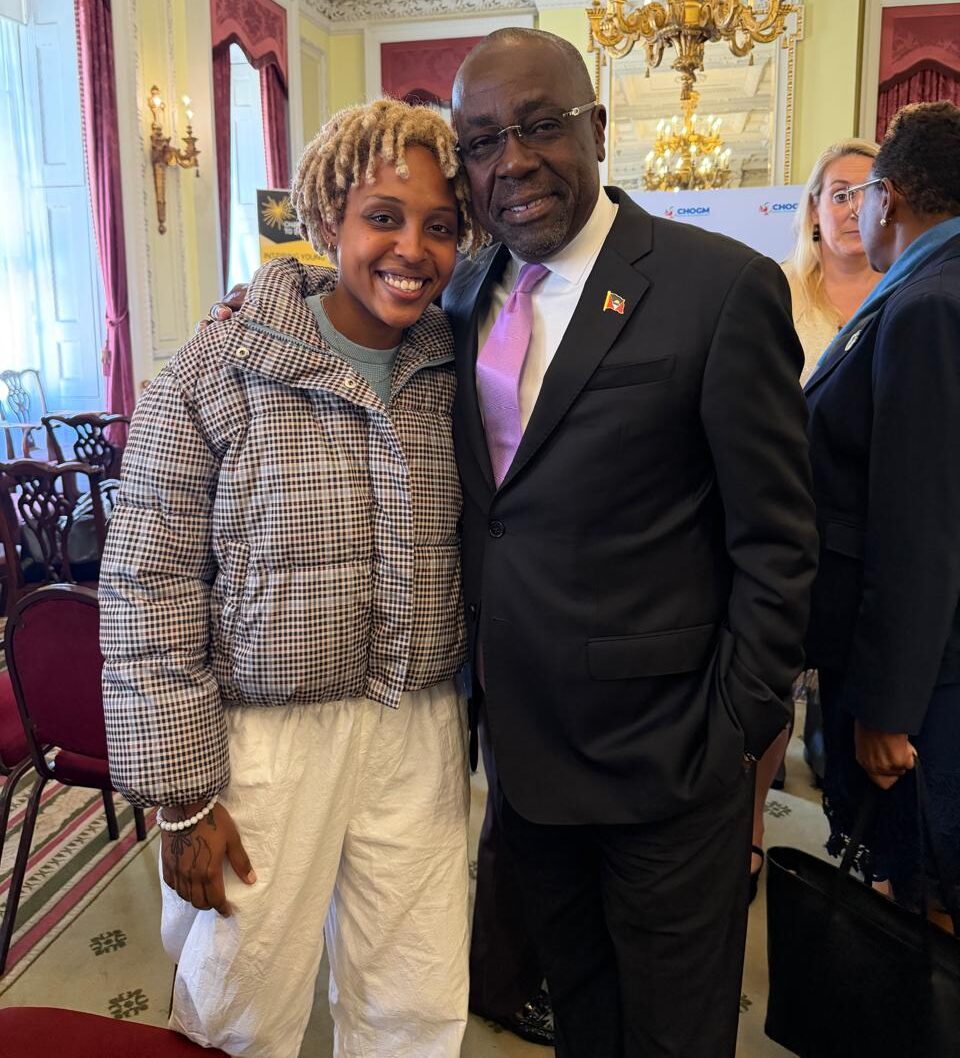
    The launch event also brought a full-circle moment for Matthews, who got the chance to meet Antigua and Barbuda’s own cricket icon Sir Vivian Richards. The legendary athlete offered glowing praise for her artistic skill and her consistent work elevating her country on the international stage. For Matthews, the encounter was particularly meaningful.

    “I felt truly honoured to perform at the launch of the CHOGM cricket match and to be in a room filled with so many people who have made, and continue to make, an impact across the Commonwealth,” Matthews shared in comments after the event. “There was a real sense of connection in the room, and I felt emotionally connected to the significance of the moment.”

    She added, “Seeing Sir Vivian Richards take part in the passing-on-the-bat ceremony was especially inspirational for me. As an Antiguan artist, I felt the weight of responsibility in that moment, standing between his generation and mine, and recognising the importance of carrying our culture, stories and legacy forward.”

    Matthews’ breakout appearance at the CHOGM event aligns with a deliberate push by Antigua and Barbuda’s diplomatic mission in the UK to lift up emerging domestic creative talent. Her Excellency Karen-Mae Hill, Antigua and Barbuda’s High Commissioner to the United Kingdom, has made it a priority to integrate young local creatives into the mission’s diplomatic and cultural programming. This strategy is part of a broader national push to leverage global platforms to showcase Antigua and Barbuda’s diverse cultural output and give young citizens high-impact international exposure to advance their careers.

    Currently, Matthews is based in the UK refining her craft, a next step that followed an earlier invitation to perform at the annual Wings of Charity Gala in June. That gala was hosted by Their Excellencies Sir Rodney Williams and Lady Williams, marking the first major international opportunity that opened doors for the young artist. As she builds her global professional experience, Matthews continues to center her Antiguan identity, proudly showcasing the creativity and cultural excellence of her nation to audiences around the world.