博客

  • OECS graduates celebrated at recognition ceremony in Morocco

    OECS graduates celebrated at recognition ceremony in Morocco

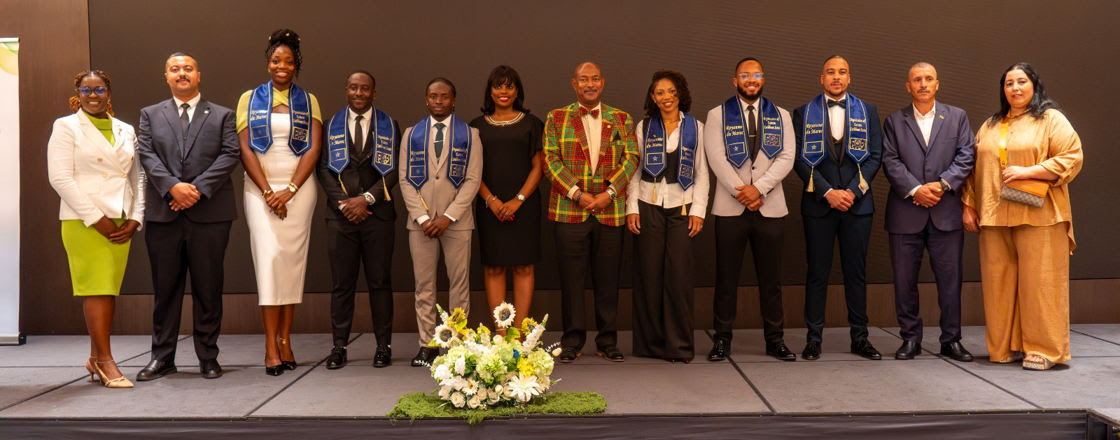
    On Saturday, September 12, the Organisation of Eastern Caribbean States (OECS) hosted a meaningful graduate recognition ceremony at the Rabat Marriott Hotel in Morocco, to honor hundreds of OECS students who successfully completed their academic programs in the North African nation. Aligning with this year’s theme “Through Perseverance Comes Triumph”, the event welcomed in-person attendees including graduates, diplomatic representatives and senior education officials, while also allowing graduates unable to travel to the venue to participate virtually via a public YouTube livestream.

    Beyond simply marking the end of each graduate’s academic journey, the ceremony centered on celebrating the extraordinary resilience of these young scholars, who left their small home islands in the Eastern Caribbean to pursue higher education thousands of kilometers from their families and communities. Navigating a new cultural landscape, unfamiliar social norms, and a vastly different higher education system, these students overcame significant geographic and personal hurdles to reach this milestone. The ceremony opened with remarks from OECS Ambassador Ian Queeley, who framed graduates’ academic success as both an achievement and a calling. He urged the newly minted degree holders to translate their hard-won knowledge, specialized skills and cross-cultural experiences into tangible positive action for their home communities. Echoing the event’s core theme, Queeley reminded attendees that every triumph traces back to a deliberate choice to persist, highlighting the relentless determination that carried each student through their studies.

    The keynote address was delivered by OECS Director General Dr. Didacus Jules, who offered graduates a thoughtful perspective on what their accomplishment truly means. Dr. Jules emphasized that the most meaningful outcome of their time in Morocco is the personal transformation they underwent, rather than the diplomas they received. He issued a clear and heartfelt call to action: “Come home and build,” urging graduates to return to their Eastern Caribbean nations and contribute their expertise across high-impact sectors, including medicine, engineering, scientific research, architecture, and agronomy. Dr. Jules also framed the cohort of graduates as a permanent, people-to-people connection between the Eastern Caribbean and Morocco, calling them a lasting “bridge between two peoples of the Atlantic.” He acknowledged the quiet hardships of studying far from home, noting that every graduate achieved this milestone thousands of kilometers away, while loved ones on their small home islands offered constant prayers and support along the way.

    Badr Alaoui, representing Morocco’s Department of Bilateral Co-operation (AMCI), reaffirmed the North African nation’s longstanding commitment to investing in global human capital. He noted that Morocco has opened its doors to generation after generation of Caribbean students, offering access to world-class academic, technical, and professional training programs. Alaoui added that through their years of study and lived experience in Morocco, the OECS graduates have already become informal ambassadors of friendship, strengthening people-to-people ties between Morocco and Caribbean nations.

    During the ceremony, three exceptional graduates from Saint Lucia received special recognition for their standout achievements. Bryonnie Mathurin earned the Ambassador’s Award for the highest overall academic achievement, following her completion of a Bachelor of Science in Radiology. Kendlee Enrique Charlemagne was honored with the Organisation of Eastern Caribbean Students in Morocco President’s Award for his outstanding contributions to the student community outside of formal executive leadership roles. Janique Raymond received the Spirit of OECSM Award for her consistent energy and encouragement that lifted up her fellow classmates throughout their studies.

    Closing out the celebratory event, Dr. Jules extended formal gratitude to the students’ family back home for their unwavering support, and to the government and people of Morocco for hosting the cohort and supporting their academic journeys. He welcomed the graduates back to the OECS community with a fitting final message that echoed the event’s theme: “Tonight, you triumph.”


  • Elrington’s Appeal Denied: Court Upholds Suspension Over “Grave Misconduct”

    Elrington’s Appeal Denied: Court Upholds Suspension Over “Grave Misconduct”

    In a landmark ruling delivered on Friday, Belize’s Court of Appeal has unanimously rejected an appeal brought by 78-year-old Senior Counsel Hubert Elrington, upholding a six-month suspension of his law license and confirming a finding of “grave professional misconduct” against the veteran legal figure.

    The disciplinary action against Elrington originated from a complaint filed by former client Orpha Martinez, who hired the senior lawyer back in 2018 to file a civil property dispute lawsuit in Benque Viejo Town. Martinez paid Elrington a $6,000 retainer fee for the work, but more than seven years passed without the attorney submitting the required court documents on her behalf. In her original complaint, Martinez alleged that Elrington provided repeated unfulfilled excuses for the delay, failed to update her on the status of her case, and refused to refund the retainer after the months-long delay.

    In November 2025, Belize’s General Legal Council imposed the six-month suspension and ordered Elrington to repay the full $6,000 to Martinez. The suspension remains active until the full restitution amount is paid to the former client. Elrington, who was represented in the appeal by his son, local attorney O.J. Elrington, sought to have the council’s ruling overturned. The appellate court rejected every ground of the challenge, dismissed the appeal in full, and additionally ordered Elrington to cover all of Martinez’s court costs arising from the appeal process.

    Friday’s ruling marks the latest in a growing series of professional and legal troubles for the senior barrister. Earlier this year in January 2026, the Belize High Court ruled that Elrington breached his fiduciary obligations while serving as the executor of the estate of the late James Lightburn. That ruling ordered Elrington to repay more than $337,000 plus accumulated interest dating back to 2019. Multiple court sources familiar with the case have confirmed that this outstanding payment remains unpaid months after the court-ordered deadline for repayment passed.

  • Antigua’s 2026 Groovy Soca King supports more than 100 students with back-to-school supplies

    Antigua’s 2026 Groovy Soca King supports more than 100 students with back-to-school supplies

    As Antigua’s newly crowned 2026 Groovy Soca King, Lennard “Young Lyrics” Henry is turning his growing local fame into tangible good for the community that raised him. Last week, the celebrated soca artist led his team in a heartfelt donation drive at Seaview Farm Primary School, his own educational starting point, delivering school supplies and critical daily items to more than 100 students just as they kicked off the new academic year.

    For Young Lyrics, the visit was far more than a charity stop—it was a full-circle homecoming. Having walked the same halls as the current students decades earlier, he said the experience of returning to lift up the next generation carried deep personal meaning. “I know firsthand what it means to have people in your corner who believe in you and push you to keep going when things get hard,” he shared during the event. “These kids are our community’s future. If I can do even one small thing to give them a stronger, smoother start to their school year, it’s worth every bit of effort to me.”

    The donation drive aligns with the artist’s expanding public commitment to youth empowerment and educational support, a core pillar of his community engagement as his professional career grows. Beyond dropping off supplies, Young Lyrics spent hours connecting with students, encouraging them to hold fast to their dreams and believe in their own potential, even when their goals feel out of reach. He also treated the excited student body to an intimate, high-energy performance of his hit soca tracks, giving them a chance to see the reigning Carnival champion outside of the big stage, as a local kid who made good and came back to lift others up.

    Seaview Farm Primary School principal Sonilda Burton praised the initiative, emphasizing the unique impact that successful alumni can have on current students. “We are so grateful that Young Lyrics didn’t forget where he came from, and that he chose to invest in our students this academic year,” Burton said. “This donation won’t just help the kids and their families with everyday school needs—it will also show them what’s possible. When a former student who sat in these same classrooms comes back as a successful artist, it proves to our kids that they can achieve their own goals too. That inspiration is just as valuable as the supplies we received.”

    Students greeted the artist and his donation with wide enthusiasm, cheering through his performance and reacting with joy to the supplies that will help them participate fully in classes this year. For Young Lyrics, the event marks another step in his ongoing mission to tie his professional success to community good. As his profile rises both in Antigua and beyond, the soca star says he plans to continue centering youth outreach, arguing that true success is not measured by the size of the stages you perform on, but by the number of lives you can lift up along the way.

  • Dominican journalists examine Argentina’s growing role in tourism to Dominican Republic

    Dominican journalists examine Argentina’s growing role in tourism to Dominican Republic

    Against the backdrop of the 18th International Congress of Journalists and Tourism Professionals held in Jujuy, northern Argentina, two Dominican journalists have spotlighted a remarkable shift in Caribbean tourism: Argentina has cemented its place as one of the fastest-growing source markets for travelers to the Dominican Republic.

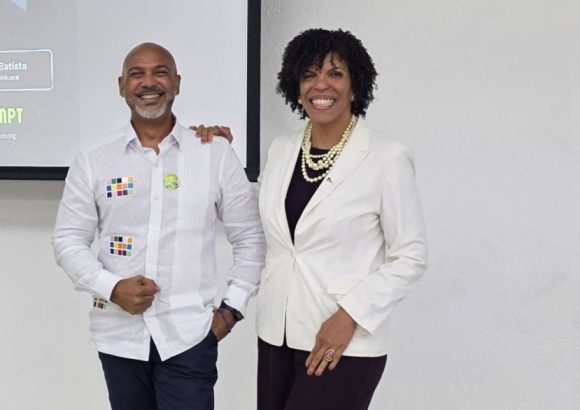
    Organized by the World Tourism Journalism Organization (OMPT), the annual gathering brought together more than 150 attendees spanning working journalists, tourism industry executives, communications specialists, higher education students and other sector stakeholders from across the globe. Against the event’s core theme, “When Communicating a Destination Generates Real Travel”, Dominican reporters Cristina Rosario and Salvador Batista took the stage as featured speakers to present their case study titled “How Does a Tourism Market Change? The Argentina–Dominican Republic Case”.

    Drawing on official data presented at the congress, the pair outlined the staggering expansion of Argentine visitor volumes to the Dominican Republic. From 189,211 arrivals recorded in 2019, the figure surged 138% to hit 450,501 by 2025, pushing Argentina from a mid-tier source market to third place among all international markets sending travelers to the Caribbean nation.

    While many observers attribute tourism growth solely to expanded air links, Rosario and Batista argued that improved connectivity is only one piece of the successful growth puzzle. In their analysis, expanded flight access removes practical barriers to travel, but targeted strategic communication is what keeps a top-of-mind presence for a destination among consumers planning their next vacation. The pair structured their presentation to illustrate how growth in the Argentine outbound market for Dominican travel aligned with two parallel shifts: expanded non-stop air connectivity between the two nations, and sustained, culturally resonant destination promotion that raised the Dominican Republic’s profile among Argentine travelers.

    To ground their argument in practical examples, the presenters integrated exclusive video interviews into their session. These included insights from Dominican Republic Tourism Minister David Collado on the strategic importance of the South American market, and commentary from José Gregorio Cabrera, Vice President of Communications and Public Relations at low-cost carrier Arajet, on how expanded airline operations have unlocked access for more Argentine travelers. The presentation also highlighted a high-impact Dominican tourism fronted by iconic Dominican singer Juan Luis Guerra, whose music accompanies sweeping cinematic footage of the country’s diverse beach, cultural and adventure destinations. The campaign, they noted, serves as a prime model of how audiovisual storytelling can strengthen the impact of new air links by keeping the destination top of mind for prospective visitors.

    The presentation was one of dozens of sessions at the Jujuy congress, which covered a broad range of industry topics from sustainable tourism development to cultural heritage promotion and modern destination communications strategy. Beyond the formal conference program, the Dominican delegation held a series of meetings with regional media professionals and engaged with students pursuing degrees in journalism and tourism, offering them firsthand insight into the Dominican Republic’s diverse tourism product.

    The congress received official backing from local Argentine authorities, with Jujuy’s Minister of Culture and Tourism Federico Posadas in attendance, and the provincial government officially designated the event as an initiative of regional cultural and tourism importance. Following the conclusion of the Jujuy sessions, the conference wrapped up a broader international press program organized by OMPT and its founder Miguel Ledhesma, which also included professional development and site visit activities in Buenos Aires and other sites across northern Argentina.

  • CDDH says at least 50 Dominicans allegedly traveled to Russia to fight in war

    CDDH says at least 50 Dominicans allegedly traveled to Russia to fight in war

    A prominent Dominican human rights organization has uncovered a troubling pattern of deceptive military recruitment that has sent hundreds of Dominican citizens to Russia to fight in an ongoing conflict, with dozens of travelers knowing they would serve as combatants and many more lured by false promises of legitimate work. The Dominican Committee for Human Rights (CDDH) has released new findings detailing that between June and August 2026 alone, at least 200 Dominicans made the journey to Russia: 50 of these individuals departed with full knowledge they would be recruited into military combat roles, while an additional 150 were tricked into traveling after being offered what they believed were legal, well-paying civilian jobs.

    Carlos Manuel Sánchez Díaz, the CDDH’s regional coordinator for the country’s Southern Region, shared the organization’s findings in an interview with Infobae, outlining the key drivers that push young Dominicans to accept these offers. Chronic economic instability, widespread lack of formal employment opportunities across low-income communities, and recruiters’ promises of life-changing financial compensation have made the recruitment pitches particularly compelling, Sánchez Díaz explained. The deals offered to recruits include upfront payments ranging from $8,000 to $16,000 U.S. dollars, with life insurance policies that promise the recruits’ families payouts of up to $400,000 to $500,000 if the recruit is killed during combat.

    The CDDH has even documented cases where entire families encouraged young relatives to take the opportunity, swayed by the massive financial incentives on offer. One of the most high-profile cases documented by the organization involves a 22-year-old Dominican blacksmith and welder who connected with recruiters through social media platforms. According to his sister, the young man arranged all his travel details in secret, hiding his plans from his family until after he had arrived in Russia. He later reached out to his relatives via WhatsApp to reveal he was already serving as a soldier in the country, and confirmed he had traveled alongside several other young Dominican men, some from neighboring small communities. Since that initial contact, the family has been completely unable to reach him. When his relatives called the phone number he had used to contact them, a Russian-speaking man who identified himself as the 22-year-old’s military commanding officer told them there was no working signal in the area where the young man was stationed, and offered no further information about his whereabouts.

    The CDDH has pinpointed a set of recruitment hotspots across the Dominican Republic where the organization says most of the recruitment activity is concentrated. These high-risk areas include Haina, El Carril, the National District, Santo Domingo province, Higüey, San Pedro de Macorís and San Juan de la Maguana. Sánchez Díaz also alleged that a portion of the entire recruitment operation is coordinated from neighboring Colombia, with recruiters using encrypted digital communications to avoid detection and disguising military contracts as agreements for construction work or international cultural exchange programs to hide the true military purpose of the trips.

    On August 24, 2026, CDDH representatives and family members of the recruited Dominicans filed formal complaints with the Dominican Attorney General’s Office, submitting physical contracts, recruiter phone numbers, and other supporting evidence of the illegal operation. The organization also notified other senior Dominican government authorities about the recruitment network, but as of the CDDH’s latest update, no official response has been received from any state body. The human rights group further claims that recruited Dominicans already in Russia have been subjected to strict communication restrictions and coercive reprisals after details of their participation became public. CDDH investigators also note they have received unconfirmed reports that at least one Dominican recruit has already been killed in a drone strike, though neither Dominican nor Russian government officials have independently verified the death.

    In response to the unfolding crisis, the CDDH is calling on Dominican national authorities to immediately activate formal diplomatic channels to locate all Dominican citizens currently in Russia, provide consular protection to those who want it, and facilitate the safe return of any recruit who wishes to come back to the Dominican Republic.

  • Abinader receives Google Cloud president for Latin America

    Abinader receives Google Cloud president for Latin America

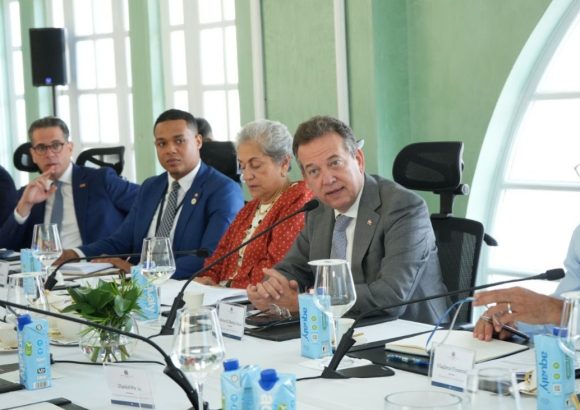
    A high-profile diplomatic and business meeting held at the Presidential House in Santiago de los Caballeros has brought the Dominican Republic’s digital transformation ambitions into the global spotlight, as President Luis Abinader held discussions with Eduardo López, leader of Google Cloud for Latin America, regarding potential technological collaboration and investment.

    The gathering, which also included the Dominican Minister of the Presidency, served as a platform for President Abinader to outline the Dominican government’s steady progress in upgrading the country’s digital backbone and regulatory technological institutions. Key national strategies highlighted during the talks included the ambitious Digital Agenda 2030, the country’s first comprehensive National Artificial Intelligence Strategy, and the newly established National Framework for Interoperability and Data Governance, all of which form the foundation of the nation’s push toward a fully digitized public and private sector.

    In response to the government’s presentation, López reaffirmed Google’s long-term commitment to expanding its presence in the Dominican Republic. He praised the nation as a fast-growing, dynamic economy with untapped regional influence, noting that the Dominican government’s consistent progress in technological modernization has made it an attractive market for global tech investment. López added that Google stands ready to provide full support for all development initiatives that align with the country’s existing institutional framework.

    A core component of Google’s existing regional strategy centers on elevating the Dominican Republic to a leading digital connectivity hub for the Caribbean and Latin America. As part of the company’s 2026 Americas Connect initiative, three new submarine cable systems will include direct landing points in the Dominican Republic, alongside a new branch extension of the existing Firmina cable. Once completed, these infrastructure projects will dramatically strengthen the country’s digital links to major markets across Latin America, the Caribbean, the United States, and Europe, creating faster, more reliable cross-continental connectivity.

    Beyond large-scale infrastructure development, Google’s ongoing work in the Dominican Republic extends to capacity building: the company already runs programs to train new domestic digital talent, provides targeted support for public education institutions, and maintains ongoing technical partnerships with multiple government agencies.

    This meeting forms part of a broader, proactive outreach strategy by the Dominican government, which has prioritized engaging with the world’s largest technology firms to attract foreign direct investment, expand national digital infrastructure, and speed up the digital transformation of public sector services. As the country continues to solidify its position as a regional tech leader, partnerships with global giants like Google are expected to play a critical role in helping it meet its long-term digital development goals.

  • Dominican authorities launch Operation LM2 against cocaine trafficking network

    Dominican authorities launch Operation LM2 against cocaine trafficking network

    Authorities in the Dominican Republic have carried out a major coordinated crackdown on a transnational criminal syndicate smuggling massive volumes of cocaine to consumer markets in the United States and Europe, capping off a multi-year investigation with dozens of raids, large drug seizures and the arrest of one of the network’s top leaders.

    Officially dubbed Operation LM2, the enforcement action was a joint effort between the Dominican Public Prosecutor’s Office and the National Drug Control Directorate (DNCD), mobilizing a team of 13 specialized prosecutors and more than 150 trained DNCD law enforcement agents. To cut off escape routes and prevent evidence destruction, the agency carried out simultaneous search operations across three key regions: Greater Santo Domingo, Hato Mayor, and Santiago.

    When the dust settled from the raids, investigators had seized 168 packages of contraband confirmed to be cocaine, alongside a haul of illicit assets that included luxury high-end vehicles, a heavy-duty truck, a large sum of undeclared cash, multiple illegal firearms, and reams of documentary evidence linking the assets and suspects to the trafficking operation.

    One of the most high-profile captures was José Miguel Ceballos Rosario, widely known by his alias “El Viajero”, who law enforcement officials have named as a key leader of the organized trafficking network. Investigators note that multiple other high-value suspects connected to the ring remain at large, and have issued a public call for these fugitives to turn themselves in through official legal channels to avoid further legal repercussions.

    A closer inspection of the syndicate’s operations revealed a sophisticated smuggling concealment strategy: the 168 seized cocaine packages were hidden inside 31 solid metal tubes and bars stored at a compound in Villa Vásquez, Montecristi, which investigators confirmed served as a central collection and processing hub for the network. The site also held hundreds of cardboard boxes, custom cutting and shaping tools, and other specialized materials used to package and hide the illegal drugs before shipment.

    According to official investigation briefings, the network regularly moved multi-ton quantities of cocaine to the U.S. and European markets, using two common concealment tactics to evade border inspections: hiding drugs inside shipping boxes with custom-built false bottoms, and embedding contraband within heavy metal structural components. To further launder their operations and avoid suspicion, the syndicate operated both a network of legitimate front companies and untraceable shell corporations, making drug shipments appear to be legal commercial cargo.

    Operation LM2 is not an isolated bust: it grew directly out of a long-running investigation that first targeted a connected trafficking cell dismantled during earlier raids in La Vega and Monseñor Nouel. That earlier operation, carried out in 2023, resulted in the seizure of 392 cocaine slabs, three high-powered military-grade rifles, multiple vehicles, and specialized packaging machinery used to hide the drugs.

    The full investigation timeline stretches back to July 2023, when authorities first stumbled on the network’s activities during a raid on a rural farm in Jayaco. During that search, they found hundreds of pre-prepared cardboard boxes, dozens of which already had false bottoms holding hidden cocaine. Investigators also executed a search warrant on a private residence in Rincones de La Vega that the syndicate was using as a secondary drug collection center.

    That 2023 operation led to the arrest of three core members of the network: Basilio Saturria Mosquea, Danckeline De La Cruz, and José Luis Santana Vargas. All three were prosecuted by the Dominican Public Prosecutor’s Office, and ultimately sentenced to 15 years of prison each by the Collegiate Court of La Vega. The court also ordered the full confiscation of all assets connected to the group’s trafficking activities.

  • Dominican Republic moves to develop dry ports along Haiti border

    Dominican Republic moves to develop dry ports along Haiti border

    In a significant step to boost cross-border trade and unlock economic potential along its northern Caribbean frontier, the Dominican Republic has formally launched coordinated planning for the development of a network of dry ports along its entire shared border with Haiti. The project, which has been elevated to a matter of supreme national interest via a recent presidential decree, brought top government officials and private sector leaders together for their inaugural high-level coordination meeting earlier this month, chaired by the country’s Foreign Minister Víctor “Ito” Bisonó.

    The overarching goals of the initiative extend far beyond just constructing new infrastructure. Proponents say the network of inland dry ports will modernize outdated border logistics systems, sharpen the Dominican Republic’s competitive edge in regional trade, and catalyze long-overdue economic growth in underdeveloped border communities. Additional core objectives include simplifying cross-border trade procedures, tightening customs compliance, strengthening overall border security, and attracting new domestic and foreign investment to the frontier region.

    Addressing attendees at the opening session, Bisonó emphasized that successful delivery of the project will depend on close, sustained collaboration across the full spectrum of public institutions and private industry stakeholders, rather than a narrow focus on brick-and-mortar construction alone. To kickstart the initiative, he put forward the Comendador–Belladère cross-border corridor as an ideal pilot project, arguing that early implementation here would generate actionable insights and best practices that can be scaled to other border locations across the country.

    The inaugural coordination meeting drew senior representatives from a wide range of government entities, including the Ministries of Finance, and Industry, Commerce and Micro, Small and Medium Enterprises (MSMEs), the General Directorate of Customs (DGA), the General Directorate of Internal Taxes (DGII), the Dominican investment promotion agency ProDominicana, the National Competitiveness Council, the Dominican Civil Aviation Institute (IDAC), the Dominican Port Authority, and the National Border Development Office. Private sector representation included leading industry groups such as the Dominican Free Zones Association (Adozona), the Logistics Association of the Dominican Republic (Asologic), the National Council of Private Enterprises (Conep), and the Association of Industrialists of the Dominican Republic (AIRD).

    During the session, participating stakeholders mapped out their respective institutional responsibilities for the project, and pinpointed cross-cutting areas that require aligned inter-agency and public-private coordination. The collaborative session laid the groundwork for a unified implementation roadmap to guide the rollout of the dry port network.

    The entire project is anchored in Decree No. 166-26, signed into law on March 16, 2026, which formally authorizes the full lifecycle development — including design, financing, construction, equipping, operation and maintenance — of dry ports at four strategic border locations: Dajabón, Elías Piña, Independencia and Pedernales. These inland logistics facilities will operate under the same regulatory frameworks as the country’s primary customs zones, with the explicit purpose of streamlining cross-border trade procedures and advancing the Dominican Republic’s long-term strategic goal of establishing itself as a leading regional logistics hub.

    Beyond the development of domestic infrastructure, the decree also mandates that the executive branch, led by the Ministries of Foreign Affairs and Industry, Commerce and MSMEs in coordination with the DGA, lead discussions with Haitian government authorities to identify and jointly develop strategic border crossing points that can support expanded, more efficient international trade between the two neighboring countries.

  • Constitutional Court rules against two-year driver’s license renewal for people over 75

    Constitutional Court rules against two-year driver’s license renewal for people over 75

    In a landmark ruling that reaffirms protections against age-based discrimination, the Constitutional Court of the Dominican Republic has invalidated a controversial regulation forcing drivers aged 75 and older to renew their operating permits every two years, half the standard four-year validity period applied to younger motorists.

    The contested policy, first introduced via executive Decree 330-26, violated two core constitutional principles: the fundamental right to equality under the law, and the targeted legal protections guaranteed to senior citizens, the court ruled. The decision formally annuls the modified provision in national driver license regulations, removing the age-linked distinction entirely.

    In its written judgment, the court emphasized that using chronological age as a basis to restrict or condition the exercise of a legal right qualifies as a form of age discrimination unless the state can present clear, compelling legal justification for the distinction. Beyond questions of equal treatment, the justices also noted that any regulation creating this type of differentiated legal status must be enacted through formal legislation approved by the national Congress, not implemented unilaterally via executive order. The court found that the national government failed to meet either requirement: no sufficient evidence was provided to prove the shorter renewal mandate was necessary for public safety, and the policy was never codified through proper legislative process.

    Existing national law — Law 63-17 on Mobility, Land Transport, Transit and Road Safety — already mandates routine medical and technical evaluations for all drivers seeking to renew their licenses, and the statute never includes any provision setting different renewal timelines based on age. The court’s ruling concluded that road safety goals are already fully addressed through these existing universal assessment requirements, making the automatic imposition of a shorter validity period for older drivers unnecessary and unjustified.

    The policy rollback traces back to an earlier 2019 regulation, Decree 6-19, which first implemented the two-year renewal cycle for all drivers aged 65 and older. When the government issued the updated Decree 330-26 in May 2026, it only adjusted the age threshold to 75 while retaining the shortened renewal requirement. With the latest court decision, all age-based differentiation in driver license validity has been eliminated. Moving forward, all licensed drivers in the Dominican Republic, regardless of their age, will enjoy the standard four-year validity period for their permits, provided they continue to meet the mandatory medical and technical evaluation requirements during each renewal cycle.

  • Dominican Republic hosts 12th Ibero-American Meeting of Museums in Santo Domingo

    Dominican Republic hosts 12th Ibero-American Meeting of Museums in Santo Domingo

    SANTO DOMINGO – Leading cultural heritage experts, museum administrators, and cultural policy specialists from across the Ibero-American region have gathered in the Dominican Republic for the 12th edition of the Ibero-American Meeting of Museums (EIM), a landmark event dedicated to unpacking the most pressing challenges and untapped opportunities that will define the future of cultural institutions and heritage preservation.

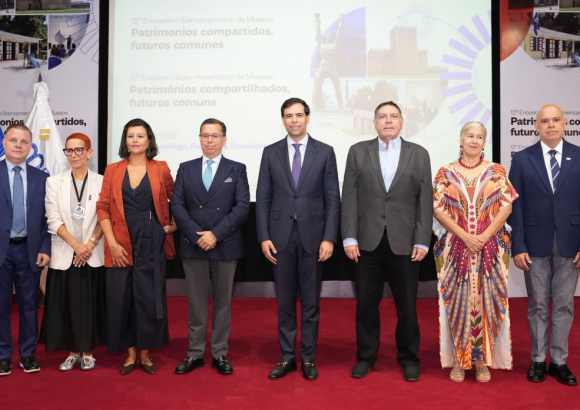
    Hosted jointly by the intergovernmental Ibermuseums Program and the General Directorate of Museums under the Dominican Ministry of Culture, the three-day summit runs from September 14 to 16 in the capital city of Santo Domingo, anchored by the unifying theme “Shared Heritage, Common Futures.” The official opening ceremony was held at the city’s Indotel Digital Culture Center, drawing dozens of senior representatives from regional cultural cooperation bodies to kick off the cross-border dialogue.

    Against a backdrop of rapid global change, the conference frames collective cultural heritage as both an ongoing shared construction and a living connection to collective memory, while guiding participants through critical conversations about how museums must adapt to shifting social norms, accelerating technological innovation, and escalating environmental disruption. According to Mônica Barcelos, coordinator of the Ibermuseums Program’s Technical Unit, the summit brought together more than 80 designated participants from 18 Ibero-American countries, all convened to debate the evolving role and core responsibilities of museums in relation to the communities they serve.

    The full conference agenda is structured around three core thematic pillars, with dedicated sessions covering a wide range of pressing topics including public engagement and social ownership of heritage, expanding representation of diverse cultural identities, integration of cutting-edge emerging technologies, and building resilience against environmental threats. Two topics stand out as central priorities for this year’s gathering: the transformative impact of artificial intelligence on how museums frame and share cultural narratives, and the urgent need to protect biocultural territories as climate change amplifies environmental risks across the region.

    Beyond panel discussions and keynote addresses, the three-day meeting serves as a collaborative platform for cultural professionals and their institutions to exchange on-the-ground experiences and proven best practices. The ultimate goal of these exchanges is to strengthen regional public policy frameworks for cultural heritage and co-develop actionable strategies that empower museums to tackle emerging challenges across the social, technological, and environmental spheres.

    Founded in 2007, the Ibermuseums Program is an intergovernmental cooperation initiative focused explicitly on advancing the museum sector across Ibero-America. Its core mission centers on strengthening national public policies for cultural institutions, building professional capacity among heritage workers, and advancing protections for at-risk museum collections and heritage sites. Today, the program connects 22 member countries and supports a vast regional network that includes more than 10,000 museums and cultural institutions across the region.