博客

  • Black River police issue high alert for UK child allegedly abducted and brought to Jamaica

    Black River police issue high alert for UK child allegedly abducted and brought to Jamaica

    Authorities in Jamaica’s St Elizabeth parish have ramped up a public safety alert for a young British child, Tau Kleio Rodriguez-Fairplay, who was allegedly abducted by her non-custodial parent and smuggled to the Caribbean island in violation of a formal UK court order. The six-year-old, a resident of Walthamstow in East London, was officially entered into missing person databases by local police in Black River on Thursday, April 9, 2026, more than two months after she was first taken from her primary residence in the UK.

    According to official accounts and statements from the child’s mother, Samar Rodriguez, a lecturer at the London School of Economics, the girl was taken by her ex-partner Athena Belle-Fairplay — also known by the alias Natalie Bartlett-Foster. The pair held a shared custody arrangement for Tau Kleio, and a UK court had explicitly barred the child from being removed from the country without prior written judicial approval. The alleged abduction unfolded in February 2026, when Belle-Fairplay failed to show up to a prearranged handover at a London train station, where she was supposed to return the child to Rodriguez following a scheduled visit.

    UK border officials have since confirmed that Belle-Fairplay flew to Jamaica with Tau Kleio just days after the missed handover, directly contradicting the standing court order. For months, Rodriguez has waged a public and private campaign to recover her daughter, speaking to both local and international media outlets to draw attention to her case, including an in-depth interview with UK national newspaper The Guardian. She even traveled to Jamaica personally and hired a private investigator to track down the pair, but so far all searches have turned up empty.

    Rodriguez has publicly voiced deep frustration with the Jamaican Central Authority (JCA), the government body tasked with upholding Jamaica’s international treaty obligations, including the Hague Convention on the Civil Aspects of International Child Abduction. Local legal representatives who spoke to The Guardian confirmed that the case has been bogged down by repeated administrative delays, with the JCA insisting that it is Rodriguez’s personal responsibility to locate her ex-partner and daughter. In a formal response to the reporting, the JCA countered that the investigation has been slowed by the lack of a confirmed fixed address where the child might be staying.

    Complicating the case further, reporting indicates that official bodies have faced bureaucratic challenges formally classifying Tau Kleio as a missing person, due to the fact that she is in the care of one of her legal parents, despite the violation of custody and court orders.

    Black River police have released a detailed public description of the missing child to aid in community tips: Tau Kleio has a brown complexion, a medium build, stands approximately 104 centimeters (3 feet 6 inches) tall, and was last seen wearing a pink coat decorated with butterfly patterns. Law enforcement is urging any member of the public with information about Tau Kleio Rodriguez-Fairplay’s current location to contact the Black River police station at 876-965-2232, the national emergency police line at 119, or any nearby local police outpost immediately.

  • Sports lawyer questions World Athletics’ move to refuse Jamaican athletes transfer to Turkey

    Sports lawyer questions World Athletics’ move to refuse Jamaican athletes transfer to Turkey

    In a significant development out of Kingston, Jamaica, prominent sports attorney Dr. Emir Crowne has raised critical questions about the procedural integrity of a recent ruling from World Athletics, which rejected national allegiance transfer requests from 11 athletes—four of whom are Jamaican—looking to represent Turkey in future international competition.

    The Jamaican contingent at the center of the dispute includes three decorated Olympic medalists: Roje Stona, Wayne Pinnock, and Rajindra Campbell, alongside Jaydon Hibbert, the current world under-20 triple jump record holder. All four were part of the larger cohort that had applied to switch their athletic citizenship to the European nation.

    World Athletics announced its ruling Thursday, confirming that its independent Nationality Review Panel unanimously rejected all 11 applications. In a formal statement, the governing body explained the panel determined approving the transfers would undermine core principles laid out in its eligibility rules and allegiance transfer regulations. The panel further alleged the applications were part of a systematic, state-coordinated recruitment drive orchestrated by the Turkish government via a state-owned and fully state-funded club. According to the panel’s findings, the club offered substantial, high-value contracts to recruit foreign athletes specifically to complete allegiance transfers and qualify them to compete for Turkey at major upcoming events, most notably the 2028 Los Angeles Olympic Games.

    Speaking exclusively to Jamaica’s Observer Online, Crowne, one of the region’s most respected sports law experts, labeled the ruling a “very interesting development” and centered his critique on the panel’s process rather than the underlying policy itself. The core of Crowne’s concern centers on whether the panel evaluated each athlete’s application on its own individual merits, or whether the 11 cases were improperly grouped together for a single, collective decision.

    “It does raise a question as to whether the 11 athletes were unfairly grouped together, as opposed to it being an individualised assessment of the merits of each transfer,” Crowne explained.

    Beyond the grouping concern, Crowne also highlighted what he describes as a structural irregularity in the appeal process for athletes seeking to reverse the decision. He noted that any appeal to the Court of Arbitration for Sport (CAS) first requires athletes to file a formal request for reconsideration with the same original Nationality Review Panel that rejected their applications. Crowne characterized this mandatory pre-appeal step as effectively requiring athletes to plead for a reversal from the very body that already ruled against them before they can access an independent, external arbitration panel.

    “Seems to me that that in itself is slightly irregular,” he added.

    The ruling has already sparked broader debate within global track and field about the balance between governing body regulations designed to prevent opportunistic nationality switching and the individual career rights of elite athletes. For the four Jamaican athletes involved, the decision puts their plans to compete for Turkey in upcoming international competitions on indefinite hold as they weigh their legal options for appeal.

  • Former Virginia Lt Gov Justin Fairfax and wife found dead in suspected murder-suicide

    Former Virginia Lt Gov Justin Fairfax and wife found dead in suspected murder-suicide

    A shocking tragedy has shaken the community of Annandale, Virginia, after former state Lieutenant Governor Justin Fairfax fatally shot his wife Cerina before taking his own life in their family home earlier this week, according to law enforcement and multiple media reports.

    The devastating incident unfolded while the couple’s two teenage children were inside the residence, authorities confirmed. It was their son who placed the emergency 911 call to alert first responders to the violence unfolding at the property. Fairfax County Police officers arrived at the scene in the hours after midnight on Thursday, where they discovered the bodies of both Justin and Cerina Fairfax inside the home.

    In comments to CNN, Fairfax County Police Chief Kevin Davis shared key details emerging from the initial investigation into the double death. Forensic evidence indicates that a single firearm was used in both the killing of Cerina Fairfax and Justin Fairfax’s subsequent suicide. Chief Davis added that the violence grew out of ongoing divorce proceedings between the couple, describing the marital split as “what seems to be a complicated or messy divorce.”

    Court records confirm that Justin Fairfax had recently been formally served with legal paperwork scheduling his next mandatory court appearance for the divorce case. Speaking to reporters, Chief Davis noted that divorce is an extremely common experience across the United States, with roughly half of all marriages ending in separation, but lethal violence stemming from these disputes is extraordinarily rare.

    “Half of America probably goes through divorce proceedings at some point in time and very, very rarely, thankfully, does it ever end up like this,” Davis told CNN. “So, very sad for this community…a lot of people who know the Fairfax family — everybody’s shocked. We’re shocked.”

    As of Friday morning, law enforcement has not released additional details about potential prior domestic incidents at the Fairfax home or the specific issues that were being contested in the divorce. Crime scene investigators remained at the property through the day on April 16, processing evidence and working to piece together the full sequence of events that led to the shooting, with photos from the scene showing a heavy police presence cordoning off the residential neighborhood.

  • US to blockade Iran ports ‘as long as it takes’—Pentagon chief

    US to blockade Iran ports ‘as long as it takes’—Pentagon chief

    In a blunt press briefing held at the Pentagon on Thursday, United States Defense Secretary Pete Hegseth issued a stark warning to Iran: Washington will maintain a full blockade of the country’s ports for however long is required to force a negotiated settlement, and will launch new military strikes if Tehran rejects a diplomatic outcome.

    Hegseth made clear the consequences of Iran walking away from talks, stating, “If Iran chooses poorly, then they will have a blockade and bombs dropping on infrastructure, power and energy.”

    The blockade officially went into effect at 14:00 GMT this Monday, launching just one day after a new round of peace negotiations in Pakistan concluded without any breakthrough agreement between the involved parties. Dan Caine, the highest-ranking active U.S. military officer, clarified that the restrictions are universal, applying to all commercial and military vessels sailing to or from Iranian territorial ports, no matter what flag they sail under.

    Standing alongside Hegseth during the briefing, Caine added that non-compliance will be met with immediate force, but noted that so far, 13 vessels bound for Iranian ports have chosen to alter course and avoid confrontation.

    Hegseth also used the briefing to accuse Iranian leadership of attempting to recover and reactivate military equipment that survived five weeks of joint U.S.-Israeli airstrikes across the country. Speaking directly to Iranian officials, he asserted that U.S. intelligence is fully tracking all movements of remaining military assets, arguing that Tehran’s efforts to rebuild its capabilities are futile while U.S. military position continues to strengthen.

    “You are digging out your remaining launchers and missiles with no ability to replace them — you have no defense industry, no ability to replenish your offensive or defensive capabilities,” Hegseth said.

    Admiral Brad Cooper, commander of U.S. Central Command which oversees all American military operations across the Middle East, confirmed that U.S. forces are using the current lull in active large-scale strikes to bolster their own position. He emphasized that the U.S. military is rearming, refitting, and refining its operational tactics to prepare for any future escalation, noting that no other global military can adapt to changing battlefield conditions as quickly as the United States.

  • World Athletics rejects transfer of Jamaican quartet to Turkey

    World Athletics rejects transfer of Jamaican quartet to Turkey

    In a landmark decision published Thursday, the World Athletics Nationality Review Panel has blocked 13 elite athletes, including four of Jamaica’s top track and field stars, from switching their international sporting allegiance to compete for Turkey. Among the Jamaican applicants was Roje Stona, the newly crowned 2024 Paris Olympic men’s discus gold medalist, alongside shot putter Rajindra Campbell, triple jumper Jaydon Hibbert and long jumper Wayne Pinnock – all core contributors to Jamaica’s rising field athletics program. The rejected applications also included six athletes from African nations – Nigeria’s Favour Ofili, four Kenyan runners including marathon legend Brigid Kosgei, Catherine Relin Amanang’ole, Brian Kibor, Ronald Kwemoi, Nelvin Jepkemboi – and one Russian athlete, Sophia Yakushina.

    The panel’s ruling centered on a key finding: the batch of applications was not made up of individual requests, but rather part of a coordinated, state-backed recruitment strategy led by Turkey through a state-funded sports club. According to the panel’s statement, the program offered extremely lucrative financial contracts to elite athletes to secure their citizenship and eligibility to compete for Turkey at major international competitions, including the 2028 Los Angeles Olympic Games.

    After reviewing all applications collectively due to their shared characteristics, the panel determined that this systematic recruitment approach directly conflicts with the foundational core principles of international track and field. These principles exist to protect the credibility of global competition, incentivize national member federations to invest in nurturing domestic young talent, and preserve athlete confidence that national teams are built through development, not large-scale poaching of established talent from other countries.

    “These applications, if approved, would fundamentally undermine the purpose of World Athletics’ eligibility and transfer of allegiance rules,” the panel said in its official announcement. The ruling means none of the 13 athletes will be permitted to represent Turkey in international competitions or national team events. The decision does not restrict the athletes from competing in lower-stakes competitions such as one-day track meets or road races as individual or club entrants, nor does it bar them from continuing to live and train in Turkey.

    World Athletics’ transfer regulations set clear criteria for athletes seeking to change the nation they represent at the international level. While holding legal citizenship of the new country is a basic requirement, additional rules are in place to verify a genuine, ongoing connection between the athlete and their new nation, and to protect the global integrity and long-term development of the sport. The independent Nationality Review Panel is tasked with evaluating all allegiance transfer applications in line with these binding regulations.

    Prior to the ruling, reports confirmed the Jamaican quartet had already completed Turkish citizenship documentation, drawn by the promise of substantial financial compensation ahead of 2025. The planned departure of the four stars was widely seen as a major setback for Jamaica’s athletics program, particularly for its fast-improving field event sector, which the athletes have helped raise to global prominence. Following news of the athletes’ planned switch, the Jamaica Athletics Administrative Association (JAAA) formally called on World Athletics to investigate and intervene, setting the stage for Thursday’s final decision.

  • Football fans outraged as World Cup train tickets set to cost over US$100

    Football fans outraged as World Cup train tickets set to cost over US$100

    As the United States prepares to co-host the men’s FIFA World Cup this summer, a controversial new controversy has erupted over planned surge pricing for public transit trips to tournament match venues, drawing sharp condemnation from international football fan groups, top elected officials, and long-time tournament attendees. Multiple media reports have revealed that two major public transit agencies are considering dramatic price increases that would push round-trip fares far above their standard event-day rates, leaving many traveling supporters facing hundreds of dollars in unexpected travel costs just to reach stadiums.

    According to a recent report from sports outlet The Athletic, New Jersey Transit (NJT) has drafted plans to charge passengers more than $100 for a single round-trip ticket between Manhattan’s Penn Station and MetLife Stadium, the New Jersey venue set to host eight World Cup matches. For context, the same journey typically costs just $12.90 round-trip on non-event days, and even for major regular events at the stadium, fares remain far lower than the proposed World Cup rate. Separately, the Massachusetts Bay Transportation Authority (MBTA) has publicly confirmed it will charge $80 for round-trip tickets between Boston and Gillette Stadium, where multiple group-stage matches will be held – a four-fold jump from the agency’s standard $20 event-day fare.

    International fan groups have been among the loudest critics of the proposed hikes, arguing that the price increases price out ordinary working-class supporters in favor of wealthy attendees. Guillaume Aupretre, a spokesperson for the largest French supporters’ association, told Agence France-Presse that the pricing structure runs counter to longstanding World Cup norms. “It’s a disgrace. In recent tournaments, transportation was either included in the ticket price or offered at a heavily discounted rate for ticket holders,” Aupretre said. “They keep piling on the extra costs without giving any thought to the fans.” He added that the policy amounts to FIFA shutting out the sport’s most loyal supporters to cater exclusively to wealthier fans. France is scheduled to play all three of its Group I matches at the Boston and New Jersey venues, meaning French fans will face the full brunt of the inflated fares.

    UK fan group Free Lions, which represents traveling England supporters, also voiced anger over the pricing in a social media post, writing: “Another day, another rip off at this World Cup. What on earth is going on?” England also will play its group-stage matches at the same two venues, leaving its traveling fan base facing the same steep costs.

    The transit pricing controversy comes as FIFA already faces widespread backlash over exorbitant match ticket prices for the 2026 tournament, which is being co-hosted by the U.S., Mexico, and Canada. FIFA, the global governing body for football, has not yet responded to AFP’s request for comment on the transit fare dispute.

    Top American political leaders have stepped into the controversy, calling on FIFA to cover all public transit costs for the tournament, pointing to the massive $11 billion in projected revenue that FIFA is expected to earn from the 2026 event. Senate Minority Leader Chuck Schumer, a Democrat from New York, publicly demanded that the governing body take responsibility for the costs in a social media statement Tuesday. “The least FIFA can do is ensure New York residents can go to the stadium without being gouged at the turnstile,” Schumer wrote. “I am demanding FIFA step up and cover transportation costs for host cities and states.”

    New York Governor Kathy Hochul also criticized the proposed hikes, writing on social platform X that “Charging over $100 for a short train ride sounds awfully high to me.”

    NJ Transit has pushed back slightly on the reports, with a spokesperson telling The Athletic that no final decision has been made on World Cup-specific pricing, describing the leaked $100 fare figures as “unconfirmed speculation.” The agency did not respond directly to AFP’s request for comment. The Athletic also reported that hosting eight matches in New Jersey is expected to cost the transit agency roughly $48 million overall, with most of that cost tied to expanded security requirements for the tournament.

    Not all host cities are moving ahead with price hikes, however. Federal authorities have already allocated $100 million in total federal funding to cover transit-related costs for host cities across the country, including $8.7 million for the Boston and Massachusetts region, $10.4 million for the New York-New Jersey metro area, and $9.6 million for Los Angeles. Los Angeles’ transit agency has already committed to keeping standard fares in place for World Cup match days: a round-trip from downtown Los Angeles to SoFi Stadium will remain just $3.50, the same as it is on any other day.

  • Pope condemns ‘endless cycle’ of death in ‘bloodstained’ Cameroon region

    Pope condemns ‘endless cycle’ of death in ‘bloodstained’ Cameroon region

    On a historic Thursday visit to one of Cameroon’s most violence-scarred regions, Pope Leo XIV delivered a stark rebuke of the nearly decade-long separatist conflict that has left the area bloodied and destabilized, calling out the self-serving greed that perpetuates cycles of death. Speaking in Bamenda, the northwestern city that sits at the heart of the anglophone insurgency, the pontiff laid bare the damaging economics fueling the unrest: those who siphon natural resources from local communities funnel much of their illicit profits into weapons, extending the years-long emergency for their own gain.

    Traveling under heavy military protection in a bulletproof-winded vehicle, the U.S.-born pontiff arrived at Saint Joseph’s Cathedral, where he paused to bless throngs of joyful worshippers and supporters who had gathered to welcome his landmark visit. Crowds dressed in traditional clothing emblazoned with the pope’s image waved both Vatican and Cameroonian flags, filling the streets with singing, horn blasts and festive music despite the shadow of insecurity hanging over the region.

    The conflict that has ravaged Cameroon’s two anglophone regions dates back to 2016, when peaceful protests by anglophone communities complaining of systemic political and social marginalization under the long-ruling government of President Paul Biya—who has held power in the central African nation since 1982—were met with violent government crackdowns. That escalation pushed separatist movements to launch an armed campaign for secession from the majority French-speaking country. Over eight years of fighting, the United Nations estimates at least 6,000 people have been killed, and civilians have borne the brunt of the violence, targeted in widespread killings and mass kidnappings.

    This visit marks the second stop of Pope Leo XIV’s high-profile tour of the African continent, following his arrival in the country on Wednesday. In his solemn peace address, the pope also condemned actors who exploit religion and invoke the name of God to advance their own military, economic and political ambitions, a sharp rebuke of radicalization in the conflict.

    In response to the pontiff’s visit, imprisoned separatist leaders have issued a call for negotiations mediated by the Vatican, with support from the United Nations, to address the deep-rooted causes of the conflict. Their lawyer, Joseph Awah Fru, delivered the request on the prisoners’ behalf, opening a potential path to dialogue following the pope’s high-profile intervention.

  • Silva to leave Man City at end of season

    Silva to leave Man City at end of season

    LONDON – Premier League powerhouse Manchester City sent shockwaves through European football on Thursday, confirming that club captain Bernardo Silva will depart the Etihad Stadium when the current campaign concludes this summer. In an official announcement, the club paid glowing tribute to the 31-year-old Portuguese midfielder, describing his impact on the club’s historic era of dominance as “incalculable.”

    Since signing from Ligue 1 side Monaco in 2017, Silva has cemented his status as one of the most influential players in Manchester City’s modern history. Across eight seasons with Pep Guardiola’s trophy-laden side, he has racked up more than 450 appearances – a milestone that recently pushed him into the club’s all-time top 10 for most senior appearances, outstripping club icons including David Silva, Paul Power and Willie Donachie. His attacking output for the Citizens stands equally impressive: 76 goals and 77 assists in all competitions, a testament to his consistent creative and goal-scoring threat from midfield.

    Over his tenure at the club, Silva helped Manchester City claim 15 major senior trophies, an unparalleled haul that includes six Premier League titles, one UEFA Champions League crown, multiple FA Cups and League Cups. His contributions have been central to City’s run as the dominant force in English football over the past decade, the greatest sustained period of success in the club’s 145-year history.

    As he prepares to bring his Manchester City chapter to a close, the club said Silva will remain fully focused on adding more silverware to his collection before he exits. Guardiola’s side is still firmly in contention for a historic domestic double, sitting in tight contention for the 2024/25 Premier League title and advancing deep into the FA Cup competition.

    Silva shared his own emotional reflection on his departure via his personal Instagram account, touching on the personal as well as professional roots he built in Manchester. “In a few months it’s time to say goodbye to the city where not only we won so much as a football club, but also where I started my marriage and my family,” he wrote. “From the bottom of my heart, Ines and Carlota, thank you!”

  • ¡Salud Por Malbec!

    ¡Salud Por Malbec!

    As global wine enthusiasts turn their focus to World Malbec Day on April 17, 2026, most discourse naturally gravitates toward the well-chronicled, award-winning estates of Mendoza and the large-scale export networks that have long anchored Argentina’s reputation as the world’s preeminent Malbec producer. But 1,000 miles north, in Argentina’s mountain-framed province of Salta, a quieter, more deliberate reimagining of this iconic grape is taking root – one defined not by export volume or global name recognition, but by extreme altitude, intentional small-batch production, and a commitment to letting terroir lead the way.

    At the heart of this evolving movement stands Bodega Dal Borgo, a family-owned winemaking project that defies simple classification. It is neither a centuries-old legacy estate nor a flash-in-the-pan experimental boutique outpost. Instead, it occupies a thoughtful middle ground: rooted in generations of agricultural knowledge, yet constantly looking ahead to meet shifting global consumer demands. Tucked into the dramatic expanse of the Calchaquí Valleys – one of the highest commercial viticultural regions on Earth – the winery operates within an unforgiving natural landscape that teaches discipline: vines will not produce on demand, requiring winemakers to practice precision, patience, and a willingness to work with the land rather than against it.

    The winery’s founders, who built their vision on a foundation of practical agricultural stewardship and a refined approach to hospitality, have intentionally adopted a restrained philosophy toward winemaking. Rather than forcing Malbec into a one-size-fits-all commercial profile that has sold well globally for decades, they let the unique conditions of their site shape the final wine. At elevations topping 1,700 meters above sea level, Malbec takes on a character distinct from its Mendoza counterpart. The fruit profile becomes tighter and more focused, acidity brightens, and tannins develop a structured, firm backbone. Gone is the overripe, opulent fruit that defined decades of Argentine Malbec exports; in its place is clarity of flavor, a subtle, lingering finish, and a quiet intensity that holds up to scrutiny.

    This evolution in style reflects a larger crossroads facing Argentina’s $5.5 billion wine industry in 2026. For 50 years, Malbec’s global success was built on broad accessibility, consistent crowd-pleasing flavor profiles, and affordable price points. This strategy built international markets, cemented Argentina’s place on the global wine map, and turned Malbec into a household name for casual wine drinkers. Today, however, that historic success presents a new challenge: as global palates evolve and more consumers prioritize terroir specificity and unique, site-expressive wines over familiar, generic flavors, consumers are increasingly seeking differentiation within the Malbec category itself.

    Salta’s independent producers have been quick to capitalize on this inflection point. The region’s extreme high-altitude terroir – with most vineyards sitting above 1,700 meters, where solar radiation is intense, daily temperature swings are dramatic, and soils are rich in minerals and low in fertility – creates grapes that naturally diverge from the Mendoza archetype. At Bodega Dal Borgo, these harsh natural conditions are not framed as obstacles to overcome; they are treated as unique assets that enable the creation of a far more precise, distinctive expression of Malbec.

    This ethos of adaptation extends from the vine rows to the winery’s sustainability practices. Water scarcity has become an increasingly urgent concern across Argentina’s wine regions, as glacial melt – a historic source of irrigation water for many valleys – becomes less reliable due to climate change. Bodega Dal Borgo’s approach aligns with a broader industry push toward sustainable, low-input production: irrigation is carefully calibrated, guided by real-time soil moisture monitoring and long-term climate data, rather than a one-size-fits-all routine. The goal is not maximum yield, but balanced vine health, encouraging roots to grow deep into the mineral-rich subsoil to draw nutrients, allowing the wine to carry the unique geological signature of the site.

    This commitment to precision carries into the cellar as well. Fermentation protocols are tailored to each individual block of vines, designed to preserve the natural structural character developed in the vineyard. Extraction is carefully controlled, and oak usage is intentionally restrained to avoid masking the natural fruit and terroir character. The winery has also embraced parcel-based vinification, recognizing that even within its small 40-hectare estate, subtle variations in soil composition and sun exposure demand separate processing to highlight each micro-site’s unique qualities. These choices align with global trends documented by leading wine industry bodies, including the International Organisation of Vine and Wine and the Wine & Spirit Education Trust, both of which have recorded growing global consumer demand for terroir-driven, site-specific wines over generic, mass-produced alternatives.

    But Bodega Dal Borgo’s significance extends far beyond technical winemaking innovation. It serves as a case study for Salta’s broader emergence from the periphery of Argentina’s wine narrative. For decades, Salta was admired for its dramatic mountain landscapes but largely overlooked in national industry strategy, overshadowed by Mendoza’s larger production volumes and global marketing power. That dynamic is shifting rapidly, as a new generation of small-scale boutique producers redefine the region’s identity. Rather than positioning Salta as a competitor to Mendoza, these producers frame it as a complementary, distinct expression that adds depth and diversity to Argentina’s national wine portfolio.

    Wine tourism has become a core pillar of this rebranding effort. At Bodega Dal Borgo, hospitality is treated as an extension of the vineyard and winemaking mission, not a separate commercial side business. Visitor experiences are immersive, intentionally paced, and deeply rooted in the region’s cultural heritage, with a strong emphasis on pairing estate wines with traditional Calchaquí Valleys cuisine that highlights local ingredients. This approach aligns with global beverage industry trends identified by IWSR Drinks Market Analysis and Wine Intelligence, both of which note that experience-driven wine consumption and tourism have grown dramatically in importance over the past decade, even as sales of mass-produced wine have stagnated. For Salta, this trend works to the region’s advantage: its historic remoteness, long seen as a commercial limitation, now makes it a highly desirable destination for travelers seeking authentic, off-the-beaten-path wine experiences.

    Against this backdrop, the 2026 World Malbec Day celebration is far more than an annual marketing event. It becomes a moment for the global wine community to reflect on how Argentina’s flagship grape continues to evolve to meet shifting global demands. In Salta, that evolution is built on specificity: this is not Malbec that seeks to copy the successful Mendoza formula, but one that asserts its own unique identity, shaped by altitude, climate, and a regional culture that balances respect for agricultural heritage with a willingness to innovate.

    Salta’s emergence as a strategically important wine region reflects these layered, nuanced dynamics. It is not simply about producing wines that taste different; it is about articulating a clear, distinct identity in an increasingly segmented global wine market. Argentina’s greatest competitive strength has always been its extraordinary geographic and climatic diversity, and regions like the Calchaquí Valleys expand that narrative by offering a new, unexpected perspective on the world’s most popular South American red grape.

    As World Malbec Day 2026 unfolds, these trends converge to offer a more complete, nuanced understanding of modern Argentine wine identity. The annual celebration honors the heritage that made Malbec famous, while also making space for the transformation that is shaping its future. In Salta, that transformation is subtle but profound: it is visible in the way producers work with their environment rather than against it, in the small, intentional decisions that shape every vintage, and in the growing global recognition of regions that once operated on the margins of the global wine trade.

    Specialized curators like Anetza Concierge play an important role in connecting global travelers and wine buyers to these emerging regions, helping to interpret the unique cultural and environmental complexities of Salta and create meaningful connections between visitors and small-scale producers. The goal is not just to sell more wine, but to build deeper comprehension: helping consumers understand wine as both a commercial product and a reflection of place and culture.

    Ultimately, Bodega Dal Borgo’s greatest significance lies in its ability to embody this larger industry shift. It represents a new Argentina: one that is increasingly confident in its regional diversity, willing to explore new expressions of iconic established grapes, and increasingly attentive to the environmental and cultural contexts that make great wine unique. In this setting, Malbec is not a static conclusion to Argentina’s wine story; it becomes a living conduit, carrying the imprint of its mountain terroir, the intentional choices of the people who cultivate it, and the evolving expectations of a global audience.

    In this context, World Malbec Day is less a one-off celebration and more a milestone in an ongoing, evolving narrative. A narrative that, in Salta, is being shaped one carefully tended vine and one intentional vintage at a time, with precision, restraint, and a quiet, unshakable sense of purpose. Salud!

  • Coaches are the key

    Coaches are the key

    Jamaican football is positioning for sustainable, long-term growth through a strategic focus on expanding its domestic pool of qualified coach educators, according to top leadership at the Jamaica Football Federation (JFF).

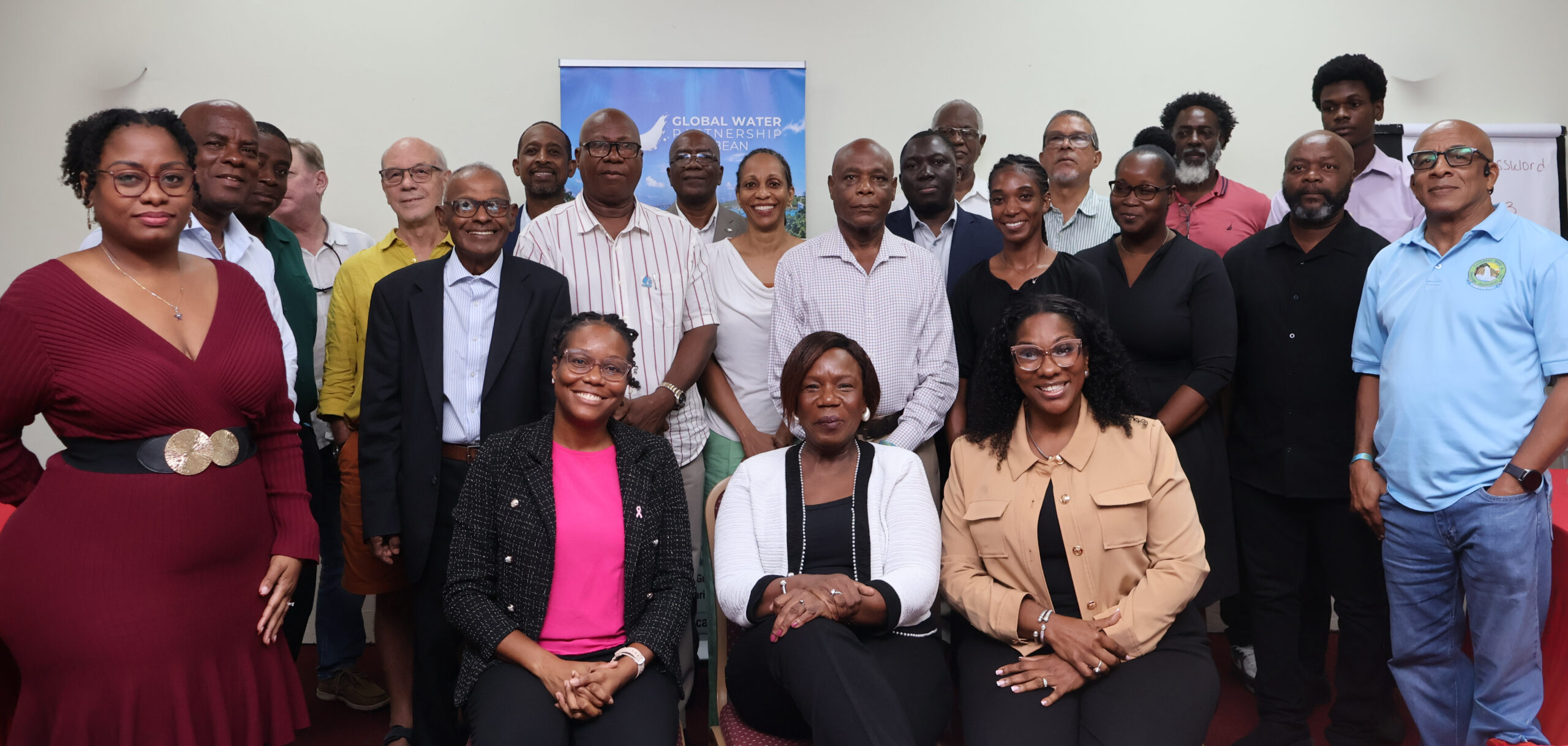
    Last week, the JFF teamed up with Concacaf, the regional governing body for football in North and Central America and the Caribbean, to wrap up a new “Train the Trainer” coach educators workshop. The hands-on program was hosted at the Captain Horace Burrell Centre of Excellence, located at The UWI Mona Bowl in St Andrew, and led by a panel of football and education experts: JFF Director of Football Andrew Peart, FIFA Caribbean technical consultant Lenny Lake, Ballaz Academy founder Andre Virtue, and Concacaf Head of Education Andre Waugh.

    The workshop gathered a cohort of accomplished local coaches from across the island, including Keon Broderick, the lead coach behind Excelsior High School’s recent Manning Cup title win. Trainees joined the program with the goal of joining Jamaica’s existing network of coach educators, supporting the delivery of the national football association’s C and D-level coaching certification courses.

    In an interview with the Jamaica Observer, Peart emphasized that growing the number of qualified coach educators stands as a top strategic priority for the JFF. He was quick to note, however, that elite coaching experience alone does not make an effective coach educator. “A good coach educator is one who, of course, has credibility in the game as a coach, has knowledge of the game, has those characteristics that would facilitate that respect from others and one who understands adult learning principles,” Peart explained.

    Unlike youth coaching, working with aspiring coaches requires a specialized approach to adult learning, Peart added. Trainee coaches bring years of existing on-field experience and clear professional goals to their coursework, so educators must foster a collaborative, supportive learning environment that helps adult learners build on their existing knowledge rather than starting from scratch.

    Peart argued that expanding the coach educator ecosystem will create ripple benefits across every level of Jamaican football. “Over time, this sector will need coach educators, coach educator developers, coach developers, coach mentors; so you’ll need that broad framework, which supports the entire ecosystem,” he said. “Because in having more coaches now you’re going to need more mentors, more educators to deliver courses, but more mentors, more developers. So it will be an ecosystem that has different target groups supporting the whole football.”

    Paul Alexander, Director of Football at Ballaz Academy and a workshop participant, reported that the program left him far better prepared to take on his new role as a coach educator. For years, Alexander has focused on grassroots youth coaching, but the training gave him new insights into specialized adult learning frameworks, including how to apply concepts like Maslow’s hierarchy of needs to build more effective learning environments for trainee coaches.

    “I think it’s very important because if we can now help facilitate an environment that allow student coaches to take ownership of their learning and really come to an understanding of how to become a better coach and we produce better coaches out of that, I think the players on the pitch are the ones who are going to be developed and we’ll see the fruits of it down the road,” Alexander said.

    The workshop is part of a two-year national push by the JFF to upgrade the qualifications of domestic football coaches across the country. Rudolph Speid, current head coach of Jamaica’s senior men’s national team, the Reggae Boyz, and chairman of the JFF Technical Committee, outlined the progress the association has already made: by 2026, Jamaica boasts more than 400 C-licensed coaches (up from zero in 2017), 1,500 D-licensed coaches, 200 B-licensed coaches, 60 A-licensed coaches, and four coaches currently completing their top-tier professional coaching licenses.