博客

  • Ministry of Works Employees Block Road Over Outstanding Pay

    Ministry of Works Employees Block Road Over Outstanding Pay

    On Tuesday, public sector employees at the Ministry of Works in Antigua and Barbuda initiated organized industrial action to escalate their demands for long-overdue wage payments. What began as a collective demonstration escalated into a full blockage of the main roadway outside the ministry’s headquarters, disrupting daily movement across the area.

    The industrial action was officially confirmed by George Wehner, a representative familiar with the workers’ grievances, who clarified that the protest was not an unplanned disruption but a deliberate push to secure the withheld wages that workers have been waiting for. To enforce their road blockage, protesters moved heavy-duty trucks owned by the Ministry of Works across the full width of the roadway, bringing all vehicle traffic to a complete halt. This action also cut off routine public access to the ministry’s main compound, as hundreds of aggrieved employees gathered along the perimeter of the facility to voice their frustration.

    The demonstration created cascading traffic disruptions for the entire surrounding neighborhood. Motorists who had planned to travel through the corridor faced extended delays, with many forced to either wait out the standoff or divert onto smaller, less direct alternate routes to reach their destinations. As of this report’s publication, senior leadership at the Ministry of Works and officials from Antigua and Barbuda’s national government have not released any formal public statement addressing the industrial action. There is also no public information confirming when the outstanding wage payments will be disbursed to affected workers, and it remains unclear whether any negotiation talks have been scheduled or are currently underway between worker representatives and government officials to reach a resolution to the ongoing dispute.

  • CARICOM delegation heads to London for key reparations discussions

    CARICOM delegation heads to London for key reparations discussions

    After more than a decade of relentless advocacy that has steadily shifted global and public opinion, the CARICOM Reparations Commission (CRC) is bringing its campaign for reparatory justice for the transatlantic slave trade directly to the United Kingdom this week, with a four-day diplomatic and outreach mission running from July 13 to 16.

    Organized in partnership with the Institute of Commonwealth Studies at the University of London’s School of Advanced Study, the trip is designed to do more than just restate the Caribbean region’s longstanding demands. According to a public statement released by the Institute of the Black World (IBW), a key supporting organization for the mission, the delegation will focus on deepening existing strategic partnerships, expanding public awareness of the harms of chattel slavery, and mobilizing broader civil society engagement behind the reparations agenda.

    Leading the high-profile delegation is CRC Chair Professor Sir Hilary Beckles, joined by a cohort of senior regional and global reparations leaders. The group includes Dorbrene O’Marde, head of the Antigua and Barbuda Reparations Support Commission and CRC Vice Chair; Eric Phillips, another CRC Vice Chair who leads the Guyana Reparations Committee; Professor Verene Shepherd, who also holds a vice chair role on the United Nations Committee on the Elimination of Racial Discrimination; Barbados’ Ambassador to CARICOM David Comissiong; and Dr. Ron Daniels, convener of the U.S.-based National African Reparations Commission.

    The UK mission comes at a pivotal moment for the global reparations movement, marked by a string of historic breakthroughs that have pushed the issue from a marginalized demand to a core global human rights conversation. Since the CRC was founded 12 years ago, the body has led a sustained regional campaign of advocacy and public education that has kept demands for reparatory justice anchored on the international policy agenda.

    Momentum has accelerated sharply in recent years. In 2024, at the Commonwealth Heads of Government Meeting held in Apia, Samoa, CARICOM secured a landmark agreement: Commonwealth leaders formally acknowledged that the time has come for open, truthful and respectful dialogue to build a more equitable future that addresses the legacy of slavery. This marked the first time the bloc had explicitly backed such a conversation, representing a major diplomatic win for the Caribbean campaign.

    Public opinion in the UK, one of the key former colonial powers that profited from the transatlantic slave trade, is also shifting toward supporting redress. IBW cited a 2025 national poll conducted by The Repair Campaign, which surveyed 2,000 UK adults. The data showed 63% of respondents now back a formal government apology to Caribbean nations and the descendants of enslaved Africans, a four percentage point increase from 2024 polling. Support for financial compensation also rose by four points over the same period, reaching 40% of UK adults.

    Global institutional progress has also moved rapidly this year. In March 2026, the United Nations General Assembly passed a groundbreaking resolution led by Ghana that formally categorized the transatlantic trafficking of enslaved Africans and the system of chattel slavery as the gravest crime against humanity in modern history. That resolution set the stage for a high-level global consultative conference on reparations held in Accra, Ghana this past June, where government representatives, international organization officials, legal scholars and civil society leaders gathered to draft a shared framework for advancing reparatory action. The conference was widely described as a historic turning point for Africans and people of African descent worldwide.

    Just weeks before the UK mission, CARICOM’s own regional leaders reinforced their commitment to the cause. Earlier this month, CARICOM heads of government formally approved an updated version of the bloc’s core policy document, the CARICOM Ten Point Plan for Reparatory Justice: A Manifesto for the Coming Enlightenment. The revised framework frames reparations as an urgent global human rights imperative, and leaders backed a suite of new initiatives to advance the regional agenda.

    The CRC’s UK visit is intended to build on this wave of progress, cementing cross-border alliances and ensuring Caribbean demands for redress for the harms of slavery remain a top priority in global political and civil society discourse.

  • ECCB records second-highest profit in its history, says Governor Antoine

    ECCB records second-highest profit in its history, says Governor Antoine

    The Eastern Caribbean Central Bank (ECCB) has closed out its most recent financial year with one of the strongest performances in its institutional history, delivering a profit of EC$121.6 million that marks the second-highest annual gain the central bank has ever recorded. While the figure represents a slight pullback from the all-time record of EC$126.1 million posted in the previous financial year, ECCB Governor Timothy Antoine has emphasized that the Eastern Caribbean Currency Union’s core financial foundations remain solid, even as households and businesses across the bloc continue to grapple with persistent cost-of-living challenges.

    Antoine shared the results during the recent ECCB Monetary Council meeting hosted in Dominica, where he addressed the three most pressing concerns on the minds of residents across the currency union: the strength of the Eastern Caribbean (EC) dollar, the security of personal savings, and the trajectory of rising living costs.

    When responding directly to public concerns, Antoine offered clear reassurance on the first two issues. “Our EC dollar remains exceptionally strong,” he stated, noting that the currency is backed by foreign reserves covering 97.61% of its value — far exceeding the 60% statutory minimum requirement mandated for the union. Total foreign reserves across the bloc have now climbed to $5.9 billion, providing robust, ongoing support for the currency.

    “A strong currency requires a strong central bank. I am therefore pleased to report that the central bank is financially strong,” Antoine added, confirming that personal savings held across the region’s financial system are fully secure. He also noted that the regional banking sector maintains strong capital and liquidity buffers that keep the system stable and resilient, though he acknowledged that customer service across the industry requires significant improvement to meet public expectations.

    On the question of easing cost-of-living pressures, Antoine offered a more mixed assessment. Inflation across the currency union has moderated in recent months, bringing some relief to household budgets, but he acknowledged that many families and small businesses still continue to feel the strain of elevated prices. Even with this ongoing pressure, he stressed that the long-term structural strength of the currency union remains unshaken.

    Looking forward, the ECCB projects steady regional economic growth of approximately 2.8% for both this year and next, with the tourism and construction sectors continuing to act as the primary engines of expansion across the bloc. The central bank also reported that private sector credit grew by 5.8% last year, driven by a 10.1% jump in business lending and a 3.3% rise in household credit. This growth indicates that more local businesses and residents are gaining access to financing needed to fund investments, expand operations, and create new jobs across the region.

    In a final disclosure, Antoine confirmed that credit card debt across the currency union rose by 1.7% to reach EC$328.8 million, a small uptick that comes even as overall inflation has slowed in recent months. This modest increase signals that some households are still relying on consumer credit to cover everyday expenses amid lingering cost pressures.

  • APUA Announces Adjusted Water Schedule for Some Communities

    APUA Announces Adjusted Water Schedule for Some Communities

    Officials from the local Water Business Unit have announced an emergency adjustment to regional water distribution networks, triggered by a significant drop in surface water reserves at Bendals Valley. The declining volume has pushed water levels below the minimum threshold required for operational extraction from the valley’s natural water sources, forcing an immediate shift in supply routes for the area.

    Prior to this change, 11 distinct communities spanning across the region relied exclusively on the Bendals Water Treatment Plant for their daily water access. These affected residential areas include Bendals Village, Bendals Road, Bathlodge, Cashew Hill, Whenner Road, Brownes Avenue, Martins Village, DeSouza Road, Tindale Road, the Eastern Section of Golden Grove, and Golden Grove Extension. Moving forward, all these communities will draw their water from two alternative sources: the Ffryes Reverse Osmosis (RO) Plant and the limited number of active wells that remain operational within the Bendals Valley itself.

    The Ffryes RO Plant, a key desalination facility that already provides water to large swathes of the southwestern part of the country, currently serves 10 additional communities directly. These include Big Creek, Ebenezer, Jennings, Bolans, Crab Hill, Johnsons Point, Urlings, Cades Bay and Old Road. With the addition of 11 more communities to its customer base, the expanded load has placed increased pressure on the facility’s distribution infrastructure.

    As a result of this expanded service area, the Water Business Unit has warned customers that service disruptions and changes are to be expected across both the newly added and existing service zones connected to the Ffryes RO Plant. Common issues that residents may encounter include reduced water pressure from household taps, shorter windows of active water service on scheduled days, and longer gaps between planned distribution rotations.

    To manage the strained supply, the regional water authority has implemented a rotating service schedule that allocates available water resources across all affected communities in sequence. Officials have issued a public appeal to all residential customers: when water service is active at their property, households should store sufficient water for upcoming off periods in a responsible manner, and all residents are urged to maintain consistent water conservation habits in their daily use to stretch the limited available supply.

    In closing, the Water Business Unit expressed gratitude for the public’s cooperation and patience as the organization works to navigate the current water scarcity challenge and manage the region’s limited available water resources in the most equitable way possible.

  • Final farewell to ‘visionary’ fisheries chief Cox

    Final farewell to ‘visionary’ fisheries chief Cox

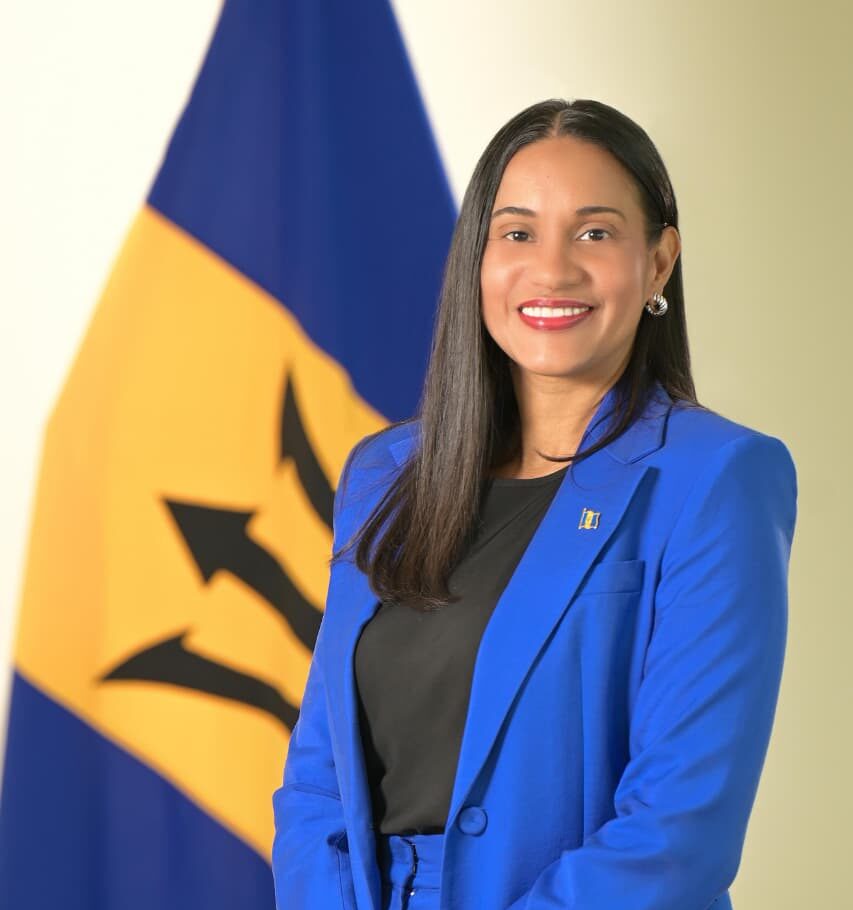
    On Monday, Barbados gathered to lay to rest one of its most promising public servants, Chief Fisheries Officer Dr Shelly-Ann Cox, who died suddenly at 38 while carrying out work she loved. Family, friends, representatives from uniformed services, and senior government officials joined members of the island’s fishing community to honor the visionary leader whose transformative legacy is expected to shape Barbados’ fisheries sector for generations to come.

    Dr Cox collapsed and died on June 13 while presenting awards at a community fishing event held in Weston, St James. Appointed to the top fisheries role in January 2023, she made history as the youngest person ever to hold the position, and only the second woman to serve as a chief fisheries officer across the entire Caribbean Community bloc. Her groundbreaking appointment marked a milestone for young leaders and women in marine management across the region.

    Speaking at the official funeral service hosted at Wildey Gymnasium, Prime Minister Mia Mottley told gathered mourners that Dr Cox died while actively serving the fishing community she had dedicated her entire professional career to. “She did not observe from a distance. She was serving. She was giving. Right there,” Mottley emphasized, noting that while Dr Cox’s life was cut tragically short, her impact on the nation would never be forgotten.

    “We will always wish that she had more time. But let us also remember that a life cut short is not a life of no consequence. Her life was short, but her contribution was not small. It was great. Her example will not only endure. It will inspire,” the prime minister said. She reassured Dr Cox’s family that the entire nation had benefited immeasurably from their loved one’s service and commitment to public good.

    Mottley first encountered Dr Cox through the government’s Future Barbados leadership development program, where the young professional immediately stood out for her clear sense of purpose and innate leadership ability. “We wanted to create something that would give our young people opportunity to express themselves, to learn, to share and to drag us into the future with them. Shelly was part of that first cohort. Her purpose that very first day at Ilaro Court became absolutely clear to me,” the prime minister recalled. When the role of chief fisheries officer opened, Mottley said she had no doubt Dr Cox was the right candidate to lead the sector, and the young leader never disappointed.

    “Shelly did not disappoint. She excelled. She had the mind of a scholar, the instincts of a practitioner, but above all else, the heart of someone who cared,” Mottley said. She praised Dr Cox’s rare ability to bridge academic expertise and on-the-ground understanding of the challenges facing ordinary fisherfolk, a skill that set her apart as a leader. “The scholarship never separated her from people. She understood the policy, but she understood the reality of the work in the market,” the prime minister added.

    This unique combination of vision and attention to detail was on full display in Dr Cox’s work shaping the national Barbados Fisheries Policy and steering the passage and implementation of the landmark Sustainable Fisheries Management and Development Act. “It was probably her management of the complex Sustainable Fisheries Management and Development Act of 2025 that we saw her amazing skills and her capacity to bring vision into life, dotting every ‘i’ and crossing every ‘t’. Very often you do not find that capacity for vision married with that capacity for detail,” Mottley noted.

    The prime minister also highlighted Dr Cox’s steady leadership in the aftermath of Hurricane Beryl, which destroyed the Bridgetown Fisheries Complex in July 2024. Mottley recalled that Dr Cox made repeated visits to the damaged site, focusing entirely on restoring the critical industry that supports hundreds of Barbadian households. “Shelley’s unflappable stance ensured that even when fishermen, those depending on the industry, panicked, hers was a steady voice. That’s remarkable for someone so young, but with a clear, clear mission,” she said. “We know what we have lost,” Mottley added, acknowledging the enormous gap left by Dr Cox’s passing.

    Nikola Simpson-Kellman, a close friend and colleague of Dr Cox, echoed that reflection in an earlier tribute, noting that Hurricane Beryl was one of the only times she ever saw Dr Cox overcome by emotion. “Almost always had a smile on her face; even when she was facing challenges, she was inspired and gifted and guided. The only time that I ever saw Shelley crying was just after Hurricane Beryl, when the complex was a scene of utter devastation and heartbreak,” Simpson-Kellman said.

    Addressing Dr Cox’s young son, Shay Ocean Cox, Mottley said no words could ease the loss of his mother, but he must always carry with him the knowledge of how deeply she was respected and loved by the entire nation. “You must know that your mother served this country greatly. You must know her work has been spoken of with pride,” she said. The prime minister issued a call to members of the Fisheries Division and the broader fishing community to carry forward the work Dr Cox started, noting that the greatest tribute to her legacy would be to bring her transformative vision to completion.

    Damien Prescod, another friend and colleague, described Dr Cox as an exceptional public servant whose deep passion for the ocean drove her mission to reform and revitalize Barbados’ fisheries sector. “Within the span of three years, Shelly and her A-Team revitalised the local fisheries sector. One only had to enter the halls of the Fisheries Division since she assumed the role of Chief Fisheries Officer to feel the renewed sense of purpose and contagious energy that emanated from personnel within the various departments,” Prescod said.

    He added that Dr Cox prioritized investing in the people around her, believing every worker deserved the chance to grow professionally. “She met them where they were at and provided them with the tools to evolve and elevate professionally. No one was left behind,” Prescod said, recalling Dr Cox’s relentless work ethic, which often saw her sending work messages to colleagues before dawn. When he once asked where she found the energy for such a demanding schedule, her answer was always the same: “If we don’t do it, who will?”

    Prescod credited Dr Cox with advancing science-based fisheries management across the island, leading innovative work on the productive use of sargassum seaweed, expanding opportunities for women and young people in the fisheries sector, and steering the industry’s recovery after Hurricane Beryl. While her passing has left a void that can never be filled, he said the community must ensure her vision endures. “There will never be another you, and this space will never be the same. However, the mission continues. We will honour your legacy and do our best so that the shared vision of world-class transformation continues, rooted in deep collaboration,” Prescod said.

    Simpson-Kellman echoed that call, urging colleagues to carry forward Dr Cox’s work while honoring the friend she was to so many across the island. “We are forever grateful and privileged to have been in your physical presence. As you would often say to me on our birthdays, friends like you are the greatest gift. Shelly, you were and are the greatest gift to so many,” she said.

  • Court overturns appointment of lead judge in vaccine mandate case

    Court overturns appointment of lead judge in vaccine mandate case

    A landmark legal ruling from the Eastern Caribbean Supreme Court (ECSC) has upended the appointment of a senior appellate judge, while leaving his controversial prior decision on a high-stakes COVID-19 vaccine mandate in place, sending ripples through legal and political circles in St. Vincent and the Grenadines (SVG).

    In a written judgment delivered July 7, High Court Justice Raulston L. A. Glasgow annulled the January 8, 2024 appointment of St. Lucian jurist and academic Eddy Ventose to the ECSC’s Court of Appeal. The ruling confirmed that at the time Ventose wrote a key 2025 majority verdict overturning a lower court’s nullification of SVG’s national COVID-19 vaccine mandate, he did not legally hold the position of Justice of Appeal.

    The vaccine mandate case at the center of broader public and legal debate traces back to March 2023, when then-High Court Justice Esco Henry — now elevated to the appellate bench — ruled the mandate implemented by SVG’s ruling Unity Labour Party (ULP) was unconstitutional and void. The government appealed the decision, and in February 2025, a 2-1 majority of the ECSC appellate panel led by Ventose overturned Henry’s ruling. Appellate Justice Paul Webster joined Ventose’s majority opinion, while Justice Gerhard Wallbank issued a dissent saying he would have upheld the lower court’s ruling and dismissed the government’s appeal.

    The validity of Ventose’s appointment was first challenged in December 2025, when former Grenada Attorney General and King’s Counsel James A.L. Bristol filed an application for judicial review with the ECSC, targeting the Judicial and Legal Services Commission (JLSC)’s approval of Ventose’s appointment. Bristol argued Ventose failed to meet two core statutory qualifications for appellate court office laid out in Section 5(2) of the ECSC Courts Order: first, he had not served a cumulative total of at least five years as a judge of an unlimited jurisdiction court in the Commonwealth, and second, he had not accumulated the required 15 years of experience practicing as an advocate before a qualifying court.

    Ventose had sought to dismiss Bristol’s challenge outright, arguing the court lacked jurisdiction to hear the matter and labeling the application an abuse of process. The court rejected this preliminary motion in December 2025, clearing the way for a full merits trial of the challenge.

    In his final judgment, Justice Glasgow confirmed that Ventose’s appointment fails to meet the statutory qualifications mandated by law. Citing Section 101 of the Grenada Constitution Order 1973, Glasgow ruled Ventose’s appointment is “unconstitutional, null, void and of no effect” due to his failure to satisfy the eligibility criteria in Section 5(2) of the Courts Order. Critically, however, the judgment explicitly clarifies that the ruling casts no shadow over Ventose’s professional legal standing: the court confirmed no questions have been raised regarding Ventose’s competence, extensive legal expertise, or widely acknowledged professional accomplishments, a position Bristol himself reaffirmed during oral arguments.

    Glasgow noted that all relevant stakeholders — including the JLSC, Ventose, the ECSC, the appointment search committee, and the public Ventose served — operated under the shared assumption that Ventose’s appointment was valid until the search committee raised formal concerns. There is no evidence to conclude Ventose knew or reasonably should have known he occupied the office unlawfully, the judge added.

    This finding cleared the way for Glasgow to apply the de facto officer doctrine to all proceedings Ventose participated in and all rulings he issued during his tenure. “Those proceedings and judgments are therefore not rendered invalid by reason only of the defect in his appointment,” the judgment reads. This means Ventose’s February 2025 ruling overturning the lower court’s voiding of the vaccine mandate, along with all other rulings he issued during his time on the bench, remain in effect unless overturned by a higher court.

    The core legal dispute centered on interpretation of the statutory language governing appellate qualifications. All parties to the challenge agreed Ventose did not meet the first eligibility requirement of five years of prior judicial service in a Commonwealth unlimited jurisdiction court. The disagreement turned on whether he met the second requirement: 15 cumulative years of practice as a qualified advocate before such a court. The JLSC defended its appointment, asserting it had properly verified that Ventose met the 15-year requirement and had complied fully with all statutory rules. Ventose echoed the JLSC’s position, affirming he meets the constitutional eligibility criteria and that his appointment was lawful.

    The vaccine mandate case is now pending final review by the London-based Privy Council, SVG’s highest appellate court. Legal analysts note the recent ruling on Ventose’s appointment is expected to reignite fierce public debate in SVG over the controversial mandate, which political observers say played a decisive role in the ULP’s landslide 14-1 defeat to the New Democratic Party (NDP) in the November 2025 general election. The mandate led to the termination of hundreds of public sector workers who refused vaccination, though most have since returned to their positions under transition arrangements negotiated between the outgoing ULP administration and the incoming NDP government.

  • Plan voor extra verkeershandhavers krijgt steun van minister Monorath

    Plan voor extra verkeershandhavers krijgt steun van minister Monorath

    PARAMARIBO, Suriname – July 14 – Suriname’s Minister of Justice and Police Harish Monorath has announced full backing for a targeted proposal designed to expand the enforcement capabilities of the Korps Politie Suriname (KPS), the country’s national police force, in a major push to cut traffic violations and improve public road safety. The initiative, which centers on training and deploying dedicated traffic enforcement officers to step up monitoring of road rule compliance, was formally presented to the minister by the Traffic Enforcement Commission, a body chaired by Joanne Kasno-Adraai, director of Suriname’s National Road Safety Institute (VVI).

    Members of the commission laid out core details of the proposal during a formal presentation attended by a cross-section of key stakeholders, including KPS’ head of traffic policing, the lead traffic official for the national investigative team, a representative from the national legislation bureau, a retired senior police chief inspector, and a senior staff member from VVI. During the gathering, commissioners walked attendees through the plan’s core objectives, projected public safety outcomes, and outlined next steps for moving the initiative forward.

    Per the commission’s analysis, expanding dedicated enforcement capacity will directly increase the likelihood that drivers who violate traffic laws will be caught, creating a stronger deterrent effect that addresses high-risk dangerous driving behaviors that have contributed to road accidents and casualties across the country. Following the presentation, Minister Monorath publicly praised the commission for developing the targeted initiative and reaffirmed his full support for moving it toward implementation.

    Monorath emphasized that strengthening targeted traffic enforcement is not a discretionary measure, but a necessary step to deliver long-term, sustainable improvements to Suriname’s road safety outcomes for all road users, from pedestrians to professional drivers. The minister also stressed that the project should move forward with urgency, calling for the training and deployment of the new dedicated traffic enforcement officers to begin as soon as possible.

    In the coming weeks, relevant government bodies will hold additional working sessions to work through the fine details of the plan and finalize implementation arrangements. For the initiative’s architects, the expansion of traffic enforcement capacity marks a critical foundational step toward higher rates of road rule compliance and a safer road environment for every person using Suriname’s road networks.

  • LIVE: Disaster and You 14th July 2026 presented by Office of Disaster Management

    LIVE: Disaster and You 14th July 2026 presented by Office of Disaster Management

    When a news content submission is processed, only social sharing buttons (Share, Tweet, Pin) and a link to an image file are provided, with no full textual content of the intended news story included. This incomplete submission leaves no core information, key events, contextual details or subject matter to analyze, rewrite or classify. Without the actual text of the news report, it is impossible to extract core points, identify the topic of the story, assess its significance, or complete the requested rewriting and analysis tasks. Individuals seeking news processing are required to provide the full, complete textual content of the original news story to receive a comprehensive, accurate output that meets all stated requirements.

  • Vincy engineer advances career at world’s top semiconductor maker

    Vincy engineer advances career at world’s top semiconductor maker

    Twelve years ago, Devan Peters left his small island home of Belmont, St. Vincent and the Grenadines (SVG), for a life-changing opportunity half a world away. What began as a 2014 Taiwan Ministry of Foreign Affairs (MOFA) scholarship to study Mandarin and complete an undergraduate degree has evolved into a rare and remarkable achievement: Peters now serves as an engineer at Taiwan Semiconductor Manufacturing Company (TSMC), the global powerhouse that dominates 70% of the world’s contract semiconductor manufacturing and supplies critical chips to tech giants from Apple to Nvidia.

    As the only known Vincentian employee at TSMC’s Taiwan headquarters and one of just a handful of Caribbean professionals on the company’s roster, Peters’ journey is far more than a tale of individual career success. It is a case study in strategic planning, resilience, and unwavering commitment to lifting up his home country, even as he builds a life thousands of miles from its shores.

    Peters’ path to TSMC was not a given. His first attempt at securing the MOFA Taiwan scholarship in 2013 ended in rejection. Rather than abandoning the goal, he re-applied the following year and earned the award that brought him to Taipei. After a year of intensive Mandarin study at National Taiwan Normal University, he enrolled in Tamkang University’s electrical and computer engineering program – completing his entire bachelor’s degree in Mandarin, a feat few international students attempt. He went on to earn a master’s degree in the same field from National Yang Ming Chiao Tung University, and today balances a full-time engineering role at TSMC while completing a PhD focused on semiconductor test circuit design.

    Breaking into the hyper-competitive semiconductor sector at a top firm like TSMC required intentional preparation long before Peters ever submitted a job application. Instead of waiting to apply for roles after graduation, he mapped his academic and skill-building journey around industry requirements. “I identified the roles I wanted; for example, integrated circuit designer, then studied the job postings for those roles to see exactly which skills companies were asking for,” Peters explained. “From there, I worked backwards. I chose courses that mapped directly to those requirements and built a project portfolio around them so that when a hiring manager looked at my CV, they immediately saw someone who already fit the role.”

    This strategic approach paid off, landing him interviews with multiple major global tech companies before he accepted his current role at TSMC. Peters notes that technical expertise alone is not enough to succeed in Taiwan’s engineering sector: fluency and commitment to Mandarin are non-negotiable, as most workplaces operate entirely in the local language. He also emphasizes the importance of maintaining full legal compliance for visas, residency, and work authorization – small details that can derail even the most qualified candidate’s prospects.

    Throughout every challenge of his 12-year journey, Peters says his Christian faith, the inspiration of his siblings who pursued overseas higher education, and the support of loved ones kept him grounded. In Taiwan, he particularly credits his wife Shemon Baptiste-Peters and local Vincentian cultural ambassador Peggy Carr for standing by him through every milestone. Before moving to Taiwan, Peters was not a top-performing student, but he refused to let language barriers or his background become an excuse, working steadily to earn strong marks through every Mandarin-taught course.

    Today, as one of the few Black professionals at TSMC, Peters frequently fields questions from curious colleagues about his home country – opportunities he embraces to share Caribbean culture and raise awareness of SVG. Despite building a life and career in Taiwan, he has never lost sight of his goal to give back to the nation he still calls home. He has already begun this work: during a recent visit to SVG, he spoke to students at his alma mater, the SVG Community College’s Technical and Vocational Division, and donated equipment to support both students and lecturers. His long-term plan is to gain enough expertise and experience in the global semiconductor industry to make a meaningful, lasting contribution to SVG’s development when he eventually returns.

    Adjusting to life in Taiwan came with steep challenges, Peters acknowledges. The language barrier creates hurdles in everyday interactions, from opening a bank account to navigating government bureaucracy, and cultural adaptation took time. But today, he speaks highly of his adopted home, calling it “one of the safest, most convenient places I’ve lived thus far,” praising its affordable, high-quality healthcare, reliable public transit, and generally welcoming attitude toward foreigners. “The turning point for me was committing to Mandarin seriously. Once you can operate in Chinese, a completely different Taiwan opens to you, professionally and personally,” he says. “My wife and I have built our life here now. And after all these years, I can say this is a country that rewards people who invest in it.”

    For Caribbean students considering pursuing higher education in Taiwan through the MOFA scholarship program, Peters offers clear, experience-backed advice. He notes that Taiwan provides a uniquely accessible path to a world-class education in high-demand fields like engineering and technology, with tuition and living costs that make it far more financially viable than many Western study destinations. He encourages prospective students to research industry opportunities in their field early, build relevant skills before job hunting, and prioritize Mandarin study from day one – calling language proficiency the single biggest factor in turning a study abroad term into a long-term, rewarding career. He also advises students to prepare mentally for the great distance from home, build local community early, and know that long-term residency and professional success are achievable outcomes for hardworking students.

    “I came here as a student, and I’m still here by choice, all these years later,” Peters says. “Everything I am doing now is a stepping stone towards achieving my full potential. I will always be Vincentian, no matter where I am.”

    This report was produced by Kemarlie Durrant, a Vincentian mass communication and journalism student at Taiwan’s Ming Chuan University, as part of a graduation internship in collaboration with the Embassy of St. Vincent and the Grenadines to Taiwan. Durrant is on track to complete his bachelor’s degree in June 2027.

  • Antigua and Barbuda Named Among the Finalists in the World Dental Federation’s Young Dentist Leadership Program

    Antigua and Barbuda Named Among the Finalists in the World Dental Federation’s Young Dentist Leadership Program

    The Antigua and Barbuda Dental Association (ABDA) has announced a landmark achievement for its national dental community: the small Caribbean nation has been selected as one of the finalists for the prestigious Young Dentist/Early Career Dentist Leadership Program hosted by the FDI World Dental Federation. This international recognition marks a major milestone for the association, which has spent years prioritizing investments in emerging dental professionals across the country.

    At the core of ABDA’s successful nomination was a detailed submission showcasing the organization’s holistic strategy to nurture the next wave of dental leaders. The association’s program centers on four key pillars: structured mentorship pairing early-career practitioners with seasoned industry veterans, targeted leadership skill-building workshops, iterative governance reforms designed to give young dentists a greater voice in decision-making, and expanded access to evidence-based continuing education opportunities that keep local practitioners aligned with global dental care standards.

    The final stage of the global program will place Antigua and Barbuda’s work in the international spotlight this September. All finalist initiatives will be featured through immersive photo and video exhibits at the upcoming FDI World Dental Congress, held in Prague, Czech Republic. The showcase will give hundreds of senior dental leaders and policy-makers from every corner of the globe the chance to learn about the innovative, inclusive approaches ABDA has implemented to support early-career dentists in a small island nation.

    A key driving force behind the initiative has been Dr. Jaleel Allen, ABDA’s official Early Career Dentist Representative. Throughout the development and nomination process, Dr. Allen has worked closely with young dental professionals across Antigua and Barbuda, amplifying their needs, advocating for resources, and representing their interests at every level of the association’s work.

    In comments on the achievement, ABDA President and National Liaison Officer to the FDI World Dental Federation Dr. Deborah Akande emphasized the broader meaning of the selection. The recognition, she noted, proves that innovative thinking and dedicated, purpose-driven leadership can generate global impact regardless of the size of an organization or the country it represents. “We are incredibly proud that Antigua and Barbuda will be represented on this world stage,” Dr. Akande said. “This achievement reinforces our long-standing commitment to continuing to invest in the next generation of dental leaders who will shape the future of our field.”

    The association extended formal gratitude to every stakeholder that contributed to the program’s success, including its full membership base, Executive Board, industry lecturers, volunteer mentors, and the early-career dentists whose passion and commitment turned the vision into a reality. Looking ahead, ABDA says it will continue expanding and refining its Early Career Dentist program, with the ultimate goal of building a stronger, more accessible future for dentistry and public oral health across Antigua and Barbuda.