博客

  • Derde helft WK 2026: Team Brazilië barst van talent, moet zich bewijzen

    Derde helft WK 2026: Team Brazilië barst van talent, moet zich bewijzen

    As the 2026 FIFA World Cup approaches in North America, five-time champions Brazil enter the tournament as one of the tournament’s most surprising underdogs, despite a long and unparalleled history of success on the world’s biggest football stage. The only nation to have qualified for every men’s World Cup since the tournament’s inception in 1930, Brazil holds the record for the most World Cup titles, with triumphs in 1958, 1962, 1970, 1994 and 2002. However, it has now been 24 years since the Seleção last lifted the golden trophy – a drought that matches the dry spell the side broke with their 1994 win on American soil, a parallel that has not been lost on fans and players alike.

    Recent years have brought a string of crushing disappointments for Brazilian football, from the traumatic 7-1 semi-final defeat to Germany on home soil in 2014 to a penalty-shootout quarter-final exit at the hands of Croatia in the 2022 Qatar World Cup. A shaky CONMEBOL qualifying campaign that saw Brazil finish fifth in the regional standings ultimately cost manager Dorival Jr his job, paving the way for a historic appointment: Real Madrid icon Carlo Ancelotti became the first permanent foreign head coach to take charge of the Brazilian national team last year.

    Ancelotti brings one of the most impressive resumes in club football to the role, with five UEFA Champions League titles earned across stints at AC Milan and Real Madrid, plus league trophies in all five of Europe’s top domestic competitions. Renowned for his ability to manage star personalities and build pragmatic, tactically flexible sides that thrive under pressure, Ancelotti does carry one major question mark into the World Cup: he has limited experience in international football. Early results with the Seleção have also been mixed, with friendly wins over Colombia and Chile offset by a 2-1 loss to world champions France in March 2026. One clear advantage for Ancelotti is his existing familiarity with many of Brazil’s top talents, most notably Real Madrid winger Vinicius Jr – the player widely flagged as Brazil’s difference-maker heading into the tournament.

    The 2026 Seleção’s breakout star has had a rollercoaster club season, struggling early on under former Real Madrid manager Xabi Alonso before finding his form once Álvaro Arbeloa took charge, finishing the La Liga campaign with 16 goals. For Brazil, the 28-year-old winger has yet to hit the same heights he reaches at club level, notching just eight goals in 43 senior international caps. Ancelotti has made the bold choice to move Vinicius into a central striker role, a positional shift that has sparked debate, but few doubt that when at his best, his blistering pace, close control and eye for goal make him nearly unstoppable for opposing defenders.

    One of the most controversial selection calls Ancelotti made was the inclusion of veteran Neymar, Brazil’s all-time leading goalscorer with 79 international goals, who has been plagued by a string of serious injuries over the past five years. The 34-year-old has not featured for Brazil since October 2023, and after a difficult spell in Saudi Arabia, he returned to his boyhood club Santos to rebuild match fitness. He was left out of Brazil’s March friendly squad due to lack of rhythm, so his World Cup selection came as a major surprise – especially with Chelsea’s player of the year Joao Pedro left out of the final squad. Ancelotti defended the call, noting that Neymar has shown consistent improvement in fitness and form over the past few months, and that his veteran experience was a priority for the squad. Neymar has spoken of his desire to mirror the 2002 run of Ronaldo, who led Brazil to the title after two years of injury struggles, though concerns remain over his fitness and off-field issues at this late stage of his career.

    Beyond the two star forwards, Brazil’s 2026 squad is packed with quality across the pitch. Raphinha comes into the tournament full of confidence after a standout title-winning season with Barcelona, while young talents like Endrick, Gabriel Martinelli and Matheus Cunha add further attacking depth, even as injuries to Rodrygo and Estevao are major blows to the side’s attacking options. In midfield, Newcastle’s Bruno Guimaraes has established himself as one of the Premier League’s top midfielders, while veteran Casemiro is enjoying a late-career resurgence at Manchester United. Brazil’s defense is anchored by Paris Saint-Germain leader Marquinhos, with Liverpool’s Alisson Becker widely regarded as one of the best goalkeepers in world football, giving the side a solid foundation at the back.

    Brazil has been drawn into Group C for the 2026 tournament, a repeat of the 1998 group stage that paired the Seleção with Morocco and Scotland. Haiti is the surprise qualifier, making their first World Cup appearance since 1974. 2022 semi-finalists Morocco are widely expected to be Brazil’s toughest group test, and will be eager to pull off an upset in their opening clash in East Rutherford, New Jersey on June 13. Brazil will then face Haiti in Philadelphia on June 19, before closing out group play against Scotland in Miami on June 24. Analysts widely expect Brazil to top the group if they perform to their potential, with comfortable wins projected against Haiti and Scotland.

    As the tournament kicks off, the narrative around Brazil remains clear: the five-time champions have all the individual talent and top-tier coaching needed to compete for the title, but their underdog status comes with good reason. Key question marks over Neymar’s fitness, Ancelotti’s inexperience at international level, and the strength of opposing contenders could all derail Brazil’s bid to end the 24-year title drought. For long-time Brazil fans, many of whom have supported the side through decades of highs and lows, belief remains unshaken – if the Seleção can find cohesion and perform at their best when it matters, they could pull off one of the most surprising World Cup triumphs in the tournament’s modern history.

  • Marine spatial plan bus hits road to boost public awareness

    Marine spatial plan bus hits road to boost public awareness

    On a Friday launch event held at the Garrison, the Caribbean nation of Barbados introduced an innovative public outreach tool: a custom-branded ‘moving classroom’ designed to bridge the gap between policymakers and local communities when it comes to marine conservation and sustainable ocean management. The core mission of this mobile initiative is to expand public understanding of the Barbados Marine Spatial Plan, a national framework that will shape the future of the island’s ocean resources, and make conversations about marine policy accessible to people across every corner of the country, rather than limiting them to closed-door conference rooms and technical consultations.

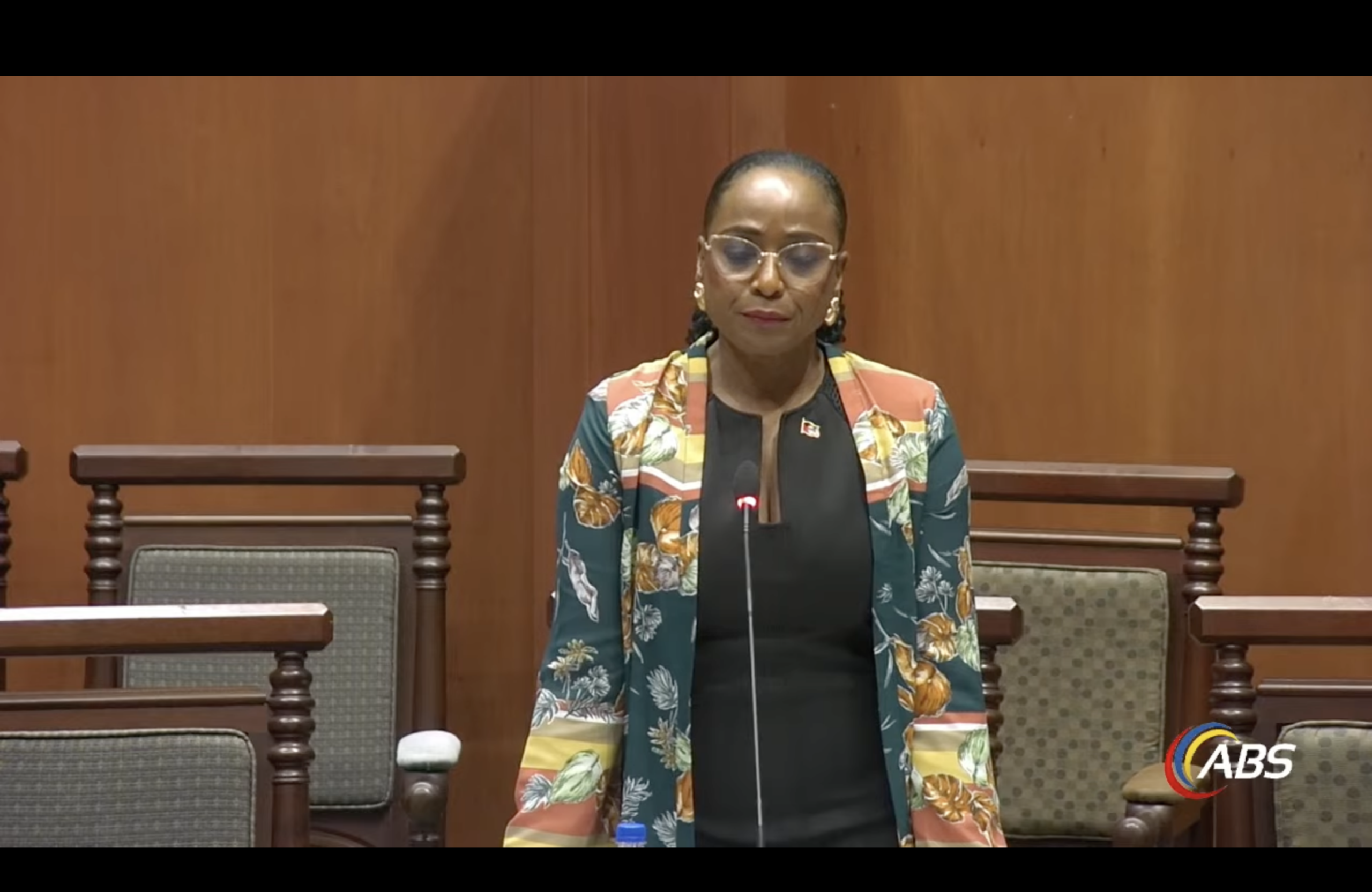
    Speaking at the official unveiling, Deputy Prime Minister and Minister of the Environment Santia Bradshaw emphasized that the initiative is far more than a simple branded vehicle. For Bradshaw and the government team behind the project, the bus is a mobile educational hub that brings discussions of ocean stewardship directly to Barbadians, regardless of their location or connection to marine policy. ‘This bus is more than a vehicle. It is what we consider a moving classroom, bringing the ocean to the people of this island and to those who visit,’ Bradshaw stated during her address.

    She explained that the project will break down the barriers that have long kept discussions of marine sustainability, climate resilience, and ocean governance confined to technical documents and elite policy circles. By traveling to communities across Barbados, the bus will create space for ordinary residents to learn about the national plan, ask questions of policymakers, and contribute input that shapes how the island’s marine resources are used and protected in the decades ahead. ‘Every journey that this bus makes is another opportunity to raise awareness, to learn more about the Barbados Marine Spatial Plan, and also to look at how we can help to shape the future of our ocean space,’ Bradshaw added.

    The environment minister stressed that marine spatial planning is not an abstract technical policy that only affects industry or scientists – it is a framework that touches the daily life of every single Barbadian. As a small island nation, Barbados’ entire economy and cultural way of life are inextricably linked to the surrounding ocean, supporting critical sectors from tourism and commercial fishing to food security and household livelihoods. Effective marine planning is essential to balancing the competing demands for ocean space, from conservation and recreation to renewable energy development and economic growth. ‘At its core, the marine spatial plan is about ensuring that we use our marine space responsibly, sustainably and fairly, balancing conservation, tourism, fisheries, recreation, renewable energy, economic opportunity and climate resilience,’ Bradshaw noted.

    Minister of Finance Ryan Straughn reinforced this perspective during the event, underlining the deeply intertwined relationship between environmental stewardship and long-term national economic development. Straughn pushed back against the long-held idea that environmental protection and economic growth must be addressed as separate, often competing priorities, noting that Barbados has embraced an integrated, cross-cutting approach to national policy that recognizes the value of natural assets as the foundation of economic prosperity.

    ‘There’s no separation between finance and environmental sustainability,’ Straughn said. He pointed out that Barbados’ marine territory supports nearly every pillar of the national economy, from tourism and the fast-growing blue economy to shipping, coastal protection, private investment, recreation, and widespread livelihoods across communities. As a small island developing state that is disproportionately vulnerable to the impacts of climate change and sea-level rise, Straughn argued that Barbados has no choice but to both protect its irreplaceable marine assets and use them responsibly to support current and future generations.

    ‘We have to treasure our assets, protect those assets, but also utilise those assets to ensure that our citizens can sustain themselves and their families and communities,’ Straughn said. He concluded by noting that how Barbados manages its marine resources as an independent republic will be a defining factor in building national climate resilience and ensuring that all future development is rooted in long-term sustainability that benefits all Barbadians.

  • AG vows jail time for gang members

    AG vows jail time for gang members

    Barbados is set to enact sweeping new legislation that will criminalize gang membership outright, as the Caribbean nation ramps up its crackdown on organized criminal activity. The Criminal Gangs (Prevention and Control) Bill, introduced to the House of Assembly by Attorney General Wilfred Abrahams on Friday, sends an uncompromising warning to anyone linked to criminal gangs: prison time is guaranteed for violators of the new law.

    “Jail, jail, jail is what awaits you if you belong to or associate with a gang,” Abrahams told legislators, emphasizing that the proposed legislation casts a broad net to capture not just core gang leaders, but anyone who actively affiliates with these criminal groups. “The government is dropping the hammer on gangs. The government is taking back control of Barbados.” Under the bill, even public displays of gang affiliation will count as admissible evidence in court. Abrahams specifically called out social media posts, noting that anyone who shares photos posing with gang signs on platforms like Instagram opens themselves up to criminal charges. “People now need to think twice about belonging to a gang. Very soon, belonging to a gang will be a stand-alone criminal offence in this country,” he added.

    To avoid misapplication of the law, Abrahams clarified the carefully drafted definition of a gang that was refined through extensive negotiations during the bill’s drafting process. Under the legislation, a gang is defined as any formal or informal grouping of three or more people organized to carry out criminal activity. The attorney general stressed that the law does not target groups of ordinary friends gathering for social purposes, and the sole determining factor for classification is ongoing participation in criminal activity.

    The bill sets out exceptionally strict mandatory minimum prison sentences to underscore the government’s zero-tolerance approach. Even basic gang membership or harboring a gang member carries a starting minimum sentence of 10 years behind bars, while more serious offenses draw penalties ranging from 15 to 35 years. Special provisions have been included to account for family relationships and maturity levels: parents, guardians and teachers acting in loco parentis will not be penalized for their natural relationships with minors who may be involved with gangs. While courts retain limited discretion to adjust mandatory minimum sentences for minors convicted under the law, that flexibility is heavily restricted, especially in cases involving the recruitment of children into gangs.

    Recruiting a minor into a gang carries harsher penalties than recruiting an adult, with sentences ranging from 10 to 25 years in prison. If the recruitment takes place on school grounds, at a place of worship, or within 500 meters of either location, the mandatory penalty jumps to between 15 and 25 years. The only exception to these mandatory minimums applies when the recruiter is also a minor, Abrahams explained.

    The legislation also expands the scope of evidence that can be used to prove gang affiliation, including self-admissions, assistance with gang activities, concealment of evidence, sharing of criminal proceeds, and public statements made on behalf of the gang. Anyone who hides weapons, disposes of evidence, or holds proceeds from gang crimes can also be prosecuted under the bill. Addressing widespread community concerns that residents of high-crime neighborhoods would be unfairly profiled as gang members based solely on their address, Abrahams confirmed the bill explicitly prohibits residence in a specific community from being used as evidence of gang membership. “We’re not targeting anybody based on where you live. We are targeting you based on what you do,” he said.

    Additional offenses covered by the bill include counseling, financing, or otherwise supporting gang criminal activity, which carry penalties of up to 25 years. Abrahams addressed concerns from the legal community, clarifying that legitimate legal representation for clients will remain protected, but anyone who facilitates gang criminal activity under the guise of legal work will be prosecuted. The bill also criminalizes tipping off gang members about upcoming police investigations, with penalties ranging from 10 to 25 years in prison for obstruction of justice.

    Retaliatory violence against witnesses, a common feature of gang-related conflict popularly referenced by the phrase “snitches get stitches,” is also targeted with harsh punishment. Anyone who retaliates against a cooperating witness faces between 15 and 30 years in prison. For law enforcement, the bill expands pre-charge detention powers, allowing police to hold suspects without a warrant for up to 72 hours, with extensions requiring judicial approval. It also introduces special protective measures for judges, magistrates, prosecutors, and jurors involved in gang prosecutions, who face elevated risks of retaliation. Threatening a judicial officer or juror carries the highest mandatory minimum sentence under the law, between 20 and 30 years imprisonment. Suspects charged under the bill will also be ineligible for bail in magistrate’s court, mirroring existing rules for firearms offenses, and must apply for bail directly to the High Court.

    Responding to critics who argue the bill prioritizes punishment over rehabilitation, Abrahams countered that the government has already invested heavily in diversion programs to steer young people away from crime, pointing to existing initiatives including the Chapman Challenge, peacebuilding programs, microfinance trust loans, and skills training. He emphasized that the purpose of this legislation is not to replace those rehabilitation efforts, but to send a clear message that gang activity will not be tolerated. “This legislation is intended to protect our communities and restore public confidence in our ability to keep citizens safe,” Abrahams said.

  • Justice Served: Elmer Nah Found Guilty

    Justice Served: Elmer Nah Found Guilty

    Three and a half years after a senseless act of violence tore apart a family’s New Year’s Eve gathering in Belmopan, Belize, a long-awaited guilty verdict has closed one chapter of a high-profile criminal case that shook the small Central American community. On May 29, 2026, High Court Justice Nigel Pilgrim handed down a ruling finding former Police Corporal Elmer Nah guilty on three counts of murder and one additional count of attempted murder, connected to the deadly December 31, 2022 shooting at the Ramnarace family residence.

    The attack left two members of the Ramnarace brothers, David and Jon Ramnarace, dead at the scene. Jon’s wife, Vivian Belisle Ramnarace, initially clung to life after being shot, but succumbed to her injuries just 15 days later. The only surviving victim of the attack, Yemi Alberto, escaped with his life after the shooting.

    Throughout the high-profile trial, key witness testimony and physical evidence converged to build the case for a guilty conviction. The most critical piece of the prosecution’s argument rested on the pre-death statement provided by Vivian Belisle Ramnarace, who gave her account of the shooting despite suffering fatal wounds. Justice Pilgrim confirmed in his ruling that the court found Vivian to be a truthful and credible witness, noting that her detailed description of the attack was fully corroborated by available video evidence — a alignment he called “remarkable”.

    The court also rejected the alibi Nah had presented to account for his whereabouts during the time of the shooting. Justice Pilgrim ruled that the defendant had intentionally fabricated a false account of where he was when the murders occurred, and this finding was a decisive factor that led the court to reach the guilty verdicts.

    A sentencing hearing, where Nah will learn his punishment for the convictions, has been scheduled for the afternoon of June 18, 2026. The verdict brings a measure of closure to the community and the Ramnarace family after years of waiting for justice following the devastating 2022 attack.

  • “Tensions in The Sarstoon Persist Daily”

    “Tensions in The Sarstoon Persist Daily”

    A newly circulating viral video has pulled back the curtain on long-running frictions between Belize and Guatemala, capturing Guatemalan military personnel chasing soldiers from the Belize Defence Force (BDF) in Belizean territorial waters adjacent to the contested Sarstoon River. The footage, which spread across social media platforms earlier this week, has reignited public concern over the unresolved border dispute that has defined relations between the two Central American neighbors for decades.

    For generations, Belize has officially held that the Sarstoon River marks the legitimate southern border separating its territory from Guatemala. However, Guatemala has continuously rejected this territorial claim, leaving the waterway as a persistent flashpoint for cross-border standoffs.

    In response to public outcry following the video’s release, Francis Usher, Chief Executive Officer of Belize’s Ministry of National Defence and Border Security, spoke out to address the situation. He confirmed that the confrontation caught on camera was far from an isolated event, revealing that such encounters are an everyday reality for security forces operating in the region. “Tensions in the Sarstoon persist daily, but the brave men and women of the Belize Defence Force stand firm and ensure our sovereignty and territorial integrity remain intact,” Usher stated in his informal address.

    Usher added that BDF personnel are not operating alone: the Belize Coast Guard maintains a constant presence near the contested area, positioned to provide immediate backup if required. To adapt to the persistent volatility along the border, security officials have adjusted operational tactics, boosting their presence through the deployment of additional patrol vessels, larger watercraft, and increased personnel numbers to reinforce border security.

    Belize’s defence ministry has also confirmed that it maintains continuous coordination with the nation’s Ministry of Foreign Affairs. Every incident along the Sarstoon is carefully documented, and formal complaints over the incursions are consistently raised through established international diplomatic channels, as the country works to de-escalate tensions and defend its territorial claims through formal international processes.

  • Minister: Gang recruitment targeting vulnerable young people

    Minister: Gang recruitment targeting vulnerable young people

    On Friday, the Mia Mottley administration tabled a far-reaching new anti-gang bill in Barbados’ House of Assembly, marking a decisive policy push to reverse a surge in gun-related violence and break up transnational criminal networks operating across the island nation.

    Michael Lashley, Barbados’ Minister of Legal Affairs and Criminal Justice, formally introduced the Criminal Gangs (Prevention and Control) Bill to lawmakers, framing the new legislation as a direct response to an alarming uptick in gun violence and retaliatory violent offenses disproportionately involving young Barbadians.

    Lashley outlined that the bill was crafted after extensive policy research, drawing on successful frameworks for similar anti-gang laws already implemented across fellow Caribbean nations Jamaica, Trinidad and Tobago, and The Bahamas. The drafting process also included broad consultation with legal stakeholders, including the national Bar Association, practicing attorneys, and community members who have been directly impacted by gang-related crime. This outreach directly refutes claims that the government rushed the legislation forward without sufficient public and expert input, Lashley emphasized.

    Prior to drafting, research conducted by the Criminal Justice Research and Planning Unit confirmed the urgent need for targeted anti-gang legislation, he told parliament. The unit’s on-the-ground research among inmates at Dodds Prison found clear evidence of embedded gang activity in the correctional system, with young male detainees and incarcerated people reporting they joined gangs at early ages, maintained close ties to active gang networks outside prison, or had directly participated in gang-linked criminal activity.

    The new bill is also aligned with a broader regional commitment by Caribbean community leaders to coordinate cross-border action against organized gang activity, Lashley noted. Gangs operate seamlessly across Caribbean national boundaries, he explained, making a unified “One Caribbean” approach to combating transnational criminal networks a critical priority for Barbados and its neighbors.

    Addressing widespread public and opposition concerns that the legislation could lead to unfair targeting of marginalized communities, Lashley stressed that the bill includes explicit safeguards to prevent discriminatory enforcement. Under the text of the proposed law, a person’s neighborhood of residence, family background, or regular social gathering spots cannot be used as sole evidence to prove gang association or involvement in gang-related criminal activity.

    Lashley framed the proposed legislation as clear proof of the current administration’s unwavering commitment to upholding citizen security, public safety, and the rule of law in Barbados. “This government is serious about citizen security and public safety,” he said. “We are willing to confront gang networks and criminal networks in this country frontally, and we will not back away.”

    He noted that the bill’s harsh proposed penalties are designed to act as a strong deterrent for all those involved in gang activity, targeting not only high-level gang leaders and active members, but also third parties who knowingly conceal gang-related criminal operations.

    In response to calls from the opposition Democratic Labour Party to add provisions targeting unexplained wealth linked to gang activity, Lashley pointed to existing national proceeds of crime legislation that already covers this objective. A civil asset recovery fund, already established under current law, will enable prosecutors to pursue any illicit wealth generated by gang activity once a conviction is secured under the new anti-gang bill, if it is passed into law, he explained.

    Additional key provisions of the bill include formal protections for jurors, judges, law enforcement officers, and other court personnel involved in prosecuting high-stakes gang-related cases.

    Even as the government advances this new legislation, Lashley acknowledged that new laws alone cannot resolve Barbados’ ongoing challenges with violent crime. The anti-gang bill is only one component of the administration’s broader, multi-pronged criminal justice reform agenda, he explained, which already includes delivered reforms such as expanding the number of active criminal judges and prosecutors, amending the national Firearms Act, and updating the Bail Act to streamline violent crime prosecutions.

    Lashley also disclosed that a full slate of additional crime-fighting bills is already drafted and ready for parliamentary debate in the coming months. These upcoming legislative proposals include a bill to establish specialized gun courts, new domestic terrorism legislation, and an updated Evidence Amendment Bill, he confirmed.

    Alongside legislative and enforcement action, Lashley emphasized that long-term crime prevention programs targeting at-risk youth remain the central pillar of the government’s overall strategy. Gang leaders deliberately target vulnerable young populations, he explained: unemployed youth, young people from dysfunctional or at-risk households, teens struggling with substance abuse, and adolescents with limited access to quality education.

    Data from pre-sentence reports in existing criminal cases consistently shows that warning signs of future violent offending emerge years before a person commits a serious offense, Lashley noted. Many high-risk offenders faced behavioral challenges at school, early drug involvement, and unstable home environments as early as ages 11 to 13, but lacked targeted early intervention to steer them away from criminal activity. He expressed confidence that the Ministry of Education Transformation and other national social agencies will continue expanding evidence-based early intervention programs to support vulnerable families and communities before young people become involved in crime.

    Finally, Lashley called for a fully holistic approach to national crime policy that includes dedicated support for victims of violent crime and their families, a group that is often overlooked in policy discussions focused on offenders. “Sometimes we focus on the accused, and what measures we can put in place to help them and their family,” he said. “But we also have to look at the victim and the victim’s family. The anger that comes from losing a loved one can manifest in harmful ways, so we must center their needs in a holistic approach to crime prevention.”

    Key provisions of the proposed Criminal Gangs (Prevention and Control) Bill include: creating new, specific criminal offenses for gang membership, leadership, and supporting activities that are currently not defined under Barbados law; stiff deterrent penalties for gang-related offending; the use of existing proceeds of crime laws and the established civil asset recovery fund to seize illicit gang-linked wealth; explicit anti-discrimination safeguards to prevent unfair community targeting; court-side protections for justice system personnel involved in gang cases; and expanded investigative powers for law enforcement to disrupt gang operations.

  • Belize City Couple Charged After Cocaine Found in Home

    Belize City Couple Charged After Cocaine Found in Home

    A joint law enforcement operation targeting illegal narcotics and unregistered firearms across Belize has resulted in felony charges for a local Belize City couple, alongside a major haul of illegal weapons and ammunition seized over a five-day enforcement blitz. The operation, run by coordinated specialized police teams and regional law enforcement units across the country, ran from May 25 through May 29, 2026, with a targeted search in the Kings Park neighborhood of Belize City yielding a key drug bust.

    During the search of a residential property on Vasquez Avenue, officers from the Eastern Division police unit uncovered 154 grams of suspected cocaine, leading to the immediate arrest of the home’s two residents: Corey Ottley and Tricia Ottley. Both have been formally charged with possession of a controlled substance with intent to supply, a charge that indicates authorities believe the pair intended to distribute the narcotic rather than hold it for personal use.

    The Belize City drug arrest was just one outcome of the widespread nationwide enforcement push. Across targeted search operations in three key jurisdictions – Belize City, Corozal, and Belmopan – police also confiscated 10 illegal firearms. Officials report that these recent seizures have pushed the total volume of illegal weapons taken off Belize’s streets since the beginning of 2026 to 116, spanning multiple calibers. Alongside the firearms, law enforcement has seized a total of 3,724 rounds of unregistered ammunition so far this year. To date, 109 individuals have been taken into custody on charges linked to illegal firearms and ammunition possession across the country.

    The crackdown comes as part of Belize’s ongoing efforts to curtail cross-border drug trafficking and reduce gun-related violent crime, which has remained a top public safety priority for law enforcement across the Central American nation. This latest operation reflects a coordinated, multi-regional strategy to target illegal contraband at the local level.

  • Plans unveiled to transform Consett Bay into multi-use fisheries, cultural hub

    Plans unveiled to transform Consett Bay into multi-use fisheries, cultural hub

    Barbados’ government has launched an ambitious full-scale transformation project for the aging Consett Bay fishing facility, reimagining the outdated site as a modern, multi-functional hub that integrates commercial fishing operations, public recreation, and cultural activity. The project will center both international technical guidance and local community feedback to shape the final design, marking a major shift from past piecemeal maintenance work to a complete overhaul of the site.

    Deputy Prime Minister Santia Bradshaw, who also serves as Minister of the Environment and National Beautification, confirmed the government’s new approach during a public community forum, where local residents shared decades of frustrations with the facility’s current inefficiencies and failing infrastructure. One of the most vocal contributors was Paul Standard, a Martins Bay resident with direct experience working around the site’s limitations, who detailed the grueling daily challenges fisherfolk face under the current layout.

    Standard explained that fisherfolk currently rely on manual labor and outdated wheelbarrows to transport heavy catches from the end of the jetty up an inclined path to the market, navigating a confusing, awkward layout that requires multiple turns to reach the sales floor. To cut down on wasted time and physical strain, he proposed a simple but impactful reconfiguration: moving the market’s main entrance to face directly onto the jetty, and installing an electric tram system to move catches and supplies automatically. This system would not only speed up fish transfers but also allow the tram to return to service other vessels immediately, eliminating the long waits that come with manual wheelbarrow trips, and can even be used to transport heavy ice bags back to waiting fishing boats.

    Beyond layout inefficiencies, Standard highlighted critical failing infrastructure that impacts both fisherfolk and local small vendors. The facility’s existing ice machine is outdated and constantly on the brink of failure, he said, noting that it serves not just commercial fishermen but also local snow cone vendors and snack sellers that operate at community events like funerals and fairs. The current ice storage unit, which he described as a tiny 4-by-4 foot box, is far too small to meet daily demand. Standard closed his remarks by expressing cautious optimism, saying he placed faith in the new minister to deliver meaningful change that addresses longstanding unmet needs.

    Bradshaw directly responded to these concerns at the forum, reassuring attendees that community feedback will be a core guiding force for all architectural and design decisions. She shared that recent site visits with local MP Charles Griffith confirmed that the facility required far more work than initial assessments suggested, and that the site’s unique coastal location makes it ideal for a mixed-use development beyond just a working fish market.

    “Consett Bay to me lends itself to being developed as a space for recreation, for culture, for fisheries. The transformation that I see in that space for me is phenomenal,” Bradshaw said.

    To deliver a best-in-class upgrade, the government has turned to global leaders in fisheries infrastructure for technical support. Bradshaw revealed that the administration has already held discussions with the Japanese ambassador to secure targeted technical assistance for the project, noting that Japan is widely recognized as the global gold standard for sustainable, efficient fisheries infrastructure.

    The partnership with Japan will specifically prioritize two of the most pressing needs raised by local residents: replacing the outdated ice machine and expanding cold storage capacity for freshly landed catches. Meanwhile, a private sector engineering firm is already finalizing designs for upgrades to the facility’s jetty, which will be shared with the local community for additional feedback before construction begins.

    The government’s broader vision for the site addresses multiple longstanding design flaws that have held back economic activity. Currently, vendor stalls are tucked away in hidden ocean-side locations that casual visitors cannot easily find, leading many tourists and locals to leave without stopping to shop. To fix this, the ministry will rework the processing hall’s windows and layout to bring vendor operations into more visible, accessible spaces.

    Accessibility is another core priority of the redevelopment. Currently, the entire facility only has one road in and out, creating major traffic and safety challenges. Bradshaw confirmed that the project includes plans to add a second access road to create separate entrance and exit routes, improving flow for vehicles and pedestrians. The National Conservation Commission has already begun preliminary site work, carrying out clearing and beautification across the property, and the government is in the process of acquiring adjacent land to expand public parking. Upgrades will also include new public lighting and fully renovated public restroom facilities to make the space comfortable for recreational visitors as well as working fisherfolk.

  • Interpol weigert OM wederom opsporingsverzoek tegen Hoefdraad

    Interpol weigert OM wederom opsporingsverzoek tegen Hoefdraad

    The international law enforcement cooperation agency Interpol has for a second time turned down a request to issue a so-called Red Notice for former Surinamese Finance Minister Gillmore Hoefdraad, according to an official correspondence sent by Interpol to Suriname’s prosecutor general.

    Details of the rejection were confirmed by Hoefdraad’s legal defense team, which confirmed that Interpol reviewed the renewed request from Suriname to add the former minister to its global wanted person alert system. After assessment, the agency once again found no justifiable grounds to approve the request. This marks the second time Suriname’s attempt has failed, after Interpol revoked an earlier global alert for Hoefdraad months prior.

    Murwin Dubois, a lead defense attorney representing Hoefdraad, told local outlet Starnieuws that this second rejection sends a clear signal: Interpol continues to harbor serious doubts about the objectivity of the criminal prosecution against the former minister. Interpol operates under strict core rules designed to prevent the agency from being drawn into legal matters that carry potential political motivations, a policy that guided the agency’s decision in this case.

    When Interpol rejected Suriname’s first request, it explicitly justified its ruling by concluding that the prosecution against Hoefdraad carried political motives. The agency also noted that Suriname’s Public Prosecution Service failed to submit sufficient documentation and solid legal evidence to disprove that conclusion. Today, Dubois argues that the string of rejections should prompt a full, critical re-evaluation of both the entire criminal case against Hoefdraad and the procedural practices that have guided the prosecution to date. He pointed to longstanding criticism from multiple independent jurists and defense lawyers over flaws in key parts of the investigation and legal process.

    The attorney further called on Suriname’s Public Prosecution Service to release full transparency about all requests submitted to Interpol in the Hoefdraad case, as well as all responses received from the agency. “Suriname’s society has an inherent right to know the full details of proceedings in a case brought in the name of the Surinamese state,” Dubois argued.

    As of this report, the Public Prosecution Service has not issued any official comment on Interpol’s latest rejection. Beyond the short formal notification sent to the prosecutor general, Interpol has not released any additional supporting documentation or public explanation of its second rejection.

  • Duck Run 1 Gets New Polyclinic, Hurricane Shelter

    Duck Run 1 Gets New Polyclinic, Hurricane Shelter

    On Thursday, a landmark infrastructure project officially opened its doors to residents of Duck Run 1 Village, located in Belize’s Cayo District, delivering a much-needed dual-purpose facility that combines critical primary healthcare access with emergency storm protection. The new polyclinic and hurricane shelter, the product of a collaborative partnership between the government of Belize and the International Organization for Migration (IOM), represents a key milestone in a broad regional development effort focused on boosting climate resilience and upgrading community well-being across western Belize.

    The entire cross-community initiative, branded “Building Climate Change Resilience and Social Integration of Displaced People in Settlements of Western Belize,” was first launched back in February 2022, with core funding of BZ$4.6 million provided by the European Union. Of that total investment, more than $1.5 million was allocated to the construction of the new Duck Run 1 facility, which was formally transferred this week to Belize’s Ministry of Health and Wellness for long-term operation and community use.

    Unlike many single-purpose infrastructure projects, this development delivers dual benefits to local residents: the polyclinic will expand access to routine and urgent primary care services for a community that previously faced longer travel times for basic medical treatment, while the reinforced structure doubles as a hurricane shelter capable of accommodating dozens of local families during extreme weather events that have become increasingly frequent amid global climate change.

    The broader initiative covers six vulnerable communities across western Belize: Santa Familia, Billy White, Los Tambos, and the three Duck Run settlements (Duck Run 1, 2, and 3). Beyond the construction of new healthcare and emergency infrastructure, the program has delivered a suite of complementary upgrades to support long-term community resilience. Project activities include the construction of five combined hurricane shelters and community centers across the target region, improvements to existing potable water systems, upgrades to storm drainage infrastructure to reduce flood risk, the procurement of new firefighting equipment for local emergency response teams, and hands-on training for community health workers to strengthen local care capacity.

    Officials involved in the project note that the initiative addresses two overlapping challenges facing western Belize: the need to improve access to basic social services for local and displaced communities, and the growing urgency of adapting to the impacts of climate change, which has brought more intense and frequent hurricanes to the Caribbean region in recent decades. The handover of the Duck Run 1 facility marks the first of several completed infrastructure projects set to open across the six target communities in the coming months, with organizers saying the development will serve as a model for climate-resilient infrastructure investment across Central America.