博客

  • PNM vows to enhance Argyle Waterfall, create jobs for Tobago

    PNM vows to enhance Argyle Waterfall, create jobs for Tobago

    In a strategic move ahead of Tobago’s January 12 House of Assembly elections, opposition leader Ancil Dennis has unveiled an ambitious employment manifesto targeting the island’s chronic unemployment crisis. The People’s National Movement (PNM) Tobago Council leader committed to generating 7,000 new jobs within four years if returned to power, addressing what he termed “deliberate economic neglect” by the current administration.

    Speaking at a December 11 rally in Roxborough/Argyle, Dennis—a former chief secretary—launched a scathing critique against the Tobago People’s Partnership (TPP) government, accusing them of diverting over $300 million in development funds to Trinidad-based contractors. He specifically referenced a stalled $30 million road project on Lammy Road awarded to an off-island contractor as emblematic of this problematic pattern.

    The opposition leader announced a transformative procurement policy mandating that all Tobago House of Assembly contracts must优先授予本地承包商 possessing relevant capabilities. “No contractor from outside Tobago should be building roads here when we have qualified local firms that can employ community members,” Dennis asserted, framing this approach as both economic justice and practical development strategy.

    Dennis projected that this localization initiative would immediately restore 2,000 jobs while creating thousands more through targeted investments in construction, tourism, and agricultural sectors. His rhetoric emphasized economic sovereignty, repeatedly promising to return “Tobago people’s money to Tobagonians’ pockets.

    Simultaneously, PNM candidate Shonae John outlined her vision for transforming Roxborough/Argyle’s economic landscape. She proposed developing Argyle Waterfall into a comprehensive tourist destination while establishing integrated agricultural-tourism linkages. Her innovative “farm-to-table food hub” concept would connect Lammy Road farmers directly with tourists and culinary facilities, creating an experiential tourism circuit complete with trained guides, lifeguards, and retail opportunities.

    The electoral battle lines are now clearly drawn, with the PNM advocating economic localization against the TPP’s development approach. Current area representative Watson Duke’s Progressive Democratic Party has withdrawn from the race to support the ruling TPP, whose candidate Orlando Kirk will directly challenge John’s bid to unseat the incumbent administration.


  • Marcel Gayle aims to lead St George’s College revival after Bell’s resignation

    Marcel Gayle aims to lead St George’s College revival after Bell’s resignation

    Following two decades as an assistant coach at St George’s College, Marcel Gayle finds himself positioned as the leading candidate to spearhead the revival of the institution’s football program. This development comes in the wake of the sudden resignation of legendary coach Neville ‘Bertis’ Bell, who departed after a disappointing season that saw the ‘Light Blues’ eliminated in the Manning Cup round of 16.

    Gayle, who currently serves as head coach of Waterhouse FC, served as Bell’s deputy during the school’s most successful era, which included five Manning Cup victories and 15 total titles across various competitions. Expressing both surprise and determination, Gayle acknowledged the challenge ahead while emphasizing his deep understanding of the school’s culture and systems.

    ‘Having been there for over twenty years, I comprehend the institution’s framework intimately,’ Gayle stated. ‘If selected for this role, I will commit fully to restoring our competitive standing while maintaining our core values.’

    The transition won’t be straightforward. Gayle’s initial match as interim coach resulted in a 2-4 Walker Cup defeat to Mona High, underscoring the magnitude of the rebuilding task. St George’s College, historically Jamaica’s second-most successful school with 21 Manning Cup titles, has experienced a notable decline, having last won the prestigious competition in 2012.

    Gayle outlined a philosophy extending beyond mere trophy acquisition, emphasizing holistic development: ‘Our mission transcends football victories. We’re shaping young minds and building future leaders for Jamaica. These students are scholars first, athletes second—we’re cultivating better human beings who will contribute positively to our nation’s future.’

    The appointment decision comes at a critical juncture for the North Street institution as it seeks to reclaim its status among Jamaica’s football elite.

  • Scotia Group grows top line, but costs dampen profits

    Scotia Group grows top line, but costs dampen profits

    Scotia Group Jamaica Limited (SGJ) has announced a 17% decline in fourth-quarter net profit, which fell to $5.14 billion from $6.16 billion, primarily driven by escalating operational expenditures and one-time costs associated with Hurricane Melissa. This occurred despite the group achieving substantial growth across key financial metrics and solidifying its position as Jamaica’s leading mortgage provider.

    Throughout the 2025 financial year, SGJ expanded its total loan portfolio by 12% to $350.44 billion, with residential mortgages reaching $118 billion. This expansion fueled a 9% annual increase in operating income, which climbed to $64.71 billion. The fourth quarter alone saw operating income rise by 4% to $16.31 billion.

    However, these gains were significantly offset by a 29% surge in quarterly operating expenses, which jumped to $8.82 billion. This increase was attributed to multiple factors: a 44% rise in staff salaries and benefits to $4.21 billion following union negotiations, a 28% increase in cash handling costs due to vendor repricing, and $817 million in non-recurring expenses for efficiency initiatives, asset write-downs, and hurricane-related provisions.

    President and CEO Audrey Tugwell Henry addressed the cost pressures, noting the challenges of cash transportation for their extensive network of 300 automated banking machines, two-thirds of which are located offsite. The bank also adjusted various customer fees effective May 1st in response to these rising costs.

    Despite the catastrophic impact of Hurricane Melissa on Jamaica’s western region, SGJ leadership expressed confidence in their resilience. The group’s non-accrual loans stood at $4.8 billion (1.3% of gross loans), with credit loss provisions exceeding total non-performing loans by 123%. The bank has implemented client assistance programs offering payment deferrals and insurance flexibility for affected customers.

    SGJ demonstrated significant market strength throughout the year, accounting for 55% of the total loan growth across Jamaica’s eight commercial banks. Consolidated net interest income grew by 8% to $50.01 billion for the full year. For the 2025 FY, consolidated net profit declined marginally by 1% to $19.90 billion, with earnings per share of $6.40.

    The group continues to advance its digital transformation strategy under Scotiabank’s global ‘make it easy to do business with us’ initiative. Recent enhancements include online onboarding, digital debit card controls, investment portfolio visibility through mobile banking, and plans to introduce Apple Pay and digital wire transfers, though specific timelines remain undisclosed.

    SGJ’s total assets grew by 10% to $773.78 billion, while shareholder’s equity increased by 9% to $150.51 billion. The company declared a dividend of $0.45 per share, payable January 21, bringing the annual dividend yield to 3.44%. Despite short-term challenges, CEO Tugwell Henry affirmed the institution’s strong positioning to navigate current conditions and deliver robust future performance.

  • Early start for St James Grand Market Push to make up 85% revenue drop

    Early start for St James Grand Market Push to make up 85% revenue drop

    MONTEGO BAY, St James — Facing an 85% collapse in municipal revenue following Hurricane Melissa’s devastation, the St James Municipal Corporation is launching an economic recovery initiative centered on an early commencement of the traditional Grand Market event.

    Mayor Richard Vernon announced at Thursday’s monthly council meeting that the annual Christmas Eve market—typically a day-long shopping extravaganza—will commence on December 15 this year. The strategic move aims to stimulate commercial activity in a downtown district severely impacted by the October 28 Category 5 storm, which caused extensive damage to government revenue-generating assets including Charles Gordon Market.

    “This initiative will breathe life back into downtown Montego Bay and the market district,” stated Mayor Vernon, revealing the municipal corporation’s dramatic financial predicament. “This is a staggering blow to our financial capacity. As a result, we are recasting the budget for the remainder of the financial year.”

    The mayor acknowledged the corporation’s reliance on Central Government support to maintain essential services and meet inescapable expenses, noting that pre-hurricane budgetary obligations cannot be fulfilled under current circumstances.

    Despite these challenges, municipal authorities pledge to implement enhanced safety and organizational measures for the extended market period. “This pre- and post-Grand Market period will be regulated for order and safety, ensuring a vibrant, secure space for commerce and community,” Vernon assured.

    Prospective vendors must register through the municipal corporation’s Commercial Services Department by the December 15 launch date.

    The hurricane’s impact will also transform the city’s annual Christmas tree lighting ceremony into a communal healing event. Scheduled for December 21, 2025, at 6:00 pm, the gathering will incorporate elements of prayer and reflection alongside traditional celebrations. Mayor Vernon described it as “an evening of praise, worship and hope” for residents affected by the catastrophic storm.

  • Samuda poised to head UN Environment Assembly

    Samuda poised to head UN Environment Assembly

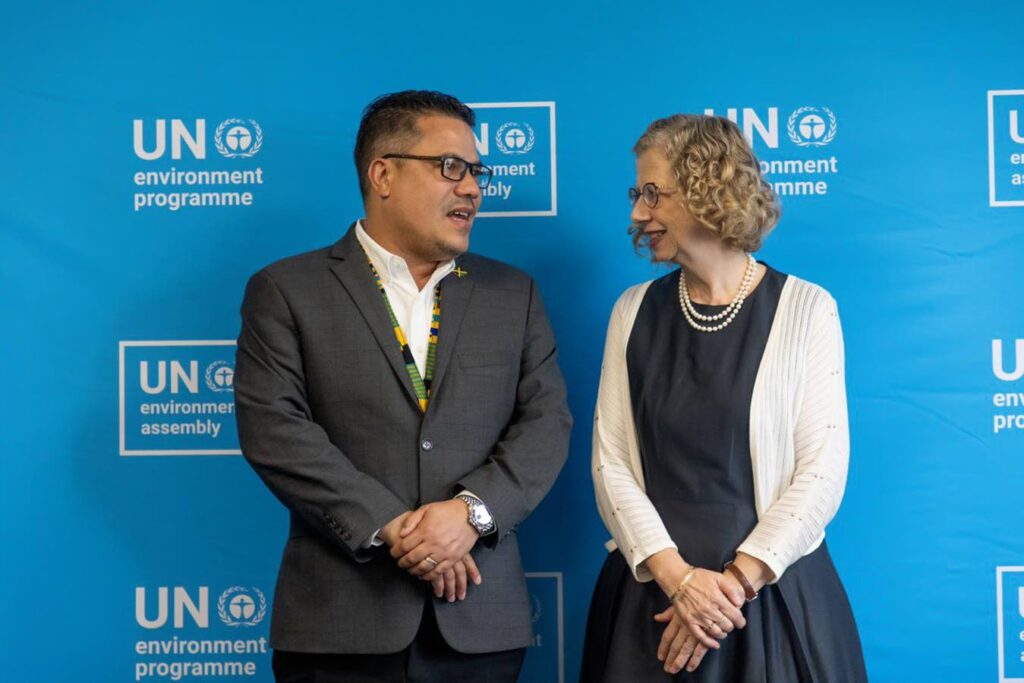
    Jamaican Minister of Water, Environment, and Climate Change Matthew Samuda is positioned to assume the presidency of the United Nations Environment Assembly (UNEA), the premier global environmental decision-making body representing 170 nations. Currently leading Jamaica’s delegation at the UNEA-7 session in Nairobi, Kenya, Samuda would succeed Abdullah Bin Ali Al-Amri of Oman, whose term has concluded.

    The Latin American and Caribbean Group (GRULAC) has formally endorsed Samuda as their candidate for the leadership position. Vincent Sweeney, head of the Caribbean Sub-Regional Office for the United Nations Environment Programme, confirmed that based on regional rotation protocols, Samuda represents the expected successor to the presidency.

    The potential appointment comes during what environmental experts identify as a critical juncture for planetary health, with the triple environmental crises of climate change, biodiversity loss, and pollution pushing natural systems toward collapse. During his address to the assembly, Minister Samuda emphasized the urgent need for sustainable solutions, drawing from Jamaica’s recent experiences with catastrophic climate events.

    Samuda detailed how Jamaica has endured multiple extreme weather events within four years, including two tropical storms and two major hurricanes—Category 4 Hurricane Beryl and Category 5 Hurricane Melissa. The latter caused approximately US$8.8 billion in damages, equivalent to 41% of Jamaica’s GDP, and severely damaged 51% of the nation’s primary forests. These events were compounded by record-breaking temperatures, unprecedented rainfall, and severe droughts, resulting in deteriorated soil quality, reduced pollination rates, and saltwater intrusion into freshwater sources.

    The Minister advocated for the multi-dimensional vulnerability index, a UN-backed assessment tool that evaluates structural vulnerabilities beyond economic metrics, particularly crucial for small island developing states (SIDS) like Jamaica. Samuda reaffirmed Jamaica’s commitment to global environmental protection and climate resilience, supporting resolutions to strengthen UNEP’s role, address sargassum seaweed influxes, and accelerate coral reef conservation efforts.

  • 2026 Audi A6 e-tron: The sedan strikes back

    2026 Audi A6 e-tron: The sedan strikes back

    In an automotive landscape increasingly dominated by SUVs and electric vehicles, Audi has launched a formidable counteroffensive with the 2026 A6 e-tron Sportback. This premium electric sedan represents a technological tour de force designed to reclaim market share for traditional sedan body styles through groundbreaking innovation and sophisticated design.

    The A6 e-tron Sportback immediately commands attention with its muscular curves and coupé-inspired silhouette. The S line trim enhances its athletic presence with 20-inch wheels, while the distinctive singleframe grille houses Audi’s second-generation OLED headlights—fully programmable via the infotainment system. The rear features an integrated lighting signature that incorporates the Audi emblem into a wrap-around OLED bar, creating a futuristic aesthetic that overshadows the vehicle’s camera-based side mirrors. Carbon fiber accents on the rear spoiler complete the premium exterior package.

    Approaching the vehicle triggers a sophisticated light ceremony: all four flush-mounted door handles illuminate with differentiated animations for entry and exit sequences. The innovative door handles require users to clasp the recessed void to open the doors, eliminating traditional protruding elements. Inside, the E3 architecture delivers both spaciousness and ergonomic excellence, with the driver’s seat automatically adjusting to assist ingress and egress based on user profiles.

    The cabin is dominated by five high-resolution displays, including the curved Audi MMI panoramic display combining an 11.9-inch virtual cockpit and 14.5-inch touchscreen. Optional features include a 10.9-inch front passenger screen and door-mounted displays for the camera mirror system. The advanced head-up display creates a three-dimensional projection rather than conventional flat images. Premium materials throughout the interior complement the extensive digital ecosystem, while switchable-opacity panoramic glass roof adds to the luxurious atmosphere.

    Performance specifications underscore Audi’s technical prowess: a 362hp rear-mounted electric motor draws power from a 100kWh battery capable of DC fast charging at up to 270kW. The system supports AC charging at 11kW and regenerative braking recovering up to 220kW. Real-world range exceeds 300 miles, with rapid charging capability restoring 80% capacity in minutes—effectively eliminating range anxiety.

    On the road, the A6 e-tron Sportback delivers instantaneous power delivery that exceeds typical driving requirements while maintaining composure across all speed ranges. The chassis, suspension, and braking systems work in harmony to transition seamlessly between comfortable cruising and dynamic performance. Aggressive regenerative braking minimizes use of physical brakes, while sophisticated suspension maintains composure over varied road surfaces.

    Built on the 800-volt PPE architecture, the A6 e-tron Sportback represents the pinnacle of electric vehicle technology while preserving the driving dynamics and refinement expected from a premium sedan. It successfully combines striking design, cutting-edge technology, and practical performance to create a compelling alternative in the evolving automotive market.

  • SHE’S BACK!

    SHE’S BACK!

    Jamaican netball sensation Vangelee Williams has dramatically ended her five-year retirement to rejoin the national team, bringing veteran leadership to the Sunshine Girls ahead of their crucial Vitality Series clash against England. The 33-year-old defensive specialist, who previously represented Jamaica in two World Cups and two Commonwealth Games, returns to international competition with renewed passion and determination.

    The upcoming series against England has been significantly altered due to Hurricane Melissa, which forced cancellation of the Jamaican leg scheduled for December 6-7 at the National Indoor Sports Centre. The competition will now consist solely of two matches at London’s Copper Box Arena on December 13-14. This marks a reversal from last year’s series, which Jamaica won 2-1 with one tied match.

    Williams expressed profound satisfaction with her return, stating: ‘I feel really happy to be back. I anticipated this moment very much since I have been training. It really feels good and has made me realize that I actually missed the sport at this level.’ Despite acknowledging that her fitness requires further development, Williams emphasized steady progress since rejoining the senior squad in September.

    The veteran athlete had completely mentally disengaged from elite netball after her 2020 retirement, believing her career was finished. Her perspective has transformed dramatically, with Williams now declaring: ‘I am back and I am better.’ While uncertain about participating in another World Cup, she has set her sights on competing in the next Commonwealth Games.

    Head coach Sasher-Gaye Henry-Wright welcomed Williams’ return as a strategic necessity, explaining: ‘We were out of all of our defensive players. All other defensive players are younger players who have not yet played a lot at this level, so we definitely wanted to bring back some experience.’ The coaching staff monitored Williams’ performance in league matches before inviting her back to the national setup.

    Williams recently participated in the team’s preparatory match against an All-Star Mixed team, where Jamaica suffered a 40-52 defeat. Addressing concerns about defensive stability, Williams remained confident: ‘I don’t think the defence is shaky. There are definitely some levels of inexperience but each girl on the defensive team is a workhorse. We provide interceptions and deflections, and we definitely give our best.’

    The returning star emphasized the team’s collective hunger to perform despite missing key players Shamera Sterling-Humphrey, Latanya Wilson, and Kadie-Ann Dehany. Williams’ comeback adds crucial tournament experience and defensive prowess to a squad blending youth and experience as they prepare to face England’s netball team.

  • Pirates of the Caribbean

    Pirates of the Caribbean

    In a significant escalation of hemispheric policy, the Trump administration has executed an unprecedented maritime seizure by capturing a Venezuelan oil tanker in Caribbean waters. This action directly implements the White House’s recently announced security strategy advocating renewed enforcement of the Monroe Doctrine to restore American dominance in the Western Hemisphere.

    The December 10 seizure occurred amid mounting international pressure regarding the administration’s controversial program of lethal strikes against vessels allegedly involved in drug trafficking. Administration officials justified the tanker interception by claiming involvement in transporting sanctioned oil to Iran, though President Trump remained ambiguous about the disposition of the confiscated cargo.

    Venezuelan authorities condemned the operation as “an act of international piracy,” characterizing it as both alarming and predictable given recent U.S. posturing. The incident appears strategically timed to redirect attention from potential war crimes allegations toward technical debates regarding maritime law and sanctions enforcement.

    The administration’s narrative has shifted noticeably from initial justifications centered on combating “narco-terrorism” toward emphasizing Iran’s regional influence and sanctions compliance. This rhetorical evolution coincides with longstanding suspicions that the administration ultimately seeks regime change in Caracas or control over Venezuela’s substantial oil reserves.

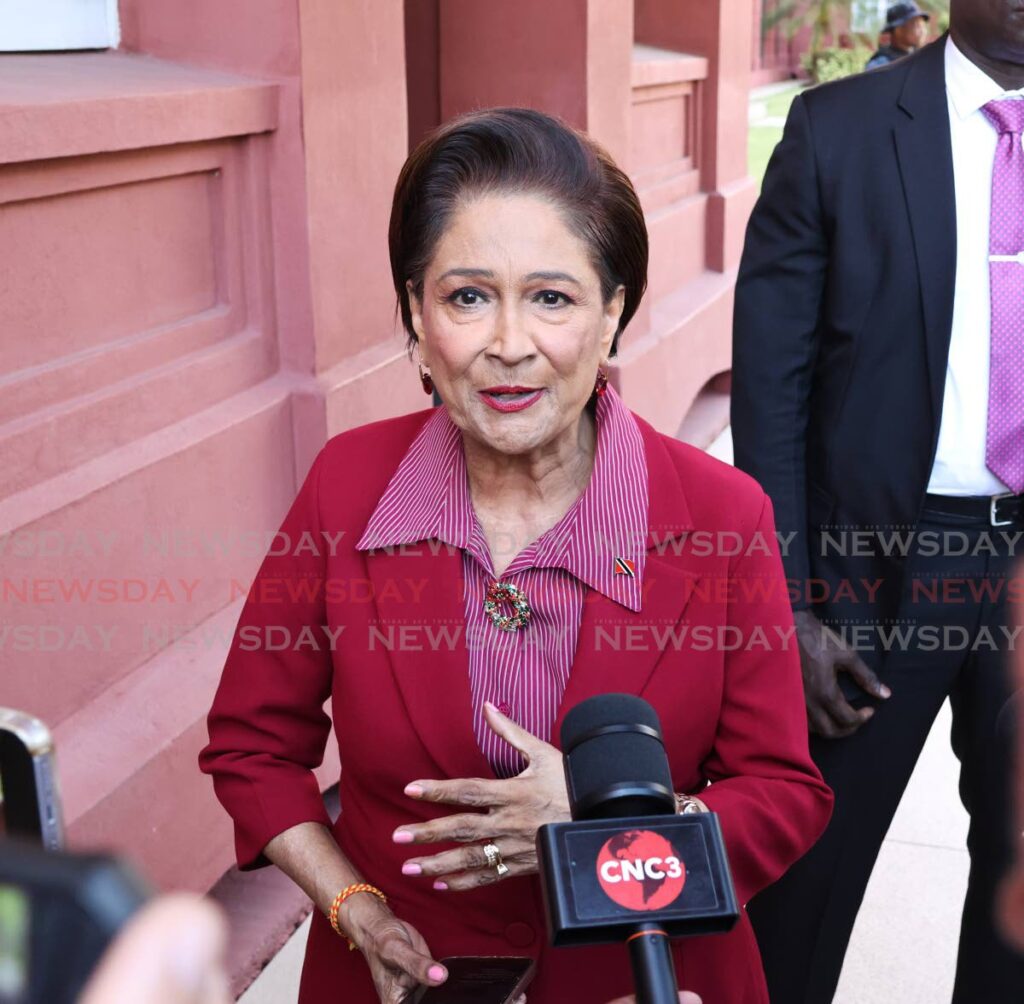
    Regional implications deepened when Trinidad and Tobago’s Prime Minister Kamla Persad-Bissessar attempted to deflect moral questions about possible citizen casualties from U.S. boat strikes by focusing instead on issues of vessel registration and piracy definitions. Her simultaneous acknowledgment that newly installed U.S. radar infrastructure in Tobago assists in detecting Venezuelan sanction-busting activities reveals deeper involvement in U.S. sanctions enforcement than previously acknowledged.

    These developments effectively draw Caribbean nations into the escalating confrontation between the Maduro regime and Republican Party foreign policy objectives. Analysts anticipate further escalation as President Trump faces mounting domestic pressures, including ongoing controversies surrounding his administration’s handling of the Jeffrey Epstein scandal.

  • A threat to democratic freedoms

    A threat to democratic freedoms

    A concerning democratic reversal is unfolding in Trinidad and Tobago as the current administration moves to regulate social media commentators, marking a stark departure from its previous stance while in opposition. This policy shift represents both profound hypocrisy and a fundamental threat to constitutional freedoms that form the bedrock of the nation’s democracy.

    During its opposition years, the United National Congress (UNC) actively championed social media as a vital platform for public discourse, even encouraging memes, caricatures, and criticism directed at the then prime minister and cabinet. Their Monday Night Forum served as a celebrated rallying point for dissent. Today, however, the same party condemns similar expressions as “reckless” and seeks to regulate what it once vigorously defended.

    This dramatic reversal reveals a troubling pattern where criticism appears valid only when directed at political opponents rather than being recognized as an essential democratic right. The government’s approach contradicts established democratic principles, particularly regarding free expression. Legal precedents from multiple jurisdictions demonstrate that when public officials create forums for public discourse—including social media pages—they cannot subsequently silence critics without violating fundamental rights.

    International legal perspectives reinforce these concerns. US courts have consistently ruled that when public officials utilize social media for governance purposes, the interactive portions of their accounts transform into “public forums” where censorship constitutes unconstitutional viewpoint discrimination. While these cases originate abroad, they articulate universal democratic values that should concern every Trinidad and Tobago citizen.

    Further alarm arises from the homeland security minister’s openness to collaborating with foreign governments to revoke visas of commentators disseminating “misleading” narratives. This development follows closely after the Prime Minister denied involvement in Gary Aboud’s visa troubles, suggesting either concerning coordination or visible disunity within government ranks.

    Equally troubling were the minister’s comments praising China’s social media control model, which prioritizes strict state censorship to maintain “social stability” and single-party narratives. This approach remains fundamentally incompatible with Trinidad and Tobago’s constitutional democracy, which explicitly guarantees freedom of thought, expression, and press.

    While the government cites legitimate concerns about online extremism, existing legal frameworks already provide sufficient remedies. Trinidad and Tobago law contains various statutes, common law offences, and civil remedies that render totalitarian-style censorship unnecessary. From preventative detention orders to established defamation laws, authorities possess adequate tools to address genuine threats without resorting to broad censorship that inevitably stifles legitimate criticism.

    The solution to challenging speech isn’t enforced silence but more speech. As late US Supreme Court Justice Louis Brandeis wisely counseled, the remedy for falsehood remains “more speech, not enforced silence.” Similarly, Dr. Eric Williams eloquently stated, “Let the jackass bray,” emphasizing that the most effective response to problematic speech is counterargument rather than government suppression.

    This assault on free expression coincides with troubling signs of press freedom erosion, recalling the 2013 attempt by the previous government to deny media access to crime statistics and criticize negative coverage. The current administration appears to be continuing this dangerous precedent rather than reversing it.

    Ultimately, a government that genuinely champions democracy cannot emulate the censorship practices of authoritarian regimes. However well-intentioned these measures might claim to be, historical precedent demonstrates that powers to silence critics, once established, inevitably expand beyond their original scope. Citizens across political affiliations must collectively defend the foundational principle that in a true democracy, every individual retains the right to criticize their government without fear of reprisal.

  • Restore timely negotiations

    Restore timely negotiations

    The Estate Police Association (EPA) has issued a stark warning about the deteriorating credibility of Trinidad and Tobago’s industrial relations system due to persistently delayed wage negotiations. Association President Deryck Richardson revealed that unresolved negotiation cycles spanning from 2014-2016, 2016-2019, and the still-pending 2020-2025/26 period continue to severely compromise the collective bargaining process.

    The systemic delays have created a situation where wage settlements lose their real value due to inflationary erosion, forcing employees to prioritize back pay over meaningful improvements in living standards. Richardson emphasized that expired negotiation cycles fundamentally restrict both parties’ ability to implement substantive changes to collective agreements, as addressing past ‘lived realities’ becomes increasingly impractical once the relevant period has passed.

    A particularly concerning example emerges from the National Maintenance Training and Security Company, where years of delays may result in estate constables receiving no wage increases whatsoever. This stagnation places their basic compensation at par with security officers lacking police commissioner-issued precepts, while supervisors receive only minimal adjustments.

    The association notes that successive minimum wage adjustments have effectively overtaken earlier wage proposals, creating the false impression that workers have received adequate increases. Richardson clarified that the minimum wage represents merely a protective floor rather than a genuine assessment of officers’ skills, responsibilities, and risks.

    Compounding the problem, job evaluations across state companies and statutory bodies remain outdated, failing to reflect modern duties and expectations. The state’s continued reliance on antiquated assessment methods further undermines fair compensation practices.

    These negotiation delays also generate substantial back pay obligations that burden state finances and complicate long-term budgeting. The EPA emphasizes that timely settlements would enable responsible financial planning while ensuring workers receive increases when they actually matter.

    The association confirms it has submitted proposals to resolve all outstanding negotiation periods and now calls on the state to honor the collective bargaining process, return negotiations to proper timeframes, and restore real value to the nation’s estate police officers.