博客

  • Column: Wanneer een wet klopt, maar moreel ontspoort

    Column: Wanneer een wet klopt, maar moreel ontspoort

    A controversial compensation law passed in November 2024 has placed Suriname’s Prosecutor General among the highest-paid public officials in the nation, earning a staggering net monthly salary exceeding SRD 1 million (approximately USD 27,000). The legislation, championed by Asis Gajadien (VHP) and Geneviévre Jordan (ABOP) and enacted under President Chan Santokhi’s administration, has sparked widespread criticism for its timing and provisions.

    The Judicial Position Act establishes that the Prosecutor General’s base compensation reaches 95% of the presidential salary. However, this figure represents merely the foundation for additional benefits rather than a true cap. The law’s critical feature is its definition of ‘compensation’ as an aggregate of base salary, allowances, and reimbursements.

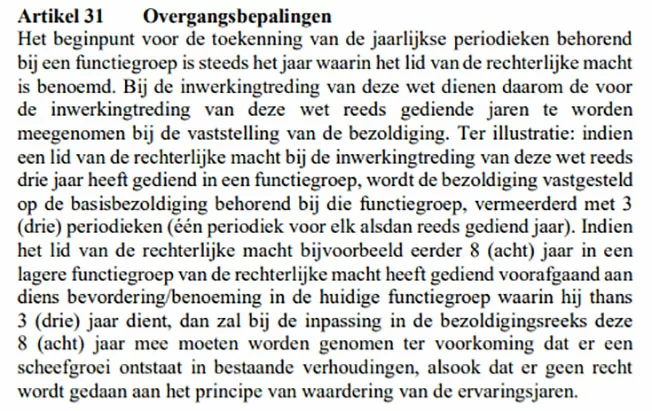
    Article 31 further compounds this structure by granting annual 5% increments based not on years served in current position, but on total tenure within the judicial system. For the current Prosecutor General—with six years in role but over forty years in judicial service—this translates to exponential salary growth rather than measured experience recognition.

    Beyond these provisions, tax-free allowances can reach 150-170% of base compensation, creating a system where officials technically remain under the 95% threshold while substantially exceeding it in practice. This design emerges as particularly controversial given its implementation during nationwide austerity measures that saw subsidy reductions, tax increases, and repeated government calls for public sacrifice.

    The disparity has drawn sharp criticism from Assembly Member Poetini Atompai (NPS), who has demanded full governmental transparency regarding the judicial compensation structure and its burden on national finances. He rightly questions the proportionality, reasonableness, and executive accountability in this arrangement.

    Critics argue that the Dutch ‘Balkenende norm’—which establishes the prime minister’s salary as the absolute maximum for public officials—offers a more transparent alternative that prevents creative legislative constructions. The current system, while legally sound, represents a failure of legislative responsibility when laws become mathematically clever but socially indigestible.

    In a nation where nurses, teachers, and pensioners face genuine economic hardship, this judicial compensation model threatens to erode public trust in the justice system. The law requires immediate revision to prevent the moral derailment of Suriname’s judicial institutions and restore faith in governmental fairness.
  • LVV doet aangifte wegens onbevoegde beheersdaden op terreinen in Tibiti

    LVV doet aangifte wegens onbevoegde beheersdaden op terreinen in Tibiti

    The Ministry of Agriculture, Livestock, and Fisheries (LVV) in Suriname has initiated legal proceedings against unauthorized occupation of state-owned lands in the Tibiti region of Para district. The contested forestry territories were officially allocated to the ministry for agricultural purposes by the government in March 2023.

    During an inspection at kilometer 99 in the Tibiti area, ministry officials encountered workers who claimed to be operating under instructions from two individuals identified as R.M. and K.J. The workers asserted they had received authorization from the son of former LVV Minister Parmanand Sewdien, though the legal validity of such permission remains unclear.

    Through a formal legal notice delivered by attorney Deepak Jairam, the ministry has demanded the immediate evacuation of the premises from K.J. The document emphasizes that no authorization has been granted to any parties for activities on these parcels, except to a company responsible for installing an irrigation system for an official agricultural project.

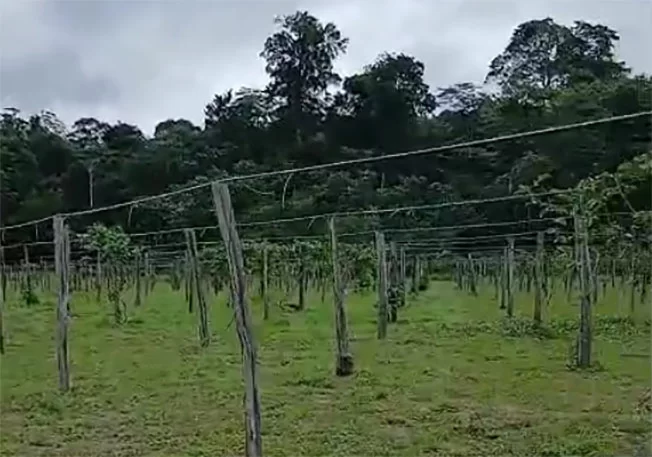
    LVV Minister Mike Noersalim confirmed to Starnieuws that significant investments have been made on the property, including equipment, a drip irrigation system, and solar panels valued at approximately €40,000. The Dutch company that executed and delivered these projects has reportedly not yet received payment. Additionally, the site contains a cultivated passion fruit (markoesa) plantation.

    The ministry has indicated that if evidence emerges of damage to state property, additional charges for destruction and/or theft will be filed. This incident has reignited concerns regarding the management and supervision of state lands designated for agricultural development. Local police have documented the case and are conducting an investigation into the matter.

  • APNU excludes WIN from Region Four council committees- Manickchand

    APNU excludes WIN from Region Four council committees- Manickchand

    In a significant political development within Guyana’s Region Four (Demerara-Mahaica) governance structure, the A Partnership for National Unity (APNU) has excluded its coalition partner We Invest in Nationhood (WIN) from representation on crucial council committees. Local Government and Regional Development Minister Priya Manickchand disclosed this exclusion during Thursday’s parliamentary session while addressing budgetary estimates.

    The revelation emerged when WIN councillor Tabita Sarabo-Halley questioned why only APNU and People’s Progressive Party Civic representatives were appointed to sectoral committees. Minister Manickchand clarified that APNU’s Chief Whip failed to submit any WIN nominations when invited to propose committee members. ‘I’m advised that in this particular instance, no names were submitted from your collection. The APNU Chief Whip failed to submit any names from WIN when they were asked to submit names,’ she stated.

    The minister speculated that APNU might have determined WIN lacked sufficient capacity or expertise, though she emphasized that the two parties must resolve the matter internally. This exclusion marks a notable fracture in the opposition alliance, particularly significant since APNU unexpectedly lost its historical control of Region Four in last September’s elections, securing only nine seats compared to PPPC’s seventeen and WIN’s eight seats.

    APNU parliamentarian Ganesh Mahipaul attempted to secure a commitment for parliamentary-style proportionality in committee formations but was unsuccessful. Minister Manickchand maintained that appointments must follow legal guidelines rather than political proportionality models, noting that committee members are conventionally selected based on expertise and ability to serve regional interests, with the exception of procurement committees which fall under the National Procurement and Tender Administration Board’s jurisdiction.

  • Ultimatum Rosebel loopt af; president zet in op oplossing via overleg

    Ultimatum Rosebel loopt af; president zet in op oplossing via overleg

    A critical deadline looms in Suriname’s mining conflict as police have issued a Friday 8:00 AM ultimatum for gold miners to vacate the contested territory between New Koffiekamp’s border and the Royal Hill mine, including the Redi Bergi area. The confrontation between artisanal miners and multinational Zijin Rosebel Gold Mines has reached a pivotal moment following recent violent clashes that resulted in one fatality and the destruction of heavy machinery.

    President Jennifer Simons, speaking during the reopening of the NDP’s Social Services Bureau, emphasized diplomatic resolution over forceful measures. “If proper agreements are reached, harsh intervention becomes unnecessary,” Simons stated, acknowledging the complex historical dimensions of the land dispute. The President highlighted the economic stakes for Suriname, which holds a 30% stake in Zijin’s operations. “The government must enable Zijin to operate—when production halts, the entire nation suffers financial losses,” she explained.

    The escalating tensions follow an incident within Zijin’s concession area that claimed the life of a small-scale miner and prompted the company to withdraw its staff. Security forces have struggled to maintain order as miners, who assert their activities are legal, refuse to abandon the site. President Simons called for equitable solutions that address all stakeholders: “We must develop solutions for all parties to move forward peacefully. Gold seekers require designated areas rather than operating dangerously near active mining zones, while respecting the historical claims of local communities.”

  • Gangs : Recruitment of children up 200% over one year

    Gangs : Recruitment of children up 200% over one year

    Haiti is confronting an alarming escalation in the exploitation of minors by armed factions, with UNICEF revealing a staggering 200% increase in child recruitment throughout 2025. This disturbing trend emerges against the backdrop of International Red Hand Day, observed annually on February 12th, which aims to combat the conscription of children into armed conflicts.

    The humanitarian landscape in Haiti remains dire, with over 1.4 million internally displaced persons—more than half being children—enduring extreme poverty and multifaceted crises. UNICEF Executive Director Catherine Russell emphasized the non-negotiable nature of children’s rights, stating: ‘Every child must be protected. Those recruited must be released and supported to heal, return to learning, and rebuild their futures.’

    Children are typically coerced into joining armed groups through direct threats against themselves or family members, economic desperation, or as a means of survival after family separation. This recruitment constitutes a severe violation of international law and exposes minors to combat injuries, sexual and psychological abuse, arbitrary detention, and educational disruption.

    Since the January 2024 Handover Protocol implementation, UNICEF and child protection agencies have verified and assisted over 500 children associated with armed groups through specialized reintegration services. These efforts are coordinated with Haiti’s Ministry of Social Affairs, Justice Ministry, Education Ministry, and humanitarian partners.

    Support mechanisms include psychosocial assistance, health service referrals, temporary learning spaces, family tracing, and the PREJEUNES program which focuses on vulnerability reduction and social inclusion for at-risk youth. UNICEF urges national authorities to strengthen child protection systems, ensure service access, and enhance community-based prevention networks with confidential reporting pathways.

    The organization simultaneously appeals to donor governments and private sector entities for increased funding, noting critical support programs remain significantly under-resourced. Russell concluded: ‘These children must not be treated as perpetrators but provided reintegration services and protected from additional risks, stigma, or retaliation.’

  • Minister Clarke addresses vending standards and urban management in Basseterre

    Minister Clarke addresses vending standards and urban management in Basseterre

    BASSETERRE, Saint Kitts – February 12, 2026 – Minister of Sustainable Development, Environment, Climate Action and Constituency Empowerment, Senator Dr. Joyelle Clarke, has formally addressed mounting concerns regarding vending operations throughout urban Basseterre during her parliamentary address on Thursday.

    The Minister acknowledged the economic significance of street vending for numerous families while emphasizing the necessity of compliance with established legal frameworks and public health standards. Dr. Clarke identified specific areas of concern where vending activities have recently expanded, including Fort Street, the Pond Road Agro Strip, Buckley’s, and sections of the bypass corridor.

    Official clarification was provided regarding the designated purpose of the Pond Road Agro Strip, which was specifically established for agricultural producers and food processors rather than general commercial enterprises. Minister Clarke expressed particular concern about the unauthorized construction of permanent structures and highlighted the significant traffic hazards created by roadside vending operations.

    The Ministry announced plans for immediate direct engagement with vendors operating in these areas, requiring those outside approved guidelines to either regularize their status or relocate to designated vending zones. Dr. Clarke simultaneously disclosed ongoing efforts to develop structured vending zones within the capital to expand legitimate commercial opportunities.

    ‘Our approach balances livelihood protection with public safety standards,’ Minister Clarke affirmed. ‘We are committed to protecting both vendors’ rights to earn a living and consumers’ right to safe business environments.’

    The Ministry will continue its engagement through public consultation sessions and direct dialogue as part of a comprehensive strategy to enhance urban planning, strengthen public safety protocols, and maintain commercial order throughout Basseterre.

  • Abinader to visit U.S., Chile and France in March

    Abinader to visit U.S., Chile and France in March

    SANTO DOMINGO – The Dominican Presidency unveiled on Thursday an extensive international itinerary for President Luis Abinader, marking a significant month of diplomatic engagements across the Americas and Europe throughout March. This strategic tour underscores the nation’s proactive approach to strengthening bilateral relations and engaging with global economic governance.

    The President’s first diplomatic stop will be in the United States, where he is scheduled to participate in a high-profile regional summit convened by U.S. President Donald Trump in Miami on March 7th. The assembly, as detailed in an official government communiqué, is designed to foster dialogue on pressing matters of mutual regional and international concern.

    Following his North American engagement, President Abinader will journey to Santiago, Chile, for a three-day visit from March 10th to 12th. The central purpose of this leg is his official attendance at the presidential inauguration of Chile’s President-elect, José Antonio Kast. The agenda also includes a dedicated bilateral meeting between the two leaders to discuss avenues for enhanced cooperation between their nations.

    Concluding this diplomatic tour, President Abinader will travel to Paris, France, on March 24th and 25th. The European visit features a pivotal meeting with French President Emmanuel Macron. Furthermore, the Dominican leader will actively participate in high-level assemblies of the Organisation for Economic Co-operation and Development (OECD), highlighting the country’s commitment to engaging with critical international economic policy forums.

  • New App and website to put consumer power in the palm of consumers’ hands

    New App and website to put consumer power in the palm of consumers’ hands

    In a landmark move for consumer rights in the Caribbean, Saint Kitts and Nevis is set to launch the innovative SKN Smart Shopper App and corresponding website on February 18, 2026. This digital initiative represents a significant advancement in consumer protection technology, placing market transparency directly into the hands of citizens.

    The groundbreaking platform, developed through collaboration between the Department of Consumer Affairs (CAD) and the Digital Transformation Unit, features sophisticated price tracking capabilities for essential goods. Consumers can now monitor government-regulated prices for basic necessities including poultry, meats, fish, toilet paper, cornmeal, flour, sardines, toothpaste, margarine, and detergent across various retailers.

    Paul Queeley, Director of CAD, emphasized the transformative potential of the application during a recent appearance on the InFocus program. “This technology empowers consumers with unprecedented market transparency,” Queeley stated. “With real-time price visibility across supermarkets, consumers can make informed purchasing decisions that align with their budgetary requirements while discouraging predatory pricing practices.”

    The comprehensive digital solution extends beyond price monitoring to include multiple consumer protection features. Users can submit formal complaints directly through the application, while field inspectors utilize integrated tablet functionality to document violations and issue immediate warnings. The platform’s e-ticketing system enables real-time penalty administration for regulatory violations.

    Additionally, the application provides simplified access to consumer protection legislation, offering user-friendly summaries of legal rights alongside direct links to full legislative texts. Communication Officer Tricia Delaney highlighted the application’s accessibility, noting that it “delivers clear, consumer-centric information in a mobile-optimized format that parallels the website’s capabilities.”

    Christopher Herbert, Programme Manager at the Digital Transformation Unit, credited the successful development to the robust partnership between technical and consumer protection experts. “We implemented rigorous security protocols and stability measures to ensure a reliable, secure user experience that protects both consumers and their data,” Herbert affirmed.

    This digital innovation represents a significant step forward in Caribbean consumer protection, potentially establishing a new regional standard for market regulation technology.

  • Verdict Nears in Bobby Garcia Murder Case

    Verdict Nears in Bobby Garcia Murder Case

    A pivotal moment in Belizean criminal justice approaches as two defendants await sentencing this Friday for the 2018 murder that horrified San Ignacio. The accused, who were minors at the time of the crime, have spent their formative years incarcerated at Wagner’s Youth Facility while facing charges for the brutal killing of eighteen-year-old Bobby Garcia.

    The case dates to October 6, 2018, when Garcia’s mutilated body was discovered at the Cahal Pech archaeological site bearing multiple stab wounds, a slashed throat, and ritualistic ‘X’ markings carved into his chest and face. The gruesome nature of the crime immediately sparked fears of ritualistic murder within the community.

    Investigation breakthroughs came through the victim’s personal laptop, where family members discovered suspicious Facebook profiles—’Dank Frank’ and ‘Charlie Chung’—that appeared to be coordinating a meeting at the archaeological site. This digital evidence led police to two suspects, then aged fifteen and sixteen, who were formally charged with murder and conspiracy to commit murder within days of the discovery.

    Despite their circumstances, both defendants have demonstrated remarkable rehabilitation during incarceration. Through the Kaina Online Program, they completed secondary education with academic distinction, showing particular aptitude for learning and personal development. In previous interviews, both expressed how their time in custody had fostered social skills and educational focus that were previously lacking.

    Now adults, the defendants face Justice in the Belmopan High Court after a prolonged judicial process that has spanned more than seven years. The verdict will determine whether their demonstrated rehabilitation will influence sentencing for a crime that permanently altered multiple lives and shook an entire community.

  • Case Collapses, But Charleston Green Stays Jailed

    Case Collapses, But Charleston Green Stays Jailed

    In a dramatic courtroom reversal, 22-year-old Belize City resident Charleston Green saw his attempted murder case dissolve on its inaugural day of trial. The prosecution’s case collapsed entirely when Dixon Ramirez, the alleged victim of an August 2022 shooting and the prosecution’s primary witness, failed to appear in High Court. With no alternative evidence to present, prosecutors immediately filed a nolle prosequi, formally abandoning the charge.

    Despite this legal victory, Green’s freedom proved fleeting. Within moments of exiting the High Court building, law enforcement officers immediately escorted him back to the Belize City Magistrate’s Court system. His temporary release was superseded by an existing three-year prison sentence for separate convictions involving firearm and ammunition violations, plus aggravated assault against three police officers.

    These convictions stem from the same 2022 incident that generated the attempted murder charge. According to police reports, Green allegedly discharged a weapon at officers during a pursuit before being apprehended while in possession of a loaded firearm. The court had delivered these convictions in 2025, with sentences structured to run concurrently. Despite the dismissal of the most serious charge, Green remains incarcerated with the earliest possible release date set for July 2027, ensuring his imprisonment continues for at least another eighteen months.