博客

  • Politic : New Municipal Commission at the head of Port-au-Prince

    Politic : New Municipal Commission at the head of Port-au-Prince

    In a significant administrative move, Haiti’s Interior Ministry has formally established a new governing body for its capital city. On February 11, 2026, Interior Minister Paul Antoine Bien-Aimé presided over the swearing-in ceremony of the freshly appointed Port-au-Prince Municipal Commission at the Ministry’s Delmas 60 headquarters.

    The commission, comprising President Yves Andrel Salomon (functioning as mayor) alongside deputies Dorothé Ignace Morel and Esther Cinéas, assumes authority during a period of substantial challenges for the capital. Their appointment, initially decreed by the Council of Ministers under Prime Minister Fils-Aimé on February 7, 2026, signifies a strategic effort to stabilize municipal governance.

    The installation event witnessed the presence of key government figures, including Ketlène Jean Louis, Director General of the Ministry of Haitians Living Abroad (MHAVE), senior ministry officials, and representatives from the National Federation of CASECS of Haiti (FENACAH).

    In his address, Director General Pierre Canisius Guignard emphasized that this leadership transition stems from a commitment to address the legitimate needs and aspirations of Port-au-Prince residents, specifically through the enhanced delivery of quality public services. The Ministry of the Interior and Territorial Communities (MICT) has expressed strong expectations for the new commission to implement local public policies aimed at revitalizing the city and restoring its former pride. The executive agents are urged to operate with both effectiveness and efficiency.

    Minister Bien-Aimé formally presented the official confirmation of appointments to the new members, aligning with the decree that establishes this municipal commission. This body is tasked with managing the capital’s affairs on an interim basis until the next scheduled elections.

    A critical directive for the new council is to prioritize the acute needs of the population, with particular attention to the most vulnerable communities, including those residing in camps for displaced persons. The Ministry has pledged its full support to the municipal executive agents, aiming to boost operational performance and fortify the institutional framework of the municipality during this pivotal period.


  • Casa del Cordón screens “Galeones de Azogue,” exploring the origins of underwater archaeology in Dominican Republic

    Casa del Cordón screens “Galeones de Azogue,” exploring the origins of underwater archaeology in Dominican Republic

    Santo Domingo’s Taíno Cultural Center Casa del Cordón, an institution supported by Banco Popular Dominicano, recently presented a special screening of the documentary ‘Galeones de Azogue.’ The film chronicles the pioneering underwater archaeological investigations in the Dominican Republic that began with the discovery of the Azogue Fleet galleons, which met their fate off the coast of Miches during the 18th century.

    The event, organized in partnership with Spain’s Royal Shipyards Museum, featured a distinguished panel including the museum’s director Íñigo Apestegui and screenwriters Carlos León and Cruz Apestegui. They provided exclusive insights into the documentary’s extensive research methodology, historical documentation, and groundbreaking findings that shaped this significant archaeological investigation.

    Produced through a collaboration between Duho Cinema, Retama Studio, and Guasabara Cine, the documentary was spearheaded by general producers Fernando Santos and Gabriel Valencia. The technical team included editor Mikel D. Etxebarría and sound designer Laura Gantes. The film incorporates expert commentary from renowned specialists Pedro Borrel, Frank Moya Pons, Bernardo Vega, Federico Schad, Jaime Vega, and Tracy Bowden.

    The documentary traces the accidental discovery in 1976 by local Miches fishermen of two submerged galleons in Samaná Bay. This chance finding catalyzed the nation’s first official underwater archaeological expedition, unearthing artifacts connected to a maritime catastrophe that occurred over three centuries earlier.

    Historical records indicate that on August 24, 1724, the galleons Nuestra Señora de Guadalupe and Tolosa—part of the Mercury Fleet voyaging from the Iberian Peninsula to the Viceroyalty of New Spain (modern-day Mexico)—encountered a devastating storm. The vessels were transporting more than 360 tons of mercury from Spain’s Almadén mines, a crucial component in colonial silver processing. While the Guadalupe sustained severe damage, the Tolosa sank entirely off the Dominican coastline.

    The tragedy claimed more than 600 lives, with survivors enduring extreme hardships—some clinging to ship masts for weeks, others navigating treacherous jungles and beaches in search of rescue—leaving behind a profound narrative of human endurance.

    Archaeological work recommenced in 1994 through a cooperative Dominican-Spanish initiative, representing a watershed moment for the nation’s maritime heritage preservation. The Quicksilver Galleons Project successfully recovered over 45,000 artifacts, including cannons, navigational equipment, coins, personal belongings, and an exceptional assemblage of European glassware. These discoveries have significantly enriched understanding of colonial trade networks and 18th-century maritime practices while establishing the foundation for Dominican underwater archaeology, enabling the nation to reclaim and safeguard its submerged historical legacy as an integral component of its cultural identity.

  • B&B and DOE Respond to Trash Report Findings

    B&B and DOE Respond to Trash Report Findings

    A comprehensive environmental assessment has revealed that plastic waste continues to dominate Belize’s pollution landscape, accounting for sixty-seven percent of all documented debris nationwide. The 2025 Sea of Life TrashBlitz report, analyzing over fourteen thousand waste items, identifies single-use beverage bottles as the primary contaminant, with Bowen and Bowen products appearing most frequently throughout the study.

    Despite Belize’s groundbreaking 2022 legislation prohibiting various single-use plastics, straws, cups, and plates, plastic pollution remains an entrenched environmental challenge. The report demonstrates that prohibited materials persistently appear in drains, streets, and waterways, ultimately compromising marine ecosystems.

    Bowen and Bowen, the nation’s predominant beverage manufacturer, has implemented a returnable glass packaging system and maintains collection depots nationwide for recycling purposes. Company representatives emphasize that Belize leads the region in soft drinks distributed in returnable glass containers and maintains the highest plastic bottle return rates. The corporation offers consumer incentives for container returns while advocating for proper disposal practices.

    At the governmental level, Chief Environmental Officer Anthony Mai explains that permissible plastics must meet biodegradability standards requiring fifty percent organic base material composition and decomposition within 160 days under specific conditions. Conformity assessments conducted in 2023 involving ninety samples from thirty-five companies revealed that most imported and domestically produced plastics failed to meet these standards.

    The Department of Environment is contemplating a phased plastic elimination strategy targeting shopping bags and packaging materials. However, Sea of Life Executive Director Paulita Bennett-Martin questions the adequacy of current biodegradability requirements, noting that some biomaterials don’t effectively break down and emphasizing the need for comprehensive standards addressing post-disposal behavior.

    Mai acknowledges the complexity of balancing environmental protection with business viability, noting the absence of commercially viable alternatives to plastic water bottles. The department has engaged consultants to evaluate the plastic ban’s effectiveness and identify potential improvements.

    Recycling practices present additional concerns, as Bennett-Martin highlights uncertainties regarding plastic melting processes and their potential health impacts. Bowen and Bowen currently exports collected plastic bottles to Guatemala for recycling, underscoring the transnational nature of waste management solutions.

  • Yemeri Grove Celebrates Reliable New Water Supply

    Yemeri Grove Celebrates Reliable New Water Supply

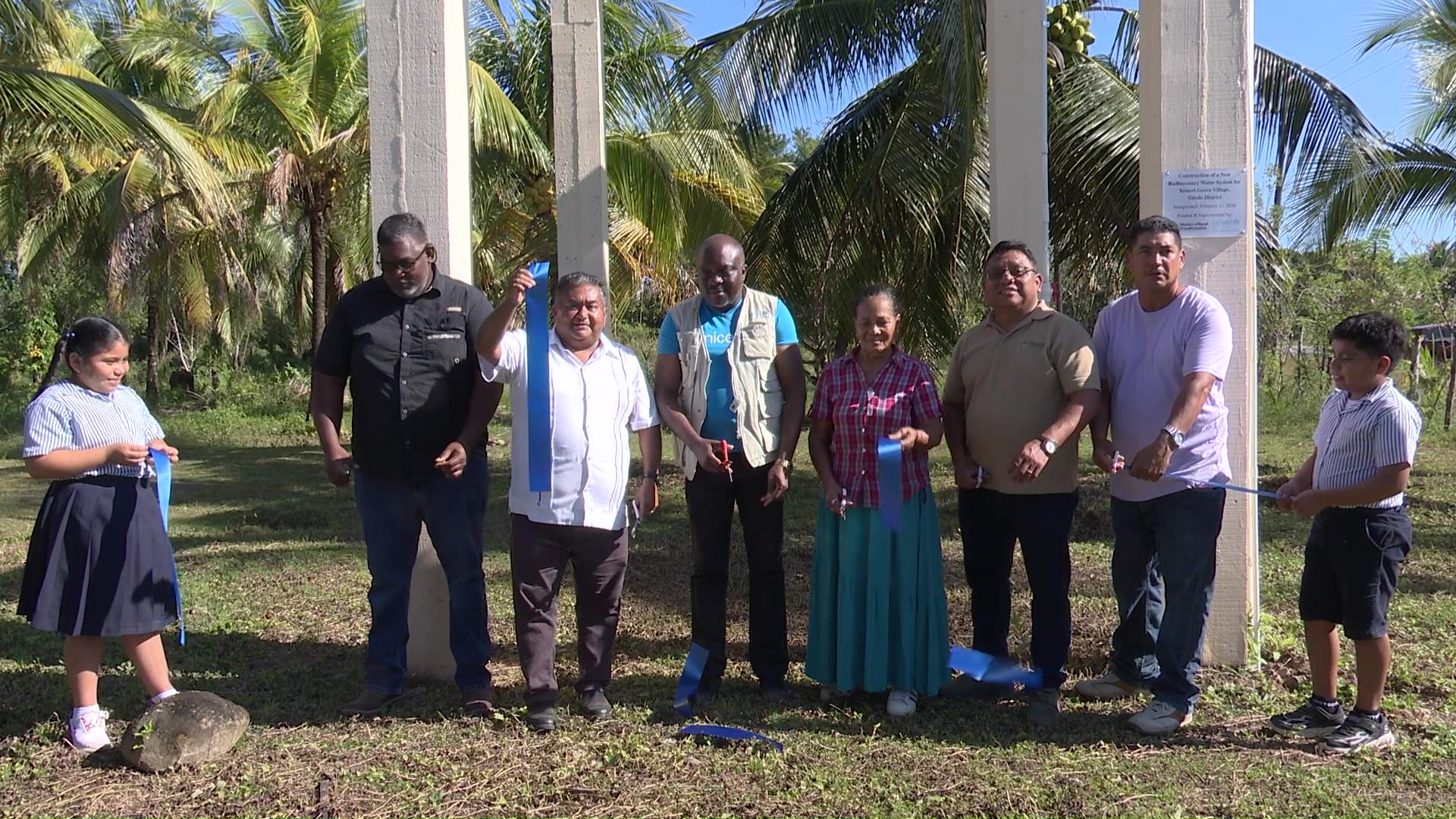
    The remote community of Yemeri Grove in Belize’s Toledo District has achieved a significant milestone in public infrastructure with the formal commissioning of a completely new water supply system. This transformative project, executed through a collaborative initiative between Belize’s Ministry of Rural Transformation and UNICEF, marks the end of the village’s long-standing dependency on shared water resources from neighboring Laguna.

    The newly implemented system represents a comprehensive upgrade featuring a dedicated production well, a modern elevated reservoir, and a high-capacity submersible pump. This engineered solution is designed to provide consistent, clean water access to over one hundred households, ensuring twenty-four-hour availability that was previously unreliable.

    During the inauguration ceremony, Oscar Requena, Minister of Rural Transformation and Community Development, highlighted the strategic importance of this development. “This achievement in Yemeri Grove represents the third such water tower system our ministry has constructed, following successful implementations in Tower Hill Orange Walk and Medina Bank. This infrastructure is crucial for serving our students, young children, and all Belizeans with reliable water access,” Minister Requena stated.

    The project addresses both immediate public health concerns and long-term community development goals. Herald Usher, Chairman of Yemeri Grove Village Council, expressed collective appreciation: “On behalf of our village council and water board, we profoundly appreciate this water system that significantly enhances our quality of life and community resilience.”

    This water independence initiative demonstrates Belize’s ongoing commitment to improving rural infrastructure and represents a model for sustainable community development through governmental and international partnership.

  • UNICEF Partnership Delivers Water Upgrade in San Jose

    UNICEF Partnership Delivers Water Upgrade in San Jose

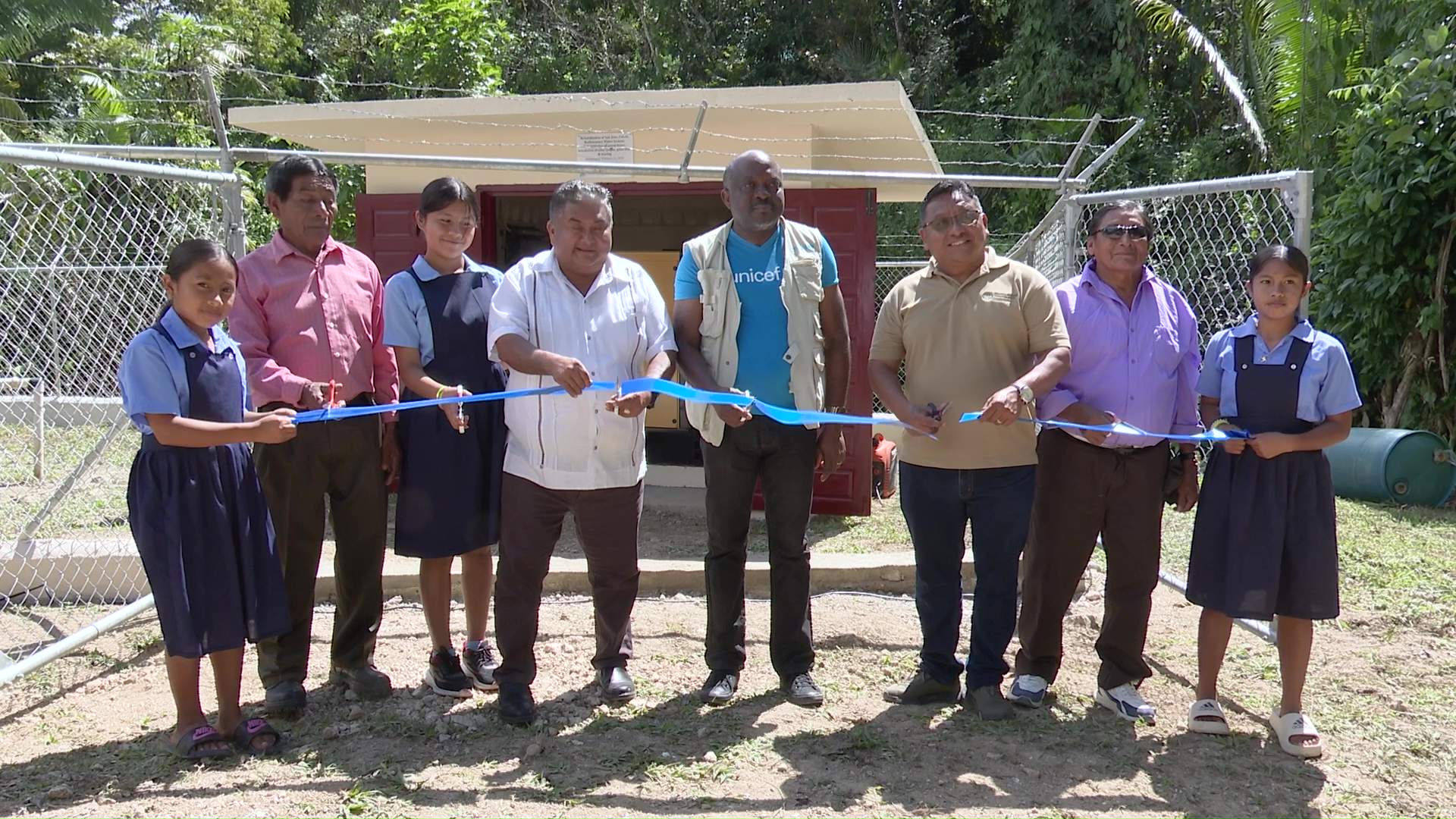
    Residents of San Jose in the Toledo District are now benefiting from a transformed water infrastructure system following the official inauguration of a major upgrade project. The initiative, a collaborative effort between Belize’s Ministry of Rural Transformation and UNICEF, represents a significant advancement in sustainable water management for rural communities.

    The newly implemented system transitions the village to an environmentally conscious, green-energy powered setup that substantially reduces operational expenses while ensuring consistent water distribution. A critical component of the upgrade includes the installation of a heavy-duty backup generator, providing essential resilience during power disruptions or extreme weather events that previously compromised water access.

    Dr. Olusa Oladeji, UNICEF Health and Nutrition Specialist, emphasized the project’s broader implications during the handover ceremony. “This initiative marks tangible progress in extending safe and reliable water services to children and families,” stated Dr. Oladeji. “Secure water access forms the foundation of health, educational continuity, and community resilience, particularly in rural settings where infrastructure challenges persist.”

    The official acknowledged the collaborative framework involving the Belizean government, local Village Water Board, Nanka community representatives, and the Village Council in bringing the project to fruition.

    Nikyra Cho, a local student, expressed community appreciation for the comprehensive improvements, which included new piping networks, water meters, solar electrification, protective fencing, and the emergency generator. “These enhancements have not merely restored but fundamentally strengthened our water infrastructure,” Cho noted. “Reliable clean water signifies life itself, and today our community stands empowered through this support—transcending mere construction to represent improved health outcomes, reduced hardships, and expanded opportunities for future generations.”

    The San Jose water system upgrade exemplifies ongoing efforts to address infrastructure disparities in rural Belize through innovative, sustainable solutions that prioritize long-term community welfare.

  • Businessman Raises Alarm Over Alleged Oil Dumping in Five Islands Mangroves

    Businessman Raises Alarm Over Alleged Oil Dumping in Five Islands Mangroves

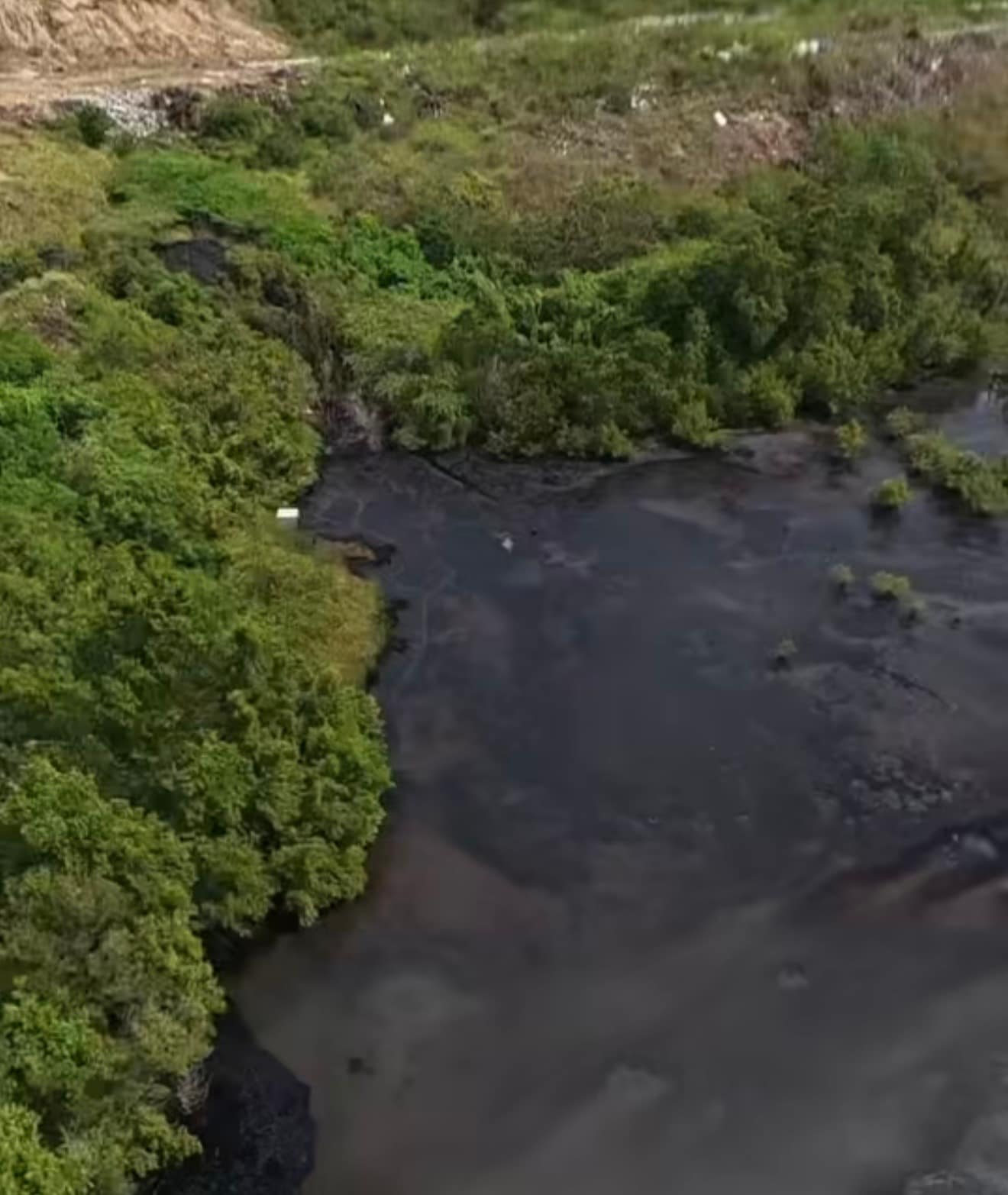
    A significant environmental emergency is unfolding in Antigua’s Five Islands region, where prominent businessman and environmental advocate Eli Fuller has reported the deliberate dumping of thousands of gallons of waste oil into ecologically sensitive mangrove ecosystems. The alleged contamination occurred following recent heavy rainfall events, with oil slicks reportedly spreading throughout Five Islands Harbor.

    Fuller, who documented the incident firsthand, described this as among the most severe ecological disasters he has witnessed in the region. The contamination poses substantial threats to marine biodiversity, coastal protection, and local economic activities that depend on healthy marine ecosystems.

    The mangrove forests in question serve as vital nursery grounds for numerous marine species and provide natural erosion control for Antigua’s coastline. Fuller particularly emphasized the impact on traditional cockle fishing communities, having consulted with local fishermen whose livelihoods face immediate jeopardy from the pollution.

    Notably, Fuller raised serious questions about how such large-scale dumping could occur given existing security protocols at the island’s landfill facility. According to standard procedures, security personnel are stationed at the site and trucks undergo inspection before being directed to approved disposal areas.

    The environmental advocate has characterized the incident as an ‘environmental crime’ demanding thorough investigation and legal accountability. He has called for judicial proceedings that would hold responsible parties financially liable for restoration efforts, while simultaneously offering to collaborate with government authorities to develop comprehensive solutions.

    As of current reporting, government agencies and environmental authorities have not issued any public statements regarding these allegations. The situation continues to develop as environmental assessments are likely underway to determine the full extent of the contamination and its ecological consequences.

  • President Abinader inaugurates La Gaviota Amphitheater in Ciudad Juan Bosch

    President Abinader inaugurates La Gaviota Amphitheater in Ciudad Juan Bosch

    Santo Domingo witnessed a significant advancement in urban development as President Luis Abinader officially opened the La Gaviota amphitheater in Ciudad Juan Bosch on Thursday. This cultural infrastructure represents a pivotal achievement within the nation’s premier model city initiative, showcasing a holistic approach to community building.

    The newly inaugurated venue forms part of an extensive portfolio of completed and ongoing developments spearheaded by the VBC-RD Trust in collaboration with Movexco Constructora. This comprehensive strategy integrates housing solutions with cultural amenities, sports facilities, public services, and communal spaces to create a fully integrated urban environment.

    José Ignacio Paliza, Minister of the Presidency, emphasized the project’s profound social impact, noting its transformation of the area into a thriving community. “We are now creating more developed citizens,” Paliza stated, underscoring the initiative’s broader societal benefits.

    Camel Curi Lora, executive director of the VBC-RD Trust, revealed the project’s remarkable turnaround from previous stagnation, characterized by limited appeal and a 105 million peso debt. The development has seen extraordinary growth, expanding from 4,777 households in 2020 to approximately 15,500 currently, with projections indicating 25,000 homes upon final completion.

    Beyond the amphitheater, Ciudad Juan Bosch boasts substantial infrastructure including two wastewater treatment plants, a comprehensive sports complex, funeral services facility, ecological park, vitrified regulating tank, and expanded parking infrastructure serving the cultural venue and adjacent areas.

    The amphitheater’s inauguration will be celebrated from February 12 to 15 through a diverse cultural program coordinated with the Ministry of Culture. The festivities will feature symphonic concerts by the Santo Domingo Philharmonic Orchestra, contemporary dance performances by the National Contemporary Dance Company, choral presentations by Koribe Chamber Choir, folkloric exhibitions by the Dominican National Folkloric Ballet, and innovative musical experiences from Escuela Libre de Herrera and DJ Clara Egelmann Tolentino.

  • Foreign Minister denies Dominican government ties to DEA office shutdown

    Foreign Minister denies Dominican government ties to DEA office shutdown

    SANTO DOMINGO – Dominican Foreign Minister Roberto Álvarez has officially confirmed that the recent shutdown of the U.S. Drug Enforcement Administration (DEA) office in the country stems entirely from an internal investigation within the U.S. embassy, with no involvement or connection to the Dominican government or its officials. The clarification came following a direct conversation between Álvarez and U.S. Ambassador to the Dominican Republic, Leah Campos.

    Ambassador Campos provided explicit assurances that the decision to close the DEA’s operational office was motivated solely by findings from an internal probe conducted by the embassy itself. Minister Álvarez publicly relayed the diplomat’s statements, emphasizing that the measure was categorically unrelated to any actions or policies of Dominican authorities.

    The development follows the recent arrest of Melitón Cordero, the DEA’s former supervisor in the Dominican Republic, who was taken into custody as part of an investigation into alleged visa fraud. While the timing of the office closure and the arrest is notable, the Dominican government’s statements aim to dispel any speculation of local misconduct or bilateral diplomatic friction, framing the event as an internal administrative action by the United States.

  • Standoff over Critchlow Labour College with private university’s principal

    Standoff over Critchlow Labour College with private university’s principal

    A tense property dispute at Guyana’s historic Critchlow Labour College (CLC) nearly escalated into physical violence on Thursday when an excavator arrived to demolish perimeter structures, prompting a dramatic confrontation between competing claimants.

    The incident unfolded at the Woolford Avenue, Georgetown property as Stanley Paul, Principal of the University of Excellence, Management and Business (UEMB), physically intervened to prevent demolition crews from breaching the compound’s gates and fencing. Mr. Paul asserted his rights under a 15-year commercial lease agreement signed June 4, 2025, with CLC Principal Dr. Ivor English, which grants UEMB “full, exclusive and uninhibited possession” of the premises including security control.

    CLC Board Secretary Lincoln Lewis immediately challenged the lease’s validity, stating that only he possesses authorization to execute agreements on behalf of the institution. “Nobody can sign any lease for Critchlow Labour College unless the Board has permitted me,” Lewis declared, emphasizing that the college remains an incorporated entity despite Mr. Paul’s claims that it became defunct in 2013.

    The conflict is further complicated by the property’s underlying lease from Georgetown City Council, granted in 1968 for 99 years with renewal rights. This original agreement stipulates that the land must be used exclusively for CLC purposes and prohibits assignment or subletting without municipal consent—a requirement both parties acknowledge was not sought for the UEMB arrangement.

    The physical standoff occurs against a backdrop of devastating fires that destroyed significant portions of the building in 2025, including sections housing the Guyana Trades Union Congress offices and college auditorium. Mr. Lewis reported that since the blazes, Mr. Paul had locked the gates preventing even legitimate tenants from accessing their workplaces.

    Legal proceedings initiated by UEMB on January 5, 2026, seeking validation of their lease were unexpectedly withdrawn eight days later, while Georgetown City Council had issued cease-work notices in December 2025 demanding removal of unauthorized construction. Mr. Paul countered that restoration efforts were stalled because CLC officials refused to provide necessary no-objection letters to municipal authorities.

    The confrontation highlights deeper institutional conflicts regarding property rights, contractual validity, and the preservation of educational heritage in Guyana, with both parties preparing for prolonged legal battles over this strategically significant campus.

  • NDP opent opnieuw Sociaal Maatschappelijk Bureau aan Hoogestraat

    NDP opent opnieuw Sociaal Maatschappelijk Bureau aan Hoogestraat

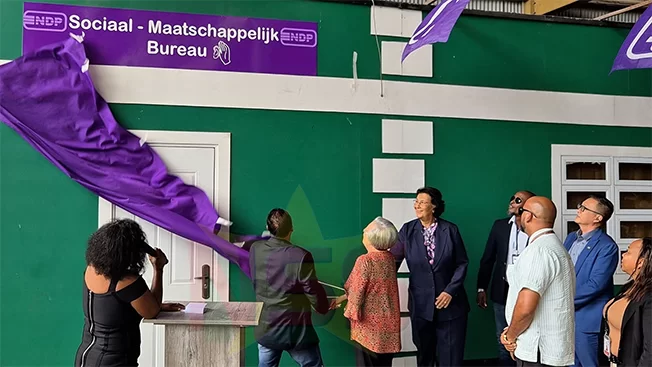
    In a significant move to strengthen community support mechanisms, Suriname’s National Democratic Party (NDP) has officially reopened its Social and Societal Bureau (SMB) after a five-year suspension. The new facility, located on Hoogestraat within the former party headquarters of the BVD, was inaugurated by NDP Chairwoman and President Jennifer Simons on February 12th.

    The bureau, operating under the Office of the NDP Chairman, will serve as a specialized center addressing public grievances that cannot be directly resolved through ministers, assembly members, or other government officials. Coordinator Yvonne Cheuk Alam explained that the facility will provide guidance and collaboratively seek solutions with citizens, potentially through engagement with relevant ministries depending on each situation’s specific circumstances.

    President Simons emphasized the bureau’s advisory nature during the unveiling ceremony, clarifying that it does not represent an institution where individuals can obtain everything they request. Rather, it functions as an information and guidance center within a nation where many administrative processes remain unclear and assistance doesn’t always arrive promptly. The SMB specifically will not replace existing institutions but will serve as a referral and advisory point, particularly for cases requiring immediate intervention.

    Cheuk Alam revealed that the bureau reactivation follows the successful operation of a similar office called the Ombudsman’s Bureau from 2010 to 2020 at the Ocer party center. That previous initiative proved effective through established agreements with ministers and assembly members, creating shorter pathways to problem resolution for citizens. The current reactivation responds to what officials describe as the dual responsibilities burdening administrators following the NDP’s assumption of national leadership under challenging circumstances.

    The bureau will address multiple societal issues including land matters, housing concerns, sexual assault cases, domestic violence incidents, educational challenges, and parent-school conflicts. While primarily established to serve party members, Cheuk Alam stressed that the facility remains open to all Surinamese citizens, emphasizing national unity beyond political affiliations in the post-election period.