博客

  • Sturge promises campaign finance reform

    Sturge promises campaign finance reform

    After two decades of broken pledges, unfulfilled proposals, and stalled parliamentary efforts, campaign finance reform has re-emerged as a central political flashpoint in Trinidad and Tobago, with the newly elected United National Congress (UNC) government reaffirming its commitment to turning decades of talk into tangible action.

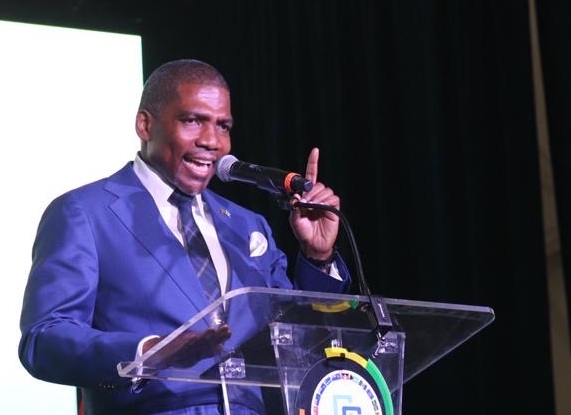
    In an interview with the *Sunday Express* last week, current Defence Minister Wayne Sturge made clear that overhauling the nation’s opaque campaign financing rules is a top priority for the new administration. Sturge, who won the Toco/Sangre Grande seat in the April 28, 2025 general election before his cabinet appointment, drew a sharp contrast between the UNC’s promise and the track record of former Attorney General Faris Al-Rawi, who he claimed repeatedly pledged reform during his 2010–2015 Senate tenure but failed to deliver over the following 10 years. “Our party campaigned on this reform, and we intend to keep every promise laid out in our manifesto,” Sturge stated.

    The resurgence of this debate comes amid fresh controversy tied to Sturge’s own election bid. Recent circulation of old photos on social media showing Sturge with slain Sangre Grande businessman Danny Guerra has sparked new unsubstantiated claims that Guerra funded Sturge’s 2025 campaign. While Sturge has declined to directly address these allegations, senior UNC officials have formally refuted the claims. The opposition People’s National Movement (PNM) deputy leader Sanjiv Boodhu has also pointed to the Guerra allegations to back his own call for mandatory campaign finance legislation.

    The issue of unregulated political financing has lingered in Trinidad and Tobago’s political landscape for generations, with persistent public warnings that undisclosed donations create open pathways for corruption. Critics warn that hidden funding can lead to biased awarding of multi-million-dollar government contracts to major political donors, and millions of dollars in unreported contributions from unnamed individuals and corporations are widely believed to flow into national election cycles annually. Currently, individual candidates face a $50,000 cap on direct campaign spending, but a loophole in the Representation of the People Act allows unlimited third-party contributions for political events, advertising, and party materials—with no requirement to disclose the source of these funds. This gap has left the political system lacking basic transparency and accountability for campaign spending.

    The current push for reform follows a call from the Trinidad and Tobago Transparency Institute (TTTI) last month, which urged the new government to move quickly to enact long-overdue legislation. TTTI’s intervention came after Prime Minister Kamla Persad-Bissessar made explosive allegations that illicit drug money funded the construction of the PNM’s national headquarters, Balisier House. Both major political parties have faced sustained public criticism for their shared failure to enforce transparency around campaign funding sources over the years.

    To understand the depth of this policy gridlock, a look back at 20 years of failed efforts makes clear how repeatedly reform has been promised then abandoned:

    In October 2006, then-opposition UNC MP Ganga Singh for Caroni East tabled a parliamentary motion calling for the creation of a special select committee to draft a framework for party registration and contribution disclosure. The motion was immediately shut down by the ruling PNM government led by then-Prime Minister Patrick Manning.

    Three years later, in February 2009, independent Senator Dr Ramesh Deosaran introduced a private Senate motion calling for a Joint Select Committee (JSC) to develop binding legislation to govern campaign financing. Though the motion received backing from the then-opposition UNC, it failed to win support from the ruling PNM and did not advance.

    When the People’s Partnership coalition led by Kamla Persad-Bissessar took power in 2010, campaign finance reform was named a core first-term priority. The administration’s manifesto pledged to introduce legislation for party registration and funding oversight, to be managed by an independent regulatory body. In November 2014, a JSC chaired by Wade Mark was established to deliver a draft framework within six months. The committee’s final report highlighted the legal loophole that allows unlimited third-party spending to bypass candidate expenditure caps, and put forward a comprehensive set of recommendations: capping private donations to limit undue political influence, introducing mandatory full disclosure of all political loans, creating a system of public campaign funding to reduce reliance on wealthy private donors, imposing overall caps on total campaign spending to ensure a level playing field, and regulating third-party spending while protecting free political expression. Ahead of the 2015 general election, Persad-Bissessar pledged her government would implement the JSC’s recommendations if re-elected, but the UNC lost the poll, and the proposal was sidelined for the next decade.

    The PNM, which held power from 2015 to 2025, also made repeated public commitments to reform during its tenure. In its first 2015–2020 term, the Keith Rowley-led administration attempted to advance reform via amendments to the Representation of the People Act. A new JSC was appointed to review the Representation of the People (Amendment) Bill, which aimed to crack down on unregulated hidden funding, prevent corruption and money laundering, and restrict incumbent governments from using state resources to boost election campaigns. Despite being introduced early in the parliamentary term, the bill faced lengthy delays and never came to a vote before the term ended.

    In 2020, Rowley again pledged to bring the bill back to parliament, referring it to a JSC chaired by former government minister Camille Robinson-Regis in a bid to secure cross-party and independent support. Rowley argued at the time that existing laws created unfair advantages for incumbent governments, which could leverage public resources to supplement candidate spending, and that the public had a right to know who was funding political parties and candidates. Despite his claim that his government was the first to have the “fortitude” to deliver on the promise of reform, the bill ultimately lapsed in committee and was never passed, leaving the promise unfulfilled once again.

    Now, with a new UNC administration in power, stakeholders across the political spectrum are watching closely to see whether this 20-year cycle of unkept promises will finally be broken.

  • From Sangre Grande to Long Island

    From Sangre Grande to Long Island

    More than three decades after a Trinidadian immigrant was brutally murdered as one of the first victims of Long Island serial killer Rex Heuermann, the long-buried family trauma that shaped her short life has finally come to light, revealing a tragic trajectory of violence, loss and broken dreams.

    Sandra Costilla, born Sandra Rajkumar in the small town of Sangre Grande, Trinidad and Tobago, was one of at least four women confirmed killed by Heuermann, a towering New York architect who targeted vulnerable women working in the sex trade along Long Island’s remote coast. Like many of Heuermann’s other victims, Costilla faced persistent economic instability that pushed her into survival sex work, making her an easy target for the killer who lured women with promises of cash before torturing, strangling and dismembering them, leaving their dismembered remains scattered across Long Island’s marshlands and remote shorelines.

    Costilla immigrated to the United States in 1982 at the age of 17, through a marriage of convenience with a U.S. Army soldier stationed at Schofield Barracks, Hawaii, arranged by her older half-brother Anthony, who had already settled in the U.S. Born to Ramkissoon “Ramki” Rajkumar, a well-known local police officer, and Milly Rattansingh, a skilled seamstress with a reputation for providing underground abortion services in mid-20th century Trinidad, Costilla — called Popo by her family and Sandy by her friends — experienced unthinkable violence from childhood that would shape the rest of her life.

    In June 1975, when Costilla was just 10 years old, her father Ramki arrived at the family’s Foster Road home carrying his service revolver, confronting Milly over allegations of infidelity. What followed that day was witnessed firsthand by Costilla’s 7-year-old younger brother Manny, who still carries vivid, traumatic memories of the massacre that left both his parents dead.

    “The bedroom door opened out into the living room area. I was standing there watching. I pi… myself,” Manny recalled in a 2024 interview, decades after the event. “They had to move me off that spot. I was frozen there. I saw everything. Ramki shot my mother. Sandra ran towards him and grabbed the gun. It went off and a bullet went straight through her right palm. After checking that my mother was dead, he put the gun to the side of his head and pulled the trigger.”

    Left orphaned, Costilla and Manny were bound by shared trauma that would haunt both of their lives for decades. Costilla long grieved the broken family she lost as a child, and after immigrating to the U.S., she struggled to build a stable life of her own, eventually spiraling into economic hardship and addiction that led her to sex work in New York. She was killed by Heuermann in November 1993, her remains dumped on Long Island like discarded meat.

    For Manny, the trauma of losing both parents as a child led to a life of instability, marked by brushes with the law, addiction, and incarceration on three separate occasions in the U.S. After being deported back to Trinidad, he currently awaits trial on a robbery charge in Arima, still consumed by grief and rage over his sister’s murder more than 30 years ago. Though he was never able to protect Costilla from their father’s violence as a child, or from Heuermann’s brutality nearly two decades later, he has never let go of his desire for revenge.

    “Her death destroyed me. It changed everything,” Manny said. “She died from blunt force trauma. I would like to blunt force trauma him! I want to stand over him and…” His words cut off, the pain of his loss still raw after more than 30 years.

  • VS-Iran onderhandelingen voorlopig gepauzeerd: grote meningsverschillen blijven bestaan

    VS-Iran onderhandelingen voorlopig gepauzeerd: grote meningsverschillen blijven bestaan

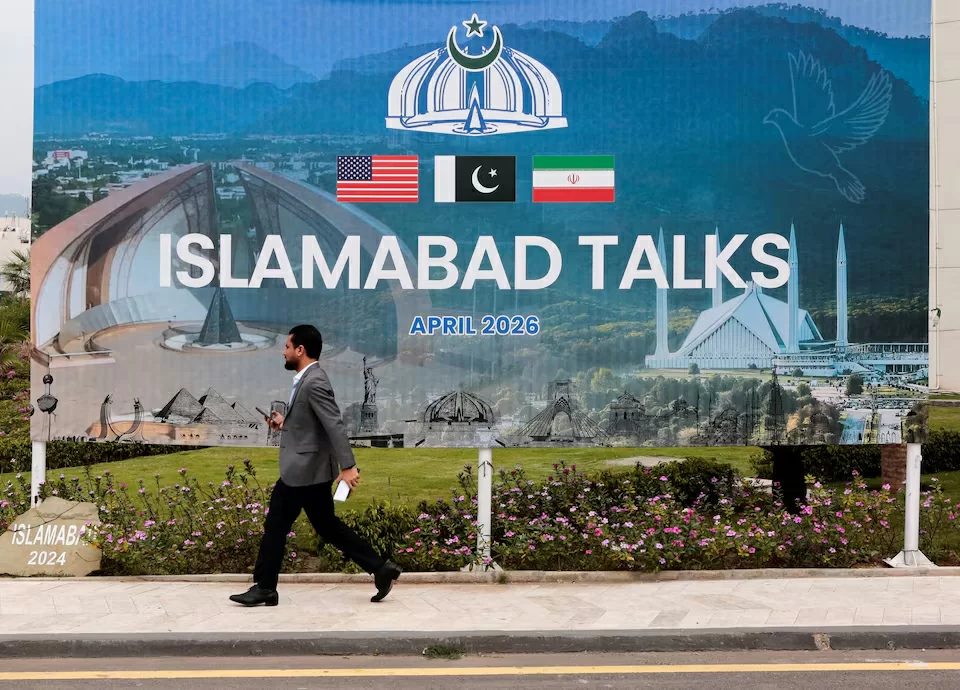
    After 14 hours of landmark direct negotiations hosted by Pakistan in Islamabad, the first round of high-level peace talks between the United States and Iran has wrapped up, with both sides agreeing to resume discussions at a later date to resolve outstanding sticking points. The talks, the first direct high-level encounter between the two nations in more than a decade and the highest-level meeting since Iran’s 1979 Islamic Revolution, aimed to end a six-week open conflict that has killed thousands and roiled global energy markets.

    As the region remains under a fragile two-week-old ceasefire, the outcome of these negotiations carries profound implications for the stability of global energy supplies, particularly through the Strait of Hormuz — the strategic chokepoint that carries roughly 20% of the world’s daily oil shipments, which Iran has effectively blocked since the start of the conflict. The six-week war has already sent global crude prices spiking and left thousands dead on both sides.

    In an early Sunday statement posted to the social platform X, Iran’s government confirmed the conclusion of the first round of talks, noting that technical teams from both delegations will now exchange drafted documentation. “Negotiations will continue despite a number of remaining differences,” the statement read, without providing a specific timeline for the resumption of talks. This account contradicts an earlier report from Iranian state television, which claimed talks would continue on Sunday.

    According to a source from Pakistan, which served as the neutral mediator for the talks, the US delegation was led by Vice President JD Vance, special envoy Steve Witkoff, and Jared Kushner — President Donald Trump’s son-in-law. They held a two-hour opening session with Iran’s top negotiators, including Parliament Speaker Mohammad Baqer Qalibaf and Foreign Minister Abbas Araqchi, before entering a recess. The Trump administration has not yet issued any official public comment on the outcome of the talks or the details of outstanding disagreements.

    In a symbolic demonstration of mourning, the Iranian delegation arrived in Islamabad on Friday dressed entirely in black. The gesture honored the recent passing of Iran’s Supreme Leader Ayatollah Ali Khamenei, as well as all Iranians killed during the conflict. Delegates also brought the shoes and bags of student victims killed in a US airstrike that hit a school adjacent to an Iranian military compound. The Pentagon has launched an investigation into the strike, which Reuters reports was almost certainly carried out by American forces. The Pakistani source added that the first day of talks saw shifting moods, with negotiations marked by fluctuating emotions amid deep-rooted mutual distrust.

    To secure the unprecedented diplomatic gathering, Pakistani authorities locked down large swathes of Islamabad, deploying thousands of paramilitary forces and regular troops across the capital. The hosting role marks a notable shift for Pakistan, which was widely sidelined in international diplomacy just one year ago.

    The status of the Strait of Hormuz has emerged as the central sticking point in negotiations. The US military announced it has been laying the groundwork to clear the strait of blockades, saying two US warships have already transited the waterway and mine clearance operations are underway. Iran has outright denied that any American military vessels have passed through the strait.

    Ahead of the talks, a senior Iranian official told Reuters that Washington had agreed to unfreeze billions of dollars in Iranian assets held in Qatar and other foreign banks, a claim that a senior US official immediately denied. Per Iranian state media and senior officials, Tehran’s core demands also include full Iranian sovereign control over the Strait of Hormuz, war reparations from the US, a region-wide ceasefire that includes clashes in Lebanon, and the right to collect transit tolls from commercial ships passing through the waterway.

    For the Trump administration, core negotiating goals have shifted over the course of the conflict, but the non-negotiable priorities remain guaranteed unimpeded transit for global commercial shipping through the strait, and the permanent disabling of Iran’s uranium enrichment program to prevent it from developing a nuclear weapon. Israel, the US’s closest regional ally which has participated in strikes on Iran and continues to bombard Hezbollah positions in Lebanon, has stated that its military campaign is not covered by the current US-Iran ceasefire.

    Despite the opening of diplomatic dialogue, decades of deep mutual suspicion between Washington and Tehran remain largely unaddressed, casting uncertainty over whether the current ceasefire will hold and whether a lasting peace deal can be reached.

  • The Dominican Republic has had two hydrometeorological events per year in the last decade

    The Dominican Republic has had two hydrometeorological events per year in the last decade

    Over the 30-year period spanning from 1995 to 2024, the Dominican Republic has recorded 75 major hydrometeorological events, with tropical depressions and storms making up the vast majority of these extreme weather occurrences, according to newly released data from the country’s National Statistics Office (ONE).

    The national statistical agency’s comprehensive analysis breaks down the makeup of these 30 years of weather events: 15 were classified as tropical depressions, 29 were categorized as tropical storms, and the third most common type was Category 1 hurricanes, which hit 10 times over the study period. When looking at more recent trends from the past 10 years, ONE found that the annual frequency of these hydrometeorological events has held steady, holding to an average of two recorded events per year.

    Beyond frequency and type, the data also highlights a clear seasonal concentration of extreme weather. More than 65% of all recorded events over the 30-year window occurred in just two months: August and September, aligning with the peak of the annual Atlantic hurricane season that impacts the Caribbean nation.

    Geographically, the impact of these events is not evenly distributed across the Dominican Republic’s provinces. ONE’s data identifies five provinces that have seen the highest number of hydrometeorological event trajectories between 1995 and 2024: La Altagracia leads with 8 recorded trajectories, followed by Azua with 7, and San Juan and Elías Piña tied at 6 each, with La Vega rounding out the top five at 5.

    In addition to mapping long-term weather trends, the 2024 data also sheds light on how Dominican households are preparing for extreme weather events. The statistical office reports that nearly 65% of households across the country took proactive preventive steps in 2024, reinforcing doors, roofs and windows when receiving alerts about incoming natural hazards.

    Other common preparedness actions taken by residents include securing loose furniture and household appliances (practiced by 20% of households), properly securing propane gas tanks to reduce risk (17.7%), relocating to the home of a family member or friend for safety (13.3%), and stockpiling emergency supplies and non-perishable food ahead of an event (12.5%).

  • COE reports more than 700 displaced people, isolated communities, and maintains alert for 26 provinces

    COE reports more than 700 displaced people, isolated communities, and maintains alert for 26 provinces

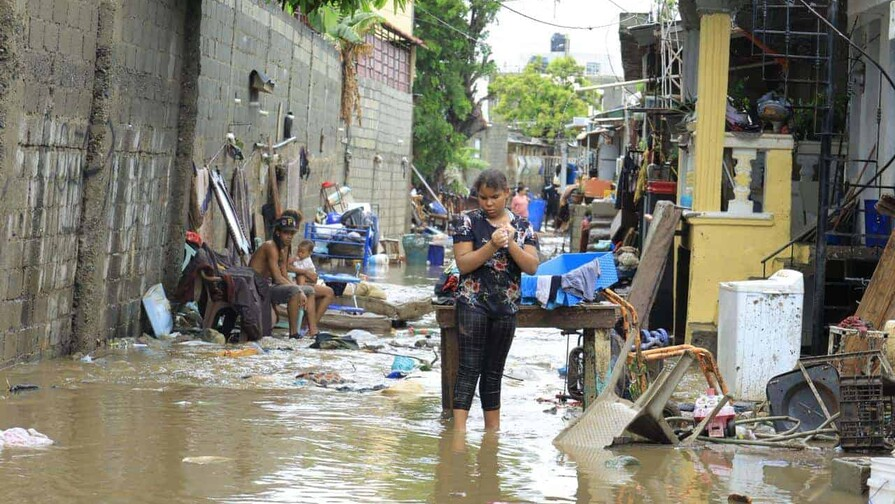
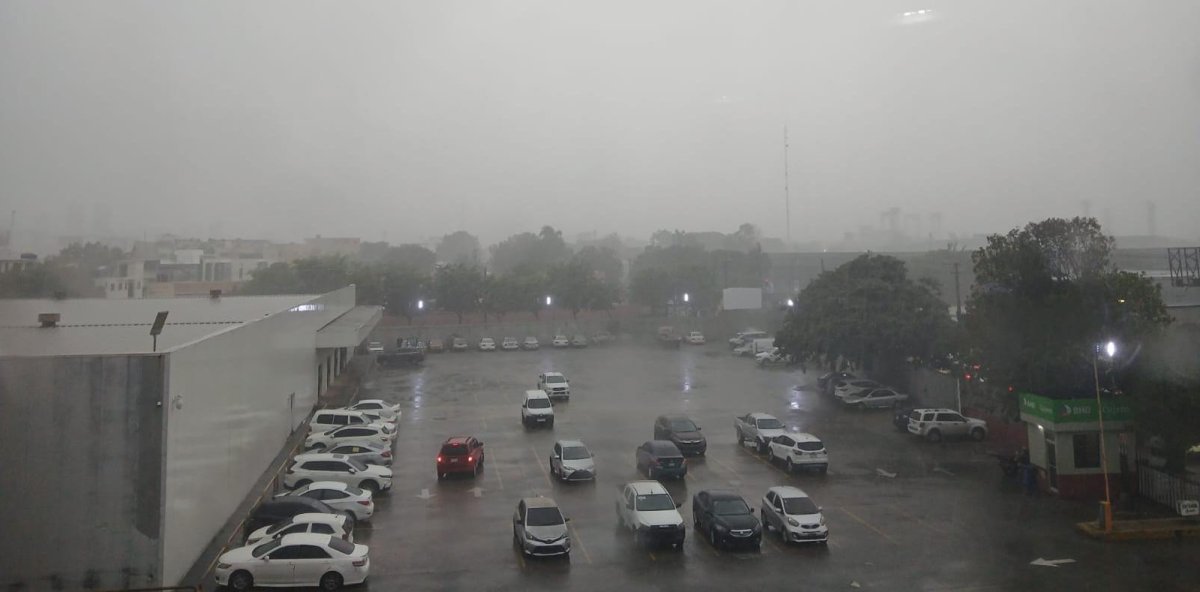
    Torrential rainfall that hit several northern and central provinces of the Dominican Republic Saturday night has triggered devastating flash flooding, leaving hundreds of residents displaced and disrupting critical infrastructure across the affected region, the nation’s Emergency Operations Center (COE) confirmed in an official update Sunday morning.

    In its latest situation bulletin, the COE detailed the widespread human and material toll of the disaster: across the hard-hit provinces of Puerto Plata, Monte Plata, Valverde, and María Trinidad Sánchez, the flooding has damaged 145 residential properties, forced 725 people from their homes, and left 167 residents taking temporary refuge in government-run emergency shelters. Twelve entire communities remain cut off from surrounding areas, blocked by floodwaters that have made local roads impassable.

    Beyond housing and displacement, the disaster has also triggered a major public health crisis by cutting off drinking water access for more than 113,000 users across the affected region. Seventeen regional aqueduct systems have been knocked out of commission by the heavy rains and flood damage, leaving vast swathes of the impacted population without access to safe running water.

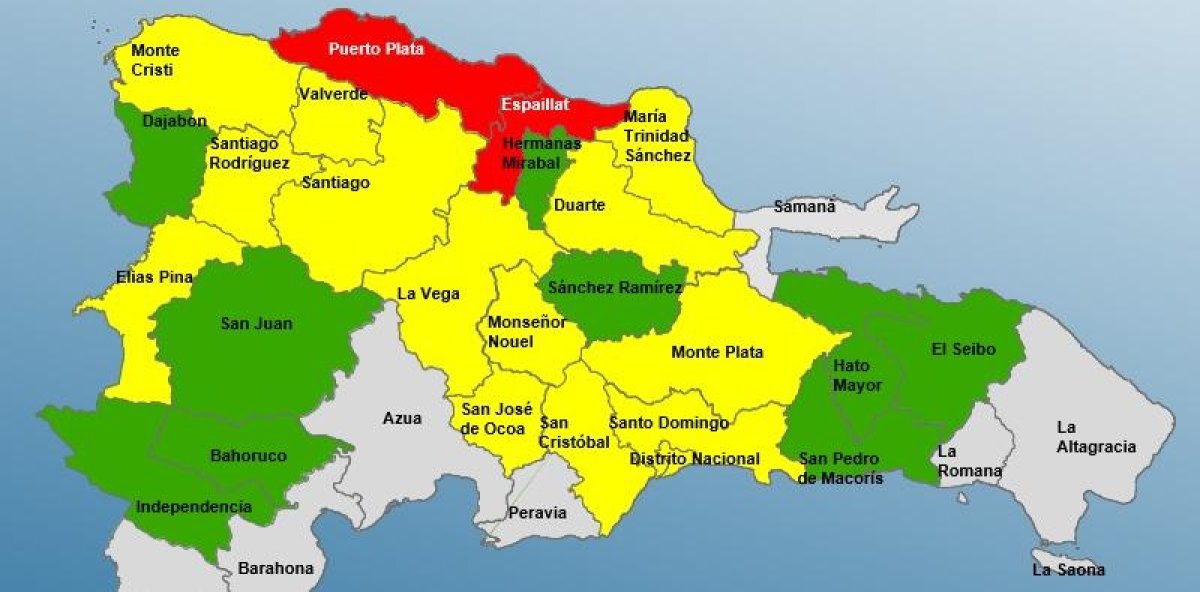
    In response to the ongoing hazard, the COE has activated its highest-level red alert for four of the most severely impacted provinces: Puerto Plata, Espaillat, María Trinidad Sánchez, and Valverde. The alert bars non-essential travel and mandates emergency response teams to remain on standby for rapid rescue and relief operations.

    An additional 15 provinces and administrative areas remain under lower-level yellow alert, warning residents of ongoing risks of flooding and landslides. The areas under yellow alert include Monseñor Nouel, Sánchez Ramírez, Santiago, La Vega, Monte Cristi, Elías Piña, Samaná, Santiago Rodríguez, San Cristóbal, Santo Domingo Province, the National District, Monte Plata, San José de Ocoa, Duarte – with particular focus on the high-risk Bajo Yuna region – and Hermanas Mirabal.

  • Suriname pleit voor eerlijke klimaatfinanciering tijdens Amazone overleg

    Suriname pleit voor eerlijke klimaatfinanciering tijdens Amazone overleg

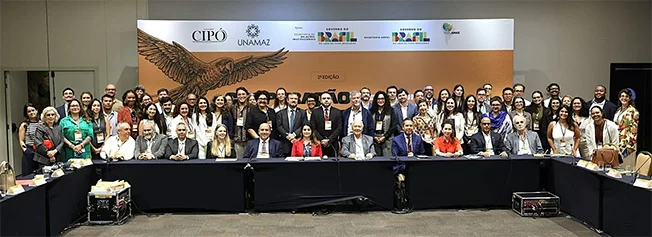
    On April 9, a critical regional consultation focused on Amazon rainforest protection brought together a diverse array of stakeholders in Brazil’s capital city of Brasília, where Suriname emerged as a leading voice demanding systemic reform to global climate finance frameworks that recognizes the contributions of nations preserving extensive, intact forest ecosystems.

    Organized to advance implementation of prior regional commitments to Amazon conservation, the gathering convened representatives from member states of the Amazon Cooperation Treaty Organization (ACTO), ACTO’s administrative secretariat, Brazilian federal authorities, civil society groups, Indigenous communities, and academic research institutions. Discussion centered on strengthening cross-border collaboration, updating scientific data infrastructure, and addressing longstanding inequities in global climate action support.

    Speaking on behalf of the Surinamese government, Ambassador Ike Antonius drew attention to a gaping oversight in current international climate funding structures: the failure to adequately compensate High Forest, Low Deforestation (HFLD) nations. These are countries that maintain vast tracts of intact forest cover with minimal deforestation rates, delivering substantial global public benefits by sequestering carbon and slowing the progression of anthropogenic climate change. Yet they have historically been locked out of the majority of climate finance allocated to forest protection, which is often directed only to nations tackling high existing deforestation rates.

    Suriname, which falls squarely into the HFLD category, has repeatedly raised this demand across global climate policy forums. The country’s position reflects a longstanding government push to overhaul the global financial architecture underpinning international climate policy, to ensure nations that have already prioritized forest conservation receive tangible recognition and support for their ongoing efforts.

    Beyond the debate over climate finance, the consultation reinforced the shared commitment of Amazon basin nations to deepening cross-border collaboration. Participants emphasized that coordinated action on knowledge sharing, aligned policy development, and improved access to up-to-date scientific data is essential to scaling up effective conservation across the region. Stakeholders from Indigenous groups and civil society also contributed perspectives on integrating traditional knowledge and community-led stewardship into regional conservation strategies, underscoring the multi-sectoral approach needed to protect the world’s largest tropical rainforest.

  • Meteorologist explains April rains reignite the debate: which is the rainiest month in the Dominican Republic?

    Meteorologist explains April rains reignite the debate: which is the rainiest month in the Dominican Republic?

    For many people living in or familiar with the Dominican Republic, a widespread misconception has persisted: that the country’s wettest weather aligns with November, or that unusually heavy early-spring downpours in recent years have shifted the peak rainfall to April. But 30 years of systematic climate measurements tell a far different story, according to a leading Dominican meteorologist.

    Cristopher Florian, a climatology specialist at the Dominican Institute of Meteorology (Indomet), shared the findings in an exclusive interview with local newspaper HOY, debunking the common misconception about the country’s rainfall patterns. Long-term climatological data collected consistently across decades confirms that May actually holds the title of the Dominican Republic’s rainiest month, with June ranking as the second wettest, Florian explained.

    “That conclusion is firmly established by climatological science, drawn from three decades of continuous rainfall measurements across monitoring sites across the country,” Florian told reporters. The meteorologist added that while extreme heavy precipitation events have occurred in April and November in recent years, that short-term trend is not enough to upend long-held climate patterns.

    To formally declare a shift in a region’s long-term climatology, scientists require a continuous 30-year dataset to filter out short-term random weather fluctuations and identify sustained trends, Florian noted. “We still need many more years of consistent measurements to confirm that April or November have overtaken May and June as the country’s rainiest months,” he clarified.

    Beyond correcting the long-held misconception, Florian also issued a practical forecast for the coming days, warning residents that widespread rainfall will persist through the weekend. He projected that precipitation levels will climb notably on Sunday, and the wet weather will continue into Monday with increased intensity. This forecast raises the risk of several hazardous conditions, including swelling of rivers, streams and mountain ravines, as well as flash urban flooding in low-lying developed areas, the meteorologist cautioned.

  • CARICOM Chairman insists T’dad Foreign Minister absented from retreat due to seasickness

    CARICOM Chairman insists T’dad Foreign Minister absented from retreat due to seasickness

    A brewing internal dispute within the Caribbean Community (CARICOM) has moved into the public eye, with CARICOM Chairman and St Kitts and Nevis Prime Minister Dr. Terrance Drew issuing a detailed public refutation of Trinidad and Tobago’s claims surrounding the recent reappointment of the bloc’s Secretary General on Saturday evening. The core of the conflict centers on two key claims from Trinidad and Tobago: that its Foreign Minister Sean Sobers was deliberately disinvited from a critical leaders’ retreat focused on the Secretary General appointment, and that the reappointment process violated CARICOM’s foundational governing treaty.

    Addressing the first allegation head-on, Drew laid out a timestamped timeline of communications to back the bloc’s position that Sobers voluntarily opted out of the February 26 off-site retreat due to pre-existing seasickness. According to Drew, after Trinidad and Tobago Prime Minister Kamla Persad-Bissessar departed the broader CARICOM conference hosted in St Kitts and Nevis on the evening of February 25, Sobers reached out to incumbent CARICOM Secretary General Dr. Carla Barnett via WhatsApp at 10:33 PM that same night to ask if he could attend the retreat in Persad-Bissessar’s place. Barnett confirmed that foreign ministers routinely stand in for absent heads of government, clearing the way for Sobers to participate. In that same exchange, Drew said, Sobers noted that the retreat required a boat ride to reach its venue, and his chronic seasickness made attendance uncomfortable, leaving his participation uncertain. By 10:55 PM that night, Barnett forwarded the exchange to Drew, noting that Trinidad and Tobago would likely go unrepresented at the next day’s retreat. In a follow-up message sent at 12:37 AM on February 26, Barnett told Sobers that the CARICOM chair would fully understand his decision to skip the event if the boat trip would trigger illness. Drew emphasized that Sobers never sent any follow-up communication to either the chair or the Secretary General indicating he had changed his mind and was able to attend. This directly contradicts Trinidad and Tobago’s claim that Sobers was uninvited to the closed-door meeting.

    Drew also pushed back on Trinidad and Tobago’s second claim that the Secretary General appointment was never placed on the retreat’s formal agenda. He confirmed that the reappointment of incumbent Dr. Barnett for a second five-year term was discussed under the retreat’s existing “Financing and Governance of the Community” agenda item. The discussion was held in accordance with the provisions laid out in Article 24 of the Revised Treaty of Chaguaramas, CARICOM’s core governing document, and Barnett stepped out of the room during the deliberations to avoid any conflict of interest. After regional leaders reached a consensus to approve Barnett’s reappointment, Drew explained that the bloc intentionally delayed the public announcement as a courtesy to inform CARICOM heads who were not present at the retreat before making the decision official. However, repeated attempts to contact Persad-Bissessar via both email and phone went unanswered, and Drew was ultimately tasked with notifying Sobers of the outcome.

    Trinidad and Tobago has rejected the legitimacy of the process, arguing that the appointment violated the Revised Treaty of Chaguaramas. While the country has ruled out a full exit from CARICOM, it has announced that it will cut all financial contributions to the regional bloc until the dispute is resolved to its satisfaction. So far, at least two CARICOM member states — Guyana and Belize — have publicly expressed their support for the reappointment process that led to Barnett’s second term. Barnett made history as the first woman to hold the post of CARICOM Secretary General. The dispute also spilled over into an April 10 virtual summit called to address Trinidad and Tobago’s concerns about the reappointment, which Trinidad and Tobago boycotted entirely. Drew confirmed that neither the prime minister nor any other representative from the country attended the scheduled meeting.

  • Analyse: Rekenkamer legt systeemfout bloot: probleem is geen geld, maar bestuur

    Analyse: Rekenkamer legt systeemfout bloot: probleem is geen geld, maar bestuur

    Dutch Court of Audit’s 2025 annual report does more than just outline technical administrative gaps—it offers a unflinching diagnosis of deep-rooted systemic issues that have plagued the country’s public governance for years. Contrary to common assumptions, the core crisis is not a shortage of public funding or the absence of regulatory frameworks, but a persistent lack of consistent, accountable governance across all levels of government.

    The audit acknowledges that incremental progress has been made in recent years to strengthen oversight systems: the Accountability Act is now being broadly applied, a standardized single-audit principle has been rolled out across departments, and there is greater institutional focus on financial and administrative control. On paper, these reforms have left the public governance framework looking far more robust than it was a decade ago. But in real-world practice, structural shortcomings in implementation remain entirely unaddressed, leading to the report’s most stark conclusion: the Dutch public sector does not lack rules—it lacks consistent compliance with those rules.

    A particularly alarming trend highlighted in the report is the repeated pattern of identical failings across disparate policy areas. Whether the audit examines land allocation, social welfare distribution, or public subsidy disbursement, the same three flaws emerge consistently: inadequate internal control mechanisms, insufficient documentation and public accountability for spending, and most critically, the consistent failure to act on previous audit recommendations. This pattern is not evidence of isolated, one-off errors; it is proof of a fundamental systemic failure, where the government only addresses issues through reactive, ad-hoc corrections rather than implementing permanent structural fixes. This approach allows small errors to accumulate into larger, more costly problems over time.

    The report identifies misaligned policy design and budget implementation as the critical weak link in the current system. While this gap is often framed as a technical administrative issue, the Court of Audit makes clear it is inherently political. Governments regularly set ambitious policy targets and approve corresponding budgets, but the actual execution of those plans consistently falls short. This disconnect exposes a foundational unanswered question in Dutch public administration: who bears ultimate responsibility for policy delivery, and who actually enforces that accountability? Without a clear link between responsibility and oversight, policy remains disconnected from on-the-ground reality, the report confirms.

    Internal oversight, a mechanism designed to catch errors early before they result in public harm, also fails to deliver on its mandate. While every ministry formally maintains internal control systems, the audit found these systems either operate poorly or are not taken seriously by senior leadership. This flaw is consequential: by the time problems are identified through post-implementation audits, the damage to public funds and public trust has already been done.

    The report’s sharpest, though implicit, conclusion centers on a lack of political will to drive meaningful reform. Time and again, the Court of Audit issues evidence-based recommendations to address long-standing gaps, but those recommendations are never incorporated into sustained structural change. This confirms the problem is not a lack of knowledge about what needs fixing—it is a failure of political and administrative discipline to implement the required changes. Good governance, the report argues, is not a matter of expertise—it is a matter of political will to enforce accountability.

    Far from being a final assessment of governance failures, the 2025 report acts as a mirror held up to the Dutch government, ministries, and the National Assembly. The key finding of the audit is already clear; the open question now is how elected and appointed officials will act on these warnings. If the same failings are documented again in the 2026 audit, the conclusion will be unavoidable: the system is not just weak, it is unwilling to change.

  • Bridge over Camú River collapses; dozens of homes flooded and extensive damage in Puerto Plata

    Bridge over Camú River collapses; dozens of homes flooded and extensive damage in Puerto Plata

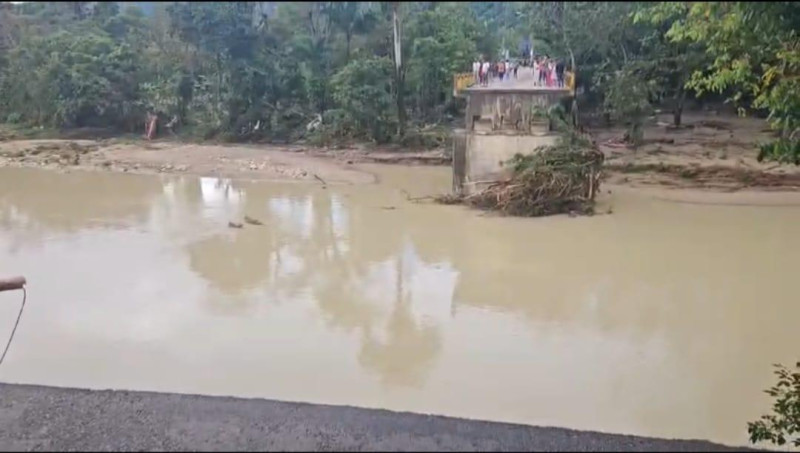
    On Saturday night, torrential downpours swept across the Dominican Republic’s Puerto Plata province, leaving a trail of widespread destruction that has disrupted communities and cut off critical transportation links. Two major bridge structures sustained serious damage, while rising floodwaters inundated dozens of residential properties across multiple municipalities.

    The most critical infrastructure failure occurred on the region’s popular tourist corridor, where the Camú bridge collapsed entirely, trapping residents and cutting off access to the surrounding area. A parallel crisis unfolded in the Altos de la Boca sector of Los Hidalgos, where a second bridge was rendered impassable by flood-driven damage, creating another isolated pocket of the province.

    Flooding was not limited to infrastructure damage, with multiple low-lying communities across Villa Montellano registering severe inundation. Neighborhoods including Los Ciruelos, El Tamarindo, Monte Bravo, and the La Maternidad district all reported standing floodwaters that entered residential homes. In one dramatic incident in Monte Bravo, an entire family was forced to climb onto the roof of their flooded property to escape rising waters, where they waited for rescue before being pulled to safety by teams from Amber Rescue.

    In the municipality of Imbert, communities along the Bajabonico River including Baraguana, Barrabás, and La Yaguita all saw widespread flooding as the waterway overflowed its banks. The same pattern of river-driven inundation was reported across three additional municipalities: Guananico, Altamira, and Villa Isabela, where dozens of additional homes were flooded.

    Beyond flooding and infrastructure damage, the heavy rain also triggered multiple landslides along the Puerto Plata-Navarrete highway. Slope failures were recorded in the El Copey community of Altamira, as well as at the main entrance to the highway’s tunnel, closing sections of the critical intercity route.

    In response to the crisis, José Ignacio Paliza, the Dominican Republic’s Minister of the Presidency, announced that an official emergency assessment and relief mission would launch in the early hours of Sunday. Paliza confirmed the government’s commitment to supporting impacted families in a post to his official social media account, writing, “We are heading to Puerto Plata to assist the families affected by the heavy rains of the last few hours. God is in control!”