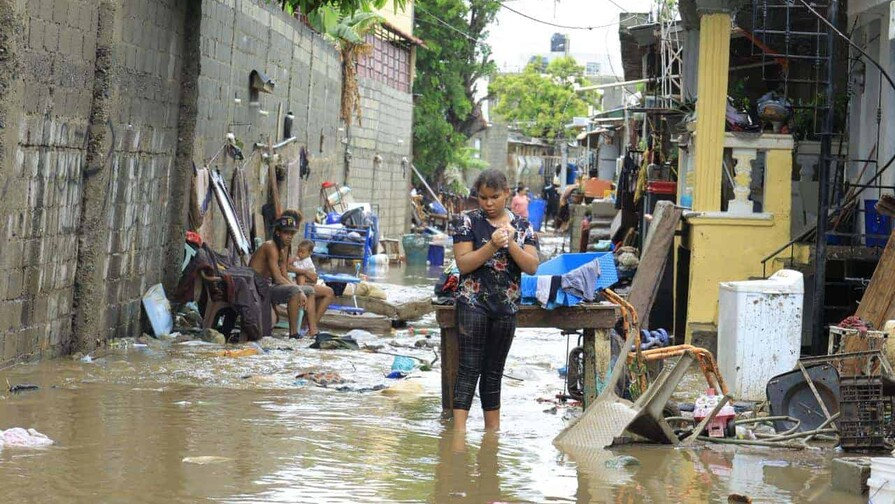
Over the 30-year period spanning from 1995 to 2024, the Dominican Republic has recorded 75 major hydrometeorological events, with tropical depressions and storms making up the vast majority of these extreme weather occurrences, according to newly released data from the country’s National Statistics Office (ONE).
The national statistical agency’s comprehensive analysis breaks down the makeup of these 30 years of weather events: 15 were classified as tropical depressions, 29 were categorized as tropical storms, and the third most common type was Category 1 hurricanes, which hit 10 times over the study period. When looking at more recent trends from the past 10 years, ONE found that the annual frequency of these hydrometeorological events has held steady, holding to an average of two recorded events per year.
Beyond frequency and type, the data also highlights a clear seasonal concentration of extreme weather. More than 65% of all recorded events over the 30-year window occurred in just two months: August and September, aligning with the peak of the annual Atlantic hurricane season that impacts the Caribbean nation.
Geographically, the impact of these events is not evenly distributed across the Dominican Republic’s provinces. ONE’s data identifies five provinces that have seen the highest number of hydrometeorological event trajectories between 1995 and 2024: La Altagracia leads with 8 recorded trajectories, followed by Azua with 7, and San Juan and Elías Piña tied at 6 each, with La Vega rounding out the top five at 5.
In addition to mapping long-term weather trends, the 2024 data also sheds light on how Dominican households are preparing for extreme weather events. The statistical office reports that nearly 65% of households across the country took proactive preventive steps in 2024, reinforcing doors, roofs and windows when receiving alerts about incoming natural hazards.
Other common preparedness actions taken by residents include securing loose furniture and household appliances (practiced by 20% of households), properly securing propane gas tanks to reduce risk (17.7%), relocating to the home of a family member or friend for safety (13.3%), and stockpiling emergency supplies and non-perishable food ahead of an event (12.5%).