博客

  • GTAWU and SGU sign collective bargaining agreement

    GTAWU and SGU sign collective bargaining agreement

    In a significant development for labor relations in Grenada, the Grenada Technical and Allied Workers’ Union (GTAWU) and St. George’s University Limited (SGU) formally ratified a comprehensive Collective Bargaining Agreement on February 12, 2026. The six-year pact, covering July 1, 2022 through June 30, 2028, was executed under the supervision of Labour Commissioner Sparkle Grenade-Courtney.

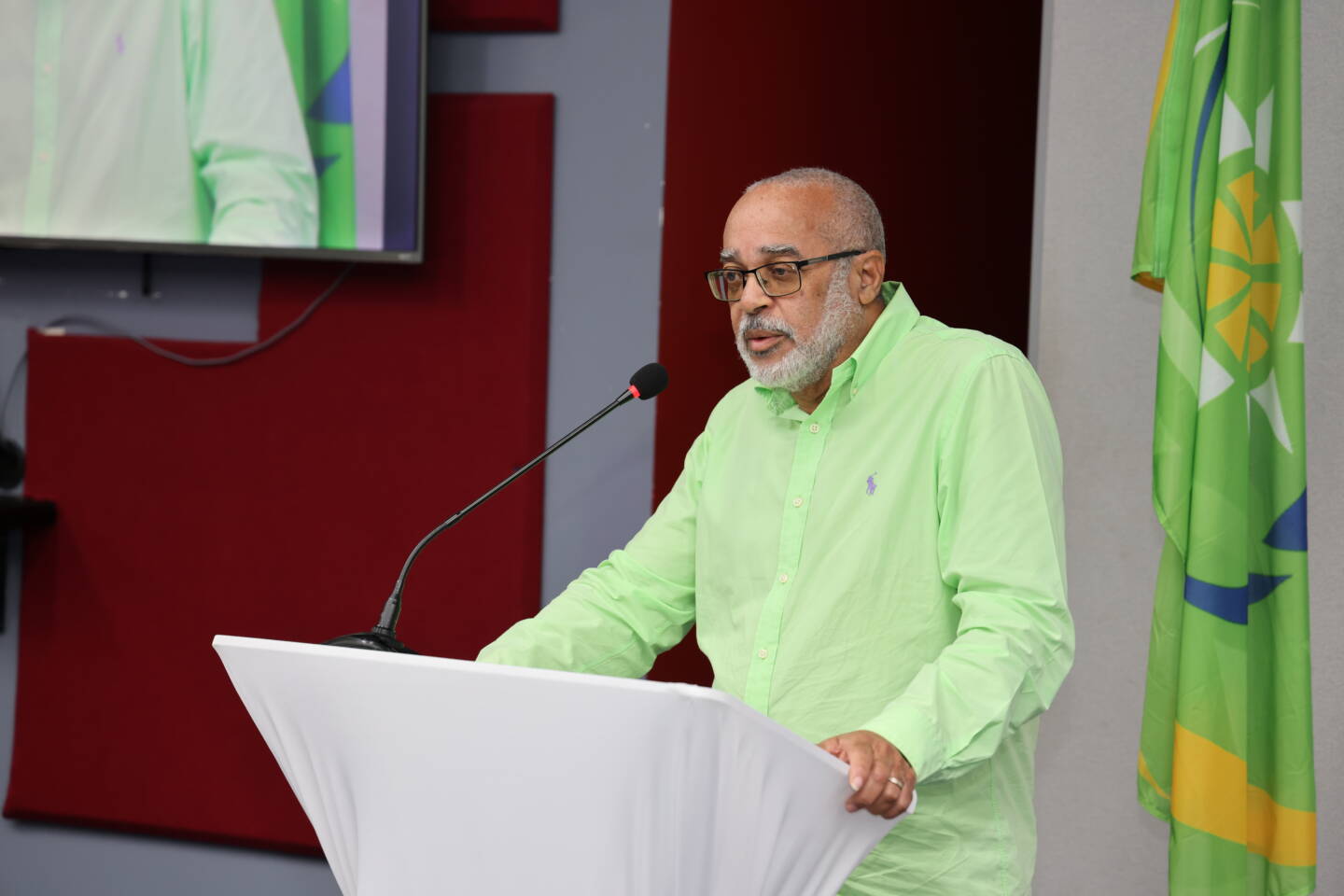
    The signing ceremony featured representation from both organizations’ leadership. SGU’s delegation included Chief Campus Operations Officer Greg Hendel, Vice President Business Administrator Dawne Buckmire, Human Resources Director Camila Williams-Johnson, and legal counsel Skeeta Chitan-Sylvester. GTAWU’s representation was led by President General André Lewis, accompanied by Chief Grievance Officer Trevor Xavier, Shop Stewards Kevon Noel and Gleaner Lewis, Workers’ Representative Ron Greaves, and Industrial Relations Officer Kadisha Andrew.

    Key provisions of the landmark agreement establish minimum starting salaries at 20% above Grenada’s national minimum wage threshold. The compensation package includes structured annual increments: four consecutive 4% raises for the 2022-2026 periods, followed by two 5% increases for the final two years of the contract.

    Additional benefits encompass enhanced night differential allowances, full reimbursement of driver’s license fees, comprehensive health insurance coverage, uniform and protective clothing provisions, pension benefits, and a formalized grievance procedure framework.

    Notably, both parties committed to ongoing negotiations regarding the unresolved status of SGU’s ‘Unvaccinated Workers’ who have been barred from campus premises since June 2021. The discussions will focus on compensation arrangements for these employees’ years of service prior to the implementation of vaccination mandates.
  • NDP: 25 februari blijft ideologisch fundament van de partij

    NDP: 25 februari blijft ideologisch fundament van de partij

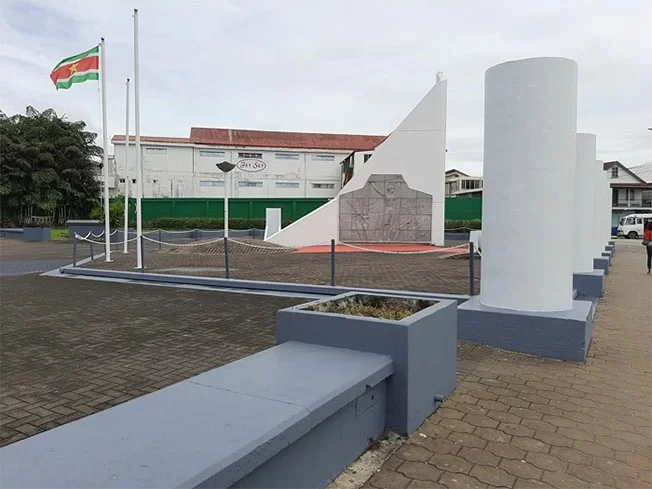
    The National Democratic Party (NDP) of Suriname commemorated the 46th anniversary of the February 25th Revolution today, reaffirming its commitment to the ideological foundations established during the 1980 military intervention. Rather than treating the date as mere historical nostalgia, the party positions it as the bedrock of its political philosophy centered on national sovereignty, social justice, and economic independence.

    The revolution, spearheaded by the late Desiré Delano Bouterse and a cadre of young military officers, initially emerged as a political intervention but subsequently evolved into what the NDP describes as a broader national awakening. This transformative period fundamentally reshaped Suriname’s trajectory toward self-determination and collective national identity, breaking from external dependencies and internal divisions.

    At the core of the NDP’s ideology lie five foundational pillars that continue to guide its political platform:

    1. National Sovereignty and Self-Determination: Suriname maintains absolute autonomy in directing its political, economic, and diplomatic course without external influence or domination.

    2. Social Justice: Development must benefit all citizens equally, with guaranteed access to education, healthcare, and employment opportunities alongside protection for socially vulnerable groups.

    3. Economic Independence: Strategic control over natural resources and domestic production sectors remains essential for sustainable growth and financial self-sufficiency.

    4. National Unity: The nation transcends ethnic, religious, and social differences, with unity in diversity serving as a prerequisite for stability and progress.

    5. Robust State Institutions: Effective governance requires strong institutions capable of steering development and safeguarding national interests.

    The NDP acknowledges the complex historical legacy of the revolution and recognizes that February 25th evokes diverse emotions within Surinamese society. However, the party maintains that this period represented a fundamental turning point in nation-building, shifting development metrics from purely economic indicators to encompass dignity, civic participation, and national pride.

    In light of contemporary challenges including economic pressures, global power shifts, and geopolitical tensions, the NDP calls for renewed national solidarity. The party emphasizes that current circumstances demand leadership grounded in the principles of sovereignty, justice, and courage that defined the revolution.

    On this 46th anniversary, the NDP extended congratulations to its members and the Surinamese people, expressing hope that ‘the spirit of courage, national unity, and self-determination will continue to inspire collaborative efforts toward building a strong, just, and independent Suriname.’

  • No one is coming to save us

    No one is coming to save us

    In a profound address resonating across the Eastern Caribbean, Dr. Didacus Jules, Director General of the Organisation of Eastern Caribbean States (OECS), has amplified Professor Justin Robinson’s stark declaration that ‘No One is Coming to Save Us.’ This statement, originally articulated in a widely circulated article, serves as a catalyst for redefining regional sovereignty and self-reliance in an increasingly fragmented global landscape.

    Dr. Jules contextualizes this realization not as a cause for despair but as a necessary awakening from long-held illusions. The past year has dismantled the Caribbean’s enduring belief that international systems, historical partnerships, or benevolent allies would provide sanctuary during crises. Major powers are recalibrating strategies to serve their own interests, concessional finance is diminishing, migration pathways are constricting, and the rules-based international order proves malleable to the whims of the powerful. This represents a fundamental structural shift, not a temporary disruption.

    For the OECS, the path forward is neither isolation nor empty bravado, but deliberate design. True sovereignty for small states, argues Jules, is not achieved through solitary defiance but through strategic pooling of capacities where size is a disadvantage and collective action where fragmentation weakens influence. The Eastern Caribbean already demonstrates this principle through functional realities: a common currency, a unified Supreme Court, free movement of people, and coordinated diplomatic representation. These are not theoretical constructs but operational systems that enhance, rather than dilute, national sovereignty.

    The contemporary geopolitical environment demands an evolved operational model. Incremental reform is insufficient in a world where geopolitics directly governs access to finance, trade, data, energy, and mobility. In this context, fragmentation across countries and sectors has transitioned from a manageable inconvenience to a strategic liability.

    Dr. Jules outlines a concrete framework for actionable self-reliance:

    1. Treating regional systems—education, digital infrastructure, climate resilience, energy, and data governance—as strategic assets that generate competitiveness and bargaining power, not merely as social expenditures.

    2. Making fragmentation economically and politically costly by strengthening regional platforms that reduce transaction costs, attract capital, and amplify collective voice. This requires unprecedented political discipline, establishing national-interest red lines on core matters like regional integration, citizenship, and external alignment that transcend electoral cycles.

    3. Replacing rigid planning with disciplined adaptability, designing institutions capable of learning, adjusting, and course-correcting amid perpetual uncertainty.

    4. Converting vulnerability into exportable expertise by developing climate resilience, disaster management, renewable energy, and digital services at regional scale rather than as isolated national experiments.

    5. Speaking with one coherent, data-grounded voice or accepting the consequence of being spoken for in international forums.

    Ultimately, Dr. Jules reframes development as a political and institutional choice rather than a technical problem awaiting external solutions. The OECS experience proves that self-preservation is within regional capacity—requiring clarity of purpose, courage for deeper integration, and discipline to build enduring systems. This moment represents not a rejection of global engagement, but a determination to engage the world on terms that protect agency, dignity, and future sovereignty.

  • Public Consultations Set for Workplace Violence and Harassment Bill 2026

    Public Consultations Set for Workplace Violence and Harassment Bill 2026

    The government of Antigua and Barbuda has initiated a crucial phase of public engagement for its proposed Workplace Violence and Harassment (Prevention) Bill 2026, scheduling consultation sessions to gather vital stakeholder input. These forums, designed to incorporate diverse perspectives before legislative advancement, will convene on two separate dates: February 25th at 5:00 PM at the Bolans Wesleyan Holiness Church, followed by a second session on March 4th at 2:30 PM within the Parliament Building in St. John’s.

    Government organizers are issuing a broad invitation to ensure comprehensive representation from across the workforce ecosystem. Employers, employees, trade union delegates, and concerned citizens are all actively encouraged to contribute to these pivotal discussions. This initiative represents a significant component of the administration’s broader strategy to reinforce legal protections and foster safer professional environments.

    The prospective legislation itself establishes a comprehensive framework to combat workplace misconduct. Its provisions are slated to introduce mandatory preventive protocols, establish clear and confidential reporting channels, and implement robust safeguards for victims. The law’s jurisdiction will extend to both public institutions and private sector enterprises, ensuring uniform standards of protection.

    According to official statements, these consultations serve a fundamental democratic purpose: to collect informed feedback and substantive recommendations directly from the populace. This collaborative approach aims to strengthen the bill’s effectiveness and legitimacy before it enters the formal legislative pipeline for debate and enactment.

  • Youth ambassadors commend region’s resilience, urge bold action at 50th CARICOM Heads gathering

    Youth ambassadors commend region’s resilience, urge bold action at 50th CARICOM Heads gathering

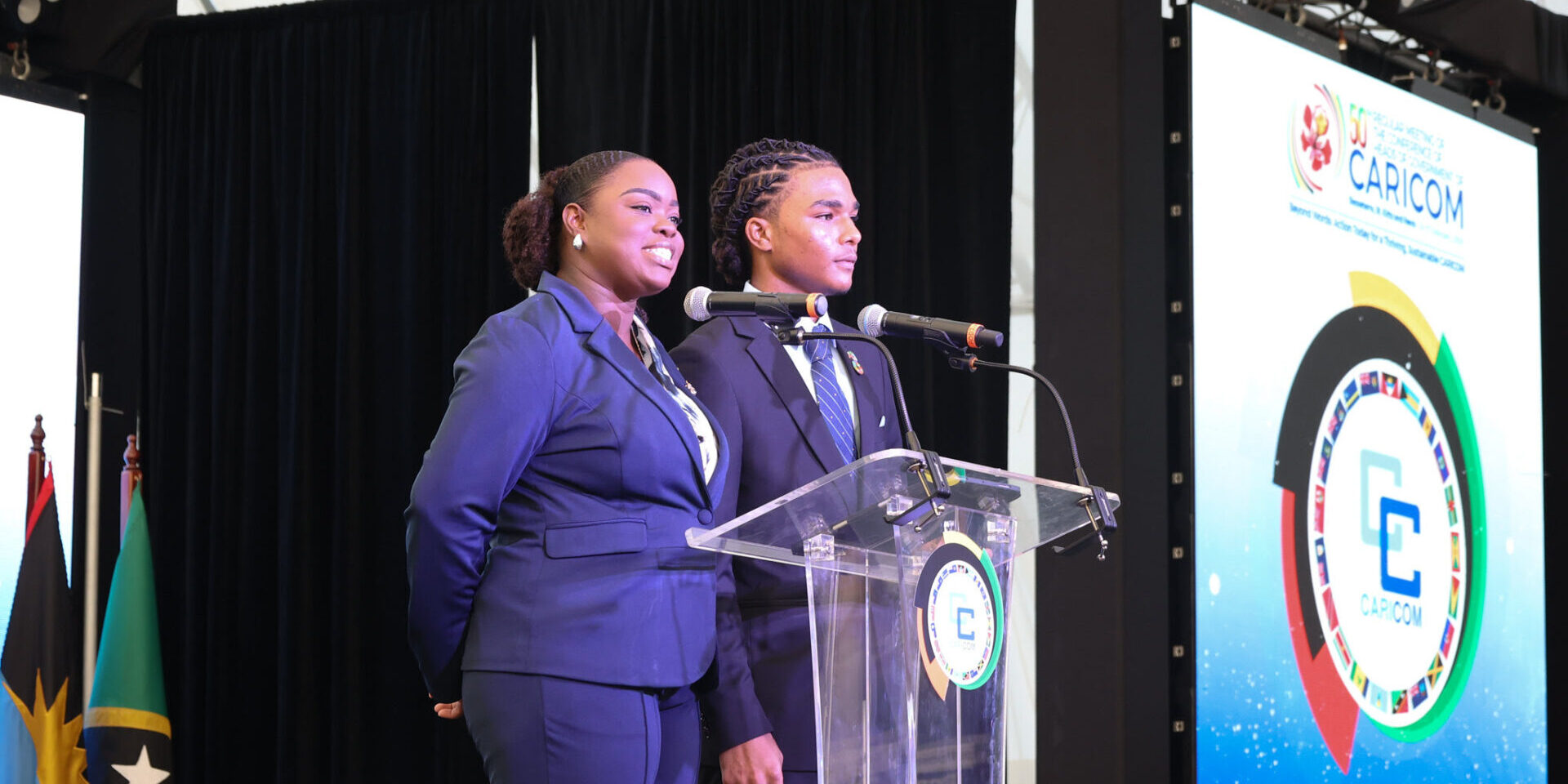
    ST. KITTS AND NEVIS – At the landmark 50th CARICOM Heads of Government Conference opening on February 24, youth ambassadors from St. Kitts and Nevis delivered a powerful call to action that resonated through the gathering of regional leaders. Aquanjé Robinson and Siobhan Phipps-Harding, serving as CARICOM Youth Ambassadors, articulated a compelling vision for tangible progress beyond diplomatic formalities.

    Phipps-Harding extended a warm welcome on behalf of the host nation, expressing pride in staging this golden jubilee of Caribbean unity. However, she quickly pivoted to the core message: “Our Region’s people and youth are no longer looking for togetherness written in ink; but they are looking for progress etched into our landscapes.” This statement underscored the growing impatience with symbolic gestures without substantive implementation.

    Both ambassadors identified critical challenges facing the Caribbean community, including climate volatility, unsustainable debt burdens, and brain drain migration patterns that deprive the region of its most talented citizens. They emphasized that these issues require more than discussion—they demand concrete solutions.

    Robinson framed the Caribbean response through the lens of historical resilience: “Our resilience is not a modern buzzword; it is our inheritance. It is woven into our shared history, from the resistance of our ancestors to the reconstruction of our islands after every storm.” This resilience, he argued, must now translate into bold, purposeful action rather than mere survival.

    The youth ambassadors outlined specific pillars for a transformed CARICOM: digital connectivity to bridge educational and economic divides, food security to reduce import dependency, and climate justice that provides actual protection for vulnerable communities. Their vision emphasized regional integration that transcends geographical separation.

    Concluding with a unified message, both ambassadors reminded leaders: “Let this 50th Meeting be remembered not for the elegance of its speeches, but for the boldness of your vision and your implementation, moving beyond words, together.” They expressed confidence that “our Region’s future is bright because we are building it together,” signaling both hope and expectation for concrete outcomes from the historic gathering.

  • WATCH: Alex Browne ready to take the fight to Labour in March 16 by-election

    WATCH: Alex Browne ready to take the fight to Labour in March 16 by-election

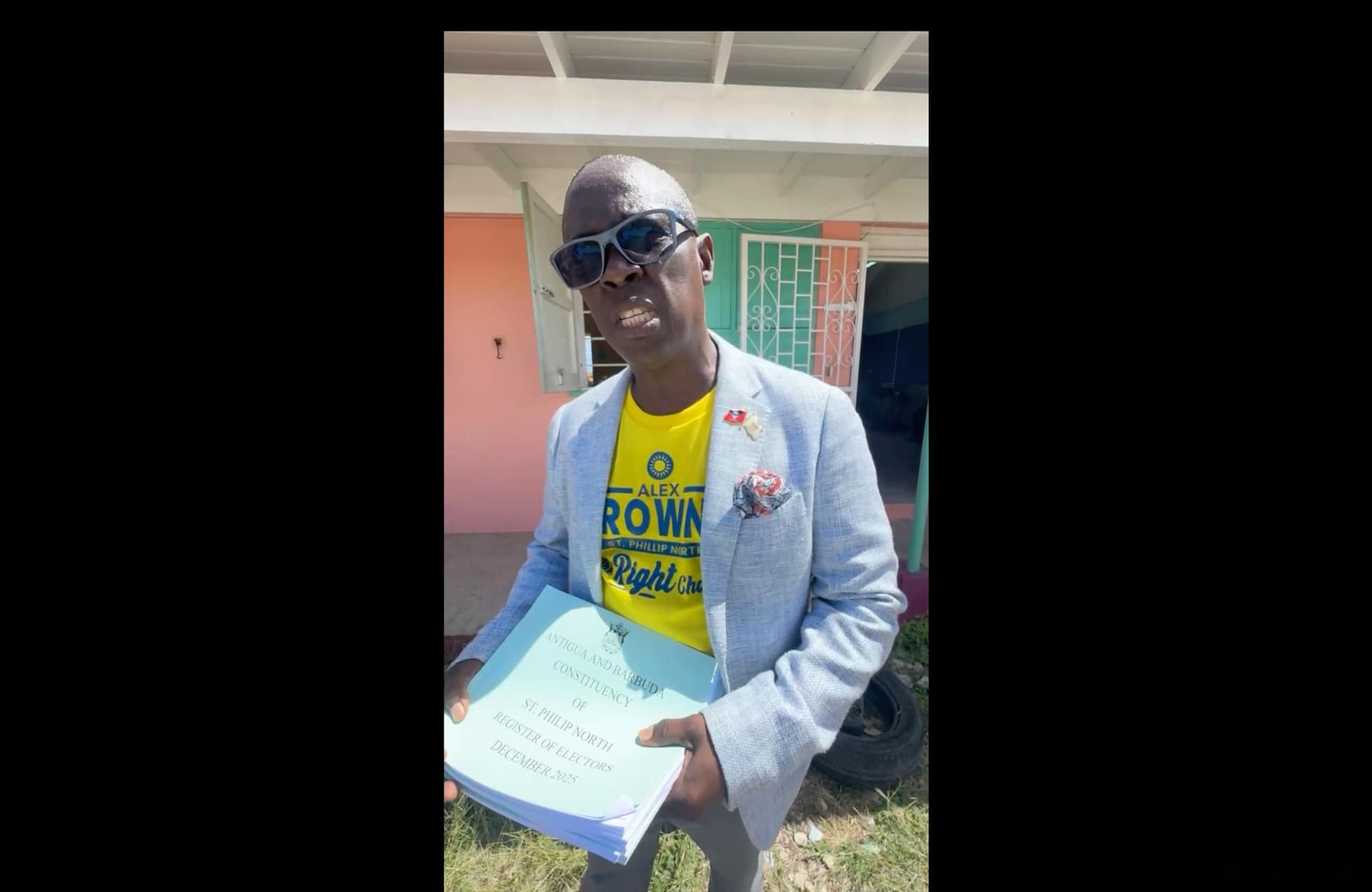
    In a significant political development, United Progressive Party (UPP) nominee Alex Browne has characterized his candidacy in the St. Philip’s North by-election as a “seminal moment in history,” framing the upcoming contest as a definitive opportunity for transformative change in the constituency. The by-election, scheduled for March 16, was necessitated by the retirement of longstanding parliamentary representative Sir Robin Yearwood.

    Following his formal nomination, Browne expressed profound humility and honor at his selection, acknowledging divine providence in the process. “We have work to do and we are praying about this moment,” Browne stated. “We will continue to pray and work because this moment must be remembered for generations that today is Saturday for change in St. Philip’s North.”

    The UPP leadership has thrown its full support behind Browne’s campaign, with Political Leader Jamale Pringle emphasizing the candidate’s extensive groundwork and preparation. Pringle unequivocally described the contest as a “change election” and pledged the party’s complete mobilization to secure victory. “Brother Alex has been putting in the work… This is the election,” Pringle affirmed, signaling the party’s strategic commitment to capturing the seat.

    The March 16 by-election represents not merely a routine electoral exercise but a potential watershed moment in St. Philip’s North political landscape, with both candidate and party framing it as a historic pivot point that could reshape the constituency’s future trajectory.

  • Baltimore Says Labour ‘Strong and Ready’ After Nomination in St. Philip’s North

    Baltimore Says Labour ‘Strong and Ready’ After Nomination in St. Philip’s North

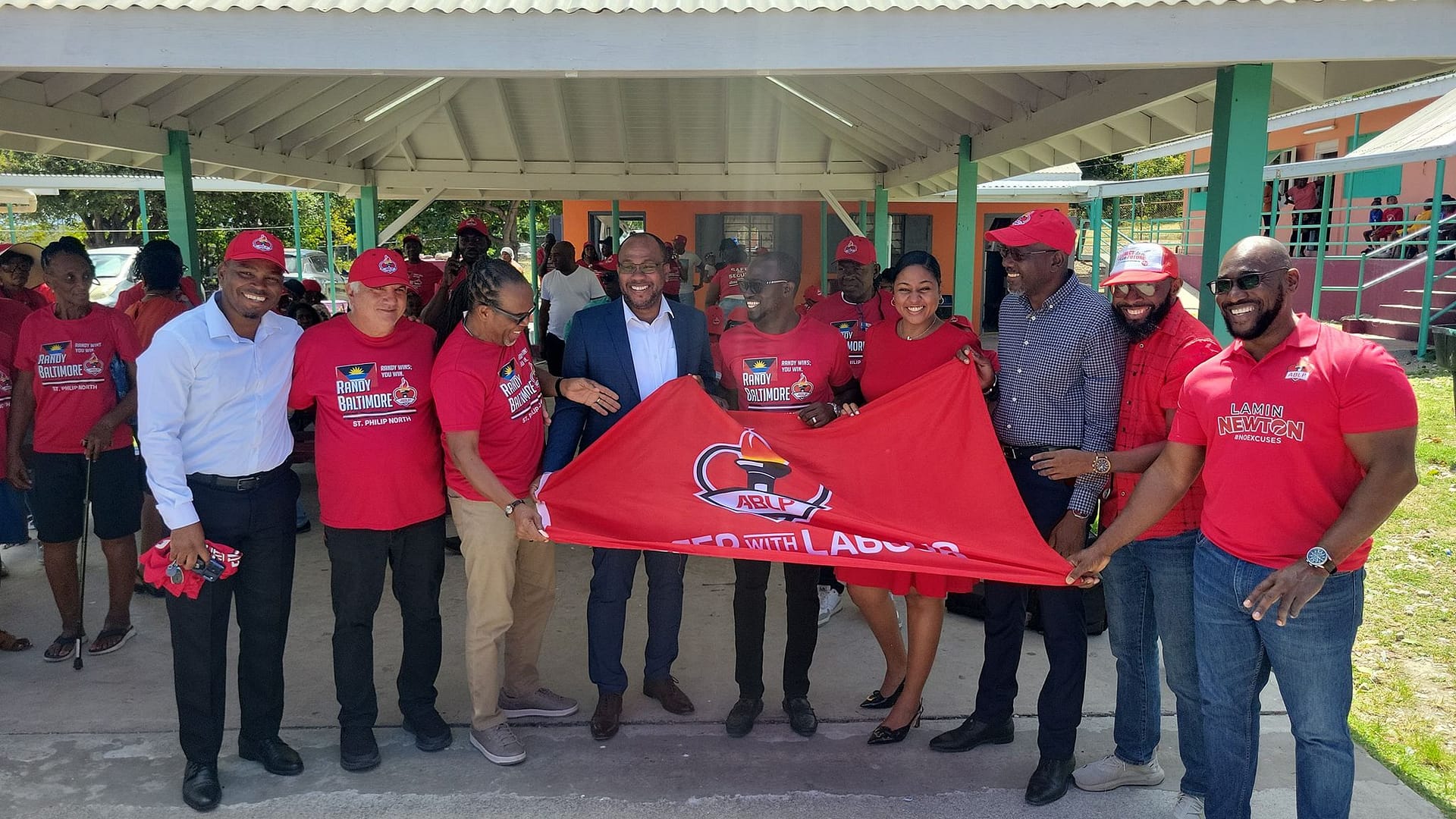
    The political landscape in St. Philip’s North, Antigua and Barbuda, is heating up as Randy Baltimore officially becomes the Antigua and Barbuda Labour Party (ABLP) candidate for the crucial March 16 by-election. The nomination process concluded successfully Wednesday at the Nelvie N. Gore Primary School in Willikies, marking the formal commencement of electoral preparations.

    Baltimore, who recently resigned from his position as principal customs officer to pursue his political ambitions, expressed profound optimism about his party’s prospects. ‘The Labour Party in this constituency is strong and ready,’ Baltimore declared in post-nomination remarks to state media, highlighting the substantial supporter turnout during nomination proceedings as evidence of robust grassroots backing.

    The by-election follows the retirement of political stalwart Sir Robin Yearwood, whose five-decade parliamentary tenure established a formidable legacy. Baltimore emphasized his commitment to building upon this foundation, stating: ‘With Sir Robin passing the torch, it is my philosophy to continue and to build on that foundation going forward.’

    Baltimore will compete against United Progressive Party candidate Alex Browne in what promises to be a closely contested race. Browne previously lost the seat by a narrow margin of fewer than 100 votes during the 2023 general election, setting the stage for a potential reversal.

    The ABLP candidate differentiated his campaign through emphasis on community connectivity and proven track record. ‘I’m connected with the people,’ Baltimore asserted. ‘My commitment and work have been evident for years, even before politics.’ He referenced several constituency initiatives already implemented, including health fairs and educational support programs, as demonstration of his practical engagement with community needs.

    Policy priorities identified by Baltimore center on infrastructure development, educational enhancement, and healthcare improvement. He specifically pledged to lobby government for continued road works and infrastructure projects while expanding scholarship opportunities for constituents.

    With campaigning intensifying ahead of the March vote, Baltimore urged constituents to ensure voting readiness: ‘The most important thing right now is to pick up your cards. Get your cards renewed.’ He framed the election as representing ‘a new era, a new life, a new vision’ for both the party and constituency.

    The candidate also outlined plans for expanded elderly outreach programs, emphasizing the need for senior residents to ‘feel more embraced within our community.’ Baltimore’s nomination ceremony was attended by cabinet ministers, party supporters, and family members, with his wife Nikisha and mother expressing strong personal pride in his political journey.

  • Ariza National Championships set to ignite track and field excitement

    Ariza National Championships set to ignite track and field excitement

    Grenada’s premier athletics event, the Ariza National Championships, is set to showcase the nation’s top track and field talent on February 28th and March 1st, 2026, at the renowned Kirani James Athletics Stadium. The competition will feature athletes from across the island vying for national honors while simultaneously serving as a qualifying pathway for the prestigious CARIFTA Games.

    This year’s championships carry special significance as Grenada prepares to host the regional CARIFTA competition, offering local athletes the exceptional opportunity to compete on home turf while representing their nation. The event promises to be a spectacular display of emerging athletic excellence and competitive spirit.

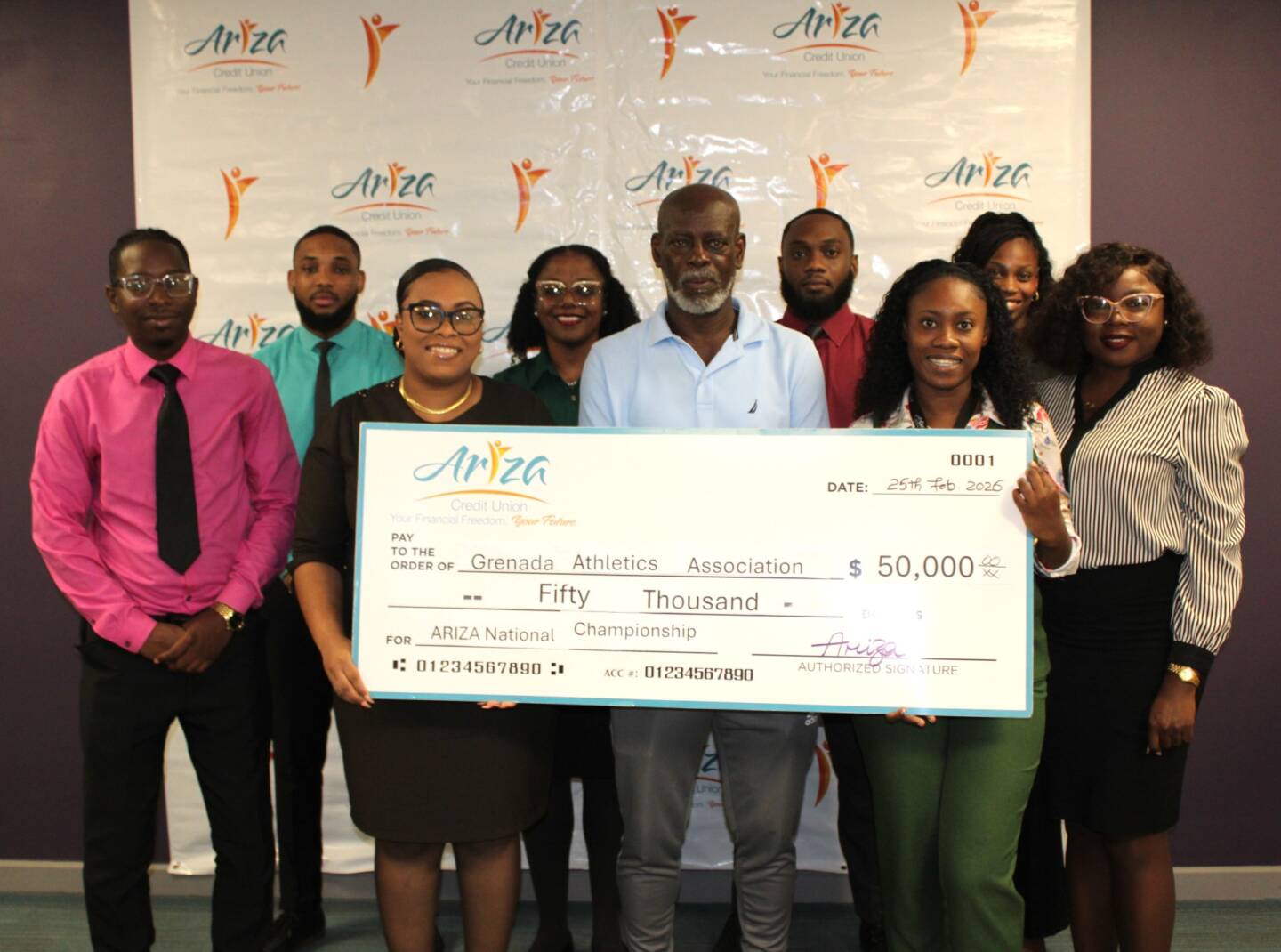
    Marking over a decade of sustained partnership, Ariza Credit Union has reinforced its commitment to youth development through sports by presenting the Grenada Athletics Association (GAA) with a substantial sponsorship cheque of EC$50,000. This continued investment underscores the financial institution’s dedication to nurturing athletic talent and community development initiatives.

    Mervyn Lord, Chief Executive Officer of Ariza, emphasized the organization’s philosophy: “Our ongoing investment initiatives specifically target youth empowerment and community strengthening through athletic programs. Sports serve as a fundamental platform for developing discipline, building confidence, and creating meaningful opportunities for young Grenadians.”

    Conrad Francis, President of the Grenada Athletics Association, acknowledged the vital support: “We deeply appreciate Ariza’s consistent partnership and their unwavering commitment to one of our nation’s most anticipated sporting events. This sponsorship enables us to maintain the high standards of competition and athlete development that define these championships.”

    The collaboration between Ariza Credit Union and the GAA continues to demonstrate how corporate sponsorship can effectively drive sports development while creating pathways for athletic excellence and national pride.

  • Mar-a-Lago Calling: Guyana, T&T Leaders Invited to Meet President Trump

    Mar-a-Lago Calling: Guyana, T&T Leaders Invited to Meet President Trump

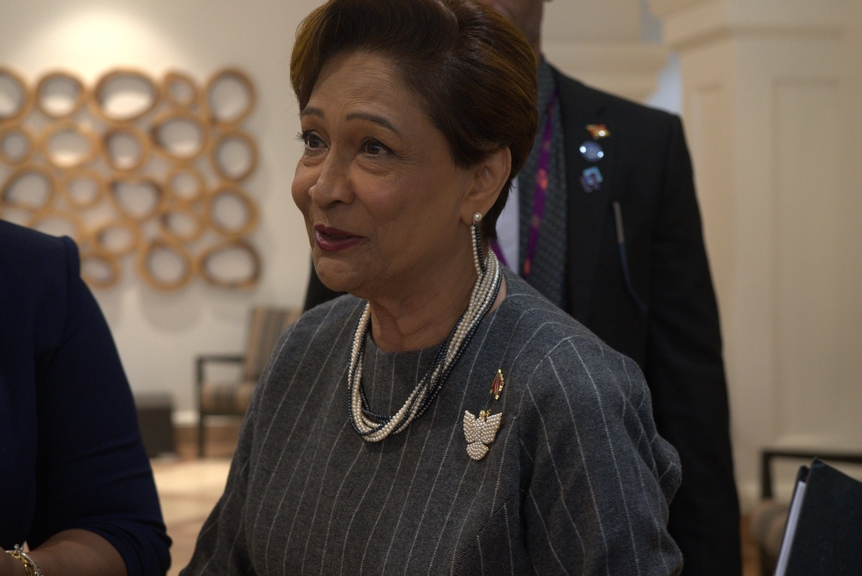
    In a significant diplomatic development emerging from the CARICOM Summit, U.S. President Donald Trump has extended exclusive invitations to two Caribbean leaders for high-level talks at his Mar-a-Lago estate in Florida. President Irfaan Ali of Guyana and Prime Minister Kamla Persad-Bissessar of Trinidad and Tobago have confirmed their attendance for the March 7 meeting, which coincides with the Shields of the Americas Summit in Doral, Florida.

    The invitation follows Wednesday’s strategic engagement between U.S. Secretary of State Marco Rubio and Caribbean leaders, signaling a renewed American focus on hemispheric relations. While specific agenda items remain undisclosed, the meeting is expected to address regional security, economic partnerships, and energy cooperation matters.

    Prime Minister Persad-Bissessar emphasized her commitment to prioritizing national interests, stating her focus would be squarely on achieving outcomes that benefit the people of Trinidad and Tobago. President Ali acknowledged his participation while noting uncertainty regarding the complete roster of invited nations.

    The selective nature of the invitation has generated considerable interest among regional observers, particularly regarding its implications for CARICOM unity. The development occurs alongside expected participation from several Latin American leaders, including the presidents of Costa Rica, El Salvador, and Paraguay, suggesting a broader realignment of U.S.-Caribbean-Latin American relations.

  • 3×3: Saint Lucia’s shortcut to global basketball glory

    3×3: Saint Lucia’s shortcut to global basketball glory

    The global basketball landscape is undergoing a transformative shift as 3×3 basketball emerges as the fastest-growing discipline within FIBA’s ecosystem. This urban team sport variant, characterized by its rapid pace and dynamic gameplay, is creating unprecedented opportunities for smaller nations like Saint Lucia to compete on the international stage.

    Glen Guiste, President of the Saint Lucia Basketball Federation, recently disclosed that FIBA is actively encouraging smaller territories to capitalize on this sporting revolution. The condensed format—featuring three players per side with one substitute—operates under a relentless 12-second shot clock that commences immediately after defensive possession. Unlike traditional basketball, there are no inbound passes from the baseline after scored baskets, creating a continuous flow of action that demands instinctive play and exceptional team chemistry.

    The Caribbean region is positioning itself at the forefront of this development, with Cayman Islands, Guyana (men’s team), and Jamaica already confirmed for the Commonwealth Games in Glasgow from July 24-29. Guiste draws parallels between 3×3’s impact on basketball and T20’s transformation of cricket, describing it as “the short, exciting version” that democratizes international competition.

    FIBA frequently references Saint Lucia’s historic victory over Argentina as evidence that smaller territories can achieve remarkable success in this format. The federation believes 3×3 offers a more viable pathway to Olympic qualification than traditional five-on-five basketball.

    Despite its advantages, Guiste acknowledges strategic challenges: “The dynamics of 3×3 don’t give you much time to develop the game. We must balance development versus the quick version.” Nevertheless, he emphasizes that resistance is futile—FIBA is aggressively promoting the format worldwide. Saint Lucia’s national teams have already participated in 3×3 tournaments in Mexico and the Bahamas, signaling the nation’s commitment to embracing basketball’s future.