After two decades of broken pledges, unfulfilled proposals, and stalled parliamentary efforts, campaign finance reform has re-emerged as a central political flashpoint in Trinidad and Tobago, with the newly elected United National Congress (UNC) government reaffirming its commitment to turning decades of talk into tangible action.
In an interview with the *Sunday Express* last week, current Defence Minister Wayne Sturge made clear that overhauling the nation’s opaque campaign financing rules is a top priority for the new administration. Sturge, who won the Toco/Sangre Grande seat in the April 28, 2025 general election before his cabinet appointment, drew a sharp contrast between the UNC’s promise and the track record of former Attorney General Faris Al-Rawi, who he claimed repeatedly pledged reform during his 2010–2015 Senate tenure but failed to deliver over the following 10 years. “Our party campaigned on this reform, and we intend to keep every promise laid out in our manifesto,” Sturge stated.
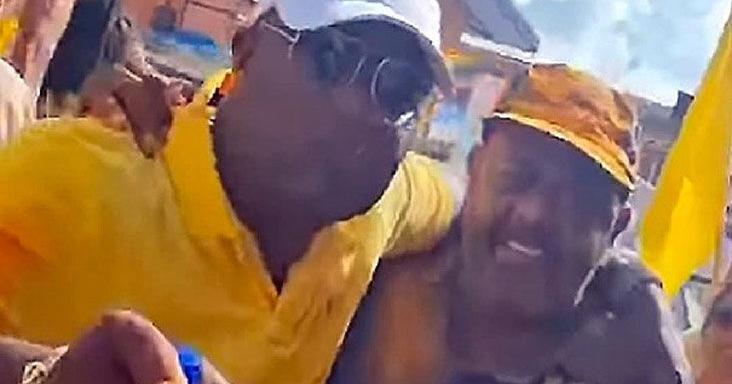
The resurgence of this debate comes amid fresh controversy tied to Sturge’s own election bid. Recent circulation of old photos on social media showing Sturge with slain Sangre Grande businessman Danny Guerra has sparked new unsubstantiated claims that Guerra funded Sturge’s 2025 campaign. While Sturge has declined to directly address these allegations, senior UNC officials have formally refuted the claims. The opposition People’s National Movement (PNM) deputy leader Sanjiv Boodhu has also pointed to the Guerra allegations to back his own call for mandatory campaign finance legislation.
The issue of unregulated political financing has lingered in Trinidad and Tobago’s political landscape for generations, with persistent public warnings that undisclosed donations create open pathways for corruption. Critics warn that hidden funding can lead to biased awarding of multi-million-dollar government contracts to major political donors, and millions of dollars in unreported contributions from unnamed individuals and corporations are widely believed to flow into national election cycles annually. Currently, individual candidates face a $50,000 cap on direct campaign spending, but a loophole in the Representation of the People Act allows unlimited third-party contributions for political events, advertising, and party materials—with no requirement to disclose the source of these funds. This gap has left the political system lacking basic transparency and accountability for campaign spending.
The current push for reform follows a call from the Trinidad and Tobago Transparency Institute (TTTI) last month, which urged the new government to move quickly to enact long-overdue legislation. TTTI’s intervention came after Prime Minister Kamla Persad-Bissessar made explosive allegations that illicit drug money funded the construction of the PNM’s national headquarters, Balisier House. Both major political parties have faced sustained public criticism for their shared failure to enforce transparency around campaign funding sources over the years.
To understand the depth of this policy gridlock, a look back at 20 years of failed efforts makes clear how repeatedly reform has been promised then abandoned:
In October 2006, then-opposition UNC MP Ganga Singh for Caroni East tabled a parliamentary motion calling for the creation of a special select committee to draft a framework for party registration and contribution disclosure. The motion was immediately shut down by the ruling PNM government led by then-Prime Minister Patrick Manning.
Three years later, in February 2009, independent Senator Dr Ramesh Deosaran introduced a private Senate motion calling for a Joint Select Committee (JSC) to develop binding legislation to govern campaign financing. Though the motion received backing from the then-opposition UNC, it failed to win support from the ruling PNM and did not advance.
When the People’s Partnership coalition led by Kamla Persad-Bissessar took power in 2010, campaign finance reform was named a core first-term priority. The administration’s manifesto pledged to introduce legislation for party registration and funding oversight, to be managed by an independent regulatory body. In November 2014, a JSC chaired by Wade Mark was established to deliver a draft framework within six months. The committee’s final report highlighted the legal loophole that allows unlimited third-party spending to bypass candidate expenditure caps, and put forward a comprehensive set of recommendations: capping private donations to limit undue political influence, introducing mandatory full disclosure of all political loans, creating a system of public campaign funding to reduce reliance on wealthy private donors, imposing overall caps on total campaign spending to ensure a level playing field, and regulating third-party spending while protecting free political expression. Ahead of the 2015 general election, Persad-Bissessar pledged her government would implement the JSC’s recommendations if re-elected, but the UNC lost the poll, and the proposal was sidelined for the next decade.
The PNM, which held power from 2015 to 2025, also made repeated public commitments to reform during its tenure. In its first 2015–2020 term, the Keith Rowley-led administration attempted to advance reform via amendments to the Representation of the People Act. A new JSC was appointed to review the Representation of the People (Amendment) Bill, which aimed to crack down on unregulated hidden funding, prevent corruption and money laundering, and restrict incumbent governments from using state resources to boost election campaigns. Despite being introduced early in the parliamentary term, the bill faced lengthy delays and never came to a vote before the term ended.
In 2020, Rowley again pledged to bring the bill back to parliament, referring it to a JSC chaired by former government minister Camille Robinson-Regis in a bid to secure cross-party and independent support. Rowley argued at the time that existing laws created unfair advantages for incumbent governments, which could leverage public resources to supplement candidate spending, and that the public had a right to know who was funding political parties and candidates. Despite his claim that his government was the first to have the “fortitude” to deliver on the promise of reform, the bill ultimately lapsed in committee and was never passed, leaving the promise unfulfilled once again.
Now, with a new UNC administration in power, stakeholders across the political spectrum are watching closely to see whether this 20-year cycle of unkept promises will finally be broken.