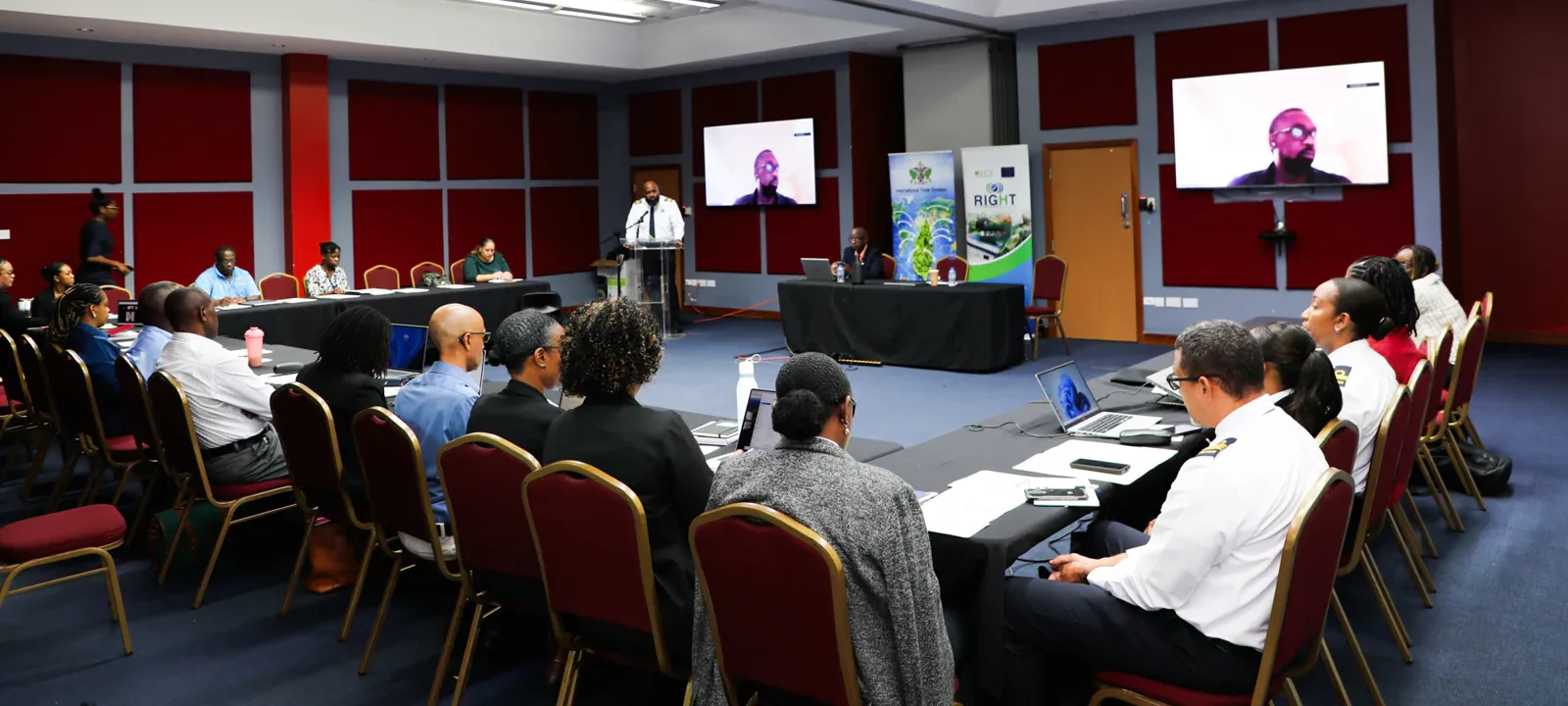
Against a backdrop of persistent agricultural labour gaps and shifting demographic trends that threaten Dominica’s national food security goals, cross-sector stakeholders from government, industry, and civil society have convened to build a cohesive, inclusive framework for integrating migrant labour into the country’s farming sector. The International Organization for Migration (IOM) Mission in Dominica partnered with the Ministry of Agriculture, Fisheries, Blue and Green Economy to host the Technical Validation Workshop for the Policy and Action Plan for Integrating Migrant Labour into the Agricultural Sector of Dominica, held at the Prevost Cinemall.
The two-day workshop brought together representatives from all affected groups to review the draft policy and accompanying implementation plan, flag unaddressed gaps, and submit actionable revisions to ensure the final framework aligns with the on-the-ground needs of local farmers, migrant workers, and public agencies tasked with regulating labour migration. This collaborative effort is a core component of the broader Development of the Agricultural Sector in Dominica by Strengthening Migration Governance initiative.
In her opening address to attendees, Viola Pascal, Project Coordinator for IOM Dominica, outlined that the draft policy and action plan were developed following a gender-inclusive agricultural labour assessment that centered the lived experiences and input of stakeholders across all segments of the sector. Pascal explained that widespread labour shortages and ongoing demographic shifts have made migrant labour an increasingly critical pillar of sustaining agricultural output and upholding national food security. She stressed, however, that a well-functioning system depends on clear regulatory guidelines, improved inter-agency coordination, dignified working conditions, and robust legal protections for all migrant workers. “This policy and action plan, developed by the government with IOM’s support, marks a critical milestone toward streamlining and formalizing this process,” Pascal noted.
Honourable Roland Royer, Minister for Agriculture, Fisheries, Blue and Green Economy, identified consistent access to a reliable agricultural workforce as one of the most pressing barriers holding back Dominican farmers and the country’s push to expand domestic food production. Minister Royer shared that through the government’s existing temporary migrant farm labour programme, 189 migrant workers have already entered the country to support agricultural operations, directly benefiting 47 local farming operations. He emphasized a key point that guides the government’s approach: migrant workers are not intended to displace Dominican workers, but rather fill critical labour gaps where local workers cannot meet current demand.
Minister Royer also noted that migrant labour integration is only one part of a broader transformation of Dominica’s agricultural sector. Long-term resilience, he argued, requires expanded investment in mechanization, broader adoption of modern agricultural technologies, and targeted outreach to encourage young Dominican people to view farming as a viable, rewarding long-term career. “What we need is a system that is clear, coordinated, accountable, and responsive to the needs of all farmers while protecting the rights and welfare of workers,” Royer stated.
The workshop structured discussion into two focused technical sessions to allow for deep, targeted review of the proposed framework. Dr. Schuyler Esprit, Head Consultant at Create Caribbean, led the first session, which centered on the overarching policy goals and regulatory structure for integrating migrant labour into Dominican agriculture. The second session, facilitated by Create Caribbean’s Project Manager and Research Assistant, gave attendees space to examine the step-by-step implementation action plan and contribute revisions to improve its feasibility and impact.
For participating stakeholders, the workshop reinforced how critical cross-sector input is to building a policy that works for all groups. LeSean Peter, a delegate from the Dominica National Council of Women, called the convening insightful, noting the value of creating structured spaces where stakeholders can address challenging topics and contribute meaningfully to the policy development process. Emmanuel Joseph, Agriculture Officer for the East Agricultural Region, echoed this perspective, highlighting that migrant labour governance extends far beyond the agricultural sector alone. While agriculture remains the focus of the policy, Joseph noted that stakeholders from public health, labour regulation, and national security all have critical roles to play in successful implementation.
The Technical Validation Workshop marks another key step toward establishing a formal, responsive system for managing migrant agricultural labour that meets the needs of farmers while upholding the rights and well-being of migrant workers. Moving forward, IOM Dominica will continue collaborating with the Government of Dominica and cross-sector stakeholders to finalize the policy and action plan. The overarching goal of the effort is to strengthen national migration governance while building a more productive, resilient agricultural sector that can support Dominica’s long-term food security goals.