博客

  • Congrats, JUNELLE & NOAH

    Congrats, JUNELLE & NOAH

    On Monday, April 6, fashion and lifestyle publication Vogue gave global audiences an exclusive first peek inside the intimate, celebratory wedding of Jamaican track and field athlete Junelle Bromfield and American Olympic sprint gold medalist Noah Lyles, held two days prior in scenic Trenton, Georgia.

    The pair tied the knot on Saturday, April 4 at The Conservatory at Blackberry Ridge, a popular wedding venue nestled in the Georgia countryside, choosing a thoughtful ‘All Shades of Melanin’ theme to center their shared Black heritage throughout the celebration.

    Bromfield made a breathtaking entrance down the aisle in a voluminous ballgown designed by Pantora Bridal, a Black-owned bridal brand based in Jamaica. The same label also crafted the elegant bronze gowns worn by the couple’s bridal party. Matching the day’s warm, inclusive theme, Lyles opted for a rich chocolate tailored suit from designer brand Musika for the ceremony.

    The exclusive feature was reported by Vogue contributing wedding editor Shelby Wax, with professional photography captured by Stanley Babb of Stanlo Photography, whose images give fans a detailed look at the couple’s special day.

  • Congratulations to the newlyweds!

    Congratulations to the newlyweds!

    New behind-the-scenes glimpses from a star-studded wedding reception have emerged, with Vogue holding exclusive rights to the full details of the high-profile celebration. Headlined by sprinter and groom Noah Lyles, the event brought together a roster of big-name guests from the global sports community, including retired Jamaican Olympian sprinter Asafa Powell, who was captured cutting a rug on the dance floor alongside the newlywed groom.
    Beyond the social dancing that kept the crowd energized throughout the evening, the reception included two standout planned segments: a personal, heartfelt address from the groom to his guests and new spouse, and a one-of-a-kind special performance from Grammy Award-winning gospel recording artist Tasha Cobbs Leonard.
    Vogue’s exclusive photo journal from the big day also captures a lively moment from the wedding’s bridal party, who took to the dance floor to perform a choreographed routine to the popular Afrobeat track “Shake It To The Max”, released by artists Moliy and Silent Addy, featuring dancehall stars Skillibeng and Shenseea. All official photography from the event was shot by creative studio Stanlo Photography, and full unshared details from the wedding day are available exclusively to readers on vogue.com.

  • KEEPING IT JAMAICAN

    KEEPING IT JAMAICAN

    For more than two decades starting at the turn of the 21st century, the Jamaica Football Federation (JFF) has relied on foreign leadership to guide the country’s iconic men’s national team, the Reggae Boyz, appointing seven overseas head coaches in that stretch. But a crushing late failure to qualify for the 2026 FIFA World Cup has pushed the federation to turn a new page, with JFF President Michael Ricketts confirming the organisation will now prioritise homegrown coaching candidates, citing widespread mismanagement under the most recent foreign appointee, former England manager Steve McClaren.

    Jamaica’s 22-year wait to return to the World Cup — a drought that dates back to their historic 1998 appearance — stretched on for at least another four years last week, when a narrow 0-1 defeat to African side DR Congo in the intercontinental play-off final held at Guadalajara’s Estadio Akron dashed the Reggae Boyz’ hopes of a spot in this summer’s tournament. This marked the second missed qualification opportunity in just months: the side already fell short of automatic booking during the final round of Concacaf qualifying in 2025.

    McClaren’s tenure with the national team ended almost six months before the decisive play-off match, after a 0-0 draw with World Cup-bound Curacao at Kingston’s National Stadium in November 2025. The English manager stepped down after just 16 months in the role, having failed to secure a win in 12 of his 23 matches in charge. Following his exit, veteran Jamaican coach Rudolph Speid stepped into the role on an interim basis, with another local specialist, Miguel Coley, joining him as assistant coach.

    From the earliest months of McClaren’s tenure, his leadership was dogged by controversy, as the Jamaica Observer first reported in November 2025. Sources within the federation cited persistent tension between the manager and JFF leadership, as well as widespread criticism of how he handled locally based Jamaican players. Most notably, McClaren chose to maintain his primary residence in England throughout his tenure, a decision that proved deeply unpopular with both federation officials and fans.

    McClaren became the second consecutive foreign coach to exit the Reggae Boyz post early. Before him, Icelandic manager Heimir Hallgrímsson stepped down in June 2024, and less than two weeks later accepted the top job with the Republic of Ireland’s men’s national side.

    To put the federation’s decades-long preference for foreign coaches in context, just four Jamaican-born coaches have led the Reggae Boyz over the past 26 years. Prior to the recent string of foreign appointments, Theodore Whitmore, a former Reggae Boyz star, led the national side from 2016 to 2021. After Whitmore’s exit, his former assistant and national teammate Paul Hall took over on an interim basis before the first of the back-to-back foreign appointments. Carl Brown and Wendel Downswell are the other two homegrown managers to hold the top job in recent decades.

    Speid and Coley’s interim contracts expired immediately after the conclusion of the World Cup intercontinental play-off, leaving the top two technical positions on the national team staff vacant as the JFF begins its search for a permanent appointment. Ricketts, who now says he regrets entrusting the team’s World Cup campaign to a foreign manager, made clear that local candidates are the clear front-runners for the roles this time around.

    “I tried again with overseas coaches and the rest is history. I don’t think the programme was managed very well,” Ricketts told the Jamaica Observer in an interview. “Now these local coaches are here, they see our local players, they watch games, they keep abreast of what is happening in domestic club football. They keep in contact with me, they keep in contact with the JFF directors, so we are always updated on the technical aspect of the team by these local coaches. They are rooted here, so you are bound to have consistent working relationships that you don’t get with overseas coaches who come and go at their own discretion, which sometimes is not ideal for our situation.”

    The JFF board of directors is set to formalise its appointment before the end of April, with the Reggae Boyz scheduled to return to competitive action next month at the Unity Cup in England. Upcoming key fixtures for the side also include Concacaf Nations League matches later this year, followed by the 2027 CONCACAF Gold Cup, making a swift appointment a priority for the federation.

    While the final decision rests with the full board, not Ricketts alone, the JFF president said he strongly favours retaining the current interim leadership team for the next two-year cycle. “I would certainly want to have Speid and Coley to continue with our programmes,” he said. “But if Speid and Coley are interested, then certainly they will be my choice to be head coach and assistant coach, at least for the next two years.”

    For their part, Speid is expected to retain his current role as manager of defending Jamaica Premier League champions Cavalcer if he accepts the national position, while Coley is currently contracted to Iraqi top-flight side Zakho SC and will need to resolve his club commitments before taking the national job full-time.


  • RECRUITMENT RUSH

    RECRUITMENT RUSH

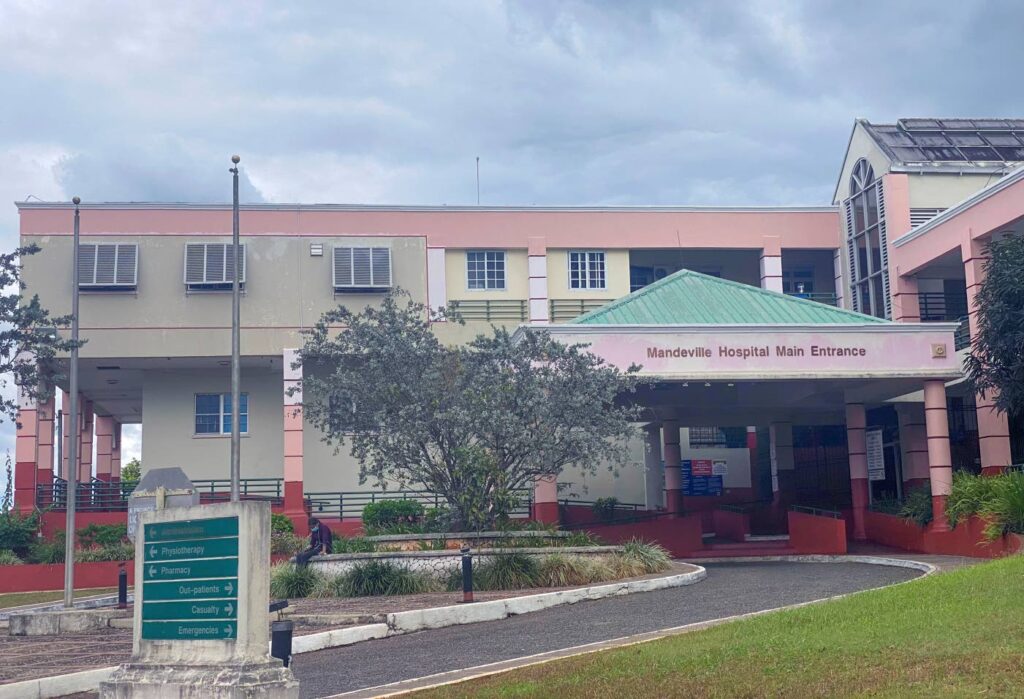
    MANDEVILLE, Manchester — Following the recent termination of the long-standing Cuban medical support programme, Jamaica’s Southern Regional Health Authority (SRHA) has launched an urgent recruitment drive to replace departing Cuban medical specialists across the south-central region of the country.

    In an exclusive interview with Jamaica Observer, SRHA Director Michael Bent outlined the scale of the staffing gap created by the programme’s end. Across SRHA’s coverage area, approximately 30 Cuban medical professionals have exited the system: 10 based at facilities in Mandeville, another 10 in Clarendon, and the remaining 10 working at smaller parish-level health sites. While the authority has already hired local Jamaican doctors and nurses to cover non-specialist roles, Bent confirmed that critical gaps remain in high-skill specialty departments that have yet to be filled.

    The most pressing needs are concentrated at Mandeville Regional Hospital, where the radiology and nephrology departments are currently operating without their Cuban specialist leads. Bent expressed confidence that these positions can be filled quickly, noting that formal recruitment processes are scheduled to launch before the end of the current month. In the interim, the SRHA has implemented contingency measures to prevent disruption to patient care, drawing on existing local medical staff who previously worked alongside the Cuban team to cover core services.

    “To date, we haven’t seen any major disruption to care delivery because of the exit of the Cuban professionals,” Bent explained. “Our local medical teams already worked side-by-side with their Cuban counterparts for years, so while we are facing a clear manpower challenge, we still have the core skills in place to keep services running. We are working aggressively to close that gap as quickly as possible.”

    For the radiology department, the authority has arranged for part-time coverage from specialist staff based at Black River health facilities while recruitment is ongoing, a temporary solution Bent says is keeping services on track.

    Alwyn Miller, chief executive officer of Mandeville Regional Hospital, echoed Bent’s assessment, noting that even the loss of a single high-skill specialist creates a major impact for the facility. Miller explained that Cuban medics brought rare, much-needed specialist expertise that is in short supply locally. Beyond radiology and nephrology, Miller confirmed that the hospital’s accident and emergency department lost a specialist nurse, the high-dependency unit lost multiple clinical staff, and the pathology department lost at least one senior specialist.

    “Even the loss of one highly trained specialist hits hard when we are already operating with tight staffing margins for these roles, because the skills they brought were irreplaceable in the short term,” Miller said. Still, he emphasized that the hospital’s local team has remained resilient in the face of the challenge. “Our team is incredibly dedicated and used to problem-solving through the obstacles we face every day. We’re continuing to deliver care day by day as we work to secure long-term replacements for these critical roles.”

  • Hurricane-ravaged Black River Hospital to have operating theatre back shortly

    Hurricane-ravaged Black River Hospital to have operating theatre back shortly

    In the coastal town of Black River, St Elizabeth, Jamaica, recovery efforts following the devastation of Hurricane Melissa are progressing steadily, with a senior regional health authority leader projecting that major rehabilitation work at the storm-ravaged Black River Hospital will be nearly complete within two months.

    Michael Bent, Director of the Southern Regional Health Authority (SRHA), shared the update in an interview with Jamaica Observer last Thursday, outlining a phased timeline for restoring critical services at the facility that once served the region with 150 inpatient beds. When Hurricane Melissa hit, the storm surge between 8 and 14 feet destroyed much of the hospital’s infrastructure, forcing a dramatic reduction in operational capacity. Today, the facility runs on just a third of its original capacity: 35 beds are set up in a temporary field hospital, and an additional 15 beds have been created by converting part of the Emergency Department into an impromptu ward.

    According to Bent, the restoration project includes targeted modifications to expand usable space beyond the pre-hurricane layout in some areas. Work crews are enclosing open-air corridors to create new, enclosed bed spaces, a change that will offset a small net reduction in total capacity once all repairs are finished. Bent confirmed that the hospital’s critical operating theatre, a core service for the local community, is expected to be fully operational again within 7 to 10 days, no later than mid-April. All inpatient wards are on track to be reopened and back in service by the end of May, bringing the hospital’s total capacity back up to roughly 135 beds.

    While short-term repairs are moving forward on schedule, the long-term future of the hospital remains tied to a broader climate-resilient redevelopment plan for the entire town of Black River. Bent confirmed that local and national authorities have held initial consultations about permanently relocating the hospital to higher inland ground, as proposed by the national government, but no final decision has been reached, and the full relocation process will take years to complete.

    Prime Minister Dr Andrew Holness first laid out the government’s ambitious long-term vision for Black River during his contribution to the 2026/27 Budget Debate last month. He detailed how Hurricane Melissa’s powerful storm surge devastated the town’s historic waterfront, destroyed multiple civic buildings, and left critical public infrastructure severely damaged. In response, the government is not planning to simply rebuild the town as it stood before the storm. Instead, the Urban Development Corporation, in partnership with international development stakeholders, is developing a comprehensive climate-resilient redevelopment plan that separates coastal uses from essential public infrastructure that needs to be protected from future storm surges and long-term sea level rise.

    Under the plan, a new planned urban core will be built on elevated inland ground, well above projected flood and sea level rise thresholds. All of Black River’s core public services, including the hospital, courthouse, municipal offices, police station, tax office, local school, public market, and transport hub, will be consolidated into a single, walkable, flood-safe precinct — a planned civic center the 300-year-old town has never had before. The new development will also include a public town square and civic park, and all new buildings will be engineered to withstand Category 5 hurricane winds, built on elevated platforms, and equipped with modernized drainage, utility corridors, and emergency backup systems to ensure resilience against future climate events.

  • ‘Road to destruction’

    ‘Road to destruction’

    Against the backdrop of a heated debate over extended tariff waivers for imported eggs, the head of Jamaica’s leading egg farming advocacy group has issued a stark warning about the long-term economic dangers of excessive dependence on foreign agricultural imports, calling for intentional, values-aligned collaboration to strengthen local food production.

    Mark Campbell, president of the Jamaica Egg Farmers’ Association (JEFA), delivered his remarks at the 2025/2026 University of Technology (UTech) Western Campus Seminar hosted at Montego Bay’s Sea Gardens Beach Resort. The event, centered on the theme “Bridging Minds, Building Futures: Igniting Innovation through Collaboration”, featured Campbell’s analysis of how collective action can advance Jamaica’s agricultural sector, titled “Feeding the Nation Together: The Role of Collaboration in Advancing Jamaica’s Agricultural Sector”.

    In unflinching remarks, Campbell argued that the allure of cheap imported food masks devastating long-term consequences for developing economies like Jamaica. “I fundamentally and without apology submit that the road of importation is broad, beautiful and enticing but it is the road that leads to destruction for a nation,” he told attendees. He explained that excessive importation funnels wealth to foreign producers, trapping local farmers in low-income subsistence operations that perpetuate poverty. This dynamic, he added, is a core driver of the persistent economic gap between wealthy developed nations and lower-income developing countries.

    While Campbell acknowledged that collaboration is theoretically critical to agricultural progress, he pushed back against the hollow, profit-first collaboration that dominates Jamaica’s current market. He called out local intermediaries who prioritize cheap imports over supporting domestic producers, noting that many middlemen operate with a single-minded focus on profit, disregarding national food security and the livelihoods of local farming communities. “With whom shall producers collaborate? Shall we collaborate with those whose sole interest is hinged unto that ‘profit motive’ which says, ‘As long as I can make a profit by importing, I do not care about the local producer or concepts such as food security?’ And that, I tell you, is the mentality of many of the margin gatherers in Jamaica,” he said.

    Campbell went on to outline a clear roadmap for purpose-driven collaboration that centers national food security. He recommended that local farmers build trust-based partnerships with domestic financial institutions to expand access to capital; work closely with academic research centers and regional farmer collectives to share data and boost output; integrate digital and agricultural technology to cut operational costs, improve communication, and boost efficiency; engage with public and private sector stakeholders to unlock new market opportunities; upgrade core infrastructure for quality control, logistics, packaging and cold storage; partner with educational institutions to train farmers in high-value skills like negotiation and business management; and align with climate science organizations to advance climate-resilient, sustainable farming practices.

    Campbell’s broader critique of over-reliance on imports grows out of recent tensions in Jamaica’s domestic egg market. JEFA has publicly opposed the Jamaican government’s plan to extend a duty waiver for imported eggs through the end of May 2026, arguing the policy would undercut local producers still working to rebuild after back-to-back major hurricanes. The tariff exemption was originally set to expire on February 28, 2026, but the Ministry of Agriculture, Fisheries and Mining has moved to extend it, citing ongoing supply disruptions following consecutive major storms.

    When Hurricane Melissa, a Category 5 storm, made landfall on October 28, 2025, Jamaica’s egg industry was still recovering from Hurricane Beryl, which hit in 2024. The ministry noted that after Beryl, JEFA projected production would return to pre-storm levels within six months, but that recovery never materialized, leaving persistent supply gaps. Though Campbell did not address the waiver proposal directly during his seminar address to final-year UTech business students, he clarified his position to Jamaica Observer in a post-presentation interview, confirming that local egg production has rebounded substantially in the months after Melissa hit.

  • National Soca Fraternity Calls Meeting for Artists and Stakeholders on April 8

    National Soca Fraternity Calls Meeting for Artists and Stakeholders on April 8

    The National Soca Fraternity of Antigua and Barbuda (NSF) has issued a broad call to all soca music creators and industry stakeholders to participate in its upcoming general meeting, which will take place at 7:00 p.m. on Wednesday, April 8, hosted at Dele’s Restaurant and Bar. Originally planned for Tuesday, April 7, the gathering was pushed back one day due to unforeseen logistical challenges outside of the organizing body’s control.

    As the governing body for the Caribbean nation’s soca community, the NSF has stressed that attendance at this meeting carries significant weight for the long-term growth and strategic direction of the local soca sector. Leaders of the NSF Executive Board have underscored that broad participation from across the industry is not just welcomed, but essential, as the organization works to deepen engagement with its member base, reinforce community bonds, and build a stronger, more cohesive national soca fraternity that can better support artists and industry professionals across the country.

  • Naeem Simon Shows Grit and Promise in U17 High Jump at CARIFTA

    Naeem Simon Shows Grit and Promise in U17 High Jump at CARIFTA

    One of Antigua and Barbuda’s rising young track and field talents, Naeem Simon, has wrapped up his competition at the CARIFTA Games, claiming 11th position in the fiercely contested Under-17 boys’ high jump event. Competing against the most promising young high jump prospects from across the Caribbean region during the afternoon competition slate, Simon stepped onto the regional stage with clear focus, carrying the hopes of his home nation and holding his own against elite-level youth competition.

    Though he did not claim a podium finish, Simon’s performance drew widespread praise from the Antigua Barbuda Athletic Association, the governing body for track and field in the country. In an official statement released following the event, the association highlighted the 17-year-old competitor’s remarkable determination and grit throughout every round of the contest.

    The association emphasized that high-level youth competitions like the CARIFTA Games are critical stepping stones for emerging athletes, noting that every attempt, every jump, and every moment of competition contributes to an athlete’s long-term growth. For Simon, the association stressed, this appearance at one of the region’s most prestigious youth athletic events is just the starting point of what promises to be a promising athletic career.

    In closing, the association extended encouragement to Simon as he continues his training and athletic development, urging him to maintain his drive and commitment. “Keep pushing, keep rising. The future is bright,” the statement read, underscoring the confidence that local sporting officials have in Simon’s potential to achieve greater success in upcoming competitions.

  • Zonique Charles Claims Javelin Silver for Antigua and Barbuda

    Zonique Charles Claims Javelin Silver for Antigua and Barbuda

    Rising young throwing star Zonique Charles has added another impressive medal to Antigua and Barbuda’s regional athletics tally, securing a silver medal in the fiercely contested Under-17 girls’ javelin competition. Competing against a deep field of elite youth talent from across the region, Charles delivered a display of steady power and technical precision that saw her claim the second-place spot on the podium, with her best throw landing at 46.27 meters. This silver medal continues the young athlete’s string of standout performances over recent competitions, cementing her status as one of the most promising young javelin prospects in the region. For Antigua and Barbuda, Charles’ breakthrough result marks yet another moment of national pride in the ongoing regional athletics tournament, shining a spotlight on the country’s growing youth athletic development pipeline.

  • Politie vraagt hulp bij opsporing vermiste Natasha Nanaa

    Politie vraagt hulp bij opsporing vermiste Natasha Nanaa

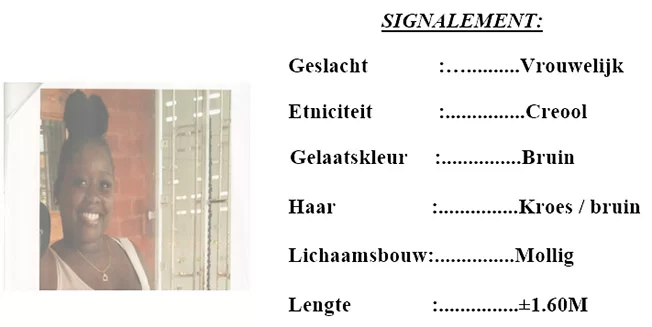
    Authorities in Paramaribo, Suriname have issued an urgent public call for assistance in locating a 21-year-old woman who has been missing for more than two weeks. Natasha Nanaa, born December 22, 2004 and a resident of Ormosiastraat in the capital city, left her family home on Thursday, March 19, 2026, and has had no contact with loved ones since her departure.

    Law enforcement has released detailed identifying information to help members of the public recognize Nanaa. She is described as having brown skin, curly brown hair, a fuller build, and stands approximately 1.60 meters tall. Distinctive markers that set her apart include a noticeable mole on her lower right leg, a nose piercing on the left side, and an additional piercing through her upper gum. When she was last seen, Nanaa was wearing an all-black outfit consisting of black trousers, a black t-shirt, and black Birkenstock slide sandals.

    The case is currently being handled by the Suriname Police Force’s Serious Crime Combating Division, indicating that investigators are treating the missing person case with priority. Police are urging every member of the public who may have seen Nanaa, or holds any information about her current location, to reach out to authorities immediately. The public can share tips through multiple contact channels: the Flora police station via phone lines 531170 or 494900 (extension 105), the national police command center via the emergency line 115, or any nearest local police outpost.