博客

  • COI 100 day play would end naturalization in first few weeks

    COI 100 day play would end naturalization in first few weeks

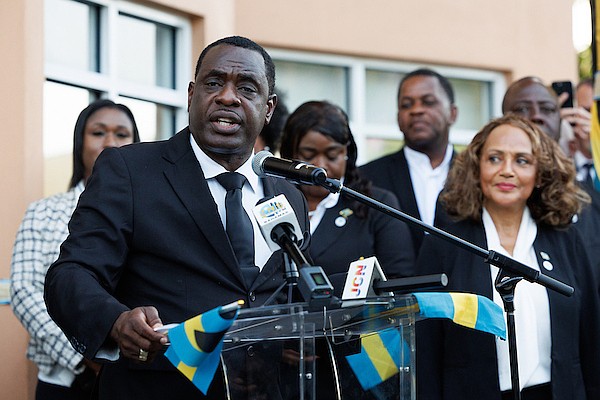
    A small Bahamian political party, the Coalition of Independents (COI), has laid out an aggressive 100-day plan to reshape the nation’s immigration system, border security, and citizenship policies — a proposal that would kick off with a dramatic move to end naturalization just seven days after the party takes office, if elected.

    Under the blueprint shared by the opposition group, a COI administration would first table amendments to the Bahamas Nationality Act to remove the legal framework for naturalization. Within the first 12 months in office, the party would hold a public referendum to embed this change permanently in the national constitution. Legal analysts have already flagged a critical procedural inconsistency in this timeline: since Bahamian citizenship is ultimately governed by constitutional provisions, full elimination of naturalization would require a constitutional amendment and popular vote before any legislative change can take effect, not after.

    Notably, the party has left key details of the policy unaddressed. It has not clarified what pathways to citizenship would be available to replace naturalization, nor has it outlined how the backlog of pending naturalization applications would be resolved if the policy is scrapped. Competing as a third party in a political system long dominated by two major parties, the COI faces steep odds to secure power in upcoming elections.

    A central structural reform laid out in the plan merges the portfolios of immigration and national security into a single cabinet ministry, which would be led directly by COI leader Lincoln Bain. The consolidation would bring all relevant enforcement agencies under a unified command structure, with the goal of aligning planning, interdiction, applicant processing, and enforcement actions to a single coordinated national timeline.

    The proposal also includes a 30-day national amnesty program for individuals currently residing in The Bahamas without legal status. During this window, all undocumented people would be required to complete biometric registration, employment confirmation, housing verification, and full security background checks. Individuals found to meet basic compliance requirements would be granted temporary legal status, while those who fail checks or do not come forward would be processed for deportation.

    To streamline status verification for the public and private sectors, the plan calls for the launch of a centralized digital Legal Immigrant Portal. Employers and landlords would be required to check a migrant’s legal status via the platform before extending a job offer or signing a rental agreement. Entities that fail to comply with the verification requirement would face financial penalties, potential suspension of operating licenses, or court action.

    One of the plan’s most controversial planks is an immediate suspension of all new work permit applications from Haitian nationals, effective from day one of a COI administration. All existing work permits held by Haitian workers would also be subject to individual review as part of a broader audit of the entire work permit system. Legal experts have noted that a blanket suspension based solely on nationality could raise significant constitutional questions, as national policy is required to avoid arbitrary or discriminatory treatment under existing law.

    Strengthened border enforcement is a core priority of the plan. The COI proposes creating a layered “sea wall” of security around the island of Inagua, deploying marine patrol vessels, surveillance drones, radar systems, and rapid response teams to both the eastern and western coasts to intercept boats suspected of carrying undocumented migrants.

    Within the first 30 days of taking office, the COI says it will launch a public commission of inquiry to investigate longstanding allegations of corruption and abuse in the processing of passports, work permits, and residency approvals. The party also plans to declare a targeted state of emergency focused exclusively on illegal immigration and border security starting on day one.

    Additional proposed measures include clearing unregulated shanty towns that house large numbers of undocumented migrants, building purpose-built regulated housing for migrant workers with legal status, and mandating that all immigrants hold approved private health insurance to reduce strain on the country’s public healthcare system.

    The plan also introduces a volunteer deputization pilot program, which would allow thoroughly vetted civilian volunteers to assist law enforcement with surveillance and reporting in high-risk border areas, operating under the direct supervision of official security personnel. For serving immigration officers, the COI calls for a comprehensive modernization push, including higher pay and improved benefits, upgraded operational equipment, advanced specialized training, cross-agency intelligence sharing systems, and mental health and wellness support.

    In the final phase of the 100-day plan, between day 61 and day 100, the party intends to introduce new legislation targeting the hiring of undocumented workers and the provision of unregulated housing to migrants, as well as stricter anti-smuggling laws, rules allowing for the confiscation of smuggling vessels, and formal regulatory frameworks for the digital portal, regulated worker housing, mandatory health insurance, and anti-fraud protections.

    Party representatives say the entire plan is designed to return full control of The Bahamas’ borders to the national government, improve compliance with immigration laws, and expand the country’s enforcement capacity. However, the proposal leaves two critical gaps unaddressed: the COI has not outlined a funding plan for the wide-ranging series of reforms, nor has it confirmed that all measures — particularly large infrastructure projects such as a new national immigration headquarters and a dedicated enforcement base in Inagua — can be fully delivered within the ambitious 100-day timeline.

    The party says progress will be assessed at the 100-day mark based on three core metrics: increased border and internal enforcement activity, the completion of a fully verified national immigration database, and active repatriation of undocumented people found non-compliant. A full national public report will then be released to outline initial results and lay out the next phase of policy implementation.


  • Equality Bahamas: Govt failing on gender-based violence

    Equality Bahamas: Govt failing on gender-based violence

    Bahamian gender equality advocacy group Equality Bahamas has issued sharp criticism of the current Davis administration, accusing leaders of sidelining gender-based violence (GBV) as a policy priority during their term, pointing to chronically underfunded support systems for survivors and the government’s ongoing refusal to outlaw marital rape.

    In an interview outlining the group’s concerns, Equality Bahamas Director Alicia Wallace charged that the administration has rejected even the most straightforward, low-barrier actions to address widespread GBV, despite consistent calls for reform from both local advocacy organizations and international human rights bodies. Unlike the government’s claim that entirely new policy frameworks are needed to tackle the crisis, Wallace noted that actionable, vetted recommendations have existed for years from global groups including the UN Committee on the Elimination of Discrimination against Women (CEDAW) and the UN Human Rights Council. Existing draft legislation only requires minor updates and final approval to move into law, she added.

    A core point of contention is the long-running push to criminalize marital rape, a reform that CEDAW has recommended since 2018. Even after a new draft bill was introduced to amend the country’s Sexual Offences Act, Wallace said the current administration deliberately excluded this critical provision. In public comments made in February 2025, Prime Minister Philip “Brave” Davis argued that broad “consensus” from across Bahamian society was required to move forward with the change, saying the government must reflect the will of all groups, not just gender equality advocates. That same month, Attorney General Ryan Pinder confirmed that the administration does not plan to introduce the legislation before the end of its current term, citing the issue’s political sensitivity.

    Notably, the prime minister’s own spouse, Ann Marie Davis, has publicly broken with the administration’s position, voicing full support for criminalizing marital rape and calling for policymakers to act immediately. Back in 2022, Davis made an unusually public rebuke of the status quo, saying: “We must agitate and hold our policy makers accountable. We want them to upgrade our laws and we really need that. Imagine, we are still living in a society where no does not mean no. How could that be? I tell you no and you think I mean yes. No, sir. Of course I’m talking about marital rape right. No means no.”

    Critics of the administration’s delay point to past examples where Bahamian governments have moved forward on politically divisive policies without full national consensus. For instance, the former Christie administration moved to regularize the gaming industry after a referendum on the issue failed, and the current Davis administration implemented cannabis reforms despite widespread opposition from religious groups.

    Wallace explained that the legal exception for marital rape is not just a technical oversight, but a reflection of deep systemic gender inequality. “It suggests that women’s identities and autonomy cease to exist in the context of marriage, and dangerously, that we become the property of men. This is at the root of all other issues of gender inequality and gender-based violence,” she said.

    Beyond criticizing the ruling party, Wallace also called out the Bahamian opposition for failing to uphold its oversight role, noting that the opposition has not used its legislative leverage to push for reform or back advocates’ demands as high-profile domestic and sexual violence cases continue to make headlines. “As story after story of domestic violence and sexual violence reach headlines, they have not reiterated recommendations, support our demands, or made their own interventions, completely wasting the leverage they had as an opposition,” she said.

    Other youth and community leaders echoed these concerns. Prodesta Moore, from the Bahamas Urban Youth Development Centre, emphasized that GBV and the lack of legal protections do not only affect adult women, but shape the lives of young people across every community. “Domestic violence and sexual assault continue to affect families across communities, with young people often directly or indirectly impacted. These are not just adult issues, they are youth issues,” Moore said. “They shape the environments our young people grow up in, the trauma they carry, and the futures they are trying to build.” Moore called for expanded protections for women and girls, broader public education and prevention programming, and more accessible support services for survivors.

    Khandi Gibson, a representative of local group FOAM, acknowledged that many women face unique barriers to leaving abusive relationships that extend beyond government policy, but confirmed that limited resources remain a crippling barrier to support, particularly for temporary housing and mental health counselling.

    The Bahamian Tribune reached out to four senior female government ministers — Labour and Public Service Minister Pia Glover-Rolle, Energy and Transport Minister Jobeth Coleby-Davis, Education Minister Glenys Hanna-Martin, and Housing and Urban Renewal State Minister Lisa Rahming — for comment on the administration’s unaddressed gender equity commitments. None responded to requests for comment before the publication deadline.

  • Eleuthera project to be ‘game changer’

    Eleuthera project to be ‘game changer’

    A US-based hospitality and real estate developer has unveiled full details of a transformative $650 million integrated resort and residential development set to reshape central Eleuthera, Bahamas, marking what could become the largest tourist-focused investment in the region’s history. Jeff Jacobs, chairman and CEO of Jacobs Investments — a firm with decades of large-scale resort, gaming and real estate experience across the United States — first shared the broad outlines of his J Resort Eleuthera proposal with local media earlier this year, but new details of the project’s scope, evolving design and long-term vision have only just been made public.

    The planned development spans 600 acres of prime coastal land stretching from the Atlantic Ocean to the Caribbean Sea, positioned directly adjacent to the existing French Leave hotel near Governor’s Harbour. Under the original vision shared in a December 2025 strategic presentation, the project would combine a phased hospitality investment of more than $200 million with over $450 million in projected third-party residential real estate sales across five resort-linked neighborhoods, totaling more than 350 high-end vacation homes. To date, Jacobs has already poured $40 million into land assembly to secure the parcels required for the development, with additional acquisitions planned to reach the full 600-acre footprint.

    The original proposal included a diverse range of amenities: a boutique oceanfront hotel, a mega yacht marina capable of accommodating the largest private vessels cruising Florida and Bahamian waters, multiple waterfront dining venues, a public outdoor sculpture garden showcasing regional artists, an 18-hole “sea-to-sea” golf course, a boutique casino, and a connected network of community pathways linking Governor’s Harbour to the iconic French Leave Beach. The developer also committed to permanent public beach access for Bahamian residents and pathway expansions along major local thoroughfares as core components of the project.

    However, Jacobs confirmed that the development plan has evolved significantly since the 2025 presentation. Most notably, plans for the 177-acre 18-hole golf course near Governor’s Harbour airport have been paused indefinitely, citing a combination of economic headwinds, environmental protection concerns, and competitive market dynamics. Instead of pursuing a single large resort development, Jacobs is adopting a “master developer” model that will set aside three to four parcels within the 600-acre footprint for independent developers to build their own boutique resorts, a model that has proven successful across the Bahamas’ Family Islands. This phased approach is designed to deliver a steady pipeline of construction and permanent full-time jobs for local residents over the next 20 to 30 years.

    In a move to address long-standing local infrastructure gaps, Jacobs also revealed he is in early discussions with global US engineering and utility firm Kimley Horn to develop a self-contained, reliable power solution for central Eleuthera, with plans to also explore improvements to local water infrastructure. Responding to community concerns about the scale of the development and the proposed casino, Jacobs emphasized that the gaming space will be a small, boutique “James Bond-style gaming salon” roughly the size of a standard restaurant, far smaller than the large casino complexes at Nassau’s Atlantis and Baha Mar. The amenity is designed to attract high-net-worth visitors to Governor’s Harbour, rather than become a large-scale standalone gaming destination.

    To date, the project has not yet entered the formal government permitting and regulatory approval process, with Jacobs noting there is still substantial preparatory work to complete. Local consultant Janeen Bullard, principal of JSS Consulting, has already been engaged to lead the preparation of an Environmental Impact Assessment (EIA), and the first public community consultation meetings are scheduled to begin this summer to gather input from local residents. This public outreach comes as local residents and environmental activists have already raised concerns about the project’s potential strain on Eleuthera’s already overburdened power and water infrastructure, risks to the local environment, and the possibility that the development would rely on imported labor rather than local workers.

    Jacobs, whose portfolio includes major long-term developments such as the multi-decade redevelopment of Cleveland’s riverfront and the ongoing $1 billion transformation of downtown Reno, Nevada, pushed back against concerns, framing the project as a decades-long commitment to Governor’s Harbour rather than a short-term speculative investment. He noted that his firm has a 40-year track record of delivering community-focused large-scale developments that generate lasting social and economic benefits, positioning J Resort Eleuthera as a project that will create a transformative, lasting positive impact for both residents and visitors while opening central Eleuthera to a new market of high-net-worth mega yacht tourists that have previously not accessed the region.

  • Wireless music fest cancelled after Kanye West barred UK entry

    Wireless music fest cancelled after Kanye West barred UK entry

    LONDON – Organizers of the UK’s high-profile Wireless Festival, which was scheduled to welcome Kanye West (now legally known as Ye) as a headlining performer this July, announced Tuesday that the entire event has been scrapped, following a decision by British immigration authorities to bar the controversial American rapper from entering the country. The confirmation of the cancellation came via an official statement posted to the festival’s Instagram account, where organizers explicitly cited the Home Office’s entry ban on Ye as the direct cause of shutting down the event. In the wake of the sudden cancellation, organizers confirmed that every ticket purchased for the festival will be fully refunded automatically, with no extra action required from holders. The ban and subsequent cancellation come after a wave of global backlash triggered by a series of unapologetic antisemitic remarks made by West in recent months, which have seen the rapper dropped from multiple industry partnerships and shut out of major public events across multiple continents.

  • UK gov’t blocks Kanye West from London music fest — BBC

    UK gov’t blocks Kanye West from London music fest — BBC

    LONDON — In a high-profile decision that has sent ripples through the global entertainment industry, the United Kingdom government has barred controversial American rapper Kanye West from entering the country to perform as a headliner at London’s Wireless Festival, multiple sources confirm. The move comes in response to widespread public fury over a series of virally spread antisemitic comments the rapper made in recent months, according to public broadcaster BBC.

    West, who had lined up a three-night headline set at Finsbury Park’s July iteration of the popular festival as a key stop on his planned European comeback tour, submitted his formal entry application to UK authorities on Monday. Within 24 hours, the Home Office, the UK government department responsible for border control and public safety, rejected the request on official grounds. A spokesperson for the Home Office told the BBC that the refusal was issued because the government determined West’s presence in the UK would not serve the public good.

    The cancellation of West’s planned appearance marks one of the most significant institutional consequences the rapper has faced for his repeated inflammatory remarks targeting Jewish communities. Industry observers note that the decision signals a growing global intolerance for hate speech in the entertainment space, as event organizers and governments continue to grapple with balancing artistic expression and public accountability.

  • WATCH: Woman dead, man injured in Spur Tree Hill crash

    WATCH: Woman dead, man injured in Spur Tree Hill crash

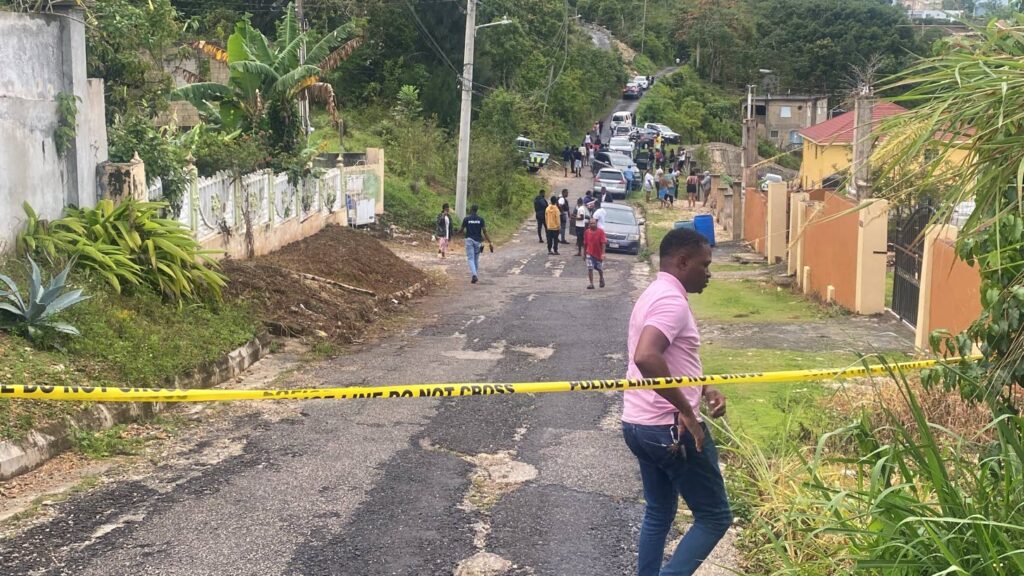
    MANCHESTER, Jamaica — A devastating early-morning traffic incident on Spur Tree Hill has left one woman dead and a man in critical condition, after the heavy cargo vehicle they were riding in careened over a steep cliff edge Tuesday.

    Local residents confirmed the collision occurred just after 5 a.m., when the tractor-trailer, which was fully loaded with bags of cement, lost control and began rolling down the slope. The vehicle tumbled end-over-end multiple times during the fall, ejecting both of its only occupants before coming to a stop at the base of the precipice.

    Emergency response teams from the Mandeville Fire Station were quickly dispatched to the remote crash site to extricate the injured pair. First responders moved the two casualties out of the wreckage and rushed them to a nearby regional hospital for urgent care. Despite emergency efforts, the woman was officially pronounced dead by medical staff upon her arrival at the facility. The male occupant remains hospitalized, where clinical teams are fighting to stabilize his life-threatening injuries.

    Beyond the human cost of the crash, the incident has caused significant disruption to local transportation infrastructure. The falling vehicle struck and snapped a utility pole, bringing down multiple power and communication lines across the roadway. Crews have reduced the affected stretch of highway to a single-lane pass-through while repairs and cleanup work continue, creating long delays for motorists traveling through the Manchester area.

  • Soldier charged in girlfriend’s murder due in court Wednesday

    Soldier charged in girlfriend’s murder due in court Wednesday

    MANDEVILLE, Jamaica — A 27-year-old active member of the Jamaica Defence Force is on track to appear in court for the first time Wednesday, nearly a week after the brutal killing of his 29-year-old partner Tanzanya Dunkley in the quiet Three Chains community just outside Mandeville, local law enforcement has confirmed. Damanice Tyrone Williamson, the accused soldier, was formally charged with murder Saturday evening, following a confession he gave to investigators over the weekend, according to a senior police source who spoke to local media Jamaica Observer.

    Court documents and police accounts detail a deadly confrontation that unfolded mid-afternoon last Friday. The conflict began when Dunkley made the decision to end her romantic relationship with Williamson, triggering a heated argument between the pair. In his confession, Williamson told detectives that an internal voice commanded him to kill Dunkley during the dispute. After he grabbed Dunkley’s mobile phone, the victim clung to him in an attempt to retrieve the device; at that point, Williamson grabbed a knife and cut her throat, law enforcement recounted.

    Minutes before the fatal attack, police say, Williamson sent Dunkley’s 12-year-old daughter to an upper floor of the family home, telling the child he needed to speak privately with her mother. Immediately after carrying out the killing, he fled the property. Neighbors told the Observer they heard loud screams coming from the residence around 3 p.m., and moments later spotted a man matching Williamson’s description running from the home, his clothing stained with what looked like fresh blood.

    The shocking murder has left the tight-knit Three Chains community reeling. Leonora Reid, a relative of the victim who arrived at the scene shortly after the killing, described the mood as one of collective grief. “The community is saddened and in mourning. Everybody is in mourning, because it is said that this has never happened here. And look at the people around you; everybody coming from near and far, because this is strange to people living in this area,” Reid told the Observer Friday.

    The brutal killing is not an isolated incident for Manchester Parish, however. Local authorities have recorded a steady rise in domestic violence-related offenses across the region in recent years. The growing public safety crisis has led police to repeatedly call for the establishment of a dedicated, specialized intervention centre to address domestic violence in south-central Jamaica, a proposal that has yet to be fully implemented as the parish grapples with rising violent crime tied to intimate partner conflict.

  • Douglas smashes Under-20 200m record twice in a week

    Douglas smashes Under-20 200m record twice in a week

    The 53rd edition of the Carifta Games wrapped up its final day of competition on Monday at Grenada’s Kirani James Athletics Stadium, where rising Jamaican sprint star Shanoya Douglas delivered a historic performance that cemented her status as one of the world’s most promising young track athletes.

    Just seven days after breaking Briana Williams’ six-year-old Jamaica Under-20 200m record at the ISSA/GraceKennedy Boys’ and Girls’ Athletics Championships, Douglas smashed her own newly minted mark of 22.36 seconds with a blistering time of 22.11 seconds, set with a 1.9m/s tailwind. The result not only earned her the 200m gold medal but also completed a back-to-back sprint double at the regional youth athletics showcase, following her 100m title win on Saturday.

    This standout time places Douglas in elite company globally. Her 22.11 seconds is tied for the third-fastest Under-20 women’s 200m time in history, matching the mark set by United States sprint legend Allyson Felix. Only Namibia’s Christine Mboma, who ran 21.78 seconds in 2021, and American sprinter JaMeesia Ford, who clocked 22.08 seconds in June 2024, have posted faster times at the under-20 level. Douglas also knocked down a 12-year-old Carifta Games record in the event, shaving more than six-tenths of a second off Shaunae Miller’s 2013 mark of 22.77 seconds. On the day of her record run, Douglas claimed gold ahead of compatriot Natrece East, who took silver with 23.39 seconds, and Haiti’s Breanne Barnett, who rounded out the podium with 23.49 seconds.

    Douglas’ historic run set the tone for a dominant final day for Team Jamaica, which extended its lead atop the overall medal table heading into the final events. As of press time, Jamaica had accumulated an unrivaled 65 total medals, including 24 gold, 25 silver, and 16 bronze, putting the nation far ahead of all other competing delegations at the regional tournament.

    Other Jamaican athletes also delivered standout performances on the final day of competition, bouncing back from earlier setbacks to claim top honors. Sanjay Seymore, who was disqualified from the Boys’ Under-20 100m earlier in the games, rebounded to win the 200m final with a personal best time of 20.63 seconds, finishing ahead of Bermuda’s 100m gold medalist Miles Outerbridge (20.67) and The Bahamas’ Eagan Neely (20.73).

    In the sprint hurdles events, Jamaica completed a clean sweep of all four intermediate division titles on Monday, adding to the gold medal the nation won on Sunday. Mark-Daniel Allen set a new championships record in the event, clocking 13.25 seconds with a 1.6m/s wind to break the 13.49 record set by fellow Jamaican Kahiem Cardy in 2023. Allen also improved his personal best by 0.32 seconds, cutting down his previous top time of 13.57 set at Jamaica’s Carifta trials one month prior. Another Jamaican, Brandon Bennett, also finished under the old championships record with 13.47 seconds to take silver, while Shawne Ferguson of The Bahamas earned bronze with a 14.30 clocking.

    Robert Miller, who lost his Under-20 Boys’ 400m hurdles title on Sunday, reboured to win the 110m hurdles with a wind-aided time of 13.43 (2.5m/s), beating The Bahamas’ Jahcario Wilson (13.53) with Jamaica’s Romario Jibbison taking third in 13.73. Tiana Marshall successfully defended her Under-20 Girls’ 100m hurdles title, outpacing the entire field to finish in 13.43 seconds even with a challenging -3.2m/s headwind. Jenna-Marie Thomas of Trinidad and Tobago took silver, while Sofia Swindell of the US Virgin Islands claimed bronze. In the Under-17 Girls’ sprint hurdles, Tashana Godfrey claimed gold for Jamaica with a 13.27 second run, followed by teammate Macaela Gordon in second, with Checia Joseph of Trinidad and Tobago in third.

    In middle-distance events, upsets marked the day’s competition. Nahjan Wyatte of St Maarten out-kicked Jamaica’s Markland Williams in the final stretch to win the Under-17 Boys’ 800m in 1:53.26, with Williams finishing second in 1:53.60. Kymarni Newton of St Kitts/Nevis took third, just ahead of a second Jamaican runner, Luke Plummer. In the Under-20 Men’s 800m, Kiile Alexander of Trinidad and Tobago took gold in 1:50.38, with Grenada’s Nicholas Frederick taking silver and Jamaica’s Saturday 1500m champion Joel Morgan settling for bronze. Barbados dominated the Under-20 Women’s 800m, with Ashlyn Simmons taking gold and Danya Skeete silver, while Jamaica’s Dallia Fairweather earned bronze. Pre-race medal favorite Kevongaye Fowler did not finish the event.

    In the field events, United States-based Jamaican thrower Able Mills added a second gold medal to her Carifta haul, winning the Under-20 Women’s discus throw with a new personal best of 53.85m, beating her 2024 best of 51.68m. Mills already won gold in the shot put event on Sunday. Marla-Kay Lampart, who took third in the event in 2024, earned silver with a 48.96m throw, also adding a second medal to her tournament haul, while Tejha Thompson of The Bahamas took third. In the Under-20 Men’s shot put, discus gold medalist Joseph Salmon added a silver medal with a personal best throw of 18.17m, improving his previous top mark of 17.62m. Jayden Walcott claimed gold with an 18.41m throw, and Jelany Chinyelu of Trinidad and Tobago took bronze.

  • MoBay Perimeter Road on track for Sept deadline, says Morgan

    MoBay Perimeter Road on track for Sept deadline, says Morgan

    Following two successive hurricane disruptions that pushed back the original completion timeline, Jamaica’s Minister with responsibility for works Robert Morgan has reaffirmed that the transformative Montego Bay Perimeter Road infrastructure initiative remains on schedule to meet its revised September 2026 delivery date, built with cutting-edge climate-resilient engineering to withstand extreme weather. In an exclusive interview with Jamaica Observer on Monday, Morgan laid out the phased completion timeline and updated the public on the project’s current status, funding security and storm preparedness measures. “I’m very confident…We are on time for September. We are working to have West Green Avenue completed by September and then next year Barnett Street, and we’ll have the Long Hill Bypass as well, which is an addition to the Montego Bay Perimeter Road project,” Morgan stated. Currently managed by Jamaica’s National Road Operating and Constructing Company (NROCC) and executed by China Harbour Engineering Company (CHEC), the large-scale infrastructure project carries an estimated total price tag of US$354 million. Its full scope includes a 15-kilometer Montego Bay Bypass, an 11-kilometer Long Hill Bypass, comprehensive structural upgrades to two existing urban corridors (Barnett Street and West Green Avenue), and the construction of a new 180-meter bridge spanning the Montego River. As recently as an October 2025 site tour of the project’s Bogue segment, Morgan had announced that work was progressing ahead of schedule and on track to wrap up as early as May 2026. That original updated timeline was derailed by two consecutive extreme weather events: Hurricane Beryl, which made landfall in June 2024, and the more recent Hurricane Melissa, which hit Jamaica on October 28, 2025. Category 5 Hurricane Beryl alone inflicted an estimated US$79 million in damage to uncompleted sections of the project, but Morgan noted that comprehensive insurance coverage has mitigated the majority of the financial impact of the storm damage. “As a matter of fact, we started paving last year and would have been further ahead if it wasn’t for the rains and the hurricane, because we would have started paving last year and started putting up safety barriers and so on,” he explained. When questioned whether ongoing storm risk during the upcoming hurricane season could further derail the revised September 2026 deadline, Morgan highlighted that the project’s design marks a fundamental shift in how major transportation infrastructure is engineered across Jamaica, developed specifically to address growing climate change-driven extreme weather risks. “I think the design and engineering that we used for the perimeter road, and also what we’re using for the Long Hill Bypass, are so much different from what we traditionally use. They have been built for resilience. So a lot of the work that is going on now is pretty much final-leg infrastructure. We have already done the base course and the running course is what is being put on now, finishing some drainage and some hillside protection and so on,” Morgan explained. He added that the robust, climate-adapted design means the project is well-protected against routine rainfall and moderate storm events, even as the region enters peak hurricane season. “So we do not expect general rains to have any significant impact on the road. I mean, if we have a Category 5 again, that might be a different conversation, but we’re hoping and praying that we don’t have one of those events before it’s completed,” the minister said. On the topic of project financing, Morgan confirmed that the Jamaican government maintains a stable fiscal position to see the initiative through to completion. “We have received the allocation for the completion of it in the current budget. There may be some changes that may be made one way or the other as the year goes by, but we are pretty confident in the funding arrangements through the Ministry of Finance,” he said. Under the revised phased completion schedule, the Montego Bay Bypass and West Green Avenue segments are now targeted for completion by September 2026. Upgrades to Barnett Street are projected to be finished by April 2027, with the added Long Hill Bypass segment wrapping up construction the following month, in May 2027. As of the latest update, crews are currently carrying out concrete casting work on the new Barnett Street Bridge, with paving and final infrastructure works ongoing across multiple segments of the project.

  • Yaksta set to ‘Roar’ into new era

    Yaksta set to ‘Roar’ into new era

    For years, Jamaican recording artist Yaksta has built his reputation on music rooted in cultural awareness and thoughtful reflection on national identity. Now, with the launch of his latest single *Roar*, the deejay is stepping into a far more vulnerable, unapologetically personal creative space — one defined by raw, unfiltered honesty that he says many in the music industry avoid at all costs.

    Yaksta says he is ready to speak out on topics fellow artists often sidestep, even if that means sacrificing the mainstream fame and widespread popularity that most performers chase throughout their careers. “We need to understand what we are as a nation,” he explained in a recent conversation about his new work. “I think the imperfect characteristics of Jamaicans are what made us perfect. We were the rebels of the pack, of all the African diaspora, we were the voice box of the universe — and suddenly now we’re censored because of monetary gains.”

    He points to iconic Jamaican artists such as Bob Marley as proof that greatness does not come from conforming to industry expectations. “All those great men never made it because they conformed,” he noted. “They may have worked within a system, but they had a mind of their own. Everybody who conforms falls in line, and I am not one of them.”

    Rebellion has always been woven into Yaksta’s musical DNA, he says, though the rigid structures of the commercial music industry have at times softened that outspoken spirit. “We have always been rebellious, it’s just that past management we worked with more or less censored us in certain ways,” he shared. He also called out shifting social norms around gender identity that he says have created widespread confusion, clarifying he does not aim to bash anyone but believes the current trend is a pressing issue for society.

    For Yaksta, *Roar* is far more than just a new single — it is a rallying cry to reclaim the uncompromising, truth-centered roots of Jamaican reggae music. “*Roar* is about the regrouping of consciousness in our music, in our nation,” he said. “I think we’re drifting too far from our core values. When it comes to speaking out and provoking thought about the issues actually affecting the society we live in now, people shy away from that. But reggae was never a pretty, polished genre — it was always about truth and empowerment.”

    The artist argues that much of the music dominating current radio and streaming playboxes has strayed far from these foundational principles, and he is aiming to hit reset on the genre ahead of the release of more new music. He specifically pushes back against the misogynistic lyrics that are common in many contemporary tracks, noting he refuses to participate in the degradation of Black women, who he identifies as queens. “We have given them 20 years of foolishness, we must be able to give them one year of consciousness,” he stated.

    *Roar* is a preview of Yaksta’s upcoming full-length album, *The Microphone Saved Me*, a project he describes as a bold, unapologetic declaration that refuses to bend to the pressures of an industry he believes has lost both its authenticity and moral compass. He argues that modern music’s focus on exploitative and harmful content has negatively influenced young people, noting that artists are often the primary role models for youth when parental figures are absent. “We have to know that we have a responsibility,” he emphasized. “Fans spend their time, their money, their essence to make you important. So we have to reverse that harmful trend.”

    Yaksta says he is fully prepared to face criticism and backlash for his outspoken stances, clarifying that this creative shift is not about adopting a new persona — it is about embracing a deeper understanding of his purpose as an artist. “The moment I started doing me, saying what I wanted to say, it started resonating more with audiences,” he explained. “I may not be booked for local shows every day, and it is not because they won’t call me — it is that certain shows are not aligned with my message and the brand I am building.”

    The deejay also opened up about the personal costs of sudden fame, noting that his early experience in the industry taught him how quickly envy can erode even close relationships. “I had a normal life before all the popularity, but popularity taught me how envious love can become in the blink of an eye,” he shared. “If you’re not grounded, it is easy for artists to lose their way, fall off, or break when all this success comes to you overnight. I’m the kind of person that when the rush of fame comes, I step back and assess my choices carefully. I found out that the real enemies were often the ones that stood with me. I’ve seen family change, friends get envious — but where love is, hate follows. That’s where the microphone saved me in real life.”

    The album is scheduled for a May release, and Yaksta plans to take an unconventional, fan-focused approach to rolling out the project, skipping large traditional stage shows in favor of intimate direct engagement. “What I’m going to do for this album is bring it directly to the people,” he said. “I’m going to host pop-up shops, showcase my merch, and give fans free live performances. You may not see me on a big festival stage, but come to my show.”