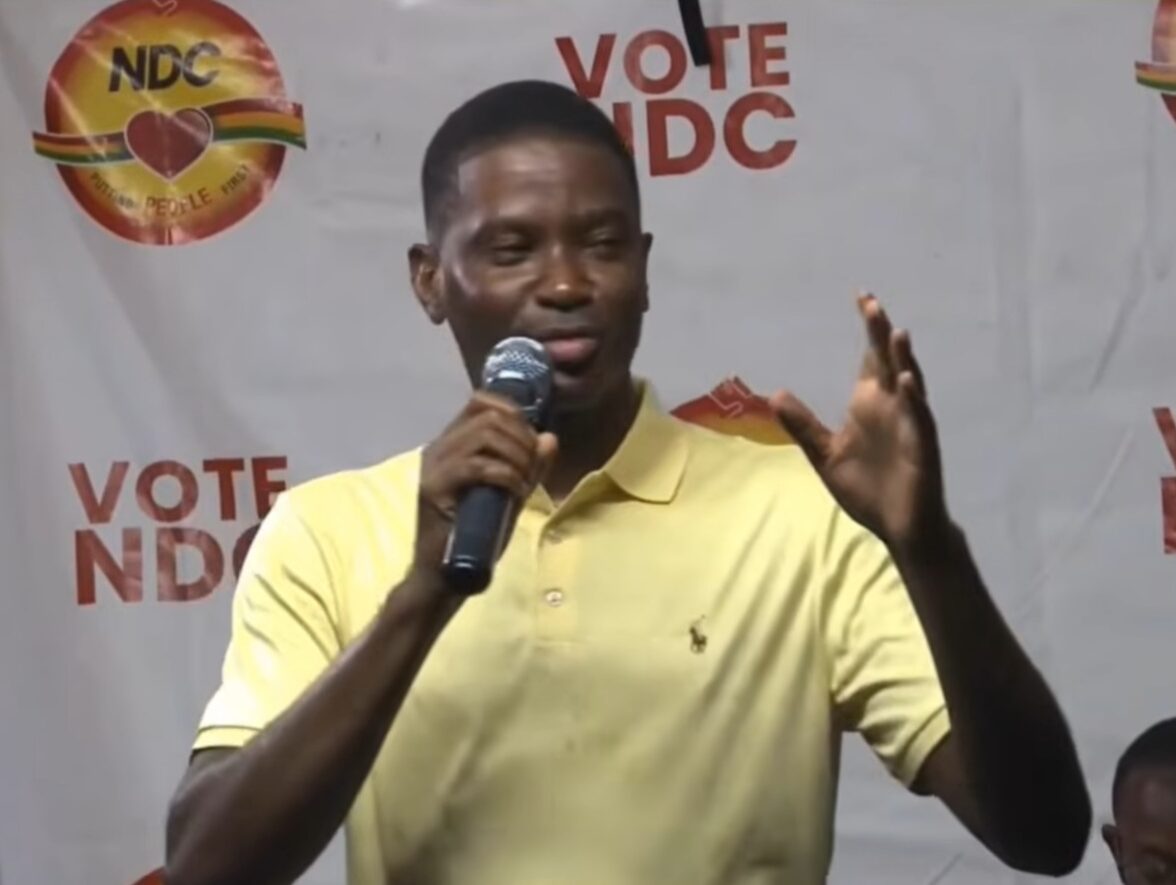
After months of public debate and behind-the-scenes political preparation, Grenadian Prime Minister Dickon Mitchell has put a definitive timeline on one of the country’s most pressing political questions: the official date of the next general election will be revealed to the public on 4 October.
Mitchell shared the news Friday evening at a rally for his ruling National Democratic Congress (NDC) held in Perdmontemps, St David, telling cheering supporters that the official announcement would come during an event in St Mark, where the traditional conch shell — a symbolic call to political action — would be blown. Crucially, the prime minister clarified that 4 October marks the date of the announcement itself, not the date of the general election.
The announcement arrives at a moment when political parties across Grenada have been ramping up campaign preparations, and public discussion of the election timeline has dominated social media and community conversations across the island nation. The last general election in Grenada was held in June 2022, when 69.49% of registered voters — a total of 60,853 people — cast ballots. In that contest, the NDC secured a majority, winning 9 of the 15 available parliamentary seats, while the long-dominant New National Party (NNP) took the remaining 6.
Under Grenada’s constitution, parliament serves a five-year term unless dissolved early. The Governor-General has the authority to dissolve parliament, typically acting on the prime minister’s advice, and a general election must be held within three months of dissolution. This constitutional framework has left room for widespread speculation that an election could be called well before the 2027 deadline, a view echoed by senior leaders of smaller opposition parties.
Deputy Political Leader of the Democratic People’s Movement (DPM) Arley Gill, an attorney who will run as the party’s candidate for St John in the upcoming vote, says the surge in on-the-ground political activity confirms an early election is on the horizon. He points to the growing flood of public and social media discussion focused on when Mitchell will make the long-awaited election date announcement as further evidence of an imminent vote.
External political analysts, however, have offered a more nuanced reading of the current political climate. Peter Wickham, a respected Barbadian political analyst and pollster, argues that while Mitchell’s inner circle is pushing the prime minister to move quickly to call an election, Dickon Mitchell himself has not shown the same sense of urgency. “I feel that he’s being pushed by all those around him to appear to be ready and to move in that direction… my sense is that I don’t know that there’s a lot of urgency on his part, but I believe that he’s being pushed in that direction,” Wickham told local media outlets earlier this week.
Wickham also noted that Grenada’s economy is in a weaker position today than it was when Mitchell took office in June 2022, pointing to headwinds from global political instability, including the ongoing conflict in the Middle East, as a major external drag on the island’s economic performance. When assessing the opposition’s prospects, Wickham added that the main opposition NNP faces steep structural challenges heading into the vote, while the newer DPM has a far lower bar to shape the country’s political future. Unlike established parties that need to win a majority to gain power, Wickham argued, the DPM only needs to pose a credible threat to one or two major parties to shift national political conversations.
On social media, speculation has grown that the NDC could aim to turn its current 9-seat majority into a historic full sweep of all 15 parliamentary seats, though that remains unconfirmed speculation for now. Away from party headquarters and social media threads, ordinary Grenadians hold a wide range of views on the upcoming election, from urgent calls for an immediate vote to total disengagement from politics.
In informal conversations with everyday residents, perspectives varied widely. One sidewalk vendor said she hoped the election would be called as soon as possible, rooted not in partisan loyalty but in the harsh daily realities of making a living: “It could call tomorrow, please God, because the place tough and bad and rough.” Another vendor shrugged off the question, saying she does not vote, while another resident said he chooses not to participate in politics at all. A passer-by offered a neutral assessment, saying “It’s going good so far. I don’t have any issues. I’m just a neutral guy.” Other residents offered a range of possible timelines, from November this year to early 2025.
These varied responses underscore the wide spectrum of political engagement across Grenada, from closely tuned partisan followers to completely detached residents who prioritize daily life over electoral politics.
At his Friday rally, the prime minister officially kicked off his party’s campaign for a second term, framing the election as a choice between going backward or moving forward. He pledged that if returned to power, the NDC would continue its “progressive policies supporting and protecting workers’ rights” and said he wanted his party to return to parliament with greater strength and public confidence.
Mitchell also added a striking personal dimension to the campaign, sharing his goal to “sanitise” and “redeem” the Mitchell name across Grenada, Carriacou and Petite Martinique. His comments come in the context of the political legacy of his predecessor and namesake, former Prime Minister Dr Keith Mitchell, who has retired from electoral politics. Dr Keith Mitchell stepped down as NNP leader and Leader of the Opposition, with Emmalin Pierre now holding both roles.
Dickon Mitchell told supporters he wanted to leave no question that there is not just “a good Mitchell” leading the country, but “the best Mitchell,” framing his tenure as a chance to redefine the family name for the next five years. The personal remark adds an extra layer to a campaign that is already shaping up to center on the NDC’s two-year governing record, opposition policy alternatives, and the pocketbook issues that matter most to ordinary voters.
Now that the date of the election announcement is set, the focus of Grenadian politics is shifting. For the ruling NDC, the immediate task is to solidify its case for a new mandate. For opposition parties, it is to refine their alternative platforms and mobilize their base. For voters, the coming weeks will bring competing visions for the country’s future, once the official election date is revealed.
After 4 October, when the conch shell blows as promised, the countdown to voting day will officially begin, and the national conversation will shift from when Grenadians will go to the polls to what they will be voting for. The countdown to announcement day is already underway.