博客

  • NY serial killer pleads guilty to Trini’s murder

    NY serial killer pleads guilty to Trini’s murder

    In a stunning courtroom twist that closed a 31-year chapter of unsolved violence, convicted serial killer Rex Heuermann has pleaded guilty to the murder of eight women, including 28-year-old Trinidadian native Sandra Costilla, in a Suffolk County, New York court. The 62-year-old Manhattan architect, a married father of two who hid a brutal double life as a predatory killer for three decades, entered the guilty plea this week, reversing his earlier not guilty plea entered ahead of his scheduled September 2024 trial.

    Heuermann, who stood 6-foot-4, began his killing spree as early as 1993, when Costilla – a migrant who had moved to the U.S. from Trinidad and Tobago at age 17 and was living in Queens at the time – became his earliest known victim. On November 20, 1993, two hunters discovered her body on New York’s Long Island in the North Sea area. Court documents detail extensive, brutal injuries: multiple sharp-force wounds to her face, torso, breasts, left thigh, and vaginal region, with her body positioned in a degrading arrangement. Heuermann confirmed in court this week that he strangled Costilla to death, the same method he used to kill all eight of his confirmed victims. He pleaded guilty to three counts of first-degree murder and four counts of second-degree murder, which includes Costilla’s killing.

    For three decades, Costilla’s case remained unsolved, until advances in forensic DNA testing connected cold case evidence to Heuermann, who was first arrested in 2023 in connection with the long-running Gilgo Beach serial killings. During the initial 1993 investigation of Costilla’s death, forensic analysts from the Suffolk County Crime Lab recovered three hair strands from her body and clothing: one from her right arm, one from a striped shirt found near her body, and a third from a white shirt. DNA testing at the time confirmed one hair came from a male suspect, and the other two from female contributors. Decades later, the Gilgo Beach Homicide Task Force retested the evidence, and in February 2024, forensic results confirmed the male hair from Costilla’s striped shirt matched Heuermann’s DNA. One of the two female hairs was even traced to a woman who lived with Heuermann shortly before Costilla’s 1993 murder, cementing the connection between the killer and the decades-old crime.

    Courtroom observers reported Heuermann spoke in a calm, matter-of-fact tone about his crimes, confirming that he dismembered some victims and bound others by the head and legs. Investigators who seized 422 electronic devices from Heuermann’s home uncovered disturbing evidence that prefigured his crimes: a handwritten planning document that noted “SMALL IS GOOD” – a reference to the fact that all eight of his known victims, including Costilla, were petite women. Another entry in the planning document read: “HIT HARDER TOO MANY HIT TO TAKE DOWN. CONSIDER A HIT TO THE FACE OR NECK NEXT TIME FOR TAKE DOWN.”

    Investigators also found a massive, decades-spanning collection of violent, bondage, and torture pornography on his devices, dating back to 1994. The content includes graphic depictions of breast mutilation, sexualized violence against women, bondage, and whipping – imagery that aligns closely with the injuries found on Costilla and two other victims. Unlike many of Heuermann’s later victims, who were sex workers, investigators have found no evidence Costilla worked in the sex trade. Unlike his later crimes, which relied on disposable burner phones to contact victims, the 1993 killing of Costilla predates widespread consumer cell phone use and social media, leaving investigators still unclear on how Heuermann first encountered his earliest victim. Heuermann is scheduled to receive his formal sentence on June 17, 2024.

  • Toenemende kans op middagbuien

    Toenemende kans op middagbuien

    Dated April 9, the latest daily weather forecast outlines a day of shifting atmospheric conditions, starting with calm morning conditions and building toward scattered storm activity through the afternoon. Early in the day, the sky will feature a balanced mix of clear, sunny intervals and patchy light cloud cover, with no major disruptive weather expected through the early morning hours.

    As the day progresses, cloud cover will gradually increase across the region, raising the probability of scattered rain showers that may be accompanied by thunder. These showers are expected to develop primarily between mid-afternoon and early evening, and while they will be short-lived in most local areas, they can bring heavy, intense precipitation during their passage.

    Temperatures will climb to between 31 and 33 degrees Celsius throughout the warmest part of the day. Elevated humidity levels will push the perceived heat index higher than the recorded air temperature, creating more uncomfortable conditions for those spending extended time outdoors. Winds will stay light to moderate, blowing consistently from an eastern direction.

    Through the evening hours and into the following night, partial cloud cover will remain in place, with a small lingering chance of one isolated shower passing through. Overnight temperatures will drop to a mild 24 degrees Celsius.

    Overall, the broader weather pattern remains slightly unsettled, with ongoing warm conditions and continued chances of precipitation concentrated mainly in the afternoon and evening periods over the coming timeframe.

  • Ralph takes on Kamla over CARICOM SG re-appointment

    Ralph takes on Kamla over CARICOM SG re-appointment

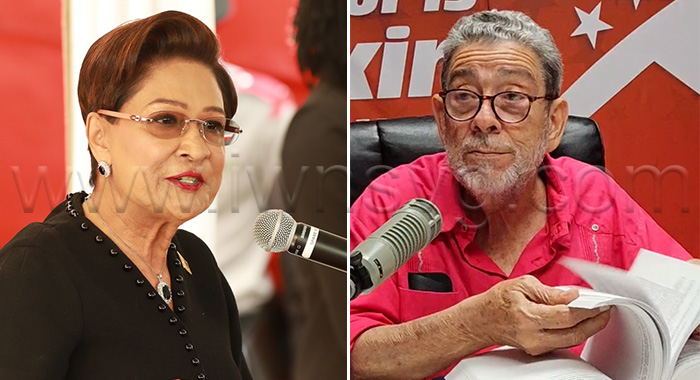
    A deepening regional dispute over the re-appointment of CARICOM Secretary General Carla Barnett has emerged, with former St. Vincent and the Grenadines prime minister Ralph Gonsalves stepping forward Wednesday to push back against scathing criticisms from the government of Trinidad and Tobago. Trinidad and Tobago’s leadership has labelled the process that extended Barnett’s five-year term as “surreptitious and odious”, claiming it was deliberately shut out of the closed-door caucus vote held in Nevis during a February CARICOM summit hosted by St. Kitts and Nevis, and is demanding a full special meeting of the 15-member regional bloc to revisit the decision, even floating the possibility of holding a fresh election for the post.

    Trinidad and Tobago Foreign Affairs Minister Sean Sobers has amplified his government’s objections, arguing that the country’s exclusion from the decision-making caucus was no accidental mistake. He noted that the leaders of Antigua and Barbuda and The Bahamas also departed the main summit early, and both nations had appointed designated representatives to stand in for their heads of government—yet none of these delegates, including Trinidad and Tobago’s representative, received an invitation to attend the caucus. According to Sobers, this deliberate exclusion violates Article 11.2 of the Revised Treaty of Chaguaramas, which explicitly allows any head of government to appoint a delegate to attend summit meetings on their behalf. He also added that three formal letters Trinidad and Tobago sent to regional leaders on the issue have been met with complete silence, a lack of response he calls deeply troubling.

    Trinidad and Tobago Prime Minister Kamla Persad-Bissessar has doubled down on these criticisms, stating in a public Facebook statement that the flawed process poses long-term risks for her country, and that until the matter is resolved with full transparency, her government will give no ground to CARICOM or its secretariat.

    But speaking on his Unity Labour Party’s local radio station, Gonsalves—now opposition leader in St. Vincent and the Grenadines, and one of the longest-serving heads of government in CARICOM’s history until he left office last November—dismissed Trinidad and Tobago’s claims as unfounded. As a signatory to the 2001 Revised Treaty of Chaguaramas who shepherded the agreement into domestic law during his premiership, Gonsalves broke down the bloc’s voting rules to back his argument that the re-appointment was completely legal.

    He pushed back against the claim of deliberate exclusion, noting that CARICOM chairman and St. Kitts and Nevis Prime Minister Terrance Drew personally traveled to Port of Spain to meet with Persad-Bissessar ahead of the summit to resolve pre-meeting tensions, and both sides described those talks as very fruitful. Persad-Bissessar publicly confirmed she would attend the summit, Gonsalves said, which left regional leaders relieved. Gonsalves added that he has received verified information that both Persad-Bissessar and Sobers were formally invited to the Nevis caucus where the vote was held. He explained that closed-door caucuses for heads of government (and their designated delegates) are standard procedure for sensitive CARICOM business, contrary to Trinidad and Tobago’s claims of an unprecedented secret process.

    On the subject of Trinidad and Tobago’s absence, Gonsalves revealed that Persad-Bissessar ultimately decided not to travel to Nevis for the caucus, and Sobers confirmed he could not attend in her place because he experiences seasickness—an explanation Gonsalves cast doubt on, noting the five-minute boat ride between St. Kitts and Nevis is a short, routine crossing. Gonsalves added that even if Sobers could not travel, Trinidad and Tobago failed to nominate an alternative representative who could attend the meeting. He also rejected Trinidad and Tobago’s claim that Antigua and Barbuda and The Bahamas were also wrongfully excluded, noting he has participated in multiple caucus meetings where the two nations’ foreign ministers served as accredited delegates for their governments, and there is no rule barring designated representatives from attending.

    Breaking down the text of the treaty that governs CARICOM, Gonsalves explained that decisions of the Heads of Government Conference are binding when supported by an affirmative vote of members, and abstentions do not invalidate a decision as long as three-quarters of member states vote in favor. Omission from voting by a member state counts as an abstention under the treaty’s rules. Gonsalves confirmed that St. Kitts and Nevis Prime Minister Drew publicly stated Barnett secured the required majority for re-appointment, meeting all procedural requirements.

    He also addressed Trinidad and Tobago’s reference to Article 24 of the treaty, which outlines the Secretary General’s appointment process, noting that the article does not override the conference’s supreme authority to take up the matter directly even if it has not been reviewed by the Community Council (CARICOM’s second-highest ministerial body). The treaty explicitly allows the Heads of Government Conference—CARICOM’s supreme decision-making body—to address any matter directly, he said.

    Gonsalves also touched on an earlier disagreement between Persad-Bissessar and Barnett, noting that Persad-Bissessar had publicly criticized Barnett for failing to respond to a letter regarding a CARICOM Arrest Warrant case involving a Trinidadian citizen detained in Barbados. Gonsalves argued this was an internal matter between Trinidad and Tobago and Barbados that should have been raised with the CARICOM chairman, not the Secretary General, so Barnett was correct not to intervene.

    Regional leaders are scheduled to hold a follow-up meeting on the dispute this Friday, according to information Gonsalves has received. He noted that even if the matter is reopened, if a majority of leaders back the original re-appointment, Barnett will retain her post. Responding to implicit threats from Persad-Bissessar that Trinidad and Tobago could withhold funding over the dispute, Gonsalves argued that Trinidad and Tobago is already the largest beneficiary of the Caribbean Single Market and Economy, and any move to withdraw from the bloc would backfire. Trinidadian businesses currently enjoy free establishment and preferential access to all CARICOM markets, he noted, and losing that access would make Trinidadian exports less competitive against goods from the United States, Puerto Rico, and the Dominican Republic, dragging down Trinidad and Tobago’s economy and driving up unemployment. Gonsalves said that if Persad-Bissessar disagrees with the process, the treaty allows her to either initiate withdrawal with a one-year notice or bring the matter to the Caribbean Court of Justice for a formal ruling.

    Barnett, a Belizean-born economist, became CARICOM’s eighth Secretary General in August 2021 after being unanimously appointed by regional leaders, and her re-appointment would extend her tenure through 2031.

  • Authorities seize 151 packages of suspected synthetic Marijuana in Azua

    Authorities seize 151 packages of suspected synthetic Marijuana in Azua

    A major coordinated crackdown on illicit drug trafficking in the Dominican Republic has yielded a significant haul, as law enforcement and military agencies intercepted a large shipment of suspected synthetic marijuana in the southern province of Azua. The multi-agency operation brought together three key Dominican institutions: the Dominican Republic Army, the National Drug Control Directorate (DNCD), and the Public Ministry, all working in tandem to disrupt smuggling networks operating in the region.

    The interception unfolded at a fixed security checkpoint located at kilometer 15 along a major transit route, where patrol officers pulled over a red Daihatsu commercial truck for a routine inspection. Initial observations suggested the vehicle was only transporting empty agricultural crates, but inconsistent information from the driver and suspicious behavior raised red flags for responding agents, prompting them to conduct a thorough secondary search.

    Upon dismantling the apparent layer of legitimate cargo, law enforcement personnel uncovered 151 individually packaged parcels of the controlled substance, concealed beneath a stack of plastic containers to avoid detection. Preliminary on-site testing and weighing put the total mass of the seized drugs at approximately 160 pounds, marking one of the larger synthetic drug seizures in the province in recent months.

    The operator of the truck, 36-year-old Henry Reyes Ferreras, was taken into custody immediately following the discovery. He is currently being held in detention and will formally face a series of drug trafficking charges under the Dominican Republic’s national drug control legislation.

    In a statement following the operation, authorities confirmed that the seized suspected narcotic substance will be sent to the National Institute of Forensic Sciences for full laboratory analysis to confirm its classification and purity. Investigations remain ongoing, with law enforcement working to trace the origin of the shipment and identify any additional co-conspirators connected to the alleged trafficking ring.

  • Acties universiteitspersoneel opgeschort na overleg met vicepresident

    Acties universiteitspersoneel opgeschort na overleg met vicepresident

    A standoff between Suriname’s academic scientific staff and national authorities has moved toward de-escalation, after the Vakvereniging Wetenschappelijk Personeel Universiteit (VWPU), the union representing scientific staff at Anton de Kom University, agreed to suspend its industrial actions following high-level negotiations led by Surinamese Vice President Gregory Rusland. The talks, held earlier this month, brought together leadership from the university’s governing board and union representatives to address long-running grievances over working conditions and staff support that had prompted the union to ramp up protest actions in recent weeks.

    The Anton de Kom University board was led by chair Virginia Assin-Oostburg and vice chair Patrick Peneux during the discussions, while the VWPU delegation included its president Roy Badal, secretary Sunita Bipat, and treasurer Sanjeevkoemar Bisessar. Over the course of the meeting, participants thoroughly mapped out the core bottlenecks that had pushed the union to escalate its actions, centering on gaps in basic provisions for the university’s scientific workforce.

    Vice President Rusland opened the discussion by framing the issue of basic staff provisions—including competitive salaries and fair overall employment terms—as an issue that cannot be addressed in isolation. He emphasized that these demands are inherently tied to broader ongoing negotiations between the Surinamese government and national labor unions over working conditions for all public sector employees, a group that includes education workers alongside employees across other state-run sectors.

    Despite this broader context, Rusland confirmed that the government remains open to adopting targeted, immediate improvements to the working conditions of the university’s academic researchers and instructors. Specific measures tabled during the talks include institutional support for academic staff to purchase new work computers, upgrades to campus data connectivity and internet infrastructure, increased transportation stipends for faculty supervising students during off-site internships, and a limited end-of-year bonus to recognize additional academic workload.

    Under the terms of the preliminary agreement reached during the meeting, Vice President Rusland has ordered the university’s governing board to flesh out the full details of these proposed measures, with a final progress report due no later than this coming Friday. Once finalized, the proposals will be forwarded to relevant government authorities for coordination and final approval. The vice president’s office also confirmed that President Jennifer Simons has already been consulted on the framework, to ensure a coordinated, whole-of-government approach to resolving the dispute.

    Following the conclusion of productive talks, Rusland requested that VWPU leadership scale back its ongoing protest actions, a proposal that the union’s governing body put to a vote with its membership. The union ultimately approved the request, moving forward with a full suspension of all active industrial actions.

    Multiple participants in the meeting described the negotiations as taking place in a constructive, solution-focused atmosphere. Vice President Rusland emphasized that all stakeholders must uphold their shared social responsibility to advance progress for the country’s higher education sector. He stressed that collaborative effort is the only path to meaningful improvements for scientific staff, part of the government’s broader long-term goal of incrementally strengthening public services and working conditions for all Surinamese residents.

    Negotiations between the government and labor unions over broader public sector basic provisions remain ongoing, with no slowdown in discussions planned. Going forward, the government has committed to rolling out additional targeted measures in consultation with worker representatives as economic conditions allow. Officials also noted that the administration has already implemented a series of relief measures for workers and the general public, enacted to buffer the population against the impact of global economic shifts that have spilled over to affect Suriname’s domestic economy. The government has reiterated its commitment to mitigating these external impacts as much as possible within the country’s available fiscal resources.

  • Wereld reageert op ‘brutale’ Israëlische aanvallen op Libanon na VS-Iran staakt-het-vuren

    Wereld reageert op ‘brutale’ Israëlische aanvallen op Libanon na VS-Iran staakt-het-vuren

    Just hours after a two-week ceasefire between the United States and Iran was announced, Israeli forces launched devastating, wide-ranging bombardment across Lebanon that has left hundreds dead and thousands injured, sending shockwaves through the already volatile Middle East.

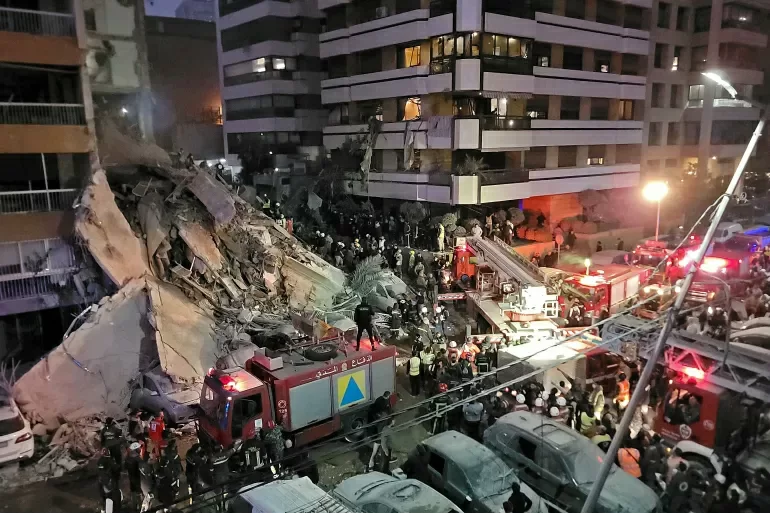
    Lebanese Civil Defense has confirmed that at least 254 people were killed and 1,165 more wounded in the airstrikes, which targeted locations across the country: including the Tallet al-Khayyat neighborhood of Beirut, the Bekaa Valley, the Lebanon Mountains, the coastal city of Sidon, and multiple villages in southern Lebanon. Emergency response workers and local residents have already gathered at the scene of the Beirut strike to recover victims and provide aid, according to AFP photos from the attack site.

    The Israel Defense Forces labeled the operation the largest coordinated assault on Lebanon since it launched a new military campaign in the country on March 1. IDF officials confirmed that the strikes targeted more than 100 Hezbollah command centers and military installations across the country.

    The scale of the casualties has overwhelmed Lebanon’s already strained healthcare system. Elias Chlela, head of the Lebanese Medical Association, issued an urgent call for all doctors to report to hospitals immediately to assist with the influx of wounded patients. One of Beirut’s largest hospitals also announced a critical need for blood donations of all blood types to support emergency operations.

    Dispute has already erupted over whether Lebanon falls under the scope of the newly announced U.S.-Iran ceasefire. Israeli Prime Minister Benjamin Netanyahu stated openly that Lebanon is not included in the ceasefire deal, arguing the truce does not apply to clashes with Hezbollah. U.S. President Donald Trump echoed this position, describing Lebanon as a separate case excluded from the agreement. However, Pakistan, which served as a mediator in the ceasefire negotiations, confirmed that Lebanon was intended to be covered by the truce, creating a major rift over the terms of the deal.

    Reactions from global actors and regional stakeholders have been swift and widespread: In Lebanon, Parliament Speaker Nabih Berri condemned the strikes on densely populated civilian areas as a full-fledged war crime. He noted the attack came immediately after the ceasefire announcement, calling it a serious test for the international community and a blatant violation of international law, while urging all Lebanese citizens to unite in solidarity with the victims.

    Lebanese armed group Hezbollah affirmed its inherent right to respond to the attacks, stating that the blood of its killed and wounded members will not be spilled in vain, and reaffirming its right to resist occupation. A Hezbollah member of parliament warned that the Israeli strikes constitute a serious violation of the ceasefire, and continued attacks will put the entire truce agreement at risk.

    On the Israeli side, Defense Minister Israel Katz explained that Israel intends to separate the conflict with Iran from its military campaign in Lebanon in order to fundamentally alter the situation on the ground. Netanyahu reaffirmed that Israeli operations will continue, as the ceasefire does not apply to Hezbollah targets.

    Iran’s leadership issued a stark warning that it will retaliate if Israel does not immediately halt its attacks on Lebanon. Iranian Foreign Minister Abbas Araghchi stressed that the terms of the ceasefire are clear, stating “The United States must choose: either a ceasefire, or war through Israel.” He added that the entire world is witnessing the bloodshed in Lebanon, and responsibility for any further escalation rests with the U.S.

    The U.S. maintained its position that Lebanon is excluded from the truce due to its conflict with Hezbollah, with Vice President JD Vance characterizing the disagreement over Lebanon’s inclusion as a legitimate misunderstanding of Iran’s position, in contrast to the Pakistani prime minister’s confirmation that Lebanon was part of the deal.

    Multiple regional and global governments have condemned the strikes. Qatar’s Foreign Ministry decried the brutal series of attacks as a dangerous escalation and a blatant violation of Lebanese sovereignty and international law, expressing full solidarity with Lebanon and calling on the international community to hold Israel accountable. Egypt condemned the bombardment as a premeditated attempt to undermine regional and international de-escalation efforts and plunge the entire region into chaos. Turkey’s Foreign Ministry strongly condemned the attacks, warning they will drastically worsen the already catastrophic humanitarian situation, and called on the international community to act immediately to end Israeli operations and protect civilian lives. Spanish Prime Minister Pedro Sánchez called Netanyahu’s disregard for civilian life and international law disgraceful, calling for Lebanon’s immediate inclusion in the ceasefire and the imposition of sanctions on Israel. Italian Foreign Minister Antonio Tajani expressed solidarity with Lebanon, warned the offensive could create a second Gaza conflict, and called on Israel to halt bombing and guarantee safe operating conditions for United Nations peacekeepers.

    United Nations officials issued a sharp condemnation of the strikes, calling for urgent diplomatic action to prevent further civilian casualties. The UN High Commissioner for Human Rights described the scale of destruction as appalling, and stressed that protecting civilian peace and safety must be the top priority. The International Committee of the Red Cross also expressed outrage over the deadly destruction in densely populated civilian areas, emphasizing that any regional ceasefire agreement must prioritize the safety and dignity of Lebanese civilians.

  • Greene Details Healthcare, Housing and Skills Investments in St. Paul’s Ahead of Election

    Greene Details Healthcare, Housing and Skills Investments in St. Paul’s Ahead of Election

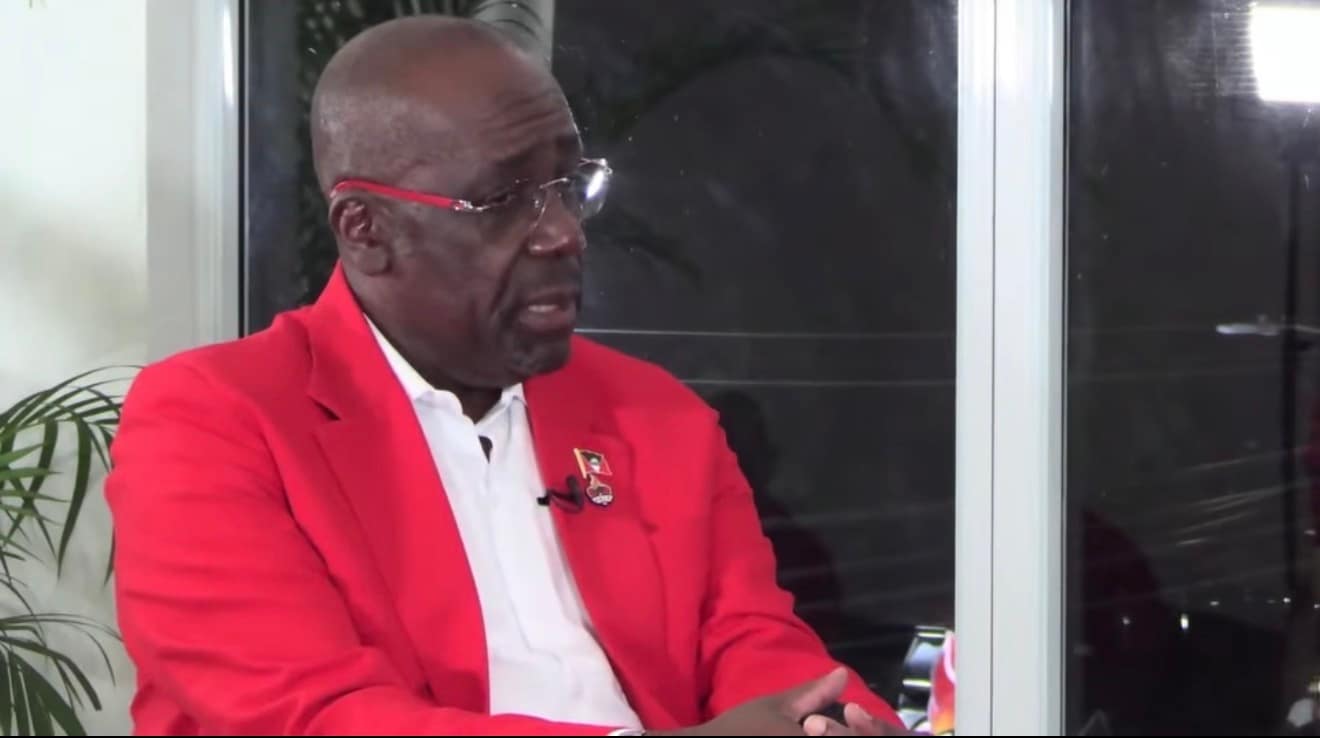
    As political parties across Antigua and Barbuda ramp up campaign efforts ahead of the approaching national general election, Chairman of the ruling Antigua and Barbuda Labour Party (ABLP) E.P. Chet Greene has laid out a comprehensive portfolio of completed and planned development initiatives for the St. Paul’s constituency, framing the work as proof of consistent, long-term progress rather than last-minute electioneering.

    At the core of the constituency’s recent gains are expanded public healthcare infrastructure, designed to reduce barriers to access for local residents. Greene confirmed that two upgraded healthcare facilities are now fully operational: a newly constructed primary care clinic in the community of Cobbs Cross, and a comprehensive renovation of an existing clinic elsewhere in St. Paul’s. “We have two very functional clinics in St. Paul’s, bringing healthcare services to a new level,” Greene shared in his remarks, emphasizing that the upgrades were structured to bring essential care directly closer to the communities that need it. Looking ahead, the ABLP has further plans to widen the scope of available services, adding specialized dental and vision care to the constituency’s public health offerings in coming months.

    Beyond healthcare, the ABLP has prioritized youth development and workforce readiness through expanded education and vocational training opportunities. A key milestone in this effort is the nearing completion of a new technical training centre, which will offer programming across a range of practice-focused career tracks. One dedicated wing of the facility will provide professional training in beauty and skincare, while other sections will cover a broad spectrum of vocational skills aligned with local labour market demands.

    This new centre complements existing training partnerships with larger post-secondary institutions across the country, including the University of the West Indies Five Islands Campus, where dozens of St. Paul’s residents are already enrolled in skills-building programs. “We have about 30 students on short courses… and others in longer programmes,” Greene noted, adding that youth empowerment and accessible education remain non-negotiable pillars of the constituency’s long-term growth strategy.

    The ABLP’s development agenda for St. Paul’s also includes targeted expansion of affordable housing, with Greene confirming that new parcels of land will soon be opened up for residential development to accommodate the constituency’s growing population. Complementary infrastructure upgrades, including improved emergency response facilities, are also in the works to support the area’s expanding population and growing local economic activity.

    Greene took explicit care to distinguish the ABLP’s ongoing work from pre-election campaign promises, stressing that consistent progress in St. Paul’s has been a years-long priority rather than a temporary push for votes. “While others campaign, I maintain,” he said, emphasizing his administration’s sustained presence and on-the-ground engagement with constituents throughout his tenure. The rollout of the constituency’s development record comes as the ABLP works to highlight its delivery track record across all electoral districts ahead of the upcoming vote.

  • Column: Sportpaspoort affaire

    Column: Sportpaspoort affaire

    In the lead-up to a critical World Cup qualifying play-off against Bolivia, a heated public and institutional campaign has erupted in the Netherlands targeting Dutch-born footballers who represent Suriname in international competition. What began as an isolated eligibility dispute raised by an Eredivisie club over a player’s purported naturalization as an Indonesian citizen quickly spilled over to the entire group of Suriname national team players, who were already in Mexico preparing for their do-or-die qualification match for this year’s World Cup.

    As media coverage of the eligibility debate intensified, the Suriname technical staff initially dismissed the controversy as unfounded noise, choosing to downplay the issue to protect their players’ focus ahead of the high-stakes fixture. But after Suriname dropped the match on Mexican soil, criticism and regulatory action accelerated rapidly. When the players returned to their club duties across Europe, a raft of punitive measures followed: some were dropped from club selection, while others faced demands questioning their retention of Dutch nationality. Even in Belgium, player Gyrano Kerk was sidelined and barred from training with his club as collateral damage from the broader dispute.

    The situation quickly devolved into confusion, with inconsistent application of measures across leagues and clubs. For some players, eligibility issues were resolved quickly after they secured official work permits, allowing them to return to competitive action, while others remained in limbo.

    Officials from the Suriname Football Association (SVB) have pushed back against the eligibility claims, emphasizing that the special sports pass used to allow Dutch-born players to represent Suriname holds no legal standing for nationality claims. In contrast, the Royal Dutch Football Association (KNVB) has warned all domestic clubs to only field players that can prove full eligibility, and has joined a number of clubs in demanding work permits from players that have represented Suriname.

    A close look at Suriname’s existing nationality law makes clear that the eligibility claims against the players lack legal foundation. Article 8 of Suriname’s Law on Nationality and Residency explicitly outlines requirements for obtaining Surinamese nationality, mandating both a clear legal basis for naturalization and five consecutive years of primary residency in Suriname ahead of any application. Even the exception for naturalization granted for state interests, laid out in Article 9, requires formal legislative action to take effect. According to public records, none of the players in question have completed the mandatory steps to obtain Surinamese citizenship.

    Without completed legal naturalization, none of the players hold Surinamese nationality. That means calls to strip them of Dutch nationality and treat them as foreign non-citizens carry severe unintended consequences: if the players are not Dutch and not Surinamese, they would effectively be rendered stateless. Legal observers note that the current actions by the KNVB and several European clubs appear to contradict the 1961 Convention on the Reduction of Statelessness, an international treaty designed to prevent exactly this outcome. To date, there is no evidence that Suriname has enacted any legal change that would grant these players formal nationality. The core purpose of the Suriname sports pass, officials confirm, is only to establish eligibility for international football representation, not to grant citizenship or change the players’ existing legal nationality status.

  • Dasac delivers emergency food aid to families affected by flooding in multiple provinces

    Dasac delivers emergency food aid to families affected by flooding in multiple provinces

    In the Dominican Republic, widespread severe flooding triggered by relentless recent heavy rainfall has left hundreds of families displaced and in urgent need of support, prompting rapid disaster response action from the country’s Directorate of Social Assistance and Community Food (Dasac). The government agency has mobilized specialized response brigades to deliver life-sustaining emergency supplies to hard-hit communities across at least four administrative regions, addressing immediate food insecurity in the wake of the natural disaster.

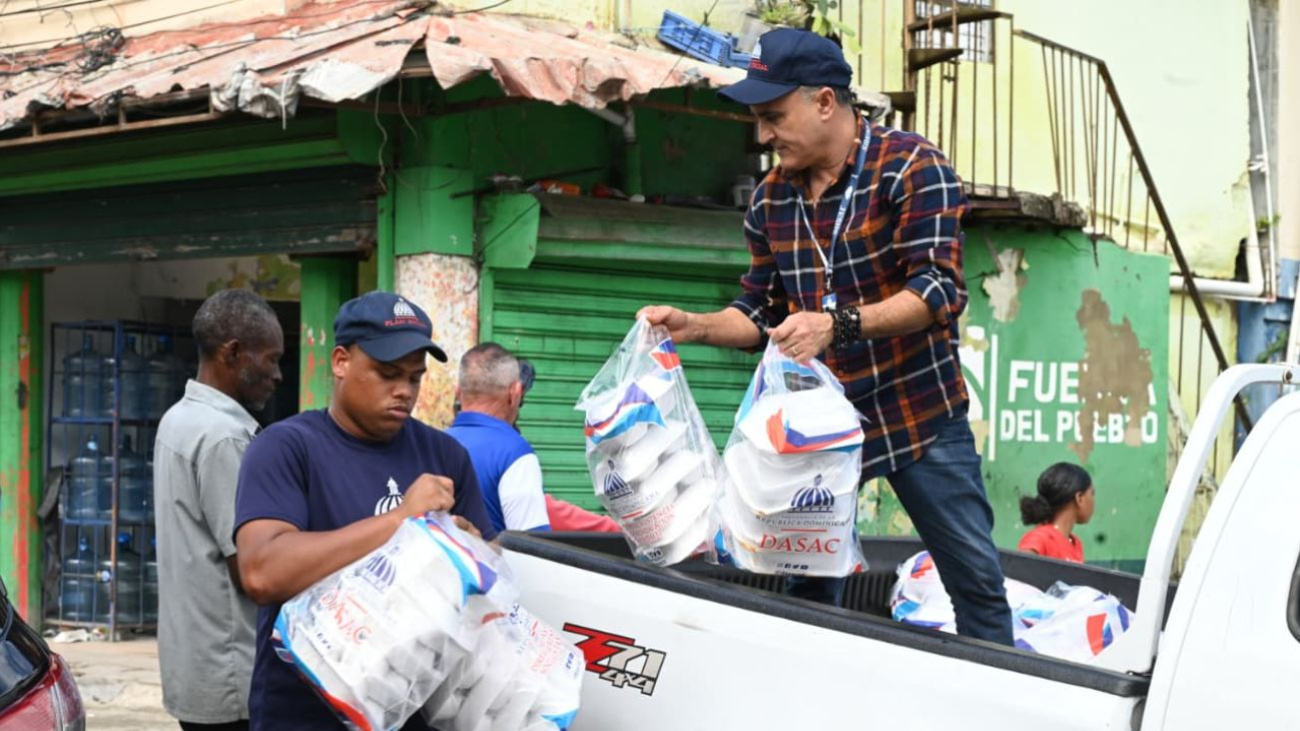
    Dasac Director Édgar Augusto Féliz Arbona personally took charge of on-the-ground response operations in two of the most affected areas: the northern and western municipalities of the national capital district, Santo Domingo. Response teams working under his leadership distributed thousands of prepared meals to vulnerable residents in low-lying, heavily impacted neighborhoods including La Arenita, El Aguacate, Los Platanitos, and Manganagua, where floodwaters have destroyed homes and cut off access to local grocery and food supply networks.

    Beyond the Santo Domingo metro area, additional mobile response brigades have been dispatched to extend support to affected households in two more provinces: San Cristóbal, located along the country’s southern coast, and Valverde, in the northwestern Cibao region. Local disaster management officials confirmed that the entire agency remains on heightened alert under direct orders from Dominican Republic President Luis Abinader, who prioritized rapid, people-centered response to the flooding disaster.

    To expand outreach and meet diverse community needs, Dasac has deployed a full network of response assets: fully mobile kitchen units that can prepare hot meals close to flood zones, fixed community soup kitchens for residents who have relocated to emergency shelters, and specialized damage assessment teams that survey impacted residential areas to document housing damage and identify unmet needs for long-term recovery support. To streamline communication with affected residents, the agency has also publicized a dedicated emergency hotline (829-222-9194) across all its official social media platforms, allowing community members to submit urgent requests for aid directly to response coordinators.

  • Kleurrijke start 61e Avondvierdaagse: bijna 5.000 deelnemers op pad

    Kleurrijke start 61e Avondvierdaagse: bijna 5.000 deelnemers op pad

    One of Suriname’s most beloved annual community walking events, the 61st edition of the Avondvierdaagse (AVD), officially launched on Wednesday, bringing together thousands of participants in a vibrant celebration of movement, community and local culture.

    The multi-day walking marathon opened with a festive, energetic atmosphere, where participants showcased elaborate, finely detailed costumes paired with creative, handcrafted accessories that turned the route into a moving display of local creativity. A standout feature of this year’s edition is the unprecedentedly large contingent of individual participants: more than 1,900 solo walkers have registered to take part in the four-day event.

    The official opening ceremony was led by two top government officials: Nalini Gopal, Minister of Sport, and André Misiekaba, Minister of Public Health. Joined by Lakshmi Vishnudatt, chair of the BVSS — the organizing body behind the event — the trio took the official first steps to mark the start of the 61st AVD, kicking off four days of scheduled walking for participants across all age groups.

    As of the opening day, event organizers have counted a total of 4,900 registered participants. The field breaks down into 9 junior groups, 38 senior groups, and the 1,900+ individual walkers. Cultural participating groups drew attention from onlookers kilometers away thanks to their bright, eye-catching costumes and group singing that brought a joyful soundtrack to the walking route.

    Across all organized participating groups, the National Democratic Party (NDP) remains the largest contingent by a significant margin, a consistent trend in past editions of the event. On the opening day of the 2026 AVD, participants completed an 11.3-kilometer route, with organizers already releasing the route details for the second day of the multi-day walking event. The four-day event is expected to draw ongoing community attention as participants complete each day’s route ahead of the closing ceremony.