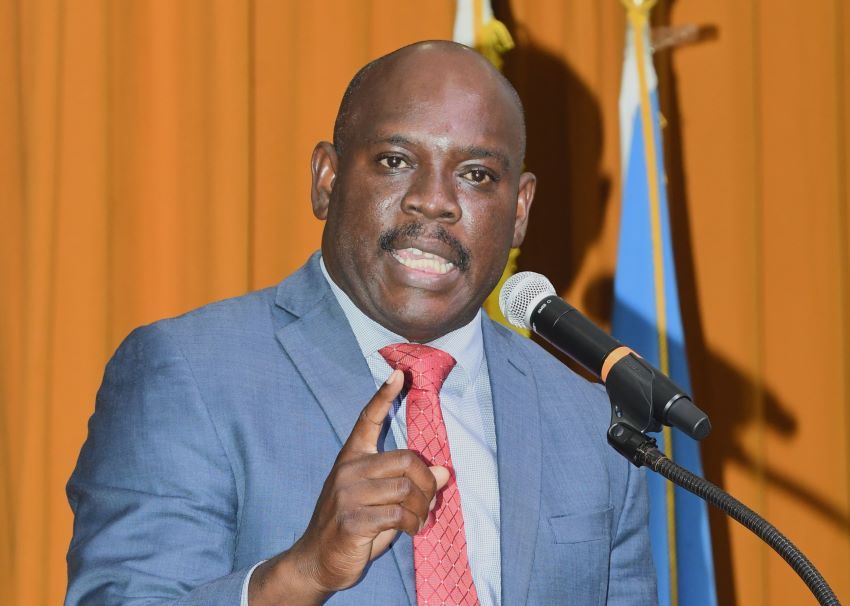
Against a backdrop of escalating global economic volatility and years of ongoing fiscal reform after a major debt restructuring, the Government of Barbados has formally re-established an independent Fiscal Council, a move designed to embed greater transparency and accountability into the country’s long-term debt reduction strategy, the Ministry of Finance announced Thursday.
The newly reconstituted five-member body, which draws together cross-sector expertise from economics, finance, banking, and organized labor both within Barbados and across the international community, carries a clear, public-focused mandate: to verify the credibility of the economic and financial projections that form the foundation of the national budget, assess whether the government is meeting its legally and politically binding fiscal responsibility commitments, and track emerging long-term fiscal risks ranging from underperformance at state-owned enterprises to unplanned contingent liabilities and climate-related financial exposures. To keep the public fully informed, the council will publish independent annual evaluations of four key government documents: the national Fiscal Framework, the Mid-Year fiscal review, the Pre-Election Economic and Fiscal Update, and the annual national budget. All reports will be made freely accessible to any Barbadian citizen who wishes to review them, the ministry confirmed.
“The council’s only job is to examine the evidence and report its findings transparently to the people of Barbados,” the ministry stated in its official announcement.
Leadership of the new council includes Ismail Momoniat, former acting director general of South Africa’s National Treasury, who will serve as chairman, and Winston Moore, a professor of economics and deputy principal at the University of the West Indies Cave Hill Campus, who takes on the role of deputy chairman. The remaining council members are Nlandu Mamingi, emeritus professor of economics; Donna Wellington, chief country management officer at CIBC Caribbean; and Cedric Murrell OBE, a veteran labor relations consultant and former president of the Congress of Trade Unions and Staff Associations (CTUSAB). The council has already convened its first meeting, formalized its operating mandate, and begun its core work, according to the government statement.
The Fiscal Council was first launched in May 2023 as a core component of Barbados’ International Monetary Fund (IMF)-backed economic reform program, which was launched after the country completed a sweeping debt restructuring process to pull its public finances back from unsustainable levels. This reconstitution comes as the Mia Mottley administration works to sustain investor confidence and fiscal stability while navigating persistent global economic headwinds and working toward long-term debt reduction targets set under the ongoing reform initiative.
Barbados entered the IMF’s Extended Fund Facility program in October 2018, when its public debt had surged to roughly 160% of the country’s gross domestic product (GDP). By June 2024, concerted reform efforts had cut that ratio to 117% of GDP, with projections showing the downward trend continuing and a long-term target of reducing debt to 60% of GDP by 2035.
A defining feature of the new council is its full operational independence from government, the finance ministry emphasized: the body is non-statutory, not controlled by any executive branch ministry, and does not answer to political leaders. This autonomy is critical to its ability to deliver unbiased assessments, officials noted.
Finance Minister Ryan Straughn framed the reconstituted council as a critical accountability mechanism at a moment of ongoing global economic instability. “Good governance is not just about making the right decisions, it is about being willing to be held accountable for them,” Straughn said. “No government gets everything right. Governing a small island nation in the middle of a turbulent global economy is serious work. What matters is that there are credible, independent people watching, ready to say so when we fall short and to confirm it when we do not. When they say we have fallen short, we listen, we adjust, and we act. That is how good governance actually works in practice.”
Straughn also paid tribute to former council chairman Alejandro Werner, the former head of the IMF’s Western Hemisphere Department, who led the body during its initial setup phase. “Alejandro never treated this as a ceremonial role,” Straughn said. “He asked hard questions, he pushed for rigour, and he left the council in better shape than he found it.”
The work of the Fiscal Council aligns with broader international recognition of Barbados’ commitment to sound fiscal management. A 2024 report from the United States Department of the Treasury, which evaluated IMF lending programs to Barbados and Suriname, noted the council was established to “further demonstrate commitment to sound fiscal management” and added that the body will hold the government accountable for transparent implementation of a fiscal strategy focused on cutting public expenditure, reforming state-owned enterprises, and embedding the Medium-Term Fiscal Strategy into permanent institutional practice.
With the reconstitution complete, the Fiscal Council of Barbados is now fully operational, the government confirmed.