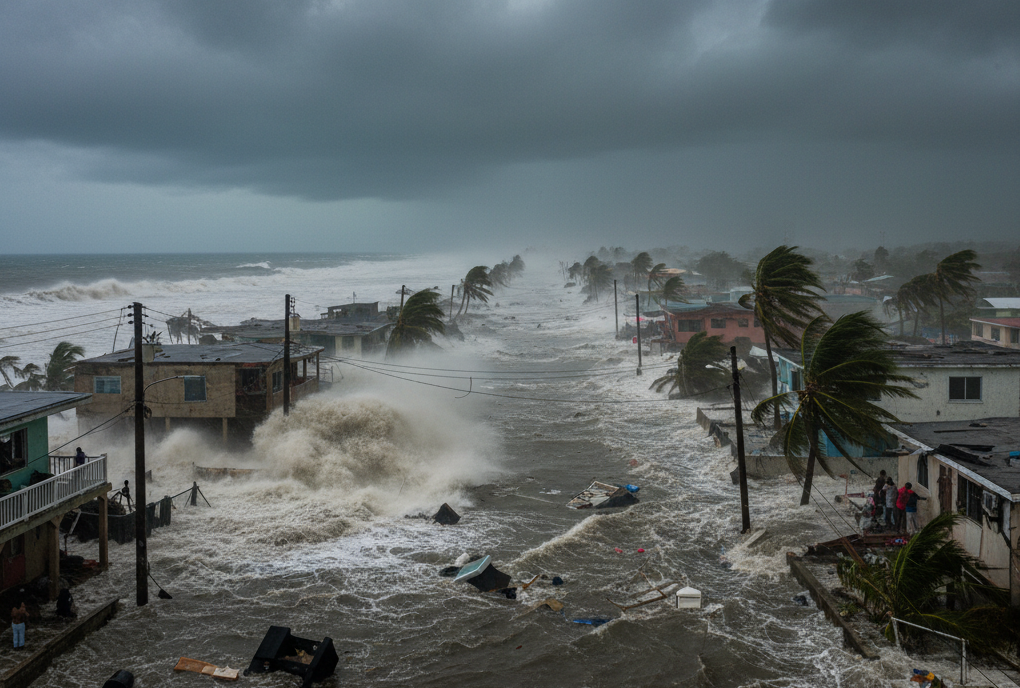
When Jamaica took the floor at the 81st United Nations General Assembly general debate this week, it carried a stark, urgent lesson for the global community: even nations that follow every rule, make hard choices, and build long-term resilience can lose decades of progress in a single catastrophic event. Foreign Affairs and Foreign Trade Minister Senator Kamina Johnson Smith turned the country’s recent trauma from Hurricane Melissa into one of the most compelling arguments for small developing states heard during the week of global diplomacy.
The destruction left by Hurricane Melissa, which made landfall on October 28, 2025, is almost unfathomable for a small open economy. Early assessments peg total damage and economic losses at 56.7% of Jamaica’s entire annual gross domestic product – more than half a year of national output erased in just a few hours of extreme weather. Johnson Smith emphasized that Jamaica had done everything in its power to prepare: years of deliberate fiscal discipline had built robust economic buffers, and the country had proactively invested in catastrophe insurance and catastrophe bonds that unlocked immediate liquidity for emergency response. Even with all this prudent planning, however, the Minister told the Assembly that no amount of national preparation can fully shield a small developing state from a climate disaster of this scale. One extreme weather event, she noted, can unravel decades of hard-won development, no matter how well a nation governs itself.
This devastating experience forms the core of Jamaica’s central policy demand: a fundamental reworking of how the global community measures national vulnerability to climate and economic shocks. Per capita income alone, Johnson Smith argued, cannot capture the structural risks small island developing states face. Crossing an arbitrary income threshold does not make a country any less exposed to catastrophic hurricanes or other climate-driven disasters. Jamaica is once again pushing for global development and concessional finance eligibility to be guided by multidimensional vulnerability indices, and is calling for climate finance that is truly accessible, reasonably priced, and predictable for at-risk nations.
The credibility of Jamaica’s case is strengthened by its own track record of strong governance before the storm. Before Hurricane Melissa hit, the country had cut its national debt from a high of more than 140% of GDP down to just 62%. Unemployment fell to a historic low of 3.4%, and even after the storm, it has only edged up to 3.7%. Credit rating agencies have retained or improved Jamaica’s ratings despite the massive disaster, a testament to the country’s stable economic fundamentals. Johnson Smith stressed that Jamaica is not asking for special treatment or to be let off the hook for its responsibilities – instead, it is demanding an international system that gives responsible, well-governed small states the support and policy space they need to recover and grow after climate shocks.
Johnson Smith’s address also advanced the broader regional agenda of the Caribbean Community (CARICOM) with clear conviction. Jamaica joined regional partners in nominating Carolyn Rodrigues-Birkett of Guyana for the position of UN Secretary-General, framing small states as natural bridge builders whose global influence stems from their credibility, not their geographic or population size. On the ongoing crisis in Haiti, Jamaica called for sustained international support for the Haitian Gang Suppression Force, Haitian National Police, and national armed forces, urging the UN Security Council to renew the Force’s mandate at what Johnson Smith described as a critical crossroads for the country.
On the issue of transnational organized crime, Johnson Smith echoed Prime Minister Andrew Holness’s call for a coordinated global campaign against gang activity, reminding major arms-exporting nations that illicit firearms flooding Caribbean communities do not originate locally. She pushed for stricter international export controls on small arms and mandatory post-delivery verification to crack down on illegal diversion. Domestically, Johnson Smith noted, Jamaica has already made major progress: the country recorded its lowest annual homicide count in more than three decades in 2025, and the Global Peace Index now ranks Jamaica as the most peaceful nation in the Caribbean.
On the long-running campaign for reparations for the transatlantic slave trade, the Minister confirmed that the historic petition delivered to Buckingham Palace has now been referred to the Judicial Committee of the Privy Council. She also confirmed Jamaica’s support for the UN General Assembly resolution introduced by Ghana in March 2025. Johnson Smith defined reparatory justice as encompassing six core pillars: truth, acknowledgement, repair, compensation, development, and reconciliation. Notably, she framed Jamaica’s claim around its own individual petition rather than referencing CARICOM’s established Ten-Point Plan, marking a distinct approach for the country’s advocacy.
On the topic of US-Cuba relations and the decades-long trade embargo, Johnson Smith struck a carefully balanced tone: the delegation expressed clear concern for the hardship faced by the Cuban people, encouraged ongoing domestic reform efforts on the island, and called for diplomatic engagement rather than continued isolation under the blockade.
Sixty-four years after Jamaica gained independence and raised its black, green and gold flag, the country has delivered one of the most actionable and evidence-backed arguments for the upcoming global debate on climate and development finance. As the aftermath of Hurricane Melissa makes clear, vulnerability for small island states is structural, not a consequence of low national income. The next critical step is turning this powerful case made from the UNGA rostrum into tangible change to the international eligibility rules that shape access to critical finance for at-risk nations.