A devastating spell of extreme heavy monsoon rainfall has triggered widespread flooding, catastrophic landslides and mass evacuations across large swathes of South and Southeast Asia, leaving at least 68 people confirmed dead and seven more missing across India, Nepal and Thailand as of late September.
In India’s most populous state, Uttar Pradesh, 56 people have lost their lives to flood and landslide-related incidents since Friday, according to local disaster management officials. Between Friday and Sunday morning alone, the region recorded 66.5 millimeters of rainfall – nearly nine times the 7.6 millimeter seasonal average for the same period. The record downpour, amplified by a low-pressure system moving inland from the Bay of Bengal, damaged more than 1,000 residential structures and left another 46 people injured.
Flood risks are escalating across other parts of India as well. In the eastern coastal state of Odisha, more than 70,000 residents have been evacuated from low-lying flood-prone areas and relocated to hundreds of temporary emergency shelters. Multiple major rivers across northern Odisha have already surged past dangerous warning levels, prompting state officials to increase controlled outflow from the major Hirakud Dam in preparation for further rising water levels in the Mahanadi river system. India’s Central Water Commission has confirmed that dozens of monitoring stations across multiple states, including along the iconic Ganges, Gandak, Kosi, Bagmati and Narmada rivers, are recording water levels above critical danger thresholds.
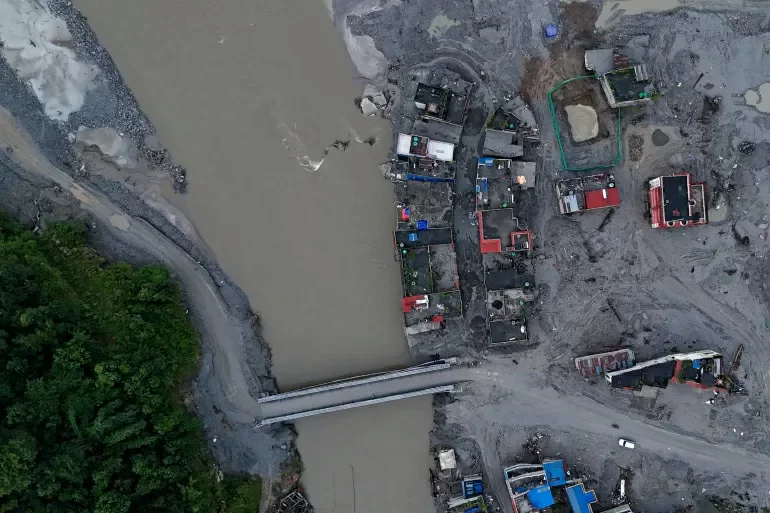
To the north of India, Nepal is facing a second devastating weather event just weeks after a catastrophic glacial lake outburst flood that killed more than 1,400 people and left thousands more missing in late August. Since September 24, the country has recorded 12 flood and landslide-related deaths, with seven additional residents still unaccounted for. More than 1,100 people have already been evacuated from at-risk areas. Across the country, hundreds of properties have been destroyed: in Parbat District, the swollen Kaligandaki River has washed away an estimated 80 homes, while nearly 1,000 residents in Butwal were forced to flee after the Tinau River rose above warning levels.
Nepal’s national disaster management authorities have issued urgent warnings that the situation remains extremely volatile, with rivers and tributaries continuing to rise rapidly across most regions, and new downpours expected to trigger additional sudden landslides. Unlike the August disaster, the current flooding is driven by extreme rainfall, not glacial activity, but it is hitting many communities that are still in the early stages of recovering from the previous catastrophe.
Further south, Thailand’s capital city of Bangkok is facing its worst urban flooding in years, after days of near-continuous heavy rainfall left most of the capital submerged. All 50 of Bangkok’s districts have now been formally declared disaster zones, with some areas recording between 300 and 320 millimeters of rain over just two to three days. Canal-side neighborhoods have been hit hardest, as the city’s water network has reached full capacity. On Sunday, multiple major arterial roads remained submerged, with floodwaters reaching hip height in some residential neighborhoods. An estimated tens of thousands of households have been impacted, with thousands of residents relocated to emergency evacuation centers.
While rainfall has temporarily eased, allowing for minor improvements in some areas, most canals remain at dangerously high levels and many roads are still impassable. Thailand’s Meteorological Department has warned that additional heavy to extreme rainfall remains likely across the region. In response, the Thai government has declared a special public holiday for all civil servants in Bangkok and three surrounding provinces for Monday and Tuesday, while all schools in the capital will remain closed to keep residents out of harm’s way. The current extreme rainfall in Thailand is being driven by an active low-pressure system interacting with a strengthened southwest monsoon, forecasters said.
Though the three countries are facing separate flood events, they are all experiencing the same dangerous weather pattern: unprecedented heavy rainfall, rapidly rising river levels, and an elevated risk of sudden flash floods and landslides. The impacts vary by region: India and Nepal have faced the highest human death toll, while Bangkok is grappling with widespread urban disruption to housing, transport and public services.
Rescue teams, military personnel and local aid groups have already been deployed across all affected regions to support response efforts. In Odisha, additional rescue teams have been mobilized to support evacuations and emergency response. In Nepal, authorities are prioritizing evacuations, clearing landslide-blocked roads and repairing damaged critical infrastructure. In Bangkok, more than 200 emergency shelters have been set up, with officials advising residents in low-lying canal-side areas to move valuables to higher ground and avoid all non-essential travel.
Forecasters warn that the overall trajectory of the crisis remains uncertain. If rainfall eases in the hardest-hit regions, water levels are expected to gradually recede. But any new heavy downpours would likely worsen the crisis, particularly in areas where rivers and canals are already operating at or above full capacity.