博客

  • Grenada U19 fall to Dominica in Windward Islands Youth Clash

    Grenada U19 fall to Dominica in Windward Islands Youth Clash

    The 2026 WINLOTT Inc. Super 6 Windward Islands Under-19 Tournament kicked off with a weather-disrupted opening clash on Saturday 11 April at Benjamin’s Park, where hosts Grenada suffered an opening defeat to defending tournament champions Dominica. Persistent heavy showers reshaped the entire course of the match, forcing a revised target under the Duckworth-Lewis-Stern (DLS) method that left Grenada unable to find their footing in the chase.

    After winning the pre-match toss, Grenada’s captain made the call to field first, a decision that looked solid in the opening exchanges. Grenada’s bowlers stuck to tight line and length early, restricting Dominica’s batters and holding the first wicket until the final delivery of the 10th over. It was pace bowler Aaron Edwards who broke the opening stand, dismissing Derwin Lewis for 19 runs with Dominica’s total just 46 at that point.

    Rain interruptions would go on to disrupt the middle overs, but Dominica’s middle-order batter Aiden Burton stepped up to steady the innings, crafting a well-compiled 58 runs off 62 deliveries marked by five fours and two maximums. When play was called off for the weather at 33.3 overs, Dominica had posted 168 runs for the loss of three wickets. Grenada’s bowling was led by spinner Aravinda Bishop, who claimed two key wickets while conceding 46 runs across his full 10-over allocation. Edwards backed him up with an economical spell, taking one wicket for just 25 runs from six overs. The full bowling breakdown for Grenada saw Jayonn Henry end with 0 wickets for 19 runs from four overs, Jeremy Edwards at 0 for 15 from five overs, Desrond Mitchell at 0 for 41 from eight overs, and Ron Charles at 0 for 9 from 0.3 overs.

    Following an extended weather delay, match officials applied the DLS par score rule, setting Grenada a challenging revised target of 209 runs to win from a shortened 29-over chase. Grenada got off to a steady start in their response, with opener Raekeim Lewis Charles top-scoring for his side. Lewis Charles put on a 36-run opening partnership with Jordan John (18), followed by a 26-run second-wicket stand with captain Khavaughn Bartholomew (16). As the required run rate climbed steadily, Grenada was forced to accelerate, but Dominica’s disciplined bowling attack choked the scoring, allowing just 27 runs across the next five overs before Lewis Charles was dismissed with Grenada on 89 for three.

    From the position of 90 for three in the 19th over, Grenada’s batting collapsed, losing four quick wickets for the addition of just 22 runs. The innings closed at 111 for seven after the full 29 allotted overs, leaving Dominica to take the opening win of the tournament. The full Grenada batting scorecard lists Jamie Wickham 11 not out, Christian Niles 2, Jayonn Henry 6, Desrond Mitchell 1, Aravinda Bishop 3, and Ron Charles 0 not out alongside Wickham.

    Grenada will now turn their focus to bouncing back from this opening setback, with their second group fixture scheduled to take place against St Lucia on Sunday 12 April 2026.
  • ABLP expands campaign visibility with billboards ahead of election

    ABLP expands campaign visibility with billboards ahead of election

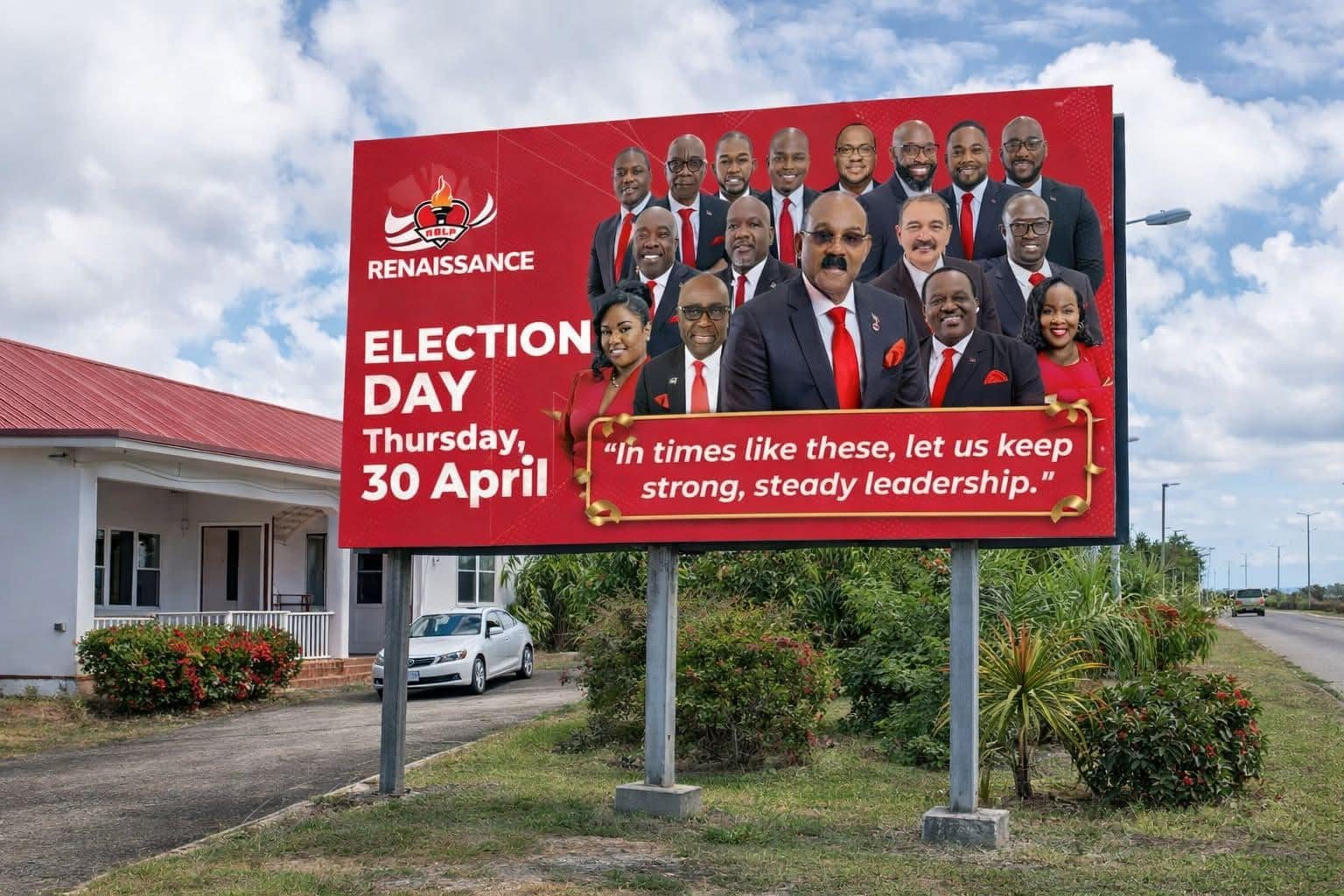
    As general elections draw near on the Caribbean island of Antigua and Barbuda, the incumbent Antigua Labour Party (ABLP) has moved to expand its public campaign footprint by rolling out a network of new billboards across key population centers. The strategic move is designed to increase the party’s visibility among undecided and mobile voters, placing core campaign messaging and party branding in high-traffic areas ranging from urban intersections to suburban commercial corridors. Political observers note that the billboard push forms part of a broader integrated outreach strategy that combines traditional out-of-home advertising with digital and door-to-door campaigning, as the party works to retain its parliamentary majority against opposition challengers. For many local voters, the growing presence of ABLP billboards across the country serves as a clear signal that the party is actively competing for support and prioritizing widespread name recognition ahead of polling day. The expansion of out-of-home advertising comes as polling analysts point to a tight race, with both major parties investing heavily in public outreach to sway the small share of swing voters that are expected to decide the election outcome.

  • Loyalty to a criminal friend versus loyalty to my country’s laws

    Loyalty to a criminal friend versus loyalty to my country’s laws

    Across the small island nation of St. Vincent and the Grenadines (SVG), open talk of violent crime and the people who commit it circulates freely in local communities, shared openly on neighborhood street corners among the right social circles. These offenses are not random acts of impulse; they are carefully planned, coordinated, and even bragged about by perpetrators among their peers. Yet despite this widespread community knowledge, law enforcement agencies continue to face immense barriers to making arrests and reining in the country’s persistent crime problem.

    This gap between public awareness and criminal prosecution has sparked a pressing public debate: Would a greater reliance on undercover policing and structured intelligence gathering finally bring dangerous offenders to justice? Or is this solution far simpler to propose than to implement, given the deep-seated cultural and moral challenges that hold SVG back, chief among them the age-old conflict between personal loyalty to loved ones and civic duty to one’s country?

    For most Vincentians, this dilemma is not an abstract hypothetical—it is a weighty moral question that cuts to the core of personal relationships. Consider the most extreme scenario: a close friend confesses to a murder they committed, and no other authorities know of their guilt. Would you hand them over to law enforcement? If you did, would that make you a disloyal friend? If you stayed silent, would that count as unwavering loyalty worth honoring?

    It is impossible to judge anyone forced into this impossible position, as any choice comes with devastating personal consequences. While on paper, many argue that all murderers must face justice no matter their personal connections, the reality becomes far murkier when the perpetrator is someone you love. What if it was not an acquaintance, but a parent, spouse, sibling, or child who accidentally took a life during a drunken brawl? Could you turn them in, knowing it would end their freedom and destroy your family bond forever?

    For the vast majority of people, the answer to that question is not a simple one. But proponents of civic accountability push back against the framing of silence as loyalty: True friendship demands that you hold the people you care about accountable for their harmful actions. Allowing a friend to walk free after committing murder not only betrays the victim and their family, it also violates the core values that any healthy relationship is built on. A real friend would guide their loved one to do the right thing, not help them hide from the consequences of their actions. Beyond that, staying silent puts the entire community at risk: If a person has killed once, there is no guarantee they will not harm more people in the future. Legally, anyone who chooses to conceal a murderer becomes an accomplice to the original crime and any violence that follows.

    This culture of silence around criminal activity does not only impact murder investigations. Author Troy Prince, a concerned SVG citizen writing in an opinion piece for iWitness News, argues that the same misplaced loyalty is what allows child sexual abuse to remain hidden and persistent across the country. Family members and friends close to abusers often choose to stay silent out of loyalty, allowing abuse to continue for years without intervention.

    Prince argues that this widespread reluctance to report crimes committed by friends and family is a clear sign of deep moral erosion in Vincentian society, and it has severely damaged the country’s justice system. Without community cooperation, even the most well-resourced police forces cannot effectively reduce crime or hold offenders accountable. To rebuild SVG as a nation rooted in moral responsibility, equal justice, and personal accountability, sweeping reform of the country’s justice system is non-negotiable, he says. The key open question remains: Which stakeholders will step up to lead that change?

    In closing, Prince offers advice to every Vincentian grappling with this dilemma: Turning in a loved one who has committed a crime is not “snitching” — it is an act that protects both the broader community and the perpetrator themselves, guiding them to take accountability for their actions rather than carrying the weight of their crime forever. It also shields innocent people from becoming legal accomplices and protects communities from future harm. Fighting the crime that plagues SVG is not solely the responsibility of police or politicians — it is a collective duty that starts with individual self-reflection and a willingness to do the right thing, even when it is hard.

    Disclaimer: The opinions expressed in this piece are solely those of the author, and do not necessarily reflect the official editorial stance of iWitness News.

  • Hospital honours four retiring nurses for decades of service

    Hospital honours four retiring nurses for decades of service

    After dedicating decades of their lives to advancing patient care and strengthening local healthcare services, four long-serving nursing professionals from Sir Lester Bird Medical Centre have closed out their distinguished careers, drawing heartfelt tributes from the institution they served.

    The four retiring team members include two nursing assistants, Loretta Gage and Corrine Scotland, and two experienced registered nurses, Janice Dunbar and Judy St John Edwards. Each brought unique skills, consistent compassion, and unwavering commitment to their roles over their years of service at the facility.

    In an official public statement, hospital leadership extended sincere gratitude to the four retirees, highlighting their far-reaching contributions to the center’s mission of delivering high-quality care to the community. The institution emphasized that the retirees’ consistent dedication to their craft and unwavering adherence to professional standards have shaped the hospital’s culture of care, leaving a profound, lasting impression on both their fellow colleagues and the thousands of patients who relied on their support through vulnerable moments.

    The tribute reflects the wider healthcare sector’s recognition of the critical role that long-serving nursing staff play in building resilient, trusted healthcare systems, and marks the well-deserved transition of four professionals who have given decades of service to public well-being.

  • Chairman insists Trinidad wasn’t ‘uninvited’ to CARICOM retreat

    Chairman insists Trinidad wasn’t ‘uninvited’ to CARICOM retreat

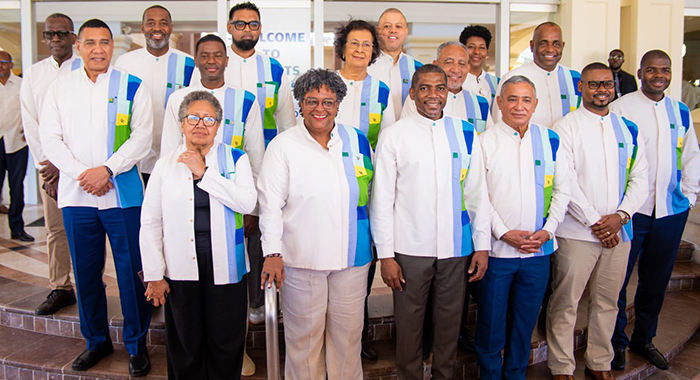
    BRIDGETOWN, BARBADOS – A growing public dispute over the reappointment of CARICOM’s top administrative leader has pushed internal governance tensions within the 15-nation Caribbean integration bloc into the open, with CARICOM Chairman and St. Kitts and Nevis Prime Minister Terrance Drew pushing back directly against claims from Trinidad and Tobago that it was deliberately locked out of the key decision-making meeting.

    In a detailed public statement released late Saturday, Drew clarified the timeline of events surrounding Carla Barnett’s reappointment as CARICOM Secretary-General for a second five-year term, a decision reached during a leadership retreat held on February 26 alongside the bloc’s 50th Regular Conference of Heads of Government in Basseterre. To back his account, Drew also published 11 pages of official correspondence exchanged between the bloc secretariat and all member states in the lead-up to the February 24-27 summit.

    Drew’s account contradicts Trinidad and Tobago Prime Minister Kamla Persad-Bissessar’s assertion that the country was uninvited to the retreat, where the reappointment vote took place. According to Drew, Persad-Bissessar departed the summit on the evening of February 25, a full day before the scheduled retreat. Later that night, at 10:33 p.m., Trinidad and Tobago’s Foreign and CARICOM Affairs Minister Sean Sobers contacted then-Secretary-General Barnett via WhatsApp to ask if he could attend the retreat in his prime minister’s absence. Drew confirmed Sobers was told he was welcome to attend, noting that other departing heads of government had previously been allowed to send their foreign ministers as representatives.

    In response, Sobers told officials he was experiencing severe seasickness and likely could not attend the boat-based retreat. Just under two hours later, at 12:37 a.m. on February 26, Barnett replied, confirming that the CARICOM chairman would fully understand if Sobers opted not to attend due to illness. Drew emphasized that Sobers never followed up to confirm he was able and willing to participate in the retreat after that exchange.

    Trinidad and Tobago’s leadership has publicly decried the reappointment process as “surreptitious and odious”, with Persad-Bissessar repeating calls for full transparency in a recent Facebook post, arguing the flawed process could have long-term negative impacts on Trinidad and Tobago’s interests. Earlier this week, Sobers announced the country would demand a full CARICOM meeting to challenge the reappointment, and even floated the possibility of holding new elections for the secretary-general post. When regional leaders held a virtual follow-up meeting on the dispute this Friday, neither Persad-Bissessar nor Sobers attended.

    Sobers has stressed that Trinidad and Tobago is not seeking to leave the 51-year-old integration bloc, but has deep concerns about CARICOM’s operational inefficiency and lack of transparency. He also confirmed the country would re-evaluate its financial contribution to the grouping in light of the dispute.

    Drew countered that all member states, including Trinidad and Tobago, received full official notification of all summit events, including the retreat’s date, location, and planned agenda items, well in advance of the conference. All member states formally acknowledged receipt of this correspondence, he added.

    During the retreat, Drew explained, leaders took up the reappointment under the agenda item focused on CARICOM governance and financing. The decision to reappoint Barnett followed the procedures laid out in Article 24 of the Revised Treaty of Chaguaramas, CARICOM’s founding governing document. Barnett, who first took office as the bloc’s eighth secretary-general in August 2021 after a unanimous appointment, was not present for the discussion or vote on her reappointment, Drew noted.

    Leaders agreed to delay the public announcement of the decision as a courtesy to allow absent leaders to be informed first, but multiple attempts to contact Persad-Bissessar via email and phone were unsuccessful, Drew said. After failed attempts to reach the prime minister, the chairman was only able to connect with Sobers.

    In addition to the reappointment, Drew confirmed that regional leaders used the retreat to advance other key governance work: they established a new sub-committee of heads from Barbados, Dominica, Guyana, and Jamaica to conduct a full review of governance and financing for all CARICOM institutions, and agreed to issue an official statement on the bloc’s recent meeting with U.S. Secretary of State Marco Rubio.

    As the dispute unfolds, two member states – Guyana and Belize – have already issued public statements confirming their support for the reappointment process. Barnett, who made history as the first woman to hold the CARICOM secretary-general post, will now serve her second five-year term in the role.

    Drew closed his statement by noting that the release of internal correspondence was aligned with agreements reached during Friday’s leaders’ meeting, and expressed hope that the bloc could return to using internal dispute resolution mechanisms to address future tensions. “Lest unfortunate and erroneous statements diminish the progress towards deepening the integration process for the benefit of the people of the Region,” he added.

  • LISTEN: Utility amnesty programme expanded to include internet access

    LISTEN: Utility amnesty programme expanded to include internet access

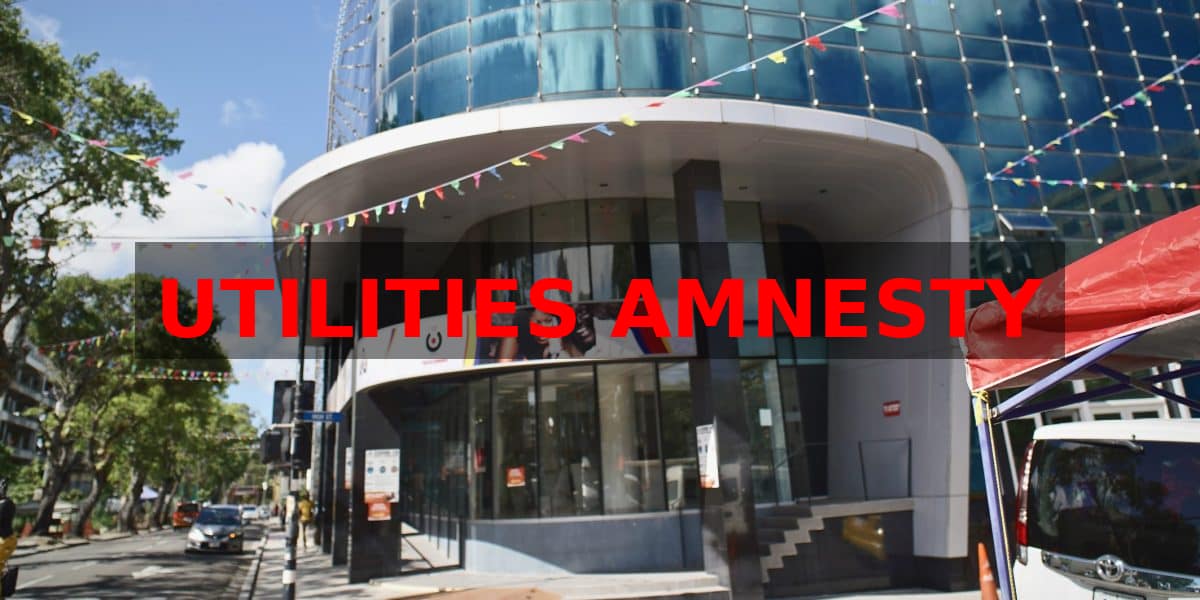
    The government of Antigua and Barbuda is taking a responsive, people-centered step to address growing household economic strain by expanding its popular utility amnesty initiative to cover internet services. The policy change will give thousands of households that lost connectivity over unpaid bills a path to have their service restored.

    Prime Minister Gaston Browne confirmed that the update to the program came directly after sustained public feedback from citizens across the country. He emphasized that in today’s digitally connected world, reliable internet access has shifted from a discretionary luxury to a core essential service, holding the same importance for daily life as traditional utilities like electricity and running water.

    This targeted expansion is crafted specifically to support low-income and vulnerable families that have fallen behind on monthly service payments amid broader economic pressures. By clearing the path for service restoration, the government aims to help these households regain critical access to tools that support daily life and boost long-term quality of life.

    Browne framed the adjusted amnesty program as a clear example of the administration’s governing philosophy: policy must be shaped through continuous dialogue with the public, and updated regularly to respond to fast-changing community needs. The addition of internet services is not a one-off adjustment, he noted, but a reflection of how essential digital connectivity has become for daily participation in society.

    The broader utility amnesty program is a core component of the government’s suite of social support policies focused on lifting up low-income households. Officials have repeatedly stressed that as a matter of principle, no resident should be locked out of access to basic and increasingly essential services due to temporary financial hardship.

    Stakeholders and government analysts project that the inclusion of internet in the amnesty will deliver outsized benefits to households in underserved communities, where many residents rely on digital connectivity for children’s remote learning, remote work arrangements, and staying connected to family members and essential healthcare services. For these communities, the change is expected to remove a major barrier to social and economic participation.

  • COMMENTARY: Why fiction feels more honest than real life

    COMMENTARY: Why fiction feels more honest than real life

    Across decades of working as both a nonfiction writer of sharp commentary and incisive interviews and a fiction author crafting stories of entirely made-up people, I have long observed a striking, counterintuitive shift: as digital and social mediation reshapes everyday human interaction, real life has grown steadily more artificial, while fictional worlds now often feel far more genuine to audiences and readers alike.

    This gap does not stem from fiction becoming more realistic in its crafting. Instead, it arises because modern real life has pushed ordinary people to adopt unnatural, polished personas tailored to algorithmic approval and risk-free public engagement. Fictional storytelling, by contrast, preserves the raw, unvarnished human qualities that contemporary social norms increasingly sand down: clear emotional honesty, consistent core motivations, and unfiltered self-expression.

    Consider a well-crafted fictional character: a grizzled, plain-spoken “good ol’ boy” with a startlingly sharp intellect that cuts through pretense. This imagined figure feels far more authentic than the carefully curated personalities many of us encounter in daily public life. Even a deliberately drawn brute, strong as an ox and unapologetically simple, carries a coherence that many real public personas lack. In modern real life, far too many people operate under the unspoken rule that any attention is better than none, leading them to perform for attention rather than show their true selves.

    Fictional characters are written to be fully, unapologetically themselves, making them feel like the last truly unmediated humans standing. Authors strip away the meaningless noise, contradictory social posturing, and vague half-truths that clutter modern real-world interaction. Fictional characters say what they actually mean, their life arcs follow clear consequences for their choices, and every decision they make reflects their core values — a coherence real life rarely grants modern people. It is this authenticity that makes fictional characters resonate and endure: they give audiences exactly what they crave: sincerity, courage, vulnerability, clear consequence, and genuine meaning.

    In recognition of this dynamic, I created the invented island-nation of St. Tosia, a whimsical, offbeat Caribbean setting where folklore, civic tradition, and gentle social satire weave together to frame everyday life. St. Tosia is a tapestry of music, gentle mischief, mythic charm, and warm magical realism — a space that feels familiar to readers while remaining entirely its own, a refuge for unfiltered human truth.

    At its core, this shift is not a failure of real life, nor an argument that we should retreat entirely into the worlds we invent. Fiction acts as a mirror, holding up the genuine human qualities we have misplaced in our modern rush to curate and perform. The real solution is to reclaim those lost parts of ourselves that fiction reminds us we still can embody: emotional clarity, courage, radical honesty, uncurbed curiosity, and the willingness to be seen exactly as we are.

    If we fail to do this, the only truly authentic humans left will be the ones we invent. When real people become artificial works of performance, fiction is the only medium that still tells the truth. As the iconic essayist and humorist Mark Twain once put it: “The only difference between reality and fiction is that fiction needs to be more credible.”

  • PM Browne Says ‘Follow the Leader’ Health Walk a Major Success, Urges Continued Focus on Active Living

    PM Browne Says ‘Follow the Leader’ Health Walk a Major Success, Urges Continued Focus on Active Living

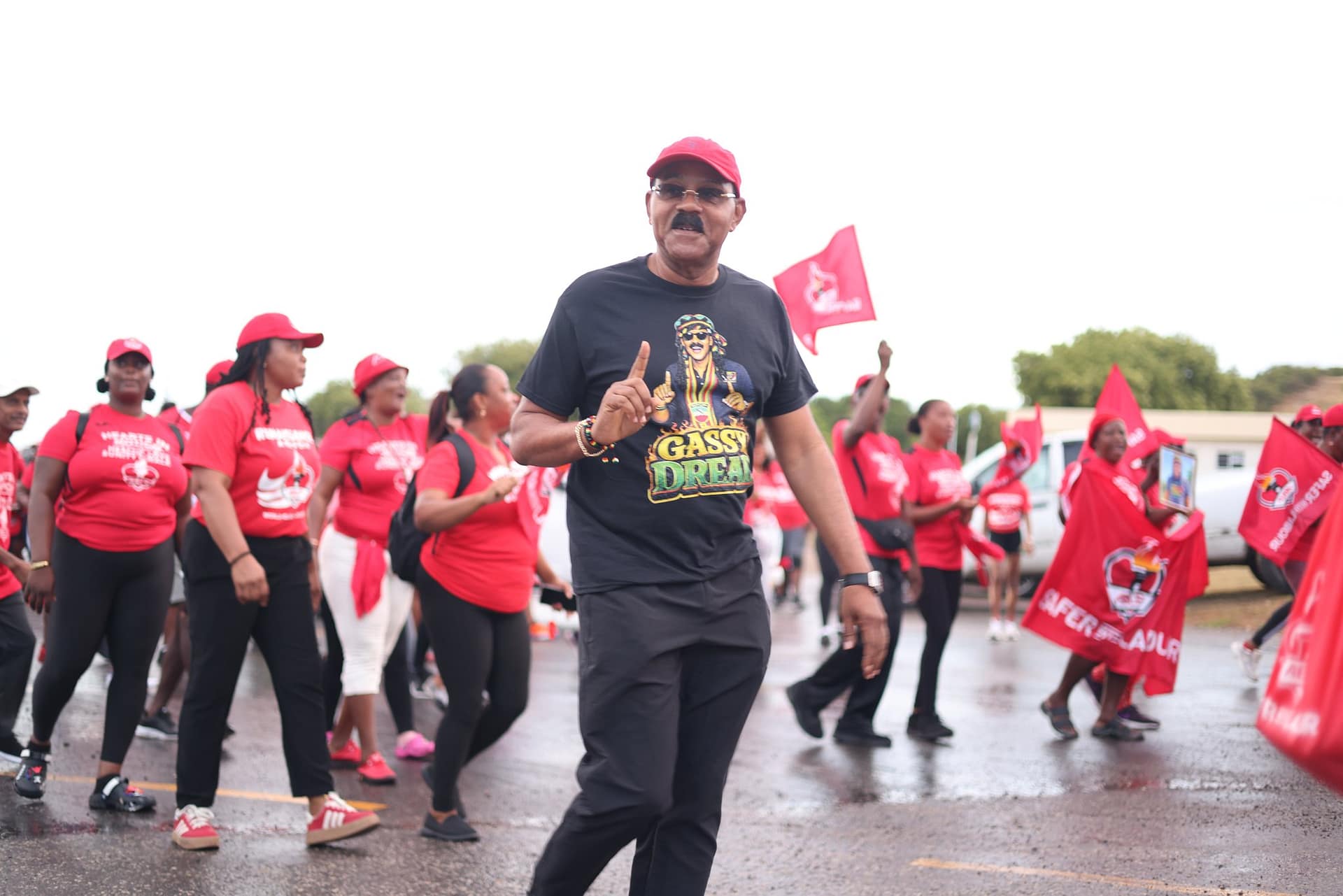
    On a recent Saturday, scores of Antiguans and Barbudans from across the twin-island nation turned out to walk alongside Prime Minister Gaston Browne for the “Follow the Leader” Health Walk, a public initiative designed to push for healthier daily habits and strengthen connections between community members. Unlike isolated fitness events that draw only dedicated exercise enthusiasts, this gathering brought together supporters of all ages and backgrounds, turning a scheduled stroll along a pre-planned route into both a gentle physical activity and a visible display of national unity.

    Opening remarks from Browne celebrated the unexpectedly strong turnout, with the prime minister emphasizing the well-documented link between consistent, routine physical activity and lower rates of preventable, lifestyle-linked chronic illnesses that strain national public health systems. Browne stressed that the benefits of events like the Health Walk extend far beyond the single day of activity, urging attendees to integrate regular movement into their weekly routines rather than only participating in one-off organized wellness gatherings.

    This walk is not an isolated project, Browne noted: it forms one piece of a broader, government-led push to improve population-level health outcomes across Antigua and Barbuda. The prime minister closed by calling on all citizens of the nation to continue “walking together” – both literally, through ongoing physical activity, and collectively, as a community working toward the shared goal of a healthier population. Organizers confirmed that the “Follow the Leader” Health Walk is just the first in a slate of planned programs that will pair public wellness education with opportunities for cross-community engagement across the country in the coming months.

  • LETTER: Impact over noise: Inside Maria Browne’s Relentless Drive to Deliver for St. John’s Rural East

    LETTER: Impact over noise: Inside Maria Browne’s Relentless Drive to Deliver for St. John’s Rural East

    In the modern political landscape of Antigua and Barbuda, where voter distrust in elected officials has grown amid widespread perceptions that politicians only show up for election season, one candidate has emerged as a clear standout: Minister Maria Browne, the Antigua and Barbuda Labour Party nominee for the St. John’s Rural East constituency. Far more than just a politician with untapped potential, Browne has already built a robust, well-documented track record defined by consistent performance, disciplined governance, and an unwavering dedication to advancing national development. Unlike many public figures who rely on grand rhetoric and viral spectacle to build their profiles, Browne’s legacy is rooted in years of quiet, relentless, outcome-focused work that spans critical sectors from infrastructure expansion to community uplift, youth empowerment and social progress.

    Browne’s impact on infrastructure development across the country is unmatched in its scope and ambition. Her work extends far beyond the borders of her St. John’s Rural East constituency, reflecting a coordinated, nation-first approach to improving connectivity and quality of life for all Antiguans and Barbudans. One of her flagship ongoing projects is the full redevelopment of All Saints Road, a transformative initiative backed by extensive planning and major public investment that will reshape one of the country’s most critical transport corridors. Beyond this landmark project, Browne has overseen upgrades to roads and public facilities in communities across the nation, including Cassada Gardens, Potters, Piccadilly, Lightfoot, Seatons, and Newfield. She has also prioritized foundational utilities beyond transport, recognizing that long-term community resilience depends on reliable basic services. Under her leadership, new water lines were installed in the Cedar Valley area, a forward-thinking investment that addresses both current access gaps and future water security for the region.

    At the local level, Browne’s work centers on building stronger, more connected communities through targeted public space investments. In St. Johnson’s Village, she championed the creation of a new outdoor gym and public playground, giving local families and children a safe, welcoming space to gather and stay active. She also led a comprehensive upgrade to the multi-use community facility at Cassada Gardens Triangle, transforming the underused space into a hub for collective activity that strengthens social bonds and fosters neighborhood unity.

    Yet Browne’s most consequential and defining investment is in people, particularly the younger generation that will shape Antigua and Barbuda’s future. To date, she has issued more than 100 scholarships to local youth, removing financial barriers to higher education and opening pathways to meaningful, long-term careers. This initiative is far from a one-off political gesture; it is a strategic investment in human capital, rooted in the core belief that a skilled, empowered population is the true foundation of national progress. Her commitment to supporting children extends across the year, with structured, enriching holiday camps hosted during Christmas, Easter, and summer breaks. These camps do more than provide recreational activities: they offer young people access to guided programming, stable supportive environments, and opportunities many would not otherwise have, creating lasting positive memories and life-changing experiences for attendees from all backgrounds.

    In her role as Minister of Housing and Works, Browne has extended this people-first approach to expanding access to affordable land and homeownership. By breaking down barriers to purchasing property and securing stable housing, she has directly improved quality of life for hundreds of families, equipping them to build long-term, secure futures for themselves and their children.

    What sets Browne apart from many of her political peers is that none of these initiatives were driven by political expediency. Every project, every scholarship, every community program has been delivered quietly, consistently, and with clear intentionality, guided by her core principle: people must always come before politics. In an era where public trust in political representation is at a historic low, Browne stands as a beacon of hope for constituents, who have seen her remain present, accessible, and responsive to community needs from her first day in office, not just in the lead-up to elections. Her deep, genuine connection to the people of St. John’s Rural East is reflected in every decision she makes. For voters, Browne’s track record makes one thing unmistakably clear: effective leadership is not measured by the promises candidates make on the campaign trail, but by the tangible, lasting results they deliver every single day.

  • PM Browne Says ABLP Launch Crowd Signals Stronger Support Than 2023

    PM Browne Says ABLP Launch Crowd Signals Stronger Support Than 2023

    As Antigua and Barbuda gears up for its upcoming general election, Prime Minister Gaston Browne is projecting confident momentum for his governing Antigua and Barbuda Labour Party (ABLP), pointing to dramatically higher turnout at the party’s recent official campaign launch than in the last election cycle.

    Browne shared his assessment during an appearance on the locally broadcast *Browne and Browne Show*, where he broke down his observations of the well-attended event. According to the prime minister, the number of supporters who gathered for this year’s launch was at least double the size of the crowd that turned out for the ABLP’s 2023 pre-election kickoff. He called the 2024 launch “epic”, noting that the energy in the room set it apart from previous campaign events.

    “The atmosphere was electric,” Browne described, emphasizing that the palpable excitement among attendees signals growing grassroots backing for the incumbent party ahead of the upcoming vote. He reiterated that the scale of turnout makes clear the ABLP holds broader support than it did entering the 2023 general election.

    A key part of this year’s campaign reboot, Browne explained, is the introduction of 10 first-time ABLP candidates. The addition of new faces is a deliberate strategic move to refresh the party’s legislative roster and tap into the growing influence of younger generations of voters, by bringing fresh talent into the political fold.

    With the anticipated general election drawing closer, all competing political parties across Antigua and Barbuda have begun ramping up their outreach and campaign activities. The ABLP will continue rolling out its campaign agenda and engaging with constituents over the coming weeks as the country moves toward election day.