博客

  • TTPS targets gang activity

    TTPS targets gang activity

    A recent uptick in violent criminal activity across multiple police jurisdictions in Trinidad and Tobago has pushed the country’s national law enforcement agency to overhaul and reinforce its crime reduction strategies, including ramping up uniformed patrols across high-risk areas, according to senior law enforcement official Suzette Martin. Martin, who serves as Deputy Commissioner of Police for Operations, outlined the updated action plan in an official media statement released Wednesday, noting that the Trinidad and Tobago Police Service (TTPS) has documented a wave of isolated violent incidents across the country over the previous 14 days.

    “In direct response to these developments, we have conducted a full review of our existing crime-fighting frameworks and strengthened our operational protocols, expanding our on-the-ground presence through our ongoing ‘Steady the Guard’ public safety initiative,” Martin stated in the release. “While early operations under this revised plan have delivered measurable progress, we do not underestimate the scale of the challenge ahead – there is still critical work to be done to reverse this recent trend.”

    The TTPS is rolling out a comprehensive, intelligence-led multi-pronged strategy to curb violent crime, with a core focus on addressing the root drivers of illegal activity, most notably organized gang activity. Leveraging targeted anti-gang operations and the expanded legal authority granted under the country’s current state of emergency, law enforcement teams are actively working to disrupt the day-to-day operations of criminal groups and dismantle transnational and local organized crime networks, Martin explained.

    To further improve operational effectiveness, the TTPS has also upgraded the analytical capabilities of its Crime and Problem Analysis Branch. This investment, Martin said, is already enhancing the agency’s ability to map emerging crime patterns, distribute personnel and resources to high-need areas more efficiently, and deploy proactive, preventive interventions that stop violent incidents before they can occur.

    On the ground, operational activities have been ramped up significantly: high-visibility policing has been intensified, with more patrols deployed along major transportation corridors and residential communities, paired with consistent roadblock operations and joint missions that bring together the TTPS’ specialized tactical units. Priority operational targets include intercepting illegal firearms shipments, breaking up gang activities, and disrupting cross-border and local narcotics trafficking operations.

    Martin also emphasized the critical role of inter-agency cooperation in the TTPS’ strategy, highlighting ongoing coordinated work between the police service and other key national security bodies, including the Trinidad and Tobago Defence Force, the national Prison Service, the Immigration Division, and the Customs and Excise Division. “These cross-agency partnerships enable synchronized operations and improved real-time intelligence sharing that makes all of our work more effective,” she noted.

    Beyond collaboration with other government agencies, Martin stressed that ongoing partnership with the general public remains a cornerstone of the TTPS’ long-term crime reduction goals. “We recognize that effective public safety cannot be delivered by law enforcement alone – it requires active buy-in and cooperation from the communities we serve. To that end, we have expanded our community-led intervention programs,” she said. “These initiatives are instrumental in lowering the risk of retaliatory gang violence and building lasting cooperative relationships between police and local residents.”

    The TTPS also places strong emphasis on strategic communication as a tool to shape positive public behavior, build long-term trust between law enforcement and communities, and drive sustainable social change, Martin added. “We are clear that no single strategy on its own can solve this national challenge. Enforcement action without public trust will never deliver meaningful, long-term results, and community engagement without robust enforcement fails to create the deterrence needed to stop criminal activity. This balanced approach is the foundation of our operational philosophy,” she explained.

    Closing out the statement, Martin reaffirmed the TTPS’ unwavering commitment to public safety on behalf of the national community. “As Deputy Commissioner of Police (Operations), I give this assurance to the people of Trinidad and Tobago: the TTPS remains steadfast in our mission to protect and serve our nation with pride,” she said. “We will continue to leverage modern, data-driven policing strategies, strengthened cross-sector partnerships, and community collaboration to drive down violent crime and make every community across our country safer.” She reiterated that the TTPS’ multi-layered, intelligence-centered approach is designed to tackle both the immediate incidence of crime and its deep-rooted underlying causes.


  • Ghany: Pnm let bills slip despite easy path

    Ghany: Pnm let bills slip despite easy path

    For more than 20 years, campaign finance reform has stood as a rare point of cross-party consensus in Trinidad and Tobago’s legislative landscape. Yet despite holding executive power for nearly a full decade, the former People’s National Movement (PNM) administration never managed to turn that long-held agreement into binding law — a failure that prominent political analyst Professor Hamid Ghany says was entirely avoidable.

    The question of reform jumped back into public discourse earlier this year, after PNM deputy political leader Senator Sanjiv Boodhu publicly called on the current sitting government to table new campaign finance reform legislation during an April 1, 2026 press appearance outside Parliament. In a recent interview with the *Sunday Express*, Ghany pushed back on Boodhu’s call by highlighting the PNM’s own history of inaction on the file, when the party held the votes and authority to pass the reform itself.

    Ghany explained that during both the 2015–2020 and 2020–2025 parliamentary terms, the PNM government tabled draft amendment legislation targeting campaign finance via changes to the long-standing 1967 Representation of the People Act. Crucially, amending this existing law only required a simple parliamentary majority — a threshold the PNM held, meaning opposition parties could not have blocked the measure even if they had united to oppose it. Despite this clear path to passage, both versions of the bill lapsed before coming to a final vote. Ghany emphasized that no external barrier stopped the legislation: “Something else stopped it.”

    Beyond the PNM’s failure to advance the bill, Ghany pulled back the curtain on extra provisions tucked into the 2020 iteration of the amendment that went far beyond basic campaign finance regulation. One controversial section, 30AS, would have mandated strict new rules for pre- and post-election political coalitions: any alliance of two or more registered parties would have to file a formal, signed coalition agreement with the Elections and Boundaries Commission (EBC) at least three months before a general election for pre-election pacts, or within 21 days of signing for post-election coalitions. All member parties would also be required to maintain their separate registered status under the law.

    Ghany noted that these rules directly intruded on core political decision-making for parties. If the bill, which lapsed in 2020, had been reintroduced and passed before the 2025 general election as planned, the long-standing coalition arrangement of the opposition United National Congress (UNC) would likely have violated the new requirements.

    The bill also overstepped its original mandate in its regulation of media coverage during election campaigns, Ghany argued. Provisions 43A and 43B would have repositioned the EBC as a formal media regulator for both state and private outlets during election cycles. Under 43A, all registered parties and candidates would be guaranteed access to state-owned print and electronic media on terms no less favorable than those granted to any other group. Direct-access political programming would be required to air in high-visibility time slots to maximize audience reach, and state media would be legally mandated to maintain strict balance and impartiality in all political coverage. The bill classified disproportionate access to state media by one party as an illegal in-kind donation from an unauthorized source, and granted the EBC power to set binding guidelines for airtime allocation across all state outlets.

    For non-state private media, 43B would have imposed similar non-discrimination rules: outlets would have to offer airtime to all parties and candidates on equal pricing terms, and the EBC would be given authority to cap the total amount of airtime any outlet could sell to a single party or candidate. This would have put the EBC in control of a core revenue stream for private media companies, for whom campaign advertising is a critical source of income during election cycles.

    In his assessment, Ghany concluded that the PNM’s two failed attempts at reform ultimately failed because the party overreached, choosing to insert regulation of internal party coalition strategy and private media business into a bill that was meant only to address campaign finance. Instead of advancing the long-sought consensus on reform, the extra provisions ultimately derailed the entire legislative effort, leaving the issue unaddressed for the entirety of the PNM’s decade in power.

  • It was a slip-up

    It was a slip-up

    Tragedy has struck twice in just days across Trinidad and Tobago, following the jet ski collision death of 7-year-old Angelica Saydee Jogie in Tobago waters. The latest child water safety incident saw 6-year-old Skylar Gabriel, a child with high-functioning autism, hospitalized in critical condition after a near-drowning at a public pool in Gasparillo’s Bumper Jumperz Fun Park on Friday.

    After the accident, Skylar was admitted to the Intensive Care Unit at San Fernando General Hospital (SFGH), where as of Sunday, medical updates showed encouraging signs of improvement. The young girl was submerged for multiple minutes in 4 feet of water before being pulled out, and her ventilator support has increased from 35% to 50% as her breathing stabilizes. Skylar’s parents, Desire Walters, a firefighter, and Sheldon Gabriel, a fire service officer, confirmed their daughter’s condition is “looking up” during a visit from the *Sunday Express*.

    Walters pushed back against unkind online speculation from social media users unfamiliar with their family, emphasizing her commitment to her daughter’s safety as the parent of a child with autism. “As a mother of a child with autism, you always have to be looking here and there, 24/7,” she said, acknowledging the incident was an unforeseen slip-up. The couple explained they had turned their backs to unpack supplies for their daughter moments after arriving at the park, and Skylar, who is familiar with water park routines, walked straight to the pool. “It happened quickly. It was a slip-up,” Walters added.

    The family also pointed out critical safety gaps at the facility: unlike other water parks Skylar has visited, Bumper Jumperz Fun Park provided no complimentary life jackets and had no on-duty lifeguard at the time of the accident. Gabriel, who performed CPR on his own unresponsive daughter after locating her, described a disturbing delay in response from park staff. For several minutes, he and Walters searched the facility for Skylar without any assistance from employees or other guests. “We told the staff she was missing, but the music continued playing. It was only after she was found that the staff came running,” he said. As a trained emergency responder, Gabriel said blocking out all surrounding chaos to administer CPR to his own child was an experience no parent should ever have to endure. “Right now, my child is looking up and that is what I’m focused on,” he added.

    Closed-circuit television footage from the facility, which police have already taken possession of and the *Sunday Express* reviewed, offers a clear timeline of the accident. The nearly 10-minute recording shows Skylar, unprotected by any flotation device, playing alone in the children’s pool while her parents sit with their backs turned roughly 4 feet away under a shaded tent. Around the one-minute mark, Skylar leaves the shallow children’s pool, climbs the stairs to the water slide leading to the deeper adult pool, rides down, and submerges without re-emerging. Her parents begin searching a minute later, and their search extends for several minutes before she is located. Approximately 40 guests were present in the pool area at the time, with other adults supervising their own children using the same slide.

    Local police confirmed that after Skylar was pulled from the 45-foot by 20-foot pool (which ranges from 3 to 5 feet deep), Emergency Health Services responded, detected a pulse, and rushed the child to SFGH for urgent ICU care.

    In a statement to the *Sunday Express* at the park Sunday, an unnamed spokesperson for Bumper Jumperz Fun Park – which has operated for 15 months without a prior serious incident – said the accident is deeply concerning, but emphasized that parental supervision is the primary responsibility for child safety at the facility. The spokesperson confirmed the park has been without a full-time lifeguard for three weeks while actively recruiting for the role, and that clear signage is posted throughout the property notifying guests of the lack of on-duty lifeguards and requiring parents to accompany children at all times. He added that two pool monitors were on staff the day of the accident, and that the team was not notified in advance that Skylar was autistic, though staff have experience working with neurodivergent children.

    The spokesperson also noted that flotation devices and life jackets are available for purchase at affordable prices starting at $30, and that the park’s emergency protocol was not activated because staff were never alerted that Skylar was missing until after she was found. “We have steps in place that if an alarm is raised, we sound the horn, we pull everyone from the pool and we conduct a thorough search,” he explained. Operations continued at the park Sunday, and the spokesperson said the team has reached out to Skylar’s family and is praying for her full recovery, while urging all parents to maintain constant vigilance when their children are near water, especially for children with special needs.

    This latest incident comes as communities across Trinidad and Tobago are already reeling from the death of 7-year-old Angelica just two days prior, reigniting public debate over water safety regulations and enforcement at public recreational facilities across the twin islands.

  • Pigeon Point tragedy  highlights deadly pattern

    Pigeon Point tragedy highlights deadly pattern

    The coastal paradise of Trinidad and Tobago’s Pigeon Point Heritage Park has once again been the site of a devastating watercraft tragedy, claiming the life of 7-year-old Angelica Jogie last Wednesday. The young girl’s death after being struck by an out-of-control jet ski is far from an isolated incident—it marks the latest entry in a decades-long pattern of preventable water-related deaths and injuries that have plagued the island nation’s popular coastal recreation areas. This newest tragedy has drawn immediate connections to a near-identical incident at the exact same beach that occurred 17 years earlier, exposing persistent gaps in safety regulation that have gone unaddressed despite clear court orders.

    In 2007, a runaway pirogue crashed into two teenage vacationers—17-year-old Yanik Quesnel from Trinidad and Tobago and his girlfriend Ana Carolina Barry-Laso, a Spanish national—who were swimming off Pigeon Point. The collision left Quesnel permanently paralyzed, prompting a years-long legal battle that held both the Tobago House of Assembly (THA), the local governing body, and Pigeon Point Heritage Park Ltd, the company that manages the park, responsible for visitor safety.

    In the 2010 ruling, Justice Judith Jones blasted the two entities for their failure to address a known hazard to swimmers. The judgment explicitly found that THA and the park operator had breached their duty of care to visitors by failing to keep large watercraft far from swimming shorelines and failing to install clear warning signs for beachgoers. Jones further noted that the teen victims had exercised reasonable caution for their own safety and were legally entitled to expect proper safety protections from the managing authorities.

    In a public news conference held the same night of Angelica Jogie’s death, THA Chief Secretary Farley Augustine referenced the 2010 ruling, which found the assembly liable for the 2007 harm. He framed the newest tragedy as a consequence of rule-breaking by watercraft operators, but public records show that even after the landmark court ruling, safety reforms have been slow to stop recurring incidents.

    Within a year of the 2010 judgment, THA implemented a ban on all recreational watercraft use at two popular Tobago beaches: Store Bay and Buccoo. Then-Environment Secretary Hilton Sandy stated at the time that the ban was explicitly intended to curb harm from reckless watercraft operation, allowing only jet skis operated by the Tourism Division for rescue purposes to operate in the restricted areas. Yet despite this initial policy change, dangerous watercraft incidents have continued to claim lives and cause severe injury across coastal areas of Trinidad and Tobago year after year.

    A review of incident records reveals a disturbing pattern of unstopped harm: In 2010, Tobago resident Andell Roberts died in hospital after losing consciousness while attempting a stunt on his personal jet ski. Two years later, three American visitors—40-year-old Racquel Welch, her 13-year-old daughter Paige Welch, and their relative Lance Aqui—suffered devastating injuries when a pirogue linked to the Trinidad and Tobago Regiment crashed into their kayak at Scotland Bay in Chaguaramas, splitting the small watercraft in half. Paige Welch’s left arm was nearly severed in the collision, and all three victims required hospitalization. Later that same year, 17-year-old Angel Superville died in a jet ski accident at the same bay, in what was only his first time operating the watercraft. He collided with a tow rope connecting a larger boat to a dinghy, and the force of the impact threw the teen—who was wearing a life jacket and remained conscious immediately after the crash—into the water, where he succumbed to his injuries.

    In 2014, 26-year-old Sheriza Ramdath was killed at Spring Bridge in Moruga when she lost control of her jet ski and crashed into a mangrove, dying at the scene of the accident. Her brother suffered severe head and facial injuries in the same crash. Four years later, another young life was lost at Pigeon Point: primary school student Shem Murray died two days after his jet ski hit an underwater coral formation, throwing him from the vehicle. He was transferred from a local Tobago hospital to a facility in Trinidad for advanced care, but could not be revived. That same year, 35-year-old fisherman Sheldon Guerra died off Los Iros when another vessel broadsided the fishing boat he was sharing with four crewmates, who had stopped to retrieve a fishing net. The collision happened in darkness, overturning both boats and throwing all passengers overboard, killing Guerra.

    More recent incidents continue the trend: In October 2022, a lifeguard required emergency medical care after being struck in the head by a fishing boat while swimming off Maracas Bay. Just last year, 21-year-old Mathias Jerry went missing after a jet ski accident near Tobago’s No Man’s Land; his body was later recovered from submerged waters.

    Angelica Jogie’s death has renewed calls for urgent action to enforce existing safety regulations and close gaps that have allowed decades of preventable harm to affect both local residents and visiting tourists at some of the nation’s most popular beach destinations.

  • Better pay, faster growth

    Better pay, faster growth

    A growing exodus of nursing professionals from Trinidad and Tobago is being driven by uncompetitive pay, blocked career advancement, and unsafe working conditions, according to first-hand accounts from three nurses who have recently relocated for jobs in the United States and United Kingdom. All three secured their overseas roles through international recruitment agencies, a pathway they describe as more cost-effective and streamlined than other hiring channels.

    Darius Mollineau, a former psychiatric nurse with Trinidad’s North West Regional Health Authority (NWRHA), left for the United Kingdom in 2021, citing a complete lack of upward professional mobility as his core motivation. Before departing, Mollineau had completed specialized training to work as a District Health Visitor and served in an acting capacity in the role for three full years. Only after he made the decision to migrate was the permanent position offered to another candidate, a missed opportunity Mollineau calls disheartening.

    What disturbed him most, he says, is the widespread culture of extended acting appointments across Trinidad’s public health system, where some staff wait as long as nine years to have their positions made permanent. “I was like, I’m not going to be stuck in that holding pattern for that long. Even now it’s not my turn, I don’t want to be that person five, six years from now still stuck in an acting role,” he explained.

    Today, Mollineau works at a hospital near Birmingham, England, where he has risen to a management role in just three years – a progression he says would be unheard of in his home country. He credits the foundational training he received at NWRHA for his success, but notes that the UK healthcare system offers far clearer pathways to transition into specialized roles such as nursing assessor or prescriber, with opportunities that are far more accessible for frontline staff.

    When asked if he would ever consider returning to Trinidad and Tobago, Mollineau says he is open to the idea – but only after major systemic changes are made. Most urgently, he points out that nurses in the country are still being paid according to a 2013 salary scale, a frozen pay structure that has not been addressed in the five years since he left. “If salaries are adjusted to what nurses actually deserve, that would be a real incentive to come back,” he said. Though he has experienced repeated racism during his time working in the UK, he says his significantly higher pay offsets the disrespect he has encountered. He added that nurses in Trinidad are also undervalued by patients and hospital visitors, on top of being drastically underpaid. Beyond salary, Mollineau says expanded investment in ongoing professional development is a non-negotiable requirement for him to return home, noting that UK nurses are required to complete regular updated clinical training every three years to maintain their practice, a standard that is not enforced locally.

    For Marcia Baptiste, a 17-year veteran nurse who worked with Trinidad’s South West Regional Health Authority (SWRHA) before moving to a New York City hospital in 2023, the decision to migrate came down to a search for financial stability and faster professional growth. “Back home, you get your pay check and it’s gone before you know it. I was looking for more long-term financial security, and moving here has really turned that around for me,” she explained.

    Beyond higher wages, Baptiste says overall working conditions are far better in New York, though she does note one downside: a 30-minute lunch break, compared to the one-hour break she received at SWRHA. She acknowledges that nurses in New York still face systemic challenges – pointing to the January 2024 strike of 15,000 nurses across three city hospitals, who walked out demanding safer staff-to-patient ratios, improved benefits, and protections from workplace violence. But even with those shared challenges, she says professional advancement is far less bureaucratic in the U.S. “Back in Trinidad, you have to cut through endless red tape to move up. Here, once you have the required certification, you can climb the ladder very quickly,” she said.

    As a single parent of two, Baptiste admits the transition to the U.S. was difficult at first, and she has faced implicit bias from patients who have questioned her competence based on her skin tone. She draws a parallel between this anti-Black bias abroad and the widespread stigma and undervaluing of nurses that is common in Trinidad. Baptiste, who plans to earn a specialized certification in chemotherapy administration – a program that is partially funded by her New York hospital – says the scope of nursing practice is also far broader in the U.S. than in her home country. “Back home, nurses rely on doctors for almost every decision. Here, we have real autonomy. If you’re certified to do a procedure, you do it, and the hospital will invest in training you to get that certification,” she explained. In the U.S., advanced practice registered nurses like nurse practitioners can diagnose conditions, order diagnostic tests, and prescribe medication, with many practice areas operating as nurse-led care models where patients only see a doctor for complex emergency cases.

    Like Mollineau, Baptiste says she would consider returning to Trinidad eventually, and wants to come back to work in a management role after gaining international experience. But she echoes the concern that inadequate pay that does not match advanced skills and specializations would keep her away. While she does not support the long-term brain drain of Trinidad’s nursing workforce, she encourages young local nurses to gain international experience before returning home to share their new skills and knowledge.

    The third nurse, a former employee of the North Central Regional Health Authority (NCRHA) who requested anonymity to protect her family back home, left Trinidad one year after graduating from the University of the Southern Caribbean in 2019, and has since worked in the UK and is currently seeking a permanent role in the southwest U.S. She cites systemic nepotism and favoritism as the core drivers of her decision to leave, explaining that hiring for permanent roles at regional health authorities is not based on qualifications, but personal connections. “Whether you have a bachelor’s degree versus an associate degree doesn’t make a difference. The only thing that matters is who you know,” she said.

    She also describes a contradictory cycle where hospital management constantly complains about understaffing, yet claims there are no open permanent positions. After months of waiting, she was only offered a 10-month fixed-term contract. As a new graduate nurse, she describes her early experience on the job as dangerously overwhelming, with no formal mentorship or support system for early-career staff. In her first few days working on a cardiac ward, she was assigned to work night shifts completely alone after just three days of on-the-job experience, a situation she found terrifying as a new nurse. “Back here in the U.S. and UK, each nurse is responsible for four to six patients maximum. Back there, I was expected to cover an entire ward alone with no support,” she explained. That experience led her to resign from the position and pursue work abroad.

    Unlike the other two nurses, she has no plans to return to Trinidad, with rising crime being another major factor in her decision to stay overseas. She notes that advanced education opportunities for nurses are also far more accessible abroad: next year, she will begin a nurse practitioner graduate program, a path she says would not have been possible for her in Trinidad, where management is rarely supportive of staff pursuing master’s or doctoral level training. She encourages other Trinidadian nurses to take the opportunity to work abroad, calling it one of the most life-changing and career-enhancing steps they can take.

  • Sturge promises campaign finance reform

    Sturge promises campaign finance reform

    After two decades of broken pledges, unfulfilled proposals, and stalled parliamentary efforts, campaign finance reform has re-emerged as a central political flashpoint in Trinidad and Tobago, with the newly elected United National Congress (UNC) government reaffirming its commitment to turning decades of talk into tangible action.

    In an interview with the *Sunday Express* last week, current Defence Minister Wayne Sturge made clear that overhauling the nation’s opaque campaign financing rules is a top priority for the new administration. Sturge, who won the Toco/Sangre Grande seat in the April 28, 2025 general election before his cabinet appointment, drew a sharp contrast between the UNC’s promise and the track record of former Attorney General Faris Al-Rawi, who he claimed repeatedly pledged reform during his 2010–2015 Senate tenure but failed to deliver over the following 10 years. “Our party campaigned on this reform, and we intend to keep every promise laid out in our manifesto,” Sturge stated.

    The resurgence of this debate comes amid fresh controversy tied to Sturge’s own election bid. Recent circulation of old photos on social media showing Sturge with slain Sangre Grande businessman Danny Guerra has sparked new unsubstantiated claims that Guerra funded Sturge’s 2025 campaign. While Sturge has declined to directly address these allegations, senior UNC officials have formally refuted the claims. The opposition People’s National Movement (PNM) deputy leader Sanjiv Boodhu has also pointed to the Guerra allegations to back his own call for mandatory campaign finance legislation.

    The issue of unregulated political financing has lingered in Trinidad and Tobago’s political landscape for generations, with persistent public warnings that undisclosed donations create open pathways for corruption. Critics warn that hidden funding can lead to biased awarding of multi-million-dollar government contracts to major political donors, and millions of dollars in unreported contributions from unnamed individuals and corporations are widely believed to flow into national election cycles annually. Currently, individual candidates face a $50,000 cap on direct campaign spending, but a loophole in the Representation of the People Act allows unlimited third-party contributions for political events, advertising, and party materials—with no requirement to disclose the source of these funds. This gap has left the political system lacking basic transparency and accountability for campaign spending.

    The current push for reform follows a call from the Trinidad and Tobago Transparency Institute (TTTI) last month, which urged the new government to move quickly to enact long-overdue legislation. TTTI’s intervention came after Prime Minister Kamla Persad-Bissessar made explosive allegations that illicit drug money funded the construction of the PNM’s national headquarters, Balisier House. Both major political parties have faced sustained public criticism for their shared failure to enforce transparency around campaign funding sources over the years.

    To understand the depth of this policy gridlock, a look back at 20 years of failed efforts makes clear how repeatedly reform has been promised then abandoned:

    In October 2006, then-opposition UNC MP Ganga Singh for Caroni East tabled a parliamentary motion calling for the creation of a special select committee to draft a framework for party registration and contribution disclosure. The motion was immediately shut down by the ruling PNM government led by then-Prime Minister Patrick Manning.

    Three years later, in February 2009, independent Senator Dr Ramesh Deosaran introduced a private Senate motion calling for a Joint Select Committee (JSC) to develop binding legislation to govern campaign financing. Though the motion received backing from the then-opposition UNC, it failed to win support from the ruling PNM and did not advance.

    When the People’s Partnership coalition led by Kamla Persad-Bissessar took power in 2010, campaign finance reform was named a core first-term priority. The administration’s manifesto pledged to introduce legislation for party registration and funding oversight, to be managed by an independent regulatory body. In November 2014, a JSC chaired by Wade Mark was established to deliver a draft framework within six months. The committee’s final report highlighted the legal loophole that allows unlimited third-party spending to bypass candidate expenditure caps, and put forward a comprehensive set of recommendations: capping private donations to limit undue political influence, introducing mandatory full disclosure of all political loans, creating a system of public campaign funding to reduce reliance on wealthy private donors, imposing overall caps on total campaign spending to ensure a level playing field, and regulating third-party spending while protecting free political expression. Ahead of the 2015 general election, Persad-Bissessar pledged her government would implement the JSC’s recommendations if re-elected, but the UNC lost the poll, and the proposal was sidelined for the next decade.

    The PNM, which held power from 2015 to 2025, also made repeated public commitments to reform during its tenure. In its first 2015–2020 term, the Keith Rowley-led administration attempted to advance reform via amendments to the Representation of the People Act. A new JSC was appointed to review the Representation of the People (Amendment) Bill, which aimed to crack down on unregulated hidden funding, prevent corruption and money laundering, and restrict incumbent governments from using state resources to boost election campaigns. Despite being introduced early in the parliamentary term, the bill faced lengthy delays and never came to a vote before the term ended.

    In 2020, Rowley again pledged to bring the bill back to parliament, referring it to a JSC chaired by former government minister Camille Robinson-Regis in a bid to secure cross-party and independent support. Rowley argued at the time that existing laws created unfair advantages for incumbent governments, which could leverage public resources to supplement candidate spending, and that the public had a right to know who was funding political parties and candidates. Despite his claim that his government was the first to have the “fortitude” to deliver on the promise of reform, the bill ultimately lapsed in committee and was never passed, leaving the promise unfulfilled once again.

    Now, with a new UNC administration in power, stakeholders across the political spectrum are watching closely to see whether this 20-year cycle of unkept promises will finally be broken.

  • From Sangre Grande to Long Island

    From Sangre Grande to Long Island

    More than three decades after a Trinidadian immigrant was brutally murdered as one of the first victims of Long Island serial killer Rex Heuermann, the long-buried family trauma that shaped her short life has finally come to light, revealing a tragic trajectory of violence, loss and broken dreams.

    Sandra Costilla, born Sandra Rajkumar in the small town of Sangre Grande, Trinidad and Tobago, was one of at least four women confirmed killed by Heuermann, a towering New York architect who targeted vulnerable women working in the sex trade along Long Island’s remote coast. Like many of Heuermann’s other victims, Costilla faced persistent economic instability that pushed her into survival sex work, making her an easy target for the killer who lured women with promises of cash before torturing, strangling and dismembering them, leaving their dismembered remains scattered across Long Island’s marshlands and remote shorelines.

    Costilla immigrated to the United States in 1982 at the age of 17, through a marriage of convenience with a U.S. Army soldier stationed at Schofield Barracks, Hawaii, arranged by her older half-brother Anthony, who had already settled in the U.S. Born to Ramkissoon “Ramki” Rajkumar, a well-known local police officer, and Milly Rattansingh, a skilled seamstress with a reputation for providing underground abortion services in mid-20th century Trinidad, Costilla — called Popo by her family and Sandy by her friends — experienced unthinkable violence from childhood that would shape the rest of her life.

    In June 1975, when Costilla was just 10 years old, her father Ramki arrived at the family’s Foster Road home carrying his service revolver, confronting Milly over allegations of infidelity. What followed that day was witnessed firsthand by Costilla’s 7-year-old younger brother Manny, who still carries vivid, traumatic memories of the massacre that left both his parents dead.

    “The bedroom door opened out into the living room area. I was standing there watching. I pi… myself,” Manny recalled in a 2024 interview, decades after the event. “They had to move me off that spot. I was frozen there. I saw everything. Ramki shot my mother. Sandra ran towards him and grabbed the gun. It went off and a bullet went straight through her right palm. After checking that my mother was dead, he put the gun to the side of his head and pulled the trigger.”

    Left orphaned, Costilla and Manny were bound by shared trauma that would haunt both of their lives for decades. Costilla long grieved the broken family she lost as a child, and after immigrating to the U.S., she struggled to build a stable life of her own, eventually spiraling into economic hardship and addiction that led her to sex work in New York. She was killed by Heuermann in November 1993, her remains dumped on Long Island like discarded meat.

    For Manny, the trauma of losing both parents as a child led to a life of instability, marked by brushes with the law, addiction, and incarceration on three separate occasions in the U.S. After being deported back to Trinidad, he currently awaits trial on a robbery charge in Arima, still consumed by grief and rage over his sister’s murder more than 30 years ago. Though he was never able to protect Costilla from their father’s violence as a child, or from Heuermann’s brutality nearly two decades later, he has never let go of his desire for revenge.

    “Her death destroyed me. It changed everything,” Manny said. “She died from blunt force trauma. I would like to blunt force trauma him! I want to stand over him and…” His words cut off, the pain of his loss still raw after more than 30 years.

  • VS-Iran onderhandelingen voorlopig gepauzeerd: grote meningsverschillen blijven bestaan

    VS-Iran onderhandelingen voorlopig gepauzeerd: grote meningsverschillen blijven bestaan

    After 14 hours of landmark direct negotiations hosted by Pakistan in Islamabad, the first round of high-level peace talks between the United States and Iran has wrapped up, with both sides agreeing to resume discussions at a later date to resolve outstanding sticking points. The talks, the first direct high-level encounter between the two nations in more than a decade and the highest-level meeting since Iran’s 1979 Islamic Revolution, aimed to end a six-week open conflict that has killed thousands and roiled global energy markets.

    As the region remains under a fragile two-week-old ceasefire, the outcome of these negotiations carries profound implications for the stability of global energy supplies, particularly through the Strait of Hormuz — the strategic chokepoint that carries roughly 20% of the world’s daily oil shipments, which Iran has effectively blocked since the start of the conflict. The six-week war has already sent global crude prices spiking and left thousands dead on both sides.

    In an early Sunday statement posted to the social platform X, Iran’s government confirmed the conclusion of the first round of talks, noting that technical teams from both delegations will now exchange drafted documentation. “Negotiations will continue despite a number of remaining differences,” the statement read, without providing a specific timeline for the resumption of talks. This account contradicts an earlier report from Iranian state television, which claimed talks would continue on Sunday.

    According to a source from Pakistan, which served as the neutral mediator for the talks, the US delegation was led by Vice President JD Vance, special envoy Steve Witkoff, and Jared Kushner — President Donald Trump’s son-in-law. They held a two-hour opening session with Iran’s top negotiators, including Parliament Speaker Mohammad Baqer Qalibaf and Foreign Minister Abbas Araqchi, before entering a recess. The Trump administration has not yet issued any official public comment on the outcome of the talks or the details of outstanding disagreements.

    In a symbolic demonstration of mourning, the Iranian delegation arrived in Islamabad on Friday dressed entirely in black. The gesture honored the recent passing of Iran’s Supreme Leader Ayatollah Ali Khamenei, as well as all Iranians killed during the conflict. Delegates also brought the shoes and bags of student victims killed in a US airstrike that hit a school adjacent to an Iranian military compound. The Pentagon has launched an investigation into the strike, which Reuters reports was almost certainly carried out by American forces. The Pakistani source added that the first day of talks saw shifting moods, with negotiations marked by fluctuating emotions amid deep-rooted mutual distrust.

    To secure the unprecedented diplomatic gathering, Pakistani authorities locked down large swathes of Islamabad, deploying thousands of paramilitary forces and regular troops across the capital. The hosting role marks a notable shift for Pakistan, which was widely sidelined in international diplomacy just one year ago.

    The status of the Strait of Hormuz has emerged as the central sticking point in negotiations. The US military announced it has been laying the groundwork to clear the strait of blockades, saying two US warships have already transited the waterway and mine clearance operations are underway. Iran has outright denied that any American military vessels have passed through the strait.

    Ahead of the talks, a senior Iranian official told Reuters that Washington had agreed to unfreeze billions of dollars in Iranian assets held in Qatar and other foreign banks, a claim that a senior US official immediately denied. Per Iranian state media and senior officials, Tehran’s core demands also include full Iranian sovereign control over the Strait of Hormuz, war reparations from the US, a region-wide ceasefire that includes clashes in Lebanon, and the right to collect transit tolls from commercial ships passing through the waterway.

    For the Trump administration, core negotiating goals have shifted over the course of the conflict, but the non-negotiable priorities remain guaranteed unimpeded transit for global commercial shipping through the strait, and the permanent disabling of Iran’s uranium enrichment program to prevent it from developing a nuclear weapon. Israel, the US’s closest regional ally which has participated in strikes on Iran and continues to bombard Hezbollah positions in Lebanon, has stated that its military campaign is not covered by the current US-Iran ceasefire.

    Despite the opening of diplomatic dialogue, decades of deep mutual suspicion between Washington and Tehran remain largely unaddressed, casting uncertainty over whether the current ceasefire will hold and whether a lasting peace deal can be reached.

  • The Dominican Republic has had two hydrometeorological events per year in the last decade

    The Dominican Republic has had two hydrometeorological events per year in the last decade

    Over the 30-year period spanning from 1995 to 2024, the Dominican Republic has recorded 75 major hydrometeorological events, with tropical depressions and storms making up the vast majority of these extreme weather occurrences, according to newly released data from the country’s National Statistics Office (ONE).

    The national statistical agency’s comprehensive analysis breaks down the makeup of these 30 years of weather events: 15 were classified as tropical depressions, 29 were categorized as tropical storms, and the third most common type was Category 1 hurricanes, which hit 10 times over the study period. When looking at more recent trends from the past 10 years, ONE found that the annual frequency of these hydrometeorological events has held steady, holding to an average of two recorded events per year.

    Beyond frequency and type, the data also highlights a clear seasonal concentration of extreme weather. More than 65% of all recorded events over the 30-year window occurred in just two months: August and September, aligning with the peak of the annual Atlantic hurricane season that impacts the Caribbean nation.

    Geographically, the impact of these events is not evenly distributed across the Dominican Republic’s provinces. ONE’s data identifies five provinces that have seen the highest number of hydrometeorological event trajectories between 1995 and 2024: La Altagracia leads with 8 recorded trajectories, followed by Azua with 7, and San Juan and Elías Piña tied at 6 each, with La Vega rounding out the top five at 5.

    In addition to mapping long-term weather trends, the 2024 data also sheds light on how Dominican households are preparing for extreme weather events. The statistical office reports that nearly 65% of households across the country took proactive preventive steps in 2024, reinforcing doors, roofs and windows when receiving alerts about incoming natural hazards.

    Other common preparedness actions taken by residents include securing loose furniture and household appliances (practiced by 20% of households), properly securing propane gas tanks to reduce risk (17.7%), relocating to the home of a family member or friend for safety (13.3%), and stockpiling emergency supplies and non-perishable food ahead of an event (12.5%).

  • COE reports more than 700 displaced people, isolated communities, and maintains alert for 26 provinces

    COE reports more than 700 displaced people, isolated communities, and maintains alert for 26 provinces

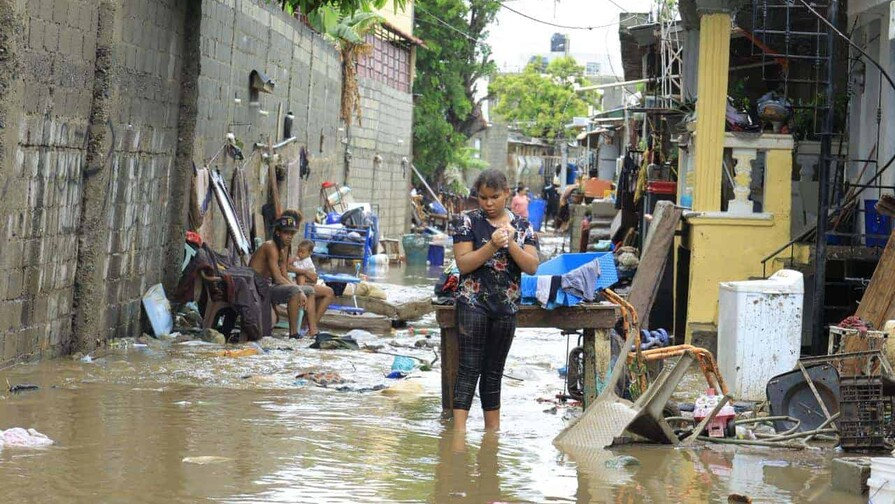
    Torrential rainfall that hit several northern and central provinces of the Dominican Republic Saturday night has triggered devastating flash flooding, leaving hundreds of residents displaced and disrupting critical infrastructure across the affected region, the nation’s Emergency Operations Center (COE) confirmed in an official update Sunday morning.

    In its latest situation bulletin, the COE detailed the widespread human and material toll of the disaster: across the hard-hit provinces of Puerto Plata, Monte Plata, Valverde, and María Trinidad Sánchez, the flooding has damaged 145 residential properties, forced 725 people from their homes, and left 167 residents taking temporary refuge in government-run emergency shelters. Twelve entire communities remain cut off from surrounding areas, blocked by floodwaters that have made local roads impassable.

    Beyond housing and displacement, the disaster has also triggered a major public health crisis by cutting off drinking water access for more than 113,000 users across the affected region. Seventeen regional aqueduct systems have been knocked out of commission by the heavy rains and flood damage, leaving vast swathes of the impacted population without access to safe running water.

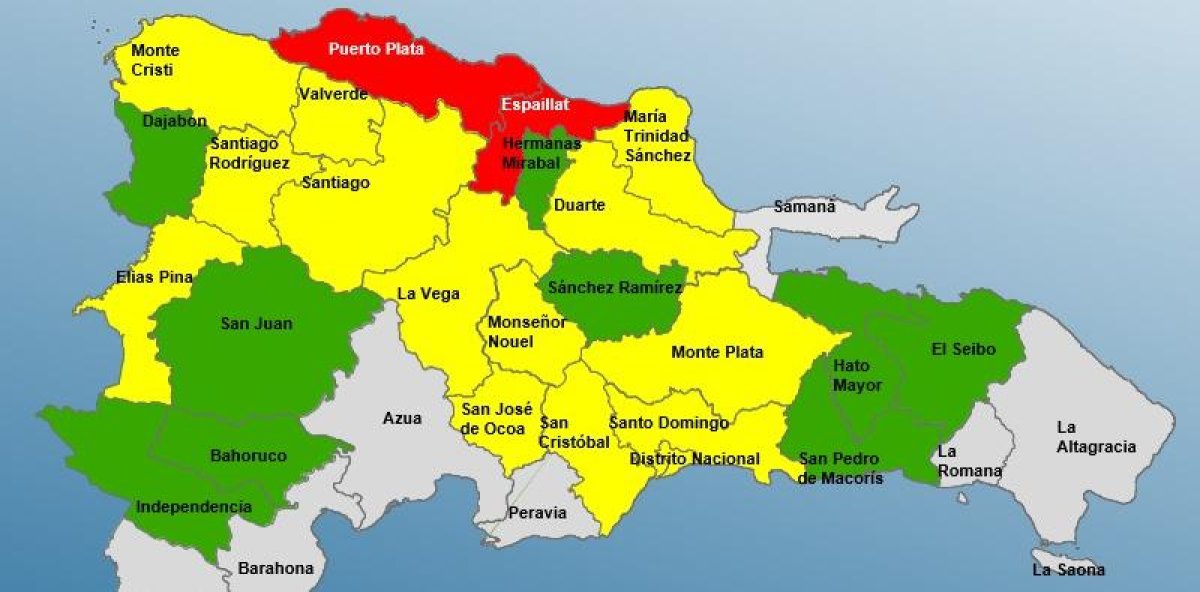
    In response to the ongoing hazard, the COE has activated its highest-level red alert for four of the most severely impacted provinces: Puerto Plata, Espaillat, María Trinidad Sánchez, and Valverde. The alert bars non-essential travel and mandates emergency response teams to remain on standby for rapid rescue and relief operations.

    An additional 15 provinces and administrative areas remain under lower-level yellow alert, warning residents of ongoing risks of flooding and landslides. The areas under yellow alert include Monseñor Nouel, Sánchez Ramírez, Santiago, La Vega, Monte Cristi, Elías Piña, Samaná, Santiago Rodríguez, San Cristóbal, Santo Domingo Province, the National District, Monte Plata, San José de Ocoa, Duarte – with particular focus on the high-risk Bajo Yuna region – and Hermanas Mirabal.