博客

  • Government of St. Kitts and Nevis Announces Discounted VAT Rate Days (DVRD) for 2026

    Government of St. Kitts and Nevis Announces Discounted VAT Rate Days (DVRD) for 2026

    BASSETERRE, Saint Kitts – On April 10, 2026, the Government of the Federation of Saint Kitts and Nevis officially announced the full annual schedule for its widely anticipated 2026 Discounted Value Added Tax (DVRD) Rate Days, a popular policy initiative built on the success of previous years that aims to inject momentum into the local economy and deliver tangible financial relief to the nation’s citizens and residents.

    The program has scheduled three separate discounted shopping windows across 2026, aligned with major seasonal holidays and annual household events, with specific eligibility rules for vehicle purchases. The first DVRD event will coincide with the Easter holiday, taking place on Friday, April 17, 2026. The second, timed to support families preparing for the new academic year, is scheduled for the summer back-to-school season on Friday, August 28 and Saturday, August 29, 2026. For both the Easter and summer events, motor vehicles are explicitly excluded from the reduced VAT rate. The third event, set for the year-end holiday shopping season, will run on Friday, December 11 and Saturday, December 19, 2026, and for this seasonal period, vehicle purchases will be included in the discounted VAT scheme.

    Officials from the government note that this targeted policy fills a critical need amid ongoing global economic headwinds. Persistent global inflation, lingering cross-border supply chain disruptions, and economic volatility driven by geopolitical tensions have put increased financial pressure on households and small business retailers alike across the globe, and Saint Kitts and Nevis is no exception. The DVRD program is designed to address dual challenges: it eases the cost burden on local families by lowering prices for everyday essentials, back-to-school supplies, and holiday purchases, while simultaneously driving higher foot traffic and consumer spending to support local retailers during their most important seasonal sales windows. Beyond immediate savings, the initiative also encourages increased circulation of capital within the federation’s domestic economy, strengthening overall economic resilience.

    To ensure the program runs smoothly for both shoppers and retailers, the government has issued a formal reminder to all participating local businesses: retailers must update their point-of-sale systems ahead of each scheduled DVRD event, and maintain clear, transparent communication of the discounted VAT terms to customers throughout the duration of each promotion.

    Residents and visitors seeking additional details, updated guidelines, or clarification on eligible purchases can access the full DVRD resource page via the official Inland Revenue Department website at www.sknird.com, or reach out to the department directly for personalized assistance.

    In its official statement, the Government of Saint Kitts and Nevis reaffirmed its ongoing commitment to implementing targeted, people-centered economic policies that support working families, strengthen local businesses, and build long-term economic stability across the federation. This press release was originally distributed via the Prime Minister’s Office and published in full by local news outlet SKNVibes.com, which notes it does not edit for spelling or grammatical errors in received press materials, and the views expressed do not necessarily reflect those of the outlet or its partners.
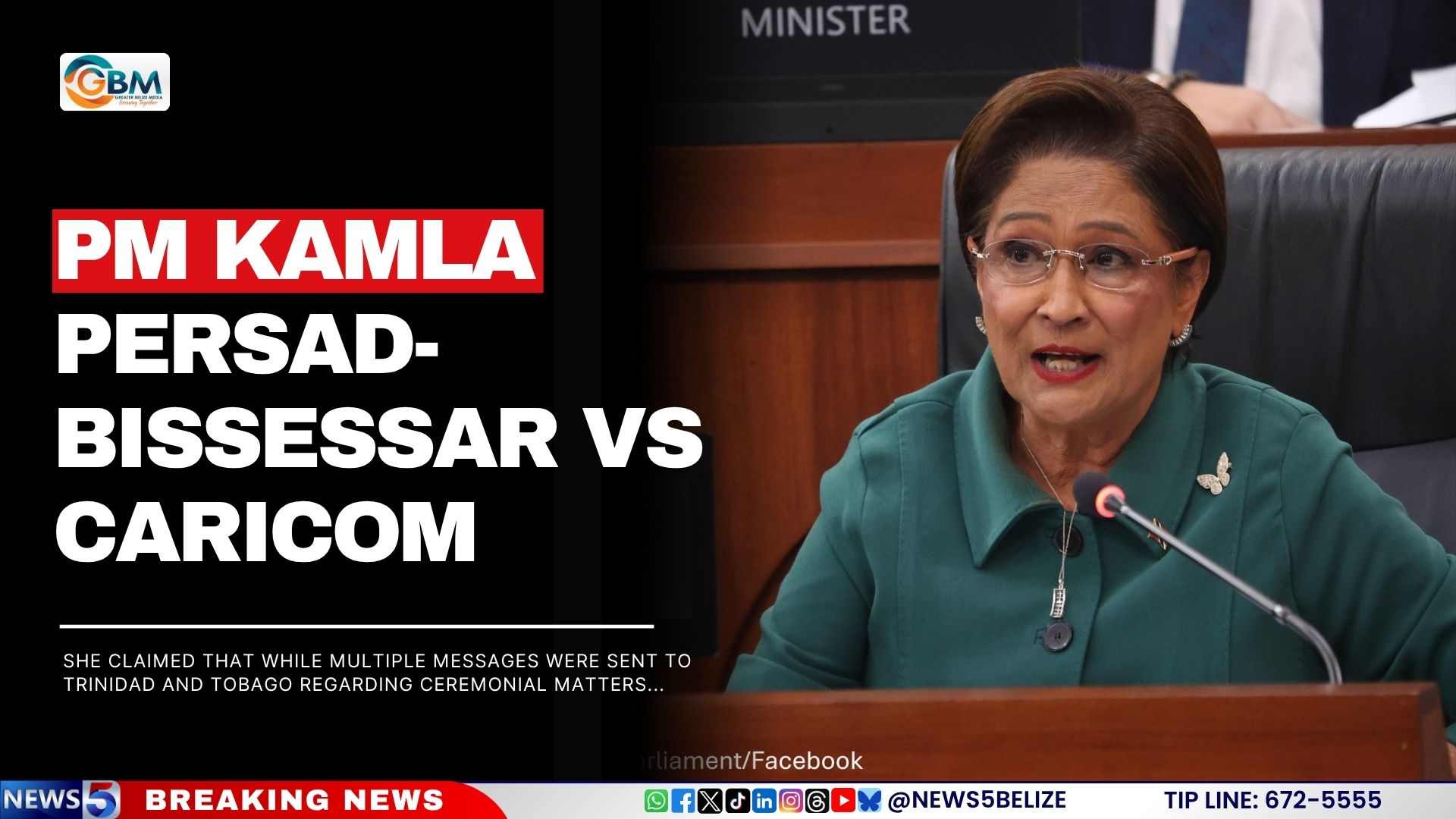

  • PM Kamla Persad-Bissessar Vs CARICOM

    PM Kamla Persad-Bissessar Vs CARICOM

    A public dispute has emerged between Trinidad and Tobago Prime Minister Kamla Persad-Bissessar and the Caribbean Community (CARICOM) over the recent reappointment of the bloc’s top administrative leader, throwing into question regional governance procedures and transparency amid a high-stakes diplomatic standoff.

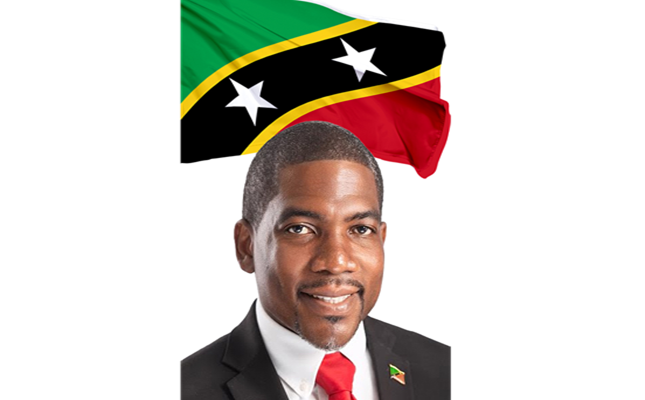
    The conflict follows the Twenty-Fifth Special Emergency Meeting of CARICOM Heads of Government, held Friday to address governance concerns raised by Trinidad and Tobago — a meeting that neither Persad-Bissessar nor any of her government representatives attended. In an official statement released after the session, CARICOM Chairman Dr. Terrance Drew, who also serves as Prime Minister of St. Kitts and Nevis, laid out the regional bloc’s account of the events that led to Secretary-General Dr. Carla Barnett’s reappointment at the 50th Regular Meeting of the CARICOM Conference of Heads of Government, hosted in St. Kitts and Nevis between February 24 and 27, 2026.

    According to Drew’s statement, all CARICOM member states received formal advance notification of the February meeting’s official schedule, draft agenda, and working breakdown, including clear details of which topics would be discussed in plenary sessions, caucus meetings, and the closed Heads-only retreat. All heads of government offices received official correspondence confirming the retreat’s date and island venue, and every member state acknowledged receipt of the materials, CARICOM claims.

    The narrative continues that Persad-Bissessar departed St. Kitts on the evening of February 25, one day before the scheduled Heads-only retreat on February 26. That same night, Trinidad and Tobago’s Foreign Minister Sean Sobers contacted Secretary-General Barnett via WhatsApp to ask whether he could attend the retreat in the prime minister’s absence. He was reportedly told that foreign ministers could stand in for heads of government if needed, but Sobers replied that he suffered from seasickness and would likely be unable to complete the boat ride required to reach the remote retreat venue.

    In response, Barnett informed Sobers that the Chairman would excuse his absence if the trip posed significant discomfort. Sobers never followed up to confirm his attendance, per CARICOM’s account. When heads of government gathered for the closed retreat to discuss community financing and governance, members approved Barnett’s reappointment in line with Article 24 of the Revised Treaty of Chaguaramas, with Barnett recusing herself from the discussion.

    As a courtesy to absent leadership, heads agreed to delay the public announcement of the reappointment to allow time to notify Persad-Bissessar. CARICOM says multiple attempts were made to contact the prime minister via phone and email, but none were successful, and the Chairman ultimately reached out directly to Sobers to share the outcome. Alongside the reappointment, CARICOM leaders agreed to form a subcommittee with representatives from Barbados, Dominica, Guyana, and Jamaica to conduct a full review of the bloc’s institutional governance and financing frameworks. Leaders also approved a formal statement on their recent meeting with U.S. Secretary of State Marco Rubio focused on evolving global geopolitical developments.

    In his closing remarks, Drew emphasized that CARICOM has long relied on its internal diplomatic mechanisms to resolve internal challenges, warning that “unfortunate and erroneous statements” from member states risk eroding years of progress toward deeper regional integration.

    But Persad-Bissessar has pushed back aggressively against CARICOM’s account, releasing a counter-statement on her official Facebook page that disputes key details and calls into question the entire reappointment process’s transparency.

    The Trinidad and Tobago prime minister claims that while her government received multiple communications about ceremonial meeting details — including required attire for official events — no notification was ever sent indicating that Barnett’s reappointment would be on the retreat’s agenda. She further alleges that a WhatsApp message sent from the Chairman’s office on the morning of February 26 explicitly stated the retreat would remain strictly limited to sitting heads of government, directly contradicting CARICOM’s claim that Sobers was welcome to attend in her place. That message, Persad-Bissessar says, instructed foreign ministers to remain at the separate Community Council meeting instead of attending the retreat.

    Persad-Bissessar is also demanding access to key internal documents that have not been made public, including the official minutes of the closed retreat, a formal performance appraisal of Barnett’s first term as Secretary-General, and full records from Barnett’s original 2021 appointment to the post. She has labeled the entire process fundamentally lacking in transparency, and has called on the CARICOM Secretariat to fulfill a formal request for documentation submitted in an April 9 letter from Foreign Minister Sobers.

  • Woman bonded for assaulting son’s teacher

    Woman bonded for assaulting son’s teacher

    A 30-year-old self-employed hairdresser from St. Vincent and the Grenadines has been handed a suspended sentence bond for attacking her son’s primary school teacher with a pair of scissors, in a case that highlights the growing tensions between parents and educators over student discipline.

    The sentencing hearing was held Thursday at the Colonarie Magistrate’s Court, which was convened in Georgetown for the session. The defendant, Zonel Joseph, faced two criminal charges: possession of an offensive weapon (a pair of scissors) and assault with intent to wound Alicia Williams, the targeted teacher, during an October 2025 public altercation in the Colonarie community.

    Court documents show that Joseph initially entered a not guilty plea when she first appeared without legal representation. She changed her plea to guilty this week after securing legal counsel from local attorney Nicholas Providence.

    Prosecutor Corlene Samuel, an inspector with the local police service, laid out the background of the conflict to the court: Joseph and Williams were long-time friends who grew up together in the same small Colonarie neighborhood. Their relationship fractured after Williams took on a teaching role that included Joseph’s son in her class.

    The confrontation unfolded around 4 p.m. on the day of the incident, when Williams was visiting a friend’s home and spotted Joseph walking through the area with her son. Samuel told the court that Joseph was openly cursing and shouting about a recent school incident where Williams had disciplined Joseph’s son, calling out “Don’t hit or touch my child again” loud enough for Williams to hear.

    When Williams responded to the comments, the exchange quickly escalated into a heated public argument. As Williams stood against a nearby wall, Joseph approached her, pulled out a small green-handled pair of scissors, and explicitly threatened to stab her before Williams moved away and contacted local law enforcement to file a report.

    In his mitigation argument to the court, Providence explained that Joseph’s initial not guilty plea came only because she lacked access to legal guidance during her first appearance. He acknowledged that the incident had the potential to end in serious harm, but argued the offenses themselves were not premeditated, noting that his client was experiencing significant personal stress at the time of the attack, including a major health crisis just three months prior in July 2025. Providence added that Joseph has expressed genuine remorse for her actions, and asked the magistrate to show “utmost mercy” in sentencing.

    The prosecution did not push for an immediate custodial sentence, but Samuel reminded the court that Joseph had a prior violent conviction: she served a one-year prison sentence in 2020 after being found guilty of stabbing her own children’s uncle in the eye. Samuel recommended that the court impose a bond to keep Joseph accountable, saying “Put her on a bond so she will know that something is hanging over her head.”

    Magistrate Kaywana Jacobs used the hearing to issue a direct warning to Joseph, urging her to address her persistent anger issues. “Don’t act in anger, you have children,” Jacobs told the defendant during sentencing. “Your future can look different if you consider the consequences,” she added, noting Joseph needs clear redirection to avoid future violent outbursts.

    For the assault charge, Jacobs ordered Joseph to enter a 12-month bond set at 1,000 Eastern Caribbean dollars. If Joseph violates the terms of the bond, she will be required to pay the full amount immediately or serve a nine-month prison sentence. On the separate charge of carrying an offensive weapon, Joseph was fined 900 Eastern Caribbean dollars, due to be paid by July 13, 2026, or face three months behind bars.

  • El Niño Expected to Suppress 2026 Hurricane Activity, Forecasters warn against complacency

    El Niño Expected to Suppress 2026 Hurricane Activity, Forecasters warn against complacency

    An upcoming shift in Pacific Ocean climate patterns is projected to curb hurricane formation across the Atlantic basin during the 2026 hurricane season, according to an early seasonal forecast released by the Colorado State University Tropical Meteorology Project, a leading research group focused on tropical storm activity. Helmed by lead researcher Philip J. Klotzbach, the new analysis lays out a clear trajectory of changing ocean and atmospheric conditions that point to a slower-than-usual storm season.

    Right now, the Pacific is under the influence of weak La Niña conditions, the cool phase of the cyclical El Niño-Southern Oscillation. But the research team projects this pattern will unwind in the coming months, transitioning to an El Niño event that is likely to strengthen to at least moderate intensity by the August-to-October peak of the Atlantic hurricane season.

    This climate shift carries outsized implications for Atlantic hurricane activity because of El Niño’s well-documented suppressing effect on storm development. El Niño, defined by sustained above-average sea surface temperatures across the central and eastern Pacific, drives an increase in vertical wind shear across the Atlantic basin. Vertical wind shear occurs when upper-level and lower-level winds differ significantly in speed or direction, and it acts to disrupt the cohesive circular structure required for tropical disturbances to organize and intensify into hurricanes. With stronger wind shear in place, most developing storms struggle to gain strength, cutting down on the total number of hurricanes that form in a given season.

    Based on the expected influence of this developing El Niño, the CSU team is projecting below-average activity for the 2026 season. Their current forecast calls for 13 named storms, six hurricanes, and two major hurricanes (storms classified as Category 3 or higher on the Saffir-Simpson scale).

    Already, observational data confirms the Pacific is on track for this transition. Sea surface temperatures across the basin have been rising steadily, with key atmospheric and oceanic drivers including intense westerly wind bursts and growing ocean heat content pushing the region out of its extended La Niña phase. The National Oceanic and Atmospheric Administration (NOAA) has independently backed this projection, estimating an 80% probability that El Niño will be in place by the peak of the 2026 hurricane season, further strengthening expectations of a less active season.

    Despite this broad consensus, the research team has emphasized that significant uncertainty remains around just how strong the El Niño event will ultimately become. The magnitude of El Niño directly correlates to how much wind shear will increase, meaning a weaker-than-expected event could leave hurricane activity higher than current projections.

    Even if the forecast holds and fewer storms form overall, experts warn that coastal and island communities cannot afford to lower their guard. Seasonal forecasts only offer a broad overview of expected total activity across the entire basin; they cannot predict weeks or months in advance where individual storms will form or whether any single storm will make landfall in a populated area. As the 2026 season approaches, even nations at high risk like Antigua and Barbuda could still face a devastating landfalling hurricane, regardless of the lower overall number of projected storms.

    In line with this risk assessment, emergency management officials across hurricane-prone regions are urging all residents and communities to complete preparedness plans well ahead of the season’s start, irrespective of the early forecast calling for below-average activity.

  • NIA Women’s Self-Empowerment Workshop Promotes Collaboration, Financial Literacy and Community Impact

    NIA Women’s Self-Empowerment Workshop Promotes Collaboration, Financial Literacy and Community Impact

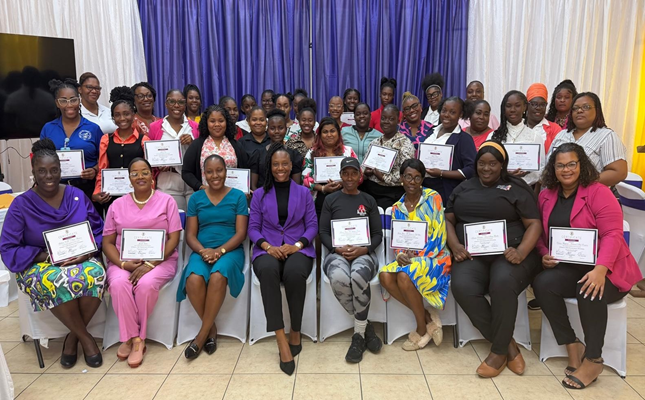
    CHARLESTOWN, Nevis – April 9, 2026 – The Nevis Island Administration (NIA) has advanced its longstanding commitment to uplifting women and girls across the island with the launch of its sixth annual Women’s Self-Empowerment Workshop, an event designed this year to center collective progress, community giving, and tangible professional and financial growth.

    Unlike many empowerment initiatives that focus solely on individual advancement, this year’s workshop framed personal success as a force that grows when shared with others. Through structured interactive sessions, participants were invited to exchange knowledge, offer peer emotional support, and build long-lasting professional networks, all with the dual goal of strengthening local communities and accelerating individual career and personal development.

    Event organizer Hon. Latoya Jones, Special Advisor to the Premier of Nevis, laid out the core mission of the 2026 workshop, emphasizing that the program was built to encourage collaborative leadership, boost participant confidence, and celebrate the often-overlooked contributions of women and girls across every sector of Nevisian society.

    “Our core goals for this sixth annual gathering are simple: to nurture a culture of collaboration and generosity across our local communities, build leadership and team-building skills through hands-on activities, honor the achievements of women and girls in all fields, and help every participant leave with stronger confidence in their own potential,” Jones explained. “We want every woman and girl here to understand that when you lift others up, you elevate yourself along with them. Empowerment isn’t just about individual win – it grows exponentially when we pass it on.”

    Beyond community building, the workshop also prioritized practical economic empowerment, with dedicated sessions covering core financial literacy topics including household budgeting, long-term savings strategies, and foundational investment principles. Organizers also integrated targeted support for emerging and existing women entrepreneurs, creating structured space for cross-business networking and skill sharing.

    Hon. Senator Jahnel Nisbett, Nevis’ Minister of Gender Affairs, opened the event with brief remarks urging attendees to engage fully with both the giving and learning core of the workshop. Echoing the mantra that empowered women lift up entire communities, Nisbett noted that the room was filled with experienced practitioners ready to share expertise across financial literacy, business development, and personal growth.

    “I want every single one of us to take as much as we possibly can from this space,” Nisbett said. “As much as we are here to give our knowledge and support, we are also here to gain new skills and insights that will help us grow. When you leave this workshop, don’t keep what you’ve learned to yourself – multiply your impact by passing it on to someone else, and keep the cycle of empowerment going.”

    The workshop was facilitated by Ramie Wilkinson-Layden, a certified auditor with the NIA, who encouraged attendees to turn the insights they gained into actionable change in their own lives and communities. “Each of us is born with unique talents and skills that we can share with others,” Wilkinson-Layden said. “I urge every participant to give generously of your time, your ideas, your resources, and your support. When you do that, you will see your own gains multiply in ways you can’t yet imagine. My hope is that everyone leaves here with at least one or two concrete steps they can take to improve their financial well-being, strengthen their literacy around money, spend thoughtfully, and build smart, sustainable long-term investments.”

    Since the workshop launched six years ago, it has reached roughly 100 women and girls across Nevis. This year’s iteration drew more than 30 attendees, including 14 young girls, and included formal representation from nine female-owned local businesses spanning a diverse range of sectors: nail care, hospitality, skincare, fitness, gift retail, beauty services, and graphic design, among others.

    Jones highlighted the critical value of having local business owners participate directly in the workshop, noting that their on-the-ground insights gave emerging entrepreneurs and aspiring business owners unfiltered, practical guidance about daily business operations and entrepreneurship that cannot be learned from textbooks.

    Looking ahead, Jones shared her hope that attendees will carry the workshop’s mission forward by paying what they learned forward through mentoring, volunteer work, and mutual encouragement, creating a ripple effect of positive change that lasts long after the event concludes. She also expressed satisfaction with the high level of engagement and active participation across all sessions, and said she is confident that attendees will apply their new skills and knowledge to build lasting personal and financial success for themselves and their communities.

  • Lotto chair urges CDC to treat Vincymas as a business

    Lotto chair urges CDC to treat Vincymas as a business

    Vincymas, St. Vincent and the Grenadines’ premier cultural festival, will retain its largest backer in the National Lotteries Authority (NLA), but organizers will need to adopt a more business-oriented, financially accountable approach to secure the event’s long-term growth, according to the body’s newly appointed chair.

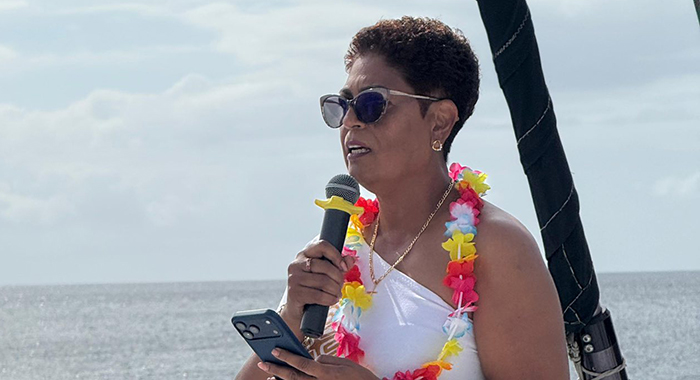
    Luann Hadaway, who made history earlier this year as the first woman to lead the NLA board since the organization’s founding in 1984, used the platform of this year’s festival media launch to reaffirm the authority’s long-standing partnership with the annual celebration. Founded to fund national sports and cultural initiatives, the NLA counts its Vincymas sponsorship as its single largest financial commitment, a reflection of the event’s outsized importance to the island nation.

    “Our sponsorship is not simply about funding an event, it is about preserving our heritage, strengthening our creative industries and creating real opportunities for our people,” Hadaway told attendees. She emphasized that the NLA’s new board takes its fiduciary responsibility seriously as stewards of public funds, requiring all sponsorship recipients to adhere to strict standards of prudent spending, robust governance and full transparency.

    “With that responsibility comes a clear obligation to ensure that every dollar is managed with care, integrity and purpose,” she said. “This is essential, not only for transparency, but for the long-term sustainability and credibility of institutions and events we support.”

    Given the scale of the NLA’s investment, Hadaway argued that Vincymas must meet consistent standards of value, impact and operational excellence. Most critically, she said, the festival must be reframed as a year-round business venture rather than a one-off annual celebration, capable of generating consistent revenue to build self-sustaining reserves for future events. This business model, she added, will expand long-term opportunities, deepen private-sector partnerships and foster the financial independence the festival needs to thrive for generations.

    Hadaway also pushed for the festival to expand its scope as a launchpad for local talent, calling for greater opportunities for young, emerging creators to perform alongside established industry figures. “It must remain a platform that truly showcases the depth of talent we have right here at home,” she said. “As we continue to invest, we also encourage a shared commitment to excellence, ensuring that Vincymas develops in a way that is sustainable, well organised and impactful for all.”

    Beyond celebration, Hadaway noted that Vincymas is a core economic driver for the country, supporting local livelihoods, boosting broader economic activity and nurturing widespread national pride.

    Speaking at the same launch event, Minister of Culture and Creative Industries Kaschaka Cupid echoed the message that cultural events like Vincymas deliver meaningful financial benefits to St. Vincent and the Grenadines. He pointed out that the festival has helped local artists earn recognition at the national, regional and international level, and pledged the government’s ongoing support to the Carnival Development Corporation, the state-owned entity tasked with organizing Vincymas.

    Cupid also issued a public call for additional corporate sponsors to join the NLA in backing the festival, highlighting the creative sector’s growing role in driving national economic growth. “And I am here as Minister of Culture … to assure you that our government is here to support you, not just financially, but we are going to create opportunities for our artistes to grow and develop their special talents,” he said.

    The minister also revealed that he has recently held discussions with Prime Minister Godwin Friday and Minister of Foreign Affairs Dwight Fitzgerald Bramble about a new initiative to deploy cultural ambassadors to promote St. Vincent and the Grenadines on the global stage. Cupid, who noted he had not attended Vincymas for roughly 20 years, said his tenure as culture minister has sparked a new appreciation for the country’s unique cultural heritage, and he plans to attend this year’s event both as a minister and a long-time culture lover.

  • STATEMENT BY THE CHAIR OF CARICOMHonourable Dr. Terrance Drew, Prime Minister of St. Kitts and Nevis Twenty-fifth Special Emergency Meeting of the Conference of Heads of Government of CARICOM

    STATEMENT BY THE CHAIR OF CARICOMHonourable Dr. Terrance Drew, Prime Minister of St. Kitts and Nevis Twenty-fifth Special Emergency Meeting of the Conference of Heads of Government of CARICOM

    On April 10, 2026, the Caribbean Community (CARICOM) convened its 25th Special Emergency Meeting of the Conference of Heads of Government to address long-simmering governance disputes first raised by Trinidad and Tobago, centered on the controversial reappointment of the bloc’s Secretary-General. In a notable snub, neither the Prime Minister of Trinidad and Tobago nor any official representative from the nation participated in the emergency gathering. The statement released following the meeting was issued by CARICOM Chair Dr. Terrance Drew, who also serves as Prime Minister of St. Kitts and Nevis, and publicly dated April 11, 2026.

    The official statement clarifies the sequence of events that sparked the current rift, dating back to CARICOM’s 50th Regular Conference of Heads of Government, hosted by St. Kitts and Nevis between February 24 and 27, 2026. According to the official documentation attached to the statement, all member states received full, timely advance notification of the conference’s official schedule, draft agenda, and detailed work program, which clearly outlined which topics would be addressed in open plenary sessions, closed caucuses, and the restricted Heads-only retreat. All member states, including Trinidad and Tobago, formally acknowledged receipt of every official communication related to the 50th Regular Conference, the document confirms.

    Tensions emerged on the first day of the conference, when Trinidad and Tobago’s Prime Minister departed St. Kitts and Nevis on the evening of February 25, a full day ahead of the scheduled February 26 closed retreat. That same night, at 10:33 PM, Trinidad and Tobago’s Foreign Minister Sean Sobers contacted the Secretary-General via WhatsApp to ask whether he could attend the retreat in his Prime Minister’s absence. The Secretary-General confirmed that, consistent with past practice, a foreign minister could stand in for an absent head of government. However, Sobers immediately raised a concern: he experiences severe seasickness, and the retreat venue required a boat ride, leaving him uncertain he could attend.

    A copy of the official WhatsApp correspondence included in the attached documentation captures the subsequent exchange. At 10:55 PM the same night, the Secretary-General updated Chair Drew on the interaction, writing: “Chairman. TT Foreign Minister Sobers called me to ask if he should come to retreat in the absence of his PM. I indicated that other Heads who have left may be represented by their FMs. He also indicated he gets seasick, so he’s not looking forward to the boat ride. So we may not have TT represented tomorrow.” Shortly after midnight, at 12:37 AM on February 26, the Secretary-General followed up directly with Minister Sobers, writing: “Minister, if the boat trip will cause nausea am sure the Chairman would understand if you chose not to come tomorrow.” After that message, Sobers never followed up to confirm he would be able and willing to attend the retreat, leaving Trinidad and Tobago unrepresented at the closed session.

    During the retreat, under the standing agenda item focused on Community financing and governance, CARICOM heads took up the matter of the Secretary-General’s reappointment. Deliberating in accordance with Article 24 of the Revised Treaty of Chaguaramas, the governing document of the bloc, heads agreed to approve the reappointment, with the Secretary-General recusing himself from the room during the discussion. Out of courtesy to absent member state representatives, heads agreed to delay the official public announcement of the decision until all absent heads could be personally informed. While outreach to other absent leaders was successful, repeated attempts to contact Trinidad and Tobago’s Prime Minister via both email and telephone went unanswered. Eventually, Chair Drew was requested to contact Foreign Minister Sobers directly to relay the decision.

    In addition to the Secretary-General’s reappointment, CARICOM heads reached two other key decisions during the February retreat: they established a special sub-committee of heads from Barbados, Dominica, Guyana, and Jamaica to conduct a comprehensive review of CARICOM institutional governance and financing, and they authorized a public statement on the bloc’s recent meeting with U.S. Secretary of State Marco Rubio under the agenda item covering global geopolitical developments.

    In his opening statement to the April 2026 emergency meeting, Chair Drew emphasized that all context, correspondence, and meeting materials from the 50th Regular Conference have been released publicly as attachments to the emergency meeting statement, to ensure full transparency for all member states and regional stakeholders. Drew closed the statement with a call for unity, noting that CARICOM’s core mission of deepening regional integration to improve the quality of life for all Caribbean people must remain the top priority. He expressed hope that the bloc can return to resolving internal differences through established internal mechanisms in the future, warning that unfounded public statements risk eroding years of progress toward integration. Full supporting documents, including a complete timeline of pre-conference correspondence and the official work program, are available for public download on the official CARICOM website.

  • ‘Elevated and reimagined’ Miss SVG returns to Vincymas calendar

    ‘Elevated and reimagined’ Miss SVG returns to Vincymas calendar

    After a one-year hiatus, one of St. Vincent and the Grenadines’ most anticipated annual cultural events, the Miss SVG beauty pageant, is making a comeback — and this year, it is reclaiming its traditional spot as the official opening event of the Vincymas carnival season, scheduled to take place on May 30. This marks a shift from the pageant’s recent scheduling, when it was moved to October to align with the country’s annual Independence Day commemorations.

    Seven young contestants from communities across St. Vincent will compete for the coveted national crown and a package of top-tier prizes, headlined by an 80,000 Eastern Caribbean dollar university scholarship that offers a life-changing educational opportunity for the winner. The contestants, listed by their official performance order, are: 1. Charisma Charles, 22, representing sponsor Insta Cash from Peruvian Vale; 2. Enecia Clarke, representing Grenadine House from Layou; 3. 24-year-old N’Zinga Deroche, representing Republic Bank, also from Layou; 4. Elreka Gaymes, representing Executive Air Ltd.; 5. 26-year-old Lourie John, representing Darcheville Construction Equipment Sales Ld. from Redemption Sharpes; 6. Kayla Jordan, representing Lotto; and 7. Anaelia Williams, representing Lynch Caribbean Brokers Ltd. from Richland Park.

    Jamie Crick, a core member of the Carnival Development Corporation’s (CDC) Beauty Shows Committee, described this year’s class of contestants as a diverse “bouquet that reflects the very spirit of Vincymas”, noting that the months-long preparation journey leading up to the pageant makes the 2026 competition extra meaningful. Over nearly a year, Crick explained, the seven candidates have dedicated themselves to rigorous training, personal discipline, and intentional growth, evolving into polished, confident ambassadors prepared to represent their sponsors, home communities, and the country ahead of the carnival season. This year’s pageant operates under the overarching theme La Fleur Royale, or The Royal Flower.

    Beyond the main competition night on May 30, organizers have planned a full slate of accessible, community-focused pre-pageant events designed to bring the excitement of the contest directly to the Vincentian public. On May 3 and 10, contestants will participate in island-wide motorcades, with an additional motorcade route through the capital city of Kingstown scheduled for May 22. The motorcades will allow residents across every corner of the island to meet the contestants in person and engage with the Vincymas spirit ahead of the main event.

    On May 8, the pageant will host a unique public event titled “Meet me in the market”, framed as a casual, lively gathering where attendees can meet the delegates, take photos, learn more about their preparation journeys, and support local vendors across the island’s public markets. This event is one of several new, fresh additions organizers have introduced to this year’s revived pageant.

    Organizers have also reimagined the traditional pageant segments while retaining beloved core elements, with a focus on celebrating individuality and innovation this year. The popular swimwear segment will return with a cohesive unified color palette, but every candidate will wear a custom, uniquely designed piece that reflects her personal style. For the competitive interview round, each contestant will answer two questions: one pulled at random on stage, and one universal question asked to every competitor to create a fair comparative framework. The cultural wear segment will be themed “Once Upon A Village”, designed to highlight St. Vincent’s rich cultural heritage and local traditions, while audiences can also expect the timeless elegance of the evening wear portion and dynamic displays of creativity during the talent competition.

    Crick emphasized that despite the disruptions and patience required to bring the pageant back to its traditional Vincymas slot, the end result will be worth the effort. “Though the journey has required patience, we stand here confident that what lies ahead will be worth every painstaking moment, because with every moment that shapes us comes the opportunity to build something greater,” she said, noting that the return of the pageant to the carnival calendar brings a fresh, exciting energy to the start of the 2026 Vincymas season.

  • Grenada U19 fall to Dominica in Windward Islands Youth Clash

    Grenada U19 fall to Dominica in Windward Islands Youth Clash

    The 2026 WINLOTT Inc. Super 6 Windward Islands Under-19 Tournament kicked off with a weather-disrupted opening clash on Saturday 11 April at Benjamin’s Park, where hosts Grenada suffered an opening defeat to defending tournament champions Dominica. Persistent heavy showers reshaped the entire course of the match, forcing a revised target under the Duckworth-Lewis-Stern (DLS) method that left Grenada unable to find their footing in the chase.

    After winning the pre-match toss, Grenada’s captain made the call to field first, a decision that looked solid in the opening exchanges. Grenada’s bowlers stuck to tight line and length early, restricting Dominica’s batters and holding the first wicket until the final delivery of the 10th over. It was pace bowler Aaron Edwards who broke the opening stand, dismissing Derwin Lewis for 19 runs with Dominica’s total just 46 at that point.

    Rain interruptions would go on to disrupt the middle overs, but Dominica’s middle-order batter Aiden Burton stepped up to steady the innings, crafting a well-compiled 58 runs off 62 deliveries marked by five fours and two maximums. When play was called off for the weather at 33.3 overs, Dominica had posted 168 runs for the loss of three wickets. Grenada’s bowling was led by spinner Aravinda Bishop, who claimed two key wickets while conceding 46 runs across his full 10-over allocation. Edwards backed him up with an economical spell, taking one wicket for just 25 runs from six overs. The full bowling breakdown for Grenada saw Jayonn Henry end with 0 wickets for 19 runs from four overs, Jeremy Edwards at 0 for 15 from five overs, Desrond Mitchell at 0 for 41 from eight overs, and Ron Charles at 0 for 9 from 0.3 overs.

    Following an extended weather delay, match officials applied the DLS par score rule, setting Grenada a challenging revised target of 209 runs to win from a shortened 29-over chase. Grenada got off to a steady start in their response, with opener Raekeim Lewis Charles top-scoring for his side. Lewis Charles put on a 36-run opening partnership with Jordan John (18), followed by a 26-run second-wicket stand with captain Khavaughn Bartholomew (16). As the required run rate climbed steadily, Grenada was forced to accelerate, but Dominica’s disciplined bowling attack choked the scoring, allowing just 27 runs across the next five overs before Lewis Charles was dismissed with Grenada on 89 for three.

    From the position of 90 for three in the 19th over, Grenada’s batting collapsed, losing four quick wickets for the addition of just 22 runs. The innings closed at 111 for seven after the full 29 allotted overs, leaving Dominica to take the opening win of the tournament. The full Grenada batting scorecard lists Jamie Wickham 11 not out, Christian Niles 2, Jayonn Henry 6, Desrond Mitchell 1, Aravinda Bishop 3, and Ron Charles 0 not out alongside Wickham.

    Grenada will now turn their focus to bouncing back from this opening setback, with their second group fixture scheduled to take place against St Lucia on Sunday 12 April 2026.

  • ABLP expands campaign visibility with billboards ahead of election

    ABLP expands campaign visibility with billboards ahead of election

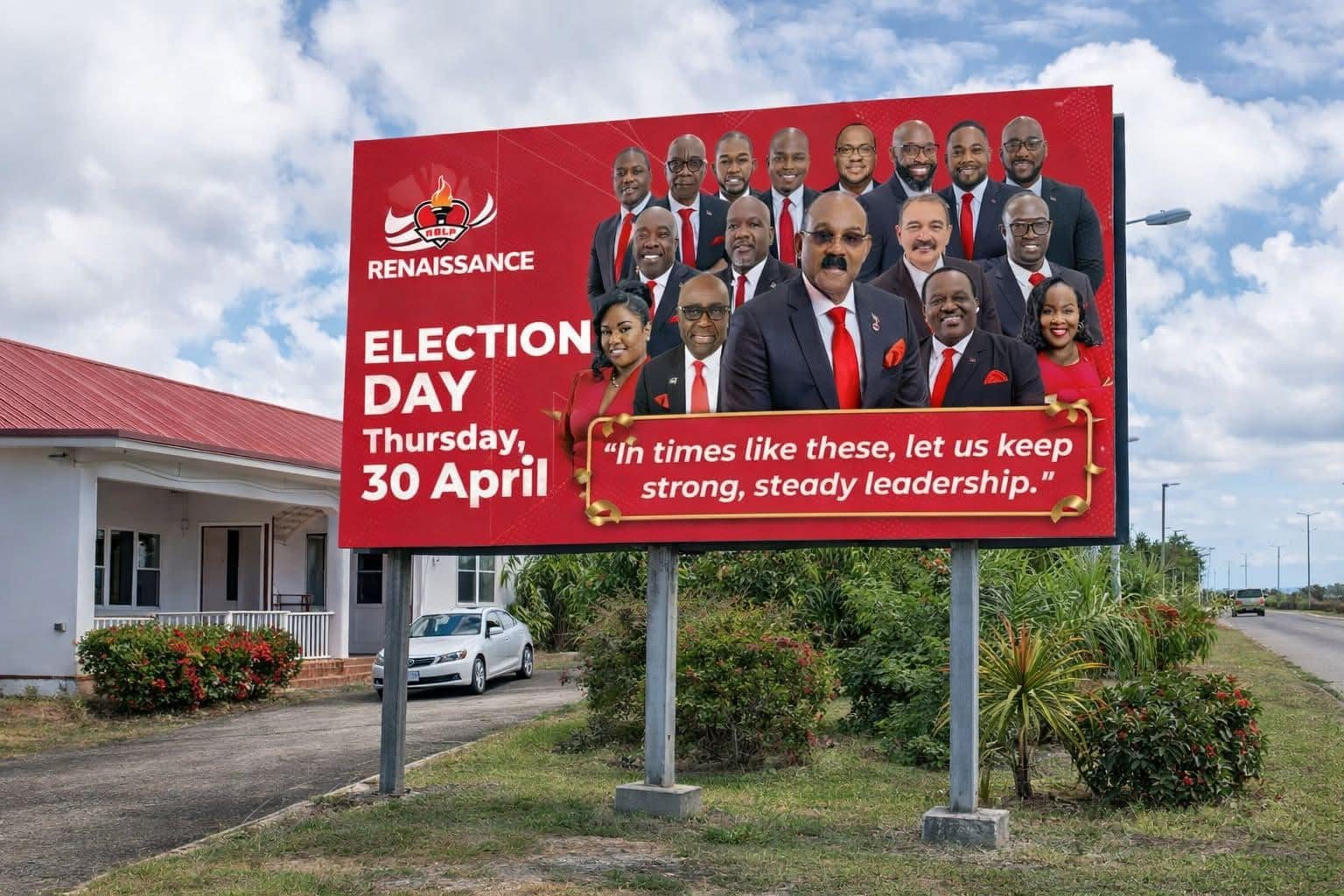
    As general elections draw near on the Caribbean island of Antigua and Barbuda, the incumbent Antigua Labour Party (ABLP) has moved to expand its public campaign footprint by rolling out a network of new billboards across key population centers. The strategic move is designed to increase the party’s visibility among undecided and mobile voters, placing core campaign messaging and party branding in high-traffic areas ranging from urban intersections to suburban commercial corridors. Political observers note that the billboard push forms part of a broader integrated outreach strategy that combines traditional out-of-home advertising with digital and door-to-door campaigning, as the party works to retain its parliamentary majority against opposition challengers. For many local voters, the growing presence of ABLP billboards across the country serves as a clear signal that the party is actively competing for support and prioritizing widespread name recognition ahead of polling day. The expansion of out-of-home advertising comes as polling analysts point to a tight race, with both major parties investing heavily in public outreach to sway the small share of swing voters that are expected to decide the election outcome.