博客

  • Pintard defends lottery plan; calls Davis ‘architect of gimmicks’

    Pintard defends lottery plan; calls Davis ‘architect of gimmicks’

    With just 28 days remaining until the Bahamas’ critical general election, the Free National Movement (FNM) held its first major campaign rally on New Providence, where party leader Michael Pintard launched a fiery defense of his controversial proposed national lottery, directly pushing back against scathing criticism from sitting Prime Minister Philip Brave Davis.

    Held at Golden Gates Park under the campaign theme “Fire Forward,” the event drew an energized crowd of FNM supporters, who packed the venue dressed in official party gear, waving party flags, chanting and dancing as the slate of party candidates took the stage. Signature FNM anthems, from “Simply the Best” to “Keep the Fire Burning,” played throughout the night, building a festive, high-stakes campaign atmosphere. The rally wrapped with a traditional Junkanoo rush-out after a closing prayer, leaving attendees buzzing with momentum ahead of the upcoming vote.

    In his keynote address – delivered after a dramatic torch-lit procession entrance accompanied by police escort – Pintard pushed back hard against Davis’ recent dismissal of the lottery plan as a cynical “gimmick” rooted in electoral desperation. The FNM leader accused the prime minister of outright hypocrisy, arguing that Davis’ label is far more fitting for the incumbent administration’s own policy practices.

    Pintard hit out at the government’s handling of public funds, declaring, “The prime minister [is] the chief architect of gimmicks. They started talking about slash funds and if you look in the dictionary next to slash funds, you will see the picture of the prime minister.”

    Outlining the core guardrails of his proposal, Pintard emphasized that the FNM’s national lottery would operate under strict regulatory oversight from an independent governing board, designed to explicitly insulate revenue from political misallocation and interference. He noted that unregulated gambling is already widespread across the Bahamas, arguing that formalizing the sector would allow the government to redirect currently untapped funds toward tangible public benefits for Bahamian citizens.

    To back the plan, Pintard pointed to existing national lottery models in countries including the Dominican Republic, Curaçao, St Martin and Ghana, explaining that the Bahamian framework would allow the state lottery to coexist with existing private gaming operators while directing all proceeds toward public initiatives. These would range from small business grants for aspiring entrepreneurs, to financial support for students pursuing post-secondary education both at home and abroad, to investments in cultural development and environmental protection.

    Questioning the incumbent government’s opposition, Pintard noted, “it was them who gave birth to the regularizing of gaming. Why would it be a problem for them all of a sudden to have a national lottery where the bulk of those resources are being administered to the government system?”

    Davis had struck back at the proposal just days earlier, questioning both its intent and the international examples Pintard cited. The prime minister called the plan a headline-grabbing stunt rooted in political desperation, arguing that the Dominican Republic’s national lottery – the example Pintard highlighted – has been marred by widespread corruption and mismanagement. Davis claimed the proposal amounted to a poorly thought out plan to create a slush fund for corrupt actors.

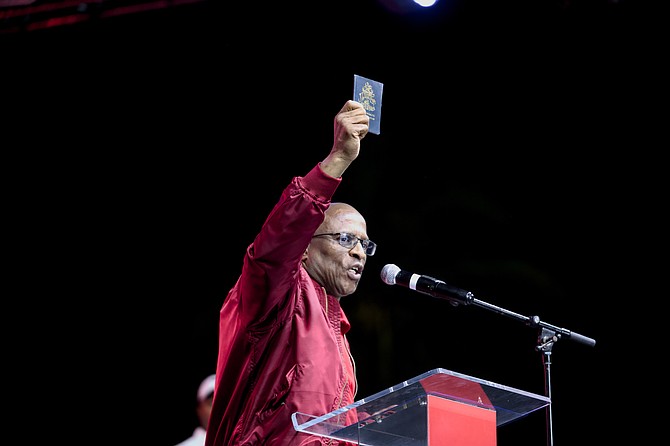
    Beyond the lottery debate, Pintard used his keynote to address broader hot-button issues including national sovereignty and immigration, holding up a Bahamian passport as a core symbol of national pride and birthright. He affirmed that all individuals who obtain Bahamian documentation through legal channels – regardless of their country of origin – are welcome members of the Bahamian community, but blasted the incumbent administration for failing to crack down on rampant fraud involving identity documents like passports and voter ID cards.

    Pintard accused the government of targeting critics who raise alarms about document fraud, saying, “if you’re not outraged by the frequency with which fraudulent passports, voters cards are being used in this country, if you are not angry about that, then you must be an accomplice in it happening.” He also pledged that if the FNM wins the election, a new administration would immediately launch a full audit of incumbent government finances to track public spending and root out mismanagement, declaring “we’re going to open the books.”

    The rally marked the FNM’s second major campaign event, and featured remarks from the party’s full slate of New Providence candidates, including Pinewood hopeful Denari Rolle, Golden Gates candidate Michael Foulkes, Garden Hills candidate Rick Fox, Bamboo Town candidate Dr. Duane Sands, Carmichael candidate Arinthia Komolafe and South Beach candidate Darren Henfield. Each candidate used their platform to criticize the ruling Progressive Liberal Party, pointing to what they described as a lack of tangible progress across their constituencies. FNM Deputy Leader Shanendon Cartwright, who is contesting the newly created St. James constituency, introduced Pintard and offered brief remarks on immigration and public spending ahead of the keynote.
  • Jaii Frais retains Isat Buchanan in shooting case; makes first court appearance

    Jaii Frais retains Isat Buchanan in shooting case; makes first court appearance

    KINGSTON, Jamaica — A post-carnival shooting in the Jamaican capital has left three people wounded, including prominent local podcaster Jhaedee “Jaii Frais” Richards, and sparked an ongoing police investigation with two people now in official custody. The violent incident unfolded Sunday night at the Ranny Williams Entertainment Centre in St Andrew, immediately following the conclusion of official carnival festivities in the area.

    Following the shooting, Richards was taken into police custody as a person of interest connected to the attack. On Wednesday, he appeared before a local court to consider a police application for an extended remand, a request that would allow officers to hold him without formal charges beyond the 48-hour window mandated by Jamaican law. The court ultimately granted the police’s application, scheduling Richards’ next court appearance for Friday.

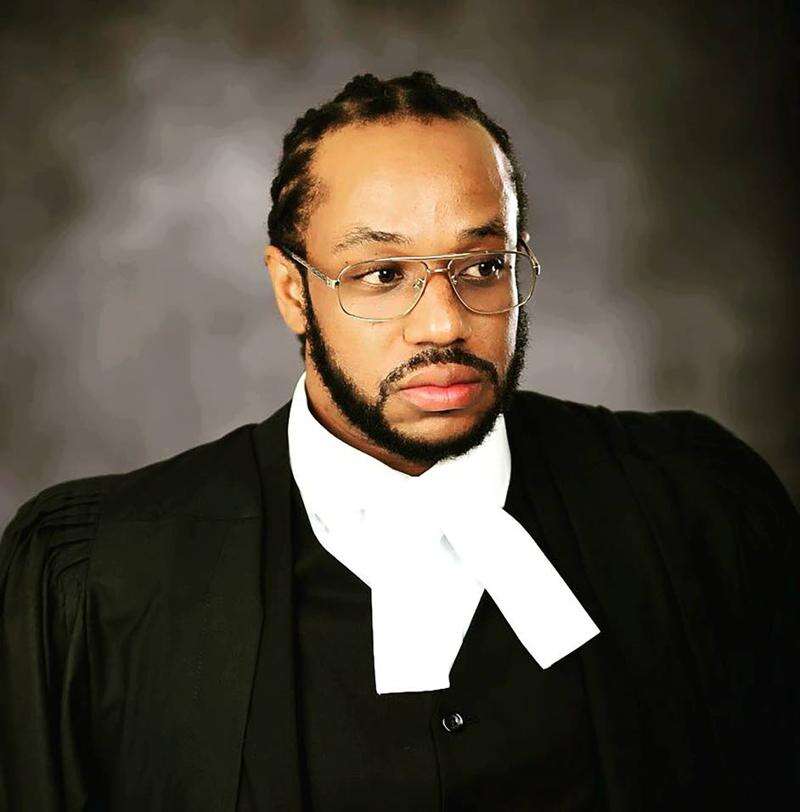
    Richards has retained prominent defense attorney Isat Buchanan to represent him throughout the investigation and upcoming court proceedings. Buchanan confirmed to local outlet Observer Online that he successfully petitioned the judge to order emergency medical care for his client, noting that the island’s police lockup facilities lack the capacity to properly treat the gunshot wound Richards sustained in the attack. Following the court ruling, Richards was transferred to a local hospital to receive care for his injury.

    “ We await the completion of the investigation and all I can say is trust the process,” Buchanan told reporters outside the courthouse Wednesday.

    Three people were hit by gunfire during the attack at the popular Big Wall after-party venue, according to official updates. Alongside Richards, the injured include a U.S. citizen and a member of dancehall recording artist 450’s personal entourage. The entourage member suffered critical injuries in the shooting but has survived and is currently receiving medical treatment, authorities confirmed.

    Richards is not the only person detained in connection with the high-profile incident. Jahvel “Jahvy Ambassador” Morrison, a well-known music producer and talent manager, has also been held in police custody since Sunday night immediately following the shooting. Morrison has retained top legal representation, King’s Counsel Peter Champagnie, to guide his case through the legal process.

    Local law enforcement has not yet released formal details on possible motives for the shooting, nor have they announced any timeline for the filing of formal charges against the two detainees. Investigations remain ongoing as officers work to piece together the sequence of events that led to the Sunday night attack.

  • Teenager kills nine, wounds 13 in Turkey school shooting

    Teenager kills nine, wounds 13 in Turkey school shooting

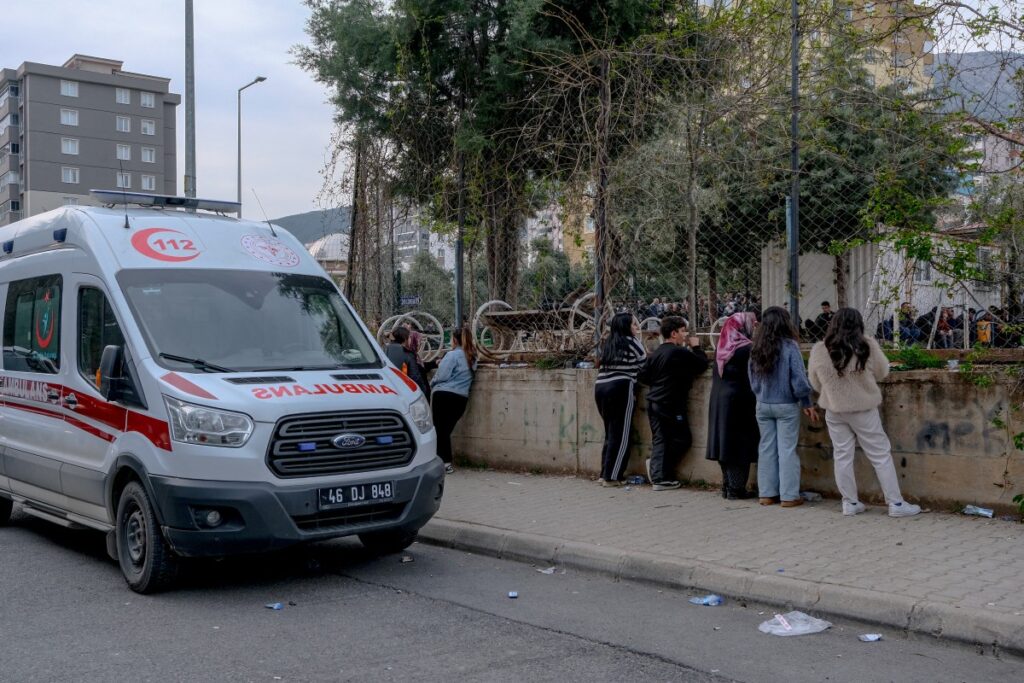
    ISTANBUL — Just 24 hours after a separate school shooting left 16 wounded in southeastern Turkey, a second mass shooting at a middle school in the country’s southern Kahramanmaras province has sent the nation into mourning, leaving nine dead and 13 injured in an attack that upended Turkey’s long history of rare school violence. The shooter, identified by local officials as a 14-year-old eighth-grade student, carried five licensed firearms and seven ammunition magazines belonging to his father, a former police officer, into the school campus on Wednesday morning. What followed was chaos: the teen opened fire indiscriminately across two classrooms, forcing terrified students to leap from first-floor windows to escape the gunfire. Dramatic, AFP-verified footage captured by a nearby resident shows students scrambling across the school courtyard, with roughly 15 gunshots audible across a 90-second clip of the attack.

    Turkey’s Interior Minister Mustafa Ciftci confirmed that nine people lost their lives in the shooting, and 13 wounded people were rushed to local hospitals, with six patients remaining in intensive care and three in critical condition as of Wednesday evening. The shooter himself died during the incident, and local governor Mukerrem Unluer told reporters it remains unclear whether the death was a suicide or an accidental killing amid the chaos of the attack. Law enforcement has since detained the shooter’s father, Ugur Mersinli, for questioning, per reporting from Turkey’s official Anadolu Agency. Video released by Turkey’s private IHA news outlet showed emergency workers evacuating covered bodies from the campus, while dozens of distraught parents gathered outside the school gates waiting for updates on their children. Law enforcement has locked down the campus perimeter, and top Turkish officials including the interior and education ministers traveled to Kahramanmaras to oversee the response, with prosecutors opening an immediate investigation into the incident.

    President Recep Tayyip Erdogan offered an official statement on social media platform X, calling the attack an unmitigated tragedy. “In this tragic attack, we unfortunately lost our bright young children and a devoted educator,” he wrote, adding that authorities would fully investigate every detail of the shooting and urging the public not to politicize the national grief. The Wednesday shooting follows a similar attack just one day prior, in Sanliurfa province’s Siverek district, where a former student opened fire with a shotgun at his old high school, wounding 16 people — 10 of them students — before killing himself during a police confrontation. Following the Tuesday attack, law enforcement detained one suspect and suspended four school officials from their posts, and ordered the affected school closed for four days.

    The back-to-back attacks have sparked urgent debate over school safety across Turkey. Main opposition Republican People’s Party (CHP) leader Ozgur Ozel argued that the violence can no longer be written off as a series of isolated events. “At this point, it is clearly evident that violence in schools can no longer be explained by isolated incidents,” Ozel wrote on X. “This issue has turned into a growing and deepening security vulnerability.” He called for immediate implementation of sweeping new security measures, including full access control at all school entry and exit points, increased on-campus security staff, upgraded campus camera systems, more frequent police patrols around school grounds, and updated emergency response plans. “The security of schools is entrusted to our state. No negligence or deficiency in this regard can be excused anymore,” Ozel added.

    Until this week, school shootings have been extremely rare in Turkey, which enforces some of the strictest gun control regulations in the region. All firearms in the country require official licensing, mandatory registration, mental health screenings and criminal background checks for owners, with heavy criminal penalties for unlicensed gun possession. The most recent high-profile school shooting prior to this week occurred in May 2024 in Istanbul, where a expelled former student shot and killed a private high school principal months after he was dismissed from the school.

  • WATCH: Swaby hails 2026 Carnival a major success despite shooting incident

    WATCH: Swaby hails 2026 Carnival a major success despite shooting incident

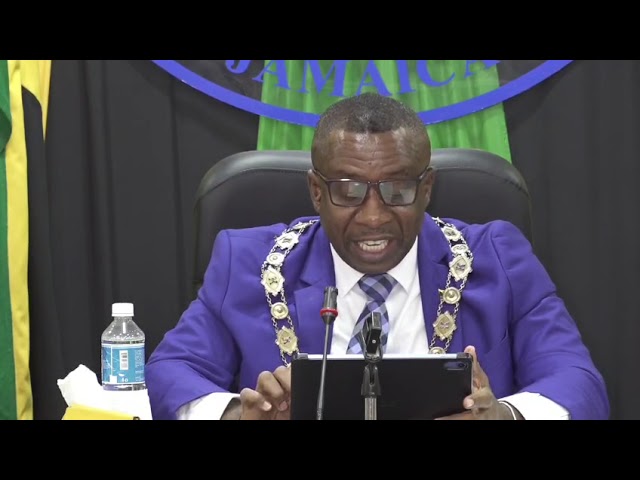
    KINGSTON, Jamaica — The 2026 Kingston Carnival season has been celebrated as a major economic win for the Jamaican capital, even as city leaders grapple with an outbreak of violence that left three people wounded over the weekend. Andrew Swaby, Mayor of Kingston, stressed that the annual celebration delivered widespread growth across multiple local industries, standing by his assessment of the event as a resounding success in spite of the shooting at the popular Big Wall carnival party.

    In an official statement released this week, Swaby emphasized that Carnival has solidified its position as a key economic driver for Kingston, injecting new energy into the city’s urban core and spurring activity across hospitality, retail, transportation and countless small business sectors. “Once again, the event has proven its lasting value, and its growing economic importance to our city cannot be overstated,” Swaby said. “I want to extend my sincere recognition to the mas bands, event organizers, and thousands of patrons who came together to make this year’s celebration a success.”

    Swaby detailed that the Kingston and St Andrew Municipal Corporation (KSAMC) embedded itself in the planning process from the very beginning, working hand-in-hand with event stakeholders to fine-tune logistics, coordinate public services, and lay the groundwork for smooth execution. This year’s event, he argued, serves as a powerful model for what public-private collaboration can achieve when paired with intentional strategic planning and a shared commitment to delivering a high-quality experience for all attendees.

    Among the most notable improvements highlighted by the mayor was a marked upgrade in waste management and post-event cleanup operations. Swaby reported that city crews cleared parade routes and event spaces far faster than in previous years following the annual road march, cutting down on environmental disruption and returning downtown streets to normal daily use in record time. He called this progress a major milestone, crediting the hard work and dedication of municipal cleaning teams and event staff. To address longstanding concerns about paint stains left on public infrastructure from Carnival activities, organizers and municipal officials tested all paint used in parades and events to ensure formulations could be easily and fully removed after the celebration, a proactive step designed to minimize avoidable disruption to the city.

    Even as leaders celebrated the event’s many wins, they did not shy away from addressing the violent incident that marred the final weekend of the season. Swaby issued a firm condemnation of the shooting at the Big Wall carnival party, which left three people injured: one a bystander, and including popular local podcaster Jaii Frais. Local reports confirm the incident involved music producer Jahvy Ambassador, associates of dancehall artist 450, and Frais, and Jahvy Ambassador has since been taken into police custody. Organizers of the Big Wall event have already issued a public apology for the violence.

    “We unequivocally condemn all acts of violence that took place at this event,” Swaby said. “Our thoughts are with everyone who was injured, and we extend our deepest wishes for a fast and full recovery to all three affected individuals.”

  • Kelly-Ann Murdock to act as director of corruption prosecution at Integrity Commission

    Kelly-Ann Murdock to act as director of corruption prosecution at Integrity Commission

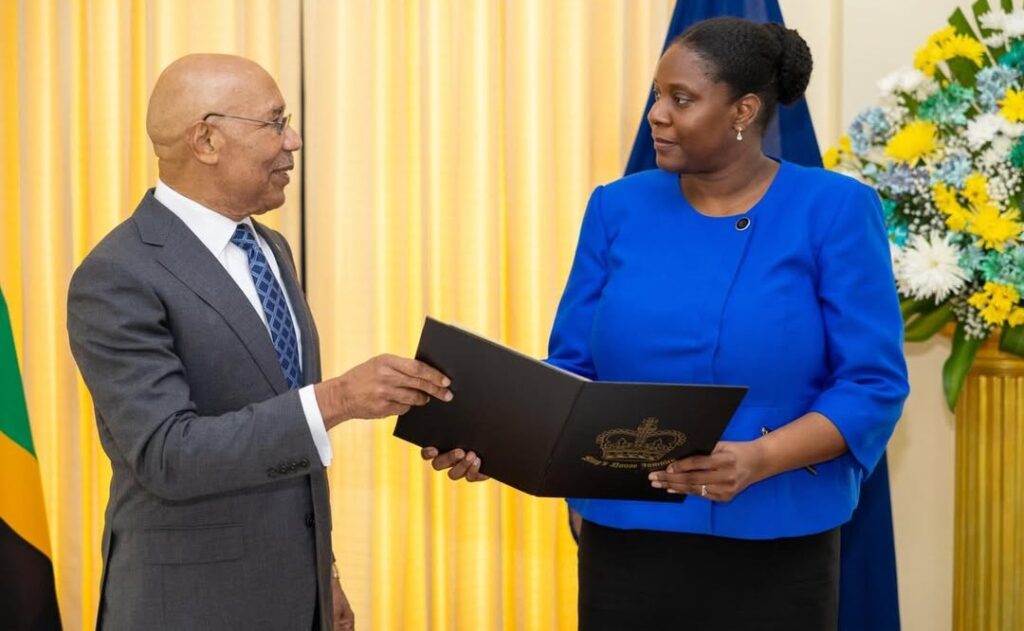
    Jamaica’s anti-corruption watchdog, the Integrity Commission (IC), has a new acting head of corruption prosecution, following the early resignation of former director Roneiph Lawrence. Veteran prosecutor Kelly-Ann Murdock officially took up the role in a swearing-in ceremony held Tuesday, March 31, where Jamaica’s Governor-General Sir Patrick Allen administered the oath of office. The appointment was announced publicly this Monday via the Governor-General’s official Instagram account.

    In the official announcement post, the Governor-General extended his warm well wishes to Murdock as she embarks on her new leadership tenure. He emphasized that the role Murdock steps into plays an irreplaceable part in protecting institutional integrity and enforcing accountability across Jamaica’s national justice framework.

    Murdock’s appointment fills the vacancy left by Lawrence, who stepped down from the post last month to accept an appointment as a domestic judge in Jamaica. Lawrence’s tenure in the same role was marked by political controversy from the start: when he was appointed to the position in 2023, Jamaica’s ruling Jamaica Labour Party raised formal objections over his long-standing personal friendship with Dr Dayton Campbell, General Secretary of the opposition People’s National Party (PNP).

    According to public profiles published on the IC’s official website, Murdock brings a wealth of specialized prosecutorial experience to the role, built over years of service across Jamaica’s justice system and the broader Caribbean region. She previously held multiple senior roles at Jamaica’s Office of the Director of Public Prosecutions (ODPP), including legal advisor to the Director of Public Prosecutions, crown counsel, and Assistant Director of Public Prosecutions. Beyond Jamaica’s borders, Murdock also served as a prosecuting attorney in the Turks and Caicos Islands, gaining hands-on regional legal experience that the IC highlights as a valuable asset for her new role.

    Murdock’s professional legal credentials date back to December 2016, when she was formally admitted to the Jamaican Bar. Her academic background spans multiple top institutions across the Caribbean and North America: she earned a Bachelor of Science in both International Relations and Criminology from the University of the West Indies’ Mona Campus, followed by a Bachelor of Laws degree from the University of the West Indies’ Cave Hill Campus. She completed her foundational legal training with a Certificate in Legal Education from Jamaica’s Norman Manley Law School, and later pursued advanced professional development in project management and strategic leadership at Lambton College in Toronto, Canada.

    Over the course of her legal career, Murdock has overseen a wide portfolio of high-stakes, complex criminal cases, including many matters of major public interest, per the IC’s statement. The commission notes she contributed to the preparation of several landmark prosecutions, including work on what the IC describes as “one of the largest gang trials in Jamaica” — the commission did not release further details or identify the specific case in its public announcement.

    In a formal statement outlining Murdock’s appointment, the IC reaffirmed her commitment to core institutional values: “Mrs Murdock is committed to upholding the rule of law, strengthening public trust and advancing the principles of accountability, transparency and integrity in public service.”

  • SMA reinforces commitment to Caribbean digital resilience and regional collaboration

    SMA reinforces commitment to Caribbean digital resilience and regional collaboration

    KINGSTON, Jamaica — Against a backdrop of growing regional demand for reliable, future-ready digital infrastructure, Jamaica’s top spectrum regulator has doubled down on its pledge to elevate digital resilience across Jamaica and the entire Caribbean basin, stressing that coordinated cross-border action, robust spectrum stewardship, and ongoing technical capacity investments are non-negotiable for long-term progress.

    The Spectrum Management Authority (SMA) laid out this strategic vision at the 31st annual Caribbean Network Operators Group (CaribNOG) Forum, which ran from April 14 to 16, 2026, in Kingston. The gathering brought together hundreds of regional and global digital industry stakeholders, policymakers, and technical experts to tackle pressing questions about the future of Caribbean digital infrastructure, aligning all discussions around the official forum theme: “The Resilient Archipelago: Strengthening the Caribbean’s Digital Core”.

    During a dedicated session focused on elevating women in the Caribbean tech and network operations space, Dr. Maria Myers-Hamilton, SMA’s Managing Director, centered her remarks on a critical, often overlooked truth: building robust, shock-resistant digital ecosystems requires far more than just laying new fiber or upgrading hardware. It requires intentional cross-stakeholder collaboration, visionary proactive leadership, and consistent, long-term investment in developing skilled workforces and strong institutional frameworks.

    “Digital resilience for the Caribbean is never solely a technical challenge,” Dr. Myers-Hamilton explained. “At its heart, it is a test of how we work together as an interconnected region. Our communication networks, our digital systems, and even our shared spectrum environments do not stop at national borders. To strengthen resilience, we must strengthen collaboration first, build up the technical expertise of our teams, and manage our finite spectrum resources in a way that prioritizes long-term sustainability and inclusive economic growth.”

    She went on to reinforce that evidence-based, effective spectrum management stands as the foundational pillar of all efforts to boost regional digital resilience, framing the practice as a strategic catalyst that unlocks universal connectivity, advances public safety outcomes, and drives broad-based economic development across Caribbean island nations.

  • BBC to cut up to 2,000 jobs in next two years

    BBC to cut up to 2,000 jobs in next two years

    LONDON, UK – One of Britain’s most iconic public media institutions, the British Broadcasting Corporation (BBC), announced this Wednesday that it intends to eliminate between 1,800 and 2,000 full-time roles across the organization over the next two years, a move rooted in severe and growing financial strain that has reshaped the global media landscape.

    In an internal statement shared with staff and later obtained by Agence France-Presse (AFP), interim BBC Director-General Rhodri Talfan Davies confirmed the scope of the cuts, noting that while final details are still being finalized, the corporation is preparing for a net reduction of nearly 2,000 roles. The announcement was first broadcast publicly on the BBC’s own rolling news channel Wednesday afternoon.

    Davies emphasized that the cuts are a necessary, urgent response to what the organization calls “significant financial pressures” that cannot be delayed. The BBC has outlined a target to cut £500 million from its £5 billion annual operating budget, with the majority of these savings required by the 2027 and 2028 fiscal cycles. If carried out as planned, this round of redundancies will mark the largest workforce reduction at the 100-year-old broadcaster in nearly 15 years, according to reports from UK-based ITV News and the Press Association.

    The downsizing comes at a time of unprecedented upheaval for traditional public service media. The BBC is grappling with multiple overlapping challenges: the rapid advancement of artificial intelligence that is reshaping content production workflows, shifting audience consumption habits that favor on-demand streaming over traditional broadcast, and a long-term decline in revenue from its core funding source, the television licence fee. In a March report, the broadcaster revealed that its real-term licence fee income has dropped by 24% since 2017, and the organization is required to cut its total cost base by an additional 10% by March 2029. The report warned that difficult decisions could ultimately lead to reduced content offerings and scaled-back public services.

    Beyond internal financial woes, the BBC is also facing high-profile external legal pressure. Former US President Donald Trump recently filed a $10 billion defamation lawsuit against the corporation over a documentary that edited footage of a 2021 speech Trump delivered ahead of the US Capitol riot. Trump alleges the editing misrepresented his remarks to make it appear he explicitly encouraged supporters to storm the congressional building.

    The restructuring comes as the BBC prepares to welcome a new permanent director-general next month: Matt Brittin, a longtime Google executive, who was hired specifically to steer the historic broadcaster through a period of major organizational transformation. Currently, the BBC remains a deeply embedded part of British public life, with the corporation reporting that 94% of all UK adults engage with its services on a monthly basis. It is funded entirely by the mandatory television licence fee paid by UK households that access any BBC content, rather than through commercial advertising.

  • US says nine vessels turned back in 48 hours of Iran port blockade

    US says nine vessels turned back in 48 hours of Iran port blockade

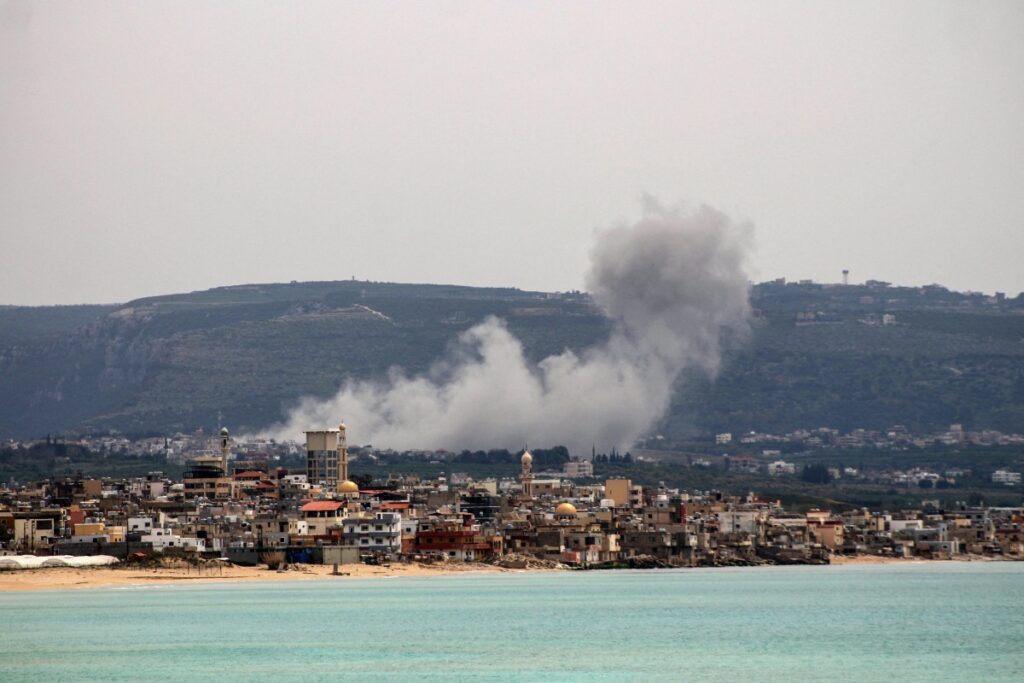
    In the escalating Middle East tensions that have roiled regional shipping and diplomatic relations, the United States military made a key announcement Wednesday regarding its newly imposed naval blockade around Iranian ports: over the first 48 hours of the operation, US forces successfully intercepted and turned back nine vessels attempting to depart Iranian territorial waters.

    US Central Command (CENTCOM), the military wing overseeing all American deployments across the Middle East, shared the update officially via a public post on X, the social platform formerly known as Twitter. In its statement, the command emphasized that zero vessels had managed to break through the US naval cordon established as part of the blockade. “Nine vessels have complied with direction from US forces to turn around and return toward an Iranian port or coastal area,” the post read, adding that “No vessels have made it past US forces.”

    This official claim, however, runs directly counter to independent maritime tracking data collected and analyzed by global shipping analysts. According to data from Kpler, a prominent provider of maritime logistics and tracking data, at least seven vessels connected to Iran passed through the Strait of Hormuz after the US blockade officially went into effect at 14:00 GMT this past Monday. Of those seven, at least three ships that departed Iranian ports successfully crossed the key global shipping chokepoint on Tuesday, though some other vessels on the route ultimately reversed course.

    The naval blockade is the latest escalation in a rapidly unfolding conflict that has upended regional security. After the US-Israeli joint air campaign against Iran launched on February 28, Iranian forces moved to close the Strait of Hormuz, the strategic waterway through which roughly 20% of the world’s global oil supplies pass. Following the collapse of regional peace talks over the weekend, the US officially announced its full naval blockade of Iranian ports on Sunday, marking a sharp escalation of American military involvement in the conflict.

  • Report warns LAC will only achieve 19% of the 2030 SDGs

    Report warns LAC will only achieve 19% of the 2030 SDGs

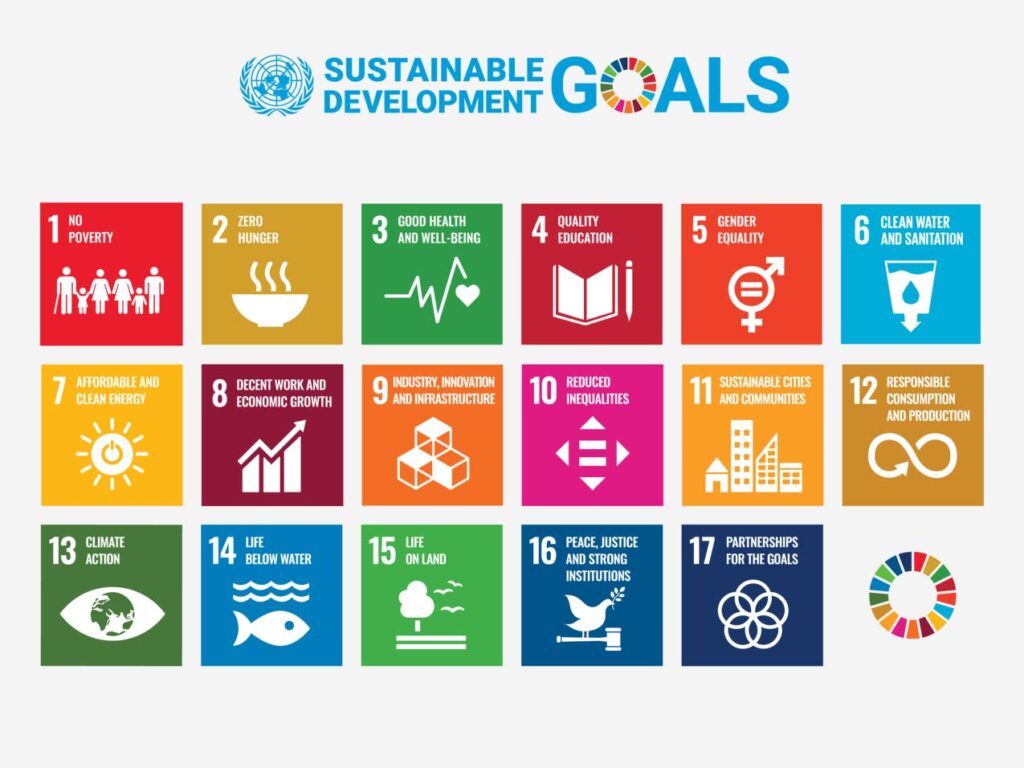
    SANTIAGO, Chile — Top stakeholders from across Latin America, the Caribbean and the global community have gathered in the Chilean capital for the ninth iteration of the Forum of the Countries of Latin America and the Caribbean on Sustainable Development, a landmark convening held at a moment of growing concern over rising geopolitical fragmentation and global uncertainty derailing progress toward the United Nations’ 2030 Sustainable Development Goals (SDGs).

    Hosted by the Economic Commission for Latin America and the Caribbean (ECLAC), the four-day gathering is set to wrap up on Thursday, with a core mission of forging cross-stakeholder agreements and sharing on-the-ground practical experiences to boost implementation of the 2030 Agenda for Sustainable Development. Attendees include senior government officials from across the region and beyond, representatives from the United Nations system, leaders of international and regional bodies, private sector executives, academic researchers, and civil society organizers, who will join a series of structured dialogues exploring coordinated action at global, regional, and national levels.

    With just four years remaining until the 2030 deadline for SDG achievement, ECLAC Executive Secretary José Manuel Salazar-Xirinachs opened the forum with a stark warning: current trends across Latin America and the Caribbean show progress on the SDGs is heading in the wrong direction, demanding urgent redoubling of efforts and strengthened regional and international collaboration to reverse existing gaps and get back on track. New analysis released by ECLAC alongside the forum paints an even grimmer picture than last year’s assessment: at the current pace of progress, only 19% of the region’s SDG targets will be met on time, down from the 23% projected in 2023.

    Of the remaining targets, 42% are showing progress toward goals but are moving far too slowly to meet 2030 deadlines, while 39% have either stalled completely or regressed since the 2015 adoption of the 2030 Agenda. ECLAC attributes this worsening outlook to a mix of external global shocks and domestic structural challenges, including eroding institutional capacities, failure to prioritize SDG targets in national policy, limited access to development financing, constrained fiscal space, growing sovereign debt burdens, and most critically, persistently low economic growth across much of the region.

    Despite the grim assessment, Salazar-Xirinachs struck a determined tone with delegates, emphasizing that stakeholders across the region retain the agency, resources, and platforms to course-correct. “We are not just passive witnesses of this new era of uncertainty,” he said. “We have agency, assets and tools. We have active platforms, like this forum, and the collective will that brought us all here together.”

    He highlighted the broad base of support for sustainable development across sectors, from civil society and youth movements to the private sector, academia, and all levels of government, noting that the multilateral system forged after World War II remains more necessary today than ever, even amid its current challenges. He urged attendees to approach the forum’s deliberations with conviction and a pragmatic sense of what can be achieved, arguing that this perspective does not equate to naivety or ignoring the very real barriers the region faces.

    “To move towards development, hope is not enough, but it is a necessary precondition,” Salazar-Xirinachs said. He acknowledged that accelerating SDG implementation is exceptionally difficult in today’s fractured geopolitical context, but stressed that this context is exactly why the work of the forum is so critical. In an increasingly divided world where power politics dominate global relations, he noted that intentional cooperation and collaborative action serve as the most effective counterweight to fragmentation.

    Salazar-Xirinachs noted that ECLAC’s daily work consistently demonstrates that the vast majority of global stakeholders are committed to collectively building an inclusive, sustainable future for all. “That is why we must coordinate more and better. Making progress on what is possible, forging pragmatic partnerships and helping others understand that the 2030 Agenda is, in the end, an agenda for transforming societies in order to achieve shared human aspirations: to live better, live in peace, live in a healthy environment, live free of injustice and excessive inequalities,” he said, closing his opening remarks with a call to action: “This is not the time to throw in the towel, but rather to roll up our sleeves and keep working.”

    Under-Secretary-General for Economic and Social Affairs at the United Nations Li Junhua echoed many of Salazar-Xirinachs’s observations, noting that Latin America and the Caribbean continues to grapple with long-standing structural constraints, including persistently high inequality and growing vulnerability to climate-related disasters. Even so, he highlighted the region’s important leadership in key areas including social protection policy, building climate resilience, and advancing inclusive development strategies, and praised ECLAC’s foundational role in supporting these efforts through regional cooperation and evidence-based policy guidance.

  • 11 nations urge ‘coordinated’ economic support amid Middle East war

    11 nations urge ‘coordinated’ economic support amid Middle East war

    LONDON – In a collective push to shore up the global economy against mounting fallout from escalating Middle East tensions, finance ministers from 11 major industrialized nations including the United Kingdom and Japan issued a joint call Wednesday for targeted emergency assistance to vulnerable states grappling with conflict-driven disruptions.

    Released publicly by the UK government, the statement urges the International Monetary Fund and World Bank to roll out a coordinated emergency support package for impacted economies, with interventions customized to each nation’s unique challenges and leveraging the full flexible scope of the two institutions’ existing policy tools.

    The ministers warned that a resumption of large-scale hostilities, an expansion of the current conflict across the region, or sustained navigation disruptions in the strategic Strait of Hormuz would trigger severe new threats to global energy security, interconnected supply chains, and broad international economic and financial stability. Even if a lasting peace agreement is reached in the near term, the ministers emphasized that lingering shocks to global growth, inflation trajectories, and financial markets will continue to weigh on the global economy for the foreseeable future.

    Beyond addressing Middle East-related risks, the joint statement reaffirmed the signatory nations’ unwavering commitment to backing Ukraine’s sovereignty and maintaining coordinated economic pressure on the Russian government nearly four years into Moscow’s full-scale invasion. The ministers noted that Russia’s ongoing war in Ukraine continues to drag on global economic performance, and pledged to keep working together to strengthen sanctions while avoiding unnecessary disruptions to global supply chains and energy markets as market conditions evolve. The group also restated its commitment to ensuring Russia cannot profit from its illegal aggression.

    The full list of signatory countries includes Australia, Finland, Ireland, Japan, the Netherlands, New Zealand, Norway, Poland, Spain, Sweden, and the United Kingdom, representing a broad cross-section of Western and Indo-Pacific advanced economies aligned in their approach to global geopolitical and economic risks.