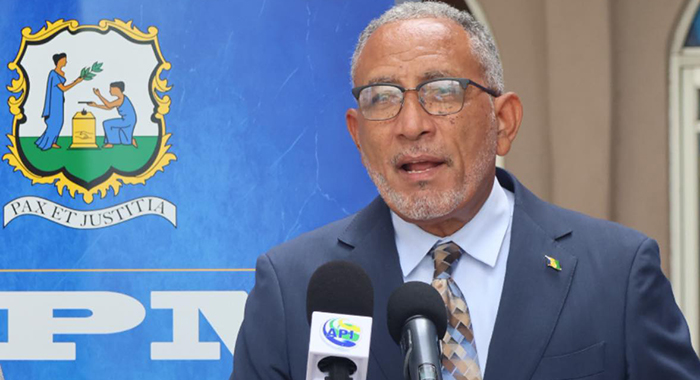
Amid a sharp global uptick in oil and fuel prices that is driving soaring energy costs worldwide, Prime Minister Godwin Friday of St. Vincent and the Grenadines has rolled out a package of targeted, temporary policy measures designed to block crippling spikes in electricity bills for residential households and small local businesses. The interventions were formally announced during a nationally broadcast address Wednesday focused on the country’s mounting economic pressures and the growing cost-of-living crisis hitting ordinary citizens.
Friday opened his address by warning that rising fuel costs for power generation have already pushed up the fuel surcharge added to monthly utility bills, and without urgent government action, electricity costs would become financially unbearable for large swathes of the Vincentian population. He noted that VINLEC, the country’s state-owned national electricity provider, had already recorded a roughly 29% jump in fuel surcharges during the first quarter of this year, and that costs would continue climbing without intervention.
At the center of the government’s three-month cost containment plan is a full waiver of two key taxes on diesel purchased exclusively for electricity generation: the customs service charge and the national excise tax. Friday emphasized that this policy represents a deliberate short-term sacrifice of public revenue, with the government expected to forego approximately $1.65 million in income over the three-month period. All savings generated by the tax waiver will be passed directly to consumers, rather than retained by the utility, he confirmed. “We as government are absorbing part of the blow, so that ordinary Vincentians do not have to absorb them all by themselves,” Friday stated, adding that the goal is to cap or even lower monthly electricity bills for end users.
In addition to the tax relief, the government is mandating that VINLEC share the burden of elevated global fuel prices with consumers through a tiered discount program for fuel surcharges that activate once surcharges cross specific price thresholds. Friday framed this framework as a model of partnership and shared responsibility between the public sector, the state utility, and private citizens.
Under the mandatory discount scheme, if the per-kilowatt-hour fuel surcharge exceeds EC$0.71, VINLEC is required to apply a 50% matching discount to the fuel portion of the cost calculation. If the surcharge rises even higher, crossing EC$0.77 per kilowatt-hour, the utility must cover 100% of any additional increase for residential customers. “This intervention means relief on utility bills and protection against runaway increases,” the prime minister said.
Friday repeatedly stressed that protecting electricity affordability is foundational to protecting overall household financial stability and small business viability across the country. Unchecked electricity price growth would force families into impossible choices between covering basic needs, he argued, noting: “It means the difference between a bill that remains manageable and one that forces families to choose between electricity and groceries, both essential.”
For small enterprises — from barbershops and tailors to neighborhood grocers, restaurants, bakeries, and small local manufacturing operations — the price controls will protect existing jobs, keep operating margins sustainable, and allow businesses to keep consumer prices affordable, the prime minister added. By capping electricity costs, the government also aims to slow the transmission of higher generation costs into the broader prices of goods and services, including food and products that rely heavily on power for refrigeration, lighting, and machinery.
Beyond these short-term relief measures, Friday used the address to lay out the government’s medium- and long-term strategy to eliminate St. Vincent and the Grenadines’ exposure to volatile global fuel markets: accelerating a national transition to renewable energy, with a particular focus on utility and residential solar power. The administration already maintains a full 100% tax waiver on solar photovoltaic systems to encourage adoption, and Friday said the current crisis has only increased the urgency of this shift. “The current crisis is an opportunity, forced upon us, to move aggressively towards renewable energy production, especially solar,” he said.
The transition will require updating national legislation to modernize regulations for electricity production and distribution, and Friday confirmed that VINLEC will be expected to take a leading collaborative role in driving this transition forward. The government is also engaged in ongoing discussions with regional partners through blocs including CARICOM and ALBA to negotiate more stable long-term government-to-government energy arrangements that strengthen regional energy security.
The electricity relief package forms just one pillar of a broader 90-day cost-of-living strategy the government is rolling out to address rising prices across key household expenses. The wider plan also includes temporary interventions for pump fuel, cooking gas, freight charges, and food prices, including cuts to excise taxes and a 50% reduction in the customs service charge on imported petroleum products. These broader fuel measures are designed to cap price increases for gasoline and diesel at no more than $5 per gallon, a change that complements electricity price controls given the country’s reliance on diesel for both power generation and ground transport.