博客

  • ODPEM reports more than $1.4 b in donations following passage of Hurricane Melissa

    ODPEM reports more than $1.4 b in donations following passage of Hurricane Melissa

    KINGSTON, Jamaica — Five months after Hurricane Melissa made landfall and caused widespread damage across Jamaica, the island nation’s disaster management agency has secured more than JA$1.4 billion in donations from a global network of supporters to fund recovery and long-term resilience work.

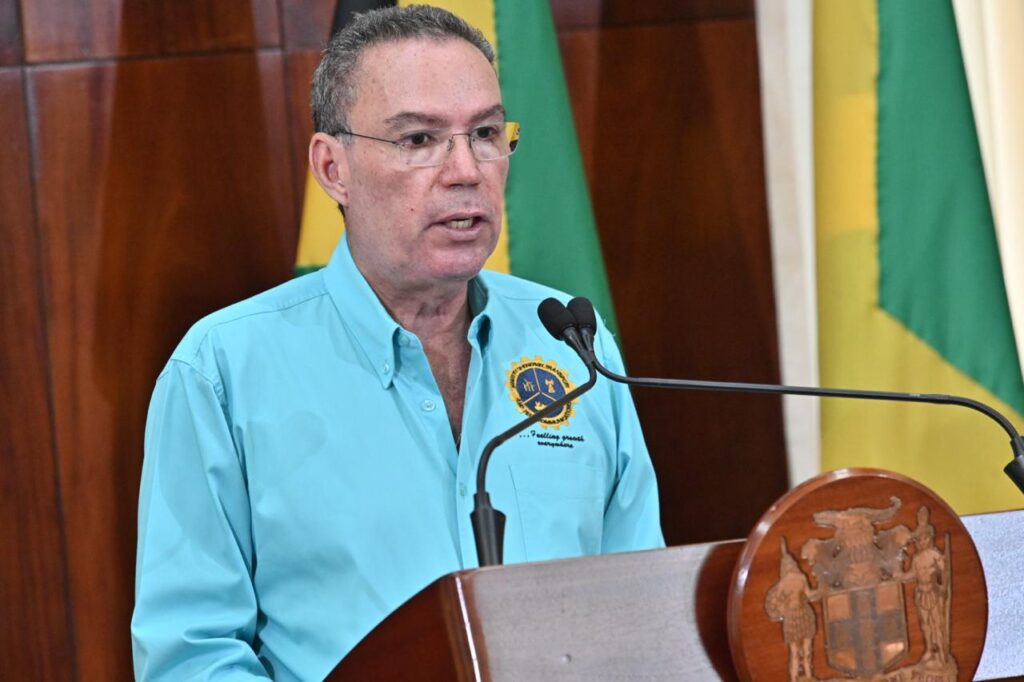
    Commander Alvin Gayle, Director General of the Office of Disaster Preparedness and Emergency Management (ODPEM), announced the updated donation figures during an April 15 post-Cabinet press briefing at Jamaica House. As of March 31, more than 17,000 individual and institutional donors have contributed to post-hurricane reconstruction efforts, which launched after the storm hit the country on October 28 last year.

    To streamline giving, ODPEM set up multiple donation channels: an online payment gateway integrated into the official Support Jamaica portal for digital contributions, as well as dedicated local bank accounts for both Jamaican dollar and U.S. dollar direct transfers. Gayle confirmed that roughly 80 percent of all total donations arrived via direct bank transfers, highlighting the preference for direct giving among large and institutional donors.

    The donor pool represents a broad cross-section of partners, ranging from local community members and domestic businesses to regional blocs, international governments, global non-governmental organizations, and private individuals from across the world. After accounting for currency conversions, net donations deposited in ODPEM-managed accounts total JA$1,478,269,567, Gayle confirmed.

    To date, a portion of the pooled funds has already been allocated to two core priority areas aligned with the government’s national recovery strategy: the public Shelter Recovery Programme and the purchase of heavy construction equipment to boost national disaster response capacity. Per a donor request, the equipment purchase is already greenlit for funding.

    So far, JA$146 million in donated cash has gone toward the government-led roof repair initiative, which has been further bolstered by an in-kind donation of $400 million worth of roofing materials from international and local partners. An additional JA$7.2 million has been disbursed to cover logistics and operational costs for the housing recovery program.

    As of the latest update, 410 damaged residential roofs have been fully completed under the program, with dozens more scheduled for construction in the coming weeks. Gayle noted that total program spending will rise as more projects move forward, adding that all beneficiaries have been vetted for vulnerability by the Ministry of Labour and Social Security to ensure support reaches the communities most in need.

    Separately, JA$320 million in donations has been earmarked for the procurement of heavy construction equipment designed to strengthen Jamaica’s emergency response capabilities. According to Gayle, this allocation does more than just address the immediate aftermath of Hurricane Melissa: it represents a long-term strategic investment that will upgrade the country’s entire national disaster preparedness and resilience infrastructure for future extreme weather events.

    The remaining unspent donation balance will be held in reserve and allocated to additional recovery and resilience projects as needed, including the upcoming rapid deployable modular housing initiative, which is designed to provide emergency shelter quickly after future natural disasters.


  • YouTube suspends pro-Iran channel posting Lego-style clips mocking Trump

    YouTube suspends pro-Iran channel posting Lego-style clips mocking Trump

    In a move that has reignited debates over content moderation and geopolitical influence online, Google-owned YouTube has taken down a channel operated by Explosive Media, a pro-Iran content creation collective that gained global fame for its viral Lego-themed AI-generated animations mocking former U.S. President Donald Trump amid escalating U.S.-Iran tensions. The platform confirmed the termination Wednesday, citing violations of its rules against spam, deceptive practices, and scams, though no further details about the specific violations were provided. YouTube added the suspension was implemented on March 27.

    Widely known for its punchy satirical content that blends American pop culture references with anti-U.S. messaging, Explosive Media has amassed millions of views on its animated clips since tensions flared between Washington and Tehran. While the group frames itself as an independent creative outlet, multiple industry observers and Western media outlets have long suspected it maintains undisclosed ties to the Iranian government, claims the organization has repeatedly dismissed as deliberate misinformation.

    Despite the removal from YouTube, the group has continued publishing its satirical content on other major social platforms, including Elon Musk-owned X (formerly Twitter) and encrypted messaging app Telegram, according to on-the-ground checks. U.S. media reports also confirm Meta, the parent company of Instagram, has taken down one of Explosive Media’s Instagram accounts, though a secondary account operating under the same name remained active as of Wednesday. Meta has not yet responded to requests for comment from Agence France-Presse on the decision.

    Responding to YouTube’s action on its official X account, Explosive Media pushed back against the ban, questioning: “Seriously! Are our LEGO-style animations actually violent?”

    Contrary to expectations, the channel termination has done little to curb the spread of Explosive Media’s work. Many of the group’s most popular clips continue to circulate widely across YouTube, reposted by independent third-party content creators that have preserved the content after the original channel was removed.

    The group’s signature format depicts former President Trump as a cartoonish yellow Lego figure with an oversize head, framing him as an out-of-touch, isolated leader prone to immature outbursts disconnected from real-world events. Shortly after a two-week ceasefire between Israeli and Hamas forces was announced last week, the group posted a new clip to X with the caption “TACO will always remain TACO” — an acronym coined by the group for “Trump always chickens out.”

    That video, paired with dramatic orchestral background music, shows a Trump stand-in toy huddling with Arab leaders before throwing a chair at visiting U.S. military officials. It closes with a scene of Iranian generals pressing a red button marked “Back to the Stone Age,” triggering a wave of fictional destruction across the Middle East.

    Policy and information warfare analysts have identified this genre of cartoonish, meme-driven content as a rapidly growing tool in modern geopolitical information campaigns, coining the term “Legofication” to describe this new style of conflict propaganda. Clips from Explosive Media and similar groups are regularly amplified by official Iranian diplomatic missions and pro-Tehran social media accounts, spreading their reach far beyond organic audiences.

    In recent weeks, the viral Lego-style memes have covered a wide range of hot-button regional topics: they have depicted fictional Iranian military victories, reimagined global leaders as dependent on Iran for energy access, and even redesigned the strategically critical Strait of Hormuz as a whimsical cartoon toll booth controlled by Iranian authorities.

    Unlike content targeted at domestic Iranian audiences, all of Explosive Media’s output is produced in English, indicating its core target demographic is users outside of Iran. This geographic targeting aligns with domestic internet restrictions in Iran: platforms including X have been fully blocked within the country for years, only accessible via virtual private networks that circumvent censorship. NetBlocks, a global internet monitoring organization, has documented a near-total “internet blackout” for Iranian civilians in recent months, leading many observers to question how an independent civilian group could consistently produce and upload high-quality polished content amid such widespread restrictions. Explosive Media has pushed back against these suspicions, calling the allegations a distortion of its work by hostile media outlets.

  • The White Lotus starts filming season 4 in France

    The White Lotus starts filming season 4 in France

    Production on one of television’s most celebrated dark comedies, *The White Lotus*, has officially entered its fourth chapter, with cameras rolling across the sun-drenched French Riviera, HBO confirmed in an official announcement Wednesday. The hit Emmy-winning anthology series, which relocates to a new luxury hospitality destination each season to unpack the tangled lives of wealthy guests and overworked hotel staff, has chosen the iconic Cannes Film Festival as its central narrative setting for this upcoming run.

  • Arsenal survive tense Sporting stalemate to reach Champions League semis

    Arsenal survive tense Sporting stalemate to reach Champions League semis

    LONDON — In a tense, error-strewn quarter-final second leg at the Emirates Stadium on Wednesday, Arsenal clung to a narrow first-leg advantage to secure a 0-0 draw with Sporting CP, booking their place in the Champions League semi-finals with a 1-0 aggregate victory. The north London side’s progression comes despite a deeply underwhelming performance that has renewed questions about their title credentials ahead of a pivotal Premier League showdown with Manchester City this weekend.

    Mikel Arteta’s side will face Atletico Madrid in the last four for a shot at a first Champions League final appearance since 2006. The Spanish side secured their own semi-final spot on Tuesday, edging out Barcelona 3-2 on aggregate. While Arsenal famously hammered Atletico 4-0 at home during the group stage in October, few observers are predicting a repeat performance: the Gunners have now produced a string of disjointed, nervous outings in recent weeks, and will need a drastic improvement to advance to the final.

    This run to consecutive Champions League semi-finals is a first in Arsenal’s 138-year history, a milestone that marks clear progress under Arteta. Yet the club’s recent form has been deeply underwhelming: they have won just one of their last five matches across all competitions, dropping points at the worst possible moment as they chase a first Premier League title since 2004 and an unprecedented Champions League crown. As things stand, the Gunners sit six points clear of second-placed Manchester City, but Pep Guardiola’s side hold a game in hand and will host Arsenal in a title-deciding clash at the Etihad on Sunday.

    Flaws that Arteta has yet to fix were on full display against Sporting. A day before the match, the Arsenal manager made an impassioned plea to his players, urging them to take to the pitch with “pure fire” and “zero fear” to silence their critics. But his side failed to deliver on that call. After a brief, energetic pressing spell in the opening 10 minutes failed to yield a goal, Arsenal dropped deep into a defensive shell, lacking both creative cohesion and cutting edge in the final third. The absence of injured star midfielders Bukayo Saka and Martin Odegaard left the attack sluggish and predictable for much of the 90 minutes.

    Center-back William Saliba gifted Sporting an early chance with a wayward pass that let Francisco Trincao curl a shot just wide of the post. Striker Viktor Gyokeres, signed from Sporting in the summer in a £65 million deal, struggled once again to impose himself on the game: his only clear sight of goal, a run into the six-yard box, ended with a last-ditch tackle from Goncalo Inacio before he could get a shot away.

    Arsenal goalkeeper David Raya compounded his side’s struggles with a dangerous misplayed pass that was intercepted by Trincao just outside the penalty area, but the winger’s misplaced pass to Luis Suarez let the Gunners off the hook. On the stroke of half-time, Geny Catamo came inches from leveling the aggregate score, his volley from a tight angle striking the far post and bouncing away to safety. The home crowd, growing increasingly frustrated with their side’s lethargy, greeted most passages of play with anxious groans as the minutes ticked by.

    After the break, Eberechi Eze saw a driven shot curl just wide of the post, Gabriel Martinelli blasted an effort over the crossbar, and Noni Madueke’s shot clipped the side-netting, but Arsenal never managed to put together a sustained period of attacking pressure. Arteta made a double substitution to turn the tide, bringing on Kai Havertz for the out-of-form Gyokeres and Max Dowman to replace the injured Madueke. Late on, Sporting had a penalty appeal turned down after a slight shove from Cristhian Mosquera on Maxi Araujo, but the referee waved away their claims.

    Despite creaking under sustained late pressure from Sporting, Arsenal held firm to see out the clean sheet they needed to progress. For Arteta, the relief of reaching the semi-finals is tempered by growing questions about his side’s mental and physical resilience: the Gunners have already lost the League Cup final to City, crashed out of the FA Cup to second-tier Southampton, and suffered a shock 2-1 home defeat to Bournemouth in the Premier League at the weekend. Having blown substantial title leads to City in each of the past two seasons to finish as runners-up, nerves are already building around the club as they head into Sunday’s title showdown.

  • Jason Pitter’s rise to fame

    Jason Pitter’s rise to fame

    KINGSTON, Jamaica — In the world of Jamaican track and field, where sprint legends are forged from a young age, a new prodigy is turning heads and breaking long-standing records. At just 15 years old, Jason Pitter has pulled off an unprecedented athletic transformation: cutting an extraordinary five seconds off his 400-meter personal best in only two years, a leap of progress that coaches and analysts call almost unheard of for youth athletics.

    When Pitter first stepped onto the track of the 2024 Boys’ and Girls’ Championship, Jamaica’s most prestigious high school track meet, he was a relative unknown competing in the under-15 (Class Three) division. He entered the 400m final with the third-fastest qualifying time of 50.54 seconds, but a tough final saw him cross the line in fourth place with 51.66 seconds, well off his best performance. He also placed fifth in the 200m, trailing winner Mario Ross by almost a full second. No one could have predicted the rapid rise that would follow over the next 24 months.

    Under the guidance of veteran coach Richard Smith, who built a tailored, gradual development plan for the young athlete, Pitter began to improve steadily. Smith’s plan prioritized balanced growth: boosting raw speed, building core strength, refining running technique, and increasing speed endurance, all while protecting the teen athlete from injury and burnout. By 2025, when Pitter moved up to Class Two (under 17), that structured training began to deliver staggering results.

    At the 2025 Championship, Pitter claimed the Class Two 400m title in 47.92 seconds, becoming the only competitor in the race to break the 48-second barrier. He avenged his 2024 loss to Rushaine Richards, who finished fourth that year with only a small improvement on his 2024 winning time. Pitter also earned a podium spot in the 200m, taking third with a time of 22.01 seconds, cutting almost a full second off his 2024 final time. The one-year improvement from 50.54 seconds to sub-48 confirmed that Pitter was no flash in the pan.

    “Jason Pitter’s work ethic has been one of the key factors behind his development,” Smith explained in an interview with Observer Online. “From early on he showed a strong commitment to training. He is consistent, disciplined and willing to handle the demands of the programme. He approaches sessions with focus and is always prepared to learn and improve, whether it is technical work, conditioning, or race execution.”

    That work ethic paid off in historic fashion at the 2026 Championship. Pitter became the first Class Two runner in the entire 100-plus year history of the meet to break the 46-second barrier, stopping the clock at a jaw-dropping 45.76 seconds.

    The teen displayed tactical maturity far beyond his age throughout the competition, conserving energy in the early rounds to peak for the final. He cruised through his opening heat in 49.86 seconds, then jogged through the semi-final to finish second in 47.24 seconds, letting top rivals Diwayne Sharpe and Jaden Campbell push to faster times ahead of the main event. In the final, with the entire stadium watching, Pitter unleashed an explosive surge of speed in the final 100m that no competitor could match, leaving his rivals far behind.

    His winning time shattered Christopher Taylor’s 10-year-old Class Two record of 46.33 seconds, and was actually faster than the winning time of 46.21 seconds posted by Paul Henry, the winner of the open-age Class One 400m that same year. Pitter didn’t stop there: he completed a dominant double by winning the Class Two 200m in 21.03 seconds, beating out 2024 winner Mario Ross who took third.

    Smith says he never doubted Pitter’s ability to reach this milestone, crediting the teen’s combination of natural talent and relentless work ethic for the rapid progress. “When an athlete combines talent with the right attitude toward training, progress can happen quickly. What Jason has done over the past two years is really the result of steady development, structured training and his willingness to put in the work every day,” Smith said. “When you look at his dedication, his physical development, and the environment around him, it’s a progression that reflects what can happen when an athlete fully commits to the process.”

    Fresh off his record-breaking performance at Champs, Pitter carried his winning form to the Carifta Games, where he claimed his first international under-17 title despite carrying fatigue from the national championship. Again, he used smart tactics to outperform rivals: he held back in the semi-final to save energy, then pulled away from compatriot Diwayne Sharpe in the final stretches of the race to take gold in 47.47 seconds, with Sharpe earning silver to give Jamaica a one-two finish. The pair then teamed up to help Jamaica win gold in the under-17 4x400m relay.

    As the athletics world waits to see if Pitter will qualify for Jamaica’s Under-20 World Championship team, few are willing to bet against the teen sprint star. With times that already outpace most of the country’s top older runners, Pitter’s rapid rise suggests that Jamaican track and field may have just found its next global icon.

  • Jury finds Ticketmaster owner ran illegal monopoly

    Jury finds Ticketmaster owner ran illegal monopoly

    In a landmark ruling that could reshape the global live entertainment industry, a federal jury in New York delivered a decisive verdict Wednesday against entertainment conglomerate Live Nation, confirming that its Ticketmaster subsidiary unlawfully exercised monopoly power in violation of both federal and state antitrust regulations, California Attorney General Rob Bonta has announced.

    Following four days of closed deliberations, the 10-member jury unanimously held Live Nation and Ticketmaster responsible for a pattern of anti-competitive behavior that inflicted widespread harm across the music ecosystem, including the inflated ticket pricing that has frustrated concert-goers for more than a decade. The outcome opens the door to sweeping corrective measures, with a full structural separation of Live Nation’s live event promotion business and its Ticketmaster ticketing division among the potential remedies being considered.

    Bonta framed the ruling as a watershed moment for creators, concert fans and independent entertainment venues across the country. “This is a historic and resounding victory for artists, fans, and the venues that support them,” Bonta said in an official statement released after the verdict. He noted that the successful state-led challenge comes amid a years-long period of weakened federal antitrust oversight, proving that cross-state coalitions can hold large corporate actors accountable even when federal action lags. “In the face of dwindling antitrust enforcement by the Trump Administration, this verdict shows just how far states can go to protect our residents from big corporations that are using their power to illegally raise prices and rip-off Americans,” Bonta added. “We are incredibly proud of today’s outcome — and especially proud of our coalition made up of red and blue states alike who understood we needed to come together to protect our consumers, businesses, and state economies from Live Nation’s illegal conduct.”

    Per the jury’s findings, Live Nation engaged in systemic overcharging of ticket buyers between May 2020 and 2024, a period that saw explosive growth in live event attendance following the end of global COVID-19 pandemic restrictions.

    The case originated in May 2024 under the Biden administration, when the U.S. Department of Justice (DOJ) formally filed suit, publicly labeling Live Nation as an unchecked monopolist that controlled nearly the entire U.S. live entertainment market. Today, Live Nation stands as an undisputed industry behemoth: in 2025 alone, the company organized more than 55,000 events across the globe, drawing a total of 159 million attendees. Beyond its core promotion business, Live Nation holds ownership or controlling stakes in 460 major entertainment venues, and has owned Ticketmaster — the world’s largest primary ticket sales platform — since the controversial 2010 merger of the two companies.

    Federal prosecutors and state attorneys general accused Live Nation of leveraging its outsized market power to coerce artists and independent venue operators into exclusive contracts, stifle emerging ticketing competitors, and impose exorbitant hidden fees that can add as much as 30% to the final cost of a concert ticket for consumers. The original DOJ suit called for a forced divestment of Ticketmaster as a core remedy to restore competition to the live entertainment market.

    Shortly after the trial got underway in New York, Live Nation reached a tentative settlement agreement with the DOJ. However, the bipartisan coalition of 39 states that had joined the antitrust challenge opted to continue the trial in pursuit of more sweeping concessions. The terms of the existing DOJ settlement require Live Nation to open its ticketing infrastructure to competing platforms, allow independent promoters to book events at a selection of Live Nation-owned venues, divest ownership of up to 13 large outdoor amphitheaters, and pay a combined $280 million in damages to the states participating in the suit.

    Even before the jury’s verdict, the tentative settlement drew sharp criticism from progressive policymakers, including Democratic Senator Elizabeth Warren, who condemned the agreement in a post on X shortly after it was announced. “Donald Trump just betrayed every fan who’s been exploited by Ticketmaster,” Warren said, arguing that the $280 million penalty amounts to a mere slap on the wrist for the profitable conglomerate. “This fine is less than one percent of Live Nation’s revenue last year. We need to break up Ticketmaster and Live Nation.”

    Now, U.S. District Judge Arun Subramaniam will oversee the next phase of the case, where he will determine the final amount of monetary damages and set the scope of structural and behavioral remedies to address Live Nation’s unlawful monopoly power.

  • Pastor Bethel says FNM lottery proposal insults Bahamian voters

    Pastor Bethel says FNM lottery proposal insults Bahamian voters

    A decades-long debate over gambling legalization in The Bahamas has reignited after the opposition Free National Movement (FNM) announced plans to pursue a state-operated national lottery, drawing fierce pushback from a prominent religious and anti-gambling activist who says the plan directly defies the will of the Bahamian public.

    Pastor Lyall Bethel, who previously served as co-leader of the anti-gambling advocacy group Save Our Bahamas, has emerged as one of the most vocal critics of the proposal. In a public letter to the editor, Bethel called the FNM’s policy shift an unforgivable “slap in the face” to voters who overwhelmingly rejected both a national lottery and the regulation of unlicensed web shop gambling in a 2013 national referendum.

    Bethel says he was shocked by the opposition’s decision to resurrect the policy, noting that official referendum results make voter opposition unambiguous: 59.56 percent of participants rejected a national lottery, while 60.71 percent voted against regulating and taxing existing web shop gambling operations. For Bethel, the FNM’s choice to advance the proposal despite this clear outcome is not just a policy misstep — it is a deliberate insult to the majority of Bahamians who cast their ballots against expanded gambling.

    “To see the opposition wade foolishly and recklessly into this conversation with talk of a national lottery is insulting and a slap in the face to the majority of Bahamians who said NO to BOTH the proliferation of numbers house gambling AND a national lottery,” Bethel wrote. “THE PEOPLE SAID NO!”

    Beyond the breach of democratic will, Bethel argues the FNM has surrendered the moral high ground it held among the large bloc of Bahamian voters who oppose expanded gambling. He notes the party had a clear opportunity to demonstrate its commitment to respecting public opinion and the stance of the country’s majority religious institutions, but squandered that political advantage through what he calls an unnecessary and reckless action.

    The controversy stems from recent remarks by FNM leader Michael Pintard, who framed a state-run national lottery as a promising new revenue stream to fund national development projects. The proposal has pulled back the curtain on a decades-long national debate that has stalled multiple previous attempts to expand legal gambling, held back by widespread concerns over its potential social harms and questions about long-term feasibility.

    Incumbent Prime Minister Philip Davis has already dismissed the FNM’s plan as a shallow political “gimmick”, and Bethel is far from alone in his opposition. Other senior religious leaders across the country have renewed their longstanding objections to the proposal, pointing both to the 2013 referendum result and the proven social damage that expanded gambling brings to low-income and vulnerable communities.

    For Bethel, gambling is already a corrosive force in Bahamian society, which he describes as “a parasitic pariah on the soul of this country”. He warns that formalizing and expanding access through a national lottery would only exacerbate the social harms that Bahamians already grapple with, from problem gambling to increased economic inequality.

    Bethel also raised pointed questions about whether lottery proceeds would actually be used for the public development projects promised by the FNM, pointing to longstanding public anger over mismanagement and corruption in the handling of public funds across successive Bahamian governments. “Bahamians are tired of waste, corruption, failed rehashed ideas peddled by one government after the other,” he wrote.

    In closing, Bethel issued a direct warning to Pintard, urging the FNM leader to reverse course immediately before the proposal erodes his party’s political support. “I urge Mr Pintard to step back from this reckless, foolish decision that will cost you more votes than you think you gained,” he said. He added that the plan risks alienating both influential church groups and the large share of voters who oppose gambling, insisting that the 2013 referendum result must remain the final word on the issue. “The people said NO to a National Lottery! What part of ‘NO’ is unclear to the FNM?” he wrote.

  • Gibson’s ex-fiancée testifies she took immunity deal to tell the truth

    Gibson’s ex-fiancée testifies she took immunity deal to tell the truth

    A high-profile corruption trial centered on public infrastructure contracts in The Bahamas took another pivotal turn this week, as the star prosecution witness pushed back against aggressive defense questioning while standing by her agreement to cooperate with authorities. The case, which has gripped local political circles since opening in late 2023, involves Adrian Gibson, a Long Island Member of Parliament and former executive chairman of the country’s Water and Sewerage Corporation, who stands accused of misconduct tied to contract awards during his tenure at the state-owned utility. Alexsndria Mackey, Gibson’s one-time romantic partner and former business associate, took the stand in the Supreme Court on Tuesday to face cross-examination from Damian Gomez, KC, lead defense counsel for Gibson.

    Under hours of pointed questioning, Mackey reaffirmed her commitment to testifying truthfully, noting that her grant of immunity from prosecution is explicitly conditional on her full and honest cooperation with the investigation. She acknowledged that the serious criminal charges she originally faced, which carry severe legal penalties, were a major factor in her decision to negotiate a plea deal, but pushed back against defense claims that she fabricated testimony solely to avoid prison time. “I knew I needed to tell the truth,” Mackey told the court, adding that even with the threat of potential incarceration hanging over her, her decision to accept the deal was rooted in a requirement to disclose everything she knew about the business arrangements tied to the contracts.

    Mackey detailed the timeline of her decision to cooperate, explaining she moved forward with the immunity agreement shortly after co-defendant Tanya Demeritte was arrested and returned to The Bahamas. At that time, Mackey said, she learned she was also at risk of arrest, prompting her to move forward with negotiations through her legal representation. She flatly denied a defense claim that former Assistant Commissioner of Police Deleveaux pressured her to testify by threatening deportation or legal action against her parents, dismissing the assertion outright.

    Much of Tuesday’s cross-examination centered on the corporate structure of two firms tied to the case — Elite Maintenance and Oak Bay Limited. Mackey has maintained that she, Gibson, and Demeritte were the true beneficial owners of the companies, which won contracts from the Water and Sewerage Corporation during Gibson’s tenure. She admitted that the beneficial owners were never officially registered with authorities, and that bank documents listed Jerome Missick and Joan Knowles, two of Gibson’s co-defendants in the trial, as placeholder owners to conceal the identities of the true shareholders. When challenged by Gomez over whether she is hiding key corporate records and lying about having already turned relevant documents over to Gibson, Mackey denied the allegations.

    On one point of discrepancy, Gomez called into question Mackey’s recent claim that key documents were sent to Grand Bahama, noting she had not raised that detail in earlier police interviews. Mackey acknowledged that she did not mention specific trust documents during her initial interview with law enforcement, and could not recall when she first brought up the detail, but stood by her core account of the companies’ ownership structure. She confirmed she received payments from Oak Bay Limited, though she could not recall the full total of disbursements. She also told the court that Gibson outlined the roles of director nominees when the companies were first formed, though she acknowledged she never directly heard Gibson give instructions to placeholder owner Joan Knowles, confirming she followed his direction on all corporate matters when the pair were in a relationship.

    Additional details that emerged during the cross-examination included confirmation that attorney David Cash negotiated the immunity deal for Mackey and Demeritte, and that Mackey’s mother paid the $10,000 fine required under Demeritte’s plea agreement. Gibson is one of five defendants on trial over the contract awards, alongside former Water and Sewerage Corporation general manager Donaldson Jr, Joan Knowles, Peaches Farquharson, and Jerome Missick. The trial, which began in November 2023, is being presided over by Senior Justice Cheryl Grant Thompson, and is expected to continue through coming weeks as more evidence is presented and witnesses testify.

  • Devastating floods leave at least 12 dead in northwest Haiti

    Devastating floods leave at least 12 dead in northwest Haiti

    PORT-AU-PRINCE, Haiti — Haitian civil defense authorities have officially confirmed that severe flooding triggered by three days of torrential rain in early April has claimed at least 12 lives across the country’s northwest department, leaving a trail of widespread destruction that has displaced thousands of residents and disrupted critical public services.

    Preliminary assessments from the Departmental Directorate of Civil Protection show the extreme weather event, which unfolded between April 11 and 13, hit three local municipalities — Port-de-Paix, Saint-Louis du Nord, and Anse-à-Foleur — the hardest. The relentless downpour pushed multiple river systems over their banks, including the major Rivière des Trois Rivières, submerging entire communities and creating an urgent humanitarian emergency that officials warn could escalate if additional rainfall arrives.

    Most of the fatalities were recorded in rural areas of Saint-Louis du Nord, where the 12 victims either died in rain-triggered landslides or were swept away by fast-moving floodwaters. Multiple people have also sustained serious injuries, and an unknown number of residents remain unaccounted for, including local fishermen and riverside inhabitants in Anse-à-Foleur.

    Official data indicates more than 2,500 families have been directly impacted by the disaster. Hundreds of residents were forced to flee their inundated properties overnight, taking shelter with host relatives or in makeshift emergency camps set up by local volunteers. Preliminary damage surveys count roughly 1,200 flooded residential properties, while all three municipalities have seen local schools and health facilities swamped with muddy floodwater. The contamination and structural damage have rendered these essential service sites inaccessible, cutting off affected communities from basic education and medical care.

    The disaster has also delivered a severe blow to local agricultural livelihoods: hundreds of head of livestock, a critical economic asset for small-scale family farmers across the region, have been washed away, resulting in catastrophic financial losses for already vulnerable households.

    Local government leaders have already issued an urgent appeal to Haiti’s national central government for immediate life-saving support. Among the most urgently needed supplies are food rations, clean drinking water, personal hygiene kits, and sanitation infrastructure, which local authorities say are critical to heading off a secondary public health crisis in crowded displacement sites.

  • Gov’t contemplates ‘COVID’ style measures amid rising oil prices — Vaz

    Gov’t contemplates ‘COVID’ style measures amid rising oil prices — Vaz

    KINGSTON, Jamaica — Jamaica is grappling with a growing crisis driven by skyrocketing international oil prices spurred by ongoing Middle East geopolitical instability, and Energy Minister Daryl Vaz has issued an urgent call for collective responsibility among all Jamaicans to cut energy use, while warning that the government could soon implement targeted movement restrictions to curb fuel consumption.

    Vaz outlined the government’s multi-pronged response to the economic fallout from Middle East tensions during a post-Cabinet press briefing held Wednesday morning, making clear that further price hikes are inevitable as long as the regional conflict continues.

    “You’re gonna see increases as long as this conflict in the Middle East continues. We [the Government] will do what we can do, but it is important that you do what you need to do to understand that you need to conserve starting today, today, today,” the minister stressed repeatedly, emphasizing the urgency of immediate action.

    Among the policy options under active consideration by the government is a return to COVID-era hybrid work-from-home arrangements, a measure that would cut down on commuting traffic and overall transportation fuel use. Vaz noted that final approval for any new conservation policies will rest with the full Cabinet, but argued that change is unavoidable given current patterns of travel.

    “The Government is gonna have to look at policies to limit movements, especially transportation movements. I don’t know whether or not we go back to a COVID-hybrid version of working from home; something has to happen, because the level of traffic that I am seeing on the road doesn’t show me that anybody realises that there’s a war and the price of fuel/oil is going to go up, and up, and up,” Vaz said.

    He added that while the government will finalize formal conservation plans following Cabinet deliberations, individual and community action is non-negotiable amid the unprecedented global price crunch. “it is 100 per cent the responsibility of every Jamaican to realise that we are in a major, major crisis as it relates to the price of oil internationally, and therefore, you need to take responsibility for your household, your business, [so] see what you can do,” he stated.

    Even as the government confronts soaring costs, Vaz moved quickly to reassure the public that Jamaica’s energy security remains solid. Long-term finished product supply contracts and domestic refining capacity operated by state-owned oil firm Petrojam have kept supply chains stable, meaning there is no risk of fuel shortages, only elevated prices. “So, it’s not a matter of not being able to buy [oil]; it’s the price. So there’s no need to panic,” he declared.

    To soften the blow of global price increases for consumers, the government has already implemented a range of mitigation measures through the Ministry of Energy, Ministry of Finance, and Petrojam, designed to avoid passing the full weight of global price hikes onto Jamaican households. Petrojam’s pricing committee also maintains continuous monitoring of global market conditions, adjusting ex-refinery prices in line with shifts.

    However, Vaz revealed that this existing price-capping mechanism has come at a steep cost: Petrojam has already accumulated between $1.3 billion and $1.4 billion in unrecovered losses that have not been passed to consumers. If the current framework remains in place through June 2026, total losses would reach $11.8 billion – an amount equivalent to two-thirds of the current fiscal year’s total revenue measures, which Vaz called “unaffordable, unsustainable.”

    Vaz also addressed the broader geopolitical context driving price volatility, noting that stalled talks between Iran and the United States have worsened market uncertainty. While he remains hopeful that a diplomatic resolution can be reached, he acknowledged that discussions have moved “in the wrong direction since Monday.”

    To address the dual goals of fiscal stability and consumer protection, the Cabinet has approved a new tiered pricing mechanism that will replace the current flat $4.50 price cap. The new framework will bring domestic fuel prices into closer alignment with global market movements, allow for controlled, predictable weekly adjustments, protect consumers from sudden sharp shocks for smaller price increases, and give Petrojam greater flexibility to respond to large global price swings.

    Vaz explained that the revised system will likely include three separate tiers of caps, adjusted weekly in response to global market changes, making it far more agile than the inflexible flat cap currently in place. “This will allow Petrojam to be more agile and respond in a more timely manner to price volatility. What does that mean? It means that the $4.50 cap cannot be sustained, and it means that we’ll have to have several different tiers of caps – probably three – that will speak to what’s happening in the market and, as I said, pricing is weekly. So it means that we can adjust on a weekly basis,” he said.

    Closing his remarks, Vaz rejected any suggestion that the government can continue absorbing massive losses to keep prices artificially low, given competing pressing national priorities. “But let me be blatantly and truthfully upfront in your face; the Government of Jamaica cannot stomach an $11.8 billion [loss] with all of what we have to do and all of the contending priorities, and anybody who tell you any different… rubbish! No Government in a situation like this can sustain that,” the minister argued.