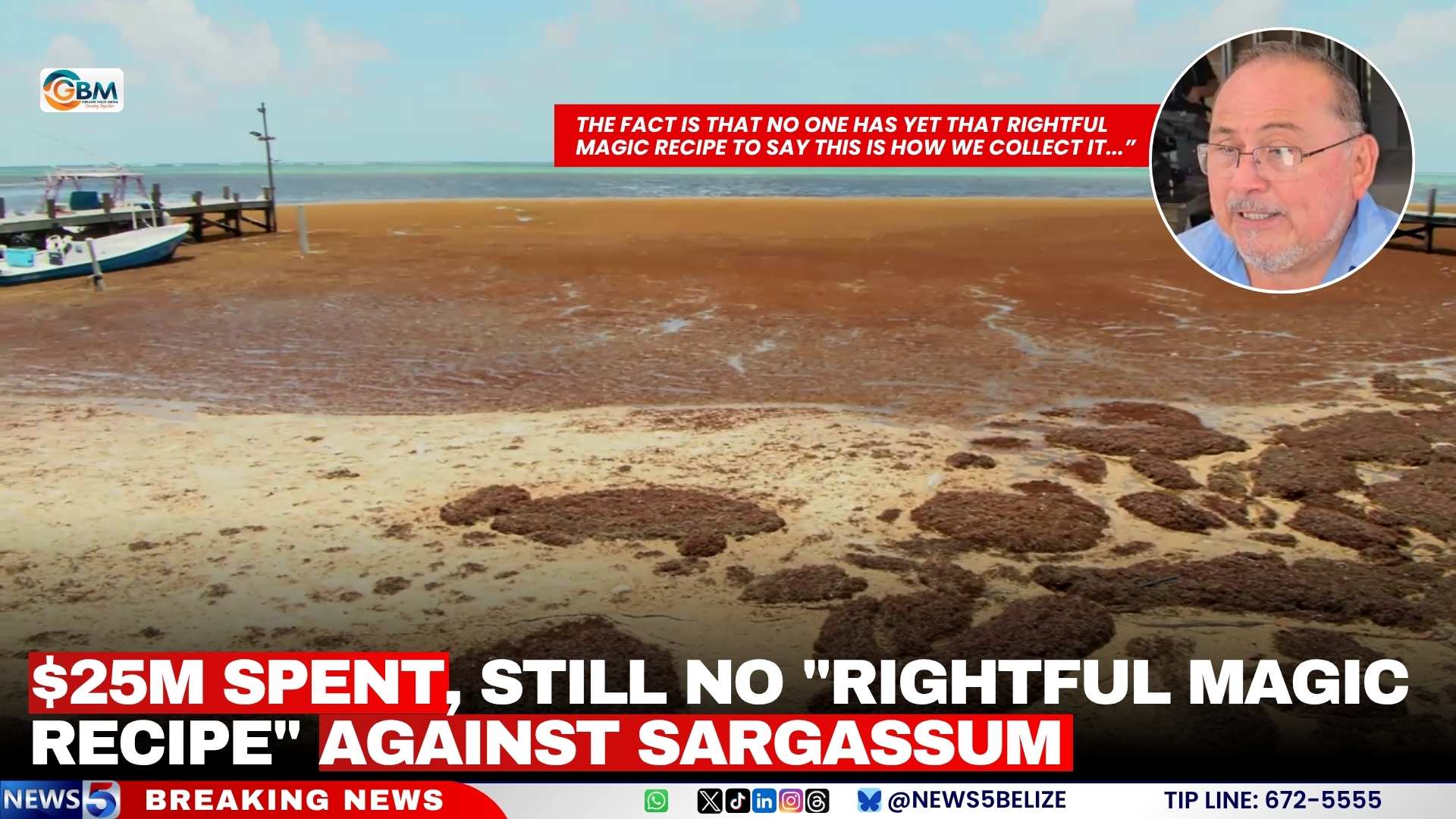
For years, Belize has poured millions of dollars into countering an escalating threat to its coastline: massive, unchecked invasions of sargassum seaweed that smother popular beaches, cripple local tourism, and upend life in coastal communities. Yet despite the steady flow of funding and dozens of proposed solutions, government officials confirm no viable, scalable fix has emerged to turn the tide against the growing crisis.
Andre Perez, Belize’s Minister of Blue Economy and representative for the rural southern region, recently shared the grim reality of the country’s anti-sargassum efforts in an interview with local outlet News 5. While dozens of entrepreneurs and innovators have pitched a wide range of strategies for repurposing and removing the invasive seaweed, none have delivered a permanent, workable resolution.
“The truth is, nobody has cracked that perfect magic recipe that tells us exactly how to eliminate this problem,” Perez explained. He emphasized that the only truly effective approach to stopping sargassum damage requires intercepting and removing the dense floating mats of seaweed out on the open ocean, before they can drift ashore. Once sargassum washes up onto beaches, it quickly begins to rot, creating foul odors, driving away tourists, and disrupting coastal ecosystems. Without a reliable at-sea collection system, the damage continues unabated.
To date, the financial toll of the crisis has already been steep. Perez confirmed that the island town of San Pedro alone has spent $25 million on ongoing beach cleanup efforts to clear rotting sargassum from its shorelines. For other hard-hit coastal communities including Hopkins, Caye Caulker, Seine Bight, and Placencia, the Belize Tourism Board (BTB) provides up to $10,000 per month to support local cleanup work. Even with this consistent funding and effort, however, the sargassum invasions keep intensifying.
The U.S. National Oceanic and Atmospheric Administration (NOAA) currently rates large stretches of Belize’s coastline as facing “High Coastal Risk Levels” for sargassum wash-ups, and long-term forecasts indicate the 2026 season will bring even worse conditions than previous years.
In response to the crisis, a handful of pilot programs in southern Belize are testing experimental strategies to turn the invasive seaweed into usable products, including agricultural fertilizer, decorative art, construction bricks labeled “sarga-blocks”, and sand supplement for public works projects. These initiatives prioritize ecological at-sea collection to prevent sargassum from reaching shore in the first place. While Perez praised these exploratory efforts as welcome steps forward, he acknowledged that none of the programs have yet demonstrated they can work at scale to solve the crisis. “We have yet to see it working,” he stated of the ongoing trials.