博客

  • Two Pitbulls Reported Missing in Bolans as Owners Appeal for Help

    Two Pitbulls Reported Missing in Bolans as Owners Appeal for Help

    A community-wide search is underway for two missing pitbulls in Bolans village, with the animals’ owners stepping up their efforts to bring the beloved pets home safely and calling on local residents to help with any information they can provide.

    The two missing dogs, named Raptor and Catalyea, were last spotted wandering in the Bolans region, and details of their appearance and circumstances have been shared widely across local online platforms to boost visibility of the search. Three-year-old Raptor is a medium-sized pitbull with a distinct light golden coat. Described as naturally friendly by his owners, he was wearing a plain black collar when he went missing. Catalyea, the younger of the two dogs at 18 months old, is a smaller pitbull with a rich chocolate-brown coat. She was outfitted with a multicolored black, red and yellow collar at the time of her disappearance.

    Public alerts shared across social media and local community groups note that both dogs are approachable and gentle with people. This key detail has sparked a specific concern among the owners: that a well-meaning local resident may have taken the two stray-looking dogs in, without realizing they are already beloved pets reported missing from their home.

    With the search entering its active phase, the owners are urgently asking anyone who has spotted the two dogs, or has information about where they might be staying, to come forward with any details that can help reunite the pair with their family.

  • Wegenautoriteit start onderhoud primaire wegen; SRD 125 miljoen uitgetrokken

    Wegenautoriteit start onderhoud primaire wegen; SRD 125 miljoen uitgetrokken

    The Suriname Road Authority is preparing to kick off a large-scale rehabilitation program for key primary road networks across three key regions of the country: Greater Paramaribo, Nickerie, and Para. The ambitious infrastructure initiative has been allocated a total budget of 125 million Surinamese dollars, marking one of the most significant public works investments in the country’s road sector in recent years.

    Three local contracting firms have been selected to carry out the construction and maintenance work, with each assigned responsibility for a specific district. Baitali Group will lead projects in Nickerie, Caremco Holding NV will handle upgrades across Greater Paramaribo, and I-Roads NV will oversee works in Para. The public tender process for the program was completed back in February, and all formal construction contracts have already been finalized and signed by all involved parties, clearing the way for work to begin.

    According to Ridgeley Kasantirto, Director of the Suriname Road Authority, the comprehensive maintenance work has become an urgent necessity. Years of heavy use have left large sections of the country’s primary road network suffering from severe deterioration, including widespread road subsidence and persistent rutting that creates major safety hazards for motorists and slows traffic flow. Kasantirto confirmed that all roads selected for inclusion in the program were identified based on rigorous technical assessments of their current condition, and independent third-party consultants will be on-site throughout the project to monitor construction quality and ensure full compliance with project specifications. This oversight is designed to deliver a long-lasting, high-quality upgrade that avoids the need for premature repeated repairs.

    The Suriname Road Authority, which manages approximately 890 kilometers of the country’s primary road infrastructure, anticipates that on-site construction work will get underway within the next three to four weeks. Once completed, the overhaul program is expected to deliver widespread benefits: it will drastically improve overall road safety, cut down on travel time by smoothing traffic flow, and create the more reliable transport infrastructure needed to support long-term regional economic development across the three districts.

  • OP-ED: UK – Caribbean Partnership on Clean Energy – From Untapped Potential to Regional Powerhouse

    OP-ED: UK – Caribbean Partnership on Clean Energy – From Untapped Potential to Regional Powerhouse

    For most people around the globe, the Caribbean evokes visions of idyllic postcard-perfect scenery: golden, sun-drenched beaches, crystal-clear turquoise waters, rolling lush mountain ranges, and gentle trade winds that cut through tropical heat. What few recognize is that these very natural features – sun, wind, water, and underground geothermal heat – add up to one of the world’s most underutilized clean energy powerhouses, sitting in plain sight.

    The United Kingdom has emerged as a key strategic partner determined to help Caribbean nations unlock this potential, forging deep collaborative partnerships to convert these abundant natural assets into low-cost, reliable energy that drives inclusive, clean, and climate-resilient sustainable growth across the region. Experts estimate the Caribbean holds enough renewable capacity to power not only its own communities but also deliver surplus clean energy to neighboring countries, with many small island nations capable of shifting to 100% renewable power generation. Several regional economies could even go a step further, converting excess renewable electricity into exportable zero-carbon fuels including green hydrogen, ammonia, and methanol to generate new streams of national revenue.

    Despite this enormous natural potential, the region remains heavily reliant on polluting fossil fuels. Current data shows roughly 87% of the energy mix used by CARICOM (the Caribbean Community) member states still comes from fossil fuels, a dependence that has sent household energy prices skyrocketing. Many Caribbean families pay between two and three times more for electricity than households in other parts of the world, while the constant exposure to volatile global fossil fuel markets has locked nations into cycles of economic vulnerability, growing national debt, and persistent energy insecurity.

    Since 2015, the UK has committed $39 million in targeted funding to advance the Caribbean’s clean energy transition. Support from the UK has already covered a wide range of critical initiatives: geothermal resource exploration and development, large-scale solar photovoltaic installation, energy efficiency retrofits for public sector buildings, technical training programs to build local renewable energy capacity across the Eastern Caribbean, and foundational planning to develop a regional offshore wind energy market.

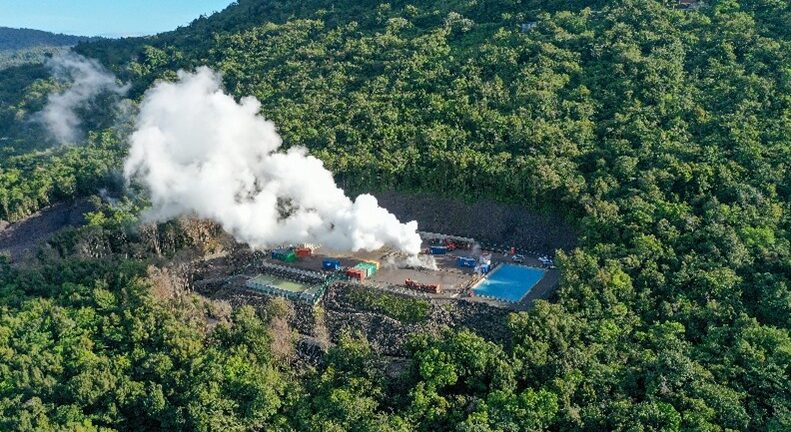
    One of the most prominent success stories of this partnership is the UK-supported geothermal development project in Dominica. UK funding helped de-risk the high upfront costs of exploratory drilling, giving private sector investors the confidence to commit to the project. As a result, Dominica is on track to commission the first utility-scale geothermal power plant in the English-speaking Caribbean in April 2026 – a project that experts say will deliver transformative economic and energy benefits for the island nation. The milestone, which required years of sustained government leadership, coordinated collaboration between multiple development partners, and flexible long-term planning, is now serving as a blueprint for ongoing geothermal projects in Grenada and St. Lucia, where the UK is aiming to replicate this success.

    In St. Vincent and the Grenadines, UK support has delivered already tangible results: funding for energy-efficient street lighting upgrades and a 500kW solar PV plant at Argyle International Airport has helped the nation save millions of dollars in energy costs and cut hundreds of tonnes of carbon dioxide emissions annually. Even the early-stage work to map offshore wind potential across the region, while still in its infancy, is projected to unlock enormous long-term development opportunities.

    While the potential for a full renewable transition is clear, progress toward CARICOM’s ambitious clean energy goals has lagged. In 2013, CARICOM set a target of reaching 47% renewable electricity generation by 2027, but as of 2023, the region had only hit roughly 13% renewable generation. To hit the 2027 target, the pace of development will need to accelerate dramatically. Progress has also been deeply uneven across the region: a small number of nations have made major gains scaling solar, wind, and geothermal power, while many others have yet to meaningfully advance their transition.

    Like most Small Island Developing States (SIDS), the Caribbean faces unique structural barriers to scaling renewable energy. Small regional grid sizes, prohibitive upfront capital costs, limited local technical capacity, and fragmented national markets that prevent economies of scale have all slowed development. Many nations also lack modernized grid infrastructure and updated energy regulatory frameworks, two critical components needed to integrate variable renewable resources like solar and wind into the energy mix.

    Despite these challenges, actionable solutions already exist to overcome these barriers. Regional pooled procurement for renewable energy equipment and aggregated project development can drive down costs and attract large-scale global institutional investors. Modernizing aging grid infrastructure and updating outdated energy regulations can open the market to greater private sector participation, while blended finance and concessional lending can help governments cover the prohibitive upfront costs that have stalled many projects. Finally, investing in training for local engineering and technical workforces will ensure projects deliver long-term sustainable benefits for local communities.

    Regional leaders and international partners stress that all the tools needed to deliver a full clean energy transition are already within the region’s reach – and there is no time to delay action. With bold coordinated leadership across CARICOM and strategic partnerships with global actors, the Caribbean can turn its abundant natural clean energy resources into sustained energy security, lower household energy bills, and a more climate-resilient future for all regional residents.

    The UK has reaffirmed its long-term commitment to partnering with the Caribbean on this transition. Through the Global Clean Power Alliance, the UK and regional partners have agreed to a concrete three-year action plan for 2026–2028, which will deliver on-demand access to UK private sector expertise and technical support to address key market barriers and attract the billions in investment needed to scale the region’s clean energy transition. The resources are already in place, and leaders say the moment for decisive action is now.

    This commentary was written by Ingrid Lavine, Climate and Renewable Energy Adviser for the Caribbean Development Team at the UK Foreign, Commonwealth & Development Office.

  • St Andrew man to face court on drug charges

    St Andrew man to face court on drug charges

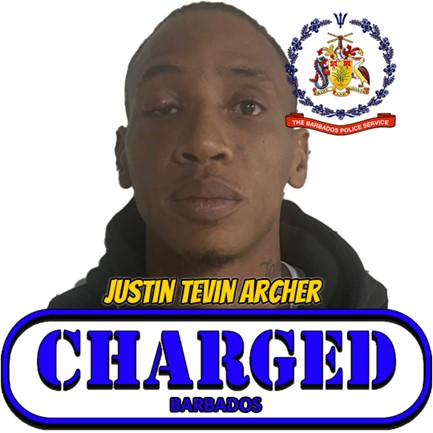
    A major drug trafficking crackdown by Barbadian law enforcement has resulted in felony charges against a 31-year-old local man, who is set to face justice this weekend at the District ‘A’ Magistrates’ Court.

    Identified by authorities as Justin Tevin Archer, a resident of Bawdens Hill, St Andrew, the suspect faces two separate drug-related offenses: acts preparatory to cannabis trafficking and the actual trafficking of the controlled substance. According to official statements from the Barbados Police Service Narcotics Unit, the alleged offenses are believed to have occurred over a three-day window between February 9 and February 12, 2026.

    Investigators seized a staggering 737.20 kilogrammes of suspected cannabis during operations connected to the case. Law enforcement estimates the illicit haul has a combined street value of just over $11,795,200, marking one of the more substantial drug seizures the Narcotics Unit has recently disrupted.

    Archer’s first court appearance is scheduled for Saturday, where formal judicial proceedings will get underway as the case moves through Barbados’ legal system.

  • Carl Christopher, Casilda Verela Donate Infant Care Items to Hospital’s Paediatrics Unit

    Carl Christopher, Casilda Verela Donate Infant Care Items to Hospital’s Paediatrics Unit

    Officials at Sir Lester Bird Medical Centre have announced that the facility’s Paediatrics Unit has received a substantial donation of essential baby and child care items from local donors Carl Christopher and Casilda Verela. Hospital leadership has characterized the contribution as a timely and meaningful boost to the quality of care the unit can provide to its young patients.

    Details of the donation were first shared via an official social media post from the medical centre, which outlined that all contributed supplies are specifically earmarked to support the treatment and daily care of infants and young children receiving treatment at the facility. In an official statement confirming the gift, the hospital reiterated their appreciation for the pair’s generosity.

    “Our Paediatrics Unit has received a generous donation of baby and child care essentials from Carl Christopher and Casilda Verela,” the hospital’s statement confirmed. Leadership went on to emphasize the critical role that donations like this play in keeping the unit’s daily operations running smoothly, noting that the items will fill key gaps in the unit’s current resource inventory.

    “Thank you so much for seeing the need and stepping in and supporting our hospital. Your gift will definitely assist with our care. We look forward to having your support in the future,” the statement added. This donation arrives at a time when public healthcare facilities across many regions increasingly depend on community partnership to stretch public funding further and upgrade patient services. Specialized care areas, including paediatrics, often face unique resource constraints that make community contributions particularly impactful for improving care outcomes for vulnerable young patients.

  • Baltimore Sets First 100-Day Targets for Sports and Healthcare Improvements in St. Philip North

    Baltimore Sets First 100-Day Targets for Sports and Healthcare Improvements in St. Philip North

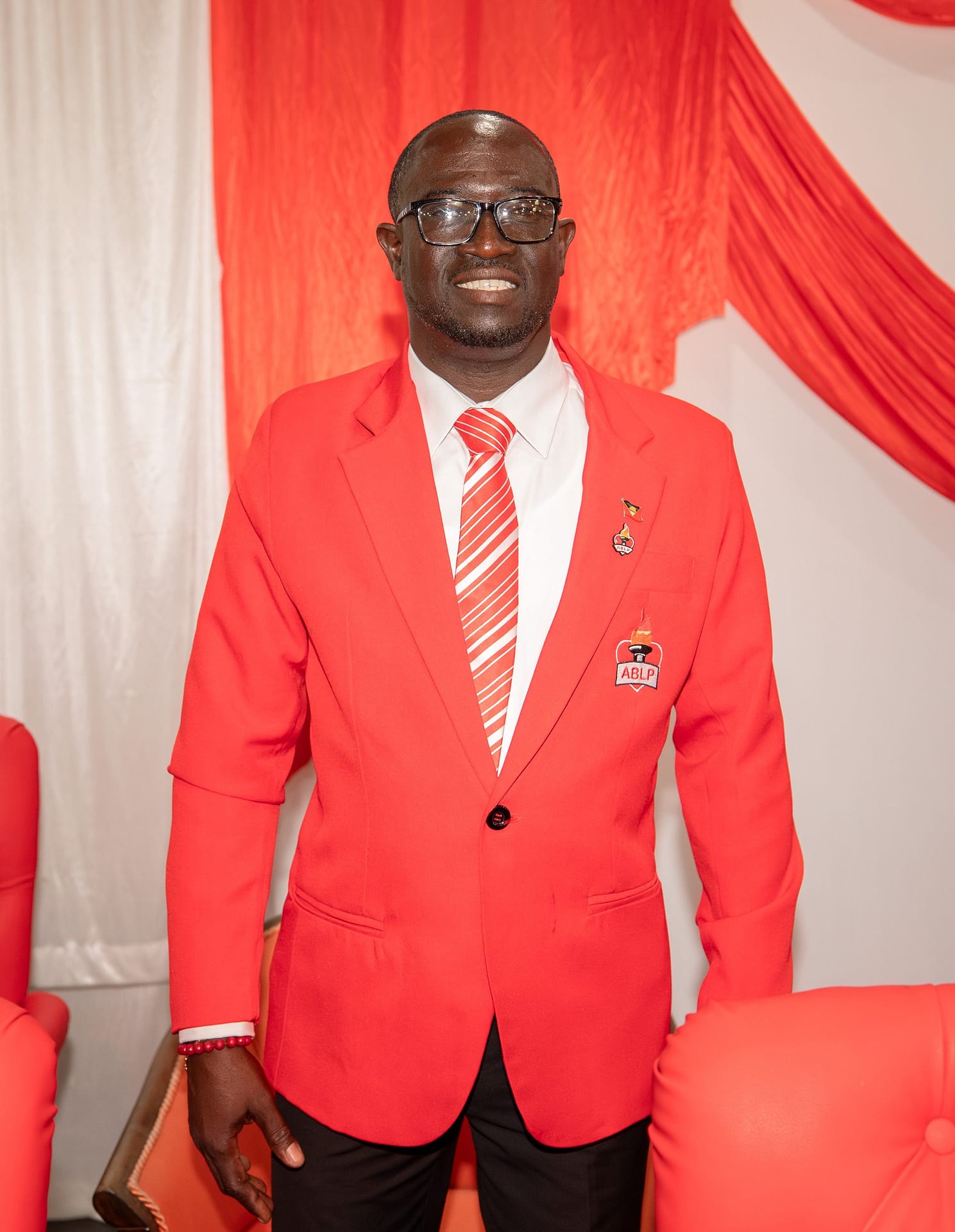
    As the April 30 general election approaches, Antigua and Barbuda Labour Party (ABLP) candidate for the St. Philip North constituency Randy Baltimore has laid out a clear, time-bound set of pledges centered on two key local priorities: upgraded community sports infrastructure and expanded, more accessible healthcare services. Appearing on ABS Television’s voter education series “Know Your Candidates”, Baltimore emphasized that constituents should hold him strictly accountable for delivering on these commitments if he wins re-election.

    Baltimore, who secured a decisive 70% of the vote in last month’s St. Philip North by-election, framed the first 100 days of a new term as a make-or-break window to deliver tangible, visible improvements for local residents. Reaffirming that both sports infrastructure upgrades and polyclinic enhancements remain at the top of his policy agenda, he highlighted that preliminary work on recreational upgrades is already well underway across the constituency.

    To date, new lighting has been installed at existing playing fields in both Willikies and Glanvilles, while a full reconstruction and lighting upgrade of the Newfield basketball court has been finalized. Upcoming projects set to launch imminently include additional lighting for local football pitches and the construction of new public restroom facilities at recreational sites across the constituency, investments designed to expand after-hours access to sports spaces for local youth and community groups.

    On the healthcare front, Baltimore has committed to continuing aggressive advocacy for increased staffing at Glanville’s Polyclinic, a key care provider for St. Philip North and adjacent eastern communities. His core goal is to secure regular on-site placements for a wider range of medical professionals, which would cut wait times, expand on-site service offerings, and make routine and emergency care more accessible for local residents who currently often travel long distances for basic services.

    He also pointed to tangible progress already delivered through his prior advocacy, noting that a new on-site pharmacy has recently opened at the polyclinic, and an ambulance dedicated to serving eastern communities is awaiting deployment. Once in service, Baltimore said the ambulance will drastically cut emergency response times for local residents, a critical improvement for rural communities that have long faced gaps in emergency care access.

    Baltimore explained that his decision to tie pledges to a clear 100-day timeline was intentional, designed to give voters a transparent, measurable benchmark to evaluate his performance if re-elected. Aligning with the accountability mission of the “Know Your Candidates” program, he reiterated that he welcomes public scrutiny of his promise-keeping. “I want the residents of St. Philip’s North to hold me accountable for the promises and for the advocacy of the things that I put forward,” he stated.

  • Jamaica vs T&T in UWI’s 2026 International Reparation Debate Final

    Jamaica vs T&T in UWI’s 2026 International Reparation Debate Final

    The Caribbean’s most prominent student debate competition is set to reach its dramatic climax this week, as two elite teams from Trinidad & Tobago and Jamaica prepare to battle for the top title at the 2026 International Reparation Debate Competition. Organized by The University of the West Indies’ (UWI) Centre for Reparation Research, the grand final is scheduled to kick off at 10:00 AM local time on Wednesday, April 22, hosted at UWI’s Regional Headquarters based in Jamaica.

    After weeks of grueling preliminary rounds that have whittled down a field of talented debaters from across the region, the final showdown will pit Our Lady of Fatima College, representing Trinidad & Tobago, against Jamaica’s own Clarendon College. This matchup carries extra narrative weight beyond the competition itself: the Trinidadian side is seeking to defend its championship title and secure back-to-back victories, while Clarendon College enters the final with a point to prove, hungry to upgrade its 2025 second-place finish with a win on home soil.

    Since the competition launched its 2026 iteration on February 9, the event has steadily grown in visibility and traction across Caribbean educational circles. Designed specifically to give secondary school students a structured platform to dive into the complex, urgent conversations surrounding reparatory justice for historical harms, the competition does more than just crown a winning debating team.

    For every participant, the competition has served as a hands-on development opportunity: students have sharpened their evidence-based research skills, refined their ability to think critically under pressure, and polished their public speaking techniques, all while engaging with layered historical and contemporary social issues that shape modern Caribbean life. It is this educational mission that organizers say sets the competition apart from standard inter-school debate tournaments.

    Adding further prestige to this year’s final, veteran award-winning Jamaican journalist Dionne Jackson Miller will take on hosting duties for the deciding round. Her decades of experience covering regional social and political issues are expected to add both depth and dynamic energy to the event, guiding audiences through the teams’ arguments and contextualizing the stakes of the debate topic.

    Organizers emphasize that the final is far more than just a competition to claim a trophy. For the young people involved, it is a rare chance to lead one of the Caribbean’s most pressing and ongoing public discussions, bringing fresh perspectives to a topic that carries profound social and historical significance for the entire region.

    For audiences unable to attend the event in person, UWI will broadcast the entire grand final live via UWItv, accessible through both the network’s official website and its Facebook page. This open streaming access means debate fans, students, and anyone interested in reparatory justice can follow the contest in real time from anywhere across the Caribbean and across the globe.

  • Iran hernieuwt controle over Straat van Hormuz, schepen melden beschietingen

    Iran hernieuwt controle over Straat van Hormuz, schepen melden beschietingen

    On April 18, new escalations in the long-simmering conflict between Iran, the U.S. and Israel have thrown global energy security into fresh uncertainty, after Tehran announced it had strengthened military control over the strategic Strait of Hormuz and issued a warning that the critical global energy shipping lane has once again been closed to traffic.

    Citing anonymous shipping industry sources, local reports confirm that at least two civilian vessels attempting to traverse the narrow waterway have come under fire. Iranian officials frame the new move as a direct response to the ongoing American blockade of Iranian ports, which Tehran says constitutes a clear violation of an existing two-week ceasefire that is set to expire this coming Wednesday. Iran’s Supreme Leader Mojtaba Khamenei emphasized in a statement that the Iranian Navy is fully prepared to inflict “new bitter defeats” on the country’s regional and international adversaries.

    The situation shifted rapidly over the course of last weekend. Early in the day, initial indicators suggested partial resumption of commercial shipping, after a convoy of eight oil tankers successfully completed transit through the narrow passage. However, shortly after this crossing, multiple commercial vessels received radio notifications from the Iranian Navy ordering all traffic to halt, confirming the full activation of tightened military oversight over the strait.

    The current standoff arrives at a defining moment for regional diplomacy. Just one day before Iran’s announcement, former U.S. President Donald Trump struck a mixed tone, describing recent developments with Iran as “reasonably good news” while simultaneously warning that full-scale hostilities could resume immediately if a lasting peace agreement is not reached before the ceasefire expires. Trump also reaffirmed that the U.S. blockade of Iranian ports will remain in place regardless of ongoing diplomatic talks.

    This is not the first time the strait has been closed in recent weeks. Iran previously announced a temporary reopening of the waterway after a 10-day ceasefire between Israel and Lebanon was reached with U.S. mediation. The broader regional conflict escalated earlier this year when Iran-backed Hezbollah militant group entered the active fighting in early March.

    Energy and geopolitical experts have repeatedly underscored the strategic importance of the Strait of Hormuz: roughly 20% of the world’s daily global oil supply transits through the waterway, making any disruption a direct trigger for rising crude prices and volatility across global commodity markets. Even after the earlier partial resumption of traffic, hundreds of commercial vessels and tens of thousands of crew members remain stranded in the Persian Gulf region, waiting for clarity on when they will be allowed to complete their transit.

    Efforts to negotiate a durable long-term ceasefire have remained stalled in recent weeks. Iranian official sources confirm no new date has been set for the next round of high-level talks, noting that a broad framework agreement must be finalized before any substantive negotiations can move forward. The core sticking point in talks remains Iran’s nuclear program: Tehran continues to assert its sovereign right to develop nuclear technology for peaceful civilian purposes, while the U.S. demands complete removal of Iran’s stockpiles of enriched uranium.

    In recent days, Pakistani mediators have held closed-door talks in Tehran and other regional capitals to break the diplomatic deadlock. Unnamed diplomatic sources indicate that a preliminary memorandum of understanding could be reached in the near term, with a full comprehensive peace agreement targeted within a 60-day window if talks stay on track.

  • Brome on bail over assisting offender charge

    Brome on bail over assisting offender charge

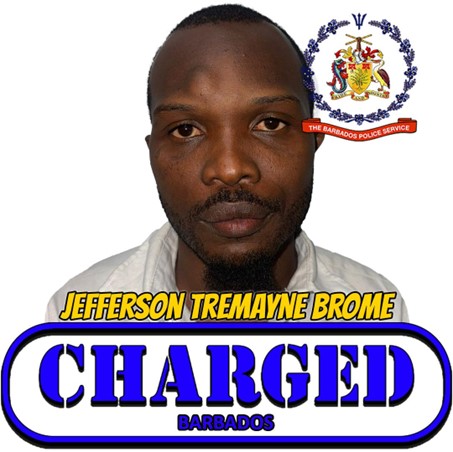
    A 34-year-old resident of Hannay’s Village, St Lucy, Jefferson Tremayne Brome, has secured his release on $10,000 bail following a Friday appearance at the District ‘A’ Criminal Court Number 1.

    He stood before Chief Magistrate Douglas Frederick to answer an allegation that he aided known offender Darion Hackett between two key dates, March 15 and April 1, 2026. As the charge against Brome falls into the category of an indictable offense, legal protocol meant he was not required to enter a formal plea during this initial hearing.

    Following the brief hearing, the court scheduled Brome’s next remand appearance for July 30, when the case will be revisited and further legal proceedings will be determined. No additional details about the nature of the assistance allegedly provided or the circumstances of the underlying offense connected to Hackett were released during the initial court appearance.

  • NDP’s position same as 2009; Gonsalves’ has shifted — lawyer

    NDP’s position same as 2009; Gonsalves’ has shifted — lawyer

    A long-simmering constitutional debate over candidate eligibility for general elections in St. Vincent and the Grenadines (SVG) has entered a critical new phase, with the newly elected New Democratic Party (NDP) government moving to codify a clarification that directly contradicts a dramatic shift in position by former prime minister Ralph Gonsalves and his Unity Labour Party (ULP).

    The controversy traces back to the 2009 constitutional referendum, when Gonsalves, then serving as prime minister, openly acknowledged that SVG’s founding constitution allowed any Commonwealth citizen — not just native-born or naturalized Vincentians — to qualify as a candidate in national general elections. At the time, Gonsalves pushed voters to approve constitutional changes that would narrow that eligibility, a position the NDP, then the opposition, campaigned against vigorously. The referendum was soundly defeated, leaving the original Commonwealth citizen eligibility rule intact.

    Now, 16 years later, the political landscape has flipped dramatically. After Gonsalves’ 25-year incumbent ULP government was defeated in the November 2025 general election, the former leader has reversed his 2009 stance. He now claims Commonwealth nations qualify as “foreign powers”, and has challenged the eligibility of two top NDP officials — Prime Minister Godwin Friday, who has represented Northern Grenadines in Parliament since 2001, and Foreign Affairs Minister Dwight Fitzgerald Bramble, first elected as MP for East Kingstown in 2020 — on the grounds that both hold Canadian citizenship obtained through their own application. The ULP has filed two electoral petitions, which are scheduled to go to trial in June, asking the courts to remove the two officials from their parliamentary seats.

    In response to the legal challenge, the NDP, which won a 14-1 supermajority in Parliament after the 2025 election, has brought forward a constitutional amendment for a parliamentary vote scheduled for Tuesday. The amendment would formally add a definition of “foreign power” to the constitution’s interpretation section, explicitly stating that a foreign power is any state that is not a member of the Commonwealth. Because the change only affects the definition section, not an entrenched core provision of the constitution, no new public referendum is required to enact it, and the amendment is all but guaranteed to pass given the NDP’s overwhelming parliamentary control.

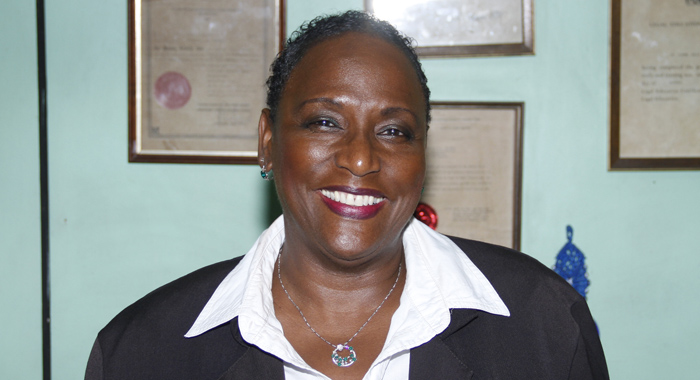
    Kay Bacchus-Baptiste, a prominent constitutional lawyer and former NDP senator, has defended the government’s move, framing it as a long-overdue clarification rather than a substantive rewrite of the nation’s supreme law. Speaking to iWitness News earlier this week, she noted that the 2009 referendum result, which defeated all proposed constitutional changes, confirmed that the Vincentian public intended to keep the original Commonwealth citizen eligibility rule in place. She pointed out that the original constitution’s definition section never explicitly defined the term “foreign power”, even as the core text clearly restricts eligible candidates to Commonwealth citizens.

    “‘Commonwealth citizen’ is a clear definition,” Bacchus-Baptiste said. “Canada is part of the Commonwealth. So, it is clear. The law says that you have to be a Commonwealth citizen, which is different from the constitutions of other Caribbean nations like Dominica and St. Kitts, which restrict candidates to their own citizens.”
    Bacchus-Baptiste emphasized that Gonsalves’ own words from 2009 confirm that the original interpretation has long been understood: back then, Gonsalves himself acknowledged that any Commonwealth citizen with one year of residence in SVG could run for office, and campaigned to change that rule. She called the current ULP argument a complete reversal of the party’s long-stated position.

    “In our law, it says a Commonwealth citizen. That alone is a massive distinction that would be difficult to get over. And I do agree that enough has been said, and it should be clarified, because even Dr. Gonsalves himself had said that a Commonwealth citizen can run; he had said it over and over and wanted to amend it. Now he’s changing his mind or pretending that that is not what the law says,” she said. “It says that, and I commend this government for clarifying it by simply including in the definition section something that was omitted. That is what they’re doing and I commend them.”

    Gonsalves and ULP spokespeople have pushed back against the amendment, accusing the NDP government of enacting an “insurance policy” to pre-emptively protect its officials from a potential unfavorable court ruling in the upcoming petitions. In an about-face from his position during the 2015 post-election legal challenges brought by the NDP, Gonsalves said in an April 15 interview with Star Radio that the courts should be allowed to issue an independent ruling on the eligibility petitions.