
The government of Antigua and Barbuda is pushing forward sweeping changes to the nation’s firearms legislation, with a key proposal introducing stiff 5 to 10-year prison sentences for anyone caught openly carrying an unauthorised gun or ammunition in designated public spaces. Attorney General Sir Steadroy “Cutie” Benjamin laid out the new penalty framework during parliamentary debate on the 2026 Firearms (Amendment) Bill, clarifying that the harsher punishment will only apply to individuals convicted via summary proceedings who do not hold legal authorization to carry weapons — a group that excludes active police officers, members of the national Defence Force, and other explicitly exempted parties. Benjamin used a recent high-incident to underscore the urgent need for the reform, referencing a political gathering held near the Parliament building that ended in chaos after multiple gunshots rang out, forcing attendees to flee for safety. He emphasized that the administration is taking an uncompromising stance against the proliferation of illegal weapons in public spaces, drawing a clear line in the sand against rising gang-related violence. “We are not going to allow Antigua to become a gangster place,” Benjamin stated firmly to parliamentary members. The new mandatory sentencing range for unlawful public carry is just one component of a broader suite of revisions to the country’s firearms laws, which collectively seek to ramp up penalties across all categories of gun-related crime. Under the proposed changes, the most severe firearm-related offenses will now carry maximum prison sentences of up to 30 years, marking a significant escalation from current punishment levels.
博客
-

Saint Lucia earns Olympiad chess medals in Uzbekistan
The 46th edition of the Chess Olympiad, one of the most prestigious global team events in competitive chess, has drawn to a close in Samarkand, Uzbekistan, and one small Caribbean nation has left the tournament with a historic collection of accolades that put their program on the international chess map. For seven days, more than 200 national teams gathered at the city’s Silk Road International Exhibition Centre to compete across open and women’s divisions, vying for medals and ranking advancement against the world’s top amateur and professional chess players.
For Team Saint Lucia’s men’s squad, the tournament delivered a breakthrough that no player from the nation had ever achieved before: a bronze medal finish in their group. Placed in Category E following the first three rounds of competition based on pre-tournament rankings, the five-player roster of Candidate Master Kaieem Elizee, Sixtus Gabriel, Daniel Nunez, Justin James, and Arvin Nicholas navigated a tight competitive bracket to outperform expectations.
The team’s path to the podium included hard-fought early setbacks that tested their resilience: a narrow 2.5-1.5 opening round loss to Curaçao, followed by a 3.5-0.5 defeat at the hands of South Sudan in round two. Rather than letting the early losses derail their momentum, the squad rallied to secure three critical match wins that propelled them into the bronze medal position. They claimed a dominant 3.5-0.5 victory over Grenada, edged out Palau 2.5-1.5 to advance, and capped their run with another 2.5-1.5 win against Cameroon in the bronze medal match. Only Qatar, who took gold, and The Bahamas, the silver medallists, finished ahead of Saint Lucia in the Category E standings.
Saint Lucia’s women’s team also turned in an impressive performance, marked by significant progress for the growing national program. The squad notched a series of standout wins, headlined by a 4-0 shutout of Guinea in the fifth round, alongside solid victories over Chad and Djibouti that showcased the depth of talent developing in the country’s women’s chess community.
Beyond the team achievements, multiple Saint Lucian players earned individual honors and career milestones at the event. Justin James, one of the men’s team key contributors throughout the tournament, officially secured the title of Candidate Master for his strong play. Daniel Nunez similarly rose to the occasion in high-stakes matches, holding off Palau’s Santiago Tan Jr to claim his own Candidate Master title.
Women’s squad standout Chelsea Wahid also delivered a career-best performance. Competing as a Woman Candidate Master, Wahid scored six points across her nine games, and sealed her Woman FIDE Master norm with a clinical, match-clinching victory over Haiti’s WCM Merisina Cadeau, marking a major step forward in her competitive career. Photos of the team’s achievements were credited to FIDE Americas, the governing body for chess across the Pan American region.
-
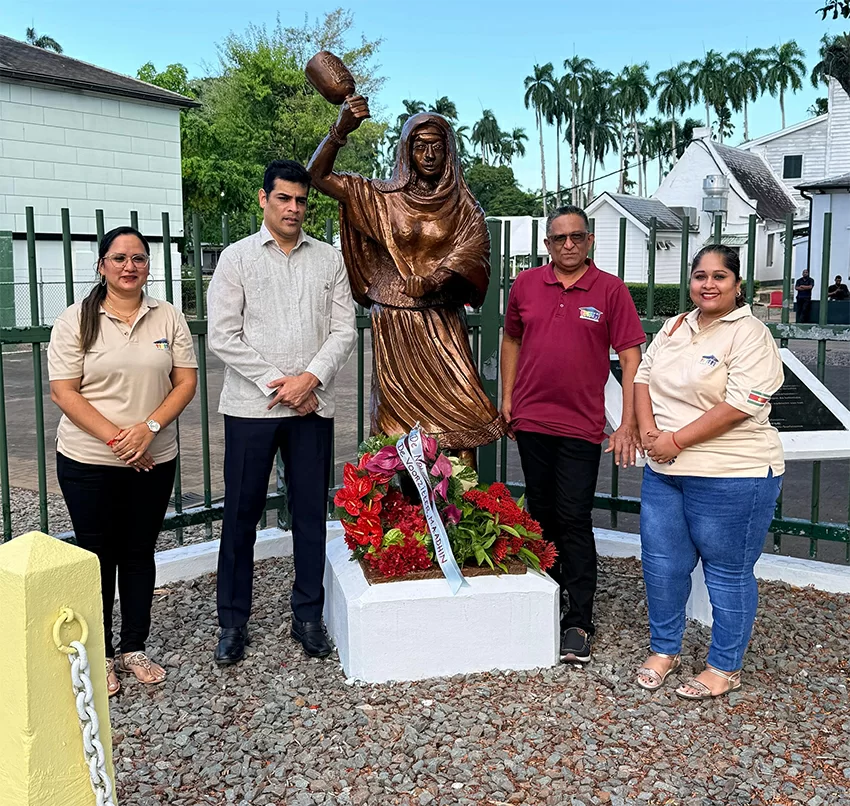
Bloemenhulde voor Janey Tetary
On September 27, 2026, the Cultural Union of Suriname (CUS) held a national commemoration to celebrate the life, lifelong struggle, and enduring legacy of Janey Tetary, a 19th-century contract labor leader and symbol of resistance against colonial exploitation. The event opened with a floral tribute at Tetary’s monument in Paramaribo, followed by a historical documentary screening at the NSHI Ballroom exploring her trailblazing story. Organizers emphasized that the commemoration is not only a moment to reflect on the past, but also an opportunity to connect Tetary’s values of courage and justice to contemporary struggles for equality.
Born around 1856 in Moniar, Patna, in what was then British India (modern-day India), Tetary faced immense hardship from a young age. Divorced in early adulthood, a status that carried severe social and economic stigma for women in that era, she was lured to Suriname by recruiters’ promises of high-wage work abroad. In 1880, she arrived with her 10-year-old son to work as an indentured contract laborer on the Zorg en Hoop plantation along the Commewijne River.
On the plantation, Tetary earned the nickname “Begum,” meaning “noble woman,” for her relentless advocacy for better working and living conditions for fellow indentured workers. She openly challenged the abuse of women by their partners, protected vulnerable workers from exploitation, and prioritized support for pregnant laborers who were forced to complete grueling field work alongside managing household duties and childcare.
By 1884, the brutal conditions on Suriname’s plantages had reached a breaking point. Recruiters had promised workers a daily wage in India, but once they arrived in the colony, pay was restructured to a task-based system that left workers earning far less, with no pay at all if they failed to complete their punishing daily quotas. In September 1884, tensions boiled over into open rebellion. On September 24, a group of workers led by Tetary attacked a white colonial official with canes. When colonial authorities deployed soldiers to arrest the organizers, hundreds of workers armed with canes, bottles, and machetes organized to resist, with women fighting side-by-side with men under Tetary’s leadership.
Colonial commanders ordered a sniper to eliminate the rebellion’s leader. On September 26, 1884, as Tetary prepared to throw a mud-filled bottle at advancing soldiers, she was shot in the back of the head at point-blank range. She died two days later at just 28 years old. Six other indentured workers were also killed in the crackdown, and all seven were buried in an unmarked plot on the Zorg en Hoop plantation. The rebellion was crushed, but Tetary’s legacy as a fighter for justice lived on in oral history.
For more than a century, Tetary’s story was largely erased from official Surinamese history books, part of a broader pattern of colonial historical erasure. That began to shift in 2017, when a bronze statue of Tetary was unveiled on the grounds adjacent to the Presidential Palace in Paramaribo. The monument replaced a bust of Barnet Lyon, the colonial official held responsible for ordering Tetary’s killing.
The unveiling of the statue was widely hailed as a landmark moment in Suriname’s ongoing decolonization process. Then-Vice President Ashwin Adhin called the moment “a milestone in the process of full decolonization, particularly the decolonization of our thinking.” He accused colonial powers of “gross historical falsification” for covering up for 130 years that Tetary was shot dead while leading a peaceful protest for better working and living conditions on Lyon’s explicit orders. Sculpted by artist George Ramjiawansingh, the statue depicts Tetary with a raised hand gripping the neck of a bottle, capturing her defiant spirit and unyielding courage.
In recent years, Tetary’s legacy has gained recognition far beyond Suriname’s borders. In the Netherlands, which controlled Suriname as a colony until 1975, multiple public spaces have been named in her honor, including Janey Tetarypad in Scheveningen, The Hague. City officials in The Hague noted that naming public spaces after figures from former Dutch colonies helps build a more inclusive society and creates a more accurate reflection of shared national history. Streets have also been named for Tetary in Amsterdam and Rotterdam, part of a growing continental movement to confront colonial and enslavement histories, and honor contributions from communities long erased from mainstream historical narratives.
The Cultural Union of Suriname has long played a central role in advancing research on Tetary’s life and preserving her legacy for future generations. In his 2017 annual address, then-Surinamese President Desi Bouterse thanked the CUS and other partner organizations for their research and advocacy to “rectify this important chapter of history and immortalize it with this statue.”
With Sunday’s 2026 commemoration, the CUS continues that mission. CUS leadership noted that the event’s dual focus on reflecting on the past and connecting to the present underscores that the values Tetary fought for – courage, dignity, justice, and the willingness to stand up for marginalized people – remain just as relevant today as they were in 1884.
-
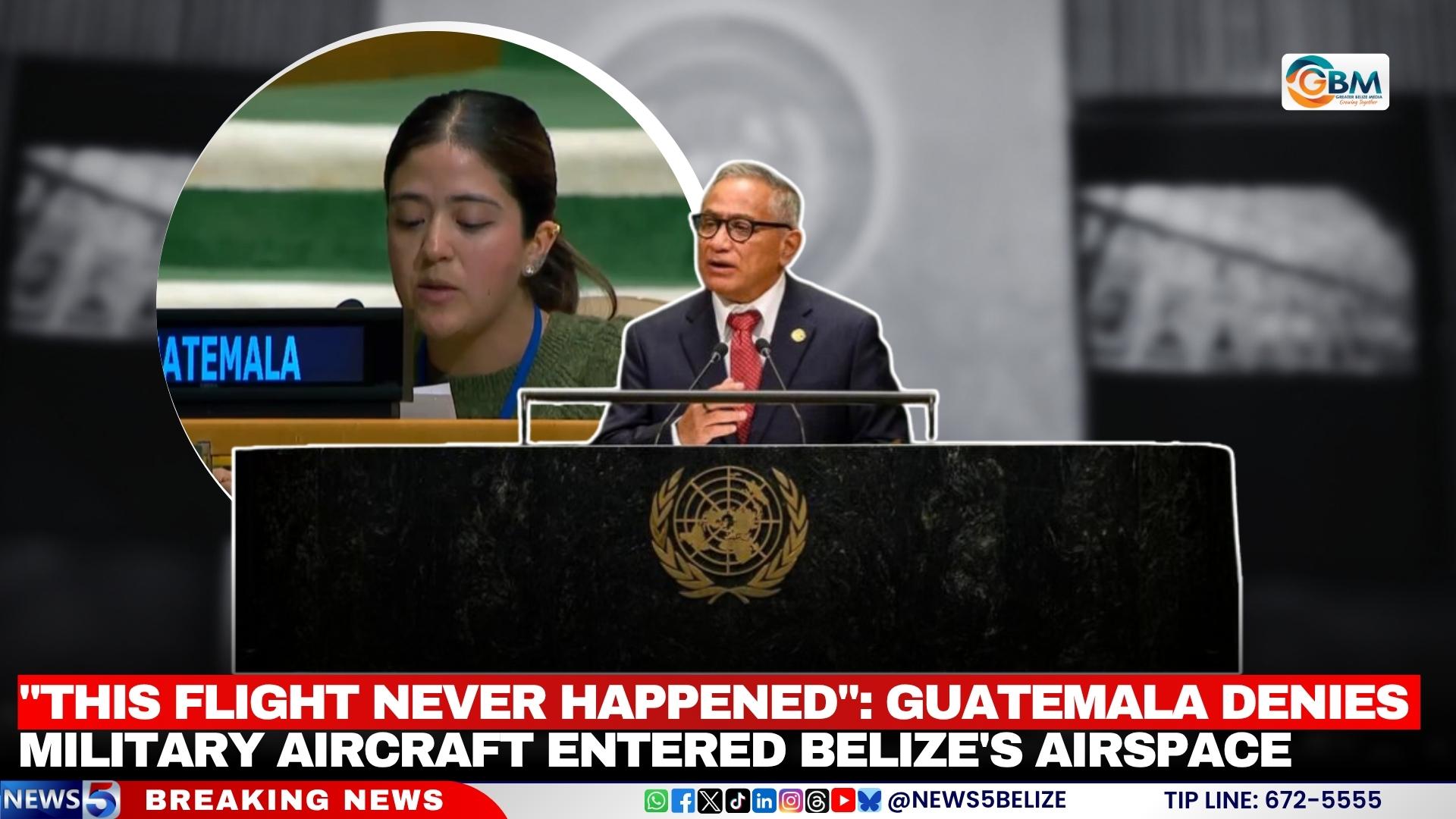
“This Flight Never Happened”: Guatemala Denies Military Aircraft Entered Belize’s Airspace
Diplomatic tensions flared on the floor of the 81st United Nations General Assembly this week, as Guatemala issued a sharp rebuttal to Belize’s accusation that one of its military aircraft illegally entered Belizean airspace earlier this month.
The dispute traces back to September 18, 2026, when Belize’s Ministry of Defense confirmed that an unauthorised Guatemalan military jet entered its national airspace, noting the aircraft had disabled its transponder during the incursion. Belizean Prime Minister John Briceño brought the alleged incident before the UNGA during his scheduled address to the assembly on Saturday, pushing the long-running territorial dispute between the two Central American nations into the global spotlight.
Within hours of Briceño’s remarks, Guatemala’s official delegation delivered a categorical rejection of the claim. In a formal statement released from the UNGA chamber, Guatemalan representatives denied any such overflight ever occurred, saying: “This flight never happened at all times.”
Beyond outright denial, Guatemala has taken steps to push for an independent probe into the conflicting claims. The country announced it will formally request the Organization of American States’ regional monitoring body to launch a full investigation into the incident, adding it is prepared to turn over all relevant flight records and even make the aircraft in question available for inspection to clear its name.
Guatemala’s delegation also hit back at Belize’s decision to raise the issue at the UN General Assembly, accusing the neighboring country of leveraging the longstanding territorial dispute for domestic political gain by spreading false information in a global diplomatic forum. The statement called the move a “flagrant violation of the 2005 agreement” between the two nations, arguing it erodes progress made on confidence-building measures designed to de-escalate border tensions.
Guatemala further emphasized that the territorial dispute between the two countries is already scheduled for adjudication by the International Court of Justice, making the UNGA an inappropriate venue to raise unilateral claims. The delegation reaffirmed Guatemala’s longstanding commitment to abiding by the ICJ’s final ruling in good faith. Scheduled hearings for the ICJ’s examination of the full territorial, insular and maritime border case are set to begin in February 2027, bringing a long-running regional conflict closer to a formal legal resolution.
-
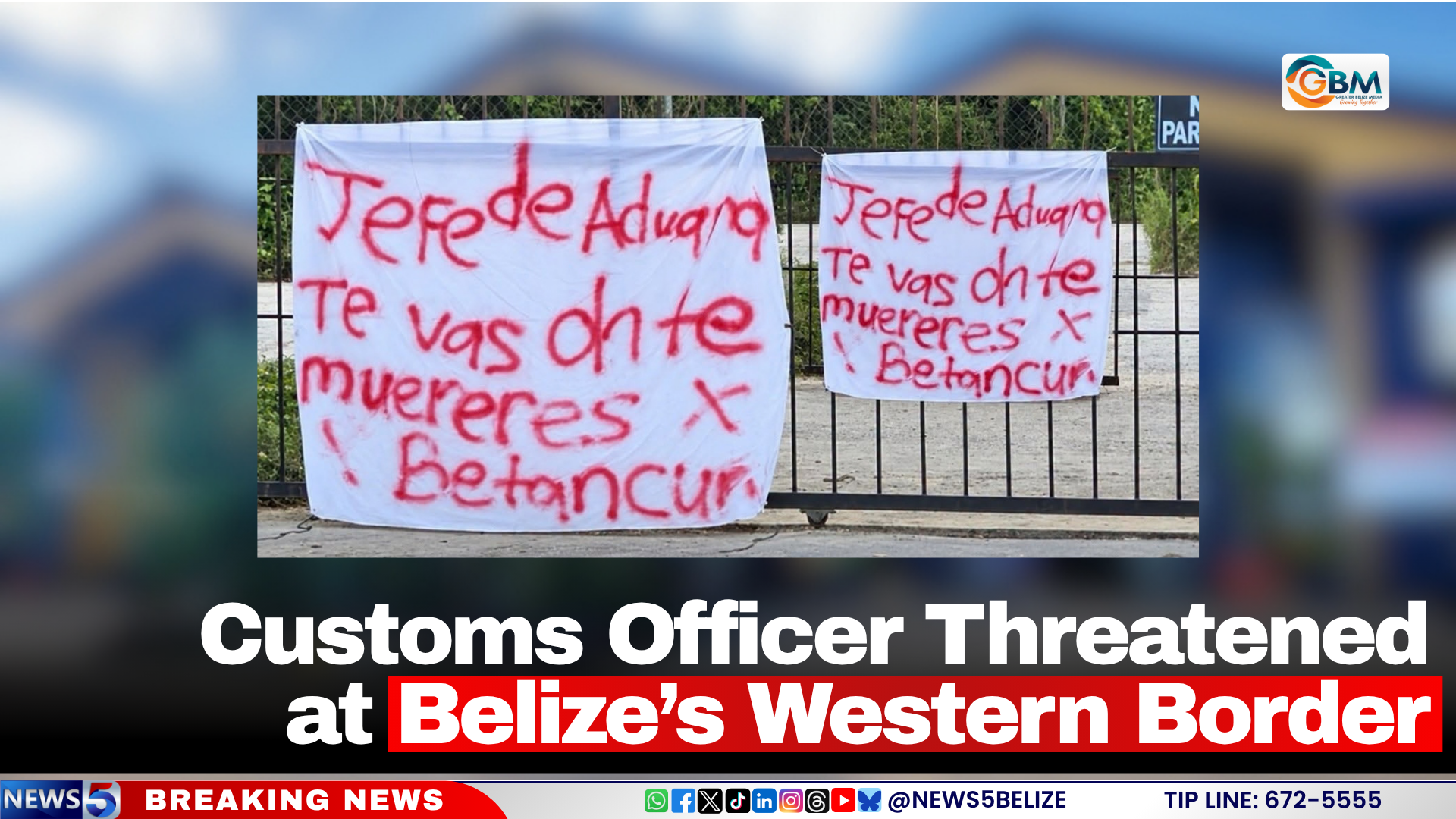
Customs Officer Threatened at Belize’s Western Border
On the morning of September 28, 2026, the discovery of a menacing handwritten sign at Belize’s busy western border crossing triggered an immediate security alert and launched a full-scale law enforcement investigation, according to official statements from Belize’s Ministry of Home Affairs. The direct threat specifically named Luis Betancourt, the recently appointed Assistant Comptroller of Customs who oversees operations at the border crossing. Written in Spanish, the sign read “Jefe de Aduana, te vas o te mueres. X Betancourt,” which translates to “Customs chief, you leave or you die. X Betancourt.”
Betancourt, a 25-year veteran of the Belize Customs Department, only assumed his new post leading western border operations in August 2026, less than two months before the threatening message was found. Law enforcement teams have not yet identified any suspects or confirmed a motive for the incident, and are working to trace who placed the sign at the border location.
Rear Admiral Elton Bennett, Chief Executive Officer of Belize’s Ministry of Home Affairs, confirmed to reporters that investigative teams are pursuing multiple leads in the case. “At this early stage of the probe, there remains a great deal of uncertainty around the incident,” Bennett explained in an official briefing. “Investigators are actively canvassing the border area, conducting interviews with local residents and border personnel, and reviewing all available surveillance camera footage to gather as much intelligence as possible.”
In response to the targeted threat against a senior border official, cross-agency security coordination at the western border has been significantly ramped up. Additional security protocols have been implemented across the crossing to protect personnel and maintain border integrity as the investigation moves forward. Local law enforcement and national security officials have pledged to provide updates as new details emerge, and the public is being asked to share any relevant information that could assist the probe.
-
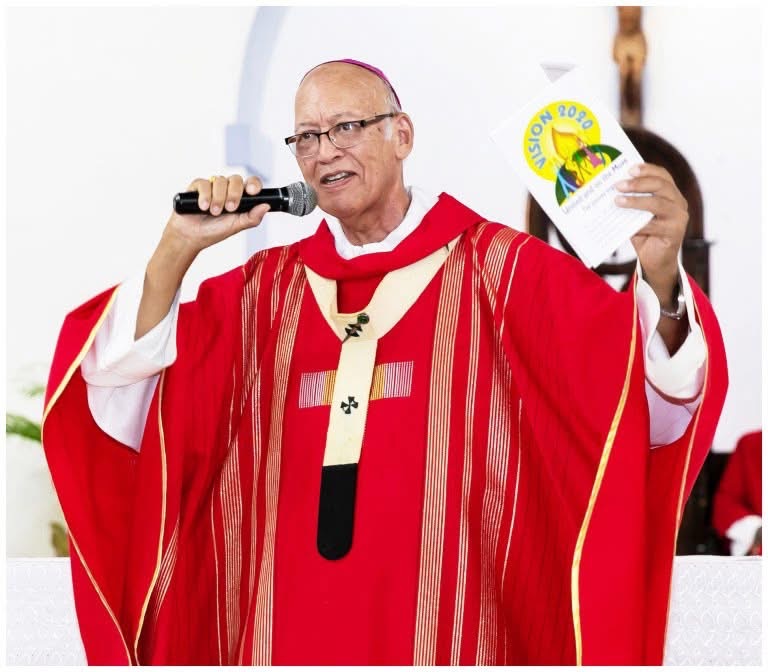
Archbishop Emeritus Robert Rivas Dies
Across the Caribbean, the global and regional Catholic community is in mourning following the Sunday, September 27, 2026 passing of the Most Reverend Robert Rivas, O.P., Archbishop Emeritus of Castries. The Diocese of St. John’s-Basseterre has been among the first church institutions to publicly honor the life and legacy of the beloved church leader, extending its deepest condolences to all those affected by his death.
Bishop Robert Llanos, the full body of clergy serving under the diocese, and lay Catholic community members have joined brothers and sisters across the wider global Church in sharing grief over the archbishop’s death. For decades, Rivas built deep connections with Catholic communities across the Caribbean, earning a reputation for humble, dedicated service that touched countless lives.
In a formal statement released following the announcement of his passing, the Diocese of St. John’s-Basseterre highlighted Rivas’ lifelong commitment to lifting up and serving the Catholic Church across the Caribbean region. Before stepping into emeritus status, Rivas held the senior post of Archbishop of Castries, the capital of the Caribbean island nation of Saint Lucia, where he led the local archdiocese through years of growth and community outreach.
“We give thanks to God for a life given so generously in service to the Church throughout the Caribbean, and we hold his family, his Dominican brothers, and the clergy and faithful of the Archdiocese of Castries close in our prayers,” the diocese shared in its public message. Closing the statement, the diocese added a final prayer honoring Rivas: “May he rest in the peace and light of Christ.”
-
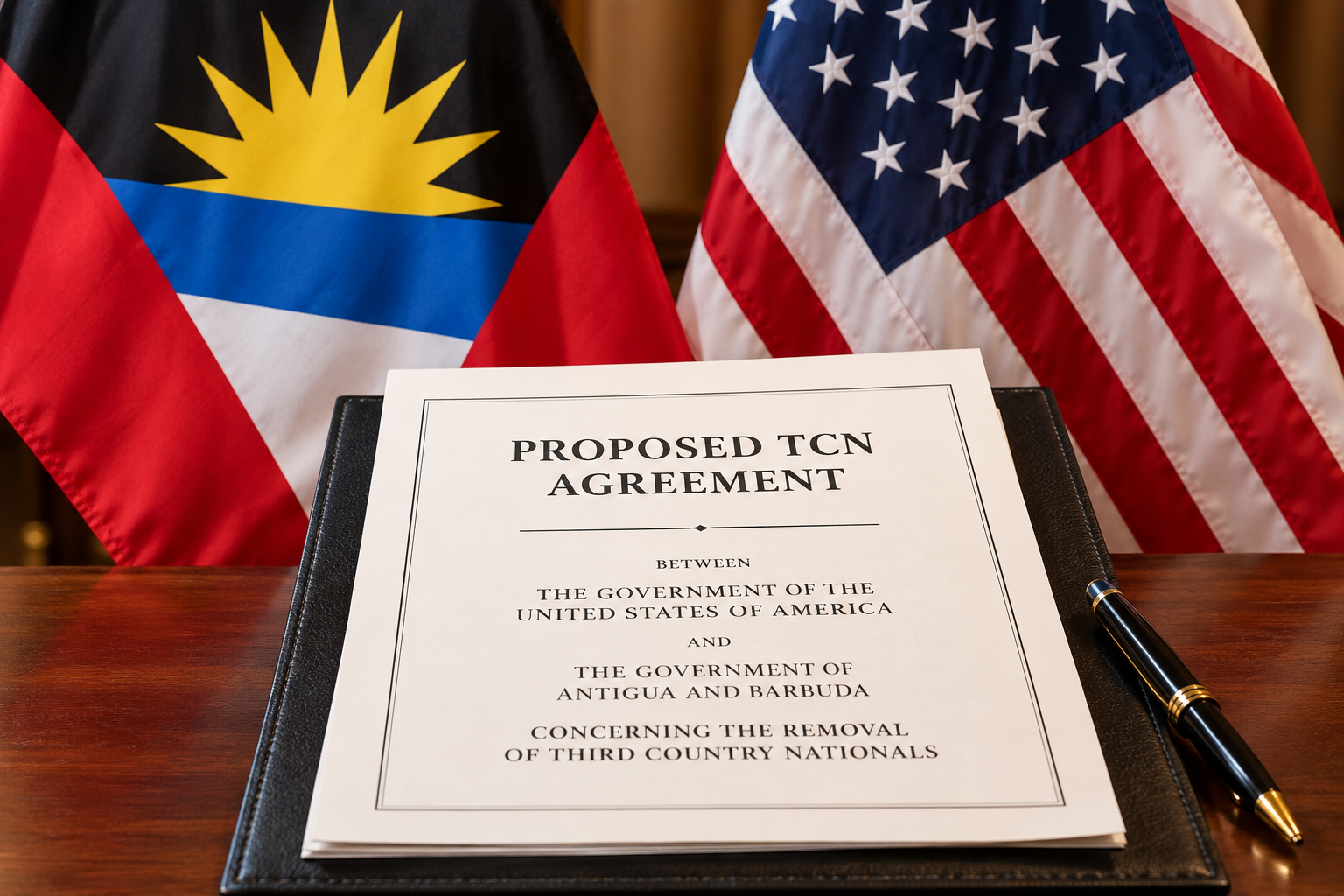
Government Releases U.S. Proposal and Antigua and Barbuda Counter-Proposal on Third-Country Nationals
In a move aligned with its core commitment to governmental transparency, the Government of Antigua and Barbuda has publicly released both the United States’ proposed operating procedures for potential transfers of third-country nationals removed from U.S. territory and Antigua and Barbuda’s formal counter-proposal, ahead of tabling both documents before the nation’s House of Representatives. Attorney General and Minister of Legal Affairs Sir Steadroy Benjamin will officially lay the two texts before parliament, opening the process to full public and legislative oversight.
This ongoing discussion forms part of a broader diplomatic push by the United States to negotiate similar transfer arrangements with nations across the globe, including multiple member states of the Caribbean Community (CARICOM). To date, some CARICOM nations have finalized such agreements, while others remain in active discussion like Antigua and Barbuda, which is approaching the talks with a strict focus on protecting its national sovereignty, public security, domestic legal framework, public finances, and core national interests. As of the public announcement, no final agreement has been reached between the two governments, with negotiations continuing in line with Antigua and Barbuda’s stated terms.
The United States’ original proposal outlines a framework for transfers under a planned 2025 Memorandum of Understanding (MOU), setting eligibility criteria that excludes unaccompanied minors under 18, citizens of Antigua and Barbuda, and individuals with criminal records beyond U.S. immigration violations. The U.S. draft proposes a monthly transfer cap of 7 individuals, notes that neither government is obligated to commit financial resources to the initiative, but states the U.S. will explore available foreign assistance funds and plans to compensate a competent international organization for support services, with no costs to fall on Antigua and Barbuda. The proposal also requires a 5-day advance notice of transfers with full biometric, medical, and background information for all proposed individuals, and designates V.C. Bird International Airport as the reception point.
In contrast, Antigua and Barbuda’s counter-proposal builds in layered safeguards to prioritize national control and protect public interests, starting with a non-binding framework that explicitly confirms no final transfer may proceed without the prior, express written approval of Antigua and Barbuda’s government for every individual case. The counter-proposal tightens eligibility restrictions, barring all individuals under 18 (not just unaccompanied minors), restricting eligible nationalities primarily to CARICOM member states excluding Haiti, plus Brazil and Colombia, and requiring all proposed individuals hold valid unexpired passports with a confirmed realistic pathway for eventual return or onward resettlement. Additional exclusions apply to individuals with serious unaccommodatable medical conditions, vulnerable groups requiring specialized care without pre-approved cost coverage, and individuals with outstanding legal barriers to transfer from the U.S.
On transfer volume caps, Antigua and Barbuda’s framework sets a maximum of 7 total transfers per three-month period – a hard ceiling, not a mandatory quota – with an additional restriction that no new transfers may proceed if 7 or more previously transferred individuals remain in the country, unless Antigua and Barbuda explicitly grants an exception. The counter-proposal also strengthens financial safeguards, requiring binding written confirmation that the U.S. will cover 100% of all costs associated with transferred individuals, from accommodation and medical care to administrative and security expenses, from arrival through departure or until the individual secures an independent lawful status in Antigua and Barbuda, ensuring no burden falls on local taxpayers. The text opens the door for the International Organization for Migration (IOM) to provide support services, but makes any IOM participation conditional on separate arrangements approved by Antigua and Barbuda’s government, with a requirement that alternative funding arrangements must be in place if IOM support is unavailable.
Procedural changes in the counter-proposal extend the advance notice period for proposed transfers to 10 business days, requiring the U.S. to provide a full suite of detailed information including full health assessments, asylum and protection claim history, proof of the individual’s written willingness to transfer, and confirmation of all legal processes in the U.S. have been exhausted. All transfers must be processed under Antigua and Barbuda’s domestic immigration law, with a clear stipulation that the arrangement is for temporary transit only, not permanent resettlement, and no transferred individual gains an automatic right to permanent residence, asylum, or work authorization. The U.S. is required to fund and facilitate all eventual return or onward placement of transferred individuals, with financial obligations remaining in place even if talks conclude or transfers are suspended.
Crucially, the counter-proposal grants Antigua and Barbuda the unilateral right to immediately suspend all future transfers if concerns arise related to national security, public health, capacity constraints, financial burdens, natural disasters, or public emergencies. It also requires a joint review of the arrangement after either the first five transfers or six months of implementation, whichever comes first. The Antigua and Barbuda government emphasizes that full sovereign authority to approve or reject any proposed individual remains exclusively with the nation, in every case.
In its public statement, the government reiterated that it values its longstanding bilateral relationship with the United States and remains committed to constructive negotiations, but any final agreement must align with Antigua and Barbuda’s domestic laws, limited national capacity, and core national interests, while guaranteeing dignified treatment for all affected individuals in line with international law. By releasing both documents publicly and tabling them in parliament, the government has fulfilled its commitment to open governance, and pledges to continue updating parliament and the public as negotiations progress.
-
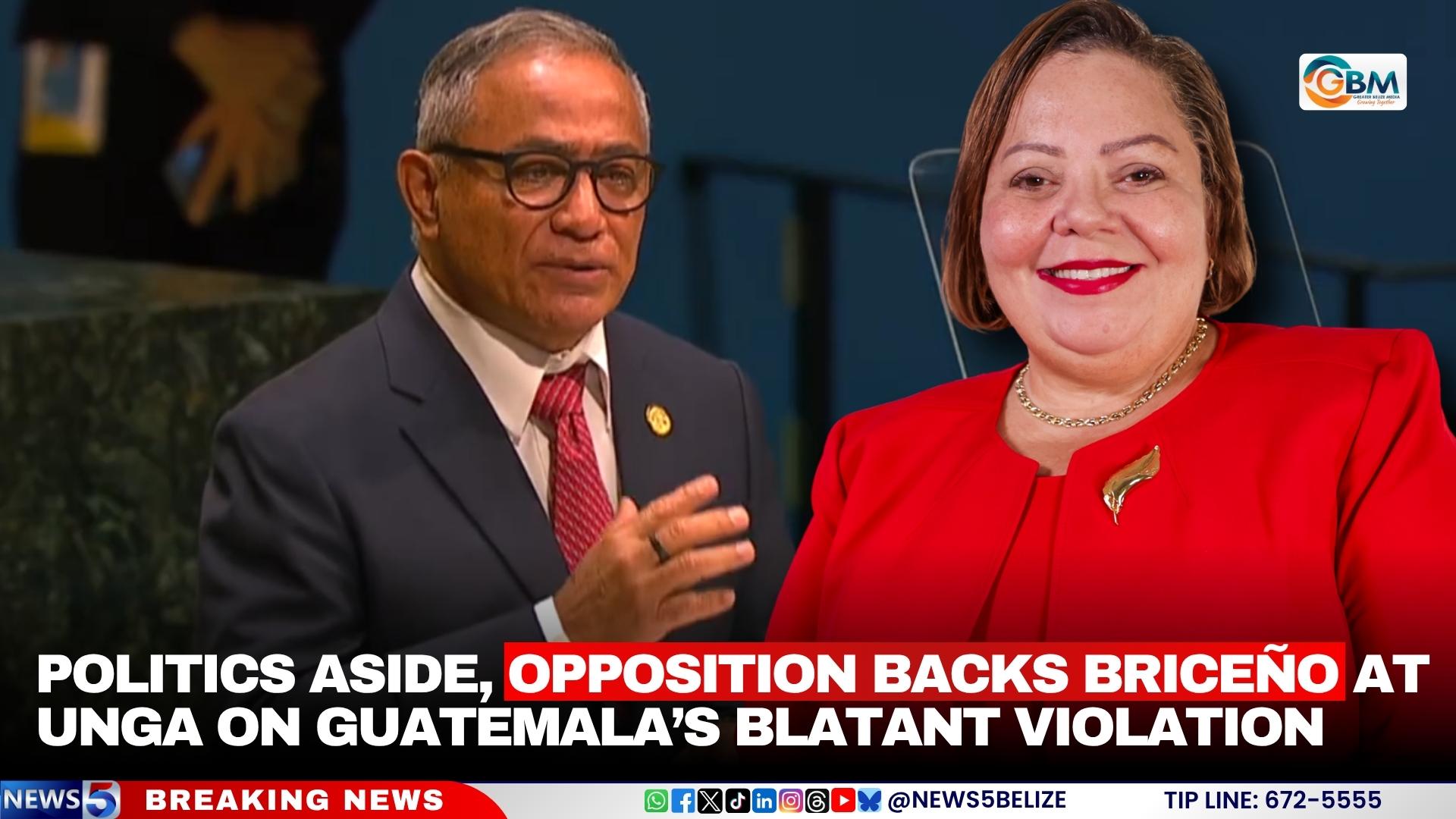
Politics Aside, Opposition Backs Briceño at UNGA on Guatemala’s Blatant Violation
In an unusual demonstration of cross-partisan solidarity ahead of a high-stakes international legal proceeding, Belize’s two leading political factions have set aside longstanding domestic disagreements to unite against what they label repeated, unprovoked violations of Belizean territorial sovereignty by Guatemala. The moment of national cohesion comes on the heels of a brazen Guatemalan military incursion that sparked fresh tensions just days after Belize marked its 45th anniversary of national independence.
On September 24, 2026 — only three days after Belize celebrated its independence — a Guatemalan military aircraft entered Belizean airspace, marking the latest in a string of incursions that have ratcheted up tensions around the long-running territorial and maritime dispute between the two Central American neighbors. Prime Minister John Briceño, leader of the incumbent People’s United Party, brought the incident directly to the attention of global leaders during his address to the 2026 United Nations General Assembly.
During his UNGA remarks, Briceño framed the airspace incursion as part of a sustained pattern of provocative actions by Guatemala, noting that Guatemalan vessels and personnel have repeatedly operated in Belizean waters along the Sarstoon River, the contested border that has been at the center of the dispute for decades. To counter these actions ahead of upcoming legal proceedings, Briceño called on the United Nations and the Organization of American States to strengthen international monitoring of the border region. The prime minister emphasized that no sovereign state should be permitted to use military force or coercive intimidation to alter the outcome of ongoing judicial processes.
In a surprising show of bipartisan unity, Tracy Panton, leader of Belize’s main opposition United Democratic Party, quickly announced her full backing of Briceño’s appeal, affirming that national territorial integrity takes priority over political rivalry at this critical juncture. “At this critical juncture, as Belize prepares to make its oral arguments at the International Court of Justice, Belize must speak with one voice in defence of our territorial integrity, national independence and the right to self determination free from intimidation or interference,” Panton said in an official statement released Saturday.
Panton also called on the Briceño administration to maintain full transparency with the Belizean public, committing to keeping citizens updated on all diplomatic developments and border security measures implemented to protect the country’s sovereign territory. Beyond the border dispute, the opposition leader also aligned her party with the prime minister’s broader foreign policy positions, backing calls for an immediate end to long-running sanctions against Cuba and supporting efforts to hold Israel accountable for what the statement described as clear violations of international law, including acts of genocide against the Palestinian people. Panton reaffirmed that Belizean foreign policy must remain rooted in core principles of human dignity, self-determination, sovereign equality, and consistent respect for international law.
Guatemalan officials speaking at the United Nations quickly pushed back against Briceño’s claims, issuing a categorical rejection of the incursion allegation. Guatemalan representatives claimed “this flight never happened,” but added that the country would launch its own internal investigation into the reported incident. Officials said Guatemala would submit all relevant investigation records and even make the aircraft in question available for inspection. They further noted that both nations have formally recognized the International Court of Justice’s jurisdiction to resolve the full territorial, insular, and maritime dispute between them, and expressed regret that Belize had chosen to use the UN General Assembly forum to spread what they called misinformation.
The upcoming ICJ oral hearings, scheduled to begin in February 2027, mark the final stage of a decades-long dispute over the contested border region, and both sides have spent years preparing their legal arguments. The recent incursion and unified Belizean response have elevated the profile of the dispute ahead of the proceedings, putting new pressure on international bodies to maintain oversight of the tense border region.
-
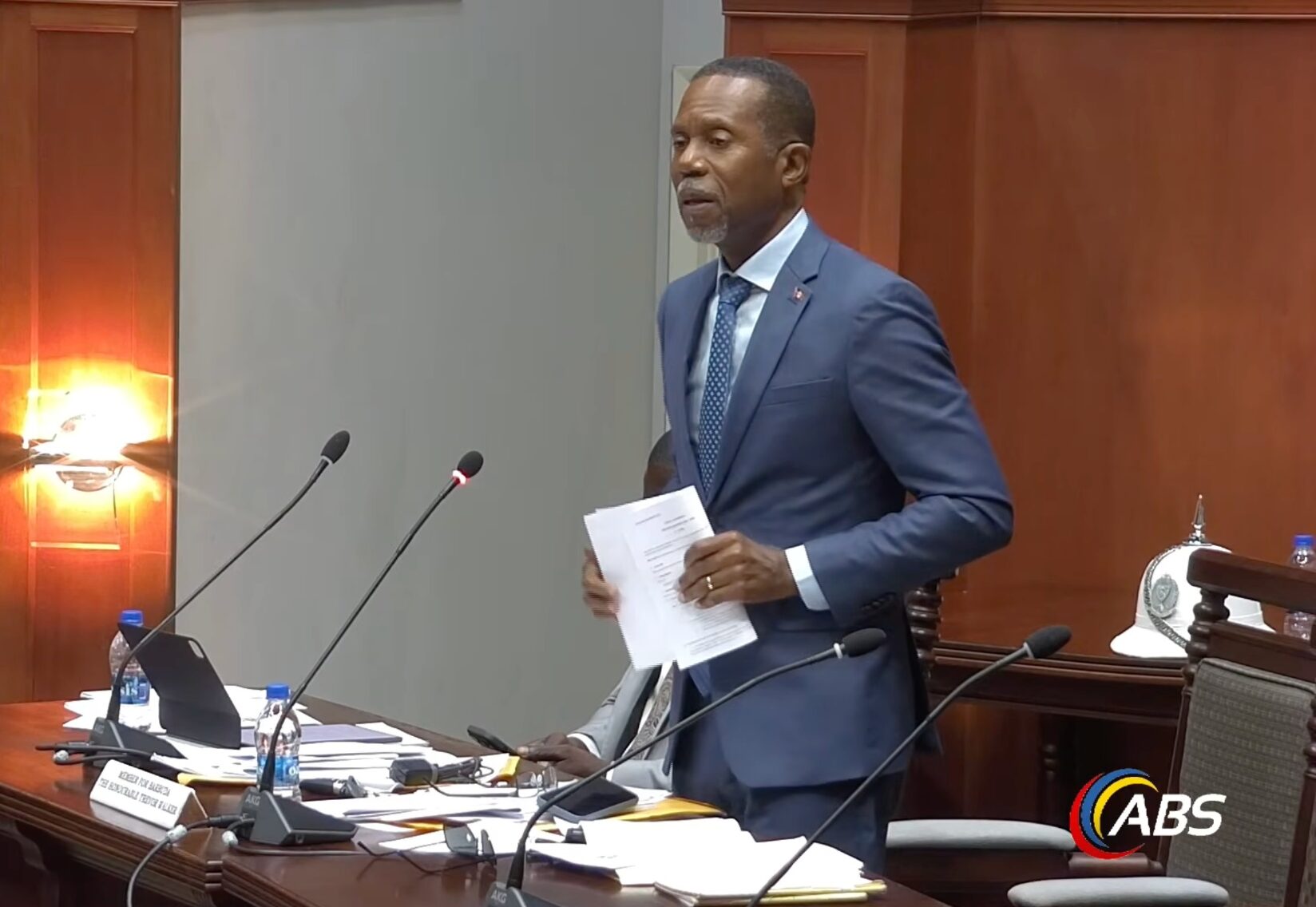
Walker Says Antigua Criminals Are Moving to Barbuda After Release From Prison
During parliamentary debate on the 2026 Firearms Amendment Bill, a senior Antigua and Barbuda lawmaker has sounded a urgent warning over a growing public safety threat on the island of Barbuda, linking a recent surge in home break-ins to the relocation of recently released prison inmates from Antigua.
Trevor Walker, the Member of Parliament for Barbuda, told lawmakers that a growing number of individuals who have completed custodial sentences for criminal offenses in Antigua have relocated to the smaller sister island, and many are legally required to check in regularly with local law enforcement. Walker noted that on any given day, three to four of these former inmates are required to sign in at the Barbuda police station, a pattern that he says has coincided with a sharp uptick in property crime across the island.
Where once break-ins were a rare occurrence, Walker stated that Barbuda now faces at least one home invasion every week, a trend that has upended the island’s historically quiet, low-crime way of life. To illustrate the severity of the issue, Walker shared details of a recent break-in at a property owned by a relative of his wife, who resides permanently in the United States. He told lawmakers that the intruder did not just steal valuables from the vacant home, but appeared to have begun occupying the property as if it were their own. Local police launched an investigation into the incident, Walker confirmed, and identified the primary suspect as a repeat offender with a prior criminal charge on record.
Despite his deep concern over rising crime, Walker was quick to highlight the exceptional work of the Barbuda-based police force, offering specific public praise for Inspector Ogaro, the island’s lead law enforcement officer. Walker described Ogaro as the most proactive and effective inspector he has seen assigned to Barbuda in his tenure in office, noting that the inspector personally leads regular patrols of high-traffic areas including the island’s port and airport, and directly intervenes when he observes open illegal activity.
To further strengthen local law enforcement capacity, Walker has formally called on the national government to deploy additional police vehicles to Barbuda, a move that would allow officers to respond faster to emergency calls and expand the scope of their patrols across the island.
The concerns raised by Walker have formed the backbone of his strong support for the 2026 Firearms Amendment Bill, which introduces tougher regulations and penalties for firearm-related and violent crime across Antigua and Barbuda. The lawmaker stressed that he holds a zero-tolerance stance for the armed robberies, shootings, and homicides that have impacted Antigua in recent years, and emphasized that Parliament carries a constitutional and moral responsibility to address rising crime head-on to protect Antigua and Barbuda’s reputation as a safe jurisdiction for residents and visitors alike.
Walker also publicly disclosed that he is a licensed firearm holder, and affirmed that he will exercise his legal right to defend himself, his family, and his property from any criminal intruder. Closing his remarks, Walker urged his fellow parliamentarians to approach the national crime crisis with the gravity it demands, saying, “This crime thing is really serious.”
-

Kohli, Gill make light work of Windies ODI target
The opening clash of a three-match One Day International series between the West Indies Men’s Cricket Team and India concluded with an eight-wicket victory for India on Sunday, played on a batter-friendly pitch at Thiruvananthapuram’s Greenfield International Stadium that produced three centuries across both innings. The match delivered a dramatic narrative of early promise unfulfilled, clinical spin bowling, and a legendary batting masterclass that secured the result for the hosts.