博客

  • OAS Scholarships 2026

    OAS Scholarships 2026

    A new partnership between the Department of Human Development, Education and Employment of the Executive Secretariat for Integral Development (SEDI-DHDEE) of the Organization of American States (OAS) and the Government of Grenada has launched a call for applications for 2027 undergraduate and graduate academic scholarship programs, opening up transformative study opportunities for eligible Grenadian citizens. This funding initiative, designed to support higher education advancement for Grenadian residents, outlines clear eligibility, documentation and timeline requirements for prospective candidates, with key benefits covering a range of study-related costs.

    ### Key Program Eligibility Rules
    All applicants must meet core eligibility criteria to be considered. Candidates must be citizens currently residing in Grenada, hold strong physical and mental health to complete their chosen program, demonstrate sufficient language proficiency to study in their host country, and be enrolled full-time in the program for which they are seeking funding. A mandatory post-study requirement applies to all awardees: regardless of study modality, recipients must return to and reside in Grenada for a minimum of 24 consecutive months after completing their funded program.

    Eligibility differs slightly for the two scholarship tiers:
    For undergraduate awards, funding is only available for the final two academic years of a bachelor’s degree program. Transfer students applying for undergraduate funding must hold an admission letter for a program starting between August and December 2027.
    For graduate awards, funding is available for full-time master’s or doctoral degree programs. Unlike undergraduate awards, graduate scholarships cannot be used for study at institutions in Grenada (applicants must study at an accredited university in another OAS member state). Online or hybrid graduate study applications receive priority consideration during selection, and awards cover one to two academic years. Medical sciences programs and language learning courses are excluded from graduate funding eligibility. Additionally, former OAS staff, consultants, and permanent mission staff may apply only after six months have passed since the end of their employment or contract with the organization.

    ### Award Benefits
    Selected scholars receive comprehensive financial support to cover core study costs. Each recipient can access up to $10,000 USD per academic year for tuition and mandatory fees, for a maximum of two academic years. Additional benefits include health insurance coverage, a monthly subsistence allowance, one round-trip air ticket to the host country for on-site study, and funding for required books and study materials.

    ### Pre-Application Requirements
    All candidates must secure admission independently before applying: applicants are required to apply directly to their chosen university for admission to their desired program, and must either be already enrolled in the program or hold an unconditional admission letter for studies starting between January 1 and December 31, 2027. While scholarships can be used at any accredited academic institution in a participating OAS member state, officials strongly encourage applicants to prioritize institutions part of the OAS Consortium of Universities.

    ### Required Application Documentation
    Specific documentation is required for each scholarship tier:
    For undergraduate applicants, required materials include: certified copies of academic credentials (associate degree diplomas and transcripts for transfer students, or high school diplomas and current progress reports for students already enrolled in a bachelor’s program); two signed recommendation letters (from former/current professors or employers, with no references from relatives accepted; unemployed applicants may submit a recommendation from a non-relative academic reference using the official OAS form); a copy of a government-issued ID or passport; and a CV that does not exceed two pages. Transfer students must also include their program admission letter.
    For graduate applicants, required materials include: a completed online application form; certified copies of all academic certificates and diplomas for the highest degree earned; certified transcripts for completed or in-progress programs; proof of enrollment or an unconditional admission letter; two signed, non-relative recommendation letters from academic or professional references; a two-page maximum CV; a copy of government-issued ID and passport biodata page; and current undergraduate transcripts for candidates with overlapping study.

    ### Application Timeline and Next Steps
    All applications must be submitted electronically according to a two-step timeline. First, completed application packets must be sent to Grenada’s Human Resource Development Division, Ministry of Education by December 4, 2026, to either [email protected] or [email protected]. Final applications must be submitted to the OAS by January 31, 2027. Pre-selection results can be obtained by contacting the national OAS office directly, and the final list of selected awardees will be published on the OAS scholarship website (oas.org/en/scholarships) in September 2027.

    Prospective candidates can access the official online application forms for both undergraduate and graduate scholarships, as well as frequently asked questions, through the OAS scholarship portal. For questions about eligibility, documentation, or the application process, candidates can contact OAS directly at [email protected], or reach out to Grenada’s Ministry of Education Human Resource Development Division by phone at (473) 417-9762 or via email at [email protected].

  • ILO study calls for better tourism jobs and support for small businesses in Dominica

    ILO study calls for better tourism jobs and support for small businesses in Dominica

    A new landmark study from the International Labour Organization (ILO) has shone a spotlight on systemic challenges facing the tourism industry across the Eastern Caribbean, including the sector in Dominica, calling for targeted policy action to formalize small businesses and uplift working standards across the region.

    Titled *Informality in the tourism sector in the Eastern Caribbean*, the research analyzes tourism ecosystems across five island nations: Dominica, Antigua and Barbuda, Barbados, Grenada and Saint Lucia. The ILO’s core argument frames coordinated progress on three interconnected goals — boosting productivity, expanding access to decent work, and cutting informal economic activity — as the only sustainable path forward for the region’s most economically critical industry.

    Across the five study countries, tourism contributes an average of 39% of total gross domestic product and accounts for more than 11% of all employment, underscoring just how deeply the sector’s health shapes regional livelihoods. These figures represent regional averages, not standalone data for Dominica specifically.

    The study outlines a web of overlapping barriers that plague both informal tourism workers and small business operators across the region. Limited access to affordable financing, widespread skills mismatches, gaps in social safety net coverage, and weak enforcement of existing labor regulations all create persistent headwinds for informal operators. Compounding these challenges, seasonal fluctuations in tourist demand and growing exposure to climate-related shocks make it even harder for small businesses to invest in long-term growth and maintain formal, regulated operations.

    For Dominica specifically, the research finds that one-size-fits-all policy solutions will not deliver meaningful change. Different types of tourism enterprises require tailored support: a small, family-run operator that earns only enough to cover basic operational costs needs vastly different assistance than a growing business seeking to scale up its offerings and customer base. The ILO notes that incremental, practical policy adjustments can make the process of formalization far more accessible for small operators, while also delivering tangible improvements to working conditions across the sector.

    The study puts forward a series of actionable recommendations for regional governments and stakeholders. Key proposals include expanding access to affordable financing and targeted skills training for micro, small and medium-sized tourism enterprises, extending social protection coverage to informal tourism workers, strengthening enforcement of labor regulations, and deepening tripartite cooperation between national governments, employer associations, and worker organizations.

    “The challenge is not simply to reduce informality, but to transform tourism into a genuine platform for decent work, productive development and social inclusion,” said Ana Virginia Moreira Gomes, ILO Regional Director for Latin America and the Caribbean, in outlining the study’s core mission.

    Notably, the research does not launch a new dedicated program for Dominica. Moving forward, the ILO has committed to collaborating with national governments, employer groups, and worker organizations to translate the study’s evidence-based recommendations into concrete policy and practice across the region.

  • Traffic arrangements for Woodlands pipeline installation

    Traffic arrangements for Woodlands pipeline installation

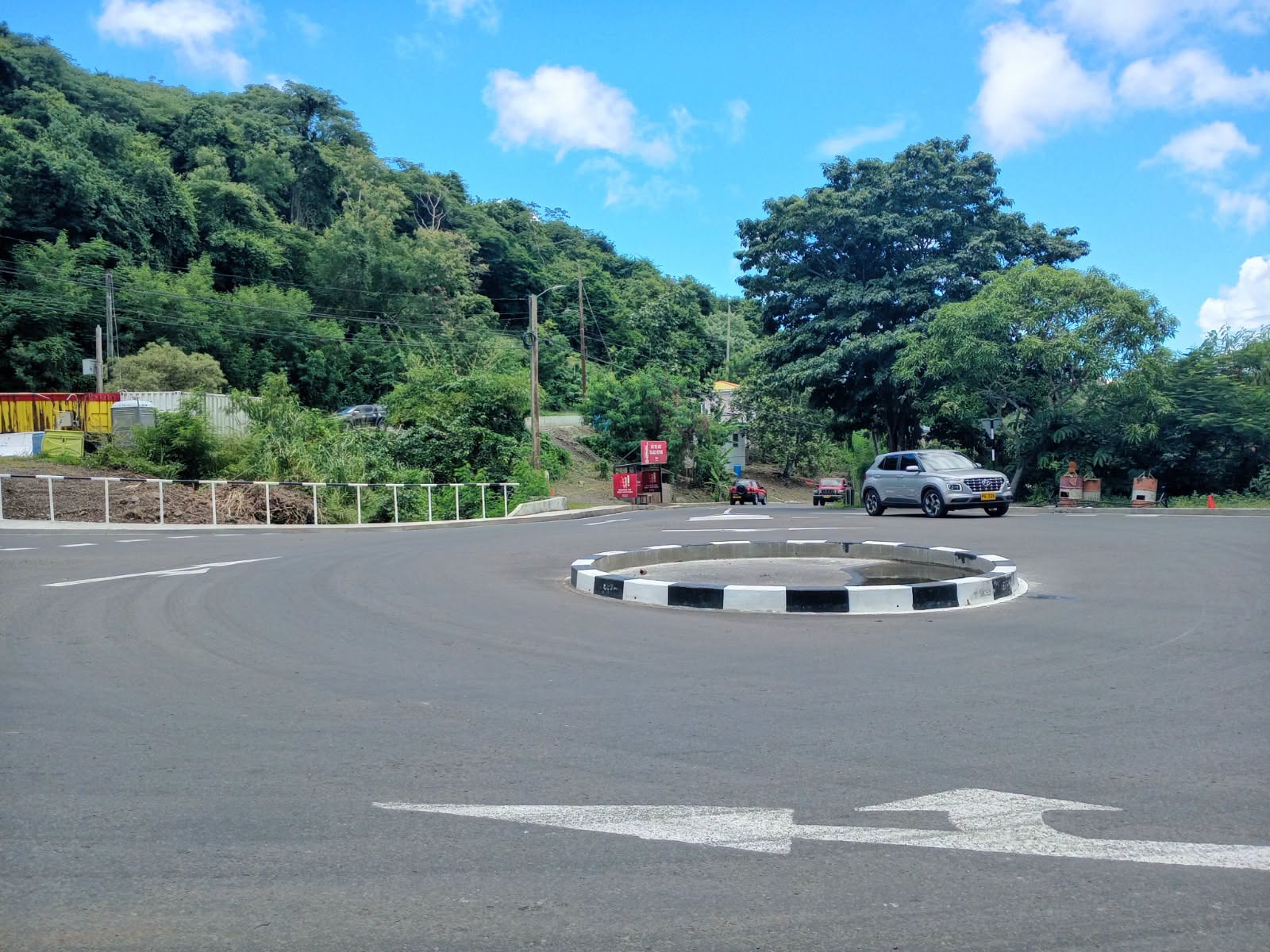
    Grenada’s National Water and Sewerage Authority (Nawasa) is gearing up to launch a critical infrastructure upgrade project along a high-traffic corridor, with construction on a new 12-inch water main scheduled to kick off on Tuesday, September 29, 2026. The work, which will stretch between Woodlands Junction and the Sugar Mill Roundabout, is projected to take approximately three months to reach completion.

    This targeted upgrade is designed to address longstanding issues with the area’s current water distribution network, replacing decades-old, deteriorating existing pipeline infrastructure. Beyond modernizing the system, the project will boost the network’s overall resilience and deliver more consistent, reliable water access for local residents and commercial operations. A key added benefit of completing the pipeline replacement before the National Asphalt Company (Namalco) carries out planned road resurfacing work is that it eliminates the need to cut into the newly paved roadway at a later date, saving public funds and reducing long-term disruption.

    To minimize disruption to daily travel and local activity, Nawasa has spent months coordinating the project timeline, safety protocols and traffic management plans with a cross-stakeholder group that includes Grenada’s Ministry of Infrastructure, the Royal Grenada Police Force (RGPF), the Grenada Transport Commission (GTC), Namalco, and other local community partners. Particular focus has been placed on preserving reasonable access for residents, businesses, and emergency services while maintaining strict road safety standards across the work zone.

    In line with the coordinated planning, the RGPF has released a revised traffic management framework that will go into effect when construction starts. Under the new rules, only one-way traffic will be allowed on the affected stretch of Woodlands Public Road, with flow restricted to vehicles traveling from Grand Anse Valley toward the Woodlands and Springs areas. Motorists heading in the opposite direction, from Springs toward Grand Anse Valley, will need to pre-plan alternate routes to reach their destinations. A permanent No Entry sign will be installed at Woodlands Junction to clearly mark the restricted access point for the work zone.

    The revised traffic rules will remain in place for the full three-month construction window, and will follow a set weekly schedule: from 9 a.m. to 9 p.m. Monday through Thursday, 9 a.m. to 3 p.m. on Fridays, and 9 a.m. to 5 p.m. on both Saturdays and Sundays. As construction progresses through different phases of the project, full temporary closures of the affected stretch may be implemented at times, with the roadway reopened outside of active work hours.

    Local transportation officials are urging all motorists who travel through the area to adjust their travel plans ahead of the project launch, build extra time into their commutes to account for potential delays, pay close attention to posted directional signage, and follow all instructions from on-site police officers and traffic management staff.

    Nawasa has committed to publishing regular, timely updates as the project moves forward, including advance public notice of any changes to access rules or temporary water service interruptions that may impact local communities. The authority has issued an advance note of appreciation to local residents, business owners, and everyday motorists for their patience and cooperation during the necessary construction work.

  • PM Browne Says Antigua Senator ‘Deh Wid’ a Pedophile

    PM Browne Says Antigua Senator ‘Deh Wid’ a Pedophile

    During a heated parliamentary debate on proposed firearms legislation this week, Antigua and Barbuda Prime Minister Gaston Browne delivered a startling allegation: he claimed an unnamed sitting senator is currently in a romantic relationship with a convicted pedophile, using the local Antiguan colloquial phrase “deh wid” to describe the pairing. The explosive claim formed part of a broader argument from Browne centered on what he frames as growing societal tolerance for dangerous, repeat offenders in the twin-island nation.

    Browne made the remarks Monday while contributing to debate on the 2026 Firearms Amendment Bill. Wading into a discussion of rising acceptance and even glorification of criminal activity across Antigua and Barbuda, Browne repeated his accusation for emphasis: “You have a senator in this Honourable House who deh wid a pedophile. Can you imagine? A senator in this Honourable House who deh wid a pedophile.”

    The prime minister went on to question the ethical precedent the senator is setting for her own children, particularly her daughters. “That is how slack we have become in this country. What do you think will happen to her children? What example is she setting for her girl children?” Browne said. Notably, Browne did not name the senator at any point during his address, nor did he offer any concrete evidence or supporting details to back up the serious public allegation.

    The claim was not an isolated comment, but part of a wider push from Browne for harsher sentencing and more punitive measures for people convicted of violent and sexual offenses in Antigua and Barbuda. Shortly before making the allegation about the senator, Browne had opened discussion on the treatment of convicted sex offenders, proposing that chemical castration — and in extreme cases, surgical castration — should be implemented for serial rapists.

    Reaffirming his stance on systemic laxity around crime, Browne argued that Antigua and Barbuda has grown overly accepting of individuals linked to serious criminal activity, and called for the country to adopt a firm “zero tolerance” policy toward all crime and violent offending.

  • Remembering how Julien Alfred brought a nation together

    Remembering how Julien Alfred brought a nation together

    To much of the global public, September 27 carries no special weight. But for the small Caribbean nation of Saint Lucia, that date has been permanently etched into national identity as Julien Alfred Day, a yearly tribute to the country’s trailblazing athletic champion, starting from its first official observance in 2024.

    Though only the inaugural celebration was designated a formal public holiday, the meaning and resonance of the day have not faded in the two years since Alfred made history. The first Julien Alfred Day marked the grand, closing finale of a week-long national celebration honoring Alfred’s unprecedented achievement at the Paris Olympic Games, where she claimed Saint Lucia’s first ever Olympic medals: a gold medal in the women’s 100-meter dash, won amid the August rain, and a silver in the 200-meter event.

    Two years later, the moment of glory and the wave of national pride it sparked remain vivid in the collective memory of Saint Lucians. For the reporter who covered Alfred’s homecoming, the memory of that day, September 24, remains sharp: standing in the community once known as Monkey Town, which locals now unofficially call Julien Alfred Avenue, speaking with the athlete’s family members who shared stories of the decades of hardship and persistent effort that shaped the nation’s most famous new icon. They asked that their overwhelming joy and pride in “Juju”’s historic win be shared, but also that the struggles that paved her path never be erased – a balance the reporter has aimed to honor in all retellings.

    The reporter also recalls the first time seeing Alfred in person, when she stepped out of her vehicle to wrap her longtime loved ones in hugs. Tears of joy streamed down her face as she was wrapped in the Saint Lucian flag, the same banner she would later officially represent as the nation’s tourism ambassador. In that moment, it was clear this was a landmark occasion – the kind of once-in-a-generation memory people will recount to their grandchildren for decades.

    Other cultural echoes of that historic moment have endured too. Sly’s *Damn Proud Lucian* quickly became an unofficial national anthem in the wake of Alfred’s win, while the sweet melody of Lady Stone’s *Small Packages*, performed by the National Combined Schools Choir, still rings out – a tribute to a champion who put Saint Lucia on the global map, joining the ranks of national icons like Nobel laureates Sir Arthur Lewis and Sir Derek Walcott.

    Though the reporter was unable to attend the national concert held on the first Julien Alfred Day in person, the widely shared images and videos of the event conveyed a spirit of national unity not seen since Saint Lucia gained independence in 1979. For one extraordinary day, there were no dividing lines: no political rivalries between the country’s Labour and Flambeau parties, no divides along religious or secular lines. For that moment, every division melted away, and all Saint Lucians stood as one behind a compatriot who defied expectations to claim victory on the world’s biggest athletic stage. That unique unifying power is the extraordinary gift of sport.

    Two years on, the nation still holds that memory close – but the question remains: have Saint Lucians taken the lesson of that moment to heart? Have we learned what we can accomplish when we set aside our differences, even for a short time, to rally behind a cause larger than our individual divides? That, ultimately, is the core reminder that Julien Alfred Day should carry for the nation each year.

  • Ethan Camacho Named First Recipient of ECAB Game Changers Scholarship

    Ethan Camacho Named First Recipient of ECAB Game Changers Scholarship

    The Eastern Caribbean Amalgamated Bank (ECAB), a leading financial institution serving the Eastern Caribbean region, has marked a major milestone in its youth development initiative by revealing 15-year-old Ethan Camacho as the inaugural beneficiary of the newly launched ECAB Game Changers Scholarship.

    A driven dual-career student-athlete, Camacho currently trains and studies at Ackworth School’s renowned football academy based in the United Kingdom. His selection followed a rigorous multi-stage review of all submitted applications, where adjudication panels prioritized two core criteria: proven academic excellence and standout athletic potential in football.

    The scholarship provides a one-time award of 25,000 Eastern Caribbean dollars, earmarked explicitly to offset the considerable costs associated with overseas study. The financial support is designed to remove barriers that often prevent talented young regional athletes from pursuing international opportunities, allowing Camacho to focus on advancing both his academic goals and his growing career as a professional footballer without the burden of unmanageable expenses.

    Before relocating to the UK to join Ackworth School, Camacho honed his academic and athletic skills at Antigua’s Baptist Academy. Throughout his time at the institution, he maintained a consistent grade point average of 3.0 or higher, balancing the demands of rigorous coursework with an unwavering dedication to football training and competition. His academic prowess was on full display in 2021, when he secured third place overall in the national Grade 6 Assessment across Antigua and Barbuda.

    Beyond the classroom, Camacho has already built an impressive athletic resume representing his home country. He has worn the Antigua and Barbuda national kit at multiple regional youth football competitions, and has collected a long list of individual honors throughout his young career. These include multiple Golden Boot awards for top goal-scoring, as well as recognitions for Best Midfielder and Most Valuable Player at prominent regional tournaments. His coaches, who have overseen his development from grassroots football, submitted glowing recommendations in support of his scholarship application, highlighting his work ethic, leadership, and commitment to continuous improvement.

    In comments following the announcement of his award, Camacho expressed heartfelt appreciation for the opportunity afforded to him by ECAB. “Thank you, ECAB. I am very grateful for this scholarship, and it will make my studies abroad easier to attain,” he said.

    Michael Spencer, Chief Executive Officer of ECAB, emphasized that the scholarship program aligns with the bank’s core mission of investing in the future of Eastern Caribbean communities. “We are always happy to support the dreams of promising young people in our country,” Spencer explained. “We want to ensure that more youth can comfortably fulfil their dreams, and that’s what the ECAB Game Changers Scholarship is all about. We wish Ethan the best in his next chapter.”

    As Camacho prepares to continue his journey in the UK, ECAB has formally congratulated the teen on his selection, reinforcing the institution’s commitment to expanding the Game Changers Scholarship program to support more emerging young talent across the region in the years ahead.

  • Antiguan Nurse Returns from Jerusalem with Public Health Degree

    Antiguan Nurse Returns from Jerusalem with Public Health Degree

    A respected Antiguan registered nurse and Chartered Director, Julien David Kentish, has completed an advanced international academic program and returned to his home country ready to transform local public health systems. After earning his International Master of Public Health from the Hebrew University of Jerusalem’s prestigious Braun School of Public Health and Community Medicine, Kentish is preparing to roll out a new vision of data-centered preventive care for Antigua and Barbuda.

    Notably, Kentish stood as the only student from the Caribbean region in a diverse, globally composed cohort at the Israeli institution. This unique position allowed him to bring a critical Caribbean perspective to classroom discussions while absorbing cutting-edge global public health practices from peers and faculty across the world. His graduate research zeroed in on a pressing local health challenge: childhood obesity, with a specific focus on healthy nutritional practices for families during the first 1,000 days of a child’s life – a critical developmental window spanning from conception through the child’s second birthday. To ground his work in local context, Kentish conducted on-the-ground inquiry into the experiences of frontline healthcare workers and family caregivers across Antigua and Barbuda, ensuring his findings are tailored to the unique needs of his home population.

    During his time studying in Israel, Kentish proactively engaged with leading clinicians, senior researchers, and top healthcare executives. These professional exchanges gave him firsthand insight into innovative models of healthcare delivery, modern nursing leadership frameworks, and emerging technological innovations reshaping global health systems. That hands-on exposure has equipped him with a diverse skill set to tackle public health challenges across multiple domains back home.

    Looking ahead, Kentish aims to contribute his new expertise to a wide range of key public health priorities in Antigua and Barbuda. His areas of focus will include evidence-based public health planning, strengthening epidemiology and disease surveillance systems, advancing maternal and child health outcomes, expanding prevention efforts for non-communicable diseases, improving patient safety protocols, and enhancing overall healthcare governance.

    In a statement reflecting on his journey, Kentish emphasized a fundamental shift that is core to his new approach: “Public health challenges cannot be addressed only when people arrive at the hospital or clinic. We have to strengthen prevention, use data more effectively, invest in healthier communities and develop systems that respond to the needs of our population before illness becomes a crisis.” He added that his decision to pursue advanced study abroad grew from a desire to expand his professional horizons beyond direct clinical care: “I left Antigua and Barbuda to learn, to challenge myself and to broaden my understanding of health beyond the bedside. I return with a greater responsibility to use that knowledge in service to my country and region.”

  • Belize Makes Chess History at International Olympiad

    Belize Makes Chess History at International Olympiad

    In a landmark moment for Belizean chess, two local competitors made history at the 46th FIDE Chess Olympiad hosted in Samarkand, Uzbekistan, earning the nation its first-ever international chess titles from the International Chess Federation (FIDE).

    The tournament, which concluded in late September 2026, gathered over 200 national teams from across the globe to compete for global rankings and individual performance honors. Among the competitors were Belize’s own Alfred Awe, a former president of the Belize Chess Federation, and his teammate Kenet Perez. By tournament’s end, both players walked away with historic achievements: Perez secured the Candidate Master title in the event’s penultimate round, while Awe crossed the required rating threshold to earn the higher distinction of FIDE Master in the final round.

    FIDE’s hierarchy of chess titles places FIDE Master as the third-highest honor available to competitive players, with Candidate Master ranking as the fourth-highest. For decades, these international titles felt like an unobtainable goal for Belizean competitors, Awe explained in an interview after his win. “We used to hear about these candidate masters, FIDE masters, and they were like these mythical chess players,” he said.

    Awe credited the steady growth of organized chess development programs within Belize for creating new pathways for local players to compete and excel at the international level. “We’ve grown the federation to the point where we can compete in these international events and we’ve, me and my fellow teammate, we’ve shown that it’s possible for us,” he added.

    The dual victories mark a pivotal new chapter for Belize’s chess community, proving that Belizean players can compete with the world’s best and earn the highest competitive honors in the sport. It is the first time that any chess player from Belize has held an international FIDE master title, opening the door for future generations of Belizean competitors to pursue similar achievements on the global stage.

  • Antigua and Barbuda Calls for Dedicated SIDS Seat on UN Security Council

    Antigua and Barbuda Calls for Dedicated SIDS Seat on UN Security Council

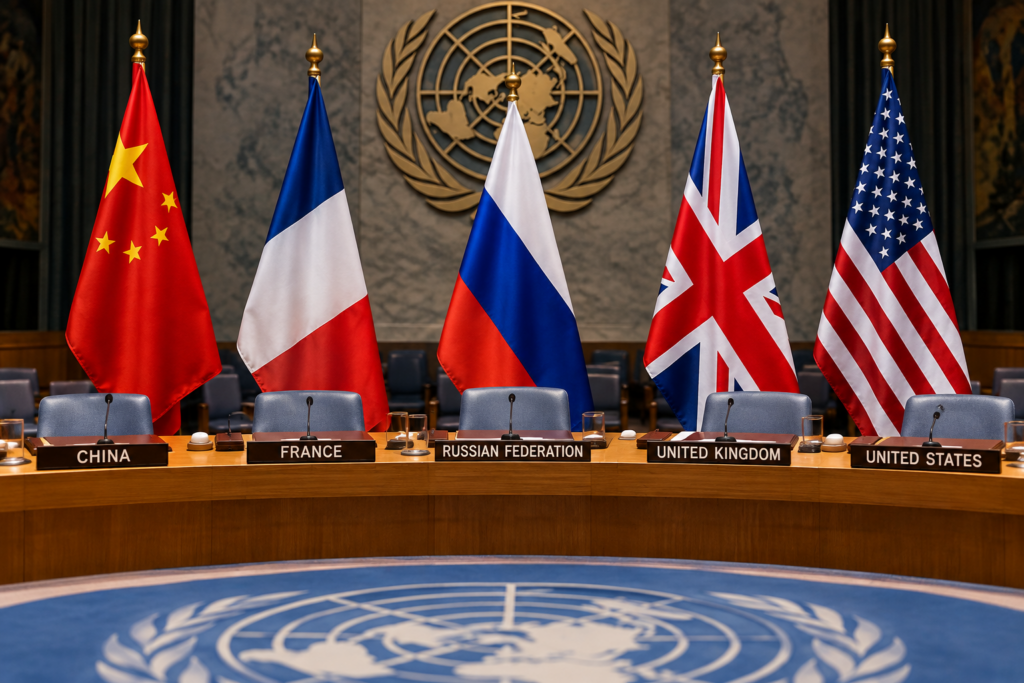
    Against a backdrop of ongoing global discussions over updating decades-old United Nations governance structures, Antigua and Barbuda has put forward a bold demand to center the voices of historically marginalized small island nations in key global decision-making. Speaking during the General Debate of the 81st Session of the UN General Assembly on Monday, Ambassador Dr. Walton Aubrey Webson, the Caribbean nation’s permanent representative to the UN, formally called for Small Island Developing States (SIDS) to be granted a dedicated, guaranteed seat on a reformed UN Security Council.

    Webson emphasized that any meaningful overhaul of the 15-member Security Council must tackle two core dimensions: the body’s operational procedures and its fundamental representation gaps. For small, vulnerable island nations that have long been sidelined in global power negotiations, an assured place at the Security Council table is non-negotiable, he argued. “Small Island Developing States must also have an assured voice at this table. Antigua and Barbuda calls for a dedicated SIDS seat on a reformed Security Council,” Webson stated during his address.

    Beyond advocating for SIDS representation, Antigua and Barbuda also joined growing international calls to correct historical injustice by granting Africa permanent membership on the Security Council. Webson noted that the continent’s continued exclusion from permanent seats on the powerful body is an unacceptable wrong that demands immediate redress.

    The Caribbean nation also threw its support behind a high-profile initiative led by France and Mexico, which calls on the Security Council’s five permanent members to voluntarily restrict their veto power. Under the proposal, permanent members would agree not to use vetoes to block council action in cases where mass atrocities are occurring. Webson confirmed that Antigua and Barbuda would add its name to the list of growing UN member states backing the initiative, stressing that the veto power should never be used to stop the Security Council from fulfilling its core mandate of upholding global peace and security.

    The push for Security Council reform forms a central plank of Antigua and Barbuda’s broader argument that global multilateral institutions must evolve to better reflect and prioritize the interests of small, economically and militarily vulnerable states. Earlier in his address, Webson underscored that for small island nations like his country, multilateral cooperation and respect for international law are not abstract political goals—they are existential necessities. Unlike major global powers that wield significant military and economic clout to advance their interests, small developing island states rely entirely on the UN system to protect their sovereignty and security. “For us, the United Nations is not optional. It is essential to our survival,” he said.

  • Antigua And Barbuda Art Week 2026 Student Art Competition Launches

    Antigua And Barbuda Art Week 2026 Student Art Competition Launches

    The Antigua and Barbuda Tourism Authority has officially opened submissions for the 2026 Antigua and Barbuda Art Week Schools’ Art Competition, an annual initiative designed to uplift young creative talent across the twin-island nation. Now marking its fourth iteration, the 2026 Art Week celebration will run from November 11 to 18, centered on elevating the creative voices, cultural perspectives, and artistic potential of the country’s next generation of creators. This year’s student competition carries the evocative theme “The Rhythm of the Islands”, which invites participants to dig into the unique energy and character that defines daily life across Antigua and Barbuda.

    Unlike generic art contests, this competition is framed as more than a prize-driven event. It offers young local artists a dedicated public platform to showcase their original work, while encouraging them to reflect on the distinctive elements that make their home one-of-a-kind. The open-ended theme encourages a wide range of interpretations: students are invited to draw inspiration from everything that makes up the island’s rhythmic identity, from iconic local music and vibrant annual festivals to long-held cultural traditions, quiet daily moments, the stunning natural landscape, tight-knit community bonds, and the people who call the islands home. Each participant is encouraged to translate their personal experience of “The Rhythm of the Islands” into a unique visual artwork.

    Mauricia Frith, lead organizer of the Art Week Student Art Competition, shared her perspective on the initiative’s core mission. “We want this competition to be more than just a chance to win a prize,” Frith explained. “It is an opportunity for our students to express themselves, celebrate where they live and show us Antigua and Barbuda, as they experience it. I am especially excited to see how each student interprets ‘The Rhythm of the Islands’ in a way that is uniquely their own.”

    The competition is open to all primary and secondary school students between the ages of 7 and 17, with entries split into three age-based categories to ensure fair judging: 7 to 9 years old, 10 to 12 years old, and 13 to 17 years old. First, second, and third place winners will be selected in every division, with specialized industry-related prizes awarded to each top finisher. Following the competition, all winning artworks will be displayed as part of the official Antigua and Barbuda Art Week exhibition at V. C. Bird International Airport, giving the young creators’ work exposure to thousands of local and international visitors.

    To be eligible, students may only submit one original piece that aligns with the competition theme. All artworks must meet specific size requirements, falling between 14 inches by 14 inches and 14 inches by 16 inches. Accepted mediums include a range of accessible materials: quick-drying paint, watercolor, acrylic, pencil crayons, wax crayons, and collage. Works must be created on approved supports: Manila paper, watercolor paper, or Bristol board. All completed entries must be submitted to the Antigua and Barbuda Tourism Authority’s office at the 1st Floor, John E. St. Luce Building on Factory Road by 12:00 p.m. local time on Friday, November 6, 2026.