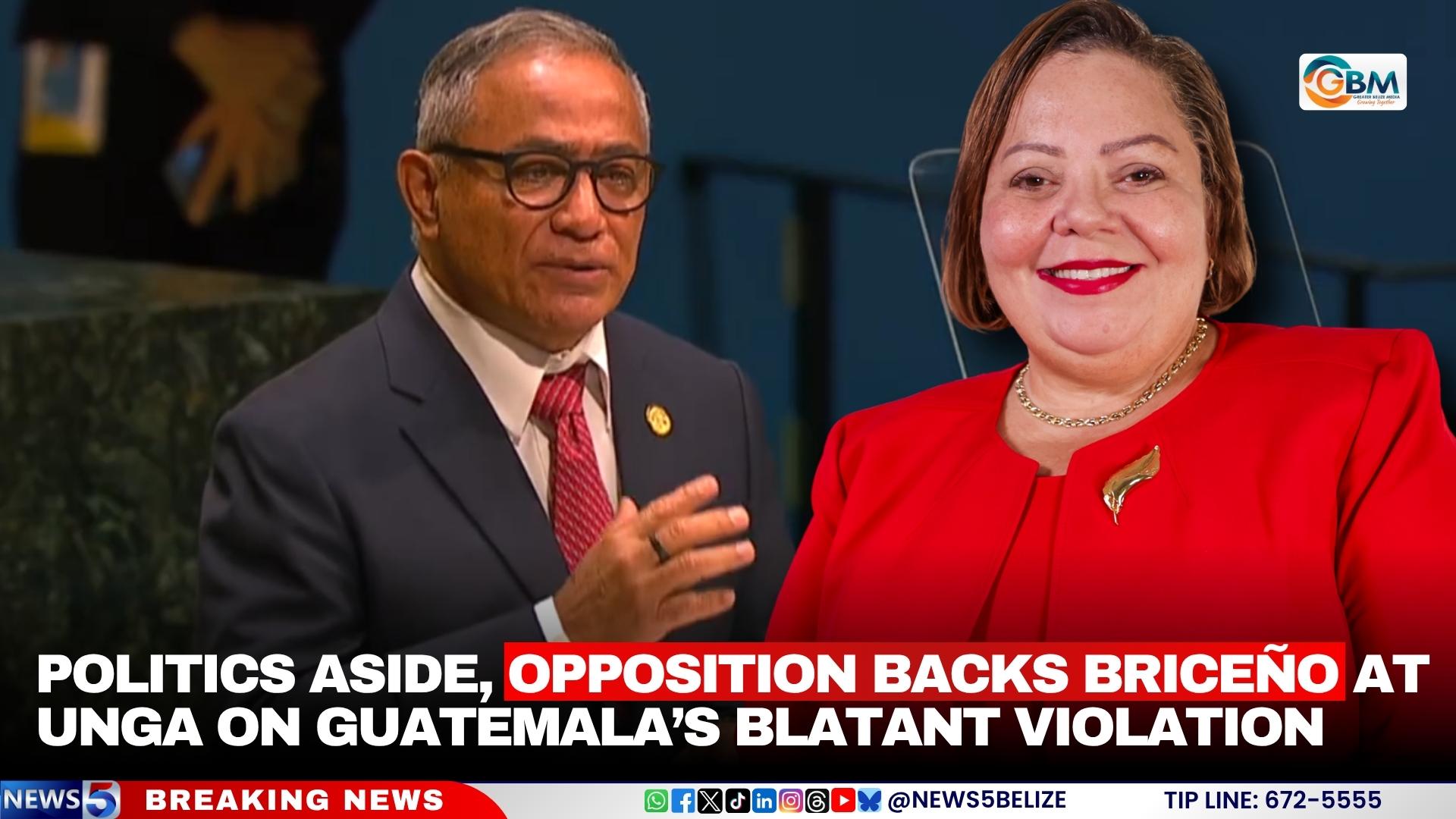
In an unusual demonstration of cross-partisan solidarity ahead of a high-stakes international legal proceeding, Belize’s two leading political factions have set aside longstanding domestic disagreements to unite against what they label repeated, unprovoked violations of Belizean territorial sovereignty by Guatemala. The moment of national cohesion comes on the heels of a brazen Guatemalan military incursion that sparked fresh tensions just days after Belize marked its 45th anniversary of national independence.
On September 24, 2026 — only three days after Belize celebrated its independence — a Guatemalan military aircraft entered Belizean airspace, marking the latest in a string of incursions that have ratcheted up tensions around the long-running territorial and maritime dispute between the two Central American neighbors. Prime Minister John Briceño, leader of the incumbent People’s United Party, brought the incident directly to the attention of global leaders during his address to the 2026 United Nations General Assembly.
During his UNGA remarks, Briceño framed the airspace incursion as part of a sustained pattern of provocative actions by Guatemala, noting that Guatemalan vessels and personnel have repeatedly operated in Belizean waters along the Sarstoon River, the contested border that has been at the center of the dispute for decades. To counter these actions ahead of upcoming legal proceedings, Briceño called on the United Nations and the Organization of American States to strengthen international monitoring of the border region. The prime minister emphasized that no sovereign state should be permitted to use military force or coercive intimidation to alter the outcome of ongoing judicial processes.
In a surprising show of bipartisan unity, Tracy Panton, leader of Belize’s main opposition United Democratic Party, quickly announced her full backing of Briceño’s appeal, affirming that national territorial integrity takes priority over political rivalry at this critical juncture. “At this critical juncture, as Belize prepares to make its oral arguments at the International Court of Justice, Belize must speak with one voice in defence of our territorial integrity, national independence and the right to self determination free from intimidation or interference,” Panton said in an official statement released Saturday.
Panton also called on the Briceño administration to maintain full transparency with the Belizean public, committing to keeping citizens updated on all diplomatic developments and border security measures implemented to protect the country’s sovereign territory. Beyond the border dispute, the opposition leader also aligned her party with the prime minister’s broader foreign policy positions, backing calls for an immediate end to long-running sanctions against Cuba and supporting efforts to hold Israel accountable for what the statement described as clear violations of international law, including acts of genocide against the Palestinian people. Panton reaffirmed that Belizean foreign policy must remain rooted in core principles of human dignity, self-determination, sovereign equality, and consistent respect for international law.
Guatemalan officials speaking at the United Nations quickly pushed back against Briceño’s claims, issuing a categorical rejection of the incursion allegation. Guatemalan representatives claimed “this flight never happened,” but added that the country would launch its own internal investigation into the reported incident. Officials said Guatemala would submit all relevant investigation records and even make the aircraft in question available for inspection. They further noted that both nations have formally recognized the International Court of Justice’s jurisdiction to resolve the full territorial, insular, and maritime dispute between them, and expressed regret that Belize had chosen to use the UN General Assembly forum to spread what they called misinformation.
The upcoming ICJ oral hearings, scheduled to begin in February 2027, mark the final stage of a decades-long dispute over the contested border region, and both sides have spent years preparing their legal arguments. The recent incursion and unified Belizean response have elevated the profile of the dispute ahead of the proceedings, putting new pressure on international bodies to maintain oversight of the tense border region.