After weeks of escalating political tension and public demands for transparency, Jamaica’s long-awaited Integrity Commission investigation into the Firearm Licensing Authority (FLA) was formally presented to Parliament this Tuesday. The sweeping probe, which centers on allegations of corrupt practice, unethical conduct and procedural irregularities across the agency’s core operations, has laid bare critical gaps in data governance, inventory control and information management that have raised alarms about oversight failures at the state body.
The report’s journey to public release was fraught with conflict, with opposition lawmakers staging a walkout in protest of what they called an intentional delay by the sitting government to hide the document’s damning findings. For weeks leading up to Tuesday’s tabling, the investigation remained a flashpoint for political friction, as opposition representatives insisted on full and immediate disclosure before the report could be formally reviewed by legislators.
The Integrity Commission’s probe targeted a wide range of alleged misconduct spanning the FLA’s firearm licensing processes, ammunition inventory tracking and secure storage operations. One of the most serious findings centers on deliberate manipulation of the agency’s core Licence Management System (LMS) linked to licensed firearms dealer Kent Brown. According to the report’s conclusion, the LMS was altered by FLA personnel to insert inaccurate data into Brown’s account without his knowledge or approval.
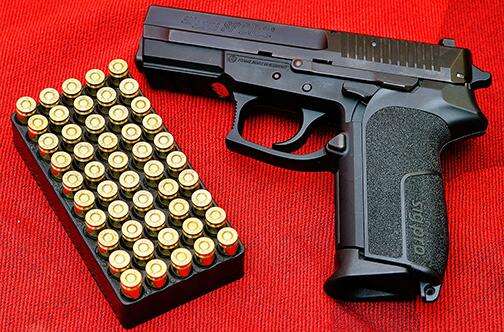
The Director of Investigation based this finding on concrete evidence that Shevon Robinson, the FLA’s former Database Administrator, added four unauthorized entries to Brown’s account. These entries documented three separate individuals purchasing a combined total of 6,000 rounds of 12-gauge bird-hunting ammunition, transactions that Brown never requested or approved, the report confirms.
Beyond the deliberate data manipulation, the investigation also uncovered systemic weaknesses in the FLA’s ammunition storage and inventory accountability protocols. Auditors found that 191 rounds of 0.22-caliber ammunition registered to a licensed firearm holder could not be located or accounted for, a gap that prompted the commission to recommend a full independent audit of all FLA secure vaults.
The report also highlights ongoing risks from poor maintenance of stored stockpiles: many rounds have deteriorating packaging and faded identification markers, issues that further complicate accurate inventory tracking and create additional security vulnerabilities.
To address the litany of gaps and failures uncovered during the probe, the Integrity Commission has put forward a series of targeted recommendations designed to strengthen internal governance, overhaul record-keeping practices, and beef up independent oversight of the FLA’s operations. Lawmakers on both sides of the aisle are now expected to debate next steps for regulatory and operational reform in response to the report’s findings.