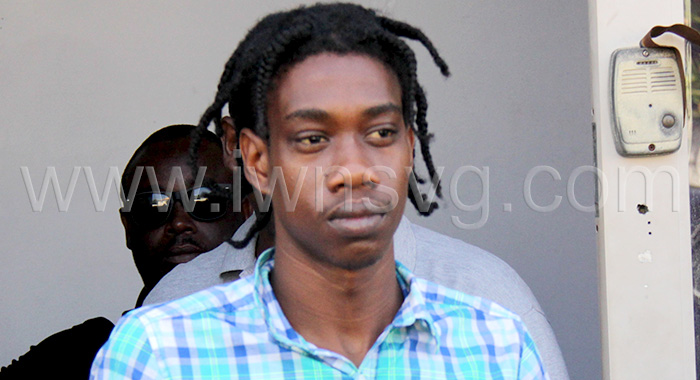
On a quiet Saturday evening in February 2024, a senseless act of violence against a defenseless infant shattered the close-knit community of Rose Hall in St. Vincent and the Grenadines, leaving a young mother grieving and a nation confronting the intersection of mental illness, substance abuse, and violent crime. On May 22, 2026, Justice Rickie Burnett of the Eastern Caribbean Supreme Court handed down a final sentence of 19 years, nine months and six days behind bars to 25-year-old Jeremiah Samuel, also known locally as Mozique, who admitted to kidnapping and stabbing to death 14-month-old Janae Samuel-Wright, his cousin’s infant daughter.
The timeline of the tragedy unfolded shortly after 6 p.m. on February 10, 2024, when Samuel left the grandmother’s home where he resided in Rose Hall’s Park neighborhood and traveled to his own mother’s residence in the nearby New Village section of the community. Samuel’s mother, Myrtle Samuel, was washing clothes in her yard when she spotted her son. She immediately walked 10 seconds away to her sister Joan Samuel’s home, where she asked her daughter Mazonya Samuel to prepare food for the unexpected visitor. When Mazonya retrieved a serving bowl from Janae’s mother Jonessa, who was in the bedroom, the 14-month-old girl was left unsupervised for just a few minutes, sitting laughing and playing in a living room armchair alongside three other young children. While Mazonya was in the adjacent kitchen portioning out food, Samuel—who had been waiting on the front porch—snatched the infant from her chair and fled into nearby dense shrubbery.
Myrtle Samuel turned back from her washing just in time to see her son running with the baby clutched to his chest. She ran screaming into the house alerting Jonessa that Samuel had taken the child, triggering a frantic search across the community. Samuel jumped a perimeter wall with Janae, pulled a black-handled kitchen knife he had stolen from his grandmother’s home earlier that day, and stabbed the child multiple times in the neck before leaving her small body and the murder weapon hidden under a lemon tree in an overgrown patch of bushes. He then evaded searchers from the community for a period of time, until police were called to the scene. Lenroy Robertson, Jonessa’s ex-boyfriend, ultimately located Janae’s body just under two hours after the kidnapping. The infant was pronounced dead by a district medical officer later that night, and an autopsy conducted by pathologist Dr. Ronald Child confirmed the toddler died from multiple sharp force injuries, including fatal cuts to her external jugular vein.
Samuel was arrested on suspicion of murder that same night. A psychiatric evaluation ordered the next day revealed a long and troubling history of substance abuse: the assessment confirmed Samuel had begun smoking marijuana while still in primary school, and by the time of the killing, he was consuming two marijuana cigarettes (known locally as spliffs) per day, starting before he turned 16. Toxicology testing and clinical assessment resulted in a formal diagnosis of psychosis, linked to chronic long-term marijuana abuse. A follow-up evaluation by psychiatrist Dr. Enyinne Williams completed in June 2025 further specified that Samuel was experiencing an acute brief psychotic disorder at the time of the killing, marked by delusional thinking, auditory hallucinations, and severely impaired judgment. Multiple community members told investigators they had observed Samuel exhibiting increasingly bizarre behavior in the days leading up to the murder: he was seen pacing roads talking to himself, screaming curses, and repeatedly telling neighbors that the 14-month-old baby was possessed by demons and “had to be gotten rid of.” He also claimed he could raise dead people back to life after the passing of a close friend, which friends and family said marked a clear shift in his already unstable behavior.
Because his mental impairment satisfied the legal requirements for a partial defense of diminished responsibility, Samuel was not eligible to stand trial for murder. He instead pleaded guilty to the lesser charge of manslaughter, alongside a separate charge of kidnapping the victim. In handing down the sentence, Justice Burnett explained that the legal framework for diminished responsibility applies when a defendant’s mental abnormality substantially impairs their ability to exercise self-control, form rational judgments, or understand the nature of their violent acts. In this case, the court ruled that Samuel’s chronic marijuana use had triggered an untreated, undiagnosed psychotic disorder that met this legal standard.
To craft the sentence, Justice Burnett started with a 30-year starting term, noting multiple aggravating factors: the victim was an utterly defenseless 14-month-old child, the attack was unprovoked, Samuel abused the trust of his own family to access the baby, he used a weapon, had premeditated the act (even if the planning stemmed from delusions), and concealed the child’s body after the killing. The judge added six years to the starting term due to these aggravating circumstances, bringing the total to 36 years. He then subtracted three years to account for mitigating factors, including Samuel’s previously non-violent criminal record, his youth (he was 22 at the time of the killing), his cooperation with law enforcement after his arrest, and his untreated mental illness at the time of the offense. Samuel received a further one-third sentence discount for his guilty plea, reducing the term to 22 years, before deducting the two years, two months and 24 days he had already spent in pre-trial detention. For the separate kidnapping charge, Samuel received a concurrent four-year, one-month and seven-day term, resulting in a final sentence of 19 years, nine months and six days additional time in custody. The judge also ordered that Samuel receive consistent, comprehensive psychiatric treatment throughout his incarceration.
In her victim impact statement, Jonessa Samuel described Janae as a calm, loving, joyful baby who brought happiness to everyone who met her. The young mother said she is left permanently heartbroken, feels empty without her child, continues to cry on what would have been Janae’s birthdays, and feels deeply betrayed that the violence came from within her own family. She emphasized that the 14-month-old girl was completely innocent, had never harmed anyone, and could not possibly defend herself against the attack. Neighbors in Rose Hall, who had previously described Samuel as generally calm, quiet, and helpful to those around him, said they were left shocked and deeply saddened by the unthinkable act.
Justice Burnett noted that there are no formal sentencing guidelines for manslaughter by diminished responsibility in the Eastern Caribbean Supreme Court, so the court relied on UK guidelines, existing case law, and legal submissions from both sides to craft the sentence. He explained that the sentence was structured to meet all four core goals of criminal sentencing: prevention of future harm, retribution for the victim, rehabilitation for the offender, and deterrence of similar crimes. The judge stated that “the court must bear in mind that crime is not only against the state but also against a specific person,” and urged Samuel to use the rehabilitation programs available at His Majesty’s Prison to address his mental illness and substance use disorder, so he can eventually reintegrate into society if he is released.
The case has drawn attention to the devastating impacts of early-onset chronic marijuana abuse and gaps in access to mental healthcare in small Caribbean communities, where undiagnosed psychotic conditions can escalate into unthinkable acts of violence before intervention is possible.