博客

  • NCOPT president calls for clear fare formula after fuel price hike

    NCOPT president calls for clear fare formula after fuel price hike

    A fresh fuel price increase that took effect on June 1 in Saint Lucia has reignited calls from the island nation’s top public transport industry body for the establishment of a standardized, automatic mechanism to tie public transit fares to volatile fuel costs.

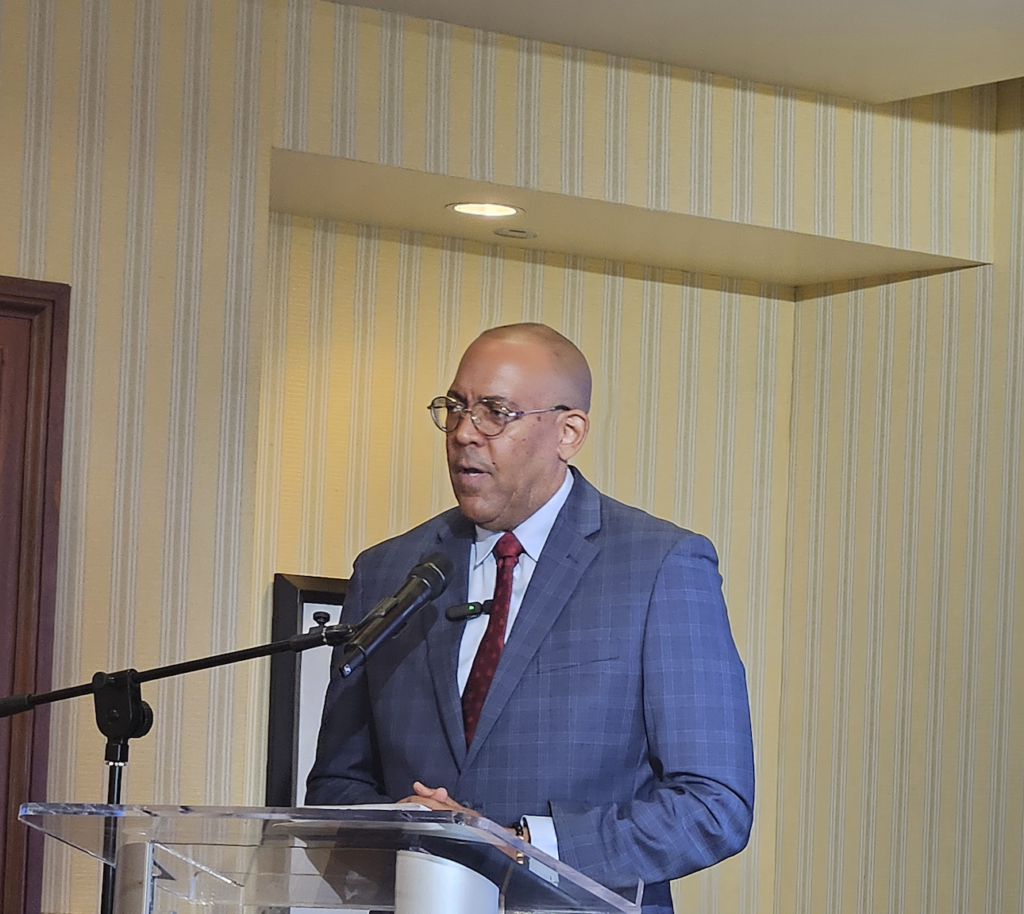
    Godfrey Ferdinand, president of the National Council on Public Transport (NCOPT), made the call in the wake of the government’s official announcement of the adjusted fuel prices. Under the revised rates, which align with fluctuations in global crude oil markets through Saint Lucia’s updated fuel pricing framework, both gasoline and diesel have jumped from $16.00 to $16.75 per imperial gallon, while kerosene has seen an even steeper increase from $9.66 to $10.41 per gallon.

    Ferdinand notes the latest price hike did not come as a surprise, but he argues that government officials failed in their responsibility to consult transport operators before finalizing and announcing the change. Reflecting the frustration shared across the sector, he remarked, “When I heard that news, I said, ‘Here we go again’.” The price hike, he emphasizes, exposes a deeper, long-standing issue: a persistent lack of coordinated planning between national government agencies and the public transport industry.

    Instead of repeating the familiar cycle of public debate, last-minute negotiations, and ad-hoc fare adjustment requests every time international fuel prices shift, Ferdinand says Saint Lucia needs a formal, pre-agreed formula that directly links bus fare rates to fuel cost levels. Under this proposed system, fare adjustments would trigger automatically when fuel prices cross set threshold levels. For example, if fuel hits $14 per gallon, fares would adjust to a pre-defined corresponding rate, and a rise to $17 per gallon would trigger a matching, pre-determined fare change. Ferdinand explains that this transparent structure would bring clarity for both operators and daily commuters, eliminating the repeated disputes and uncertainty that currently surround fare adjustment discussions. It would also allow all stakeholders to operate within a predictable, professional framework, he adds.

    Contrary to some narratives, Ferdinand clarifies that public transport operators do not feel betrayed by the latest increase, despite previous government efforts to cap fuel prices to ease cost burdens. What does frustrate the sector, he says, is that operators are consistently framed negatively by the public whenever fuel prices rise. He points out that transport businesses are forced to absorb a large share of fuel-related cost increases, which is why the sector is always the first to speak out about price shifts. As a result, the public has unfairly demonized operators for advocating for fare adjustments to offset higher input costs.

    Ferdinand also draws attention to the long gap between the last approved fare increase and the current cost landscape. A planned fare adjustment approved in 2013 was only implemented in 2022, meaning the next July will mark six full years since the last change to bus fares. While some independent operators have already called for immediate fare hikes, the NCOPT plans to take a cautious approach, monitoring market shifts over the next three weeks before deciding whether to formally submit a request for fare adjustments. Ferdinand says the council’s position is clear: if operating conditions shift further against operators, the industry will move forward with a formal request.

    He stresses that any future fare adjustment must follow the full formal regulatory process, which includes convening a dedicated fare committee, collecting input from all relevant industry associations, conducting a full review and issuing formal recommendations, and ultimately securing legislative approval from national authorities.

    Looking at past government support measures designed to ease the impact of rising fuel costs on transport operators, Ferdinand says targeted fuel rebates have delivered little meaningful relief. He describes the current rebate structure as providing just five cents per day to operators in exchange for holding off on fare increases, a sum too small to purchase even basic goods in Saint Lucia’s current economy. He stresses that the NCOPT and its members are not seeking confrontation with the government; operators simply need sustainable support to keep their businesses running. “We have a business to operate, we have to run and maintain the vehicles. So we need something that is substantial to be able to do that,” he says.

    As of yet, the NCOPT has not reached out to the national Department of Transport to initiate discussions following the latest fuel price adjustment. Still, Ferdinand argues that relevant government ministries should have proactively opened consultations before the new prices took effect. He also referenced a previous study commissioned as part of a broader Caribbean Development Bank analysis, which aimed to develop an evidence-based framework for setting bus fares that accounts for local factors including Saint Lucia’s challenging terrain, general inflation, and the real-world operating dynamics of the public transport sector. Ferdinand says it would be beneficial for the government to release the key findings of that study to the public to inform ongoing discussions.

  • LETTER: One Deportee Is One Too Many

    LETTER: One Deportee Is One Too Many

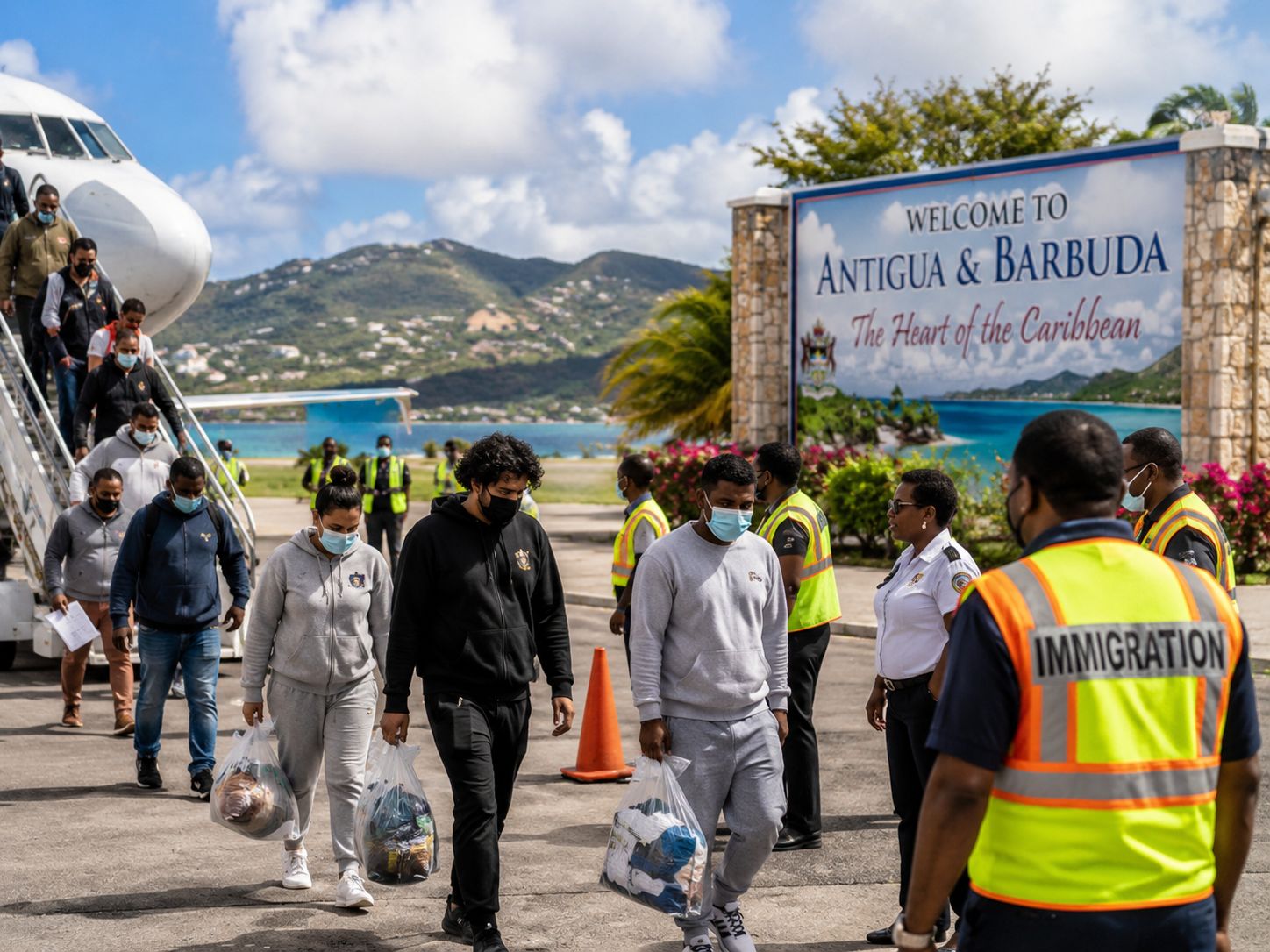
    In an open letter addressed to the editor of an Antiguan publication, a concerned mother based in St. John’s has added her voice to the growing opposition to the United States’ plan to deport non-citizens to Caribbean nations including Antigua and Barbuda, arguing that even a single deportee would place an unacceptable burden on her already vulnerable country.

    As a parent raising children in Antigua and Barbuda, the writer says she has watched negotiations over the deportation plan with increasing unease. The twin-island nation is one of the smallest sovereign states in the Western Hemisphere, and its domestic institutions already face steep strain from persistent challenges: elevated crime rates, chronically stretched law enforcement budgets, and widespread social instability that touches working families across every community. For parents across the country, daily life already comes with unrelenting worry: children’s safety is uncertain when they travel to school, wait for public transit, or gather with friends outside the home. The writer argues that Antigua and Barbuda should never be forced to absorb additional public safety risks that stem directly from the immigration policy choices of a global superpower.

    The letter voices approval for Prime Minister Gaston Browne’s current stance, which has pushed back against U.S. pressure and demanded formal safety safeguards for any deportation transfers. But the writer goes further, calling on Browne to adopt a total ban on accepting any deportees from the U.S. She emphasizes that no financial compensation can offset the harm that would come if even one high-risk person enters the country through gaps in screening.

    A core contradiction in U.S. assertions about the deportation program underscores the danger, the writer argues: U.S. officials claim that deportees sent to Caribbean nations are not convicted criminals, but at the same time, negotiations over mandatory background checks are still ongoing. This uncertainty over the identities, origins, and criminal histories of potential deportees is enough to justify rejecting the entire plan, she says. If there is any doubt about who is being sent to Antigua and Barbuda, the government has no business agreeing to participate.

    The writer acknowledges that the United States holds full authority to enforce its own sovereign immigration laws. What it is not entitled to, she insists, is shifting the logistical and public safety burden of its deportation program onto small, developing Caribbean nations that lack the resources to manage the risk. The Antiguan government’s first and most important duty is to its own citizens: to the children, aging populations, local communities, and future generations that call the islands home. The writer argues that no amount of external pressure from a larger, more powerful nation justifies making concessions that could erode public safety for Antiguans and Barbudans.

    Closing with a personal appeal rooted in her experience as a mother, the writer urges Browne to hold firm to his opposition and reject all transfers, not just limit the number. The risks of accepting any deportees, she argues, far outstrip any potential economic or diplomatic benefits that might be offered. For her and for countless other parents across the country, the top non-negotiable priority is protecting the safety and security of the next generation as they grow up on the islands.

  • Taxi union moves to close ranks after resignations

    Taxi union moves to close ranks after resignations

    Against a backdrop of internal restructuring and long-delayed industry reform, Saint Lucia’s National Taxi Union (NTU) held a landmark general meeting this week, bringing members together to address growing uncertainty, lay out a clear path for sector modernization, and resolve internal leadership disruptions.

    NTU President Terry Valcin framed the gathering as a deliberate push for transparency, designed to update rank-and-file stakeholders on the organization’s ongoing work and put to rest persistent rumors swirling around the union’s legal standing. The meeting came on the heels of a recent internal shakeup, which saw two sitting executive committee members step down after publicly raising concerns about the current leadership’s strategic direction. Valcin emphasized that the organization prioritized open dialogue with members throughout the event, creating space to clear up widespread misconceptions and align the broader membership on the NTU’s official stance on key industry issues.

    One of the most critical topics on the meeting’s agenda was the long-awaited official taxi permit system, a reform the union says will unlock stronger regulatory oversight and greater industry accountability. Valcin noted that the new permit framework will position the NTU and local regulators to enforce existing taxi laws far more effectively, grounding enforcement actions in clear, formal authorization aligned with Saint Lucian legislation.

    For years, the sector has struggled with unregulated operations: despite existing laws requiring formal authorization to work as a taxi driver, widespread permit issuance delays have left regulators unable to crack down on unlicensed operators, who have crowded the market and undercut licensed drivers. Valcin confirmed that this administrative logjam has finally been resolved, announcing that all licensed taxi drivers with TX plates across the island will receive their official operating permits by the end of September, bringing every authorized operator into full compliance with national law.

    Once full rollout is complete, Valcin explained, law enforcement will gain clear authority to act against unlicensed operators: police will be empowered to stop vehicles marked with H, P, or Q number plates—categories not legally eligible for taxi work—and issue penalties for unlicensed service, a change that will cut down on unfair competition for licensed drivers. To help drivers prepare for the new regulatory regime, the NTU is urging members to complete all required paperwork during the current industry off-season, a slower period when most drivers have extra time to handle administrative requirements ahead of the September deadline.

    Beyond regulatory reform, the meeting also highlighted the NTU’s push to bring the sector into the digital age. Members were introduced to a new custom-built mobile app designed to modernize taxi services and boost the industry’s competitiveness against emerging ride-hailing platforms. Valcin shared that development and planning for the app has been underway for months, with a live demonstration held during the meeting to walk drivers of all experience levels through its core features. He stressed that adapting to rapid technological change is non-negotiable for the sector’s survival, framing the global shift toward digital services as a technological revolution that Saint Lucian taxi drivers cannot afford to ignore. The union is committed to supporting all members in making the transition, even those with decades of experience who may be less familiar with digital tools, to ensure every driver can update their skills to match modern industry expectations. A core part of this cultural shift, Valcin added, is encouraging drivers to reframe their work as a formal business rather than casual employment, and to take an active role in driving the sector’s long-term growth.

    Following the close of the general meeting, the NTU executive committee held closed-door discussions to fill the two vacant leadership positions left by recent resignations. Valcin confirmed that the roles have already been filled, with plans for a wider reshuffle of executive responsibilities to strengthen the organization’s overall capacity. New executive members were drawn from different regions across the island, including both northern and southern Saint Lucia, creating a more geographically balanced leadership team that better represents the full membership. Valcin praised the new appointees as experienced, reliable leaders who bring diverse areas of expertise to the table, saying the union can count on their support at every turn. With these changes in place, Valcin said, the NTU is now well-positioned to guide the sector through ongoing transition and deliver on the modernization goals that will secure its future in a changing global market.

  • Symmonds: Energy transition to top $2 billion

    Symmonds: Energy transition to top $2 billion

    Barbados’ Acting Prime Minister Kerry Symmonds announced Tuesday that the Caribbean nation expects to spend more than $2 billion to end its reliance on fossil fuels and hit its ambitious 2030 clean energy targets, as the ruling Mottley administration officially launches direct negotiations for offshore oil and natural gas exploration.

    In remarks to reporters, Symmonds emphasized that the island’s 2019 National Energy Policy still prioritizes a full transition to renewable energy, even as the government moves to develop its untapped offshore fossil fuel reserves. He framed natural gas as a critical bridging fuel that aligns with the country’s long-term decarbonization goals, noting that its lower carbon intensity makes it a far cleaner alternative to coal and oil during the transition period. Most importantly, Symmonds argued, revenue from commercial natural gas and oil production would provide the critical capital needed to fund large-scale renewable energy infrastructure projects.

    “It isn’t just that it will be a fuel that you can use while you are also expanding renewable energy. It also assists us in financing the entire renewable energy effort,” Symmonds explained. He outlined several high-cost clean energy projects already in the planning pipeline, including a utility-scale wind farm in Lamberts that is projected to cost upwards of $200 million, and a nationwide battery storage network that will require an investment of several hundred million dollars. If large commercial gas deposits are discovered offshore, partial domestic use and exports to international buyers would generate immediate revenue to cover these capital outlays, he added. That funding structure would allow the country to advance its transition in a financially responsible way, rather than relying on unsustainable debt or external aid.

    Barbados’ core long-term policy goal remains reaching 100% renewable energy generation and economy-wide carbon neutrality by 2030, a target the government has reaffirmed amid the new exploration push. Symmonds added that the government will soon introduce local content legislation to Parliament to ensure that Barbadian workers and businesses capture direct benefits from any offshore development. The requirements will mandate job opportunities for local workers, open contracts for domestic service providers, and guarantee that Barbadians capture a share of direct economic profits from exploration and production.

    Beyond immediate employment opportunities, Symmonds highlighted skills development and long-term capacity building as key policy priorities. The country’s state-owned Barbados National Energy Company, formed through a merger of the former domestic oil producer Barbados National Oil Company and gas supplier National Petroleum Corporation, currently lacks experience in offshore exploration and production. Through partnerships with international energy firms, Symmonds said the state company will gain critical technical knowledge, operational expertise, and industry capacity that will allow it to eventually lead offshore development independently. “Let us say 10-15 years down the road, we want to be able to build out that capacity so that our own people and our own company will be able to one day hopefully play a major role on its own,” he noted, adding that draft legislation outlining local content requirements is already complete within the energy ministry.

    Symmonds also pointed to broader economic spillover benefits from exploration activity. Visiting industry workers and technical teams will require accommodation, food, and other services during extended onshore stays before offshore platforms are operational, creating additional revenue for the country’s already vital tourism and hospitality sectors. “From that perspective, it is also a benefit to the Barbados economy,” he added.

  • Former Saint Lucia Governor General Sir Neville Cenac dies at 86

    Former Saint Lucia Governor General Sir Neville Cenac dies at 86

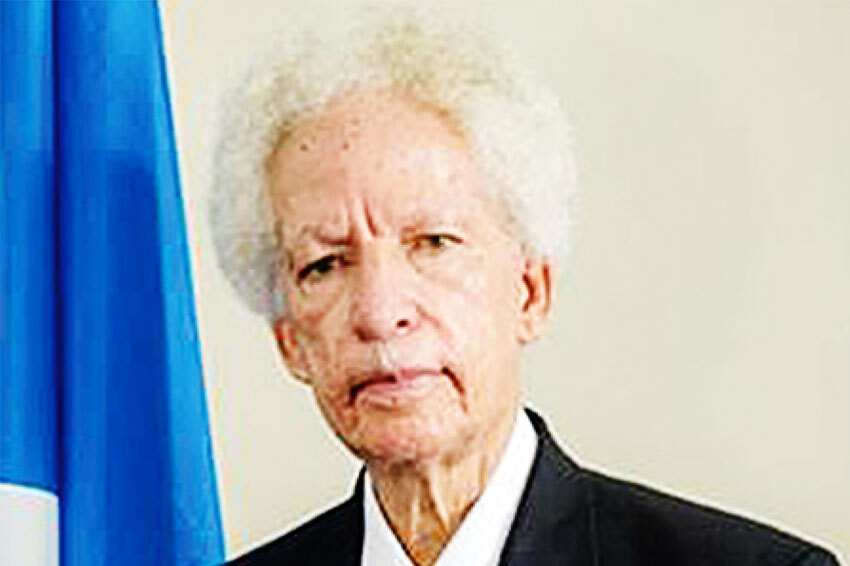
    One of Saint Lucia’s most consequential and controversial political figures, Sir Neville Cenac, who held the nation’s top ceremonial office as Governor General and previously served as Foreign Minister, has passed away at the age of 86. His death was confirmed on Tuesday, closing a decades-long chapter in the island country’s political development.

    Cenac’s tenure as Governor General, the representative of the British monarch in the independent Caribbean nation, spanned from January 12, 2018, through October 31, 2021. He took on the ceremonial role during the administration of the United Workers Party (UWP), the party he would align with in the latter half of his political career.

    The late politician’s journey in public service began long before his appointment as Governor General, with early roots in the Saint Lucia Labour Party (SLP). In 1982, he served as leader of the parliamentary opposition while a member of the SLP, and in the 1987 general elections, he secured victory for two separate seats representing the constituency of Laborie on the Labour Party ticket. During his early years with the SLP, Cenac emerged as a vocal critic of the UWP leadership, condemning what he framed as an authoritarian governing style from the party’s head.

    A pivotal and still-debated turning point in Cenac’s political career came when he made the decision to cross the floor and join the UWP. His party switch reshaped the island’s parliamentary landscape: the defection helped the UWP claim a slim one-seat majority in the legislature, holding 9 seats to the SLP’s 8. Following the shift, UWP founder Sir John Compton appointed Cenac to the cabinet as Minister of Foreign Affairs, a portfolio he held from the party switch through 1992.

    The high-profile party change sparked intense public debate across the island, even inspiring a collection of popular calypso songs that reflected the public’s divided reaction to the move. It still stands as one of the most controversial episodes in modern Saint Lucian political history.

    Late in his life, in 2024, Cenac moved to set the record straight on his decades-long political career with the release of his autobiography, titled *C’est L’huere – Crossing the Divide*. In the memoir, he offered his personal account of major political events unfolding from his entry into politics with the SLP in 1961 through the end of his cabinet tenure in 1992, aiming to address longstanding misconceptions about his decisions and career.

  • Tribute to Dr. Cuthwyn Lake by Dr James Knight

    Tribute to Dr. Cuthwyn Lake by Dr James Knight

    More than a century after the formal abolition of chattel slavery in the Caribbean, a small group of pioneering Black medical professionals returned to their home region after training abroad, laying the foundation for accessible, quality care for local communities that had long been abandoned by formal healthcare systems. Among these trailblazers was Dr. Cuthwyn Lake, only the third Black general surgeon to serve the people of Antigua and Barbuda, following in the footsteps of Dr. Noel Margetson and Dr. Ivor Heath, alongside pioneering obstetrician-gynecologist Dr. William Joseph. For generations of local residents, the transformative impact of their work remains a hidden but foundational part of the nation’s public health history.

    Before these physicians returned to their home region, the reality of healthcare for Black communities in the post-abolition Caribbean reflected the deeply entrenched inequalities of the past. During slavery, formal medical care existed exclusively for the white planter class, and care for enslaved people was only provided to maintain their ability to perform grueling plantation labor. Surgeons were even deployed to maul recaptured runaway slaves as punishment, amputating feet to discourage future escape attempts. Immediately after abolition, formerly enslaved people were no longer the property of plantation owners, and they lost what little inadequate care they had once received. For more than a century, local communities relied entirely on traditional bush medicines to treat all manner of ailments, a reality documented vividly in *To Shoot Hard Labour*, the oral history of Antiguan working man Papa Sammy that many public health advocates argue should be required reading for all secondary students in the country.

    The work of returning physicians like Lake and his peers changed this reality overnight. Alongside local nurses who stepped in to fill every role, including serving as operating room assistants, these pioneers eliminated widespread preventable illnesses and conditions that had ravaged local communities for generations. Thanks to their work, rates of goiter dropped dramatically, countless people received life-saving care for debilitating conditions like large hydroceles, uterine fibroids, and ovarian cysts, and mortality from preventable conditions like ruptured appendices and childbirth complications plummeted. Today, most people under 50 in Antigua and Barbuda have never experienced the widespread public health crises that were common before these pioneers began their work.

    Lake’s story is intertwined with the broader history of Caribbean medical progress. A close contemporary of Dr. Cuthbert Sebastian, the Antigua-born surgeon who rose to become Governor-General of St. Kitts and Nevis and published *One Hundred Years of Medicine in St. Kitts* in 2002, Lake’s experience mirrored that of medical pioneers across every Eastern Caribbean territory. Sebastian’s account of regional healthcare development could easily be adapted to describe Antigua’s journey with almost no changes.

    For Dr. James Knight, the author of this reflection, Lake was more than a pioneering public figure — he was a professional mentor who shaped his entire medical career. Knight first met Lake in January 1990, shortly after he graduated from a Cuban medical school and was waiting for his professional licensing to be processed. Lake, then a senior leader at Holberton Hospital, offered to support Knight’s onboarding once his licensing was finalized, and Knight began his clinical career working alongside Lake and Dr. Ramamuthi Bekal in the hospital’s operating room.

    Knight remembers Lake as a level-headed, open-minded leader free of the prejudice and professional resentment that plagued many senior medical leaders of the era. He was a thoughtful man with broad general knowledge and a pragmatic approach to the challenges of public health in a small developing nation. When Knight asked Lake why he maintained a close relationship with then-Prime Minister V. C. Bird yet the hospital still regularly lacked basic supplies, Lake replied with characteristic candor: Politicians prioritize visible, popular projects like village basketball courts over behind-the-scenes hospital equipment that delivers far greater public good. Knight notes that even decades later, this misprioritization — favoring sensational, visible projects over the routine organizational and programmatic needs of healthcare — remains a persistent challenge for the region’s health systems.

    Lake was also a forward-thinking healthcare planner who advocated for expanding and renovating Holberton Hospital on its existing site, arguing that the location offered ample room for future growth — a vision that many public health experts now recognize as prescient. Professionally, Lake guided Knight’s career at a critical juncture: when senior colleagues encouraged Knight to leave the hospital for a district medical officer role that offered greater opportunities for private practice, Lake refused to write a letter of recommendation, arguing that gaining broad experience across multiple hospital departments would be far more valuable for Knight’s long-term development. Knight would later call this advice life-changing: the six years of broad clinical experience he gained at Holberton gave him the confidence to become Barbuda’s first full-time resident doctor in 1997.

    Even in challenging professional conflicts, Lake’s calm demeanor and humility won over even his critics. Early in his career at Barbuda, when nursing staff pushed back against his requirement for full eight-hour shifts, a retired Holberton matron noted that Knight’s measured response mirrored Lake’s approach. Though Lake was once nicknamed “Brutus” by nurses early in his career, his good humor, civility, and humility eventually won over all his detractors. By the end of his tenure, he counted staff across every role — from senior consultants to cleaners, cooks, and carpenters — among his most ardent supporters.

    Working in an era before widespread access to specialized surgical care, Lake operated on every part of the human body, but his greatest skill was his deep understanding of human need. Unlike many leaders who saw the COVID-19 pandemic as an opportunity for profit, Lake believed the crisis should be a moment to deepen empathy for vulnerable communities. It is for this reason that naming Antigua and Barbuda’s COVID-19 alternate treatment facility after Dr. Cuthwyn Lake was a fitting tribute. True to his surname, Lake was a steady, calm force like a great lake, a deep reservoir of knowledge who nourished the entire medical community, fostering a culture of excellence and lasting humility that continues to shape the nation’s healthcare to this day.

  • Royalton Vessence touts Bajan culture, talent, jobs

    Royalton Vessence touts Bajan culture, talent, jobs

    Caribbean tourism is seeing a new shift as leisure brands lean into authentic local culture to set themselves apart in a crowded luxury market, and the latest entrant making that strategy central is Royalton Vessence Barbados. The brand-new upscale all-inclusive resort in St. James’ Holetown area held its soft opening Monday, and opened its doors for a media preview Tuesday, with leadership emphasizing that every part of the guest experience is built around showcasing Barbadian art, heritage, and local talent.

    Alejandro Rodríguez del Peón, Global Vice President of Marketing and Public Relations for parent brand Royalton Hotels & Resorts, framed the new Holetown property as a landmark launch for the company, noting it is the first location anywhere in the world for the new Royalton Vessence sub-brand. “We are extremely happy and excited to make Barbados our first place to open the Royalton Vessence brand,” he told reporters during the facility tour. “It is about bringing the true essence of a country such as Barbados – the vision and richness of Bajan culture – to a hotel that is available for everyone.”

    The company has set ambitious growth and positioning goals for the resort, aiming to elevate it not just as one of Barbados’ top luxury getaways, but as a leading destination across the entire Caribbean region. Del Peón shared that early market interest has outperformed early expectations, with demand coming from multiple key visitor segments. Beyond Royalton’s core traditional market of North American travelers, the resort has already drawn strong attention from regional Caribbean travelers and even local Barbadian residents looking for a staycation experience. He singled out high interest from guests in neighboring Caribbean nations including Trinidad and Tobago and St. Lucia, noting that “the response has been very positive.”

    Spread across its coastal St. James site, the resort offers 220 guest accommodations spanning a wide range of categories to fit different travel needs and budgets. Options include popular swim-out rooms with direct pool access, grand presidential suites, and two sprawling chairman suites that Del Peón described as “like a villa in an all-inclusive hotel.”

    To match its varied accommodation options, the resort has built out an extensive food and beverage program. While it is anchored by five full-service restaurants, the total count of food and drink outlets reaches 17 when including on-property bars, snack grills, quick-service grab-and-go spots, and specialty pop-up dining experiences. Del Peón explained that the wide range of outlets is intentional, designed to give guests diverse culinary options instead of repeating the same menu across venues. Offerings span global and local flavors, from Indian and Mexican cuisine to French fusion, classic Italian fare, premium steaks, and authentic Caribbean dishes rooted in local Bajan culinary tradition.

    The most distinct pillar of the resort’s identity, however, is its ongoing commitment to elevating local Barbadian creatives. Del Peón stressed that the resort has partnered directly with local Barbadian artists and artisans to display their original work throughout the entire property. Guests are able to engage with each piece, learn the backstories behind the creations, and purchase works directly from artists where available. Rotating exhibitions will ensure the display stays fresh over time, Del Peón added, and the resort is actively open to partnership inquiries from additional local artists interested in showcasing their work.

    “We want to show them as what they truly are, which are pieces of art,” he said. “If we want to bring the true essence of Barbados to the hotel and to the guests, it’s not only through our people, but through the architecture, the details, the art, the entertainment and the cuisine.”

    The resort’s commitment to local roots also extends to its workforce, with roughly 98 percent of all employees hailing from Barbados. Del Peón highlighted that local job creation was a core priority from the earliest planning stages of the project. “All of our focus has been to generate local employment,” he said. “Most of our employees are from here.”

    Royalton Hotels & Resorts, which operates an extensive portfolio of all-inclusive resorts across the Caribbean, Mexico, and Central America, is part of Blue Diamond Resorts, a subsidiary of the Sunwing Travel Group. The brand has expanded rapidly in recent years, targeting the fast-growing upscale travel segment across family, adults-only, and experiential travel niches, with a brand identity focused on modern amenities, unique branded concepts, and immersive destination-focused experiences.

  • COMMENTARY: If Loving Antigua And Barbuda Is Xenophobic – So Be It!

    COMMENTARY: If Loving Antigua And Barbuda Is Xenophobic – So Be It!

    Across the small island developing states of the Caribbean, conversations about national identity, resource allocation and foreign influence have grown increasingly heated in recent years. No where is this tension more visible than in Antigua and Barbuda, where a provocative new commentary has thrown long-simmering debates about national interest into the global spotlight. The piece, titled “If Loving Antigua And Barbuda Is Xenophobic – So Be It!”, makes an unapologetic case for prioritizing the economic, social and political needs of native-born and long-standing citizens over the interests of foreign investors, transient residents and outside interests that have gained increasing footholds in the country’s economy in recent decades.

    For decades, small Caribbean nations like Antigua and Barbuda have leaned heavily on foreign direct investment, particularly through citizenship-by-investment programs that grant legal status to wealthy outsiders in exchange for major capital infusions into local real estate and infrastructure. These programs have lifted government revenues and spurred job growth in the critical tourism sector, but they have also sparked growing grassroots discontent. Local residents increasingly complain that skyrocketing housing prices have pushed native citizens out of property markets, that foreign-owned businesses reserve the highest-paying positions for overseas staff, and that the political influence of wealthy non-nationals has skewed policy away from addressing widespread poverty and underdevelopment in local communities.

    The commentary’s provocative framing is not an endorsement of blanket hatred or exclusion of outsiders, its author argues. Instead, it is a deliberate rejection of the common tactic used by pro-foreign investment interests to label any call for stricter regulation or prioritization of local citizens as bigotry. By reclaiming the label of “xenophobic” as a badge of honor for those who put Antigua and Barbuda first, the commentary forces a public reckoning with the trade-offs that have come with decades of open-door investment policies. In a region where small island nations are often pressured by global economic powers and international institutions to prioritize foreign business interests over domestic well-being, the piece strikes a chord with a growing nationalist movement that demands greater sovereignty and economic equity for local populations.

    This debate does not exist in a vacuum. Across the globe, small states are grappling with the same balance between opening their borders to global capital and protecting the rights and opportunities of their own people. For Antigua and Barbuda, a nation of fewer than 100,000 people that relies heavily on tourism and offshore finance, the question of who gets to benefit from national development will continue to shape the country’s political and economic trajectory for generations to come. The commentary’s unflinching stance has already sparked fierce pushback from business groups who warn that such rhetoric will deter investment, but it has also galvanized local activists who argue that the current system has left too many citizens behind. What is clear is that this conversation will not be silenced by accusations of bigotry: the fight to define national priority in Antigua and Barbuda is only just beginning.

  • Officials say visitors surge amidst major tourism investments

    Officials say visitors surge amidst major tourism investments

    The Caribbean island nation of Dominica is celebrating a robust rebound in its tourism sector, with official data showing a 15% year-over-year jump in total visitor arrivals that pushed the full-year total to nearly 497,000, Tourism Minister Denise Charles-Pemberton confirmed in a recent official address.

    Looking at the 2026 trend through the end of the first quarter, the positive momentum shows no signs of slowing, Charles-Pemberton said. Compared to the same January-March period in 2025, overnight stayover arrivals have climbed by an estimated 10%, while the cruise tourism segment, a core driver of the island’s tourism economy, has posted an even stronger 21% year-over-year expansion.

    Buoyed by this consistent growth, the Dominican government is moving forward with an ambitious agenda to expand and upgrade the island’s tourism offerings, with sustained investments planned to enhance the overall visitor experience and support long-term sector resilience. Charles-Pemberton outlined that ongoing development work is already progressing smoothly at two high-traffic visitor sites: Champagne Beach, a popular spot known for its volcanic bubbling reefs, and Kalinago Barana Aute, a cultural heritage site that showcases the traditions of the indigenous Kalinago people.

    Additional infrastructure and amenity upgrades are already in the planning stages for other iconic Dominican natural attractions, including Titou Gorge, Trafalgar Falls, Morne Bruce, and Mero Beach, according to the minister. In a key announcement, Charles-Pemberton also confirmed that full grant funding has been secured to carry out much-needed upgrades at two major protected and recreational sites: Cabrits National Park, a historic and ecological landmark, and the India River, a top destination for eco-tourism excursions.

    Looking ahead to the coming years, large-scale transformative projects are set to further reshape Dominica’s tourism sector and unlock new economic opportunities for local communities. Charles-Pemberton highlighted three signature initiatives in particular: the proposed Cable Car Development, the new Portsmouth Marina project, and the expansion of the island’s International Airport. Each of these projects is designed to boost visitor capacity, open up new areas of the island to exploration, and strengthen the long-term competitiveness of Dominica’s tourism industry on the global stage. “We are moving forward with full confidence in the future of our tourism sector,” Charles-Pemberton added, emphasizing the government’s continued commitment to growing the industry sustainably.

  • $215 000 project to clean Savannes Bay, support seamoss farmers

    $215 000 project to clean Savannes Bay, support seamoss farmers

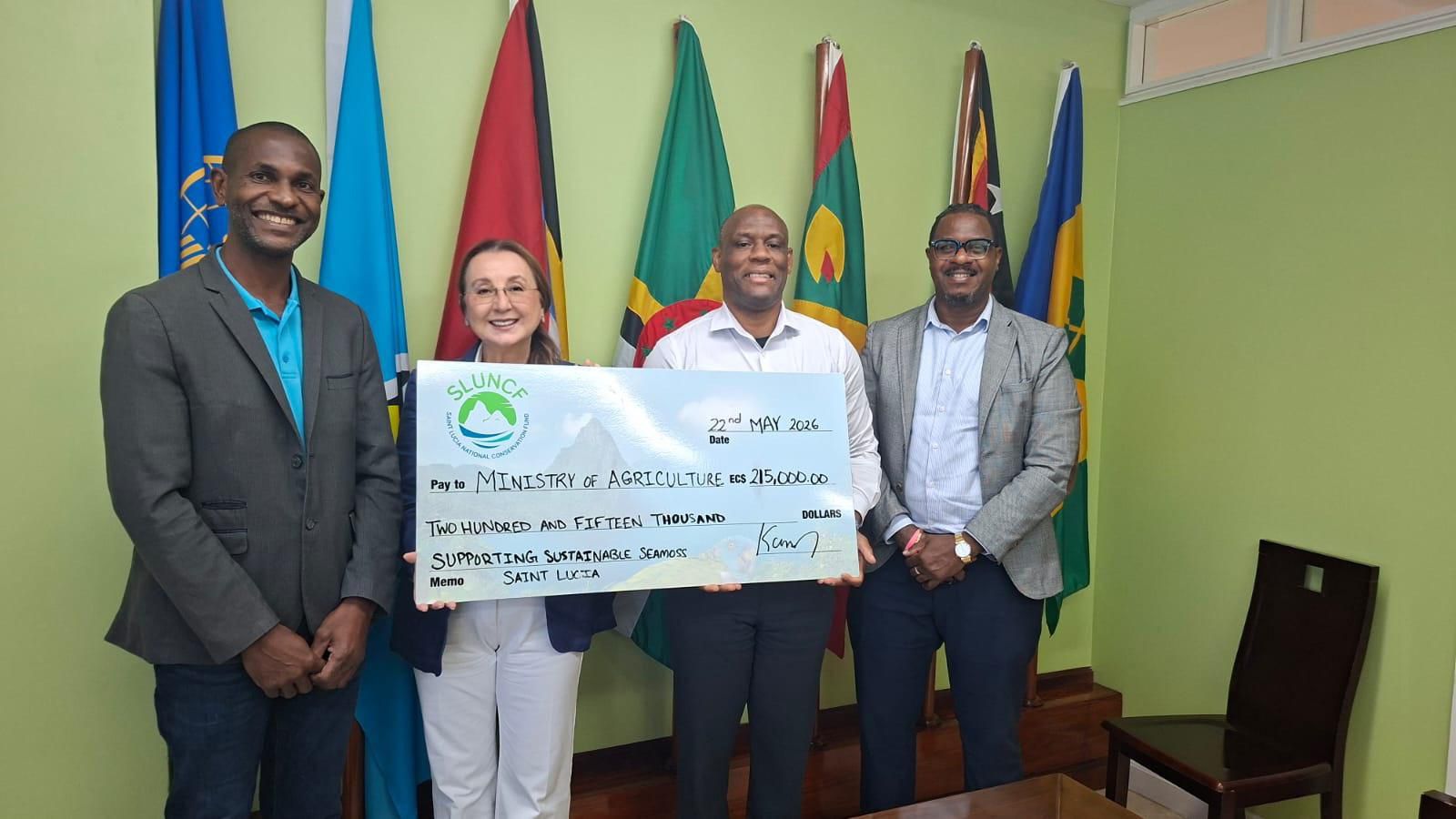
    On June 1, a landmark initiative focused on repairing degraded coastal ecosystems and upgrading working conditions for small-scale sea moss farmers officially kicked off in Saint Lucia, launched with a formal cheque handover ceremony marking the start of on-ground work.

    The Saint Lucia National Conservation Fund (SLUNCF) confirmed that EC$215,000 in financing from the France-based Agence Française de Développement (AFD) will back the project, which combines large-scale marine debris cleanup with the rollout of sustainable raft infrastructure for sea moss producers in Savannes Bay. The funding is routed through the Caribbean Biodiversity Fund as part of the broader Caribbean Regional Architecture for Biodiversity, a regional initiative focused on conservation and community livelihood support.

    Over the course of the project, teams will clear accumulated plastic and discarded fishing gear from roughly 10 hectares of coastal waters in Savannes Bay. Beyond cleanup, the initiative will install 20 new eco-friendly modified PVC raft systems designed to replace less sustainable traditional gear. The new infrastructure not only makes cultivation easier for local sea moss farmers but also reduces the risk of future debris accumulation in the bay’s sensitive marine ecosystem.

    A core priority of the project is centering local stakeholders: fishers and sea moss producers from the Savannes Bay community will be actively involved in all stages of implementation. Thomas Nelson, Deputy Chief Fisheries Officer of Saint Lucia, emphasized that this community-centered approach comes at a particularly critical moment for coastal livelihoods across the island.

    “Savannes Bay holds enormous untapped potential for sustainable, climate-resilient sea moss production, but that potential can only be realized if we protect the health of the marine ecosystems that producers depend on,” Nelson explained. He added that local marine-dependent communities are already grappling with growing climate-driven pressures that threaten their incomes, making targeted interventions like this more urgent than ever.

    Karolin Troubetzkoy, chair of the SLUNCF Board, highlighted the cross-sector collaboration that made the project possible, bringing together local community groups, national government agencies, and international conservation and funding partners around a shared goal. “When communities, government agencies, and conservation partners come together with a shared vision, we can create projects that not only restore damaged ecosystems but also create real, long-term opportunities for people and communities to thrive,” Troubetzkoy said.

    The initiative is being executed in formal partnership with Saint Lucia’s Ministry of Agriculture, Fisheries and Food Security, aligning with national goals to boost sustainable blue economy development across the island.

    Project organizers note that the Savannes Bay model is designed to be replicable for other coastal communities across Saint Lucia that face similar challenges of marine debris and unsustainable farming practices. Early plans already identify potential expansion sites in other coastal districts including Laborie and Dennery, setting the stage for island-wide impact if the pilot proves successful.