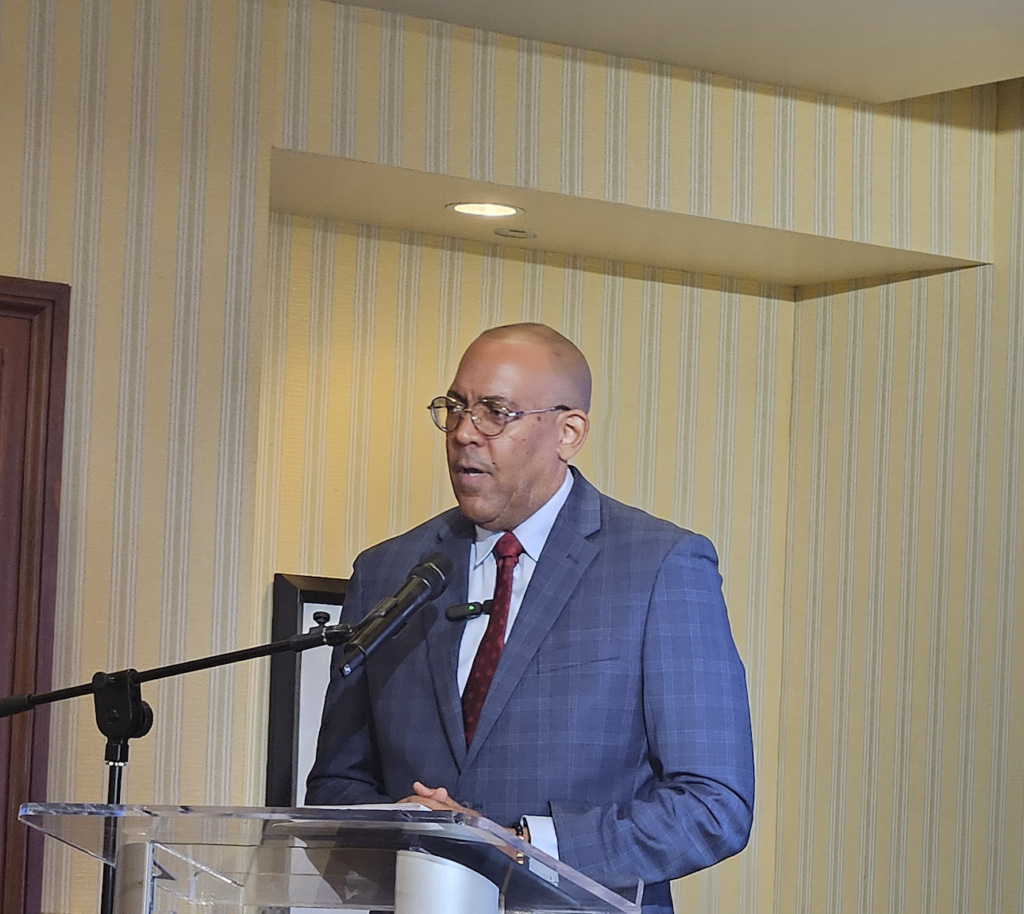
Barbados’ Acting Prime Minister Kerry Symmonds announced Tuesday that the Caribbean nation expects to spend more than $2 billion to end its reliance on fossil fuels and hit its ambitious 2030 clean energy targets, as the ruling Mottley administration officially launches direct negotiations for offshore oil and natural gas exploration.
In remarks to reporters, Symmonds emphasized that the island’s 2019 National Energy Policy still prioritizes a full transition to renewable energy, even as the government moves to develop its untapped offshore fossil fuel reserves. He framed natural gas as a critical bridging fuel that aligns with the country’s long-term decarbonization goals, noting that its lower carbon intensity makes it a far cleaner alternative to coal and oil during the transition period. Most importantly, Symmonds argued, revenue from commercial natural gas and oil production would provide the critical capital needed to fund large-scale renewable energy infrastructure projects.
“It isn’t just that it will be a fuel that you can use while you are also expanding renewable energy. It also assists us in financing the entire renewable energy effort,” Symmonds explained. He outlined several high-cost clean energy projects already in the planning pipeline, including a utility-scale wind farm in Lamberts that is projected to cost upwards of $200 million, and a nationwide battery storage network that will require an investment of several hundred million dollars. If large commercial gas deposits are discovered offshore, partial domestic use and exports to international buyers would generate immediate revenue to cover these capital outlays, he added. That funding structure would allow the country to advance its transition in a financially responsible way, rather than relying on unsustainable debt or external aid.
Barbados’ core long-term policy goal remains reaching 100% renewable energy generation and economy-wide carbon neutrality by 2030, a target the government has reaffirmed amid the new exploration push. Symmonds added that the government will soon introduce local content legislation to Parliament to ensure that Barbadian workers and businesses capture direct benefits from any offshore development. The requirements will mandate job opportunities for local workers, open contracts for domestic service providers, and guarantee that Barbadians capture a share of direct economic profits from exploration and production.
Beyond immediate employment opportunities, Symmonds highlighted skills development and long-term capacity building as key policy priorities. The country’s state-owned Barbados National Energy Company, formed through a merger of the former domestic oil producer Barbados National Oil Company and gas supplier National Petroleum Corporation, currently lacks experience in offshore exploration and production. Through partnerships with international energy firms, Symmonds said the state company will gain critical technical knowledge, operational expertise, and industry capacity that will allow it to eventually lead offshore development independently. “Let us say 10-15 years down the road, we want to be able to build out that capacity so that our own people and our own company will be able to one day hopefully play a major role on its own,” he noted, adding that draft legislation outlining local content requirements is already complete within the energy ministry.
Symmonds also pointed to broader economic spillover benefits from exploration activity. Visiting industry workers and technical teams will require accommodation, food, and other services during extended onshore stays before offshore platforms are operational, creating additional revenue for the country’s already vital tourism and hospitality sectors. “From that perspective, it is also a benefit to the Barbados economy,” he added.