博客

  • ULP gov’t paid contractors full amounts but houses not built

    ULP gov’t paid contractors full amounts but houses not built

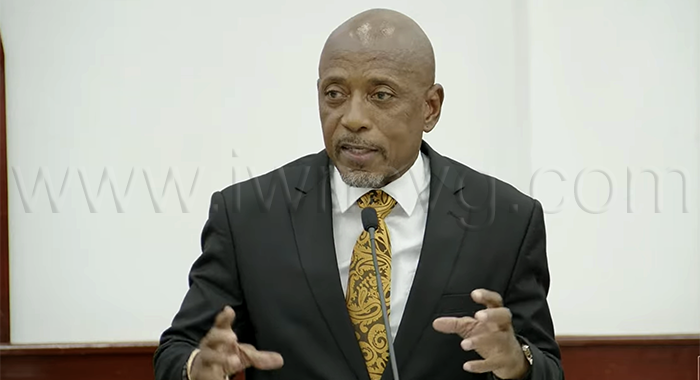
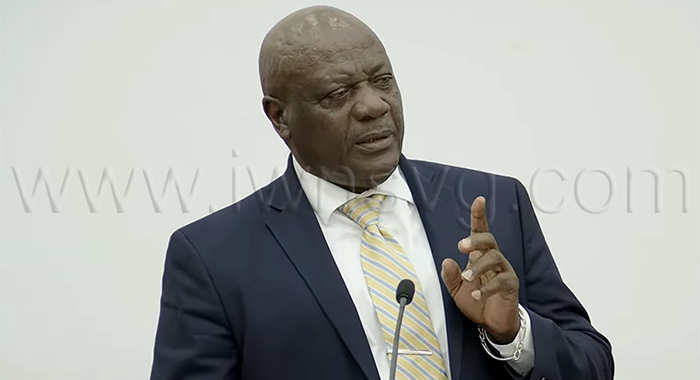
    When the newly elected New Democratic Party (NDP) government took power in St. Vincent and the Grenadines this past November, it inherited a tangled mess of uncompleted disaster recovery projects, and housing minister Andrew John has laid bare the full extent of the financial mismanagement that is derailing current reconstruction efforts. Speaking before the national Parliament on Tuesday, John detailed that he has brought forward evidence of widespread irregularities to National Security Minister St. Clair Leaock, centered on contracts awarded by the former Unity Labour Party (ULP) administration that were paid in full but never delivered.

    All the misallocated funds were earmarked for a critical mission: rebuilding homes wrecked or leveled by two major natural disasters — the 2021 eruption of the La Soufriere volcano and Hurricane Beryl, which swept across the island chain in July 2024 and destroyed more than 90% of infrastructure on Union Island, part of the Grenadines island group.

    The mismanagement of disaster recovery funds has left the new NDP administration scrambling to get stalled housing projects back on track. John explained that the previous government left millions of dollars in unpaid debts to building material suppliers, forcing the new leadership to renegotiate payment terms to secure the materials needed for new construction. One of the largest outstanding debts totals EC$1.6 million owed to East Caribbean Metal Industries Ltd. (EMIL), a local supplier. John added that the government also owes substantial sums to two Jamaican material firms, Tankweld and ARC Manufacturing Limited.

    The disclosure came in response to a parliamentary question from Carlos James, a government senator who previously served as tourism minister and North Leeward MP during the ULP’s 25-year tenure that ended with the November 27 election. James had asked for a breakdown of planned housing projects and budget allocations by constituency for the current fiscal year. While John confirmed that his ministry has finalized budget projections, he outlined the crippling financial constraints blocking progress, noting that large portions of the 2026 allocated budget are already tied up in unfulfilled contracts from the prior administration.

    “To our amazement, in some constituencies … it was discovered that contracts were paid in full … but there are no houses for these contracts,” John told lawmakers. He added that settling all outstanding inherited debts would drain the entire current housing budget, leaving no funds to start new builds: “Otherwise, it would have taken all the money, and you will not have any need to ask any question, because the answer (number of houses to be built this year) would have been zero.”

    Despite the major setbacks, John said negotiations have been productive so far, with local hardware vendors agreeing to new terms and already beginning to deliver materials. His ministry has also opened ongoing talks with EMIL to resolve the EC$1.6 million debt, and John declined to release full sensitive financial details publicly to keep negotiations on track.

    The situation is most urgent on Union Island, where John revealed that nearly all pre-delivered reconstruction materials were distributed without any formal accountability. “Not even a nail was left in Union Island. So we basically are starting from scratch in Union Island,” he said. The minister added that the new government has already restarted a local warehouse on the island to support recovery efforts, and the first shipments of new, properly accounted for materials are scheduled to arrive starting next week. Land availability for planned steel-frame housing remains an additional challenge on Union Island and other smaller Grenadine islands, while unpaid debts to independent truckers have also slowed progress, with some payment claims lacking any formal documentation to verify work completed.

    John concluded his address by reassuring residents of Union Island that the new administration prioritizes their recovery and is working to resolve the legacy issues inherited from the previous government.

  • Paliza highlights United States as Dominican Republic’s closest ally

    Paliza highlights United States as Dominican Republic’s closest ally

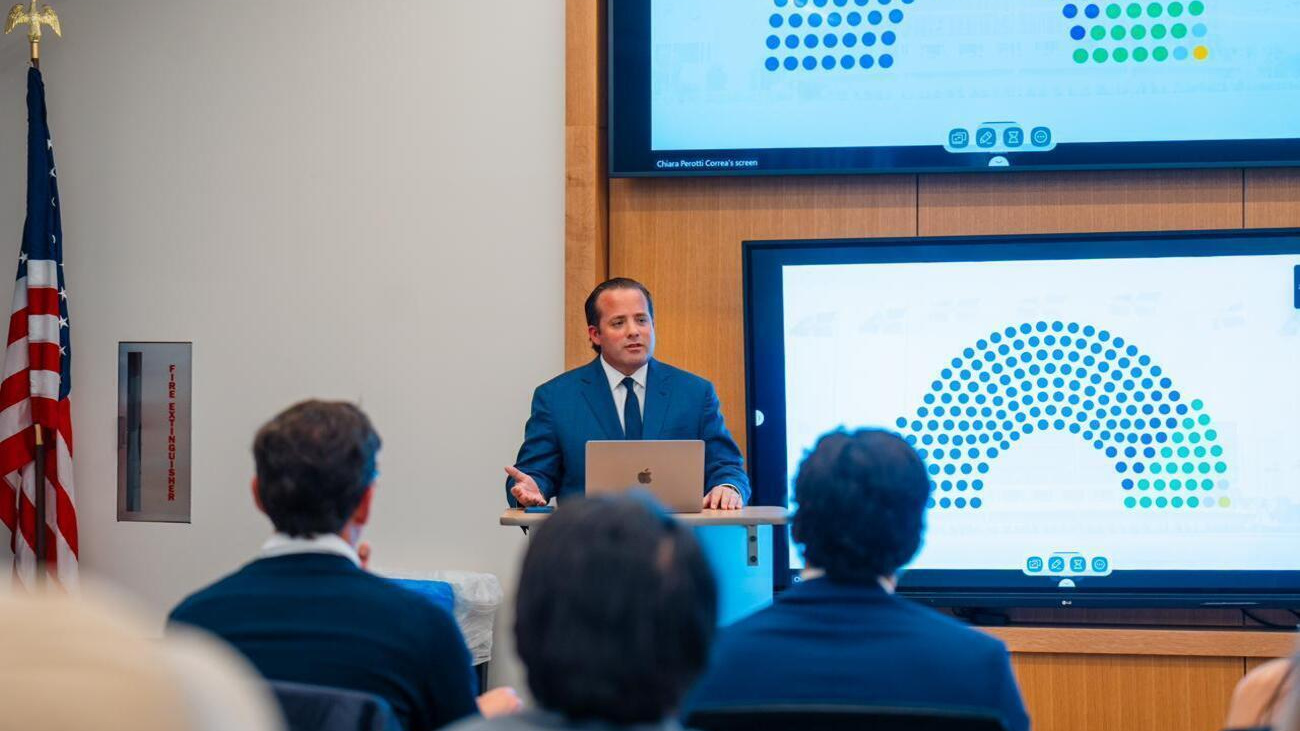
    During a high-profile public discussion hosted at Georgetown University’s McCourt School of Public Policy in Washington, D.C., Dominican Republic cabinet minister José Ignacio Paliza has reaffirmed the deep, multifaceted alliance between his country and the United States, framing the northern neighbor as the Caribbean nation’s most critical strategic and bilateral partner.

    The event, formally titled “Democracy & Governance: A Conversation with José Ignacio Paliza,” brought together policy scholars, students, and regional affairs experts to unpack interconnected challenges of democratic consolidation and institutional governance across Latin America and the Caribbean. Organized by the Latin American and the Caribbean Policy Association and moderated by seasoned policy analyst Michael Shifter, the conversation centered not only on regional issues but also on the longstanding bond between the Dominican Republic and the U.S.

    In his opening and closing remarks, Paliza emphasized that the bilateral relationship stretches far beyond the geographic proximity that naturally connects the two nations. He traced the connection across overlapping historical trajectories, shared democratic commitments, and intertwined cultural identities, noting that the partnership is anchored in common principles and values that guide cooperation across multiple sectors.

    A core pillar of people-to-people connection that Paliza highlighted is the large Dominican diaspora settled in the United States. More than 1.6 million Dominican-born and Dominican-descended people reside across the U.S., with heavy concentrations along the Eastern Seaboard. This widespread community, Paliza argued, acts as a living bridge between the two societies, fostering constant cultural exchange, economic ties, and mutual understanding that strengthens the official bilateral relationship from the ground up.

    Beyond discussing bilateral ties, Paliza stressed the outsized value of academic dialogue and cross-border collaboration in tackling shared regional challenges. He noted that open conversations between policy practitioners and academic communities, like the one held at Georgetown, create space to identify evidence-based solutions for strengthening democratic institutions, improving public governance, and addressing the most pressing institutional gaps facing countries across Latin America and the Caribbean.

  • Granny’s heart ‘mashed up’

    Granny’s heart ‘mashed up’

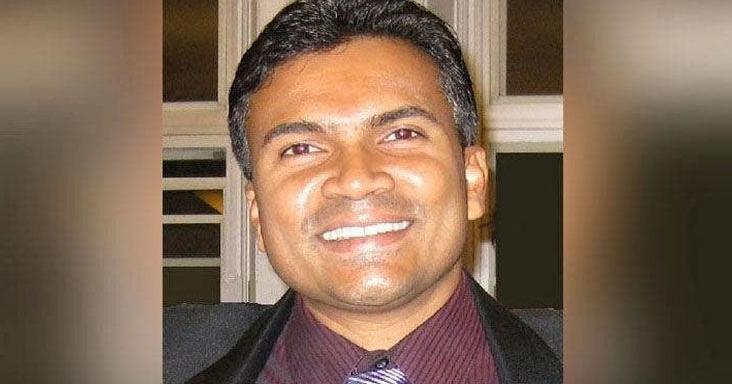
    A deadly late-night ambush on a Trinidad and Tobago roadway has left a nation grappling with unspeakable sorrow, after gunmen pulled over a car carrying five people returning from a casual day trip, killing four including a 9-year-old elementary school student with a bright artistic future. The violent attack unfolded Sunday evening along Lady Young Road in Morvant, cutting short the lives of 34-year-old Asim Armstrong, his 9-year-old great-niece J’Layna Armstrong, 27-year-old Obataiye Latiff, and 24-year-old Chelsea Edwards. The fifth passenger, 23-year-old Cornelius Short, escaped with his life and remains hospitalized in stable condition following the attack. For Tee Bruce, a Belmont resident and mother to Armstrong and honorary grandmother to J’Layna, the violence has shattered her world completely, leaving her unable to process the sudden loss of two of her closest family members. In an emotional interview with local media on Monday, Bruce described her heart as “mashed up” by the killings, saying she is stuck in a constant state of numb grief that leaves her weeping nonstop. “Numb is the word to say. I have no more feelings. I cry every minute,” Bruce shared. For Bruce, who raised three sons, J’Layna filled the place of the daughter she never had, and the bond between Armstrong and the young girl was unbreakable—so close, Bruce said, they were like “ring on finger.” The morning of the trip, Bruce had packed J’Layna’s clothes for the group’s outing to Harry’s Water Park in Tabaquite, and watched the child walk out the door to meet her uncle, with no idea it would be the last time she saw her alive. “Everybody was good. Everything was okay,” she recalled. Now, she says her days are marked by crippling emotional ups and downs, and J’Layna’s biological father is faring even worse in the wake of the tragedy. Though Bruce says she draws some comfort from the outpouring of support from friends and extended family, the loss has left an irreparable hole in her life. Just weeks earlier, the community had mourned the death of 7-year-old Angelica Saydee Jogie, who died in a jet ski accident off the coast of Tobago. Bruce said she had grieved deeply for that little girl, never imagining she would soon be facing her own devastating loss of a child. Remembering J’Layna, Bruce described the 9-year-old as a confident, outspoken, loving and incredibly intelligent young girl who was already showing signs of being a future star. “She will get on very bad, if you don’t pronounce her name properly,” Bruce said, laughing through her tears as she recalled J’Layna’s fiery personality. J’Layna loved the performing arts and drama, and had been training under veteran Trinidadian actress, producer and drama coach Penelope Spencer, who recognized her natural talent and potential from the start. Walking through J’Layna’s bedroom on Monday morning, Bruce found herself staring at the young girl’s landscape paintings, a quiet reminder of all the potential that was cut short. J’Layna’s mother, Bruce added, was a dedicated hardworking parent who doted on her daughter—even making special trips to J’Layna’s school to deliver sushi for her birthday, and bringing flowers to cheer her on after every school walkathon. J’Layna’s stepfather was also a loving, steady presence in her life, Bruce said, and the whole family had welcomed him fully. For Asim Armstrong, J’Layna was “his eyeball”—the person he loved most in the world, Bruce said. What makes their shared death even more tragic, she added, is that Armstrong had already fought and won a brutal battle with aggressive cancer. Diagnosed at age 20, Armstrong endured years of harsh treatment that forced him to give up his beloved hobby of playing football, and he had only just pulled through a major health crisis around the 2023 Christmas holiday. Armstrong would have turned 35 on May 31, and the family had been planning a celebratory trip to Saint Lucia to mark the occasion. Despite the unthinkable loss, Bruce says the family holds no anger toward the attackers, and is just focused on supporting one another through this dark time. Instead of a traditional wake, the family will host a night of prayer to honor Armstrong and J’Layna before their funeral. Local political leaders and community members have also expressed profound shock and sorrow over the attack, which has sent waves of grief across the entire country. Keith Scotland, Member of Parliament for Port of Spain South, called the killings far more than an ordinary tragedy, saying the violence has shifted the entire national mood. “What has occurred there is more than a tragedy. It’s something that has changed the mood of the nation. It’s unfathomable what has transpired,” Scotland said in a telephone interview Monday. Scotland extended his deepest condolences to the entire family, noting that even though he never met J’Layna, all accounts paint her as a good child on a promising path. Scotland added that this ambush is just the latest in a string of violent tragedies that the small nation is struggling to process, coming just after the killing of Corporal Eversley in San Fernando and the discovery of 56 buried bodies at a cemetery in Cumuto. “It’s a lot for the country to process. It’s sad,” he said. For residents of Morvant, the news of the ambush, and the killing of an innocent 9-year-old, has left the entire community reeling. On Monday morning, as residents prepared for their workday, many described feeling overwhelming shock and sadness at the news. One local woman asked, “Who would want to hurt a child?” Another male resident said he personally knew one of the murdered men and the young girl, calling the killing simply senseless and sad. “We have to keep praying. Day in, day out. We have to cover ourselves,” one Morvant woman said of the ongoing wave of violence that has shaken the community.

  • Penny: Govt downplaying  murders, Cumuto bodies

    Penny: Govt downplaying murders, Cumuto bodies

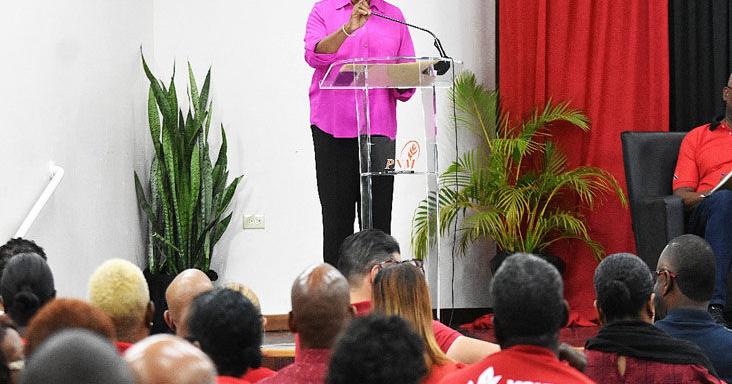
    At a packed People’s National Movement (PNM) town hall gathering held Monday evening at the Diego Martin Community Centre, Trinidad and Tobago Opposition Leader Pennelope Beckles launched a scathing attack on the ruling administration, accusing it of deliberately downplaying three shocking recent events that have shaken public confidence: the brutal murders of a 9-year-old child J’Layna Armstrong and municipal police corporal Anuska Eversley, and the illegal dumping of 50 infant remains at Cumuto Cemetery.

    Beckles centered much of her criticism on what she frames as the government’s failed state of emergency (SoE), a measure implemented to curb rising violent crime that has instead overseen senseless loss of life. She laid out the grim details of the two high-profile killings to the audience: 9-year-old J’Layna was robbed of her future before it even truly began, cut down by violence during the ongoing SoE, while Eversley – a serving municipal officer killed Sunday at a San Fernando police facility – suffered a brutal death that an autopsy confirmed included strangulation, beating, and stabbing.

    In Beckles’ telling, Prime Minister Kamla Persad-Bissessar has sought to minimize the gravity of these discoveries and normalize the unthinkable. She claimed the Prime Minister dismissed the shock of 50 unlawfully discarded infant remains as a routine occurrence, and attempted to decouple Eversley’s murder from broader systemic failures by arguing that because she served with municipal police, the killing at the municipal police building did not reflect a breakdown in public safety – urging citizens to simply continue with daily life as normal.

    Rejecting this framing outright, Beckles emphasized that violence does not distinguish between locations or police units. “It matters not whether it’s a police station, whether it’s a market, whether it’s a school, whether it’s a house. Murder is murder. And police is police,” she stressed, questioning how the government could expect ordinary citizens to go about their routines when such extreme violence has penetrated even supposedly secure spaces. She also noted that the country has already surpassed 100 murders this year, all under the supposed protection of the state of emergency.

    Beyond the crisis of violent crime, Beckles accused the Prime Minister of avoiding public and media accountability. She pointed out that since June of the previous year, Persad-Bissessar has conducted government business primarily through social media platforms like WhatsApp and Instagram, and via email, rather than making herself available for regular press questioning – a practice the PNM opposition maintains weekly. This opacity, Beckles argued, leaves the administration disconnected from public suffering and completely devoid of empathy for families impacted by crime.

    Turning to the recent extension of the state of emergency, Beckles confirmed that the opposition voted against the extension, pushing back against government claims that opposition lawmakers rejected the measure without reason. She explained that the opposition’s refusal stems from a core belief: a state of emergency is not a substantive strategy to fix Trinidad and Tobago’s deep-seated crime crisis. She mocked the government’s vague relief promises, arguing that empty pledges of household goods to displaced residents do not address the root of the violence.

    The opposition leader also called out the ruling government for breaking key campaign promises ahead of taking office, most notably its pledge on property taxation. Beckles recalled that the administration won votes by promising to eliminate property tax entirely, and to issue full refunds to any residents who had already paid the tax. To date, she said, no refunds have been issued, accusing the government of repeatedly lying to the public and assuming Trinidadian voters are too uninformed to hold them accountable.

    Beckles closed her remarks by urging PNM supporters in attendance to remain alert and hold the ruling administration to account for its failures across crime, governance, and campaign commitments.

  • ACP Sagramsingh sent on leave

    ACP Sagramsingh sent on leave

    A high-ranking Trinidad and Tobago police official has been ordered onto immediate administrative leave as investigators unravel a shocking case that combines the brutal murder of a serving police officer, large-scale theft of law enforcement firearms, and alleged long-running corruption within the municipal police ranks.

    Surrendra Sagramsingh, Municipal Assistant Commissioner of Police and head of the Trinidad and Tobago Municipal Police Service (TTMPS) for six years, confirmed to local outlet Express that he stepped down from his duties at the direction of government authorities. The administrative action comes as detectives intensify their probe into the killing of Anuska Eversley, a municipal police corporal, and the mass theft of weapons and ammunition from the San Fernando Municipal Police Station, where Eversley was stationed.

    In an interview over the phone, Sagramsingh acknowledged that while being placed on leave during an active investigation is not standard procedure, he was complying fully with the directive. “If the authorities feel that is the best thing to do at the time, I am compliant,” he stated, adding that “this measure is for transparency during the investigation, and I accept that it goes with the territory of my position.”

    The formal directive, dated April 21, 2026, was issued by acting permanent secretary Peter Mitchell on behalf of the Ministry of Rural Development and Local Government. The letter explicitly clarifies that the leave is a precautionary step to protect the investigation’s integrity, and does not represent a finding of misconduct or personal liability on Sagramsingh’s part. It directs him to remain available to investigators and cooperate fully with all lawful requests connected to the probe, a condition Sagramsingh says he accepts.

    The case unfolded early on Sunday morning, when Eversley, a mother of three, was found dead inside the San Fernando station at 4:40 a.m. A subsequent autopsy revealed she had suffered a brutal attack: she was beaten, strangled, and stabbed to death. Immediately after the discovery of Eversley’s body, authorities confirmed that a large cache of firearms and ammunition stored in the station’s charge room had been stolen.

    Senior investigative sources speaking to Express have outlined a sprawling, months-long criminal conspiracy at the heart of the case. Preliminary probe findings indicate a ring of corrupt municipal police officers has been diverting station-held weapons and selling them to criminal organizations for between six and eight months prior to Eversley’s death. The ongoing scheme has sparked urgent questions about how the illegal activity went undetected by command staff for so long.

    Sources also told reporters that investigators believe Eversley was a participating member of the smuggling ring. They allege she regularly brought unauthorized men into the station, facilitated the transport of drugs and stolen weapons using official police vehicles, and provided armed escort for gang members carrying out criminal operations. According to investigative accounts, Eversley and a primary suspect had been stealing small batches of firearms and ammunition from the charge room for months, selling the weapons and splitting the illicit profits.

    The fatal confrontation that led to her murder reportedly stemmed from a dispute over the scope of the theft: Eversley favored continuing the slow, small-scale diversion of weapons to avoid detection, while the suspect pushed to steal the entire cache of stored weapons in one raid. On the Saturday night before her body was found, Eversley was on duty at the station. Investigators say she sent the two other on-duty officers upstairs to sleep, telling them she would handle securing the charge room alone.

    Witness and intelligence accounts indicate an unknown man arrived at the station later that night to meet Eversley, and the pair engaged in sexual activity. When Eversley’s body was discovered the next morning, she was found partially clothed. After killing Eversley, the suspect signaled to two other men waiting in a silver vehicle parked outside the station. The group then removed the entire stolen cache of weapons from the station property. Sources identify the prime suspect as a drug addict who they believe masterminded the final mass heist.

    As of press time, police have detained 10 people connected to the case, and recovery efforts for the stolen weapons are underway. A major breakthrough came yesterday, when the Highway Patrol South Operations Team stopped a white Kia K2700 pickup truck carrying three male suspects. During the stop, officers recovered 13 firearms, 12 magazines, 288 rounds of 9mm ammunition, and 10 12-gauge cartridges, all confirmed to be from the Sunday theft. To date, a total of 43 firearms and more than 900 rounds of mixed ammunition have been recovered.

    Investigators add that they already have intelligence on the location of remaining stolen weapons, and expect to apprehend additional suspects who aided and abetted the criminal ring. The case has also revealed allegations that corrupt officers have falsified official station records to cover up the gradual theft of weapons over the past year.

    Only days before he was placed on leave, Sagramsingh stood alongside Police Commissioner Allister Guevarro and Minister of Homeland Security Roger Alexander at an official press conference in San Fernando addressing the incident. When contacted by Express for comment on Sagramsingh’s placement on leave, Minister Khadijah Ameen of the Ministry of Rural Development and Local Government confirmed her department’s acting permanent secretary had issued the directive, but declined to provide further details, citing the active ongoing investigation. Police Commissioner Guevarro also did not respond to requests for comment by press time.

  • Senator swap

    Senator swap

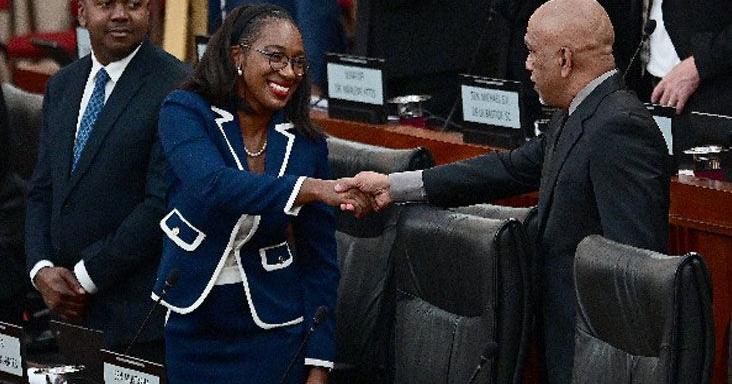
    A political shakeup has hit the Trinidad and Tobago Senate, where opposition Senator Janelle John-Bates has been removed from the influential Public Administration and Appropriations Committee (PAAC), with fellow opposition legislator Vishnu Dhanpaul tapped to fill her vacant seat. The personnel change comes amid a heated parliamentary controversy tied to an ongoing PAAC probe into the government’s pharmaceutical acquisition, importation and approval processes.

    On Tuesday, Leader of Government Business Darrell Allahar formally presented the PAAC’s explosive special report on the matter during a Senate sitting held at Port of Spain’s Red House, following the document’s initial tabling in the lower house of Parliament last Friday. Both legislative chambers are now scheduled to debate the report, which brings sharp scrutiny to John-Bates’ role in assisting former Health Minister Terrence Deyalsingh prepare his witness statement for the committee inquiry.

    Chaired by House Speaker Jagdeo Singh, the PAAC launched the investigation to examine systemic gaps and procedural conduct in how the state procures and approves imported pharmaceutical products. The inquiry was derailed in recent weeks after metadata from Deyalsingh’s April 8 witness memorandum revealed tracked edits directly linked to John-Bates, a sitting voting member of the committee responsible for overseeing the probe. Further digital records indicate she began contributing to the drafting of the document before a key closed-door committee hearing held on March 25.

    Speaking to reporters outside Parliament following the report’s tabling, John-Bates acknowledged her conduct and struck a conciliatory tone about her removal. She stated that stepping aside would remove potential distractions and allow the committee’s critical policy work to move forward unimpeded. “I respect that decision. I think it will allow the important work of the PAAC to continue without it being overshadowed by any issue,” she told journalists. When asked about her future as an opposition senator, John-Bates emphasized she would defer to her party leadership’s judgment, adding that any disputed facts should be resolved through proper parliamentary procedure.

    John-Bates was not the only opposition legislator linked to the drafting effort: opposition Senator Faris Al-Rawi also contributed edits to Deyalsingh’s statement. When approached by the media for comment Tuesday, Al-Rawi, a practicing attorney, declined to discuss the matter, citing legal professional privilege.

    The controversy first came to a head during an April 13 PAAC meeting, where members raised formal concerns that John-Bates’ dual role as a committee investigator and a collaborator with the witness created an untenable conflict of interest that undermined procedural impartiality. In its special report, the PAAC concluded that John-Bates had compromised her duty of impartiality and potentially participated in a conspiracy to commit contempt of Parliament. The document notes that upon being presented with electronic evidence of her involvement, John-Bates admitted to the conduct. The committee warned that her continued membership would make other fellow members uncomfortable and risk eroding the body’s ability to function effectively, and formally recommended her recusal or replacement.

    All voting members of the PAAC signed the special report, with one notable exception: opposition MP Camille Robinson-Regis, who submitted a dissenting Minority Report rejecting the committee’s findings and procedural handling of the case. Robinson-Regis pushed back against the PAAC’s claim that John-Bates’ continued presence would disrupt parliamentary work, dismissing the assertion as unsubstantiated speculation that violates constitutional principles of legislative participation. “The Minority rejects, in the strongest terms, the conclusion that the continued involvement of the Member ‘could make other Members uncomfortable to the point of negatively affecting the work of the Parliament’. This assertion is speculative, unsupported by evidence, and constitutionally unsound,” the Minority Report states. Robinson-Regis also warned that the committee’s reasoning sets a dangerous precedent, noting that “Parliamentary participation cannot be curtailed on the basis of subjective discomfort.” She also raised formal objections to the unauthorized leak of confidential closed-door committee proceedings related to the case.

    The PAAC has confirmed it will launch a separate parallel investigation into the leak of in-camera meeting materials, and has noted that the broader inquiry into pharmaceutical procurement remains ongoing, with no final conclusions reached yet as the committee continues to collect witness evidence.

  • Police armoury breach ‘exposes security gaps’

    Police armoury breach ‘exposes security gaps’

    A brazen weekend break-in at the San Fernando Municipal Police armoury in Trinidad and Tobago has left one officer dead and triggered urgent warnings about systemic security gaps and potential infiltration by global criminal networks. On Sunday, attackers gained access to the facility and stole an unspecified number of firearms alongside thousands of rounds of ammunition, with investigators now pointing to missing, inadequate inventory records as a key vulnerability that allowed the theft to unfold. The incident also claimed the life of on-duty municipal police officer Anuska Eversley, who was murdered inside the station compound during the attack.

    In the aftermath of the heist, two leading criminologists have offered divergent analyses of the event’s root causes and broader implications, raising critical questions about the integrity of the country’s national security apparatus. Speaking in a recent telephone interview, leading criminologist Daurius Figueira argued that the coordinated nature of the attack leaves little doubt that transnational criminal organizations are responsible. He noted that the perpetrators moved with precise, targeted knowledge of the facility, demonstrating they “knew exactly what they were doing” when they struck. Figueira outlined two potential end uses for the stolen munitions: arming local insurgent factions, or diverting the cache to the thriving global illicit arms market. But building on comments from the national Police Commissioner, he pushed forward a more alarming thesis: the heist was a deliberate operation to undermine and destabilize Trinidad and Tobago’s security institutions, and by extension, the sovereign state itself.

    Figueira emphasized that the successful breach lays bare severe, exploitable weaknesses in the facility’s security protocols, which criminal actors likely scouted for months before launching their attack. Contrary to popular framing that most armoury thefts are driven by immediate profit or local gang expansion, he explained that transnational criminal networks often pursue broader strategic goals that go beyond short-term gains. A core part of his assessment is the claim that insiders embedded within the national security apparatus are collaborating with these global networks, providing critical intelligence that makes such targeted attacks possible. He also pushed back against widespread public calls for a national curfew as a response, arguing that the blunt measure would not prevent future targeted attacks like this heist, and would only further highlight existing weaknesses in the country’s security architecture.

    Offering a contrasting perspective, fellow criminologist Dr. Randy Seepersad has called for targeted systemic reform rather than broad conclusions about institutional infiltration. Seepersad urged an immediate full review of weapons storage and inventory accountability protocols across all national law enforcement agencies, stressing that the core failure of the incident was not the presence of munitions in the station, but the lack of effective systems to track and control those stockpiles. He pushed back against assumptions that widespread corruption or institutional misconduct is baked into the system, arguing that the priority should be strengthening operational protocols rather than jumping to conclusions about insider complicity. “I don’t think it’s so much a matter of the ratio of weapons to personnel in the station,” he noted, explaining that even well-staffed facilities fail without consistent monitoring and clear accountability rules. Seepersad emphasized that while secure physical storage is a non-negotiable baseline, its effectiveness depends entirely on consistent audit processes and accountability for personnel responsible for managing armoury stockpiles.

    Seepersad also cautioned against premature speculation surrounding recent incidents of police-marked ammunition being found at crime scenes across the country, warning against rushed conclusions that could derail formal investigations. He noted there are multiple explanations for how such ammunition can end up in criminal hands, ranging from unaddressed gaps in old munitions disposal processes to deliberate planting of evidence by criminals to mislead law enforcement. Drawing quick, unsubstantiated conclusions, he argued, risks both skewing ongoing investigations and distorting public understanding of the real challenges facing national security. Unlike Figueira, Seepersad characterized the San Fernando heist as an isolated incident, rather than evidence of broad infiltration of the country’s security institutions by transnational criminal networks.

  • UK Vincies urged to invest even in small projects in SVG

    UK Vincies urged to invest even in small projects in SVG

    On a recent Sunday in London, the government of St. Vincent and the Grenadines (SVG) advanced its ongoing outreach to the global Vincentian diaspora, reframing conventional expectations of diaspora investment for the island nation’s development. At the Invest SVG Diaspora Outreach and Investment Programme, Senator Lavern King, Minister of State for Education, Vocational Training, Innovation, Digital Transformation and Information, delivered a clear, inclusive message: investments in SVG do not require the large-scale projects that have long been the focus of diaspora investment conversations.

  • Computers at consulate in NY ‘completely wiped’ after ULP loss

    Computers at consulate in NY ‘completely wiped’ after ULP loss

    The process of handing over leadership at St. Vincent and the Grenadines (SVG)’s global diplomatic outposts has been marked by unforeseen and significant obstacles, the island nation’s top diplomat has confirmed to lawmakers.

    Foreign Minister Dwight Fitzgerald Bramble told Parliament Tuesday that while the current Unity Labour Party (ULP) administration has made redefining and restructuring the mandates of SVG’s overseas missions a core governance priority, the handover phase from the previous government has proven far more difficult than anticipated.

    Opening up about the frustrations of the transition in response to a question from opposition senator and former foreign minister Keisal Peters, Bramble described the process as deeply disappointing, citing inherited problematic realities that have slowed operational progress at multiple posts.

    He shared one striking example from the SVG Consulate General in New York, where newly installed Consul General Roland “Patel” Matthews discovered a critical issue immediately after arriving to take up his role: every piece of data on the consulate’s entire computer system had been erased completely. “No information on anything that happened in the consulate in New York was left there,” Bramble told the legislative body, noting that this was just one of multiple problematic cases the new administration has inherited.

    A second contentious case unfolded at SVG’s High Commission in London, Bramble added. Former High Commissioner Cenio Lewis, serving under the previous administration that was voted out of power in November, had set up a charitable trust fund designed to support children back in SVG. Lewis administered the fund alongside a second signatory, whom Bramble did not name, but confirmed is an advisor to the now-former ULP administration.

    Since new High Commissioner Brereton Horne took control of the London mission, the remaining co-signatory has refused to transfer access or control of the charitable fund to the new diplomatic leadership. Bramble noted that the new government expected a seamless handover of all official assets and administrative controls following the election, but this has not been the case for the London trust.

    The former career diplomat stressed that the SVG public can be confident the government will not leave these irregularities unaddressed. “We will do what we have to do, we will investigate what we have to investigate and we will employ whatever legal and administrative and governmental processes to make sure that that is regularised,” Bramble said, vowing to resolve both issues to restore full functional operations at the troubled overseas missions.

  • Dominican Republic promotes agricultural exports at Macfrut 2026

    Dominican Republic promotes agricultural exports at Macfrut 2026

    ROME, Italy – The Embassy of the Dominican Republic in Italy has officially opened the Dominican national pavilion at Macfrut 2026, one of Europe’s leading international agricultural trade exhibitions, which has centered this year’s thematic focus on global mango and avocado production and trade development.

    The opening ceremony was headed by Dominican Ambassador to Italy Rafael A. Lantigua Ciriaco, with Anibelca María Mena, Vice Minister of the Dominican Republic, joining as a key guest participant. The pavilion also received high-profile visiting officials including Italian Member of Parliament Giorgio Silli and Italy’s sitting Minister of Agriculture Francesco Lollobrigida, who toured the exhibition space and met with Dominican delegation members.

    Comprising more than 120 business representatives, the full Dominican delegation brings together stakeholders from across the country’s agricultural ecosystem: leaders from the domestic agro-industrial sector, academic researchers from leading Dominican agricultural universities, and representatives from national government agricultural agencies. Notable private and public sector attendees included Patrizio Neri, Osmar Benítez, and Edwin Reyes, all key figures advancing Dominican agricultural trade.

    Throughout the duration of Macfrut 2026, the Dominican Republic is showcasing a wide range of its premium agricultural products at the pavilion, hosting one-on-one and group business matching meetings with European buyers, and highlighting untapped export opportunities for Dominican goods in the European single market. Event organizers from both the Dominican Republic and Macfrut 2026 note that this large-scale participation delivers far more than immediate trade connections: it provides a critical high-profile platform to strengthen the global competitiveness of the Dominican Republic’s agro-industrial sector, foster innovation in sustainable farming practices, and facilitate cross-border knowledge sharing around advanced agricultural technology and farm mechanization.

    Industry observers add that the event comes as the Dominican Republic continues to expand its agricultural export footprint, with European demand for tropical products including mangoes and avocados rising steadily in recent years. Participation in major European trade fairs like Macfrut is seen as a strategic step to solidify the country’s position as a reliable, high-quality supplier of tropical agricultural goods to the region.