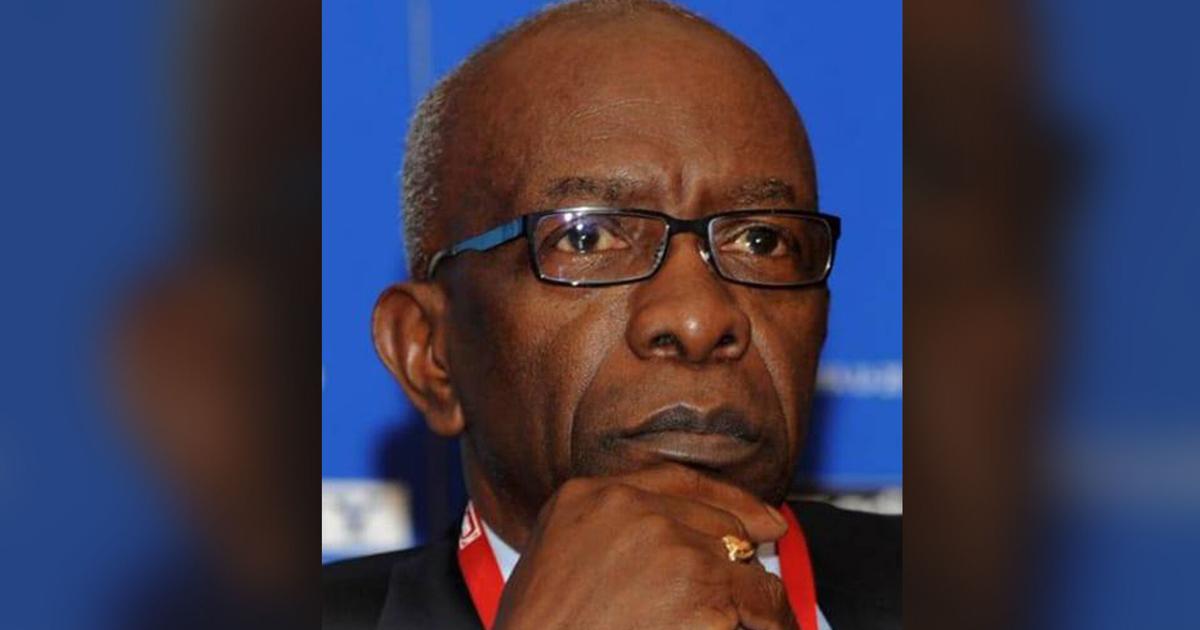
Jack Warner, a one-time national security minister in Trinidad and Tobago who reemerged from political retirement less than two years ago to campaign alongside the United National Congress (UNC) during the country’s general election, has publicly denounced the recently enacted no-protest zone policies as a deliberate attempt to silence the nation’s citizens.
In an exclusive interview with TV6’s *Morning Edition* this week, Warner pulled no punches in his assessment of the new government regulations, but was quick to frame his criticism as constructive feedback rather than a partisan attack. Anyone interpreting his words as an assault on the ruling administration, he argued, is simply overly sensitive. “I have no regrets about supporting the UNC during the election campaign,” Warner emphasized, “and my comments here are not meant to tear anyone down.”
When pressed to respond to recent remarks from UNC leader Kamla Persad-Bissessar, who confirmed the ruling government has no plans to roll back the State of Emergency regulations that ban all demonstrations within 500 meters of 15 designated state institutions, Warner made his position clear: if he still held a seat in government today, he would never back such a ban. Without a legitimate, peaceful outlet to voice their discontent, Warner warned, ordinary people will inevitably turn to more extreme, destructive channels to make their voices heard.
Warner stressed that peaceful protest is a foundational pillar of any functional democracy, noting that the current administration itself rose to power in large part through public demonstrations against the previous government. He drew a historical parallel to the 1974 mobilization of the Blue River Action Committee, reminding audiences that past efforts to stifle public dissent in the country have always failed to achieve their intended goals.
“This is nothing less than an attempt to muzzle the Trinidadian people, and it is a dangerous one at that,” Warner said. “It is dangerous because when you cut off the peaceful outlet, people will find other means, and those other means will be destructive in ways our country cannot afford to handle right now.”
Addressing the growing economic and social strain on working people, Warner added: “You have to understand that people are hurting right now, and they need a way to express that pain. If their protest is constructive, that is all the better, but even when it is critical, as long as it remains nonviolent, we have no right to ban it. Our leaders need to listen to what people are saying, correct the mistakes that have been made, and stop closing off the space for public debate. For as long as I can remember, protesting near Parliament has been a normal, accepted part of our democracy. Banning that practice? Something is fundamentally wrong here.”
The former minister also commented on a recent wave of protests sparked by the police shooting death of Joshua Samaroo and the controversial decision to file criminal charges against Samaroo’s common-law wife, Kaia Sealy. Last week, a demonstration held outside the Office of the Director of Public Prosecutions (DPP) resulted in the arrest of three organizers: lead protester Alyssa Phillip, her mother Camille Caresquero, and local blogger Jason Da Silva. Warner said he was stunned by the overwhelming show of police force deployed to control the demonstration, which was led primarily by women.
“I’ve kept asking myself: do our leaders understand what this does to our country’s international image? Do they get how this looks to tourists who are considering visiting our shores? Do they see how this feeds the narrative of rising violence and authoritarianism that is already spreading online?” Warner said. “When you see hundreds of heavily armed police officers deployed to break up a protest of just 100 women, that is a drastic failure of judgment. I was amazed when I saw it, and I am still amazed now.”
The no-protest zone regulations have already drawn widespread criticism from the political opposition, and earlier this week a coalition of national trade unions formally called on the government to rescind the policy immediately.