In a landmark diplomatic victory for Trinidad and Tobago, Prime Minister Kamla Persad-Bissessar has publicly thanked the global community for the overwhelming support that earned the small island nation a non-permanent seat on the United Nations Security Council (UNSC) for the 2027-2028 term.
Announced via the Prime Minister’s official X platform, the election results confirmed Trinidad and Tobago secured backing from 181 out of 190 voting UN member states — an approval rating of 95 percent that included support from all five of the UNSC’s permanent members: China, France, Russia, the United Kingdom, and the United States. Under the UN’s long-standing regional rotation framework for the 10 non-permanent UNSC seats, one 2027-2028 seat was allocated to the Latin American and Caribbean Group (GRULAC), which counts Trinidad and Tobago among its Caricom member states. As the only candidate nominated by the regional bloc, the nation ran uncontested for the seat currently occupied by Panama, but still faced the requirement of earning a two-thirds majority of votes from UN General Assembly members present and voting to secure the seat. The threshold stood at approximately 129 votes, a mark the nation far surpassed in a single round of voting.
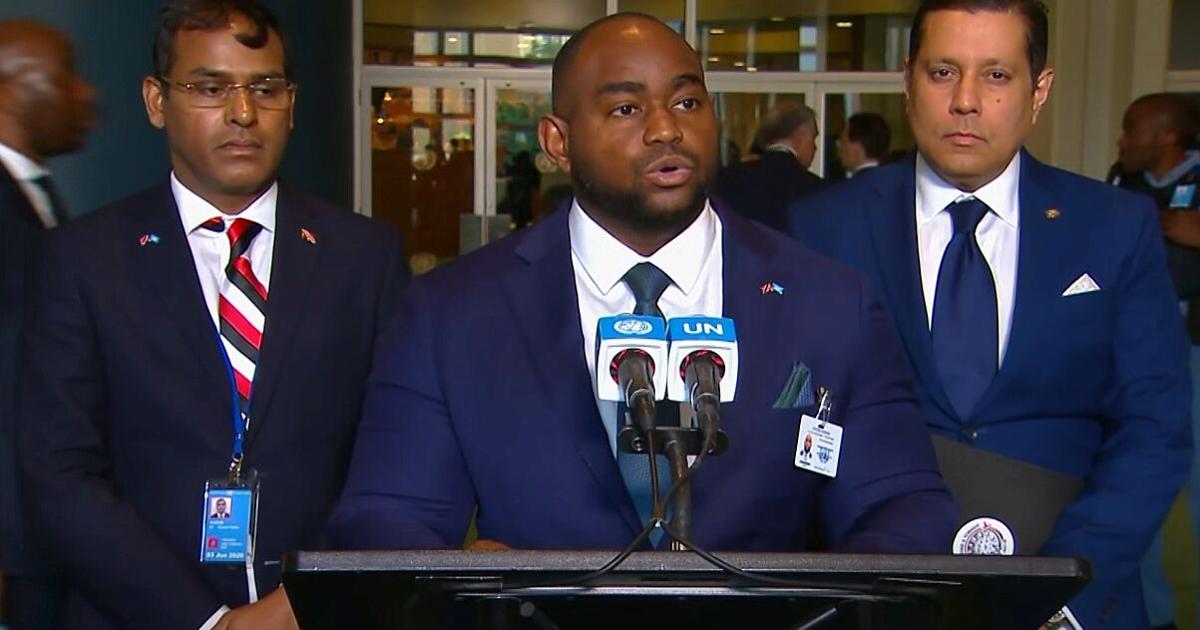
Speaking immediately after the vote count concluded in New York, Minister of Foreign and Caricom Affairs Sean Sobers accepted the international community’s vote of confidence with humility and deep honor. “We accept this mantle of responsibility with humility and pride; we wish to express our profound gratitude for the friendship, partnership and solidarity shown to Trinidad and Tobago during our campaign,” Sobers said. He extended congratulations to all successful candidates in the 2027 UNSC elections, noting that Trinidad and Tobago is eager to collaborate with all incoming and sitting council members.
This term will mark Trinidad and Tobago’s second stint on the UNSC, following an earlier term in 1985-1986, and it will become the first English-speaking Caribbean nation to hold a seat on the council since Jamaica’s 2000-2001 tenure. Since gaining independence 64 years ago, Sobers emphasized, Trinidad and Tobago has consistently upheld the rule of law, advocated for human rights, and strengthened international norms, never remaining silent in the face of injustice. He reaffirmed the nation’s unwavering commitment to the UN Charter and international legal frameworks.
Sobers outlined that the nation’s campaign theme — “Building Consensus for the Realisation of Sustainable Peace and Security” — will guide all of Trinidad and Tobago’s work during its two-year term, which will begin on January 1, 2027. Facing a global landscape marked by increasingly complex interconnected challenges, the nation will prioritize fostering constructive dialogue and bridging divides between competing international actors. Three core strategic pillars will anchor Trinidad and Tobago’s agenda: curbing the illicit trafficking of small arms and light weapons, advancing the women, peace, and security agenda to protect vulnerable children, and examining the growing implications of artificial intelligence for global peace and security. In line with instructions from Prime Minister Persad-Bissessar, the nation will use its platform to amplify underrepresented voices from across the globe, centering justice and equality as the foundation of lasting international security.
A formal statement from the Ministry of Foreign and Caricom Affairs credited Persad-Bissessar’s steady, visionary leadership for delivering what it calls a transformative diplomatic milestone for the nation. The ministry recalled that the Prime Minister first launched Trinidad and Tobago’s UNSC bid during her address to the United Nations General Assembly in September 2025, and subsequently held sustained, direct diplomatic engagement with dozens of world leaders to build support for the candidacy. “Therefore, this country’s success is a testament to the vision, dedication, and steadfast leadership of Prime Minister Kamla Persad-Bissessar, whose commitment to advancing Trinidad and Tobago’s interests internationally has helped secure this historic victory,” the release read.
When the new council convenes in 2027, the UNSC will consist of the five permanent members alongside nine other non-permanent members: Bahrain, Colombia, Democratic Republic of the Congo, Latvia, Liberia, Austria, Kyrgyzstan, Portugal, and Zimbabwe. Trinidad and Tobago will fill the seat left vacant when Panama’s current term expires on December 31, 2026, alongside four other new non-permanent members replacing outgoing Denmark, Greece, Pakistan, and Somalia.