博客

  • Preparation is key

    Preparation is key

    Jamaica’s senior women’s national football team, the Reggae Girlz, stands on the cusp of making regional history, but two former top team leaders are emphasizing that meticulous, long-term preparation will be the key to locking in qualification for both the 2025 FIFA Women’s World Cup and the 2028 Los Angeles Olympics later this year.

    Currently, the Reggae Girlz are just one win away from booking their spot in a third consecutive World Cup. After dominating Group B of the Concacaf Women’s Championship qualifiers with a perfect 4-0 record — highlighted by a 2-0 victory over Guyana at Kingston’s National Stadium last Saturday — the team will face Costa Rica in the tournament’s quarter-finals this November, hosted in Texas. A win against the Central American side will not only secure Jamaica’s place at next year’s World Cup in Brazil but also open the door to the country’s first ever Olympic women’s football appearance.

    Charles Edwards, who served as the Reggae Girlz’s head coach from 2007 to 2008, called a third straight World Cup qualification a milestone that would cement the program’s legacy as one of the strongest in the Caribbean region. “I think for the Girlz to make it a three-peat would be a significant accomplishment,” Edwards shared in an interview with the Jamaica Observer. “That has never been done in the English-speaking Caribbean, and I think all of Jamaica would be so excited — especially after the men’s team failed to qualify for the World Cup. When you look at it, a three-peat this side of the world — even some of the Spanish-speaking Central Americans and all of these countries, I don’t know if anyone has ever made it a three-peat so it’s a very great accomplishment for us, and to make the Olympics would be great.”

    Andrew Price, who was an assistant coach for Jamaica’s groundbreaking first World Cup appearance in 2019, echoed that excitement, noting the program has grown by leaps and bounds since its first historic qualification run. He pointed to the team’s depth of professional talent as a major advantage going into the November match: many of the squad’s players compete in top European and American club leagues, and even star players Jody Brown and Konya Plummer were absent from the final qualifying round, a testament to the team’s depth. “They are now going to be three World Cups older, more experienced, and I believe that will serve its weight in gold when they go to the Concacaf Women’s Championships,” Price said. “I’m expecting the game against Costa Rica to be a difficult game but it’s a game that the Reggae Girlz can win. They have beaten Costa Rica in the past at the Women’s Championship, and I believe that once they go in there mentally and physically prepared they should be able to overcome them.”

    With seven months remaining before the do-or-die match against Costa Rica, both former coaches laid out clear plans to maximize preparation time. Price argued that the Jamaica Football Federation (JFF) should take advantage of the June and October international match windows to schedule friendlies against high-caliber opponents from Europe or Asia, to help the team adapt to different playing styles including organized defensive setups and fast counter-attacking transitions.

    Edwards agreed that competitive friendlies are important, but added that targeted pre-tournament training camps are also critical. He proposed holding two camps in the United States, ideally near the match venue in Texas, to let the full squad acclimatize to the local environment and build on-field chemistry ahead of the November fixture. “Another big plus for us, it’s going to be over the summer when all the international players should have time to be together to work so I’m looking at camps — maybe two camps somewhere in the US and maybe within the area where they’re going to play the games (Texas) — so that they can acclimatise and get accustomed to all of that environment,” Edwards explained. “So a lot of simulation will have to take place and a lot of fine-tuning. It’s like an engine — you’re going to fine-tune it now, you want it running at maximum, you want to be going top speed. So [it’s] the coaches’ responsibility and the JFF, coupled together, and I think they have been doing a pretty good job so far and should be able to get us in good stead going forward into the game.”

    Current head coach Hubert Busby has already confirmed that the technical staff is moving forward with preparation plans, matching the ex-coaches’ focus on the June international window. “We’re turning to what happens within the June window and looking to maximise those two games in terms of preparations,” Busby said last Saturday after the win over Guyana. “I think it is really important for [the players], when they go back into their environment, that they are playing, they’re doing well, and continuing to push the level. We’ll have the chance to take this week and look at our reflection in terms of coaching staff and what we need to do to keep on improving as well so we can improve the group.”

    Notably, the Reggae Girlz have beaten Costa Rica in qualification matches on their way to securing spots at both the 2019 and 2023 World Cups, giving the team a historic edge ahead of the November showdown.


  • Ex-detective found no blood behind vehicle, jurors hear in cops’ murder trial

    Ex-detective found no blood behind vehicle, jurors hear in cops’ murder trial

    A former detective constable’s testimony delivered remotely from the United States has introduced significant contradiction into the high-profile murder trial of six Jamaican police officers accused in the 2013 killing of three men, challenging a core claim from an earlier prosecution witness.

    Granted permission to testify via video link after prosecutors successfully filed a special measures application, the ex-detective – currently serving in the U.S. military and enrolled in a mandatory promotional program that bars him from traveling to Jamaica for in-person court appearance – took the stand on Wednesday to share his account of processing the 2013 crime scene.

    The fatal shooting unfolded on January 12, 2013, near the intersection of Acadia Drive and Evans Avenue in St Andrew, where Matthew Lee, Mark Allen, and Ucliffe Dyer were killed. The six officers on trial – Sergeant Simroy Mott, Corporal Donovan Fullerton, and Constables Andrew Smith, Sheldon Richards, Orandy Rose, and Richard Lynch – all face murder charges; Fullerton additionally stands accused of submitting a false statement to Jamaica’s Independent Commission of Investigations (INDECOM), the body that probes law enforcement misconduct.

    A key earlier witness for the prosecution claimed that from his third-floor apartment window, he witnessed one of the three victims lying on the ground behind a parked blue Mitsubishi Outlander, with officers standing over him, before hearing what he described as explosions and seeing the man go motionless. That witness also said he observed blood in the spot behind the vehicle where he claimed the shooting occurred.

    But the former detective, who was tasked with photographing, collecting, and packaging physical evidence from the scene the day of the shooting, told the Home Circuit Court he never detected any red substance matching the description of blood in that area behind the Mitsubishi. This account undermines the credibility of the earlier witness’s core narrative of the shooting.

    Under cross-examination from defense attorney Hugh Wildman, who represents four of the six accused officers, the ex-detective confirmed additional details that cast further doubt on the earlier witness’s vantage point. Wildman put forward the argument that a third-floor observer at that apartment building would only have an angled, obstructed view of the parked vehicle, not a clear direct line of sight. The ex-detective told the court he could not confirm the exact location of the apartment building’s entrance, could not accurately estimate the distance between the building and the parked SUV, and never entered the apartment complex or surveyed the full length of Acadia Drive during his evidence collection.

    The former detective also acknowledged that he did not use a formal tape measure to record distances at the scene, instead relying on pace counts to estimate measurements, and never measured the full width of the road. He confirmed that all spent bullet casings documented at the scene were properly collected, but noted he was not trained to collect gunpowder residue (GPR) samples, and is not a specialist in forensics or ballistics. When questioned about GPR, he explained that residue presence and concentration can be affected by multiple factors, including movement during firing, weather conditions, and the type of clothing a shooter is wearing. While he confirmed that firing a gun typically leaves GPR on a shooter, he noted that movement can reduce detectable residue levels.

    The witness also told the court he was first contacted by INDECOM about two months prior to the trial, and later spoke to lead prosecutor Kathy-Ann Pyke. He confirmed he informed Pyke last week that his U.S. military promotional program made an in-person court appearance impossible due to conflicting scheduling. He added that he had not spoken to any other INDECOM representatives about his inability to travel.

    Two of the six accused are represented by attorneys John Jacobs and Althea Grant-Coppin. Following Wednesday’s testimony, presiding Justice Sonia Bertram-Linton adjourned the proceeding until the following Monday.

  • Ecstasy in oats could have triggered prison ban

    Ecstasy in oats could have triggered prison ban

    Jamaica’s Department of Correctional Services (DCS) has implemented a controversial new ban on several popular food items that visitors are permitted to bring into the nation’s correctional facilities, framing the policy as a critical upgrade to its ongoing fight against contraband trafficking, including illicit drugs like marijuana. The new list of restricted staples, which sources tell the Jamaica Observer are core food sources for incarcerated people who reject prison-prepared meals, was publicly announced by the agency this Tuesday. Under the updated rules, cup soups, rolled oats, tinned potato chips and other similar packaged snacks, and boxed cereals are no longer accepted during inmate visits.

    In a public notice accompanying the ban announcement, the DCS urged all visitors to familiarize themselves with and abide by the new guidelines to avoid unnecessary entry delays or inconvenience. The agency noted that visitor cooperation is essential to upholding the safety, security and consistent daily operations of all correctional facilities across the island. Responding in writing to queries from the Observer on Wednesday, the DCS communications team clarified that the strengthened restrictions are a core component of the department’s long-term strategy to maintain safety, discipline and orderly operations within its facilities.

    “As part of these enhanced controls, the department has also rolled out stricter gate entry protocols and broader restrictions on certain visitor items that could be exploited to hide prohibited contraband,” the DCS statement added. The agency emphasized that all new measures are preventative, and reflect its longstanding zero-tolerance policy for contraband smuggling and any activity that threatens institutional security. “We remain committed to balancing strict security standards with professionalism, fairness, and humane treatment of those in our custody, while upholding our core mandate of rehabilitation and successful reintegration into society,” the statement read.

    But the new policy has already drawn skepticism from both former inmates and industry insiders, who question both the effectiveness of the ban and point to a far larger source of contraband infiltration. One former inmate who spoke to the Observer shared that the ban on grain products like oats stems from reports that visitors have been crushing ecstasy (MDMA) pills, commonly known as Molly, into the loose grain to smuggle the drug into facilities. Despite this, the ex-inmate argued that senior prison administrators would make more progress cutting contraband if they focused their investigations on internal staff rather than punishing visitors and inmates.

    That critique is echoed by a well-placed source who interacts with Jamaican prisons on a regular basis. The source pointed out that existing protocols already require loose goods like oats to be poured out into clear plastic bags and searched thoroughly before entry. “Apart from sealed cup soups, items like oats and chips can easily be transferred to transparent packaging and searched just like any other item. Even visitors bringing toothpaste have to squeeze it out into a plastic bag for inspection,” the source explained.

    The insider went on to challenge the core logic of the ban, noting that widely recognized industry data shows the vast majority of contraband that enters Jamaican correctional facilities is brought in by correctional officers and wardens themselves, not visiting family members. “Everything you can think of is already available in prison, except your freedom. If an inmate wants a cell phone, they can get one. Inmates even trade common basic goods like tissue for drugs,” the source said.

    While the source acknowledged that smuggling contraband inside food packaging like sealed chip tins is plausible, they noted that incarcerated people have proven far more creative in their smuggling methods than surface-level bans address. “It’s possible this has happened, and it’s a logical reason for the ban, but the bigger issue remains unaddressed,” they added.

    The source also confirmed that the banned food items are staples for the large share of inmates who refuse to eat meals prepared by prison kitchen staff. Many of these inmates rely on instant, heatable options like cup soup that they can prepare themselves, even in single cells where some have access to small personal kettles. The source pulled back the curtain on the poor quality of institutional prison meals, saying, “The reality is that the food served in Jamaican prisons is almost unfit for human consumption. Inmates get hard bread for breakfast, and a small portion of rice with chicken back for lunch. It’s cooked in massive bulk, so it’s never appealing or high quality. Banning something as basic as cup soup is almost certainly going to spark discontent among the inmate population.”

    The Observer has also learned that to avoid relying on prison food, inmates have gone to extraordinary lengths to cook their own meals, even carving out pieces of their shoe soles to use as fuel to heat water for tea or instant food behind bars. The source confirmed these accounts, noting “Inmates are incredibly resourceful when they don’t have access to acceptable food.”

  • Major Brandish gets personal on Love Again

    Major Brandish gets personal on Love Again

    For over 15 years, Jamaican reggae artist Major Brandish — born Gladstone Brown and raised in east Kingston’s Rockfort neighborhood — has built his career on authenticity, a commitment he brings to his vulnerable and message-driven new single *Love Again*, released last month via ShartyB Records. Drawing from the deep personal pain of a past romantic heartbreak, the singer crafted the track to turn his own struggle into a lesson that resonates with audiences navigating similar experiences.

    In a candid conversation with the *Jamaica Observer*, Brandish explained the core philosophy driving the song: while romantic hurt can leave lasting scars, he argues that allowing that pain to curdle into hate only harms both oneself and the people around one. Growing up in Kingston’s inner city taught him critical lessons in self-discipline, emotional control, and most importantly, how to cultivate self-love in the aftermath of heartbreak. Rather than closing himself off from future connection, Brandish emphasizes that hurt is merely a common life obstacle, not a permanent barrier to opening one’s heart to new love. “Not everyone will have the opportunity to hurt you, some do come to love you and care for you, and you just do the same,” he noted.

    What sets Brandish apart from many of his peers in the entertainment industry, he says, is his willingness to center raw, personal emotion and positive messaging in his work. Many artists shy away from sharing their private struggles with heartbreak, but for Brandish, this openness is not a matter of courage — it is a core part of staying true to himself. “Ninety per cent of them go through it because they are human; they go through heartbreak too, and expressing it is good for the soul, and it frees you up,” he explained. His artistic mission is simple: to preserve the authentic, joyful, reality-centered reggae that rooted his upbringing, with intentional positive messaging that uplifts listeners.

    Looking ahead, one of Brandish’s biggest career highlights is coming this June: he is set to perform at *Legends of the Caribbean – A Tribute to Dennis Emmanuel Brown*, scheduled for June 26 at Ottawa’s Meridian Theatre in Canada. A lifelong fan of the late “Crown Prince of Reggae” Dennis Brown, Brandish called the opportunity to honor the icon a profound honor. Brown, who was named Bob Marley’s favorite singer, has been a household name for Brandish since early childhood, remembered for his enduring focus on love and celebration of Jamaican culture. When asked about his favorite Dennis Brown track, the singer says he cannot pick just one — he has too many beloved songs from the legendary artist that shaped his own musical journey.

  • ‘Loss of fear for God’

    ‘Loss of fear for God’

    On a Wednesday early afternoon in Montego Bay, St James, Jamaica, a routine fasting and prayer gathering at the Montego Bay New Testament Church of God was shattered by the crack of gunfire. Worshippers in the middle of singing hymns froze mid-praise, unable to comprehend that violence had penetrated the walls of their sacred sanctuary.

    The victim was Cora Thompson, a well-loved member of the church congregation who was shot five times while she sat selling religious books just meters from the church entrance. Several worshippers inside the building told church leaders they heard every bullet strike. In the aftermath of the attack, even after police completed their on-scene investigations and removed crime scene tape, Thompson’s blood remained visible on the outdoor walkway outside the church, a stark reminder of the violence that upended this tight-knit community.

    Bishop Ruel Robinson, the church’s senior pastor, shared that the entire congregation is reeling from the trauma of the attack. “I know everybody is traumatised, having heard the explosions and then later to find out that one of their very own got killed,” Robinson said in an interview with the Jamaica Observer. The church has moved quickly to organize grief counselling for all members, alongside targeted support for Thompson’s family as they navigate their loss. “We will have to pray for each other. This is not a personal thing, it is a collective experience as a church so we plan to provide grief counselling to the church members, and keep on praying and supporting the victim’s family,” he explained.

    Robinson remembered Thompson as a vibrant, kind-hearted woman who was a cornerstone of the church community. “Sister Thompson, the victim, she was a quality lady, somebody that is high-spirited and cooperative, supportive. She gets along well with almost everybody,” he said. He also spoke out sharply against the attack, condemning the brazen disregard for the sanctity of the church that the shooting represents. “It is obviously a loss of fear for God. It shows a spirit of disregard for God and the sanctuary,” he said.

    According to eyewitness accounts, the gunman – a single male attacker – fled the scene on foot, moving from Water Lane toward nearby Dome Street. Senior Superintendent Eron Samuels, parish police chief, told reporters that law enforcement is fully committed to bringing the perpetrator to justice. “We are very hurt and upset about it and we will not spare any efforts to find who the killers are,” Samuels said. As of Thursday, investigations into the killing remain active, with police yet to announce any arrests or confirm a motive for the attack.

  • CHILD SEX SHOCK

    CHILD SEX SHOCK

    On Wednesday, senior Jamaican law enforcement official Superintendent Keniel Henry delivered alarming testimony that sparked urgent scrutiny of the island nation’s child protection and juvenile justice frameworks during a parliamentary hearing of the Joint Select Committee reviewing the Child Diversion Act.

    Henry, a crime commander for the region designated Area Two who also serves with the Jamaica Constabulary Force’s Criminal Investigations Branch, revealed two deeply troubling recent cases: one involving sexual activity between an 11-year-old and a 6-year-old, and a second incident between a 9-year-old and a 4-year-old. When interviewed, the older children in both cases attributed their behavior to exposure to adult sexual content and activity in their surrounding environments, Henry said.

    These shocking disclosures were not isolated incidents, the superintendent emphasized. Instead, they form part of a growing, worrying pattern of harmful sexual behavior among children below Jamaica’s age of criminal responsibility — a group that cannot face criminal charges under current law, but urgently needs structured, targeted intervention to address their psychosocial needs and prevent future harm. Henry called on lawmakers to create new legal provisions that would place these children in specialized support programs, filling a critical gap that currently leaves officials with few actionable options to intervene.

    The revelations stunned committee members, who immediately launched a heated debate over root causes, institutional responsibility, and needed reforms. Committee chair Delroy Chuck argued that parental accountability must be central to any solution, suggesting that formal parental orders should be imposed on caregivers who fail to monitor and guide young children, questioning how children as young as four or six could develop such harmful behavior without adult neglect.

    But Henry pushed back for a more holistic, systemic approach, noting that while parental failure contributes to some cases, harmful exposure can also stem from school environments and broader community influences that extend beyond parental control. Education Minister Dr. Dana Morris Dixon reaffirmed her position that all such harmful behavior is learned, tracing its origin back to home environments regardless of where the incident itself occurs. “A child does not wake up and learn this behaviour on their own. They learned it somewhere,” she stated.

    The debate expanded to cover the complex dynamics of consensual sexual activity between close-in-age minors, all under 18 years old. Superintendent Kerry-Ann Bailey, head of the Centre for the Investigation of Sexual Offences and Child Abuse, outlined how these cases typically come to light: most often, female minors are reported to authorities by parents or guardians, either after school officials flag an incident, a pregnancy is discovered, parents find explicit correspondence, or a sexually transmitted infection is diagnosed. Contrary to common assumptions, Bailey noted, female minors are not always passive victims — in some consensual cases, girls are actually the ones who initiate the encounter.

    Under current law, even in fully consensual close-in-age cases, one minor is often formally labeled as an offender and referred to diversion programs, a framework that critics say fails to address the underlying welfare needs of all children involved. Member of Parliament Isat Buchanan called for new legislation centered on welfare-focused intervention rather than criminalization, paired with strengthened measures to enforce parental accountability, arguing these cases are clear symptoms of deeper systemic failures and widespread child neglect.

    Originally crafted to divert young offenders away from the harshness of the formal criminal justice system, the existing Child Diversion Act was shown during Wednesday’s hearing to have major gaps when it comes to children who cannot legally be charged with a crime. In response, Dr. Morris Dixon confirmed that amendments to the broader Child Care and Protection Act are already being drafted to create a more appropriate legal framework for these cases, since most do not involve criminal offenses but rather urgent needs for care, protection, and intervention for children exposed to harmful influences in communities and homes. She added that the joint select committee will clarify which reforms fall under the Child Diversion Act versus the Child Care and Protection Act to advance targeted, effective changes.

  • ‘A crazy idea!’

    ‘A crazy idea!’

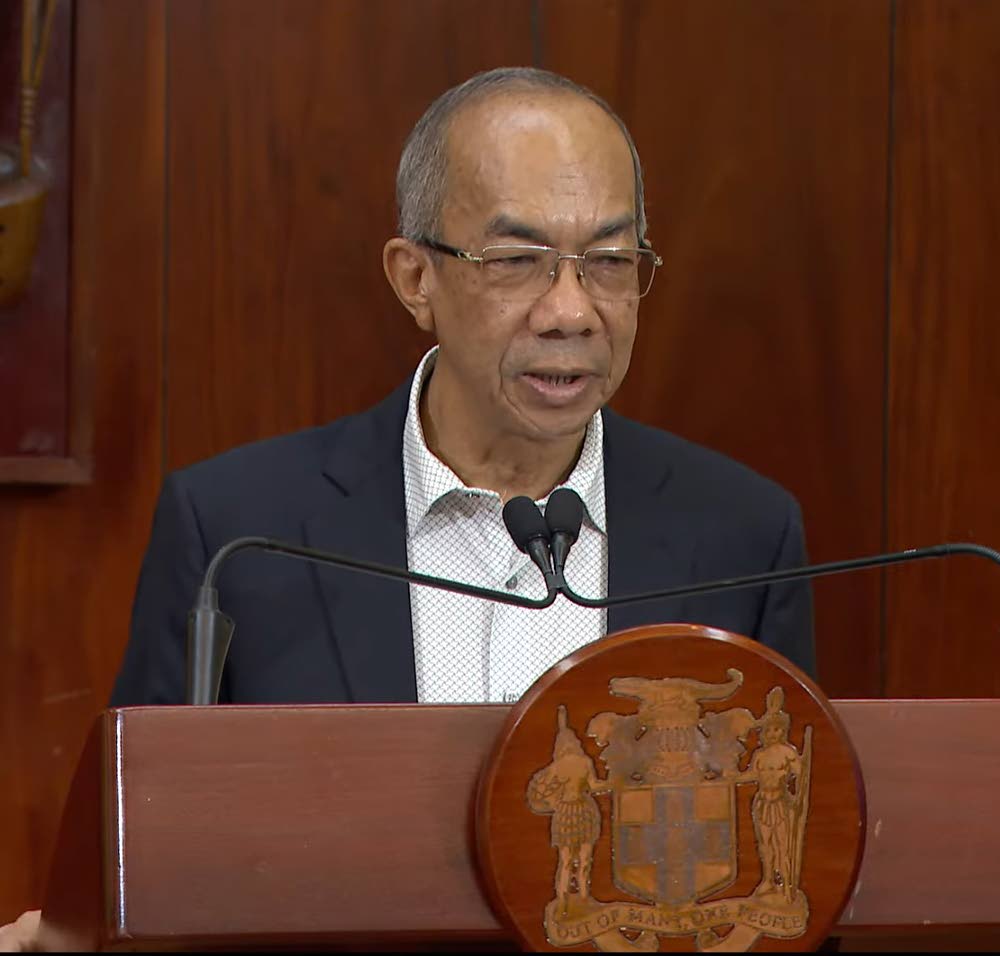
    Jamaica’s Minister of National Security and Peace, Deputy Prime Minister Dr. Horace Chang, has drawn a firm line in the ongoing debate over police body camera use, stating unequivocally that officers will not be required to wear the devices during high-risk operations targeting armed criminals. He has publicly dismissed growing demands from civil society advocates for universal body camera use as an ill-conceived and dangerous proposal that puts law enforcement lives at unnecessary risk.

    The debate has intensified in recent months amid a sharp uptick in fatal police shootings across Jamaica, with civil society group Jamaicans For Justice leading repeated calls for mandatory camera deployment during all planned police operations to increase accountability. Chang, who has been locked in public disagreement with the advocacy group over the policy, laid out his full position during Wednesday’s weekly post-Cabinet press briefing at Jamaica House, leaving no ambiguity about his stance.

    “This thing that you must wear a camera when you going to look for a man who has a M16 that’s firing 60 rounds per second is a crazy idea,” Chang stated during the briefing. He walked through the practical realities of high-stakes counter-gunman operations, explaining that when gunfire breaks out, officers prioritize taking cover before returning fire, and mandatory body cameras would create avoidable additional hazards. For early morning planned raids targeting dangerous wanted suspects, Chang said cameras are simply off the table.

    Noting that fugitive armed criminals often move more quickly than responding officers, Chang emphasized that stealth and surprise are critical to successful operations. “Cameras make them a target,” he explained, adding that officers entering these high-risk scenarios already face extreme danger, and any requirement that compromises their safety cannot be implemented. Unlike routine public interactions, these covert operations cannot afford elements that reveal officers’ positions or identities before they can engage suspects, he argued.

    Contrary to claims that the government opposes body camera use entirely, Chang clarified that the Jamaica Constabulary Force (JCF) already has access to body-worn cameras, with 1,000 additional units on order to expand the program, and all officers receive training on how to use the devices. Deployment decisions, he reiterated, rest solely with Commissioner of Police Dr. Kevin Blake, a position he first laid out during his sectoral debate address to Parliament Tuesday. Civil society groups have no authority to dictate how police equipment is deployed in the field, he added.

    Chang pointed out that body cameras are already in regular use for appropriate types of operations across Jamaica. For example, at least one officer involved in the national coordinated road check initiative — a program designed to disrupt gang activity and recover illegal firearms — wears a camera during these interactions. This use case aligns with how body cameras are deployed in the United States, where the technology was first adopted broadly to address racial profiling in routine traffic stops and public interactions, not for high-risk tactical SWAT operations. That model is comparable to the work of the JCF’s Public Safety and Traffic Enforcement Branch, which already uses cameras when engaging with the public, he noted.

    Currently, most local body camera use is for routine public-facing work: road checks and crowd management at entertainment events. Chang highlighted tangible public safety benefits from this existing deployment: since cameras were introduced for traffic stops, confrontations between police and taxi operators have dropped dramatically. “When last have you seen a video — because they used to go viral — of a policeman and a taximan fighting, or a policeman has to beat up a taximan? They don’t, because when the taximan or any driver sees a policeman with a camera and he stops a car, they behave themselves,” he said.

    The minister pushed back against what he described as a harmful colonial-era legacy of widespread public assumption that Jamaican authorities and elected officials are inherently corrupt. He argued that repeated calls for universal body camera use for all operations reinforces this false narrative, which he called an unfair misrepresentation of the JCF. “It assumes that those who have authority are corrupt, so the idea that the police is a corrupt body out there to extort people is a wrong legacy. It’s incorrect and I cannot support anything that seeks to reinforce that and that’s what the call for cameras to be used all the time does,” Chang said.

    He emphasized that while the government welcomes constructive criticism of law enforcement policy, it is long past time for the public to trust Jamaican police professionals and respect their expertise in operational planning. Acknowledging that the 14,000-strong JCF is not a perfect institution, and that a small number of officers have engaged in criminal misconduct, Chang noted that official data backs up the claim that bad actors are a tiny minority. Statistics from the Independent Commission of Investigations (Indecom), Jamaica’s police oversight body, show that only 3.4 per cent of police officers charged with offenses in recent years have been convicted.

    Chang closed by repeating his call for civil society organizations to allow established oversight processes to run their course before issuing public statements or passing judgement on police operations. He said Indecom, as the independent investigative body, should be allowed to complete its work and release its findings before any public conclusions are drawn about officer conduct.

  • Roseau Enhancement Project advances with supervision contract award

    Roseau Enhancement Project advances with supervision contract award

    The Commonwealth of Dominica has marked a key milestone in the ongoing transformation of its capital city, officially announcing the award of a multi-million-dollar consultancy contract for the second phase of the landmark Roseau Enhancement Project.

    The contract, totaling $2,246,264 USD, has been granted to the Saudi Arabia Consulting Engineering Office (PACE), which will carry out the work in partnership with locally based Corisav Inc. According to an official statement released by the Office of the Prime Minister, the procurement process for this engagement was carried out in full compliance with the funding regulations set by the Saudi Fund for Development (SFD), the primary backer of the infrastructure initiative.

    Under the SFD’s rules, bidding was limited to Saudi engineering firms or joint ventures pairing Saudi entities with local Dominican businesses. The competitive process used a Quality and Cost-Based Selection evaluation framework, and after review of the two submitted proposals, the PACE-Corisav partnership was selected as the winning bidder.

    The consultancy work will extend over a 42-month timeline, structured into three distinct phases. The first six-month phase will focus on completing detailed design reviews for the planned street rehabilitation works and providing dedicated support for the upcoming procurement of main civil construction contracts. The second, 24-month phase will involve full-time on-site supervision of all construction and road upgrade activities. The final 12-month phase will see the consultancy provide ongoing oversight throughout the statutory defects liability period, ensuring all completed works meet required performance and quality standards.

    Seven of Roseau’s most high-traffic major streets are targeted for comprehensive rehabilitation under this phase of the project: Independence Street, Bath Road, Cork Street, Great George Street, Virgin Lane, River Street, and King George V Street. The work will focus on upgrading the aging road infrastructure that forms the backbone of the capital’s transportation and commercial networks.

    In its official statement, the Office of the Prime Minister emphasized that the independent technical oversight provided by the consultancy team will guarantee that all rehabilitation works adhere to the highest international engineering and construction standards. This aligns with the Dominican government’s broader long-term vision to redevelop Roseau into a modern, climate-resilient capital city that prioritizes pedestrian accessibility and improved quality of life for both residents and visitors.

  • Caribbean Gynecologic Cancer Society to host 2026 Annual Scientific Meeting in Barbados

    Caribbean Gynecologic Cancer Society to host 2026 Annual Scientific Meeting in Barbados

    The Caribbean Gynecologic Cancer Society (CGCS) has officially unveiled plans for its 2026 Annual Scientific Meeting, set to take place April 24–25 at the Hilton Barbados Resort. One of the most anticipated regional medical gatherings of the year, the conference will draw top gynecologic oncologists, surgical specialists, research scientists and healthcare practitioners from across the Caribbean and international medical communities. Its core mission is to expand collective clinical knowledge, share breakthrough innovations, and deepen cross-institutional collaboration to address the growing public health challenge of gynecologic cancers.

    Centered on the overarching theme of advancing clinical excellence and enhancing patient outcomes, the two-day event will feature a dynamic, multi-format program designed to meet the needs of a diverse range of attendees. Expert-led keynote lectures and interactive panel discussions will open space for critical dialogue, while cutting-edge original research presentations will showcase the latest findings in the field. The agenda will focus specifically on multidisciplinary care models for three of the most common gynecologic malignancies: ovarian, cervical, and endometrial cancers. Organizers have also prioritized sessions highlighting emerging targeted therapies, game-changing technological innovations in gynecologic oncology, and adaptable, practical care strategies that work for both high-resource and low-resource clinical settings across the region.

    aA standout feature of the 2026 meeting is its roster of distinguished regional and international faculty, with speakers joining from leading global cancer research and treatment institutions. This international participation underscores CGCS’s longstanding commitment to lifting the standard of gynecologic cancer care across every Caribbean nation, regardless of local resource constraints.

    In a statement announcing the event, CGCS Chairman Dr. Vikash Chatrani emphasized the unique value of the annual gathering. “This meeting represents a vital opportunity for cross-border knowledge exchange and regional collaboration that we cannot get anywhere else,” Chatrani said. “Our core goal is to equip frontline healthcare professionals with actionable insight into the latest medical advancements, while fostering long-term partnerships that will ultimately translate to better care and better outcomes for patients across the entire Caribbean.”

    Beyond the rigorous academic program, attendees will have the chance to experience the award-winning hospitality of Barbados, with intentionally curated networking and professional engagement opportunities set against the island’s culturally rich, relaxed backdrop. Organizers expect the 2026 meeting to draw a broad, diverse cross-section of medical professionals invested in advancing women’s health, including practicing gynecologists, medical oncologists, oncology nurses, medical students, and a wide range of allied health practitioners.

    Healthcare providers and other interested parties can secure their spot at the conference by registering through the official CGCS registration page, available at: https://caribbeangynecologiccancersociety.org/register/

  • Gov’t announces more scholarship opportunities in Taiwan

    Gov’t announces more scholarship opportunities in Taiwan

    A new set of fully funded master’s degree scholarship opportunities exclusively for Vincentian applicants has been announced by the Ministry of Foreign Affairs, offered by National Chi Nan University (NCNU) based in Taiwan. This program stands apart from existing scholarship arrangements managed through the St. Vincent and the Grenadines (SVG) central government, opening an additional pathway for higher education access for students from the Caribbean nation.

    Three distinct academic tracks are available through the initiative: a Master of Business Administration, a master’s program in Information Technology, Innovation and Application, and a graduate degree in Intelligent Semiconductor and Green Technology. All coursework is conducted entirely in English, with each program spanning a standard two-year duration. The full scholarship package covers 100% of tuition costs, includes free on-campus housing for the full program period, and provides recipients with a steady monthly stipend of $200 USD to cover day-to-day living expenses.

    To qualify for consideration, candidates must hold a validated bachelor’s degree from an accredited higher education institution, and submit official documentation proving they have access to at least $3,000 USD in financial resources, whether via personal bank statements or a confirmed sponsorship agreement. It should be noted that awarded students are responsible for covering the cost of their round-trip air travel between SVG and Taiwan.

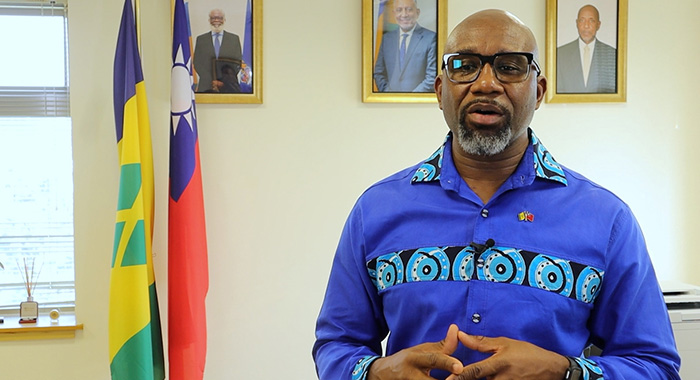
    Kenton X. Chance, SVG’s Ambassador-designate to Taiwan, outlined an additional key benefit for successful applicants: scholarship holders are permitted to work legally in Taiwan for up to 80 hours per month, which is estimated to generate roughly an extra $480 USD in monthly income on top of the $200 stipend provided directly by NCNU.

    Chance added that the SVG government and its Taipei-based embassy are currently exploring options to extend additional support to eligible applicants moving through the admissions process. In a public video posted to the embassy’s official Facebook page, he encouraged all interested Vincentians to submit their applications before the closing deadline. “If you have even the slightest interest in this opportunity, make sure you apply,” Chance stated. “Once you are accepted, we can collaborate to figure out what extra assistance we can offer.”

    The ambassador emphasized that the opportunity is open to all Vincentians regardless of their current location, urging eligible candidates to take advantage of the chance to pursue an internationally recognized graduate education. The application window is set to close on May 17, and interested parties can complete their submissions directly through the university’s official application portal at https://apply.ncnu.edu.tw/.