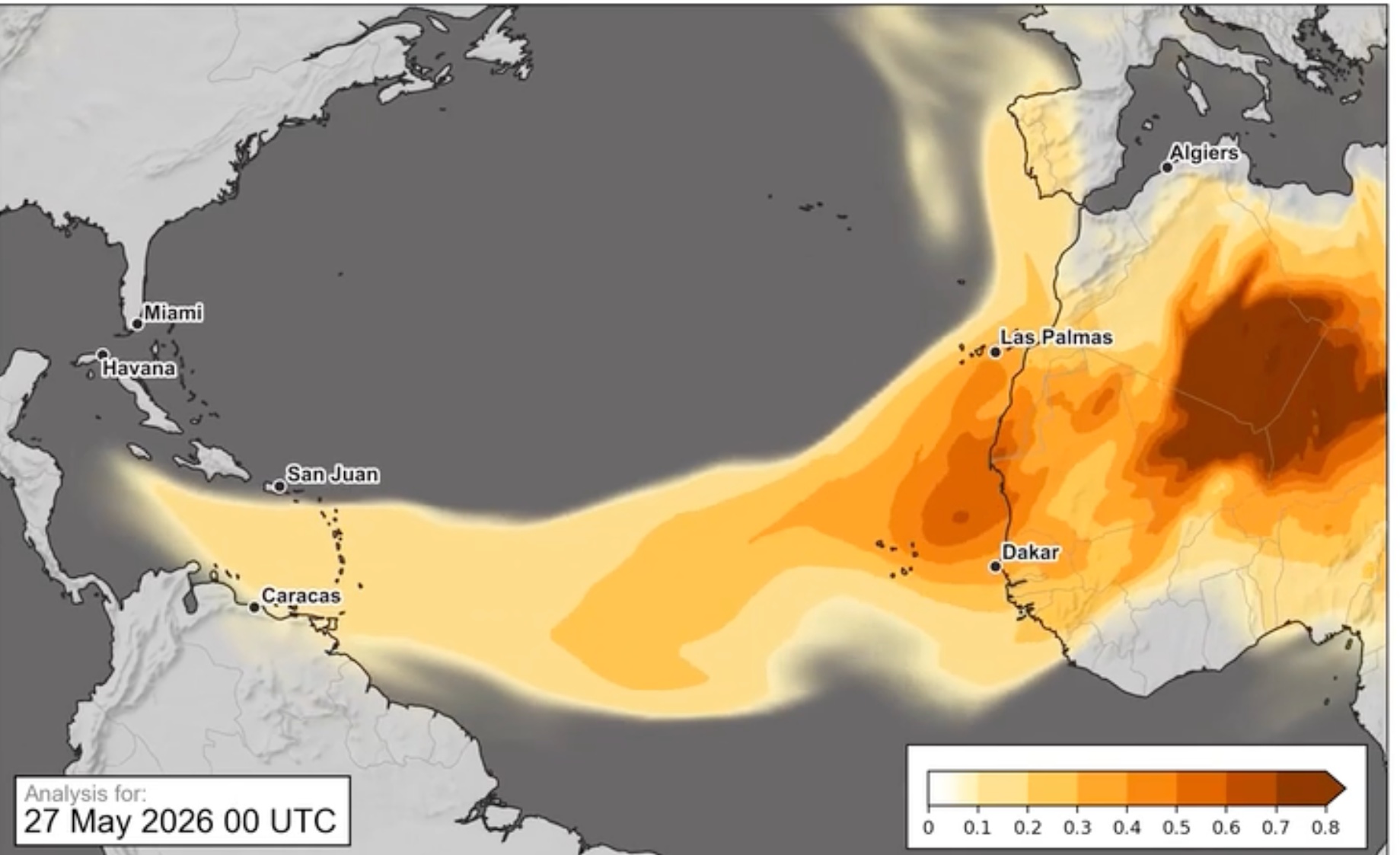
A new wave of mineral dust carried thousands of miles from the Sahara Desert has driven air quality across the dual-island nation of Antigua and Barbuda into the moderate range, triggering official health warnings that sensitive population groups could face adverse impacts through at least Thursday night. This event marks the 10th significant Saharan dust intrusion recorded in the country this year, underscoring a recurring seasonal pattern that impacts the Caribbean region annually.
The Antigua and Barbuda Meteorological Service confirmed that concentrations of fine particulate matter tied to the airborne dust pushed the nation’s Air Quality Index (AQI) to between 51 and 70, prompting the activation of an Air Pollution Alert Level II. While the overall air quality remains within the acceptable range for the general public, elevated dust levels create tangible risks for vulnerable groups, officials emphasized.
Authorities have identified people living with chronic respiratory or cardiovascular conditions, senior citizens, and young children as the most vulnerable to the negative health effects of the fine dust particles. Even among the general population, a small subset of unusually sensitive people, including those with asthma, may experience moderate respiratory discomfort and related health concerns under current conditions.
In line with public health guidance, local officials are urging active children and adults, as well as anyone with pre-existing respiratory conditions, to cut back on extended strenuous outdoor activity until dust concentrations dissipate and air quality improves. Residents are also encouraged to follow official updates from the Meteorological Service and other trusted government information channels to stay informed of changing air quality conditions and revised forecasts.
This latest surge forms part of a much larger Saharan dust plume that has been traversing the entire Atlantic Ocean since early June. Data collected by the European Union’s Copernicus Atmosphere Monitoring Service tracked the massive cloud stretching from the arid west coast of Africa all the way to the Caribbean basin earlier this month. Before reaching Antigua and Barbuda, the plume already degraded air quality across Cabo Verde and other Atlantic island nations along its path, matching longstanding forecasts that predicted the dust would spread across most of the North Atlantic before reaching Caribbean waters.