博客

  • Kaedi Philo pays tribute to Judy Mowatt’s ‘Black Woman’ with fresh take

    Kaedi Philo pays tribute to Judy Mowatt’s ‘Black Woman’ with fresh take

    Raised in a Jamaican-American household in Brooklyn, New York, Kaedi Philo grew up immersed in the roots reggae sounds that her parents brought from their Caribbean homeland. Among the vast catalog of Jamaican music that shaped her childhood, one track in particular stuck with her: Judy Mowatt’s 1980 groundbreaking anthem *Black Woman*, a powerful tribute to women of color that has retained its cultural resonance for more than four decades.

    Earlier this year, Philo fulfilled a long-held creative dream by releasing her own interpretation of the classic track, which dropped on digital streaming platforms in February. The new recording was co-produced by veteran Jamaican music producer Richard “Bello” Bell and acclaimed engineer Lynford “Fatta” Marshall under the banner of 29 West Productions. It was Bell, a decades-long fixture in the reggae industry, who first approached Philo with the idea to reimagine the iconic song for a new generation.

    For Philo, who launched her professional recording career a decade ago, honoring the original version’s core message and legacy was the top priority, leading her to keep most of the track’s original structure intact. “Early on, we thought about adding an original verse to shine a light on contemporary struggles that women of color face today,” Philo explained. “But in the end, I knew the most important thing was to pay full respect to Judy Mowatt’s original work. The only changes I made were small tweaks to the solos to add my personal touch.”

    To give the arrangement slightly more depth, Philo stacked layered background vocals alongside singer Sherida Sharpe, but the overall composition never strays far from Mowatt’s original vision. The few subtle updates to the track include blues-infused guitar riffs from seasoned instrumentalist Lamont “Monty” Savory, while legendary saxophonist Dean Fraser leads a horn section that stays faithful to the original track’s instantly recognizable opening.

    To understand the weight of the track, it is necessary to revisit its origins. Mowatt wrote and recorded *Black Woman*, the title track of her 1980 studio album, at Kingston’s iconic Federal Records studio—now known as Tuff Gong International, the legendary reggae label founded by Bob Marley. Mowatt drew inspiration for the politically charged, emotional track after a moving visit to an exhibition exploring the history of chattel slavery in the American South, an experience that led her to pen the lyrics that have resonated with generations of listeners.

    Philo’s own musical style is shaped by a diverse range of iconic artists, from reggae greats Bob Marley and Beres Hammond to American soul and folk icons Nina Simone, Anita Baker, and Tracy Chapman. This blend of influences ties back to her Jamaican roots and her upbringing in Brooklyn’s multicultural music scene.

    The project also marks a key milestone for Bell, who helped revolutionize reggae music in the 1990s through his Startrail Records label. Bell rose to prominence producing hit tracks for some of reggae’s biggest names, including Beres Hammond’s *Come Back Home*, Everton Blender’s *Lift up Your Head*, and Anthony B’s iconic *Fire pon Rome*. After stepping back from full-time music production for several years, Bell has recently begun a gradual return to the industry, working alongside Marshall to rebuild the original *Black Woman* rhythm track. That same reworked rhythm has already been used for another recent release, Kumar Fyah’s *Behold I Come*.


  • Sydney Pagon lead girls’ 4x800m qualifying at Penn Relays

    Sydney Pagon lead girls’ 4x800m qualifying at Penn Relays

    PHILADELPHIA – On the opening morning of the historic 130th Penn Relays Carnival, one of the most prestigious high school and collegiate track and field events in North America, Jamaica’s Sydney Pagon High School delivered a stunning performance to claim the top qualifying position for Friday’s final of the High School Girls’ Championships of the Americas Relays. Competing in warm conditions at Franklin Field on Thursday, the quartet of Annateseca Blackwood, Kamaya Graham, Denae Hodges and Alexia Palmer clocked an impressive 9 minutes 1.33 seconds to finish first in the qualifying round. The time not only secured their spot in the decisive final but also put them firmly ahead of one of the event’s most decorated programs, Edwin Allen High. The former championship-winning Edwin Allen squad crossed the line in 9:02.66, a solid time that was still more than a second slower than Sydney Pagon High’s leading mark, enough to earn the team a place in the upcoming final. Among the other notable Jamaican programs advancing through qualifying, Alphansus Davis, which took home second place in last year’s championship, claimed victory in its respective heat with a time of 9:08.30, positioning the team as a dark horse contender for the podium on Friday. Another program with a history of winning the Penn Relays title, Holmwood Technical, also earned a spot in the final after posting a qualifying time of 9:14.80. All eyes will now turn to Friday’s final, where the top Jamaican distance relay programs will face off for the continental championship title at the iconic Penn Relays Carnival. Reporting by Paul A Reid

  • ICJ to begin oral hearings in Guyana–Venezuela border case on May 4

    ICJ to begin oral hearings in Guyana–Venezuela border case on May 4

    GEORGETOWN, Guyana — One of South America’s most enduring territorial conflicts is set to enter a critical new chapter next month, as the United Nations’ highest judicial body, the International Court of Justice (ICJ), prepares to launch oral arguments on the decades-long border dispute between Guyana and Venezuela beginning May 4.

    Speaking during his weekly public affairs program Issues in the News, Guyana’s Attorney General and Minister of Legal Affairs Mohabir Anil Nandlall confirmed the hearings are slated to run from May 4 through 8, with the possibility of extending into the subsequent week to accommodate full arguments from both nations.

    The upcoming proceedings mark a major milestone for Guyana’s years-long push to secure a final, peaceful, and internationally binding resolution to the conflict centered on the Essequibo region, a sprawling territory that makes up more than two-thirds of Guyana’s total land area.

    The roots of the dispute stretch back to the 1899 Arbitral Award, which established the official border between the two countries. That ruling remained unchallenged for more than six decades, until Caracas formally declared the award null and void in 1962 and reactivated its long-dormant claim to the Essequibo. In 2018, Guyana took the step of referring the case to the ICJ, asking the court to formally affirm the full legal validity of the 1899 border agreement.

    The judicial process adheres to the terms of the 1966 Geneva Agreement, a multilateral pact that sets out structured frameworks for a peaceful resolution between the two parties. When years of bilateral negotiations failed to deliver a breakthrough, the United Nations Secretary-General formally referred the entire dispute to the ICJ for adjudication.

    The court has already cleared a key procedural hurdle, ruling in prior proceedings that it holds legitimate jurisdiction over the case. That decision cleared the way for the upcoming hearings on the substantive merits of the dispute, during which legal teams from both Guyana and Venezuela will present their complete legal arguments and evidence to the panel of judges.

    To date, Guyana has consistently maintained that the ICJ judicial process is the sole legitimate and internationally recognized pathway to resolving the conflict. Venezuela, for its part, has a long history of questioning the court’s authority over the matter, even as it has taken part in procedural steps including the filing of written legal submissions to the court.

    The oral hearings come after all written pleadings from both sides were completed in 2025. Once arguments conclude, the ICJ will deliberate on a final ruling, which will be legally binding on both nations and is widely expected to bring long-awaited legal clarity to one of the Western Hemisphere’s longest-running territorial controversies.

  • WATCH: Pagee flooded after heavy morning rainfall

    WATCH: Pagee flooded after heavy morning rainfall

    Heavy, sustained downpours that lasted for hours overnight have left large swathes of the coastal fishing community of Pagee in St. Mary parish, Jamaica, submerged under floodwaters, with local transportation networks thrown into chaos and residents bracing for potential further worsening of conditions early Thursday.

    Local resident Sherlon Boota recounted waking to a startling scene: her entire residential yard was fully inundated by rising floodwater. While she has not faced critical disruptions to her own safety so far, Boota explained that many of her neighbors are trapped in their homes, unable to venture outside due to the high water levels. If the rainy conditions persist into the coming days, she warned, dozens of local households will be forced to abandon their properties and find emergency shelter in safer areas.

    The flood damage is not limited to residential neighborhoods. Overflow from the Quebec River has left the main roadway connecting Islington and Port Maria nearly impossible to traverse, cutting off a key local travel artery. Albert Johnson, a local taxi operator who works the route, told reporters that drivers have been forced to reroute all trips onto the main highway, and will remain on the alternate path until water levels recede enough to declare the original road safe for use.

    In the parish capital of Port Maria, the situation has brought regional travel to a near-standstill. With commuters scrambling to find shelter and all available public and private transportation halted, movement through the town has frozen. As of Thursday morning, emergency officials have not yet received reports of any injuries or casualties related to the flooding event.

    Jamaica’s national Meteorological Service has issued an advisory urging all residents living in low-lying, flood-prone zones across the region to remain on high alert. Forecasters project that scattered showers and intermittent heavy rain will continue across the area through at least Friday, keeping flood risks elevated through the end of the workweek.

  • Public disclosures are ‘worthless’

    Public disclosures are ‘worthless’

    As The Tribune prepares for the upcoming general election cycle following the release of mandatory financial disclosure forms showing over 50 millionaires are contesting public office, two prominent Bahamian figures are sounding the alarm over systemic gaps in the nation’s political transparency framework that they say are eroding public trust and inviting systemic corruption.

    Reverend Philip Stubbs, a local faith leader, and Dr. Ian Strachan, a university professor, say the current system of voluntary, unaudited financial declarations from political candidates lacks any meaningful independent oversight, rendering the entire process little more than a hollow bureaucratic exercise. Their criticisms come amid growing public skepticism over the reliability of the newly published disclosures, which have already sparked questions about how sitting politicians recorded dramatic jumps in their net worth over the last five years.

    In interviews with the Tribune, Stubbs noted that widespread doubt hangs over the credibility of the disclosures, a sentiment that has become increasingly difficult to ignore among Bahamian voters. “If the financial disclosures are not verified by a competent third party who can be held legally accountable, a reasonable conclusion is this: the disclosures are useless,” he argued.

    Stubbs pointed to the unprecedented jumps in reported net worth among many incumbent candidates as a core driver of public frustration, with some candidates seeing their wealth surge by 200 to 300 percent over just a single five-year term. He added that this lack of transparency has steadily deepened public cynicism and political apathy, a trend that hits particularly hard among voters under 30, the nation’s largest demographic group. Despite his criticisms, Stubbs urged young and disillusioned Bahamians to reject disengagement and remain active in the electoral process, noting that change can only come through continued participation.

    The newly released disclosures reveal that multiple high-profile candidates from the ruling Progressive Liberal Party (PLP) recorded significant increases in their net worth, among them deputy leader Chester Cooper, senior party members Keith Bell, Glenys Hanna-Martin, and Myles Laroda, as well as first-term representatives Kirk Cornish, Pia Glover-Rolle, McKell Bonaby, Wayne Munroe, and Jobeth Coleby Davis. Several of these candidates have publicly attributed their rising wealth to legitimate gains from private business ventures, personal investment portfolios, and individual life changes.

    But the root of the problem, critics say, lies in the text of Bahamian law itself: current regulations do not require any independent audit, third-party certification, or formal verification of the declarations candidates submit before they are published to the public. This gap is particularly notable given the PLP’s 2021 general election campaign pledge to pass a landmark new Public Disclosure Act designed to strengthen transparency standards for public office. Since taking power, the Davis administration has yet to deliver on that promise, leaving the broken framework in place. The main opposition Free National Movement (FNM) has since stepped in to make its own pledge to strengthen the disclosure law if it wins power in the next election.

    Strachan echoed Stubbs’ criticisms, going so far as to label the current system of unaudited disclosures “worthless” and calling for sweeping across-the-board reforms to rebuild political accountability in the country. “Our amateurism enables kleptocracy,” Strachan warned. “The Prime Minister can investigate but who can investigate the Prime Minister? We obviously need to scrutinise not just politicians but all high ranking public officials. We need FOIA. We need an Integrity Commission.”

    Strachan’s proposed reforms go far beyond updating financial disclosure rules: he called for mandatory real-time public disclosure of balance sheets for all state-owned public enterprises, live public publishing of all government procurement processes, and the creation of an independent civic anti-corruption watchdog with the power to investigate and prosecute official graft. “We simply can’t survive this level of corruption. Our country will fall into crisis if we don’t clean up our act,” he said.

    Strachan added that the risks of inaction are even more acute in the current economic climate, with the country already facing crippling national debt levels, soaring cost of living pressures, and heightened vulnerability to global economic shocks. Fiscal mismanagement connected to unaccountable political power, he argued, poses an existential threat to the nation’s long-term economic and political stability.

  • US eases access to marijuana for medical use

    US eases access to marijuana for medical use

    In a landmark policy shift announced Thursday in Washington D.C., the United States federal government has overhauled the regulatory status of cannabis to widen access for medical users and clear barriers for scientific investigation into the drug’s therapeutic properties.

    Under the new rule, cannabis will be reclassified from Schedule I to Schedule III of the federal government’s five-tier drug scheduling system. For decades, cannabis had been grouped alongside dangerous substances like heroin and methamphetamine as a Schedule I drug, a classification defined by the U.S. Drug Enforcement Administration as reserved for substances with no recognized medical applications and a very high risk of dependence and abuse.

    Acting Attorney General Todd Blanche emphasized that the reclassification, which frames cannabis as having only moderate to low potential for addictive dependence, will remove longstanding regulatory hurdles that limited patient access to cannabis-based treatments and give clinicians greater flexibility to prescribe evidence-based care to their patients. “This change expands patients’ access to life-changing treatments and empowers doctors to make better-informed healthcare decisions,” Blanche stated in an official release.

    Thursday’s policy change is not an independent action: it implements a directive first laid out in a December executive order from President Donald Trump, which ordered federal agencies to take steps to remove barriers to legitimate medical research into cannabis’s safety and effectiveness as a therapeutic agent. Prior to the reclassification, the Schedule I status created extensive bureaucratic and legal barriers for researchers seeking to study cannabis, slowing progress in understanding both its benefits and potential risks. The shift to Schedule III is expected to open the door to more rigorous, large-scale clinical trials that can provide clearer data for regulators and healthcare providers moving forward.

  • Lebanon leaders accuse Israel of war crime after journalist killed

    Lebanon leaders accuse Israel of war crime after journalist killed

    BEIRUT, LEBANON – In the aftermath of an Israeli airstrike that claimed the life of a Lebanese journalist in southern Lebanon this week, Lebanese national leaders have formally leveled war crime allegations against Israel, while Israeli military officials confirm the incident remains under internal review.

    Amal Khalil, a 42-year-old correspondent for prominent Lebanese daily newspaper Al-Akhbar, had her death confirmed Wednesday by rescue services and her employer. According to Lebanon’s civil defense agency, Khalil died when an airstrike hit a residential building in the southern border village of Al-Tiri.

    In an official statement condemning what he called deliberate war crimes, Lebanese President Joseph Aoun argued that Israel systematically targets journalists to cover up evidence of its violations against Lebanese communities. “Israel deliberately targets journalists in order to conceal the truth about its crimes against Lebanon,” Aoun stated. Prime Minister Nawaf Salam echoed the accusation in a post on the social platform X, noting that targeting media workers and blocking access for first response teams amounts to a war crime, and confirming the Lebanese government plans to bring the case before international regulatory and judicial bodies.

    When contacted for comment by Agence France-Presse (AFP) Thursday, an Israel Defense Forces (IDF) spokesperson said only that “the incident is still under review.”

    The killing comes 10 days into a fragile ceasefire between Israeli forces and the Iran-backed Hezbollah movement, which paused open conflict that has killed more than 2,400 people in Lebanon since fighting resumed last year.

    Lebanon’s official National News Agency (NNA) provided a detailed timeline of the incident: Khalil and a second journalist, Zeinab Faraj, fled to the Al-Tiri house for shelter after an initial Israeli airstrike targeted a car traveling directly ahead of them. The two people in that targeted vehicle – the mayor of Bint Jbeil, a nearby town currently under Israeli occupation, and his companion – were killed in the first strike. Moments later, a second Israeli airstrike hit the house where the two journalists had taken refuge.

    Lebanon’s health ministry reported that Faraj was wounded and evacuated to a local hospital, while Khalil was left trapped under rubble. A senior Lebanese Red Cross official told AFP that teams successfully pulled Faraj from the site but were forced to withdraw without recovering Khalil after receiving an advance warning of another impending strike. Lebanese authorities were required to coordinate with United Nations peacekeeping forces deployed across southern Lebanon to secure the area, resulting in a multi-hour delay before rescue crews could re-enter to retrieve Khalil’s body from the destroyed building.

    On Thursday, Lebanon’s health ministry added a second accusation against Israel, claiming the military deliberately obstructed rescue operations and targeted an ambulance clearly marked with the official Red Cross emblem. The IDF pushed back on the account in a Wednesday statement, saying its forces had identified two vehicles in southern Lebanon that had left a military facility used by Hezbollah. The airstrike targeted a vehicle carrying “terrorists,” the military said, that had crossed what Israel refers to as its “forward defense line” in southern Lebanon and moved close to deployed Israeli troops. Israel has also denied blocking rescue teams from accessing the strike site, after establishing a heavily restricted “yellow line” deep inside southern Lebanon, where its troops are currently stationed and civilian residents are barred from returning to their homes.

    Human rights and press freedom organizations have widely condemned the killing, adding to longstanding criticism of repeated Israeli strikes that have killed media workers over the course of the ongoing conflict. Dozens of journalists gathered for a public protest in downtown Beirut ahead of Khalil’s funeral, scheduled to take place in her hometown of Baysariyeh in southern Lebanon.

    Jonathan Dagher, Middle East bureau head for Reporters Without Borders (RSF), said the documented sequence of strikes Wednesday “would indicate targeting and obstruction of aid constituting war crimes.” Ramzi Kaiss, Lebanon-based researcher for Human Rights Watch, called for a full, independent investigation into the killing. “Israel’s killing of journalist Amal Khalil should be credibly investigated with a view towards justice and accountability,” Kaiss said, adding that “intentionally targeting civilians is a war crime.”

    Khalil is the latest Lebanese journalist to be killed by Israeli forces since cross-border conflict reignited in 2023. In late March, three other journalists were killed in an Israeli airstrike in southern Lebanon, prompting a group of United Nations independent experts to call for a formal international investigation into that incident. Speaking from the Beirut protest, local journalist Inas Sherri told AFP that holding responsible parties to account is the only way to stop the pattern of killings. “Accountability is the most important thing,” Sherri said. “If we were holding people accountable, Israel would not have continued killing journalists one after another.”

  • NCB returns with $2-billion SME fund

    NCB returns with $2-billion SME fund

    KINGSTON, Jamaica — Strong unmet demand for accessible small and medium enterprise (SME) financing has pushed National Commercial Bank Jamaica Limited (NCBJ) to expand its dedicated SME Growth Fund from the original $1 billion to $2 billion, after the initial allocation was completely exhausted by eager borrowers in 2024. The newly launched second iteration of the fund, dubbed SME Growth Fund II, will extend individual loans of up to $35 million per borrower at starting interest rates as low as 9.75 percent. Funding from the program can be used to cover core working capital needs, purchase new equipment and machinery, acquire heavy-duty business vehicles, and finance a wide range of business expansion projects.

    Speaking at the official launch event held Thursday at Kingston’s AC Hotel, NCB’s SME Portfolio Manager Khason Morgan noted that the original $1 billion fund was drawn down far faster than bank leadership projected. “The depletion in funds last year happened so quickly that we broke that record, and my team would have had to make the decision around doubling the funding or extending the promotion,” Morgan explained. Bank officials confirmed that the expanded capital pool is designed to widen access to affordable financing for Jamaican SMEs, though they acknowledge that strong market demand could lead to the full $2 billion being subscribed much faster than the official timeline allows.

    Unlike the first Growth Fund, which operated without a fixed closing date and remained open to applications until all capital was disbursed, the new facility will run for a fixed application window between April 2024 and June 2026. The fixed timeline was directly shaped by the unexpected speed at which the first fund was exhausted. The initial program, originally scheduled to run from March to July 2023, closed fully disbursed in June, with 30 percent of its original allotted timeline still remaining unused. That first fund supported roughly 100 small and medium business owners across Jamaica. For the second iteration, the bank has set a baseline target of supporting at least 57 businesses, though officials note that smaller average loan sizes could open the door for many more micro-enterprises to access support than the initial target suggests.

    Garfield Holness, NCB’s Manager of Product Delivery & Portfolio Management, told local outlet Observer Online that post-disaster recovery needs reinforced the already strong demand for SME financing in the region. “We saw there was a distinct need in the market for financing for our SME clients, particularly after Hurricane Melissa, where we saw several businesses would have been impacted. We saw there was a need for capital,” Holness said. While interest rates for the new facility are variable by borrower risk profile, the bank has guaranteed that all approved borrowers will lock in the rate they agree to at the time of approval, in compliance with standard notification requirements set by Bank of Jamaica. Morgan emphasized that this rate lock guarantee, paired with the fixed application window, makes timely submissions critical for interested business owners. “The rate you apply for is the rate for the facility; that’s why it’s very important to put in, in this definitive time period, your application to be a part of it,” Morgan said.

  • Man shot and killed in New Kingston

    Man shot and killed in New Kingston

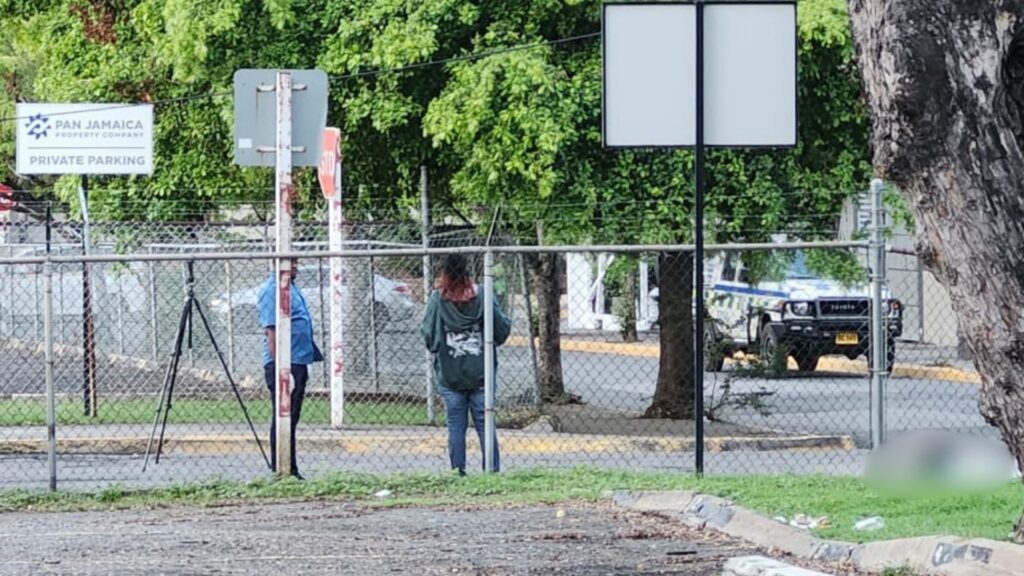
    In the pre-dawn hours of Thursday, a fatal shooting took the life of an unidentified man in the busy district of New Kingston, Kingston, local law enforcement has officially confirmed. According to initial law enforcement dispatches, the violent incident unfolded at approximately 3:30 a.m. at the busy intersection connecting Grenada Crescent and Trinidad Terrace, a central area within Jamaica’s capital. As of the latest update from the Jamaica Constabulary Force, investigators have not yet released the identity of the deceased, as officers continue working to notify next of kin and confirm personal details. At this early stage of the probe, critical context surrounding the shooting — including potential motives, whether the killing was targeted, if any suspects have been taken into custody, and what led to the altercation — remains unconfirmed, with law enforcement yet to piece together a full timeline of events. Local authorities have not announced any additional updates related to the investigation as of press time, and further details are expected to be released to the public as the inquiry progresses. Community members in the New Kingston area have been notified of the incident, and patrols have been increased in the neighborhood while the investigation continues.

  • Countdown to the 27th staging of the Jamaica Observer Table Talk Food Awards

    Countdown to the 27th staging of the Jamaica Observer Table Talk Food Awards

    Nestled on 2.8 acres of prime real estate at 67 Constant Spring Road, Kingston 10, St Andrew, Jamaica’s Marketplace has reigned as the island’s most unrivaled culinary destination for two decades. Founded by the late business visionary Derrick Mahfood as Kingston’s first dedicated culinary cluster, this centrally located hub is easily accessible from two of the capital’s busiest corridors — Constant Spring Road and Red Hills Road — drawing both local diners and international travelers to its curated lineup of 11 independent restaurants, one small bar, two specialty retail stores, and a CB Foods-run fresh meat supermarket.

    As part of the 2026 Jamaica Observer Table Talk Food Awards, judge Kadean Vendryes has launched a review series exploring Marketplace’s standout establishments, kicking off the collection with one of the complex’s most famous tenants: Usain Bolt’s Tracks & Records, which is marking its 15th year of operation in 2025.

    The eatery’s origin story traces back 15 years, when Jamaican sprint legend Dr Usain Bolt, OJ, partnered with the KLE Group to bring their shared vision for a sports-focused Caribbean dining experience to life. In a recent celebratory Instagram post marking the milestone, KLE Group chairman David Shirley reflected on the brand’s decades-long journey, highlighting the resilience that carried the business through unprecedented challenges. “Fifteen years later we’re still standing here. It just shows you with vision, opportunity, and working together what you can create,” Shirley wrote. He went on to note the obstacles the team overcame, particularly the uncertainty of the COVID-19 pandemic, when many advised closing the location permanently. Echoing Bolt’s iconic competitive grit, Shirley recalled his response: “I said no, we have to fight, just like how Usain fight when people say give it up, yuh nah go be the greatest!” Closing out his post, he reaffirmed the brand’s commitment to its Jamaican roots: “So we think, we nah give up! So Jamaica first and we just gwaan build what we have to build right! Happy Anniversary, 15 years Tracks and Records! Jamaica to di world every time! Bless Up.”

    Tracks & Records has earned its reputation as one of Kingston’s most in-demand dining spots for a wide range of diners, from sports fans to food lovers seeking authentic Caribbean flavor. The menu centers on bold, traditional dishes including jerk chicken and jerk pork, alongside signature creations like Bolt-inspired gourmet burgers. Beyond the menu, the space offers a dedicated sports bar celebrating the eight-time Olympic gold medalist’s unprecedented career, a comfortable lounge outfitted with high-definition screens for watching live events, an on-site gift shop carrying exclusive branded merchandise, and a birthday club that offers members special discounts. Diners can visit seven days a week, with hours extending from 11:30 a.m. to midnight to accommodate late-night meals and gatherings.

    For her first on-site review, Vendryes dropped in for a late dessert around 10:30 p.m. on Saturday, April 18, taking advantage of the eatery’s extended closing time. She was greeted immediately by a warm, friendly hostess who escorted her to an upper-level seat and notified server Shanika Williams of her arrival. Williams arrived promptly, delivered attentive, thoughtful service, and brought out Vendryes’ order: the eatery’s signature Heavenly Bread Pudding Surprise. The generous serving featured warm, spice-infused bread pudding paired with cool vanilla ice cream — a portion large enough to share between multiple diners. After savoring the rich, aromatic blend of mixed spices, Vendryes boxed the remaining portion to go, paying a total of $1,300 plus tax for the dish.

    To mark its 15th anniversary, Tracks & Records is running special promotions for patrons, including a standout offer that gifts weekend diners complimentary bottles of rum punch at 9:58 p.m. — a nod to Bolt’s iconic 100-meter world record time. Vendryes plans to return in the near future to sample a full meal, including an appetizer and main course, and participate in the anniversary promotions, noting she hopes to take home one of the celebration’s giveaway prizes.

    For those interested in visiting or ordering from Usain Bolt’s Tracks & Records, more information is available via the brand’s website (www.tracksandrecords.com), Instagram (@ubtandr), and TikTok (@ubtandr). Online orders can be placed through https://webmenu.visueats.com/124, and reservations or inquiries can be made by phone at 876-906-3903 or 876-926-7875.