博客

  • Ambassador Calls for Revival of Workers’ Voice as Digital Labour News Platform

    Ambassador Calls for Revival of Workers’ Voice as Digital Labour News Platform

    At the 87th Annual Delegates’ Conference of the Antigua Trades and Labour Union, Ambassador Dr. Clarence E. Pilgrim has put forward a compelling call to bring back a cornerstone of the country’s labor movement: the iconic *Workers’ Voice* publication, reimagined for today’s digital age.

    In his keynote feature address to assembled union delegates, Pilgrim walked attendees through the deep historical legacy of the original *Workers’ Voice*, emphasizing that its impact stretched far beyond simply updating members on internal union business. For decades, the publication filled a critical gap in public access to relevant information, served as a free educational resource for working people, and consistently encouraged readers to engage critically with issues affecting their working lives and broader communities.

    One of the publication’s most beloved and remembered features, Pilgrim recalled, was its popular “Question Box” column. Though the column often carried a sharp, spicy satirical edge that stirred conversation, it played an indispensable role: it gave voice to the questions that countless working people were already asking privately, but had few public spaces to raise openly.

    Pilgrim also shared a vivid anecdote of the publication’s grassroots roots, recalling how early activists including Ms. Shervington and her closest friend dedicated countless hours to distributing *Workers’ Voice* door-to-door across communities on foot, building a loyal readership one copy at a time.

    While the original print publication has long been absent from the national labor landscape, Pilgrim argues that the core need it filled remains as urgent today as it was decades ago. “The technology has changed. The need for a workers’ voice has not,” he told delegates.

    Under his proposal, the revived *Workers’ Voice* would not be a return to the print model of the past, but a fully modern digital platform tailored to 21st century workers’ needs. Pilgrim outlined a broad range of content for the new outlet, including up-to-date labor news, interactive workplace education modules, accessible financial literacy resources, evidence-based occupational health guidance, deep dives into labor history, original podcasts, and curated commentary from working people across Antigua and Barbuda. He also added that the iconic “Question Box” could be reintroduced as a popular interactive feature for the digital iteration, adapting its core mission to modern social media and digital engagement tools.

    The push to revive *Workers’ Voice* is not an isolated proposal, but rather a central part of Pilgrim’s broader vision for the evolution of modern trade unionism. He argued that today’s unions must move beyond their traditional core role of defending workers in employment disputes and workplace conflicts. To remain relevant and serve their members effectively, Pilgrim said, unions must take an active role in supporting workers’ holistic development across five key areas: economic, technological, social, intellectual, and civic. For Pilgrim, the mission of a 21st century union is clear: it should “not only defend the worker at work” but also “help develop the worker for life.”

  • Column: Goudroof onder het oog van de overheid

    Column: Goudroof onder het oog van de overheid

    Suriname sits on vast untapped gold reserves, but what the nation lacks is any meaningful oversight of its gold mining industry. What unfolds across large swathes of the country’s interior can no longer be dismissed as a handful of small-scale artisanal prospectors testing their luck with basic tools. Today, illegal mining operates as a full-fledged professional industry, utilizing heavy machinery, clearing permanent access roads, moving massive volumes of earth, and deploying toxic chemical processing agents. This level of operation requires significant capital, coordinated logistics, and structured organization — leading to one unavoidable core question: who is backing these illegal activities, and where do the billions in proceeds end up?

    Recent developments involving Rosebel Gold Mines (RGM), a project majority-owned by China’s Zijin Mining, have pushed this question to the top of the national agenda. RGM confirms it has been alerting the Surinamese government to unauthorised mining activity on two of its concession areas since January 2020. The company now estimates the illicit operation has grown into one of the largest gold mining projects in the entire country, with total damages to RGM, state oil firm Staatsolie, and the Surinamese government adding up to roughly US$138.3 million. The scale of the operation makes clear that fundamental, years-long failures in regulatory oversight and enforcement have allowed the crisis to escalate.

    This reality raises a cascade of urgent unanswered questions: How could an illegal enterprise grow to such massive size while authorities were aware of its existence? Who are the principal operators behind the mines? How many tons of gold have already been extracted from Surinamese soil? Where has that gold been smuggled or sold, and how much revenue has the national treasury lost in unpaid taxes and royalties? RGM itself has an obligation to provide full transparency to the public. If the firm can calculate a damage figure as specific as US$138.3 million, it must also explain what estimates of illicit gold production that total is based on, and how it arrived at those production numbers, given that it never granted permission for the activity to occur.

    It is long past time to abandon the fiction that political interests and the Surinamese gold sector operate in separate spheres. Vice President Ronnie Brunswijk holds verifiable large-scale financial interests in the gold industry, while simultaneously carrying political responsibility for regulating the sector as part of the sitting government tasked with bringing order to gold mining. Under that same government, the Ministry of Natural Resources has been led by ABOP party minister David Abiamofo, who has retained his position through successive administrations.

    Back in September 2020, the government established a new Commission for the Ordering of the Small-Scale Gold Sector, tasked with cracking down on illegality, addressing widespread environmental damage, and ensuring the state captured a fair share of gold revenue. Six years later, the government is once again announcing plans for sector reform — a repetition that alone demands a full, independent audit of what has actually been achieved from all the prior commissions, development projects, international donor support, training programs, and public funds poured into past reform efforts. As recently as 2022, the government confirmed it held a full master planning document for gold sector reform, complete with a concrete action plan. The public still has no clear update on what progress has been made on that framework today.

    President Jennifer Simons has publicly acknowledged that all prior sector regulation systems have failed. In response, her administration has temporarily suspended the issuance, renewal, and transfer of new mining concessions and announced it will adopt a completely new regulatory approach. This is a necessary first step, but the government now must follow through on its promises with tangible action, without exception for powerful or well-connected figures. That means launching full investigations into the overlapping political and business interests that shape the sector, targeting not just the low-level workers operating excavators, but also permit holders, concession owners, financial backers, gold buyers, and export actors. It also means uncovering who knew about the illegal operations and which public officials had a duty to intervene but failed to act.

    The environmental harm caused by unregulated mining can no longer be treated as an afterthought, either. RGM has confirmed that testing found traces of cyanide at the illegal mining sites, and for years public health and environmental advocates have raised unanswered questions about the use of Jin Chan mercury-based gold processing products. A 2018 research report by Glenn Geerlings and Tirzah Karsowidjojo focused specifically on Jin Chan use in Suriname, and that full document must be made public and subjected to independent review. The public deserves to know exactly what the research found, what its formal conclusions were, and how those findings were used (or ignored) by regulators.

    Veteran environmental activist Erlan Sleur has been sounding the alarm on these issues for years. His recent visit to the Pelin Bergi mining area, alongside DNA party parliamentarians Rabin Parmessar and Michael Marengo and independent journalists, has reignited public scrutiny of large-scale unregulated mining and the suspected illegal use of toxic chemicals. The parliamentary delegation has already called for an immediate halt to activity at the site and an independent public investigation, and this momentum for accountability must not be lost.

    The path forward is clear: authorities must launch full investigations into all mining concessions, audit all active permits, identify the true beneficial owners of all mining operations, map the full volume of gold production and cross-border financial flows, and test for illegal toxic chemical use. Where it is confirmed that gold has been extracted illegally and revenue has been withheld from the state, the government must move quickly to recover all lost funds.

    At its core, this crisis is about control of a national resource: the gold extracted from Suriname’s soil belongs to the Surinamese people. Its wealth should be used to advance inclusive national development, not disappear into a system that enriches a small connected elite while leaving the general public to cope with toxic environmental pollution and billions in lost public revenue. True sector reform is not just about creating another new bureaucratic commission. It means finally answering the critical questions: who is mining Suriname’s gold, who is profiting from it, who looked the other way for years, and who will be held accountable for the harm done. Where the state has been robbed of revenue, that money must be returned. Where the environment has been damaged, those responsible must pay for full remediation. Where laws have been broken, law enforcement must act without favor.

    Suriname cannot afford to accept yet another half-hearted attempt at “reform” while tons of national gold disappear and the public is left holding the bill for the damage. The gold is in our ground, the harm stays in our country, so the profits cannot be allowed to vanish into the pockets of a tiny few. The era of looking the other way must end now.

  • Markets designed for the neighborhood

    Markets designed for the neighborhood

    # Cuba Rolls Out Pilot Neighborhood Market Initiative to Ease Cost-of-Living Pressures

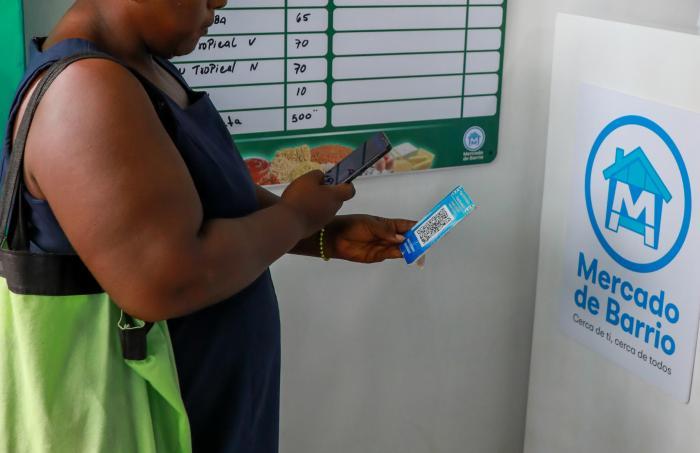
    As Cuba advances sweeping economic and social transformations, a new pilot program aimed at reducing household expenses has moved from policy drafting to on-the-ground implementation, with 37 neighborhood markets already up and running across nine of the country’s provinces.

    The concept behind the initiative is straightforward yet targeted: repurpose underused or vacant state-owned commercial spaces to bring essential goods closer to residential communities, with targeted incentives designed to cut retail prices by roughly 15 percent compared to other market segments. For Cuban residents grappling with stagnant state salaries and high living costs, even this modest reduction offers a small but tangible reprieve.

    One of the earliest converts to the model is Ariel González Vega, who operates the La Sirenita market in Havana’s La Lisa municipality. Since 2024, González has held a lease for the corner lot on 23a Street, where he built a steady customer base after converting the former multi-goods store into a neighborhood shopping stop. On August 13, he joined the pilot program, rebranding his business as an official neighborhood market.

    Like other participating merchants, González receives significant tax and cost breaks to keep prices low: he is exempt from the 10 percent wholesale sales tax and 5 percent retail sales tax for priority goods, and pays no rent on his state-owned premises for a two-to-three-year period. In exchange, he sells essential items including rice, meat, cooking oil, and detergent at the mandated discounted rates. His business model has shifted to compensate: while profit margins per item are narrower, higher sales volume keeps his operation viable.

    “I face the same challenges as everyone else – sourcing consistent stock, managing cash flow, and dealing with daily power outages that cut into operating hours,” González explained in an interview on-site. “But this is my neighborhood, and this is a service people here really need.”

    That commitment extends beyond just selling goods. La Sirenita also supports the local community’s Family Care System dining hall and helps nearly 20 local residents process their pension payments on-site, forging deep ties between the shop and the neighborhood it serves.

    For shoppers like 70-year-old Ramón, the discounted market fills a critical gap. While he notes that prices still remain out of reach for many state workers and retirees on fixed incomes, he still chooses La Sirenita for most of his weekly shopping. “Products are cheaper here, and at least I can find what I need and save a few pesos,” he said, securing his purchases to his well-worn bicycle.

    This small, local success story is one of dozens currently operating across the country, in provinces ranging from Pinar del Río in the west to Guantánamo in the east. Marpessa Portal de Villiers, Director General of Merchandise Sales at Cuba’s Ministry of Domestic Trade (Mincin), told *Granma* that locations for the new network were selected based on a set of clear criteria, including existing facility condition, population density, and local community needs. Existing commercial spaces – including underused grocery stores, public markets, and butcher shops – were prioritized to leverage already built infrastructure.

    Only priority goods – a list that includes staple foods, hygiene products, and household cleaning supplies – qualify for the tax incentives; merchants are allowed to sell additional non-priority items to meet local demand, but those do not receive the same cost breaks. All sales are required to be conducted in Cuban pesos, with electronic payment options mandatory, and participating markets are encouraged to add extra services like delivery and pre-packaged goods to improve the customer experience.

    Even with early momentum, program leaders acknowledge that significant challenges remain. Stable, consistent product supply is the most pressing hurdle to long-term success. Mincin officials have noted that early pilot sites have faced issues including incomplete contracts that fail to outline clear resupply rules, locations that lack most of the planned priority products, and poor in-store merchandise organization.

    To address supply gaps, the program is planning to draw on multiple sources: domestic Cuban production of staple goods, and new wholesale markets set to launch in multiple provinces in the coming months. The model also allows for non-state economic entities to participate in both supply and operations, either independently or in partnership with other actors. Importantly, all premises remain state property; operators only lease or purchase existing assets based on their needs, and existing employees at selected locations get priority to stay on, either as staff or as the non-state operators of the site.

    Because of these unresolved challenges, the Cuban government is not rushing a nationwide rollout. Expansion of the network will proceed gradually, with new locations added only after suitable local spaces are identified, a competitive tender process is completed, and contracts with reliable operators are finalized.

    Beyond just lowering prices, the initiative carries an explicit social mandate. Participating markets are required to set aside controlled allocations of key products for vulnerable groups including pregnant people, children, and elderly residents. All outlets are also held to strict regulatory standards covering pricing accuracy, food safety, product origin, and payment transparency, with violations handled under existing commercial penalty frameworks.

    In essence, the neighborhood market pilot is designed to test whether repurposing existing infrastructure and incentivizing independent operators can deliver meaningful relief to Cuban households. As officials note, the success of the program will not be measured by how many new locations open, but by the daily experience of the shoppers who use them: whether they can consistently find the goods they need at prices that actually save them money.

    For the residents queuing outside La Sireneta every morning at 8 a.m., that success can already be felt in small ways. The larger challenge ahead will be scaling that local success into a sustained national model that delivers on its promise of tangible economic relief for working and retired Cubans across the country.


  • Nieuwe rechters moeten werkdruk rechterlijke macht verlichten

    Nieuwe rechters moeten werkdruk rechterlijke macht verlichten

    On September 29, the Court of Justice of Suriname welcomed 15 newly trained judges in a formal swearing-in ceremony led by President Jennifer Simons, marking one of the largest single expansions of the country’s judicial bench in recent history. Court President Iwan Rasoelbaks described the addition as a landmark step to strengthen the nation’s judiciary, bringing the total number of sitting judges at the court to 45. The new appointees will be formally installed as substitute members on October 23, and will begin handling civil and criminal cases from the courtroom bench as scheduled starting in the new judicial term that opens on October 1.

  • PM Friday to testify in court Tuesday; Canadian citizenship trial continues (+video)

    PM Friday to testify in court Tuesday; Canadian citizenship trial continues (+video)

    A landmark constitutional trial over parliamentary eligibility for dual citizens in Saint Vincent and the Grenadines (SVG) reached a key milestone on September 28, with Prime Minister Godwin Friday poised to take the witness stand the following morning to present his testimony and respond to cross-examination from the petitioners’ legal team.

    The day’s proceedings at the Kingstown High Court brought a critical virtual appearance from 40-year-veteran Canadian legal expert Joel Goberman, who joined the hearing from Italy to walk the court through the legal framework, procedural requirements, and core meaning of the Canadian citizenship oath. The consolidated high-stakes trial revolves around Section 26(1)(a) of SVG’s constitution, which addresses how dual nationality impacts a lawmaker’s eligibility to hold parliamentary office. The entire day of argument unfolded as a backdrop to a personal milestone for the prime minister, who turned 67 inside the Kingstown courtroom.

    At the heart of the legal dispute is a core question: does holding dual citizenship count as an acknowledgement of allegiance to a foreign power, a status that would disqualify an individual from serving in SVG’s parliament? Goberman’s expert testimony, which came after extensive questioning over the detailed report he submitted to the court, covered everything from the administrative steps for naturalization to the legal standing of the oath of allegiance required for new Canadian citizens.

    Speaking to local outlet iWitness News after the court adjourned for the afternoon, lead defense counsel Anand Ramlogan — a former Attorney General of Trinidad and Tobago — outlined why Goberman’s testimony carries major weight for the defense. Under SVG’s election rules, candidates must hold Commonwealth citizenship to qualify for office, and Canada is a full member of the Commonwealth bloc. Ramlogan emphasized that Goberman’s evidence confirms the Canadian citizenship oath is a symbolic commitment to a system of government that aligns closely with SVG’s own constitutional framework and shared values across the Commonwealth Caribbean.

    Ramlogan also pushed back on the timing of the challenge, noting that Prime Minister Friday has never hidden his dual citizenship status throughout his decades-long career as a sitting member of parliament. The eligibility objection was never raised in prior elections, he pointed out, even as Friday served multiple terms in office. It only emerged after Friday led his party to an overwhelming electoral victory that elevated him to the prime ministership. Ramlogan argued the challenge is a politically motivated push led by the opposition, framed as a legal objection, calling the timing surprising after years of public knowledge about Friday’s dual citizenship.

    The defense lead also marked the occasion of Friday’s birthday, publicly extending well wishes and praising the prime minister for choosing to spend the day observing court proceedings rather than celebrating, a move Ramlogan called the ultimate demonstration of commitment to SVG’s constitution and the rule of law.

    For his part, Prime Minister Friday told reporters that while the constitutional challenge has dragged on longer than many expected, his legal team has remained fully prepared. He noted proceedings wrapped up earlier than forecast on September 28, leaving him a small window of time to mark his birthday, and pushed back on claims from the petitioners’ side that the defense was growing anxious as cross-examination intensified.

    “We are confident about our case, we have been from the very start, and this trial is proceeding exactly as we expected it would,” Friday said, adding that his team respects the court’s process and any final ruling the court may issue.

    The legal challenge itself dates back to SVG’s November 2020 general election, where defeated candidates from the incumbent Unity Labour Party (ULP) filed election petitions challenging the victory of New Democratic Party (NDP) candidates in two constituencies: East Kingstown and the Northern Grenadines. The petitions ask the court to remove the elected NDP lawmakers from office entirely on the grounds of their dual citizenship status.

    The legal teams on both sides bring together senior regional and local counsel: Stuart Young, SC, leads the legal team for petitioners Carlos Williams and Luke Browne, alongside local attorney Kay Bacchus-Baptiste. For the defense, Anand Ramlogan, SC, leads the team representing Prime Minister Friday and MP Fitzgerald Bramble, with support from local attorneys Shirlan “Zita” Barnwell, Zhinga Horne-Edwards, Samantha Robertson, and Gabrielle Myers.

    When the trial resumes on the morning of September 29, Friday will take the stand to open the defense’s full case, and will face cross-examination from the petitioners’ legal team. Another expert witness is also scheduled to appear on the same day, and the landmark constitutional trial is set to continue.

  • Suriname en Mexico zoeken nauwere samenwerking in olie, handel en opleidingen

    Suriname en Mexico zoeken nauwere samenwerking in olie, handel en opleidingen

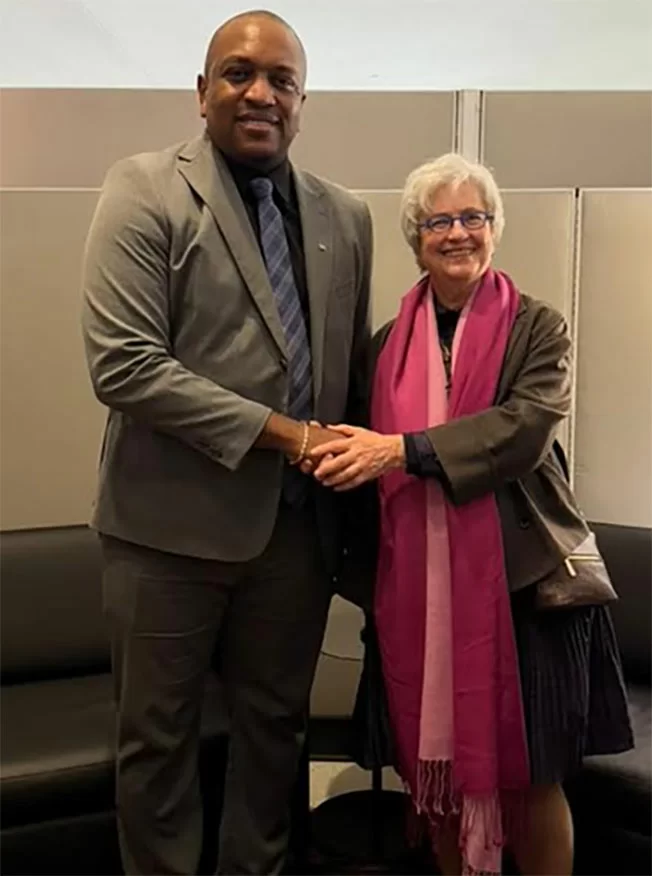
    On the margins of the 81st United Nations General Assembly in New York, senior diplomatic representatives from Suriname and Mexico held a working meeting on September 24 to discuss avenues for deepening bilateral collaboration across multiple key sectors.

    The meeting, which served as an introductory engagement for the two officials, brought together Suriname’s Minister of Foreign Affairs, International Trade and Cooperation Melvin Bouva, and Mexico’s Deputy Minister for Latin America and the Caribbean Raquel Serur Smeke. The core focus of the discussion was advancing the strengthening of long-term ties between the two nations.

    During the talks, Minister Bouva outlined ongoing preparations to expand Suriname’s rapidly developing oil and gas sector. He noted that the South American nation currently requires targeted support in three critical areas to advance this work: skills training, technical expertise, and infrastructure development. Bouva emphasized that knowledge sharing between the two countries, paired with the potential deployment of Mexican industry experts, would make a meaningful contribution to Suriname’s energy sector development.

    As part of the push for deeper energy cooperation, Mexico has received a formal invitation to participate in the 2027 Suriname Energy, Oil & Gas Summit. Beyond energy, the two officials also explored opportunities to improve air and maritime transport connectivity between Suriname and Mexico, which would support expanded trade and people-to-people ties. Another topic on the meeting agenda was fostering partnership and knowledge exchange between the two countries’ diplomatic training academies.

    Deputy Minister Serur also shared that Mexico is keen to organize an official meeting with the Caribbean Community (CARICOM) to strengthen its broader relations with the Caribbean region. Minister Bouva expressed Suriname’s appreciation for Mexico’s existing collaborative work across the Caribbean, highlighting its ongoing support in disaster preparedness, climate action, and skills training programs. Following the productive New York meeting, both sides have committed to continuing discussions to turn the explored cooperation opportunities into concrete joint projects.

  • Teen granted bail after constitutional challenge to Bail Act

    Teen granted bail after constitutional challenge to Bail Act

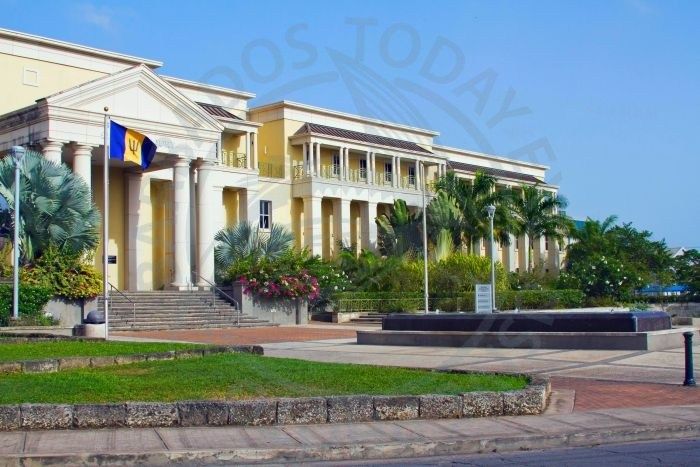
    In a landmark ruling that questions a key provision of Barbados’ newly amended Bail Act, the High Court has ordered the immediate release on bail of a 16-year-old boy who had been held in adult remand prison at Dodds on firearm charges since December 2024. The case, centered on a constitutional challenge to the law’s vague “exceptional circumstances” requirement for bail in gun-related cases, has reignited debates over the balance between public safety and fundamental constitutional rights for accused persons.

    Within minutes of Justice Bryan Weekes delivering his bail ruling on Monday, the minor was reunited with his waiting parents, who were present throughout the court proceedings. Speaking with local outlet Barbados TODAY, the teenager’s mother offered a brief but emotional reaction to the long-awaited release: “I feel great and elated about everything. I feel good; that is all.”

    Through his legal representation led by attorney Lalu Hanuman, the 16-year-old — who has formally pleaded not guilty to the firearm charges against him — argues that the Bail Act’s requirement for “exceptional circumstances” before bail can be granted in gun offences is unconstitutional. The law, Hanuman stresses, fails to provide any clear definition of what qualifies as “exceptional circumstances”, effectively creating an insurmountable barrier that leaves accused people in pre-trial detention indefinitely, even before they have been proven guilty of any crime.

    Hanuman explained that five separate bail hearings had already been held for his client, presided over by Justice Laurie Ann Smith-Bovell. In each instance, the court was bound by Section 6(10) of the amended Bail Act, which mandates that “exceptional circumstances” must be demonstrated to grant bail to anyone charged with a firearms offence. “The new act does not define what constitutes exceptional circumstances, leaving persons on remand, in effect, permanently deprived of their liberty even though they haven’t been found guilty,” Hanuman told the court.

    Justice Weekes, who described the case as highly unusual, granted bail set at $75,000 with two sureties, and ordered that the teenager be released into the direct custody of his parents. The government, represented by Deputy Solicitor-General Marsha Lougheed, had already agreed to the bail amount, though it initially requested only one surety. The judge accepted all additional bail conditions proposed by the State, which include: requiring the minor to reside at an approved location; imposing a daily 6 a.m. to 6 p.m. curfew; requiring him to surrender all valid travel documents; and mandating that he check in at the District ‘B’ Police Station three times a week between 9 a.m. and 10 a.m. In approving the conditions, Justice Weekes emphasized that the teen must always be accompanied by one of his parents, given that he is still a minor. Hanuman confirmed he had no objections to any of the court’s imposed conditions.

    Early in the proceedings, Justice Weekes raised significant concerns about the fact that the minor was being held in an adult remand facility rather than the Government Industrial School, the designated youth detention center located just hundreds of meters from the Dodds Prison complex. Responding to this criticism, Lougheed explained that the youth facility lacks the capacity and specialized infrastructure to hold the boy. She added that the teen is housed in a dedicated single cell at Dodds Prison, with no cellmate, and maintained that the State’s repeated refusal to grant bail prior to the constitutional challenge was rooted in concerns for the minor’s own safety.

    The judge also voiced sharp criticism of the delayed disclosure of evidence in the case, noting that nearly a year has passed since the teen was first taken into remand, yet his legal team still has not been formally informed of the full nature of the evidence against their client. Justice Weekes called this delay “unacceptable”, and confirmed that no trial date has yet been set for the teenager.

    Beyond the immediate bail application, the 16-year-old has launched a formal constitutional challenge against the legislation, naming the Attorney General of Barbados as the sole defendant. In his statement of claim, he alleges that the State has violated his right to personal liberty enshrined in Section 13 of the Barbados Constitution’s Bill of Rights. He notes that he has provided a formal alibi for the allegations against him, but still remained behind bars after five bail attempts solely due to the new law’s undefined requirement.

    The claim argues that the lack of a clear definition for “exceptional circumstances” creates what it terms an effective “glass barrier” to bail for anyone charged with a firearms offense. The claimant’s legal team stresses that any denial of bail is not the fault of sitting judges, who have made good-faith efforts to interpret both the letter and spirit of the new law, but that the undefined prerequisite itself violates Sections 13(2) and 13(3) of the national constitution.

    In his argument to the court, Hanuman pointed to alternative approaches used in other jurisdictions to address public safety concerns around bail for serious offenses. Many regions, he noted, have implemented electronic ankle monitoring to track the movements of accused persons granted bail, a system that was successfully deployed in Barbados itself to manage international visitors during the COVID-19 pandemic. The teen’s legal team is asking the court to formally rule that the undefined “exceptional circumstances” requirement in the 2024 Bail Act violates Section 13 of the constitution, and to award vindicatory damages for the violation of his fundamental rights.

    Section 13 of the Barbados Constitution’s Bill of Rights, which forms part of the country’s supreme law, enshrines core protections for anyone arrested or detained. The clause requires that detained people must be promptly informed of the reason for their detention in a language they can understand, must be granted immediate access to a private consultation with a legal representative of their choice at their own expense, and must be allowed reasonable opportunity to communicate with a parent or guardian if they are under the age of 16. It also mandates that anyone detained on suspicion of a criminal offense who is not released must be brought before a court as quickly as is reasonably practical, and that if a trial does not proceed within a reasonable timeframe, the accused must be released either unconditionally or on reasonable bail conditions that guarantee their appearance at a future trial, without prejudicing ongoing proceedings.

    The case has been adjourned, with a new court date to be scheduled in the coming weeks. Lougheed continues to represent the Attorney General as the case proceeds.

  • Nine-year-old in medically induced coma after apartment blaze

    Nine-year-old in medically induced coma after apartment blaze

    A young Barbadian child remains in critical condition, fighting for survival in a medically induced coma, after a devastating early-morning apartment fire in the Maynards area of St Peter left his family displaced and prompted public safety officials to renew urgent warnings about common household electrical hazards.

    The emergency unfolded just before 4 a.m. on Sunday, when the Barbados Fire Service received a distressing emergency call reporting an active blaze at a 10-unit residential housing complex. Two water tankers and a team of trained firefighters were immediately dispatched to the scene, where crews arrived to find one ground-floor apartment fully engulfed in intense flames.

    In a chaotic race against time, local community members acted before emergency crews could reach the trapped nine-year-old, pulling the child from the burning unit after he suffered severe smoke inhalation. The boy was rushed straight to a nearby hospital for urgent treatment. Divisional Commander Patrick Edwards, speaking to local outlet Barbados TODAY, confirmed the details of the initial rescue.

    Neighbor Donna O’Neil, who lives in the adjacent unit, described the terrifying moment she was woken to the crisis. “My sister was saying, ‘Get up, it is a fire.’ I saw fire and I thought she meant outside, but she said: ‘No, the apartment next door is burning,’” O’Neil recalled. She told reporters of a loud explosion that shook the complex, as neighbors scrambled to evacuate and coordinate efforts to reach the trapped child. “I heard something say ‘boom’. The neighbours from below came and tried to help get the little boy out of the bedroom,” she said. “I had to run back up, put on clothes, and try to get my mom and my daughter down. That was the only thing I was worrying about. We had to run out and leave everything in the house.”

    By Monday, updated reports confirmed medical teams had placed the young boy in a medically induced coma after he was unable to breathe independently. The boy’s mother also required emergency hospital care after suffering heavy smoke inhalation while rushing into the burning unit to rescue her son. O’Neil confirmed the mother was placed on oxygen to treat her smoke exposure, and both mother and child remained in care as of Monday.

    Firefighters were eventually able to bring the blaze under full control, but the property suffered catastrophic structural damage. Commander Edwards explained that while the upper level of the unit avoided direct flame damage, extreme heat from the fire and water damage from suppression efforts left the entire apartment completely uninhabitable.

    Officials from the National Housing Corporation quickly attended the scene to secure the damaged property, boarding up broken windows and changing locks as they work to arrange temporary alternative housing for the displaced four-person family.

    In the wake of the incident, Commander Edwards issued a public advisory urging all Barbadian residents to exercise greater caution around household electrical equipment. While he stressed that this general warning is not an official confirmation of the cause of the Maynards fire, he highlighted a growing, alarming trend of domestic fire incidents across the island linked to unsafe electrical practices.

    “I want to make public the plea of asking people to be a little bit more careful, especially when they are using electrical devices,” Edwards said. He named low-quality uncertified mobile phone chargers, overloaded electrical circuits, and substandard extension cords as the leading causes of preventable home fires across the country. Edwards expressed particular concern that many consumers prioritize low prices over certified safety standards, accidentally purchasing wiring that cannot handle the basic electrical current required by common household devices.

    “Because much of the wire is not designed to carry the load that is being demanded by that particular electrical device, this eventually poses problems,” he explained, adding that many residents amplify the risk by leaving these inadequate devices plugged in constantly, even when not in use.

    The senior fire official also noted that residential properties face far greater risk of destructive, deadly fires than commercial buildings, due to the absence of mandatory safety regulations, required fire extinguishers, and regular emergency evacuation drills in private homes. He urged the public to take simple, immediate preventative steps to reduce their risk of a similar tragedy.

    “If they can install smoke alarms, it is highly recommended that they do,” Edwards said. “This will go a long way to reducing the events that we experienced this morning.”

  • Govt, funeral homes agree emergency measures to clear burial backlog

    Govt, funeral homes agree emergency measures to clear burial backlog

    For weeks, grieving families across Barbados have faced agonizing delays in laying their loved ones to rest, trapped by a growing backlog of death documentation and bottlenecks in issuing burial and cremation warrants. But following a crisis meeting between top government officials and funeral industry leaders, emergency interventions are now in place to clear the backlog, with long-term structural reforms already planned to prevent a repeat of the crisis.

    On Monday morning, Minister of Legal Affairs and Criminal Justice Michael Lashley and Attorney General Wilfred Abrahams sat down with Ian Griffith, president of the Barbados Association of Funeral Directors, to address persistent delays at the Coroner’s Office that had ground the death processing system to a near halt. In post-meeting comments to Barbados TODAY, Lashley confirmed the discussions had yielded actionable solutions, with immediate work underway to resolve technical glitches and administrative backlogs.

    Lashley outlined that the agreement reached includes both immediate short-term fixes to clear the backlog and a long-term strategy led by a newly established joint working group between government and the funeral industry. The core of the immediate crisis stemmed from technology networking failures at the Coroner’s Office, which had halted digital processing of essential death documents. Lashley explained that relevant technical teams had already been engaged, with many issues expected to be resolved within 24 hours.

    To bypass the ongoing network outages at the Forde and Simmons Complex, where the Coroner’s Office is based, the government will immediately establish a designated processing hub at the Registry to handle documentation. “We would have a dedicated desk dealing with the matter. The staff member affected by the network issues will be moved over to the Registry so that we can have the documentation dealt with in a safe manner,” Lashley explained. Last week, the government already deployed manual processing systems and brought in an acting coroner to work through the pile of pending documents, a step that Lashley says demonstrates the full commitment of his office and the Attorney General to ending the delays as quickly as possible.

    For funeral directors across the island, the government’s intervention comes after weeks of growing frustration. While official data on the size of the backlog has not been released, industry leaders confirm the delays have affected nearly all funeral homes, with some families waiting weeks for the required documentation to hold a service, and at least one or two services forced to be postponed entirely.

    Griffith, speaking for the association, says he is optimistic that the new measures will bring immediate relief to families waiting to bury their loved ones, and will put systems in place to stop this crisis from happening again. “I believe that we should start to see some relative ease,” he said. “As long as what came up in the meeting is put in place, we should have some signs of ease, and going forward for the future, there should be further developments so that we are not back in this position.”

    But Griffith also stressed that the recent technical glitches exposed far deeper, long-standing systemic flaws in Barbados’ system for handling deaths and processing remains. He called for updated operational protocols across the entire process, from the moment a person dies at home or in a medical facility through to the transfer of remains to a funeral home, and ultimately to burial or cremation.

    Most critically, the funeral industry is pushing for comprehensive legislative reform, noting that current laws governing death processing are decades out of date. Griffith explained that the goal is to completely revamp the entire process to make it more efficient and resilient to future disruptions. “It is hoped that eventually we can see changes to the legislation, because it has been there for quite a number of years and is actually very outdated,” he said. “We are looking to revamp the whole process and make it more efficient so that going forward we wouldn’t have such issues.”

    In the coming weeks, the newly formed joint working group between government and the funeral industry will begin its work, reviewing broader legislative changes and developing permanent, updated operational protocols to modernize Barbados’ death handling system for the long term.

  • Elite Basketball Player Shot Dead Near Antelope Extension

    Elite Basketball Player Shot Dead Near Antelope Extension

    On a Sunday night in late September 2026, a promising young sporting talent in Belize was killed in a targeted shooting that has left the nation’s tight-knit basketball community and the victim’s family engulfed in grief. Twenty-five-year-old Antonio Flowers, a celebrated elite player hailing from Dangriga, was ambushed from behind while walking on a side street near Antelope Street Extension in Belize City. According to official law enforcement details, an unidentified male assailant wearing a black shirt and a face covering followed Flowers before opening fire at close range, striking the athlete multiple times. Though Flowers attempted to flee the attack, he collapsed on the street nearby and succumbed to his injuries before medical personnel could save him.

    Authorities have launched a full investigation into the fatal shooting, working to identify the attacker and uncover the motive behind the killing. ACP Hilberto Romero, head of Belize’s National Crimes Investigation Branch, confirmed that law enforcement is currently reviewing all surveillance footage captured by cameras in the Antelope Extension area to generate leads and identify the suspect. As of the latest update, no suspects have been taken into custody, and no clear motive has been publicly confirmed.

    The victim’s mother, Tanya Lobo, recalled the devastating moment she received news of her son’s death. She was at home when her younger daughter called with the alert, urging her to rush to the shooting site. By the time Lobo arrived, crowds had already gathered, and witnesses confirmed Flowers had been shot. Lobo was later called to identify her son’s body after police confirmed he had died from his injuries.

    Beyond his athletic talent, Flowers is remembered by his community as a warm, joyful presence that lifted up everyone around him. As an Independence Day baby born September 21, Flowers grew up known for his playful sense of humor and ability to make any gathering lighter. Carolyn Jang, an executive member of the Griga Dream Ballers basketball program, told reporters that Flowers was a core member of the local basketball community, serving as the team’s star sixth man who consistently stepped up off the bench to secure wins for the team. Off the court, he turned routine team workouts into fun events and made a point of motivating teammates to perform their best. “No matter what happens with the team, he was always there to motivate everyone to let them do better on game days,” Jang said. “Everybody’s just remembering him as that person who was always there to make us smile and to push us.”

    Tributes and condolence messages have flooded in from across Belize’s sporting community, with friends, opponents, and fans sharing memories of Flowers’ kindness and competitive spirit. The killing marks yet another senseless loss of life to gun violence in the country, leaving another family shattered as investigators work to deliver answers and justice.