For weeks, grieving families across Barbados have faced agonizing delays in laying their loved ones to rest, trapped by a growing backlog of death documentation and bottlenecks in issuing burial and cremation warrants. But following a crisis meeting between top government officials and funeral industry leaders, emergency interventions are now in place to clear the backlog, with long-term structural reforms already planned to prevent a repeat of the crisis.
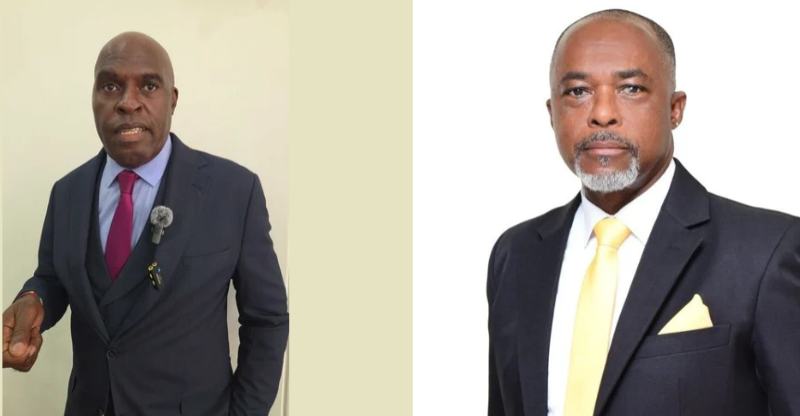
On Monday morning, Minister of Legal Affairs and Criminal Justice Michael Lashley and Attorney General Wilfred Abrahams sat down with Ian Griffith, president of the Barbados Association of Funeral Directors, to address persistent delays at the Coroner’s Office that had ground the death processing system to a near halt. In post-meeting comments to Barbados TODAY, Lashley confirmed the discussions had yielded actionable solutions, with immediate work underway to resolve technical glitches and administrative backlogs.
Lashley outlined that the agreement reached includes both immediate short-term fixes to clear the backlog and a long-term strategy led by a newly established joint working group between government and the funeral industry. The core of the immediate crisis stemmed from technology networking failures at the Coroner’s Office, which had halted digital processing of essential death documents. Lashley explained that relevant technical teams had already been engaged, with many issues expected to be resolved within 24 hours.
To bypass the ongoing network outages at the Forde and Simmons Complex, where the Coroner’s Office is based, the government will immediately establish a designated processing hub at the Registry to handle documentation. “We would have a dedicated desk dealing with the matter. The staff member affected by the network issues will be moved over to the Registry so that we can have the documentation dealt with in a safe manner,” Lashley explained. Last week, the government already deployed manual processing systems and brought in an acting coroner to work through the pile of pending documents, a step that Lashley says demonstrates the full commitment of his office and the Attorney General to ending the delays as quickly as possible.
For funeral directors across the island, the government’s intervention comes after weeks of growing frustration. While official data on the size of the backlog has not been released, industry leaders confirm the delays have affected nearly all funeral homes, with some families waiting weeks for the required documentation to hold a service, and at least one or two services forced to be postponed entirely.
Griffith, speaking for the association, says he is optimistic that the new measures will bring immediate relief to families waiting to bury their loved ones, and will put systems in place to stop this crisis from happening again. “I believe that we should start to see some relative ease,” he said. “As long as what came up in the meeting is put in place, we should have some signs of ease, and going forward for the future, there should be further developments so that we are not back in this position.”
But Griffith also stressed that the recent technical glitches exposed far deeper, long-standing systemic flaws in Barbados’ system for handling deaths and processing remains. He called for updated operational protocols across the entire process, from the moment a person dies at home or in a medical facility through to the transfer of remains to a funeral home, and ultimately to burial or cremation.
Most critically, the funeral industry is pushing for comprehensive legislative reform, noting that current laws governing death processing are decades out of date. Griffith explained that the goal is to completely revamp the entire process to make it more efficient and resilient to future disruptions. “It is hoped that eventually we can see changes to the legislation, because it has been there for quite a number of years and is actually very outdated,” he said. “We are looking to revamp the whole process and make it more efficient so that going forward we wouldn’t have such issues.”
In the coming weeks, the newly formed joint working group between government and the funeral industry will begin its work, reviewing broader legislative changes and developing permanent, updated operational protocols to modernize Barbados’ death handling system for the long term.