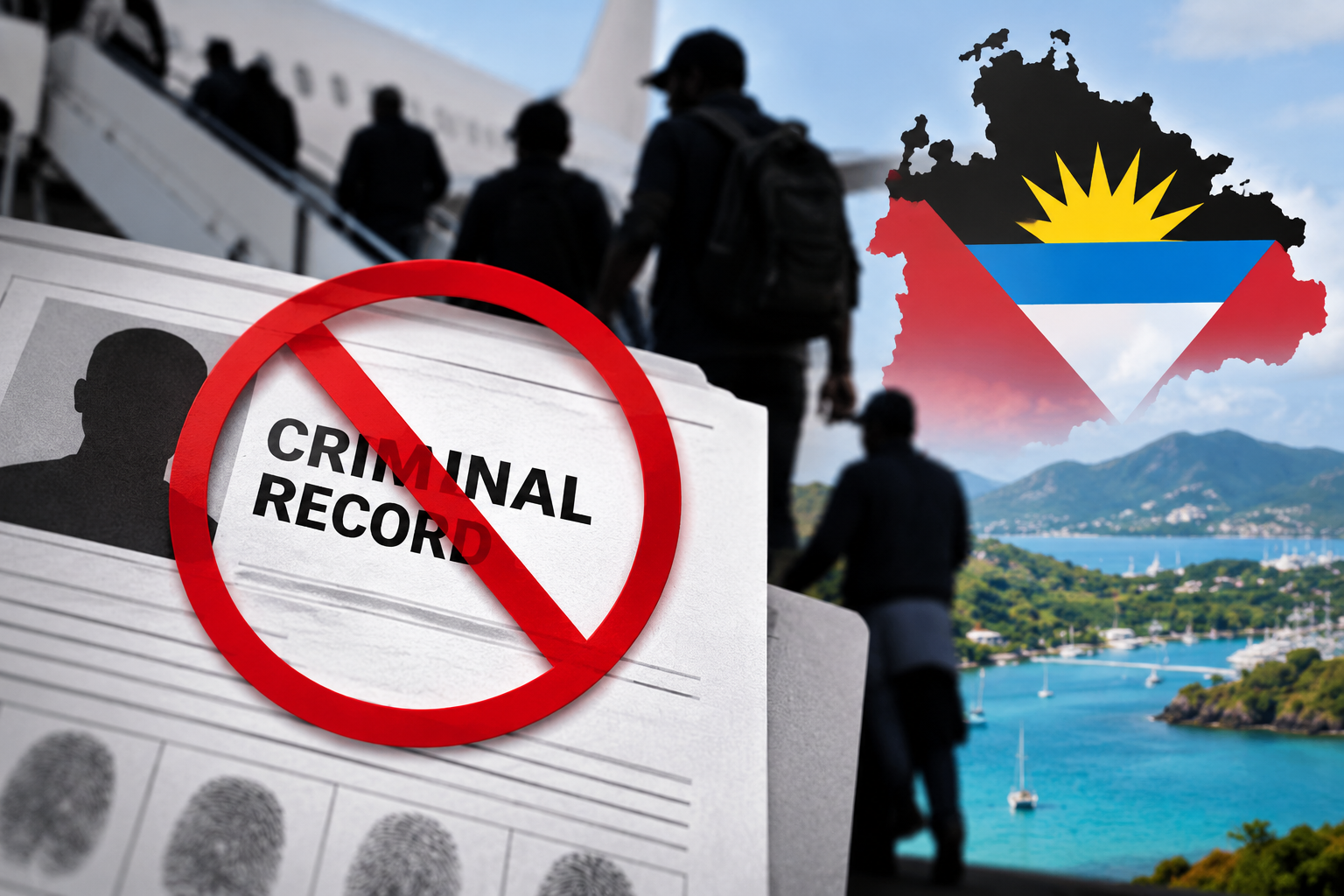
Negotiations between the United States and Antigua and Barbuda over a framework for transferring third-country nationals removed from U.S. territory are ongoing, with both sides having tabled distinct proposals outlining eligibility rules, security safeguards, and transfer limits. The U.S. draft proposal, which was made public alongside Antigua and Barbuda’s counterproposal by the Caribbean nation’s government on Sunday, includes strict eligibility guardrails that would bar most individuals with known criminal records from being transferred. The only exception to this criminal record ban would be offenses solely related to violations of U.S. immigration law. Additional categories excluded from eligibility under the U.S. plan include unaccompanied minors under the age of 18, as well as citizens and permanent nationals of Antigua and Barbuda. To qualify for potential transfer under the U.S. framework, individuals must hold final or expedited removal orders issued by U.S. authorities and hold medical clearance for travel issued by the U.S. Department of Homeland Security. Crucially, the U.S. proposal does not mandate that Antigua and Barbuda accept every individual put forward for transfer. Any candidate that does not receive formal approval from Antigua and Barbuda’s government cannot be admitted into the country and must be returned to U.S. custody. Before any transfer proceeds, U.S. officials are required to share all available background information on the individual, including biometric data, nationality details, date of birth, gender, medical screening results, and either documentation of any known criminal record or official confirmation that no criminal history is on file. The current negotiations stem from a preliminary memorandum of understanding signed by both governments in Washington back in December 2025, which laid the groundwork for talks on establishing a formal transfer process. Antigua and Barbuda has responded to the U.S. proposal with a counterproposal that adds multiple layers of additional safeguards to protect the nation’s sovereignty and reduce potential burdens. Key demands in the Caribbean nation’s counterproposal include requiring explicit, prior written approval from Antigua and Barbuda for every individual proposed for transfer, more robust criminal and national security screenings, additional health and immigration background checks, requirements for valid travel documentation, and formal confirmation that the individual has been notified of their destination and provided written consent to the transfer. Antigua and Barbuda’s proposal also caps the total number of transfers at seven individuals per three-month period, a limit the government emphasizes is a maximum ceiling, not an mandatory quota or obligation to accept transfers. This cap represents a notable departure from the U.S. proposal, which allows for a higher volume of transfers and permits Antigua and Barbuda to choose whether to exceed any preliminary numerical limits. Antigua and Barbuda’s government says its counterproposal is designed to preserve the nation’s sovereign right to approve or reject every transfer candidate, while ensuring that any final agreement does not place an unsustainable security, financial, or administrative strain on the country. As negotiations continue, both the U.S. proposal and Antigua and Barbuda’s counterproposal are scheduled to be presented to the nation’s House of Representatives by Attorney General and Minister of Legal Affairs Sir Steadroy Benjamin. No final agreement has been reached, and talks between the two governments are still ongoing.
博客
-

Antigua Opposition Leader Warns Attacks on Judiciary Could Bring Justice System ‘Into Chaos’
A growing political rift over judicial independence has emerged in Antigua and Barbuda, as Opposition Leader Jamale Pringle publicly cautions Prime Minister Gaston Browne against his repeated public criticism of the country’s judges and magistrates. Pringle argues that Browne’s unscripted public attacks risk eroding public trust in judicial independence and could ultimately throw the entire justice system into disarray.
The debate unfolded during parliamentary discussions of the 2026 Firearms Amendment Bill, a piece of legislation crafted to introduce harsher penalties for firearm-related offenses, amid rising public concern over gun violence and inconsistent sentencing outcomes. Browne has repeatedly spoken out against what he views as excessively lenient sentencing in high-stakes criminal cases, asserting that the judiciary is not immune to public criticism and that punishments must match the severity of the crimes committed.
However, Pringle contends that Browne’s approach is dangerously misguided. Speaking on the floor of Parliament, the opposition leader emphasized that any legitimate concerns over sentencing practices or judicial conduct should be raised through formal, established institutional channels, not via public statements or media appearances.
“The prime minister needs to adopt a more statesmanlike approach, rather than making offhand comments on public radio,” Pringle told legislators. He went on to warn that persistent public criticism from the head of the executive branch creates a perception of political pressure on judicial decision-making. Whether judges hand down harsher or more lenient sentences, their rulings will now be open to speculation about external influence from the government: if a judge issues a stricter sentence after Browne’s criticism, questions will arise over whether the decision was driven by law or political pressure, and if they maintain a lighter sentence, they will be accused of ignoring urgent public safety concerns. This “damned if you do, damned if you don’t” position for judicial officers will ultimately undermine public confidence in the entire system, Pringle argued, and could push the justice system into chaos.
Pringle added that it is entirely possible for the government to pursue stricter gun control legislation and tougher law enforcement without bypassing formal processes for addressing judicial concerns. He urged Browne to use the appropriate institutional frameworks laid out for addressing issues within the judiciary, rather than waging a public campaign that erodes the core constitutional principle of separation of powers between the executive and judicial branches.
-

St. Kitts and Nevis vs Grenada: Sugar Boyz secure 3-0 win in Concacaf Nations League 2026 match – WIC News
In the 2026/27 Concacaf Nations League Group B action on September 28, St. Kitts and Nevis’ national men’s football team, nicknamed the Sugar Boyz, delivered a dominant performance to secure a second straight tournament victory, beating Grenada 3-0 in front of a home crowd at the SKNFA Technical Centre in St. Peter’s.
Kickoff for the second group-stage fixture for both nations was scheduled for 8:00 PM local time, and the home side wasted no time asserting control over the match. Just 11 minutes after the opening whistle, forward Tiquanny Williams broke the deadlock, putting St. Kitts and Nevis ahead with a clinical finish. Williams doubled his tally and his side’s lead only six minutes later, in the 17th minute, putting Grenada on the back foot early in the contest.
From the opening to the final whistle, St. Kitts and Nevis maintained full possession and tactical dominance, leaving Grenada unable to generate consistent offensive pressure or find the back of the net. The Sugar Boyz held their 2-0 lead comfortably through the first half and the opening stretch of the second, before Williams sealed his historic performance and the match result in the 76th minute. The forward converted a penalty to complete his hat-trick, pushing the final score to 3-0.
The result marks a strong start to the tournament for St. Kitts and Nevis in League B, a division structured into four groups of four teams that uses a home-and-away round-robin format. With Monday’s win, the Sugar Boyz have picked up maximum points from their opening two fixtures, following a narrow 2-1 victory over Bonaire in their first Group C match. The six points they currently hold put them in a solid position to advance in the competition as group play continues.
Looking ahead, both teams are set for their next group fixtures on October 2. St. Kitts and Nevis will face Cuba in Port of Spain, Trinidad and Tobago, while Grenada will take on Bonaire the same day.
-

Flow Completes Every Six Gives Back Initiative with Donations to Two Local Charities
A community-focused sports-linked charity initiative has drawn to a close in Antigua and Barbuda, delivering tangible support to two local non-profit organizations after a successful run tied to the 2026 Republic Bank Caribbean Premier League (CPL).
Flow Antigua and Barbuda’s innovative Every Six Gives Back program, part of the telecom firm’s regional sponsorship of the CPL, tied charitable donations directly to on-field performance: for every six scored by the Antigua and Barbuda Falcons during their home series matches, the company committed US$50 to local good causes.
Over the course of the home leg of the tournament, the Falcons put on a powerful display of hitting, smashing a total of 33 sixes across their matches. That on-field success translated to a combined donation of US$1,650, which was split evenly between Sunshine Home for Girls, a residential care facility for young women, and St. John Hospice, a provider of palliative care for local patients and their families.
Uniquely, the two beneficiary groups were not selected by corporate leadership, but by Flow Antigua and Barbuda employees via an internal engagement campaign. The process gave team members the chance to identify local organizations already delivering meaningful, on-the-ground impact across the country’s communities, adding a personal layer of investment to the initiative.
The formal handover of the donations took place at a cheque ceremony, with leadership and representatives from both charities in attendance alongside members of the Flow Antigua and Barbuda team. Wayne Hull, Country Manager for Flow Antigua and Barbuda, emphasized the core mission driving the program in a statement at the event.
“This initiative is a reflection of our deep commitment to supporting local communities in ways that create real, lasting value,” Hull explained. “By tying the excitement and energy of CPL cricket to organizations that do life-changing work every day across Antigua and Barbuda, we were able to extend the positive impact of the tournament far beyond the boundary rope. What makes this even more special is that our own employees picked the beneficiaries, which gives every member of our team a personal connection to this work.”
Leaders of the two recipient organizations shared their gratitude for the unexpected and impactful contribution. Nicole Bailey, House Mother at Sunshine Home for Girls, said the donation would directly support the facility’s core mission of caring for vulnerable young girls in the region.
“We are sincerely thankful to Flow Antigua and Barbuda for this generous donation, and for recognizing the importance of the work we do every day,” Bailey noted. “Donations like this one allow us to keep providing high-quality care, guidance, and support to the young girls who live with us, and we are grateful to everyone who helped bring this initiative to life.”
Pauline Christopher, Administrator at St. John Hospice, echoed that sentiment, noting the donation would advance the hospice’s mission of delivering compassionate end-of-life care. “At St. John Hospice, our whole team is focused on providing compassionate palliative care to our patients and support for their families during incredibly difficult times,” Christopher said. “This donation will help us continue carrying out that critical mission, and we are so thankful to have been selected as one of this initiative’s beneficiaries.”
Launched at the opening of the 2026 CPL season, Every Six Gives Back is part of a broader regional strategy from Flow to tie the popularity of Caribbean cricket to community causes across multiple island nations. In Antigua and Barbuda, the model turned every fan celebration of a Falcons six into a small win for local community services, aligning sporting joy with public good.
Flow operates as a consumer brand under Liberty Caribbean, one of the leading communications and technology providers across the Caribbean region. Liberty Caribbean serves more than 20 markets across the Caribbean, delivering residential broadband, mobile, video, and voice services under the Flow and BTC brand names. Its business-to-business division, Liberty Business, provides enterprise-grade connectivity, cloud infrastructure, cybersecurity, and data center services to private businesses and government entities, supporting inclusive digital economic growth across the region. With a 150-year legacy operating in the Caribbean, the company remains rooted in local communities, building robust digital infrastructure and delivering tailored, locally focused support to meet regional needs.
-

Het vlees verandert…
Global meat production and consumption continue to climb year over year, but beneath this broad growth lies a dramatic, underrecognized reshuffling of the world’s protein market. A growing divergence is emerging between different livestock sectors: beef cattle are becoming increasingly scarce, driving up beef prices, while chicken production — which can scale far faster to meet shifting demand — has emerged as the primary engine of growth for the global meat industry, with pork occupying a middle ground between the two. This shift is not a traditional meat crisis that leaves grocery shelves empty, but a quiet, structural reordering that is changing what consumers around the world find on their plates. To understand the future of meat, analysts say we must look beyond consumer demand to the fundamentals of supply across the value chain: livestock herd sizes, feed and water availability, disease risk, and the biological timeline required to bring new generations of animals to market. For beef, this timeline has become a fundamental economic constraint.
The global beef market is still recovering from a period of widespread herd reduction across major producing nations. Persistent drought, sky-high production costs, and thin profit margins have pushed farmers to slaughter cattle earlier than planned, shrinking overall supply. When prices began to rise in response, a unique paradox emerged: a rancher can either sell a heifer today for a high price, or keep it to breed for future calves — and calves take years to reach slaughter weight. This means that high prices can actually make beef production less flexible in the short term, prolonging supply shortages.
The OECD and Food and Agriculture Organization (FAO) project that global beef prices will peak in real terms in 2026, before declining gradually as major producers rebuild their herds. But due to cattle’s long biological production cycle, this recovery is unfolding slowly, turning time itself into a defining economic factor. Unlike factories that can add production capacity in months or poultry producers that can ramp up output in weeks, beef ranchers cannot speed up their production timeline to match sudden shifts in demand.
Compounding tight supply is sustained demand growth from Asia, led by China, which remains a dominant force in global meat markets. The latest OECD-FAO forecast projects that China’s beef imports will grow by 500,000 tons by 2035, even as its domestic pork sector stabilizes. This ongoing demand means the already tight global beef market cannot count on a quick return to pre-shortage conditions, as China continues to compete for available supplies on global markets when domestic production lags behind demand.
At the same time, China is working to protect its own domestic beef sector: in January 2026, it imposed a 55% tariff on beef imports exceeding set quotas from major suppliers including Brazil. By June 2026, Brazil had already used 98.5% of its allotted quota, and in September, Brazil announced it would access unused Uruguayan quotas to gain extra access to the Chinese market. This development makes clear that global meat trade is increasingly shaped by trade policy, not just basic supply and demand dynamics.
To add another layer of uncertainty for the beef sector, animal disease has emerged as a new threat to global supply chains. In June 2026, the United States confirmed its first-ever domestic case of New World screwworm in cattle in Texas. The parasitic worm lays eggs in open wounds, and its larvae feed on living animal tissue, capable of causing severe economic damage to livestock herds. The impact quickly extended beyond the small number of infected animals: the U.S. initially closed all cattle border crossings with Mexico before beginning a phased reopening. By late August, the Douglas, Arizona border crossing reopened under new strict inspection and safety protocols, and as of September, restricted infection zones remain in place in Texas, with the U.S. Department of Agriculture monitoring the situation closely. The outbreak highlights just how vulnerable modern meat supply chains are: an epidemic does not need to kill millions of animals to cause widespread economic disruption. Even limited restrictions on livestock movement can disrupt regional markets, shift prices, and reshape global trade flows.
Against this backdrop of beef supply constraints, poultry has a decisive competitive advantage: speed. Unlike cattle, which require years to reach market weight, chickens mature in weeks, allowing poultry producers to adjust output much faster in response to shifting prices and demand. This advantage has made poultry the fastest growing segment of global food supplies.
According to OECD-FAO projections, global total meat consumption will grow by roughly 12% by 2035. The vast majority of this growth will come from poultry: chicken and other poultry consumption is expected to rise by 29 million tons, a roughly 20% increase, accounting for around two-thirds of all additional meat consumption over the next decade. By comparison, beef consumption is projected to grow by just 8% over the same period. This gap creates a built-in buffer for the global meat market: as beef becomes more expensive, consumers do not need to cut back on protein intake — they can simply switch to chicken. This dynamic makes the overall meat market more resilient, while permanently shifting the composition of protein consumed around the world.
Europe offers a clear preview of how this sectoral shift plays out in practice. The European Union expects total meat production to decline over the next decade, with beef and pork facing the most intense downward pressure, while poultry output expands. Multiple factors are driving this shift: high production costs, changing consumer habits, environmental policies, demographic shifts, and the simple reality that chicken is far cheaper and more efficient to produce than beef. Importantly, this shift does not mean that millions of Europeans are becoming vegetarian. Instead, diets are changing primarily because one type of meat has become relatively more expensive than another — a more powerful driver of dietary change than most public discussions of food choice acknowledge.
Despite poultry’s growing role as a buffer for global protein supplies, it is not a risk-free solution. Poultry production is heavily dependent on feed supplies, which are tied to volatile global grain and oilseed markets. Energy prices, fertilizer costs, drought, geopolitical conflict, and trade restrictions can all push up chicken prices over time. Animal disease also remains a persistent structural risk for the sector: the OECD-FAO highlights highly pathogenic avian influenza, African swine fever, and foot-and-mouth disease as ongoing threats that can disrupt production, trade, and pricing. The key difference, however, is that poultry producers can scale back up much faster after a disease outbreak than cattle ranchers, a major advantage for consumers. This speed also comes with a tradeoff: the poultry sector is far more dependent on an interconnected, large-scale system of feed supplies, livestock production, slaughterhouses, transport, and export markets, making it vulnerable to systemic disruptions across the supply chain.
This shifting dynamic has redefined the core challenge facing the global meat industry. It is no longer simply a question of whether the world can produce enough meat — it is whether the industry can deliver the right meat, quickly enough, to where it is needed. A drought in a major beef-producing region can impact meat prices for years. A single disease outbreak can close a national border within days. A rise in soy prices can eventually reach consumers through higher feed costs. An import tariff can permanently redirect a major trade route. As one sector comes under pressure, another steps in to fill the gap.
Overall, the OECD-FAO projects that global total meat production will rise by around 12% between 2026 and 2035, reaching roughly 412 million tons. This means the world will not face a broad shortage of meat, but the composition of that production will change dramatically: more poultry, relatively less beef and pork, with larger geographic shifts across producing regions. The geographic center of production is also shifting: most new demand will come from middle-income countries, while Asia will account for more than half of all new production, with Southeast Asia alone making up 39% of global growth in meat consumption by 2035.
At its core, this shift reflects a forced flexibility for the global meat industry that is here to stay. Where beef runs up against hard biological, land, and climate limits, chicken can adjust far faster to meet demand. Where Europe reduces beef and pork output, poultry can absorb much of the remaining consumer demand. Where China requires more meat imports, global trade flows reorient to meet that need. Where disease or climate disrupts production in one region, other regions expand output to fill the gap.
For consumers around the world, this means meat will remain widely available, but the type of meat on offer will continue to change. The core question for the future of the industry is not just how much meat the world can produce — it is what type of meat the world can afford, economically, environmentally, and biologically. And with that question, the next great shift in what we eat is already underway.
-
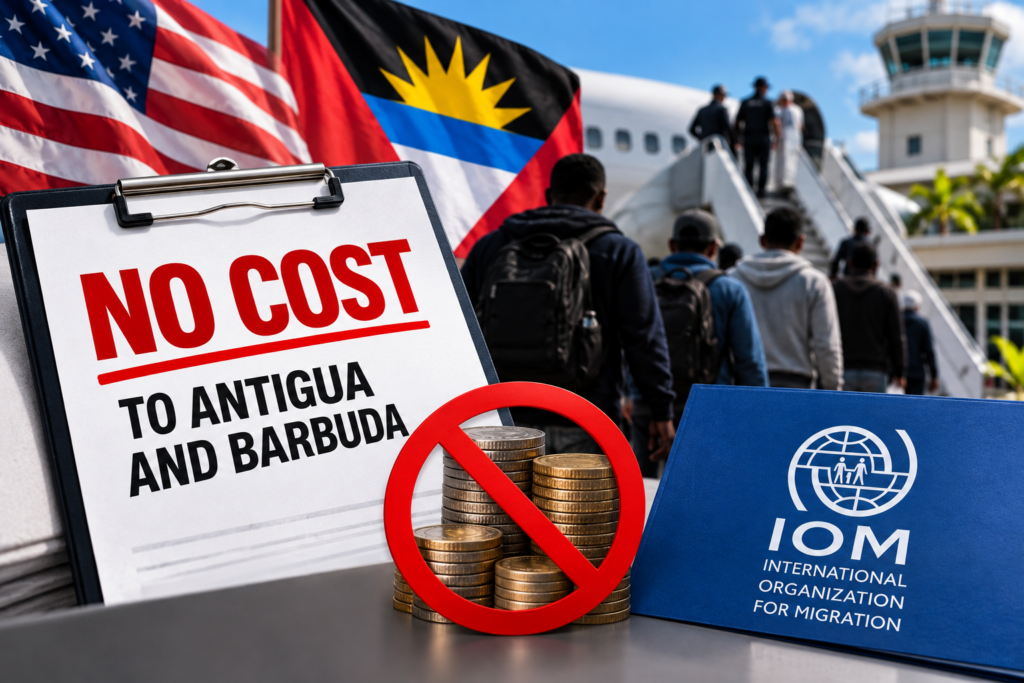
U.S. Proposal Says Services for Transferred Migrants Would Come at No Cost to Antigua and Barbuda
Negotiations between the United States and Antigua and Barbuda over a proposed framework for transferring third-country nationals removed from U.S. territory remain ongoing, with no final deal reached as both sides table differing proposals centered on financial accountability. The discussions trace back to a bilateral memorandum of understanding signed in Washington last December 2025, which laid the groundwork for potential relocation arrangements.
On Sunday, the government of Antigua and Barbuda publicly released Washington’s draft operating procedures alongside its own formal counter-proposal, bringing transparency to the closed-door negotiations. Under the U.S. draft plan, all services delivered to transferred individuals would come at no direct cost to the Antigua and Barbuda government. The U.S. proposal clarifies that the draft framework itself does not obligate financial resources from either signatory government, but notes that Washington will explore existing eligible foreign assistance funding to support the initiative, consistent with U.S. domestic laws and regulatory requirements.
The United States also plans to directly compensate a qualified international organization for delivering core services to relocated people, a structure designed to keep Antigua and Barbuda’s public finances free of associated costs. Under the proposed arrangement, Antigua and Barbuda’s primary role would be to coordinate with the contracted international organization, streamline entry for the organization’s staff, and enable on-the-ground service operations.
Notably, the U.S. draft does not outline a specific dollar amount for potential assistance nor lock in a binding formal financial commitment from the United States. In response, Antigua and Barbuda has put forward a counter-proposal that prioritizes stronger financial protections for the small Caribbean nation. The Antiguan and Barbudan government insists that all financial and operational logistics must be finalized to guarantee that costs stemming from the transfer and ongoing residence of third-country nationals do not fall on local taxpayers.
Antigua and Barbuda’s counter-proposal also suggests the International Organization for Migration could take on a supporting role, contingent on the organization agreeing to terms and negotiating mutually acceptable arrangements with the local government. The proposed arrangement would apply to a narrow subset of third-country nationals: individuals who have received final or expedited removal orders from the U.S. and hold medical clearance to travel. Exclusions from the program are clearly defined, including most individuals with criminal convictions (beyond immigration violations), unaccompanied minors under 18, and any citizens of Antigua and Barbuda.
Antigua and Barbuda’s government has emphasized repeatedly that the documents released Sunday are draft negotiating texts, not a finalized agreement. In the coming days, Attorney General and Minister of Legal Affairs Sir Steadroy Benjamin is expected to table both proposals for review by the country’s House of Representatives.
-
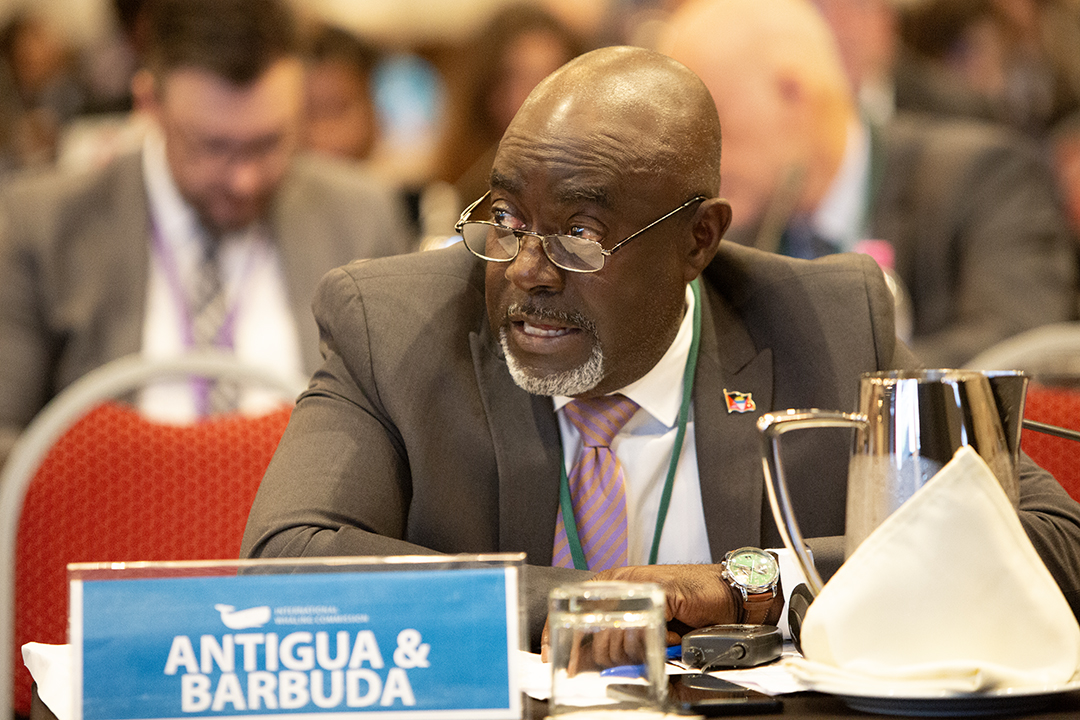
Antigua and Barbuda Warns IWC Quorum Changes Could Sideline Small Island States
As the International Whaling Commission (IWC) convenes its 70th plenary meeting in Hobart, Tasmania, to mark its 80th anniversary, a fierce debate over proposed changes to core decision-making quorum rules has emerged, with Antigua and Barbuda leading opposition over fears the reforms would marginalize vulnerable Small Island Developing States (SIDS).
The five-day meeting, which kicked off on September 28, brings together member state representatives and observer groups to tackle a wide policy agenda, from whale population surveys to new conservation and management frameworks. On the opening day, IWC leadership tabled two draft proposals to revise the body’s existing quorum requirement, which currently stands at a fixed 45 of the commission’s 88 total member states. Officials formed a cross-state drafting group to explore merging the two options into a unified proposal, but Antigua and Barbuda has already rejected both frameworks in their current forms.
The first option would redefine a quorum as a simple majority of members physically present at a meeting. Antigua and Barbuda’s IWC Commissioner Ambassador Daven Joseph argues this approach is fundamentally flawed, noting that a quorum should be tied to the commission’s full membership, not just the subset of countries that can afford to attend in-person gatherings. In the delegation’s official statement, representatives stressed: “Quorum must reflect 88, not who can afford airfare,” pointing out that SIDS regularly face crippling financial and logistical barriers to sending delegations to international meetings held far from their shores.
To illustrate the risk of this proposal, Joseph’s team laid out a hypothetical scenario: if only 50 of 88 member states attend a meeting, a majority-of-present quorum would drop to just 26 countries — less than one-third of the IWC’s full membership. That would allow a small minority of the commission to advance binding decisions, effectively disenfranchising dozens of states that cannot afford to attend. The delegation also notes that quorum must be maintained for the entire duration of the decision-making process, not just confirmed at the opening of a meeting, a safeguard missing from the first proposal. Antigua and Barbuda further draws a comparison to other global fisheries governance bodies, such as the International Commission for the Conservation of Atlantic Tunas, which ties quorum requirements to total membership rather than meeting attendance.
The second proposal under consideration would set a quorum as a majority of contracting governments that have accredited or registered a delegation ahead of the meeting. While Antigua and Barbuda acknowledges this framework is an improvement over the first option, it still carries significant flaws that make it unacceptable in its current form. Key unresolved questions include whether a country that registers a delegation online but ultimately cannot afford to send representatives in person would count toward the quorum, and whether states facing financial barriers to accreditation would be effectively excluded from quorum calculations entirely. Unlike the current fixed threshold, this proposal would create a fluctuating quorum that changes from meeting to meeting: in a scenario where only 60 member states register for a meeting, the quorum would drop to just 31, 14 members below the current requirement, the delegation calculates.
Instead of advancing either of the two current proposals, Antigua and Barbuda has put forward an alternative path forward: the establishment of a dedicated inclusive working group to re-examine the quorum issue from scratch. The Caribbean nation calls for the working group to include representatives from SIDS, coastal states, and all geographical regions, to build a consensus-backed reform that does not marginalize vulnerable nations. Antigua and Barbuda’s proposal retains the current fixed 45-member quorum threshold as a temporary safeguard, adds requirements for the IWC chair to confirm quorum is maintained before key votes on resolutions, rule changes and schedule amendments, and calls for a higher two-thirds majority threshold specifically for amendments to the IWC’s rules of procedure.
Joseph’s delegation emphasizes that all quorum reform must prioritize broad, inclusive representation rather than enabling narrow decision-making by a small subset of members. “Efficiency at 80 years must be balanced efficiency – not efficiency achieved by excluding members,” the statement reads. Antigua and Barbuda has offered to chair or co-chair the proposed working group, and is calling for the current 45-member rule to remain in place until a broadly supported reform can be agreed upon by the full membership.
-

LETTER: Demand For Fairness And Proper Treatment Of Crossing Guards
Across school districts, a group of school crossing guards has submitted an open letter to the Minister of Education, calling for urgent reforms to unfair working conditions that have been overlooked for far too long. The frontline safety workers, who protect child pedestrians at primary and secondary school crossings every school day, are pushing for two core changes: location-specific scheduling aligned to actual school hours, and a meaningful wage increase that reflects the risks and importance of their role.
Currently, all crossing guards are bound to a uniform one-size-fits-all shift schedule, requiring attendance from 7:00 a.m. to 9:15 a.m. and 1:30 p.m. to 3:30 p.m. regardless of the schools they are assigned to. This rigid structure ignores the stark differences in opening and dismissal times between primary and secondary institutions: most secondary schools start classes as early as 7:45 a.m., meaning the bulk of student morning traffic clears long before the 9:15 a.m. end of the mandatory shift. For primary schools, which typically start closer to 9:00 a.m., the early 7:00 a.m. start of the uniform shift requires guards to report for duty hours before any students begin arriving.
The crossing guards have put forward evidence-based, flexible adjustments that would match shift times to actual student traffic patterns. For secondary school posts, they propose shifts of 7:00 a.m. to 8:30 a.m. and 1:30 p.m. to 2:30 p.m., adjusted for local traffic volumes where needed. For primary school crossings, the proposed schedule of 8:00 a.m. to 9:15 a.m. and 2:30 p.m. to 3:30 p.m. would align coverage with when students actually need protection, eliminating redundant unpaid standing time.
Beyond inefficient scheduling, the letter also highlights a problematic power dynamic: a small number of guards assigned to one school tier have been allowed to influence or dictate shift terms for all guards, even though primary and secondary school operations are entirely separate. This has resulted in mandatory idle time for many guards, who are forced to stay at posts with no student crossings simply to comply with rules written for a different school schedule. The workers emphasize that this is not a request to cut working hours, but to align working time with actual public safety needs.
The second core demand addresses longstanding inadequate compensation. Crossing guards note that their role places them in constant proximity to moving traffic on busy roads, requiring constant alertness and carrying inherent risks to their own safety to protect children and other pedestrians. Despite this critical public responsibility, wages have stagnated, forcing many guards to take on second jobs just to cover basic living costs.
While the workers explicitly recognize the value of work done by teachers and other education staff, they argue that their own contribution to student safety is no less important. Every worker supporting children’s education and well-being deserves to feel their work is recognized and fairly compensated, they say.
In addition to adjusted scheduling and wage reform, the crossing guards are calling for three key procedural changes: full consultation with guard representatives before any changes to working conditions, clear official guidelines to prevent any single group of guards from setting terms for all other workers, and formal formal recognition of the unique risks and responsibilities tied to the role.
The letter closes with a powerful reminder that crossing guards are core members of the school safety ecosystem, showing up to their posts in rain, extreme heat, heavy traffic, and other challenging conditions to fulfill their responsibility to protect children. They are not invisible workers, the letter stresses, and they deserve fair treatment, dignity, respect, and pay that matches the importance of their life-saving work.
The crossing guards have called on the Ministry of Education to take their concerns seriously, meet with elected worker representatives to discuss the demands, and deliver meaningful policy changes that advance fairness for all frontline crossing safety staff.
-

Pringle Raises Concern Over Use of Hard Drugs Among Young People
As debate unfolds in Antigua and Barbuda’s parliament over the proposed Firearms (Amendment) Bill 2026 — legislation crafted to ramp up penalties for a wide spectrum of firearm-related offenses — opposition leader Jamale Pringle has pushed beyond the narrow scope of the bill, sounding the alarm over rising hard drug abuse among the nation’s youth and calling for a holistic, root-cause focused approach to tackling the country’s crime crisis.
While Pringle has openly backed aggressive action against individuals involved in gun-related criminal activity, he has pushed back against the narrative that harsher prison sentences alone can resolve Antigua and Barbuda’s persistent crime challenges. In his address to lawmakers, the opposition leader emphasized that long-term crime reduction demands targeted investment in prevention programs, offender rehabilitation, and systemic improvements to the social conditions that push vulnerable young people toward violence and illegal activity.
“Too many youngsters are using hard drugs at a tender age,” Pringle told parliament, urging legislators to expand their scope of inquiry to examine the direct link between early hard drug experimentation and the growing rates of declining mental health among the nation’s youth. “We must look at also the effects, the cause and effect why so many young people are losing their mental health,” he said, characterizing the overlapping crises of youth substance abuse and mental illness as an increasingly “serious, serious situation.”
Beyond his calls to address youth substance use and mental health, Pringle argued that the proposed firearms amendment should not stand alone as the government’s full response to gun crime. Instead, he said, the legislation must be embedded within a comprehensive national crime strategy that tackles systemic drivers of violence from multiple angles. As part of that broader strategy, he called for expanded investment in community resources and youth-focused facilities, which would give young people engaging alternatives to gathering on street corners — environments he says greatly increase the risk of exposure to crime and violent activity.
Pringle also raised critical questions about resource allocation for local law enforcement, pointing out that stricter penalties are meaningless without the capacity to identify and apprehend offenders. “If you cannot catch the criminal, this bill serves no purpose,” he stated. To improve enforcement outcomes, he proposed the creation of a specialized firearm tracing unit within the Royal Police Force of Antigua and Barbuda. This unit would be tasked with tracing recovered weapons back through their supply chains to their original sources, allowing authorities to crack down on illegal arms trafficking at the border — an approach Pringle says is far more effective than focusing solely on punishment after crimes have been committed.
The opposition leader also added prison system reform to his list of urgent priorities, calling for a “total reform” of the current correctional system that shifts its core focus from punishment to rehabilitation. He highlighted a critical failure of the current system: “Persons who enter the prison comes out worse than how they’re going in.”
Across all his remarks, Pringle maintained a consistent throughline: the Firearms (Amendment) Bill 2026 should serve as one component of a coordinated national crime strategy, not the government’s final solution to gun-related violence. His warnings about youth hard drug use and mental health were not off-topic, but rather a core part of his broader argument: cutting crime requires policymakers to both strengthen penalties for convicted offenders and address the underlying social and public health conditions that drive young people toward crime in the first place.
-
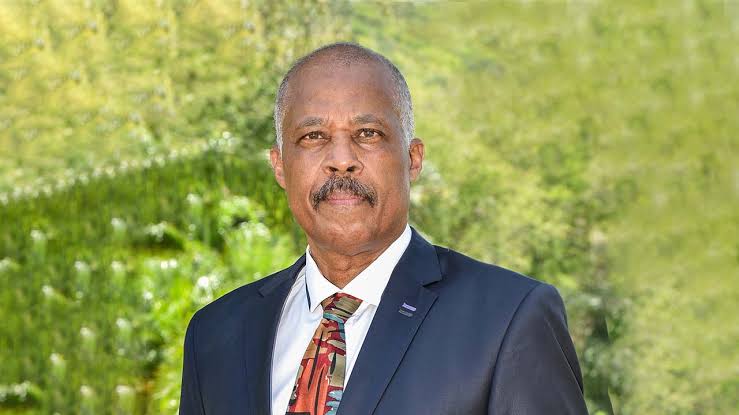
New York University honours Sir Hilary
One of the Caribbean’s most prominent academic leaders has earned a new high-profile international appointment, cementing his legacy as a leading voice on global Black and colonial history. New York University (NYU) has officially selected Professor Sir Hilary Beckles, Vice-Chancellor of The University of the West Indies (UWI), to serve as its Distinguished Scholar for the 2026-2027 academic term. The appointment will place Beckles in residence at NYU’s Center for the Study of Africa and the African Diaspora (CSAAD), an institution led by preeminent scholar Professor Michael Gomez that is globally recognized for its cutting-edge research on African and diaspora studies.
In response to the honor, Beckles expressed deep gratitude for the opportunity, noting that the appointment carries personal as well as professional meaning. “This is a valued expression of fellowship, especially as the Centre is renowned for its outstanding scholarship and research,” Beckles said. He recalled that 32 years prior, in 1994, he held a visiting scholar position at NYU’s Center for Latin American and Caribbean Studies, a role later filled by the legendary Barbadian poet and scholar Kamau Brathwaite. “Being back at NYU after 32 years, now among leading scholars of African history, will be special,” he added.
During his tenure as Distinguished Scholar, Beckles will deliver a landmark public lecture at NYU’s Silver Center, Hemmerdinger Hall in New York City on October 13, 2026, at 5:30 p.m. Titled “The Economics of Wealth Creation: Why Enslaved Black Women Were the Financial Core of the Slavery Business Model,” the lecture will unpack the understudied role of enslaved Black women as foundational capital that fueled transatlantic chattel slavery. More details about the event and registration information are available on CSAAD’s official website at the link published by UWI.
This latest appointment extends a long line of international accolades that recognize Beckles’ decades of impactful scholarship and academic leadership. In 2022, he was named Honorary International Historian of the Year by the Association of American Historians, and he currently holds the title of Chancellor’s Distinguished Professor-at-Large at Cornell University. Beyond honoring Beckles’ individual contributions, the sequence of global recognitions also elevates the international standing of The University of the West Indies, highlighting the institution’s longstanding commitment to academic excellence, cross-border collaborative research, and critical public scholarly dialogue.
Founded in 1948 as a small university college affiliated with the University of London in Jamaica, UWI opened its doors with just 33 medical students. Over the past 75 years, it has grown into a leading global higher education institution that serves nearly 50,000 students across five physical campuses: Mona in Jamaica, St. Augustine in Trinidad and Tobago, Cave Hill in Barbados, Five Islands in Antigua and Barbuda, and its flexible Global Campus. It also maintains a network of international research and academic centers in partnership with leading universities across North America, Latin America, Asia, Africa, and Europe.
Today, UWI offers more than 1,000 academic programs spanning certificate, diploma, undergraduate, and postgraduate levels across a wide range of disciplines, including the creative arts, food and agriculture, engineering, education, law, medical sciences, technology, social sciences, and sports. As the Caribbean region’s premier higher education institution, it hosts the largest concentration of regional academic expertise, with a core mission to address pressing challenges facing the Caribbean and the wider global community.
Since 2018, UWI’s growing global reputation has been validated by consistent inclusion in the Times Higher Education (THE) annual world university rankings. It holds the distinction of being the only English-speaking Caribbean institution featured across four of THE’s most prestigious ranking lists: the overall World University Rankings, which evaluates more than 2,000 leading research-focused universities globally; the Golden Age University Rankings, which recognizes institutions founded between 50 and 80 years ago; the Latin America and Caribbean Rankings, which focuses on regional higher education excellence; and the Impact Rankings, which assesses universities based on their progress toward the United Nations’ Sustainable Development Goals (SDGs).
This growing global recognition has also enabled UWI to launch new innovative academic initiatives, including the International School for Development Justice (ISDJ), a global online graduate business school designed to train the next generation of leaders to advance equitable sustainable development. As an SDG-focused institution consistently ranked among the world’s top universities for impact, UWI continues to expand its global reach while advancing its core mission of improving quality of life across the Caribbean. More information about the institution can be found on its official website at www.uwi.edu.