博客

  • Supporting the autistic

    Supporting the autistic

    KINGSTON, Jamaica — Across Jamaica’s education system, a quiet revolution is unfolding in support of autistic students, driven by a transformative collaborative bond between families and contracted Special Education Needs Assistants (SENAs) — roles previously known as shadows or caregivers. Working under the jurisdiction of the country’s Ministry of Education, Youth, Skills and Information (MoESYI), these dedicated support staff embed in school settings to advance autistic children’s participation, social integration, long-term independence, and overall safety and well-being.

    New data for the 2025-2026 academic year underscores the urgent demand for this targeted support: of 217 students placed in private non-governmental special education institutions this year, 124 — 57% of the total cohort — have received an autism spectrum disorder (ASD) diagnosis. Even more striking, 70% of the 696 students approved for dedicated shadow support this academic year are autistic. To uphold its commitment to leaving no child behind, MoESYI’s Special Education Unit has implemented a proactive provisional placement policy: students waiting for formal psychological education assessments are admitted to schools immediately, with doctor’s notes accepted as temporary documentation to avoid gaps in learning.

    This model of collaborative care, rooted in intentional partnership between SENAs and families, has produced tangible, life-changing progress for autistic students, with countless stories of patience, persistence, and compassionate care at its core.

    One such success story centers on 8-year-old Kylian Barnett, a nonverbal autistic student at Solid Base Preparatory and Kindergarten School in Spanish Town, where SENA Dana Beckford has supported his personal care and skill development since July 2024. From the earliest days of Kylian’s diagnosis, his father Keino Barnett refused to succumb to despair. With prior experience working as a music teacher supporting a nonverbal autistic drumming student at Portmore’s Aintree Basic School, Barnett understood that autism did not define his son’s potential. “He was three when we noticed developmental differences, but I stayed calm — autism wasn’t new to me. I always knew he could thrive,” he explained. The entire Barnett family, including Kylian’s sister and grandparents, has embraced active participation in his care, creating a consistent support system that complements Beckford’s work in the classroom.

    That consistent cross-setting support has delivered remarkable progress. Under Beckford’s patient, gentle guidance, Kylian — once nonverbal — now speaks several words and completes many daily tasks independently. Keino Barnett credits Beckford’s unwavering commitment for the visible shifts in his son’s development: “There are clear improvements in his behavior, and she has contributed so much to his literacy and numeracy skills. He’s grown so much, and she’s even helped him develop interest in activities he once avoided entirely. That’s the difference her dedication makes.”

    Beckford’s approach is shared by SENAs across the island, who bring personalized, child-centered strategies to their work. For Angela Davis-Johnson, that means centering patience, positivity, and individualization in every interaction. “Every autistic child is unique, with their own personality, interests, and way of learning. Some days bring mood swings or meltdowns, so I adapt to each child’s specific needs,” she explained. Davis-Johnson prioritizes positive reinforcement, framing instructions to minimize negative language and celebrating every small win to encourage desired behaviors. She also notes that ongoing professional development from MoESYI and the Special Education Unit has equipped her with the tools to succeed.

    Hannah-Lisa Clue, another SENA, adds that effective support requires more than just patience: it demands compassion, strong communication, flexibility, and a commitment to continuous learning. “I use simple, accessible communication tools — pictures, gestures, consistent routines — to help children feel comfortable and connected. Most importantly, I work closely with parents to align strategies, so kids get consistent support whether they’re at school or at home,” she said.

    Beyond the on-the-ground support from SENAs, MoESYI has built out a broader framework of inclusive programming. The ministry runs Early Stimulation Programmes (ESP) for children six and under living with a range of developmental disabilities, and has recently launched a new tailored curriculum for students with moderate to severe intellectual disabilities designed to meet their unique learning needs.


  • Barbados and Venezuela seek to strengthen relations in a wide range of socio-economic sectors

    Barbados and Venezuela seek to strengthen relations in a wide range of socio-economic sectors

    BRIDGETOWN, Barbados – In a landmark diplomatic meeting held this week, the Caribbean island nation of Barbados and the South American country of Venezuela have laid the groundwork for a significantly expanded bilateral partnership, reaching consensus on a sweeping slate of collaborative initiatives spanning energy development, trade expansion, economic integration, and cultural exchange.

    Venezuela’s acting President Delcy Rodriguez, who touched down in Bridgetown Sunday evening for the high-level talks, met face-to-face with Barbadian Prime Minister Mia Mottley to hash out the details of the new cooperation framework. Both leaders emerged from the closed-door deliberations praising the productive discussions and shared commitment to deepening ties between their nations.

    “April 27 will go down in history as the founding date of modern economic and trade cooperation between Venezuela and Barbados,” Rodriguez told reporters following the talks. She added that negotiations opened new investment opportunities for Barbadian firms in Venezuela’s burgeoning hydrocarbons sector, including invitations for joint exploration and development of the country’s untapped oil and natural gas fields.

    Rodriguez emphasized that Barbadian partnership would play a critical role in boosting Venezuela’s domestic hydrocarbon production, while Caracas would in turn deliver long-term, reliable energy security guarantees for Barbados’ population. She also noted that the two sides have identified strong synergies in renewable energy development, outlining a joint plan to manufacture solar panels that would build a fully integrated, diversified regional energy sector. To further catalyze cross-border investment, the leaders agreed to revisit and update existing bilateral agreements covering investment protections and double taxation, creating a more welcoming regulatory environment for businesses from both nations.

    For her part, Prime Minister Mottley highlighted that volatile global energy prices have put unprecedented pressure on small island developing states like Barbados, making expanded bilateral energy cooperation a long-held strategic priority. She noted that Barbados’ state-owned National Energy Company, despite its modest size, is well-positioned to enter into joint investment projects in the energy opportunities Venezuela has put forward. These collaborations, she explained, will help Barbados expand its domestic energy capacity, strengthen its resilience to global market shocks, and maintain affordable access to critical energy products for all Barbadians.

    Mottley recalled Venezuela’s decades-long track record of supporting Caribbean energy security, pointing to the 1970s San Jose Agreement – a joint initiative with Mexico that stabilized energy access for the entire region during a global oil crisis – and the 1990s PetroCaribe initiative launched by former Venezuelan President Hugo Chávez that delivered discounted oil to dozens of Caribbean nations. In recent years, she added, discussions have focused on continuing this legacy by extending discounted energy supplies to other Caribbean partners where possible. “Over the past five decades, Venezuela has stood as a close, reliable friend to the entire Caribbean on issues of energy security and affordable access to energy products,” Mottley said. “At a moment of profound global energy insecurity, we welcome this opportunity to build cooperation that delivers mutual benefit for both our nations.”

    Barbados is pushing to expand energy cooperation beyond fossil fuels to capture the massive potential of renewable energy collaboration, Mottley clarified. From small-scale residential solar water heating systems to utility-scale photovoltaic panels and onshore wind energy development, Mottley said the two sides have identified enormous untapped potential for joint work in the clean energy transition. Mottley accepted an invitation to visit Caracas in the coming months to continue advancing the partnership, noting that the short one-hour flight between the two nations underscores the geographic and strategic proximity that makes cooperation so natural. “We cannot allow historical or language barriers to hold us back from unlocking the full potential of cooperation for our two peoples,” she said. “We aim to build on the strong foundation our predecessors laid, and turn this diplomatic partnership into tangible benefits for ordinary citizens, not just government leaders.”

    In addition to energy and trade, the talks yielded a landmark agreement on cultural and linguistic cooperation. Rodriguez confirmed that Mottley has outlined Barbados’ plan to designate Spanish as the country’s second official language, building on the existing work of the bilateral Institute for Cultural Cooperation, which has long offered Spanish language training to Barbadian residents. The two sides have agreed to expand the institute’s capabilities, including integrating new digital learning tools and facilitating exchanges that will bring Venezuelan language instructors to Barbados to provide advanced training for local learners. Rodriguez added that the expanded program will also create opportunities for Venezuelans to learn from Barbadian educators and cultural leaders, creating two-way people-to-people exchange.

    The partnership also includes new commitments to advance regional food security, a pressing priority for small import-dependent Caribbean nations. Mottley said Barbados is working aggressively to build a robust domestic agro-processing industry to expand exports, and the new agreement will create new market access for Barbadian agricultural goods in Venezuela. “We are committed to making sure that planes and ships arriving from Venezuela do not return empty – they will carry back Barbadian produce that supports our farmers and manufacturers,” Mottley explained. The two sides also agreed to explore joint agricultural production projects on Venezuelan soil that will deliver food supplies for Barbados, alongside collaborative research and scientific development initiatives to boost agricultural yields. The partnership will focus on addressing the global challenge of declining soil productivity, working together to develop sustainable practices that increase harvests and deliver benefits for farmers across the Caribbean region.

    Leaving the meeting, Rodriguez emphasized that both delegations left the talks with high levels of enthusiasm for the new roadmap of cooperation, saying “we are departing this visit extremely happy with the progress we have made.”

  • Dallas teen forward Flagg voted NBA Rookie of the Year

    Dallas teen forward Flagg voted NBA Rookie of the Year

    In an official announcement made Monday, the National Basketball Association has named 19-year-old Dallas Mavericks forward Cooper Flagg the 2026 Rookie of the Year, capping off one of the most historic debut campaigns in league history. Selected as the first overall pick in the 2025 NBA Draft — a pick the Mavericks landed only after trading franchise cornerstone Luka Doncic to the Los Angeles Lakers last season — Flagg delivered numbers unmatched by any first-year player in the 2025-26 season. He averaged 21.0 points, 6.7 rebounds, 4.5 assists, and 1.2 steals per game, all leading his Dallas squad. That feat makes Flagg just the second rookie in NBA history to top his team in all four major counting stat categories, a distinction last earned by Chicago Bulls legend Michael Jordan when he won the same award back in 1985. Flagg’s standout numbers were paired with a string of league-breaking individual performances that cemented his status as a generational young talent. Earlier this month, he dropped a career-high 51 points in a tight contest against the Orlando Magic, a showing that made him the youngest player in NBA history to record a 50-point game at the professional level. Over the course of the entire regular season, Flagg notched four separate 40-point outings. That is the most 40-plus point games by any NBA rookie since Hall of Famer Allen Iverson matched the mark during the 1996-97 campaign, and it broke a 20-plus year record previously held by LeBron James for the most 40-point games by a teenager in league history. Despite Flagg’s historic individual production, the Mavericks struggled as a team through the 2025-26 season, finishing with a 26-56 win-loss record and missing out on a spot in the annual NBA playoffs. Still, that rebuild-era struggles gave the young star the opportunity to carry heavy offensive and defensive responsibilities from day one, a chance he used to showcase his full potential. Flagg is the third player in Dallas Mavericks franchise history to take home the Rookie of the Year award. He joins Hall of Fame point guard Jason Kidd, who claimed the honor in 1995, and the aforementioned Doncic, who won the award in 2019. Two other standout first-year players rounded out the award’s three finalists: 20-year-old Bahamian guard VJ Edgecombe of the Philadelphia 76ers, and 20-year-old American forward Kon Knueppel of the Charlotte Hornets. Knueppel, who was Flagg’s college teammate during their time at Duke University, finished second in voting after earning 44 first-place votes from a global panel of sportswriters and media members, for a total of 386 points. Flagg secured the win with 56 first-place votes and a total of 412 overall points in the official voting process.

  • Mexico captures top ally of drug kingpin ‘El Mencho’

    Mexico captures top ally of drug kingpin ‘El Mencho’

    MEXICO CITY – In a major blow to transnational organized crime operating across Mexico, federal and state security forces announced two high-profile arrests Monday: one being a top lieutenant to the deceased founder of the Jalisco New Generation Cartel (CJNG) long marked as a potential successor to the group’s leadership.

    Nemesio Oseguera, universally known by his cartel alias “El Mencho”, died in February from injuries sustained during a firefight with Mexican armed forces in the western state of Jalisco. His death triggered a wave of coordinated violence across the region, including widespread highway blockades and open clashes with security personnel that claimed more than 70 lives.

    According to security analyst David Saucedo, speaking to AFP, Audias Flores Silva – widely nicknamed “El Jardinero” or “The Gardener” – served as El Mencho’s closest confidant and right-hand man in the years leading up to the cartel leader’s death. Citing intelligence from both U.S. and Mexican law enforcement agencies, Saucedo added that Flores Silva was the key architect behind a rare operational alliance between CJNG and the Chapitos, the powerful Sinaloa cartel faction controlled by the family of imprisoned kingpin Joaquin “El Chapo” Guzmán. Regional security think tank Insight Crime had previously named Flores Silva as one of the leading candidates to take control of CJNG following El Mencho’s death.

    Mexican Security Secretary Omar Garcia Harfuch confirmed via the social platform X that elite Mexican naval special forces apprehended Flores Silva in the western coastal state of Nayarit. Harfuch also noted that the captured cartel leader is actively sought by U.S. law enforcement, with Washington intending to request his extradition to face charges in American courts.

    In a separate high-value operation staged hours earlier, authorities in the northeastern border state of Tamaulipas announced the arrest of a second senior gang leader: Alexander Benavides Flores, better known by his operational alias “R9”, who served as the head of Los Metros, a key faction of the Gulf Cartel. The Gulf Cartel, once one of Mexico’s most powerful criminal organizations, has been significantly weakened over the past 10 years following a string of leadership arrests.

    Benavides Flores’ capture prompted an immediate retaliatory response from his allies, who erected at least eight blockades on major highways surrounding Reynosa, a northern Mexican border city of roughly 690,000 people that sits directly across the Rio Grande from McAllen, Texas. A spokesperson for Tamaulipas state security confirmed that security forces rapidly moved to reestablish full control over the affected areas, and no injuries were reported during the unrest following the arrest.

    The dual arrests come amid ongoing tensions between the Mexican and U.S. governments over counter-cartel strategy. Former U.S. President Donald Trump has pressured Mexican President Claudia Sheinbaum to ramp up operations against transnational criminal groups, but Sheinbaum has consistently rejected controversial U.S. proposals to deploy American drone strikes or ground troops inside Mexican territory to target cartel operatives.

  • ASHE Mother’s Day concert ‘Love For Mom’ set to take place in MoBay for the first time

    ASHE Mother’s Day concert ‘Love For Mom’ set to take place in MoBay for the first time

    Western Jamaica is set to host a landmark cultural event this Mother’s Day, as iconic Caribbean performance collective ASHE Company prepares to stage its first full-scale production in Montego Bay.

    Scheduled for Sunday, May 10 at Montego Bay’s Iberostar Hotel, the special tribute concert branded *Love For Mom* will offer attendees two separate showings to choose from: a 4:00 p.m. matinee and a 7:00 p.m. evening performance. Unlike standard one-genre concerts, the production is framed as a immersive cross-genre theatrical and musical experience, pulling from beloved oldies, infectious reggae, soul-stirring gospel, and catchy contemporary pop tracks to create a dynamic, emotional journey for audiences.

    In an official press statement announcing the event, the company emphasized that the Montego Bay debut will uphold the high standards of precision, passionate performance, and professional production that have cemented ASHE’s reputation as one of the most respected live performance groups across the Caribbean. Residents and visitors across western Jamaica’s parishes — including St James, Trelawny, Hanover, and Westmoreland — are all invited to attend what organizers describe as an unprecedented cultural experience for the region.

    *Love For Mom* is ASHE’s long-running annual tribute to motherhood, a beloved tradition that has been reimagined and expanded specifically for its first outing in Montego Bay. The production weaves together live vocal performances and choreographed dance across its multiple genre segments, all tied together by a single heartfelt core theme: honoring the unwavering love and sacrifice of maternal figures.

    Conroy Wilson, executive director of The ASHE Company, shared that the production has delighted audiences in Kingston for multiple years, with a consistent track record of leaving mothers moved to joyful tears after every show. “Montego Bay deserves this experience. Western Jamaica has an extraordinary appetite for quality live performance, and we are honoured to bring ‘Love For Mom’ here for the first time,” Wilson said, adding that the event is poised to be an unforgettable night for mothers and their families gathering to celebrate.

  • JAAA dismisses reports that payment of travel tickets forced Oblique Seville to withdraw from World Relays team

    JAAA dismisses reports that payment of travel tickets forced Oblique Seville to withdraw from World Relays team

    KINGSTON, Jamaica — Top Jamaican sprinter Oblique Seville will not compete at the upcoming World Relays hosted in Gaborone, Botswana, but a circulating narrative that blames a ticket fee conflict between the athlete and the Jamaica Athletics Administrative Association (JAAA) for his exit is unfounded, the governing body has clarified. In an official statement released to the public, the JAAA pushed back against early reports that claimed a deadlock over travel ticket pricing between Seville’s representation and the association left the sprinter with no choice but to pull out of the national team.

    The actual point of conflict, the association explained, centered entirely on scheduling for Seville’s return trip to Miami, not the cost of travel arrangements. Seville had a pre-existing contractual commitment he needed to fulfill in Miami, so his team pushed for an early return date after the World Relays conclude. However, the JAAA noted that available flight routes only allowed for a return to Miami no earlier than midday on May 5, 2026, and the association could not secure an earlier departure to meet the sprinter’s timeline requirements.

    On April 21, the JAAA confirmed it received formal written notification of Seville’s withdrawal from Norman Peart, the sprinter’s manager. Alongside the notice of exit, Peart extended well wishes to the Jamaican team as they compete for qualification spots to the upcoming World Athletics Championships. The statement also added that Seville remains open and available to represent Jamaica in the 4x100m relay for future competitions, barring any unforeseen issues.

  • US mom’s viral video of son in Jamaica jersey melts hearts online

    US mom’s viral video of son in Jamaica jersey melts hearts online

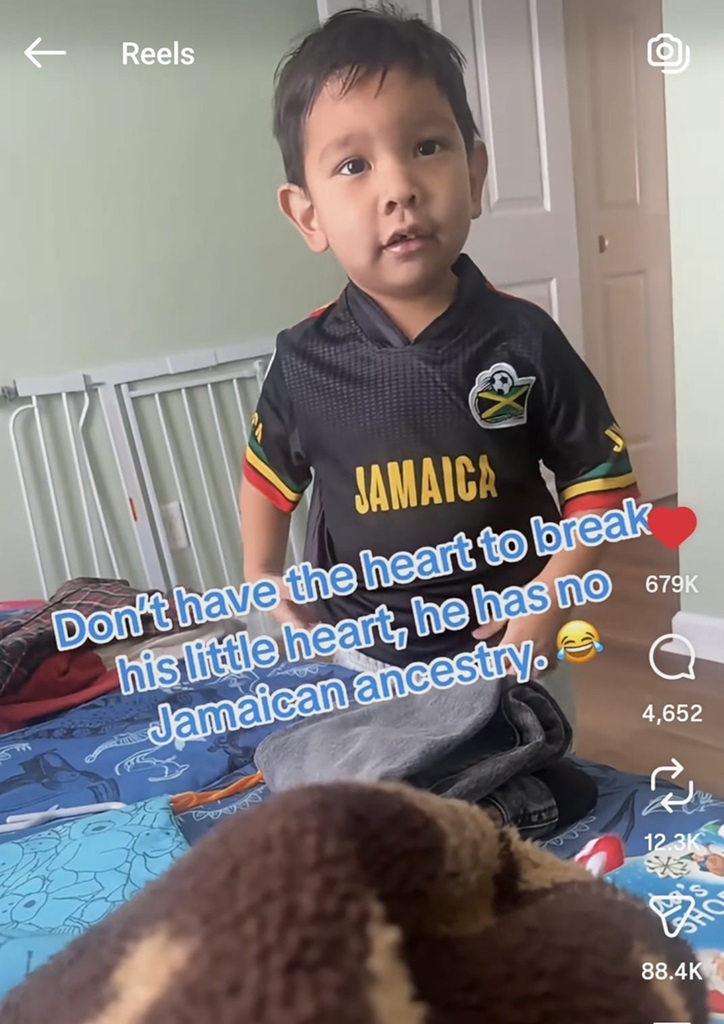
    A spontaneous, heartwarming clip capturing a young boy’s fierce pride in representing Jamaica has taken social media by storm, resonating deeply with hundreds of thousands of viewers across the globe — and particularly within the Jamaican community.

    Brenda Estrada, a mother of two residing in Delaware, United States, saw the video of her 4-year-old son Mateo go viral in early 2025. In the clip, which has now earned more than 678,000 likes and counts growing engagement by the day, the little boy confidently shows off his Jamaican national football (soccer) jersey, affectionately known as the kit of the ‘Reggae Boyz’, the nation’s men’s national team. Estrada later joked that she could not bring herself to correct her son, who has no known Jamaican ancestral roots, and burst his innocent bubble of joy.

    Contrary to assumptions that the boy’s affection for the Caribbean nation came out of thin air, the connection grew from a memorable family trip. In an interview with the *Jamaica Observer*, Estrada explained that the whole family traveled to Jamaica in April 2025, a getaway that left an indelible mark on young Mateo. During the trip, the family picked up the jersey, and Mateo fell head over heels for the island, even developing a fondness for the local staple jerk chicken. ‘Unless it was being washed, he never wanted to wear anything else,’ Estrada said of the jersey, noting that Mateo asks for it almost every morning.

    The viral moment itself was never planned, the mother confirmed. She had originally opened her camera to record a quick clip to send to Mateo’s father, and caught the boy’s enthusiastic display of his jersey completely by accident. Beyond his positive trip memories, Mateo’s lifelong love of soccer also fed into the moment. The whole family surrounds themselves with the sport: Mateo’s older sister plays competitively, the family regularly attends matches for their local Major League Soccer side, the Philadelphia Union, and the team’s starting captain is Andre Blake, a veteran Jamaican goalkeeper who plies his trade for the Reggae Boyz internationally.

    In the caption that accompanied the viral post, Estrada joked, ‘He may have been Jamaican in another lifetime… we definitely need to go back for another visit.’ Despite Mateo having no Jamaican lineage, the response from Jamaican social media users has been overwhelmingly warm and welcoming. ‘Every comment, every message has been so kind, it’s been amazing,’ Estrada said. She extended a public note of gratitude to the Jamaican community that has embraced her son: ‘Thank you for all the love you’ve shown him. It really means so much to our whole family.’

    Fueled by the outpouring of support and Mateo’s persistent requests to return to the island, Estrada confirmed that another trip to Jamaica is already being planned in the near future.

  • Regulators ramp up training as Jamaica prepares for casino gaming

    Regulators ramp up training as Jamaica prepares for casino gaming

    Sixteen years after Jamaica’s landmark Casino Gaming Act first legalized casino operations limited to approved integrated resort developments, national casino gaming regulators are ramping up capacity building and inter-agency coordination to prepare for the eventual launch of the nascent industry.

    Last week, the Casino Gaming Commission partnered with global gaming industry authority Gaming Laboratories International (GLI) to host a three-day specialized training workshop in Kingston. The event brought together regulators and law enforcement partners from across multiple agencies, including the Betting, Gaming and Lotteries Commission, the Major Organised Crime & Anti-Corruption Agency (MOCA), the Financial Investigations Division, and the Jamaica Customs Agency.

    Branded GLI University, the immersive training program covered core topics critical to effective industry oversight: from casino licensing protocols and slot machine technical engineering to forensic financial investigation and the mathematical modeling that underpins game odds, payout structures and operator profitability.

    Casino Gaming Commission Chief Executive Officer Cleveland Allen framed the training as a critical step toward Jamaica’s goal of expanding and diversifying its core tourism sector through integrated resort developments. “Given the commission’s mandate to establish and enforce a robust regulatory framework for casino gaming in Jamaica, this training comes at a critical time as we continue to strengthen our internal capacity and expand our team to meet the demands of the growing industry,” Allen stated during the workshop’s opening session Wednesday. He emphasized that upskilling both commission staff and cross-agency partners on international regulatory standards and global best practices is non-negotiable ahead of the industry going live, noting “it is important that our officers, as well as our partners, are exposed to international standards and best practices before the space becomes active.” Allen did not provide a specific timeline for when commercial casino operations will officially launch in Jamaica.

    For more than a decade, two high-profile projects have been tied to Jamaica’s integrated casino resort vision: the multi-billion-dollar Harmony Cove luxury resort proposed for Trelawny, and Celebration Jamaica, which has laid out plans for a large-scale tourism and entertainment complex. Despite repeated announcements and repeatedly shifted launch timelines, however, no commercial casino has yet begun operations in the country.

    The participation of anti-crime and financial investigative agencies like MOCA and the Financial Investigations Division underscores the strict regulatory approach Jamaica is taking to the new sector, with a particular focus on shoring up anti-money laundering controls, blocking organized crime infiltration, and protecting the integrity of the national financial system.

    GLI, which has already supported Jamaican regulators and gaming industry stakeholders across the broader gaming sector, noted the training program is designed to lay the groundwork for a transparent, credible, and well-governed national casino market. “We want to ensure that the market launches with high integrity, that the policies and regulations are clear, concise, honest, accurate and fair, and that the populace trusts that it’s well regulated,” said Matt Toler, one of the lead workshop facilitators from GLI.

  • New national survey reveals cash remains critical in Jamaica’s payment trends despite digital growth

    New national survey reveals cash remains critical in Jamaica’s payment trends despite digital growth

    KINGSTON, Jamaica — A landmark new study has painted a nuanced picture of Jamaica’s evolving payment ecosystem, finding that while digital financial tools are growing in popularity across the island nation, cash has retained its central role in everyday financial life, functioning both as a go-to transaction method and a trusted financial safety net for most Jamaicans.

    The comprehensive analysis, dubbed the Payment Preferences in Jamaica Report, was commissioned by BRANCCH Consulting and Outsourcing Limited, marking one of the first large-scale, nationally representative examinations of how Jamaicans engage with cash and digital payment options amid ongoing global shifts toward cashless finance. To build a robust, accurate dataset, researchers drew responses from more than 600 participants spread across both urban population centers and rural communities, capturing diverse perspectives on payment habits, preferences, unmet needs, and emerging trends reshaping the sector.

    Core findings from the report confirm that cash still leads for day-to-day spending, making up more than 50% of all transactions and retaining the top spot as the most preferred payment method for regular purchases. Even as digital adoption grows, Jamaicans consistently turn to cash for small, everyday buys due to its unmatched accessibility and reliability.

    That said, digital payment options — especially debit cards and online bank transfers — have seen steady growth in usage, particularly for transactions ranging from mid-value to high-value purchases. Despite this upward trajectory, widespread adoption has been held back by a series of persistent barriers: low public trust in digital systems, spotty digital infrastructure across many regions, consumer concerns over hidden transaction fees, and inconsistent service reliability have all slowed the transition to a fully cashless financial ecosystem.

    The report also uncovered a notable disconnect between access to digital financial tools and actual usage. While more than 80% of Jamaicans have access to basic traditional banking services and 72% connect to the internet regularly, only 56% have access to mobile banking or payment apps. This gap makes clear that the challenge facing Jamaica’s digital transition is one of digital readiness and usability, not just basic availability of services.

    “Jamaica isn’t just undergoing a simple shift from cash to digital — we’re operating in a hybrid payment environment where both systems need to work efficiently for all users,” explained Marcus Brodber, chief executive officer of BRANCCH. “What the data shows very clearly is that cash remains essential for most Jamaicans. This isn’t just a matter of old habit: cash continues to deliver reliability, full control over personal spending, and universal accessibility in ways that digital systems have not yet been able to match.”

    The study also highlights the powerful cultural and social factors that shape payment behavior in Jamaica. The nation has a long tradition of strong reliance on peer-to-peer transactions and informal financial support networks, a pattern reflected in the survey data: 80% of respondents reported sending or receiving money from family members in the 30 days prior to taking the survey, reinforcing how trust and interpersonal relationships remain core drivers of financial decision-making.

    Importantly, the report also identifies clear opportunities for expansion and innovation in Jamaica’s payment sector. While digital tools are already broadly available to much of the population, adoption remains held back by inconsistent point-of-sale connectivity, low public awareness of the benefits of digital payments, and lingering gaps in user confidence — especially among older age groups and residents of rural communities.

    “Reliable, locally sourced data is absolutely critical to shaping the future of payments in Jamaica,” Brodber added. “If we are serious about driving greater efficiency, expanding financial inclusion, and fostering innovation across the sector, then policy and business decisions have to be rooted in how Jamaicans actually behave, not how we assume they behave. This report is just the starting point for more informed public dialogue, better targeted solutions, and meaningful progress across Jamaica’s entire payments landscape.”

  • Allyson Felix announces plans to compete in 2028 Summer Olympics

    Allyson Felix announces plans to compete in 2028 Summer Olympics

    Legendary American track and field sprinter Allyson Felix, the most decorated Olympic athlete in U.S. track and field history, has sent shockwaves through the global athletics community with a bombshell announcement: she is ending her two-and-a-half-year retirement to chase a spot at the 2028 Summer Olympic Games in her hometown of Los Angeles, multiple American media outlets have confirmed. In an exclusive interview with TIME magazine, Felix opened up about her unexpected comeback plans, revealing that she is gearing up to resume structured training next month alongside her long-time coach Bobby Kersee, with a detailed training roadmap already finalized. At 40 years old, Felix first hung up her spikes and retired from elite competitive sprinting back in April 2022, capping a historic career that included 11 Olympic medals — seven of them gold. In a break from the relentless schedule that defined her peak competitive years, Felix says she has no intention of competing full-time on the global Diamond League circuit. This adjusted approach is intentional, allowing her to prioritize time with her two young children while still pursuing her athletic goal. For Felix, the comeback is about far more than adding another medal to her collection; it is a deliberate challenge to outdated social expectations around age, motherhood, and women’s ambition. “So many of us have been told not to do the big, bold thing,” Felix explained in the interview. “You know, at this age, I should probably be staying home and taking care of my kids, doing all that. And just, why not? Let’s flip it on its head. Let’s go after the thing. Let’s be vulnerable.” If Felix qualifies for the 2028 Los Angeles Games, she will make history as one of the oldest American track and field athletes to ever compete at an Olympic Games, while breaking long-standing stereotypes about what mothers and athletes over 40 can achieve. The comeback bid has already drawn widespread praise from across the athletics community, with fans and fellow athletes alike celebrating Felix’s bold choice to redefine limits on her own terms.