博客

  • Over 200 children sought help for sexual abuse last year

    Over 200 children sought help for sexual abuse last year

    On Friday, at a public awareness exhibit hosted by the Bahamas Crisis Centre at Marathon Mall, senior officials and advocacy leaders sounded the alarm on a persisting public safety crisis in the island nation: widespread child sexual abuse and a fragmented system that continues to fail vulnerable young victims.

    Centre director Sandra Dean-Patterson told attendees that in 2025 alone, more than 200 children between the ages of 3 and 17 reached out to the organization for support after surviving sexual violation, exploitation or assault. She noted that the victims included both boys and girls, and that in most cases, the abuse was perpetrated by someone the victims already knew, a common dynamic that complicates reporting and intervention.

    The exhibit, focused on raising public consciousness around child sexual abuse and domestic violence, also served as a memorial to those who have lost their lives to gender-based violence. In her remarks, Dean-Patterson acknowledged one key area of progress: domestic violence-related fatalities have dropped steadily since 2000, when such violence accounted for 45 percent of all deaths in the country. Still, she emphasized that non-fatal abuse remains pervasive across the Bahamas – and, crucially, that most incidents are entirely preventable with intentional, coordinated action.

    Dean-Patterson pushed back against popular, surface-level policy proposals that focus solely on harsher punishments for offenders, framing the approach as a hollow “easy fix” that avoids addressing core systemic failures. Instead, she argued, the priority must shift to improving investigations, building strong cases against perpetrators, and increasing the likelihood that offenders will be caught and held accountable. One of the most glaring gaps she highlighted is the nation’s continued lack of in-house capacity to process DNA evidence from rape kits, even as the country enters 2026. Decades of public discussion on the issue have not translated to change, she said, forcing Bahamian authorities to ship a limited number of kits to Florida for analysis – a bottleneck that derails countless investigations and lets abusers avoid justice.

    Calling for broader systemic change, Dean-Patterson urged stronger public education campaigns, coordinated collective action across civil society and government, and expanded support from local media outlets to shift public norms and reduce abuse rates. She also noted that the centre invited all candidates running in the upcoming national election to attend the exhibit, saying she hopes elected leaders will prioritize this crisis after taking office and understand the long-term damage intergenerational violence inflicts on Bahamian children and communities.

    Khandi Gibson, founder of the advocacy group Families of All Murder Victims, echoed Dean-Patterson’s calls for investment in education and early intervention. Gibson argued that every school-aged child in the Bahamas should receive age-appropriate education on personal boundaries, including how to distinguish safe, consensual “friendly touches” from inappropriate, harmful contact. Like Dean-Patterson, she highlighted chronic under-resourcing of victim support systems, calling for a dedicated national budget line to ensure consistent, reliable assistance for survivors of abuse and violence.

  • Alleged gang leader killed in Cable Beach ambush

    Alleged gang leader killed in Cable Beach ambush

    On a Thursday night, a brazen targeted attack in the crowded, tourism-focused Cable Beach area of New Providence left a high-profile alleged gang leader wanted for murder dead, sparking a massive immediate response from law enforcement. Fifty-five-year-old Mario Deveaux, also known by the alias “Mario Fox”, was discovered motionless with multiple gunshot wounds just after 10 p.m. near a Ford Taurus parked outside a gated residential property off Coral Road, a short distance from West Bay Street. First responders from Emergency Medical Services confirmed his death at the scene, with no signs of life detected.

    According to initial law enforcement briefings, the entrance gate of the property was non-functional and left open at the time of the incident. Assistant Commissioner of Police Anton Rahming told reporters that Deveaux had arrived at the location, which authorities believe is his residence, alone before he was ambushed. “Once he came to that area, unknown persons exited what we believe to be an SUV vehicle and fired upon him, subsequently wounding him fatally,” Rahming stated in a press update. He added that the suspect vehicle fled the area heading east, and preliminary witness accounts place a dark-colored SUV speeding away from the crime scene moments after the gunfire stopped. Investigators suspect the people inside that vehicle are directly linked to the killing.

    Law enforcement estimates three armed assailants carried out the attack, firing more than 40 rounds total. Both Deveaux’s body and his vehicle were left riddled with bullet holes, and investigators made a surprising observation at the scene: thousands of dollars in cash that Deveaux had on his person was left completely untouched, leading to early speculation that robbery was not a motive for the killing.

    The shooting unfolded just steps from multiple commercial establishments along the popular Cable Beach tourist strip, including the major Sandals Royal Bahamian resort and the local favorite Curly’s Restaurant and Bar. In the wake of the attack, dozens of heavily armed police officers locked down the area, forcing temporary business closures, diverting foot and vehicle traffic, and allowing crime scene investigators to process evidence at the white residential property inside the gated community.

    Deveaux was no stranger to law enforcement: he had been identified as an alleged gang leader years prior, and was named one of eight men featured on a 2017 police wanted poster for an outstanding murder charge. He was also publicly linked to the fatal shooting of another well-known alleged gang leader, Duran Neely, who went by the alias “Monster”, in August of the previous year. Investigators are currently exploring whether this killing is connected to Deveaux’s outstanding warrants or his suspected involvement in Neely’s death, though no official motive has been confirmed publicly as of the latest updates.

    The killing has reignited longstanding public conversations about gang violence in the country. Years earlier, then-Police Commissioner Ellison Greenslade highlighted that most recent homicides in the nation could be traced back to ongoing feuds over drug trade and personal disputes. At the time, he emphasized that “prolific serial offenders” cannot be allowed to remain “free in our communities to continue to create fear” and potentially commit more violent crimes, and called on family members, friends and associates of known repeat offenders to “turn them into police before you become targets”.

    For advocacy groups that support families affected by homicide, the brazen public attack is another devastating example of the endless cycle of violence plaguing communities. Khandi Gibson, president of Families of All Murder Victims (FOAM), expressed renewed concern over the killing, warning of the unbroken cycle of retaliatory violence and its lasting harm on innocent family members. “I’ve been doing FOAM for many years, and I’ve seen the hunter become the hunted,” Gibson noted. She added that while violence often cycles between perpetrators and victims, the deepest, longest-lasting damage is inflicted on the loved ones left behind, particularly children and extended relatives who struggle with unresolved grief for years after funerals end.

    Gibson also issued a call for careful handling of information during the active investigation, warning that premature release of suspect details can spark additional retaliatory attacks and put innocent bystanders at unnecessary risk.

  • King Charles begins four-day US visit despite shooting

    King Charles begins four-day US visit despite shooting

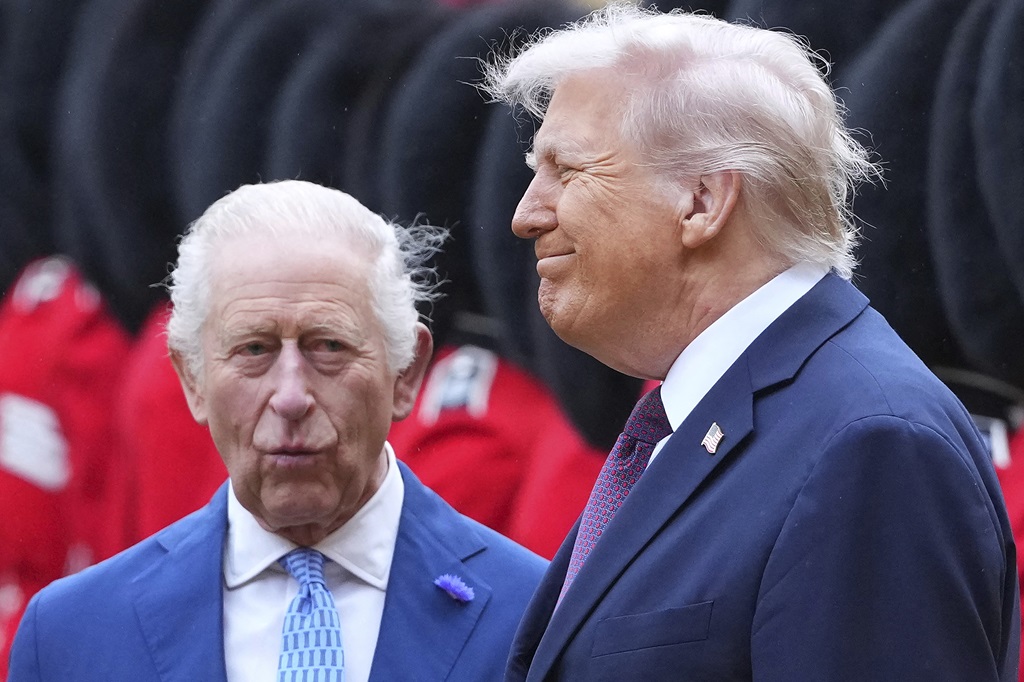
    LONDON and WASHINGTON — Four years after ascending to the British throne, King Charles III kicks off his first official state visit to the United States on Monday, launching a high-stakes diplomatic journey that unfolds against simmering transatlantic rifts over the Iran war and just 48 hours after a shooting at a gala attended by US President Donald Trump.

    The four-day itinerary, planned to celebrate the centuries-long special relationship between the United Kingdom and the United States as America marks its 250th anniversary of independence, brings King Charles and Queen Camilla across three stops across North America. After opening their schedule in Washington D.C., the royal couple will travel to New York City on Wednesday to pay respects at the 9/11 Memorial & Museum, before concluding their trip with a visit to Bermuda — Charles’s first trip to a British Overseas Territory as head of state, scheduled for Thursday.

    This trip makes history too: Charles will become the first reigning British monarch to address a joint meeting of the US Congress since his mother Queen Elizabeth II spoke to the legislative body in 1991. In addition to the congressional address, the itinerary includes a tea reception and formal state dinner hosted by President Trump and First Lady Melania Trump.

    The visit proceeds as planned despite the shooting incident Saturday night at the White House Correspondents’ Association annual gala, the event attended by President Trump. Law enforcement took an alleged lone gunman into custody immediately after the attack, which left one US Secret Service agent wounded. No harm came to President Trump, the first lady or any other attendees.

    Buckingham Palace confirmed Sunday that the state visit would not be delayed or canceled, and noted that King Charles expressed profound relief that all senior figures at the gala escaped uninjured. UK Ambassador to the United States Christian Turner told reporters in Washington Sunday evening that after extensive security reviews between British and US authorities, “we are all very confident that all appropriate security measures are in place” to protect the royal party throughout the trip.

    While logistics are confirmed, the trip has been mired in controversy from the start, driven by a sharp public rift between the Trump administration and Keir Starmer’s UK Labour government over the ongoing conflict with Iran. President Trump has publicly lambasted Prime Minister Starmer for his opposition to the war, and has also criticized London’s policies on immigration and domestic energy production.

    The two leaders spoke by phone on Sunday, where Starmer offered his well-wishes to Trump in the wake of the shooting. Beyond security, their discussion centered on one of the core points of contention: the disruption to global shipping in the Strait of Hormuz. A statement from Starmer’s office noted the pair agreed on “the urgent need to get shipping moving again” amid the severe fallout for the global economy and household cost of living on both sides of the Atlantic.

    Though Starmer has stood by his public criticism of the Iran war, he has defended the decision to move forward with the state visit, even as an early April YouGov poll found 48 percent of British respondents support canceling the trip. Responding to questions from members of parliament, Starmer argued that the British monarchy’s unique longstanding cross-border bonds let it navigate diplomatic rifts that divide elected governments. President Trump echoed that optimism, telling the BBC last week that the visit could “absolutely” help repair frayed bilateral ties, and told Fox News Sunday that “he’s a friend of mine for a long time, so he’s coming, and we’re going to have a great time, and he represents his nation like nobody else can do it.”

    At 77, King Charles has a long track record of deft diplomatic maneuvering, a skill he displayed when hosting Trump during the US president’s 2024 state visit to the UK last September. Craig Prescott, a monarchy studies expert at Royal Holloway University of London, observed that the king is “generally very good” at navigating tense political moments. Even so, Prescott expects Charles will only address the divisive Iran conflict — the widely acknowledged “elephant in the room” for the trip — through coded language during his congressional address Tuesday.

    Another lingering controversy threatens to intrude on the carefully choreographed tour: the ongoing scandal surrounding Prince Andrew, the king’s younger brother, and his longstanding ties to convicted sex offender Jeffrey Epstein. The 76-year-old disgraced royal was arrested in mid-February following new unsealed court documents detailing his connections to Epstein, who died in prison in 2019 while awaiting trial on sex trafficking charges. King Charles stripped Andrew of all his honorary titles and royal patronages back in 2022, and released a rare public statement signed in his own hand after the arrest saying “the law must take its course.” Andrew remains under active investigation, has not been charged with any crime, and has repeatedly denied all allegations of wrongdoing.

    To avoid unscripted, off-the-cuff moments that could draw unwanted attention to the scandal or the current bilateral tensions, the entire trip has been planned with extreme precision. For example, only still photographers will be allowed to cover Tuesday’s Oval Office meeting between King Charles and President Trump, with no press question-and-answer session scheduled.

  • Mbappe doubt for Clasico after Real Madrid confirm thigh injury

    Mbappe doubt for Clasico after Real Madrid confirm thigh injury

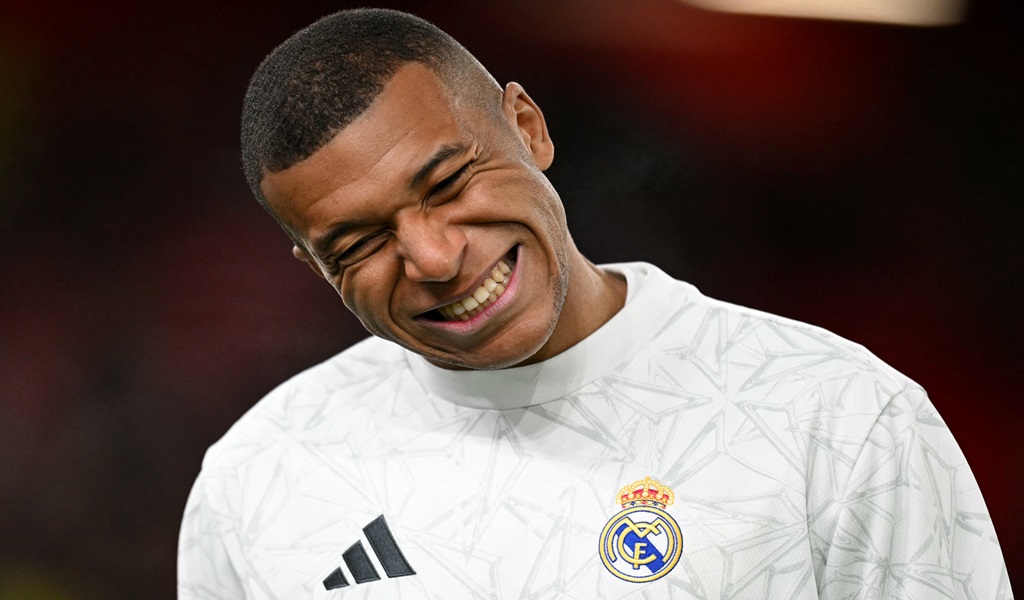
    MADRID, Spain – Fresh uncertainty has swept through Real Madrid and French football ahead of a pivotal month of fixtures, after La Liga giants Real Madrid confirmed on Monday that star striker Kylian Mbappe is facing a race against fitness to feature in the upcoming El Clasico clash against Barcelona on May 10. The world-class forward picked up the injury during Real Madrid’s hard-fought 1-1 La Liga draw against Real Betis this past Friday, forcing the France national team captain to leave the pitch early.

    In an official statement, the 14-time Champions League winners – commonly nicknamed Los Blancos – confirmed that diagnostic testing revealed damage to the semitendinosus muscle in Mbappe’s left thigh. Initial assessments shortly after the match suggested the issue was nothing more than muscular overexertion, but follow-up scans have now confirmed a full injury to the star, who leads Real Madrid’s goalscoring charts this season.

    The injury comes at a critical juncture for the club, which currently sits second in the La Liga table, 11 points adrift of league leaders Barcelona. Before the high-stakes Clasico showdown with the Catalan side, Real Madrid is set to take on Espanyol this coming Sunday. If Real Madrid drops points in that fixture without their star striker, and Barcelona secures three points against Osasuna the previous day, Hansi Flick’s Barcelona will wrap up back-to-back La Liga titles with several games still left to play.

    Beyond domestic club football, Mbappe’s latest fitness setback has sparked growing anxiety among French football circles, with the 2026 FIFA World Cup – jointly hosted by the United States, Canada, and Mexico – set to get underway on June 11. This is not the first long-term injury issue the 27-year-old 2018 World Cup winner has faced this season. Earlier in the campaign, a persistent knee injury kept him sidelined for two months, the longest absence of his entire professional career. Mbappe previously opened up about the mental toll of that extended layoff, admitting it left him struggling with feelings of frustration, anger, and anxiety.

  • Oil rises, stocks steady as US-Iran peace talk hopes wobble

    Oil rises, stocks steady as US-Iran peace talk hopes wobble

    Global financial markets showed mixed but largely stable movement on Monday, as the sudden collapse of planned peace negotiations between the United States and Iran sent oil prices climbing, leaving investors bracing for a packed week of central bank rate calls and high-stakes corporate earnings reports from top U.S. tech firms.

    What had been growing optimism over a potential breakthrough in diplomatic talks over the weekend quickly evaporated. Iranian Foreign Minister Abbas Araghchi’s diplomatic visit to Islamabad had fueled market hopes that new direct negotiations with Washington would move forward, but U.S. President Donald Trump scrapped a planned trip by American diplomatic envoys on Saturday. In comments to Fox News following the cancellation, Trump struck a dismissive tone, saying if Iranian officials wanted dialogue, “they can come to us, or they can call us.”

    On Monday, Tehran’s top diplomat placed full blame for the failed talks — the first and only round of negotiations aimed at de-escalating ongoing conflict between the two nations — squarely on Washington. Araghchi criticized the U.S. for insisting on “excessive demands” during discussions, and reiterated that “safe passage through the Strait of Hormuz is an important global issue.” The strategic Strait of Hormuz, through which roughly a fifth of global oil supplies pass daily, has remained largely closed amid ongoing tensions, keeping upward pressure on energy prices.

    U.S. media outlet Axios reported Sunday, citing an unnamed U.S. official and two additional sources familiar with the negotiations, that Iran had tabled a new proposal focused on ending hostilities by reopening the Strait of Hormuz and lifting an ongoing U.S. naval blockade of the waterway, with controversial nuclear negotiations deferred to a later phase of talks.

    Against this geopolitical backdrop, global oil benchmarks climbed on Monday, with both major contracts posting roughly 1% gains. The global benchmark Brent crude held firmly above the $100 per barrel threshold, trading up 1.3% at $106.70 per barrel by 1100 GMT, while U.S. West Texas Intermediate gained 1% to settle at $95.34 per barrel. Gains were tempered, however, by lingering investor hopes that a diplomatic agreement could still be reached in the coming weeks.

    Major European equity markets defied expectations of a pullback from higher energy prices, posting modest gains. London’s FTSE 100 added 0.2% to 10,398.57 points, Paris’s CAC 40 rose 0.6% to 8,206.54 points, and Frankfurt’s DAX climbed 0.9% to 24,348.27 points. Asian markets ended the trading day mixed: Tokyo’s Nikkei 225 and Seoul’s Kospi rallied on a wave of tech sector gains, while Hong Kong’s Hang Seng Index slipped 0.2% and Shanghai’s composite index gained a modest 0.2%. U.S. markets closed slightly lower, with the Dow Jones Industrial Average dipping 0.2% to 49,230.71 points.

    Analysts noted that investor expectations for a diplomatic breakthrough were already muted heading into the Islamabad talks, leaving most market participants in a holding pattern ahead of the week’s key economic events. “It may be that hopes of a diplomatic breakthrough were pretty faint to start with, and markets are now in wait-and-see territory ahead of a heavy week of earnings and economic touchpoints,” explained Derren Nathan, head of equity research at U.K. investment firm Hargreaves Lansdown.

    This week brings scheduled monetary policy decisions from three of the world’s most influential central banks. With energy prices remaining persistently elevated, economists widely expect the U.S. Federal Reserve will hold interest rates steady when it announces its decision on Wednesday. The European Central Bank and the Bank of England are also projected to follow suit with similar rate pauses.

    Beyond central bank policy, investors are turning their attention to quarterly earnings reports from five of the world’s largest tech giants: Alphabet, Meta, Microsoft, Amazon, and Apple. In recent weeks, stronger-than-expected corporate results have lifted equity markets globally, giving investors some confidence amid ongoing volatility. Russ Mould, investment director at brokerage AJ Bell, noted that “investors have been encouraged by corporate news flow over the past few weeks, leading to higher equity prices.” Still, he warned that extended periods of elevated oil prices carry major inflation risks: “higher oil for longer spells trouble for inflation, which in turn could act as a headwind for the economy.”

    Currency markets saw mild movement on Monday, with the euro edging up to $1.1746 from Friday’s close of $1.1717, and the pound climbing slightly to $1.3558 from $1.3530. The dollar slipped against the yen, falling to 159.15 yen from 159.42 yen, while the euro gained marginally against the pound to hit 86.64 pence.

  • UNFINISHED BUSINESS

    UNFINISHED BUSINESS

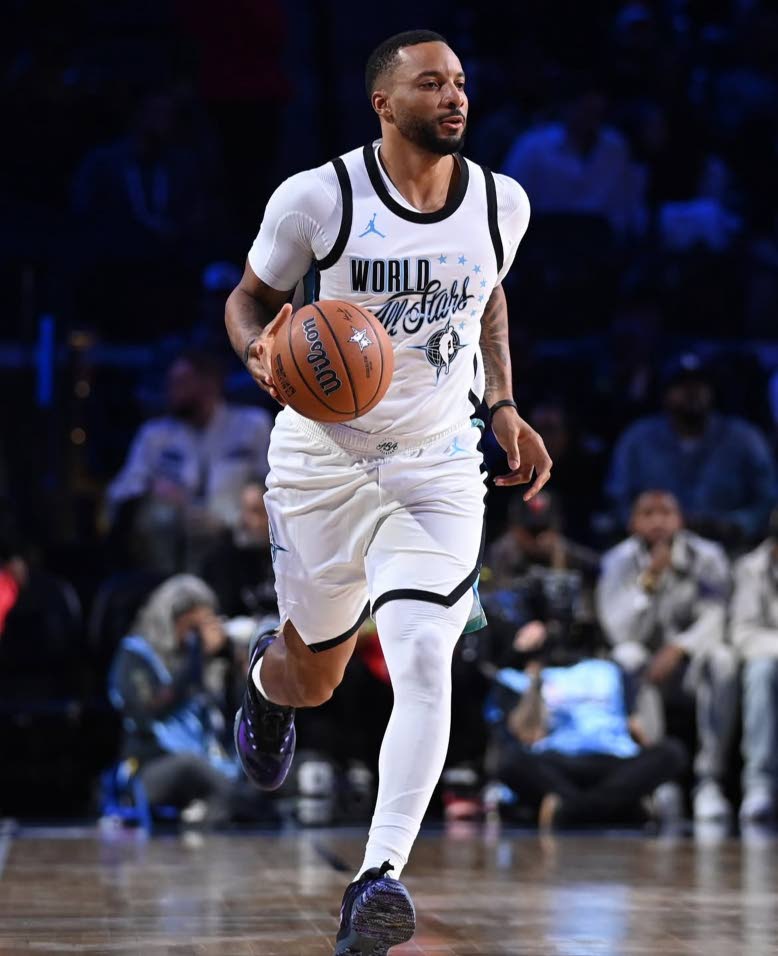
    As the NBA offseason kicks into gear and star guard Norman Powell prepares to hit free agency this July, the 32-year-old Jamaican athlete has left his long-term future with the Miami Heat open to question, wrapping up a breakout individual season that ended in collective disappointment for the franchise.

    Traded from the Los Angeles Clippers to South Florida ahead of the 2024-2025 campaign, Powell delivered a career-defining performance in his first season with the Heat. Emerging as the team’s top offensive weapon, he averaged nearly 22 points per game, a stat line that earned him his first-ever selection to the NBA All-Star Game. With the honor, Powell joined an exclusive club of Heat All-Stars that includes franchise legends LeBron James and Dwyane Wade, cementing his status as one of the league’s most in-demand free agents this summer.

    Despite his standout individual form, the Heat’s season fell short of postseason expectations. A late groin injury forced Powell into a reduced bench role for five of his final seven outings, and the team was ultimately eliminated from playoff contention in the play-in tournament with a loss to the Charlotte Hornets.

    Heading into free agency, Powell offered no guarantee he would re-sign with Miami, saying he will wait for discussions between his agent and Heat front office leadership, including Hall of Fame executive Pat Riley, before mapping out his next steps.

    “I’m not sure. I’m going to talk to my agent (and) I know my agent’s going to talk to (general manager) Pat (Riley) in the front office and figure those things out,” Powell told reporters. “I’ll connect with my agent sometime next week and figure out how those conversations went and then we’ll start the game plan from there, what free agency looks like and what the next couple weeks look like for me.”

    While his future remains up in the air, Powell made clear he holds his time with the Heat in high regard, noting he had long dreamed of playing for the franchise and that he valued the connections he built with teammates and staff despite the season’s disappointing end.

    “I enjoyed my time here in Miami, I’ve always wanted to play for the Heat. I thought it was a good year for me in spite of the injuries and some of the setbacks and stuff like that,” he said. “But I enjoyed my time, I enjoyed the staff and my teammates and everything that came along with the season. I thought we had a great time off the court, really bonding and being able to joke around and things like that. That’s the most important part about the season is the bonds and stuff that you make. Every season there’s only one champion, so it’s all about the memories and things that you make and the ups and downs and going through it.”

    Instead of fixating on free agency negotiations immediately after the season, Powell plans to decompress with family before shifting focus to international basketball. He is set to rejoin the Jamaican men’s national team for crucial FIBA World Cup Qualifying matches against Canada and the Bahamas scheduled for July.

    Jamaica currently needs at least one win from the two upcoming matches to advance to the final qualifying round, where they will compete for a spot in the 2026 FIBA World Cup hosted by Qatar. For Powell, the break from NBA roster talks will be short, with the guard set to return to the court just weeks after the end of the Heat’s season to push for his country’s first World Cup berth in recent history.

    “Right now it’s just decompressing, relaxing, getting some time to spend with my family and then getting right back into it sometime at the end of next week or the beginning of the week after that because I have some other stuff I got to take care of with the national team and things like that for qualifying,” Powell said. “So there won’t be too much time off before I start getting back on the court and working.”

  • Musicians front and centre!

    Musicians front and centre!

    Jamaica’s live music industry is undergoing a long-overdue reckoning, as a collective of instrumental musicians led by saxophonist Verlando Small is calling for a fundamental shift in how session and backing musicians are valued, positioned, and compensated within the country’s entertainment ecosystem. At the official launch of the Verlando Small Reimagined performance series, held at the University of the West Indies Mona Campus’ Philip Sherlock Centre for the Creative Arts, artists opened up about the systemic challenges that have long sidelined instrumentalists, pushing them to the background of live productions even as their work forms the backbone of every successful show.

    Slated for May 9 and 10, the two-night event is co-produced by the Verlando Small Reimagined Production Team and Aureum Luxe Entertainment, with a talented core lineup featuring musical director Evan Mason, guitarists Nicholas Groskopf and Brandon Benjamin, percussionists Colin Phillips and Robert Malcolm, multi-instrumentalist Joe Davis, and producer-engineer-musician Keneil Delisser. The launch drew a host of respected Jamaican music industry figures, including veteran industry leader Tommy Cowan and iconic tenor saxophonist Dean Fraser, all gathered to discuss the future of the craft in Jamaica.

    Opening the conversation, Tommy Cowan framed the push for musician leadership as a full-circle moment for Jamaican music, recalling the legacy of standout instrumentalists from decades past. “From the days of Ernie Ranglin, Tommy McCook, and Dan Drummond, through to icons like Dean Fraser today, excellence has always come when musicians step into their own power,” Cowan noted. “Ultimately, it comes down to each musician’s personal responsibility, ambition, and understanding of their purpose in this industry.”

    For Verlando Small, who made history in 2013 as the only non-vocalist to win Jamaica’s popular Digicel Rising Stars talent competition, the conversation is long overdue. Small, who has built a cross-genre reputation playing saxophone in contemporary worship, reggae, jazz, and soul, challenged fellow instrumentalists to take an active role in elevating their standing in the industry. “If we want more recognition and better treatment as musicians, we have to be willing to grow into more,” Small asserted. “Earning a seat at the planning table doesn’t just happen — it requires vision, original ideas, and a solid understanding of how the business side of music works.” He also emphasized that musicians consistently go above and beyond to deliver a seamless, successful show, and that greater inclusion in production planning and fair compensation must match that commitment. “We never let a show fail — we always give more than what’s asked of us. Inclusion and fair pay have to follow that effort,” he said.

    Grammy Award-winning guitarist Nicholas Groskopf echoed Small’s perspective, pointing out that while the work of musicians is irreplaceable, they are often sidelined until showtime. “Live music simply cannot happen without us, and every musician is a star in their own right — but it’s still a team effort,” Groskopf explained. “A lot of the time, we feel pushed to the back seat and forgotten, until the day of the show when everyone is scrambling to pull everything together.” He added that while Jamaica’s music industry is globally celebrated for its innovation and talent, systemic improvements are needed to better integrate musicians into early planning and production processes, rather than treating them as afterthoughts.

    Percussionist Robert Malcolm highlighted another persistent challenge: the industry’s overreliance on informal verbal agreements, with little to no formal documentation. “We operate mostly in a verbal community here, but there’s almost never any follow-up in writing,” Malcolm said. “Without a paper trail, you get constant confusion around expectations, rehearsal schedules, and compensation, which leaves musicians in vulnerable positions.”

    For musical director Evan Mason, the path forward starts with greater visibility and more intentional opportunities for instrumentalists to step into the spotlight. “We need more platforms, more events where musicians can perform in the light, not just as backup, but as the main attraction,” Mason said. While he acknowledged that Jamaica has produced legendary standouts like Dean Fraser, Monty Alexander, and Dennis Rushton, he noted these iconic figures are exceptions, not the norm for most working instrumentalists in the country. “We just need more opportunities to showcase the incredible depth of talent that exists here,” he added.

    Mason also pushed for musicians to proactively engage with the business side of the industry, even when it means having uncomfortable conversations. “Learn how the business works. Have those difficult discussions, because that’s where fair compensation comes from,” he said. “Most of the time, being clear from the start with paperwork and formal contractual agreements makes everything easier for everyone involved. We’re not here to bash anyone in the industry — we’re saying that as musicians, we have work to do to lift ourselves up and claim the space we deserve.”

    The upcoming Verlando Small Reimagined shows are designed to turn this conversation into action, putting instrumentalists front and center to showcase their talent and redefine their role in Jamaica’s live entertainment landscape.

  • Dowdie tops Miss Bikini Jamaica International

    Dowdie tops Miss Bikini Jamaica International

    After a four-month postponement triggered by Hurricane Melissa, the 11th edition of the Miss Bikini Jamaica International competition finally kicked off to a warm reception at Neil’s Auditorium in Mandeville, Manchester. When the final scores were tallied, Suzan Dowdie walked away with the coveted top crown, adding an extra Best Figure accolade to her haul to cap off a remarkable night of competition.

    Rounding out the top four placements, Gabrielle Whyte secured the runner-up position, while Moya-Maye Nanan claimed third place and Olivia Harley finished in fourth. What makes Dowdie’s victory even more compelling is the extraordinary adversity she overcame to reach the stage: a devastating Hurricane Melissa destroyed her family home in Giddy Hall, St Elizabeth, leaving her facing profound personal loss and disruption even as she stepped into the competition.

    Rather than letting the storm derail her dreams, Dowdie turned her hardship into purpose. As both a construction forewoman and the executive director of the Lil Suz Foundation, a community nonprofit she launched in the wake of the disaster, she has dedicated her post-hurricane energy to lifting up her neighbors. “Melissa knocked me down,” Dowdie shared in an interview after her win. “I am currently helping a lot of people in Giddy Hall… that is where Lil Suz Foundation came in. Currently we are building houses in Giddy Hall for persons whose homes were damaged and destroyed during the hurricane. I sheltered a lot of people in my home during and after the storm.”

    The road to the 11th staging was anything but smooth for event organizers. The competition was originally scheduled for December 2024, but event founder Dwight Dunn made the call to shift the date from peak hurricane season to April 2025, a direct response to the widespread damage caused by Melissa. Even after the date change, the storm left lasting impacts on the contestant pool: originally slated to feature 12 competitors, multiple contestants were displaced by the hurricane and forced to drop out due to catastrophic financial strain. A handful of remaining contestants also withdrew later in the process, as they could no longer cover the costs of required training, leaving 10 participants to compete on the opening night.

    Founded 12 years ago, the Miss Bikini Jamaica International competition has built a steady following through years of adaptive evolution. It launched its first edition at Oracabessa, St Mary’s iconic James Bond Beach, before relocating to Kingston for eight consecutive stagings. When the COVID-19 pandemic upended live events in 2020, organizers pivoted once again, moving the competition to Mandeville and hosting it as a virtual production. The contest returned to its traditional in-person format in 2022, and has remained in Mandeville ever since.

    Despite all the setbacks that marked this year’s staging, Dunn is already looking ahead to expanding the competition beyond Jamaica’s borders, with plans to host a staging in Florida in 2026. For the newly crowned champion, however, the focus remains on the ongoing recovery work in her community, proving that beauty pageantry can extend far beyond the stage to drive tangible, positive change for those in need.

  • From TV scripts to supply chains

    From TV scripts to supply chains

    Shanan Smart’s journey to becoming a leading Jamaican entrepreneur defies conventional career paths, blending a lifelong passion for science, years of groundbreaking work in media production, and a commitment to solving pressing local business challenges. Long before she navigated corporate boardrooms and coordinated complex logistics for her distribution company, Smart honed her creative instincts as a core team member behind one of Jamaica’s most beloved television institutions: *The Ity and Fancy Cat Show*. As a key creative force for the iconic program, she helped craft its signature humor, cultural resonance, and narrative rhythm that captivated audiences across the island and the Jamaican diaspora worldwide. Following the show’s widespread success, the creative duo behind it returned to television in 2019 with a new sitcom titled *Bigger Boss*, and brought Smart onto their growing team.

    The fast-paced, often unpredictable environment of television production taught Smart a foundational skill: how to build something impactful from limited resources. That experience refined her storytelling discipline and showed her how creative thinking can turn a simple concept into a powerful connection between diverse groups of people. Today, that same innovative spirit is directed toward solving a critical gap in Jamaica’s business ecosystem: after years of writing television scripts, Smart is now writing a new story for Jamaican enterprise through targeted supply chain solutions.

    As Chief Operating Officer of Smart Haves Distributors, Smart leads the company alongside her husband George, who serves as Chief Executive Officer. The couple founded the firm together in 2020, anchored by a clear mission: to improve lives across Jamaica by delivering high-quality essential goods and unmatched customer service. This mission has positioned the company to support local manufacturers and micro, small, and medium enterprises (MSMEs) as they navigate skyrocketing operational costs and persistent supply chain disruptions that threaten long-term business stability.

    Smart Haves fills a long-unaddressed need in Jamaica’s industrial market by connecting local businesses with consistent access to essential supplies, cutting indirect procurement costs by as much as 20 percent, and delivering the operational stability that local firms have long lacked. The company’s core client base is Jamaica’s manufacturing sector, the largest contributor to the country’s goods-producing industries, accounting for 8.9 percent of Jamaica’s total gross domestic product. Between 2020 and 2024, the sector expanded by more than J$6.7 billion, creating growing demand for reliable supply chain support.

    “Many managers and business owners do not realise how critical operational supplies are until they can’t get them,” Smart noted. “Local tax increases, international tariffs, and broader economic volatility make it extremely difficult for businesses to plan and budget accurately, since prices are constantly fluctuating. What we offer to businesses across the country is stability: reliability in pricing, on-time delivery, and customer service you can count on.”

    Smart’s winding career path before entrepreneurship included stints across seemingly disconnected sectors, each of which prepared her for her current role. She studied environmental biology, drawn to science from a young age by a deep curiosity about how natural and man-made systems work. She later transitioned into media production, where she wrote and produced content for television, before moving into a role in sales, operations, and training at iCreate.

    Looking back on her career, Smart now recognizes how every step built the skill set she needed to launch and run Smart Haves. “Science teaches you to ask questions and understand how systems function,” she explained. “Television production teaches you how to create something meaningful with limited resources. When you run a business, you need both of those skill sets.”

    George Smart credits much of the company’s rapid growth to his wife’s leadership and disciplined approach to operations. “Shanan has an incredible ability to see both the big picture and the small daily details that make a business run,” he said. “She’s an amazing mother, a trusted partner, and a business leader who approaches every challenge with patience and focus. Building both our family and our company together has been one of the most rewarding experiences of my life. Seeing the level of commitment and discipline it took for her to do both has been truly inspiring.”

    The couple’s professional partnership is built on a foundation of balanced trust and shared responsibility. While George leads business development and logistics strategy, Shanan oversees client relationships, inventory monitoring, and the operational systems that keep orders moving smoothly to clients across the country.

    Their business model prioritizes building long-term collaborative relationships with clients over one-off transactional sales. “We see our clients as partners,” Smart explained. “When their operations run efficiently, it means their employees keep working, their customers receive products on time, Jamaicans get better prices when they shop, and the entire country benefits.”

    While Smart Haves has already established a strong foothold in Jamaica’s distribution sector, Smart is already planning the company’s next phase of growth. Her long-term vision is to expand into a broader Smart Haves Group of Companies, with a new line of sustainable products that aligns with growing consumer and business demand for naturally derived ingredients.

    “We’re watching the market change in real time,” she said. “People are paying closer attention to what they use every day, and businesses have to keep up with that shift. For us, it aligns perfectly with one of our core values: sustainability. We pride ourselves on thinking ahead and being innovative. So we are excited to provide products that support healthier choices while still delivering the reliability our clients depend on.”

    When asked about navigating the overwhelmingly male-dominated business landscape, Smart gives an unfiltered, straightforward answer. She has had countless experiences where she has had to assert her expertise, prove her capabilities, and refuse to be dismissed or talked over by male colleagues. What makes her approach unique is that she never tried to conform to masculine norms to fit in.

    “My approach has always been to show up as myself. I am confident, capable, and clear. And I don’t take anything personally,” she said.

    Where many other women in male-led industries have altered their approach or tried to fit in as “one of the boys”, Smart has built her career on her own terms. Her advice to young women entering the workforce is clear: “Be yourself. If you think about it, most industries are male-dominated. You don’t need to be like the men. Learn your role, know your industry, and be disciplined. The road rises to meet the woman who walks it as herself.”


  • Teachers to wear black in protest as JTA puts members on alert

    Teachers to wear black in protest as JTA puts members on alert

    Thousands of educators across Jamaica are set to wear black clothing today and Tuesday as a visible act of protest against what the Jamaica Teachers’ Association (JTA) describes as systemic disregard for the teaching profession. The mass demonstration was announced by the JTA in an official press statement released over the weekend, at a time when months of drawn-out contract negotiations have left teachers increasingly disillusioned with the government’s lack of progress on core demands.

    In its statement, the JTA acknowledged that the extended negotiation process has placed an unmanageable burden on its rank-and-file members. Many teachers have reported deep-seated frustration, chronic professional exhaustion, and rapidly dwindling patience after months of unfulfilled promises and stalled talks. The association noted that the ongoing delay has not only tested educators’ willingness to compromise, but also eroded their sense of professional worth and dignity as public servants.

    JTA President Mark Malabver reaffirmed the organization’s unwavering solidarity with teachers across the island, emphasizing that the body understands the daily sacrifices educators make even amid ongoing uncertainty about their compensation and working conditions. Malabver stressed that the dispute extends far beyond base pay: the fight, he said, is fundamentally a battle for social justice, aimed at correcting long-standing inequities and ensuring that teachers receive the respect and compensation that matches their irreplaceable role in driving Jamaica’s national development.

    According to the JTA, Jamaica’s Ministry of Finance has recently extended a formal invitation for a new round of negotiation talks scheduled for Tuesday. The upcoming meeting is framed as a critical make-or-break opportunity to make tangible progress on the JTA’s outstanding list of claims. Two central issues top the association’s agenda: the long-unresolved graduate allowance dispute, and a suite of other outstanding matters related to members’ overall compensation and workplace welfare.

    Even with the new meeting scheduled, the JTA was candid about the lack of movement on these priorities to date. Despite the association’s repeated good-faith efforts to move the negotiation process forward over recent months, no significant breakthrough has been achieved on any of the core demands.

    Against this backdrop, the JTA has appealed to its members to extend a short window of patience to allow Tuesday’s talks to proceed without premature escalation. The association made clear that this appeal comes with a full understanding of the widespread anger and frustration that permeates the teaching profession right now. At the same time, members have been urged to remain vigilant and on high alert for further updates coming out of the negotiations.

    The JTA issued a clear ultimatum to the government: if no meaningful progress is made during Tuesday’s meeting, particularly on the graduate allowance issue and other core demands, the association will put the question of next steps directly to the full membership to decide what action to take. Teachers have been instructed to stand by for official updates immediately following the conclusion of the negotiation session.